The Yekaterinburg Metro is the rapid transit system serving Yekaterinburg, Russia. It opened on 26 April 1991 as the 13th and last metro system launched in the USSR, and today it runs on one north-south line with 9 active stations across 12.7 km (7.9 miles). The system is compact, but it remains an important part of public transport and city transport in Yekaterinburg, with daily service, Ekapta card payment, and links to bus, tram, trolleybus, and taxi routes.
| Key | Information |
|---|---|
| System type | Rapid transit metro |
| City | Yekaterinburg, Russia |
| Opening date | 26 April 1991 |
| Lines | 1 active line |
| Stations | 9 active stations |
| Route length | 12.7 km (7.9 miles) |
| End-to-end running time | About 19 minutes |
| Standard fare | 28 rubles, about $0.48 USD |
| Payment card | Ekapta card |
| Daily ridership | About 126,000 passengers in some reports |
| Annual ridership | 48.6 million riders listed for 2024 |
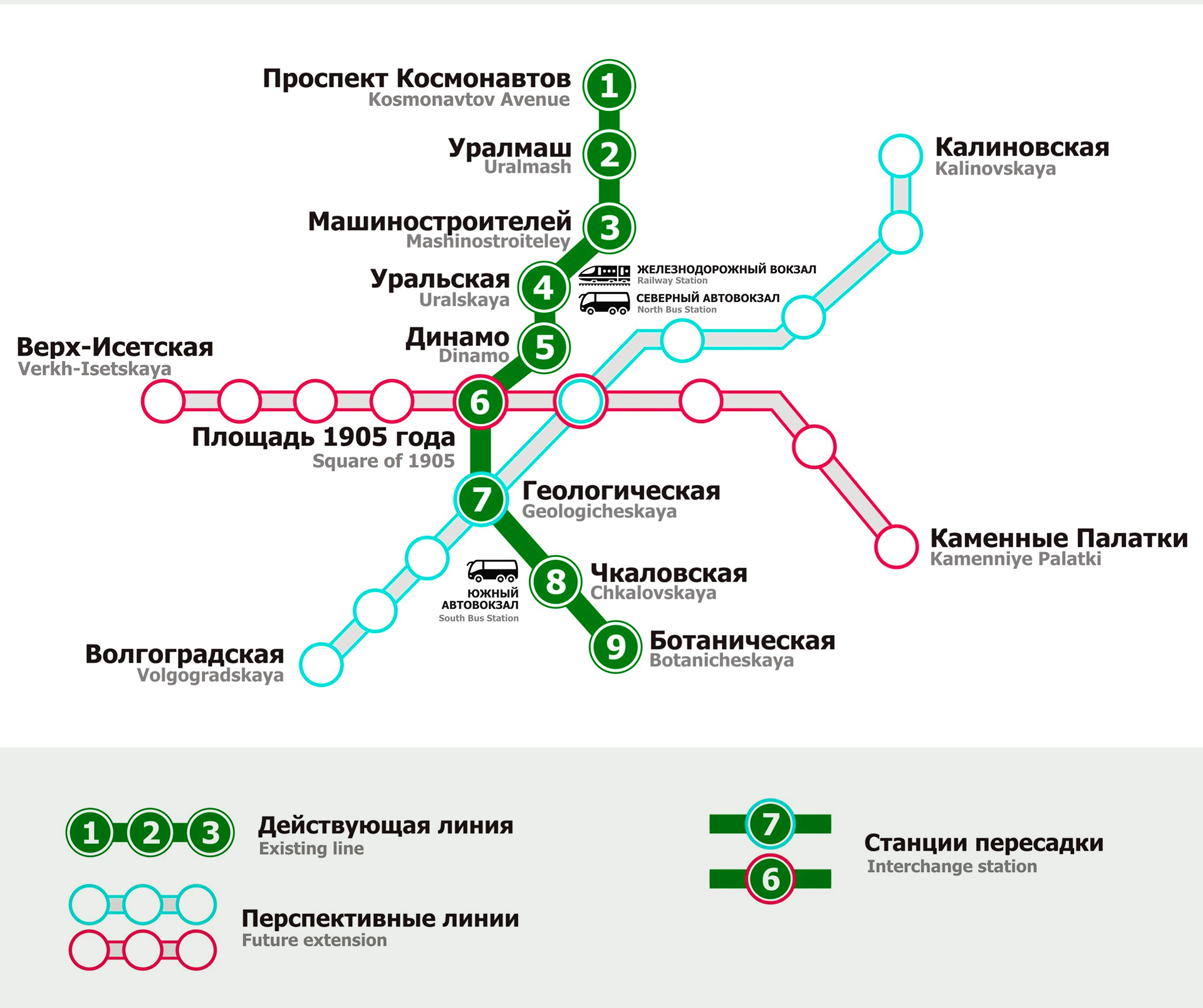
Yekaterinburg Metro Map
Map of Yekaterinburg Metro showing different lines.Click on the map to enlarge it or download the Yekaterinburg Metro map in PDF format.
Yekaterinburg Metro within the Russian Metro Systems
The Yekaterinburg Metro is one of Russia’s seven metro systems. It was the sixth metro to open in Russia and the last one launched before the Soviet Union ceased to exist later in 1991.
Compared with the metro systems in Moscow, St. Petersburg, and Novosibirsk, Yekaterinburg is much smaller. It has the fewest stations among Russia’s metros, yet it ranked fourth in ridership as of 2019. For a single-line system, that is a notable result.
The system follows a typical Soviet metro concept, with a long-term route plan that would form a triangle of three lines intersecting in the city center. Its current stations include both deep and shallow designs, shaped by the city’s uneven terrain and dense central layout.
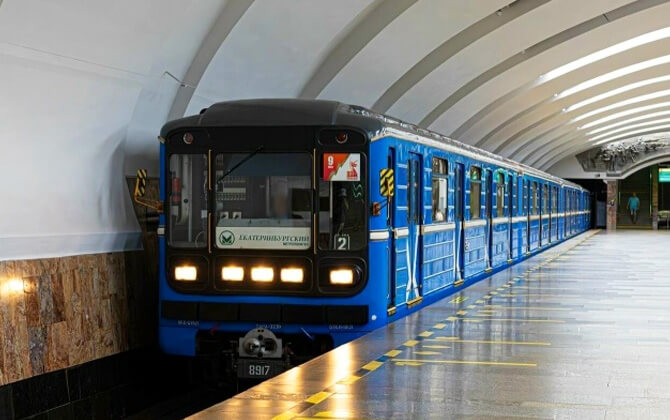
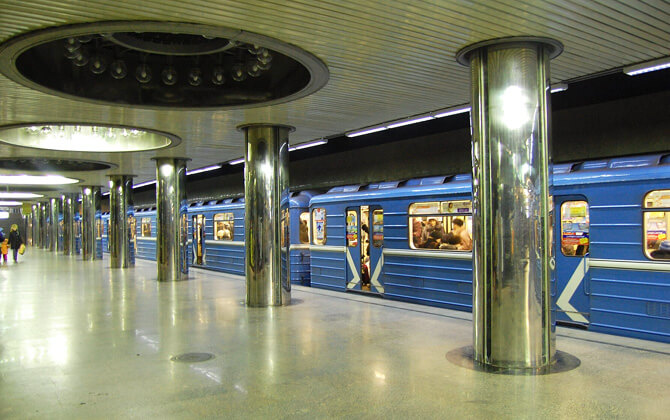
Shallow stations include pillar-trispan types and a single-vault station built using Kharkov technology. The Kalinovskoye depot serves the line, and 62 cars are assigned to the system.
Lines and Stations of Yekaterinburg Metro
The Yekaterinburg Metro currently has one active route running from Prospekt Kosmonavtov in the north to Botanicheskaya in the south. The line is 12.7 km (7.9 miles) long, and the full path train ride takes about 19 minutes. Average speed is around 50 km/h (31 mph).
The first section opened in 1991 between Prospekt Kosmonavtov and Mashinostroiteley. Later extensions took the line to Uralskaya, Ploshchad 1905 Goda, Geologicheskaya, Chkalovskaya, and Botanicheskaya. The stations map is simple: a straight north-south line through the city.
The stations list below includes active stops, planned extensions, and the closed Bazhovskaya station, which was built between Geologicheskaya and Chkalovskaya but never opened to passengers.
| Station | Details |
|---|---|
| Kalinovskaya | Planned northern extension |
| Prospekt Kosmonavtov | Opened in 1991; northern terminus |
| Uralmash | Opened in 1991 |
| Mashinostroiteley | Opened in 1991 |
| Uralskaya | Opened in 1992 |
| Dinamo | Opened in 1994 |
| Ploshchad 1905 Goda | Opened in 1994; central interchange area |
| Geologicheskaya | Opened in 2002 |
| Bazhovskaya | Built between Geologicheskaya and Chkalovskaya but never opened |
| Chkalovskaya | Opened in 2012 |
| Botanicheskaya | Opened in 2011; southern terminus |
| Uktusskie Gory | Planned southern extension |
All active stations connect with surface transport in some form, including bus, tramway, trolleybus, and taxi routes. The strongest interchange points are Uralskaya, Ploshchad 1905 Goda, Geologicheskaya, Chkalovskaya, and Botanicheskaya.
Station Details
The Yekaterinburg Metro is small, so station planning is easy. There is one line, 9 active stations, and a full route running time of about 19 minutes. The system does not use driverless trains, passengers cannot walk between platforms, and stations do not have platform screen doors.
Facilities are fairly basic by modern metro standards. Trains are not air-conditioned, but the system remains a practical local transport option for daily riders.
| Station | Details |
|---|---|
| Prospekt Kosmonavtov | Northern terminus with connections to bus, tram, trolleybus, and taxi routes |
| Uralmash | Serves the Uralmash area and connects with several surface transport routes |
| Mashinostroiteley | Opened with the first section of the line in 1991 |
| Uralskaya | Major transport interchange with bus, tram, trolleybus, and taxi connections |
| Dinamo | Metro stop with trolleybus connection |
| Ploshchad 1905 Goda | Central station serving the city center and nearby attractions |
| Geologicheskaya | Useful for city-center travel and connections to tram and bus routes |
| Chkalovskaya | Southern section station with bus, tram, and trolleybus links |
| Botanicheskaya | Southern terminus and the main metro point for indirect airport access by bus 039 |
Operating Hours
The Yekaterinburg Metro operating hours are generally listed as 6:00 a.m. to midnight daily. Some operating information shows service continuing until 1:03 a.m., so late-evening riders should check the current train schedule before traveling. For most trips, the opening hours and opening times are straightforward: service starts in the morning and runs every day.
| Service detail | Timings |
|---|---|
| Starting time | 6:00 a.m. |
| Standard closing time | Midnight |
| Latest listed service end | 1:03 a.m. in some operating information |
| Normal frequency | Every 7 to 8 minutes |
| Rush-hour frequency | Every 4 to 5 minutes |
| Night frequency | Every 11 minutes |
| End-to-end running time | About 19 minutes |
| Schedule today | Daily service; check current timings today for late-night trips |
The metro does close overnight, so it is not a 24-hour transportation system. If you need the last train, plan around the listed closing time and allow time for transfers.
Fare Information for the Yekaterinburg Metro
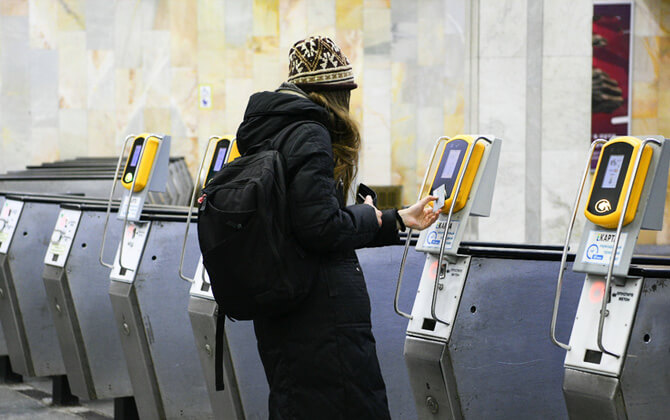
Passengers need an Ekapta card to use the Yekaterinburg Metro. Paper tickets are no longer used, and the card can be bought at authorized sales points or kiosks inside stations.
The standard ticket price is 28 rubles per ride, about $0.48 USD. For a single metro trip, the fare calculator is simple: one ride costs the same standard fare. Regular riders can also use pass options loaded onto the Ekapta card.
The same card works with fare plans for several transport networks, including tram, trolleybus, bus, and metro. This makes it useful for passengers who rely on public transport across the city rather than taking only one metro ride.
General Plans
General fare use is based on the Ekapta card. The standard metro fare is 28 rubles, about $0.48 USD, and it applies per ride.
Available pass plans mentioned in the metro materials cover four transport networks: tram, trolleybus, bus, and metro. These plans are aimed mainly at regular riders and eligible passenger groups.
| Key | Information |
|---|---|
| Standard fare | 28 rubles, about $0.48 USD per ride |
| Ticket format | Ekapta card; paper tickets are no longer used |
| Card purchase | Authorized sales points and station kiosks |
| Transport coverage for passes | Tram, trolleybus, bus, and metro |
Student Passes
Students may qualify for discounted monthly travel. The student pass is described as an unlimited monthly pass for four transport networks: tram, trolleybus, bus, and metro.
For school students aged 7 to 17, the listed price is 1,000 rubles, about $17.14 USD, for an unlimited monthly pass. The pass is available only to the relevant student group.
- School students aged 7 to 17: unlimited monthly pass for 1,000 rubles, about $17.14 USD
- Transport networks covered: tram, trolleybus, bus, and metro
- Required card: Ekapta card
University Passes
The university pass is an unlimited monthly pass for students enrolled in a public or private university, technical institute, or vocational school. It covers four transport networks for 30 days.
The listed cost is 1,700 rubles, about $28.92 USD. For students who travel frequently, this pass can be cheaper than paying the single-ride price each time.
- Eligible users: university, technical institute, and vocational school students
- Monthly pass price: 1,700 rubles, about $28.92 USD
- Networks covered: tram, trolleybus, bus, and metro
Plans for Senior Citizens and People with Disabilities
Senior citizens and people with certified disabilities have access to special fare plans through the Ekapta card. The standard fare remains 28 rubles, about $0.48 USD, but discounted pass options are also listed.
- Unlimited monthly pass: 1,000 rubles, about $17.14 USD, for 30 days of unlimited travel on tram, trolleybus, bus, and metro networks.
- One-month package: a 30-day plan allowing up to 40 rides across tram, trolleybus, bus, and metro networks.
Priority seating is provided for senior citizens and passengers with disabilities in designated train areas. Passengers are expected to leave these seats available when needed.
Passengers with reduced mobility can request assistance inside stations. The request should be submitted 30 to 40 minutes before the visit and should include the route, estimated travel time, and whether the passenger will be accompanied. Assistance for wheelchair users is provided with staff support and mobile stairlifts.
Transportation Connections in the Yekaterinburg Metro
The metro is closely connected with local transport across Yekaterinburg. Bus, trolleybus, tram, tramway, and taxi routes serve many stations, making the single metro line a useful spine for wider city transport.
| Station | Details |
|---|---|
| Prospekt Kosmonavtov | Bus lines 56, 59, 104, 108, 111, 142; tram lines 2, 25; trolleybus lines 3, 5, 10, 12, 13; taxi lines 09, 053, 063 |
| Uralmash | Bus lines 36, 56, 59, 104, 108, 111, 142; tram lines 5, 5A, 8, 17, 22; trolleybus lines 3, 5, 12, 17; taxi lines 07, 08, 033, 060, 063 |
| Mashinostroiteley | Bus lines 108, 111; tram lines 2, 5, 5A, 7, 8, 14, 16, 17, 22, 25; trolleybus lines 3, 5, 12, 17; taxi lines 07, 063 |
| Uralskaya | Bus lines 1, 13, 21, 23, 31, 48, 57, 60, 114, 144, 150, 152; tram lines 3, 5, 7, 21, 23, 27, 32; trolleybus lines 1, 3, 5, 9, 11, 15, 17, 18, 19; taxi lines 01, 05A, 06, 15, 021, 024, 031, 034, 035, 045, 046, 052, 054, 055, 056, 082 |
| Dinamo | Trolleybus line 4 |
| Ploshchad 1905 Goda | Bus lines 2, 14, 19, 23, 25, 32, 41, 46, 50, 54, 57, 61; trolleybus lines 3, 7, 17; taxi lines 04, 05, 011, 012, 015, 016, 018, 019, 024, 026, 030, 055, 056, 057, 070 |
| Geologicheskaya | Bus lines 14, 23, 46, 50, 54, 57; tram lines 1, 3, 4, 5, 9, 10, 14, 15, 21, 25, 27, 32, 33; taxi lines 011, 012, 016, 018, 019, 024, 030, 039, 047, 055, 056, 057, 197 |
| Chkalovskaya | Bus lines 23, 50, 54, 57, 57A; tram lines 1, 5, 9, 14, 15, 25, 27; trolleybus lines 11, 14 |
| Botanicheskaya | Bus lines 2, 17, 19, 26, 37, 38, 39, 57, 138, 162, 182; trolleybus lines 1, 6, 9, 15, 20; taxi lines 05, 05A, 011, 012, 025, 030, 035, 038, 042, 056, 057, 077, 083, 113, 159, 197, 198 |
Botanicheskaya is also the key metro station for the indirect airport route by bus 039. The trip takes about one hour and twenty minutes in total.
Airport Connection
The Yekaterinburg Metro does not have a direct airport station. Ekaterinburg-Koltsovo Airport can still be reached by public transport using Botanicheskaya Station and bus 039.
From Botanicheskaya, walk about 200 meters, or 0.2 km (0.12 miles), to the Shvartsa bus stop. Take bus 039 for 22 stops; the bus ride takes roughly one hour and arrives at Aeroport Kol’tsovo, opposite the airport.
From the airport to the city, leave the main terminal and walk about 200 meters, or 0.2 km (0.12 miles), to the Aeroport Kol’tsovo bus stop. Bus 039 reaches the Shvartsa stop near Botanicheskaya after about 52 minutes and 22 stops.
This route requires an Ekapta card. Since the metro does close overnight, check the current timetable and last train timings if your flight arrives late.
Passenger Rules and Regulations
The Yekaterinburg Metro rules are designed to keep the system safe, clean, and reliable for passengers. Most are standard for urban transportation, but it is worth knowing them before you ride.
- Graffiti, alteration, or defacement of stations and trains is prohibited.
- Large luggage must not inconvenience other passengers; in some cases, passengers may be asked to leave the vehicle.
- Pets are not allowed in metro vehicles or stations.
- Alcoholic beverages are prohibited in metro vehicles and stations.
- Smoking is prohibited in all metro areas.
- Dangerous or flammable materials and harsh chemicals are not permitted on board.
- Only licensed law enforcement officers may carry firearms in stations or metro vehicles.
- Passengers must not cause panic or promote collective hysteria while using metro services.
- Entry into restricted areas, including control rooms, driver’s cabs, and maintenance areas, is not allowed.
- Littering in stations and trains is forbidden.
- Priority seating is reserved for senior citizens and passengers with disabilities.
Passengers also need an Ekapta card to travel, as paper tickets are no longer used.
History
Yekaterinburg, formerly Sverdlovsk, grew into a major industrial center and transport hub in the Urals. The region is often seen as a natural boundary between Europe and Asia, and the city’s growth created demand for stronger urban transport.
Plans for a rapid transit system appeared in the late 1970s, and construction began in 1980. Because the city has uneven terrain and a dense center, planners used a mix of deep and shallow station designs.
The metro opened to passengers on 26 April 1991. It was the sixth metro in Russia and the 13th and last metro to open in the Soviet Union. The economic crisis of the early 1990s slowed the project, so the first stage included only three stations. Later state funding allowed more construction, and by 1995 the system had doubled in length.
| Key | Information |
|---|---|
| Prospekt Kosmonavtov–Mashinostroiteley | Opened 26 April 1991 |
| Mashinostroiteley–Uralskaya | Opened 22 December 1992 |
| Uralskaya–Ploshchad 1905 Goda | Opened 22 December 1994 |
| Ploshchad 1905 Goda–Geologicheskaya | Opened 30 December 2002 |
| Geologicheskaya–Botanicheskaya | Opened 28 November 2011 |
| Chkalovskaya | Opened 28 July 2012 |
Since opening, only two main extensions have been added. The system now runs north to south with 9 stations over 12.7 km (7.9 miles). Bazhovskaya was built between Geologicheskaya and Chkalovskaya but never opened.
Future Expansions
The Yekaterinburg Metro is still a single-line system, but expansion has been discussed for many years. The most developed proposal is a second line running east to west across the city.
The first proposed section of the second line would be about 4.5 km (2.8 miles) long and include four stations: Metallurgicheskaya, Tatishchyevskaya, Ploshchad Kommunarov, and Ploshchad 1905 Goda. Tatishchyevskaya and Ploshchad Kommunarov would be located near Central Stadium, which hosted FIFA World Cup 2018 matches.
This section was originally planned to open in 2018, but the project was delayed after only pre-development work had been completed in 2013. The design competition had not yet been announced, so the planned opening was no longer feasible.
Longer-term plans describe a future network of up to 31 stations, with additional lines and transfer stations. A third line has also been proposed, although details remain limited and it is not expected before the second line is completed.
Other expansion items include Kalinovskaya north of the current line, Uktusskie Gory south of the current line, and Bazhovskaya between Geologicheskaya and Chkalovskaya. Bazhovskaya has been postponed indefinitely.
Safety Measures
The Yekaterinburg Metro places strong emphasis on passenger safety and system security. Stations are monitored around the clock by closed-circuit cameras, and emergency guidance is provided through official passenger information.
Security measures also address the risk of terrorist attacks. Passenger information explains how to respond to a possible attack and how to recognize suspicious behavior.
Technical maintenance is another major part of safe operation. The metro maintains and overhauls rolling stock, installs new equipment when needed, and has introduced a contactless train control system. All trains have CCTV to support passenger security.
Infrastructure is checked regularly. Rails and the third rail are maintained, modern equipment is used to detect cracks, and measures have been developed to manage water ingress in tunnels. Semi-automatic signals have been replaced with electronic automatic train stop systems, and signaling relays are checked with a highly accurate SIRBK system.
Other upgrades support reliable working hours and daily service. LED lamps help reduce power consumption, equipment is being installed to prevent power supply disruptions, and seven of the nine stations have escalators maintained in house on a special schedule. Ventilation, water, and heating systems are controlled automatically.
Tourist Attractions
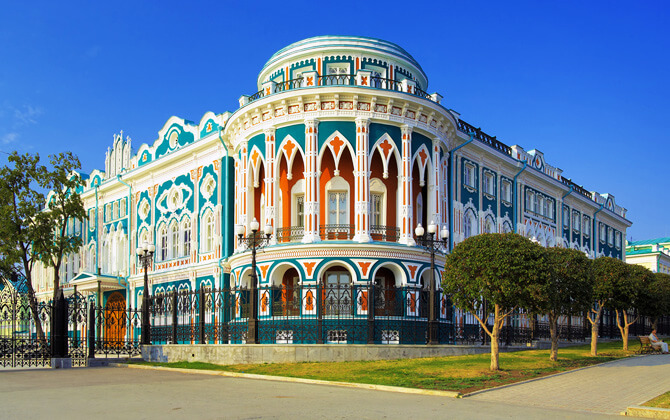
The Yekaterinburg Metro is useful for sightseeing and is also an attraction in itself. Travelers often notice the clean stations, marble walls, chandeliers, and varied stonework. Each station has its own look, which gives even a short ride some character.
Geologicheskaya is convenient for Yekaterinburg State Circus. Ploshchad 1905 Goda serves the city center and is close to the Museum of Fine Arts. Mashinostroiteley is mentioned as a stop near the Afghan, or Shuravi, war museum.
Stations such as Ploshchad 1905 Goda and Geologicheskaya also help visitors reach attractions around Lenin Avenue and Vaynera Pedestrian Street. For many tourists, the metro is a quick way to combine practical transportation in Yekaterinburg with a look at underground architecture.
The system is compact, so exploring it does not take long. With one line and 9 active stations, it works well as a short city experience rather than a full-day activity.