The Kazan Metro is a rapid transit system in Kazan, the capital of Tatarstan, Russia. Opened on August 27, 2005, it is the newest metro system in Russia and the country’s seventh metro overall. The system has one operating line with 11 stations and about 15.8 kilometers (9.8 miles) of track, linking residential districts with the city centre and northern industrial areas. It is run by MetroElektroTrans and stands out for modern features such as smart-card ticketing, semi-automatic train operation, CCTV, and station police groups. The metro is also known for themed station design, daily operating hours from 6:00 AM to 12:00 AM, and planned expansion through a second line section.
| Key | Information |
|---|---|
| System | Kazan Metro |
| Location | Kazan, Tatarstan, Russia |
| Opening date | August 27, 2005 |
| Lines | 1 |
| Stations | 11 |
| Network length | About 15.8 km (9.8 miles) |
| Operator | MetroElektroTrans |
| Opening hours | Daily, 6:00 AM to 12:00 AM |
| Fare | Flat fare system |
| Expansion | Second line under construction since 2019 |
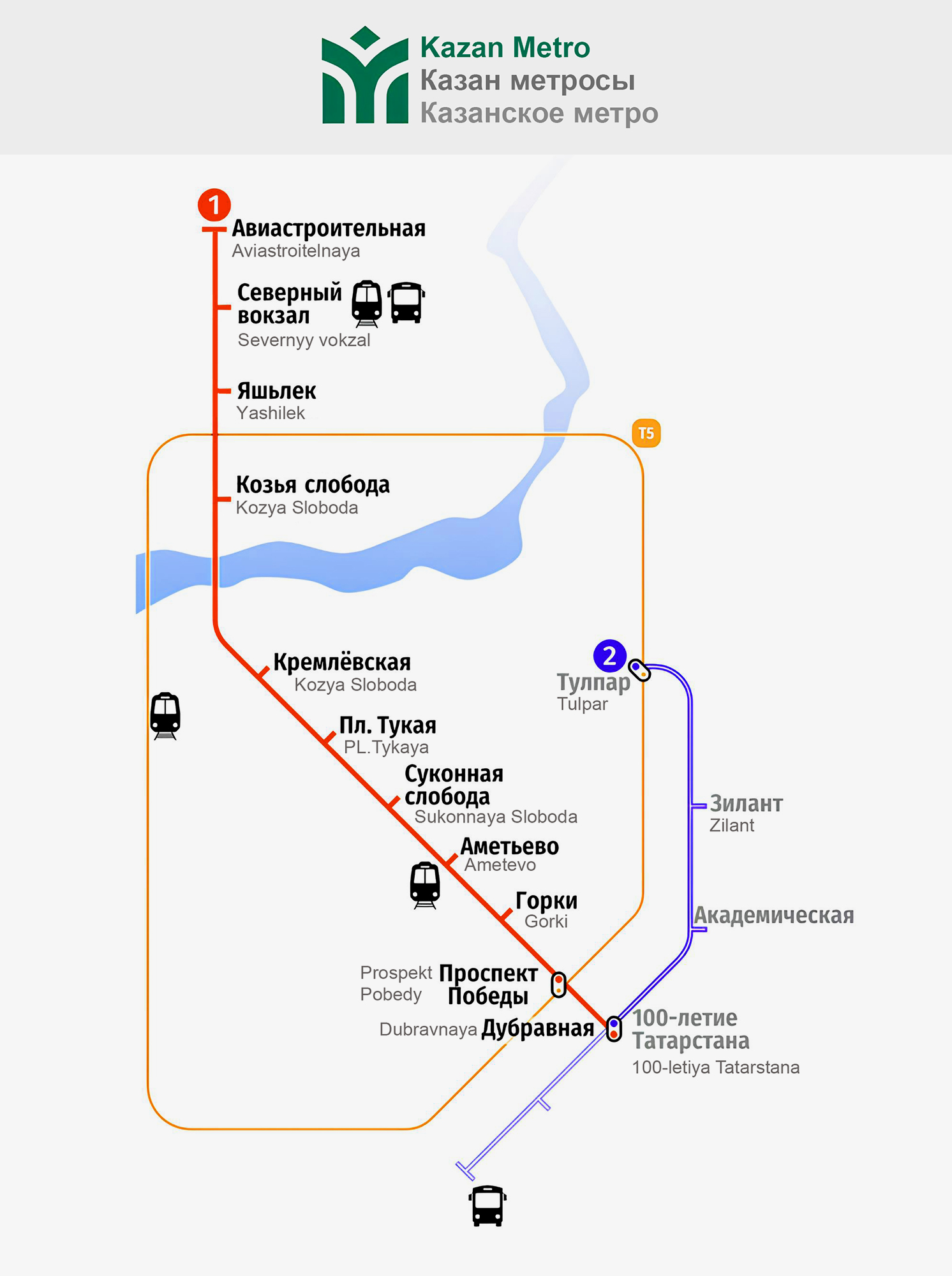
Map of the Kazan Metro
Map of Kazan Metro showing different lines. Click on the map to enlarge it or download the Kazan Metro map in PDF format.
Line and Stations
The Kazan Metro currently works as a single-line system, the Central Line. Its route runs for about 15.8 kilometers (9.8 miles) and connects southeastern residential areas with the city centre and northern industrial districts.
The line opened on August 27, 2005, with six stations. It was later extended south to Prospekt Pobedy on December 29, 2008, crossed the Kazanka River to Kozya Sloboda in 2010, and expanded north with three more stations on May 9, 2013.
If you are looking for the stations list or planning a route plan, here are the currently listed stations.
| Station | Details |
|---|---|
| Prospekt Pobedy | Southern part of the Central Line |
| Gorki | Central Line station; tram connection |
| Ametyevo | Central Line station |
| Sukonnaya Sloboda | Central Line station |
| Ploshchad Tukaya | Central city station near key visitor areas |
| Kremlyovskaya | Station for access to Kazan-Passazhirskaya via railway connection and near the Kremlin |
| Kozya Sloboda | Opened after the line crossed the Kazanka River |
| Yashlek | Central Line station; tram connection |
| Severny Vokzal | Central Line station; tram connection |
| Aviastroitelnaya | Northern station; tram connection |
One station is located on a combined glazed flyover, while the rest are sub-surface or elevated. Across the system, station architecture mixes modern design with Tatar cultural elements, so the stations map is useful not only for transport but also for sightseeing.
A second line has been under construction since 2019. It is planned to include 12 stations in total, with the first four expected by 2027.
Schedule and Timetables
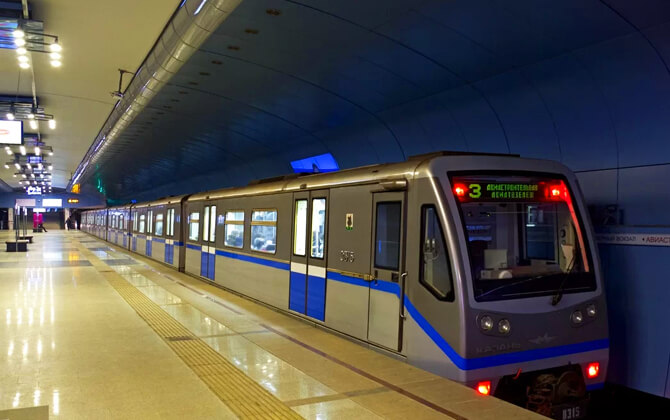
The Kazan Metro runs daily from 6:00 AM to 12:00 AM. For most passengers, that means reliable opening times for commuting, sightseeing, and everyday city transport. If you need the last train or want to check the closing time, it is worth remembering that first and last departures vary by station.
Train frequency changes through the day. On weekdays, trains run every 6 minutes 10 seconds during peak periods, every 7 minutes 56 seconds in the middle of the day, every 9 minutes 15 seconds in the early morning and late evening, and every 13 minutes 53 seconds near midnight. On weekends, the schedule generally stays at every 9 minutes 15 seconds until 11:00 PM, then every 13 minutes 53 seconds until midnight.
These operating hours, timings, and working hours may change on holidays or during special events, so schedule today and timings today should be checked against official announcements before travel.
| Service detail | Timings |
|---|---|
| Operating hours | Daily, 6:00 AM to 12:00 AM |
| Weekday peak frequency | Every 6 min 10 sec |
| Weekday midday frequency | Every 7 min 56 sec |
| Weekday early morning and late evening frequency | Every 9 min 15 sec |
| Near-midnight frequency | Every 13 min 53 sec |
| Weekend frequency until 11:00 PM | Every 9 min 15 sec |
| Weekend frequency after 11:00 PM | Every 13 min 53 sec |
| Station | Details |
|---|---|
| Prospekt Pobedy | First train 06:00; last train 00:00 |
| Gorki | First train 06:03; last train 00:03 |
| Ametyevo | First train 06:06; last train 00:06 |
| Sukonnaya Sloboda | First train 06:09; last train 00:09 |
| Ploshchad Tukaya | First train 06:12; last train 00:12 |
| Kremlyovskaya | First train 06:15; last train 00:15 |
| Kozya Sloboda | First train 06:18; last train 00:18 |
| Yashlek | First train 06:21; last train 00:21 |
| Severny Vokzal | First train 06:24; last train 00:24 |
| Aviastroitelnaya | First train 06:27; last train 00:27 |
As a route timetable and train schedule reference, these timings are helpful for planning a full running time across the line, especially if you need an early starting time or want to avoid arriving close to when the system closes.
Tariffs, Tickets, and Cards
The Kazan Metro uses a flat fare system, so the ticket price does not depend on distance. That keeps the fare simple, especially on a compact network with one line.
Available source material mentions a single ride ticket at 35 RUB (about $0.39). Some sources also mention a cash fare of 42 RUB (about $0.47) and a 2026 fare of 46 RUB (about $0.51) for cash, bank card, or transport card payments. Because the figures differ, it is best to check the latest official fare before you travel.
Tickets can be bought from station ticket machines or staffed counters. Payment options include cash, contactless bank cards, transport cards, and smart tokens. Multi-ride products such as 10-ride and 20-ride cards are also mentioned and may reduce the overall cost for regular users.
In the wider city transport system, cards may be general-purpose or discounted, and some tariff plans include time-based passes, unlimited options for certain modes, and an electronic wallet. For the metro itself, smart token payment is also mentioned in the available information.
If you are comparing ticket, card, pass, or day pass options, official updates matter. A fare calculator is not provided in the source material, but because the metro uses a flat fare, the price is usually easy to understand without one.
Interconnections with Other Systems
The Kazan Metro is part of a broader public transport network. Since one line does not cover the whole city, buses, trolleybuses, and trams play a major role in local transport and transportation in Kazan.
The tramway network connects with the metro at five stations: Aviastroitelnaya, Severny Vokzal, Yashlek, Gorki, and Prospekt Pobedy. Trolleybuses connect with almost all metro stations except Sukonnaya Sloboda and Ametyevo. Bus services are available at every station, which makes transfers fairly straightforward.
Kazan is also connected to the national railway network. The main rail hub is Kazan-Passazhirskaya, reachable via Kremlyovskaya station. From there, passengers can transfer to long-distance, regional, and suburban trains, as well as buses, trolleybuses, and trams.
For airport access, Kazan International Airport is about 26 kilometers (16.2 miles) southeast of the city centre. The metro does not go there directly, but the airport can be reached by bus or by electric shuttle train through Kazan-Passazhirskaya.
The city also has river transport on the Volga, with water routes to nearby cities and even Moscow, though that trip takes about 10 days. Still, for everyday city transport, the metro plus surface transport is what most travelers will use.
| Station | Details |
|---|---|
| Aviastroitelnaya | Tram connection |
| Severny Vokzal | Tram connection |
| Yashlek | Tram connection |
| Gorki | Tram connection |
| Prospekt Pobedy | Tram connection |
| Almost all stations | Trolleybus connections, except Sukonnaya Sloboda and Ametyevo |
| Every metro station | Bus connections |
| Kremlyovskaya | Railway link to Kazan-Passazhirskaya |
Airport Connections
Kazan International Airport is located about 26 kilometers (16.2 miles) southeast of the city centre. It is the largest airport in Tatarstan, but there is no direct metro route to the airport at present.
To reach the metro, passengers can use a bus or an electric shuttle train. The bus runs from 6:00 AM to 10:00 PM and can take travelers to the South Terminal at Prospekt Pobedy for a direct metro connection. This trip costs 70 RUB (about $0.78).
The electric shuttle train is often the more convenient option. It links the airport with Kazan-Passazhirskaya railway station, takes about 28 minutes, makes five intermediate stops, and costs 40 RUB (about $0.44).
A future direct connection has been planned, but for now the airport transfer depends on rail or bus plus metro.
Future Expansions
Kazan Metro has expanded in several stages already, and further expansion remains central to the city’s transport plans. After the original opening in 2005, the line reached Prospekt Pobedy in 2008, crossed the Kazanka River in 2010 with Kozya Sloboda, and grew north in 2013 with three more stations.
The main project now is the second line, under construction since 2019. It is planned to have 12 stations in total, with the first four expected by 2027. One of the first planned stations is Akademicheskaya in the Azino microdistrict.
Authorities also see the metro as the backbone of the future public transport system, with bus routes expected to connect more closely to metro stations for easier transfers. Other long-term ideas continue to be discussed, but the second line is the key project now.
A Glimpse into History
The history of the Kazan Metro goes back long before it opened. Early plans for rapid transit appeared in the period of the Russian Empire, but the revolution and later World War II stopped progress.
Planning returned during the Soviet era after Kazan’s population passed 1 million in 1979, meeting the threshold for a metro system. Geological work began in 1983, and by the late 1980s a first-stage plan had been prepared. Then the collapse of the Soviet Union in 1991 halted the project again.
The project came back in the 1990s. Federal authorities approved construction in 1995, the first stone was laid on August 27, 1997, and the first phase finally opened on August 27, 2005, in time for Kazan’s millennium celebrations.
Since then, the system has grown through extensions in 2008, 2010, and 2013.
Rules and Regulations
Kazan Metro has mandatory rules for everyone on metro property. They are meant to protect passengers, maintain order, and support safe operation across stations, trains, tunnels, depots, and other facilities.
Passengers are expected to follow staff instructions, respect other riders, and treat metro property carefully. The rules are displayed in trains and at stations together with contact details for the officials responsible for metro operation.
One source in the draft states that stations are open daily from 6:00 to 11:00 PM, and that operating hours may change depending on passenger flow. This differs from the service timetable given elsewhere, so travelers should check current official opening hours, working hours, and closing time before travel.
Advice
The Kazan Metro is generally easy to use. There is only one line, the fare is low, and many major sights are within easy reach.
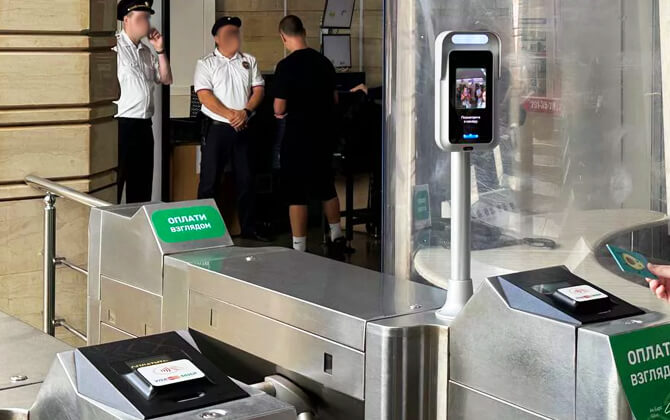
For a simple trip, use a token, smart card, or contactless bank card at the turnstile. Station names are announced in Russian, Tatar, and English, and free Wi-Fi is available in the system.
Useful stops for visitors include Kremlyovskaya, Ploshchad Tukaya, and Sukonnaya Sloboda. Children under 7 can travel free, but the controller at the entrance needs to be contacted.
Many travelers find the metro clean, safe, and not especially crowded. In hot weather, it can be a very practical alternative to buses. That said, some reviews mention difficult access for strollers or wheelchairs, so plan ahead if accessibility matters for your trip.
Interesting Facts
The Kazan Metro is the newest metro system in Russia. It opened on August 27, 2005, becoming the seventh metro in the country and the fifteenth in the former Soviet Union.
Its opening was timed with Kazan’s millennium celebrations, and the system quickly gained a reputation as one of the more modern metro networks in Russia.
One of its standout features is multilingual station announcements in Russian, English, and Tatar. The system also uses advanced automation, and trains can operate without an engineer on board, though a supervisor remains present.
Kremlyovskaya station reflects the architecture of the Kazan Kremlin, while local folklore appears in station design too, including the mythical dragon Zilant. A future station on the second line is also planned to be named Zilant.
The metro supports smart tokens valid for one day and smart cards for multiple rides or set periods. Another unusual detail: unlike many Russian metro systems, Kazan does not have interval clocks at stations showing when the previous train left.
Tourism and Sightseeing
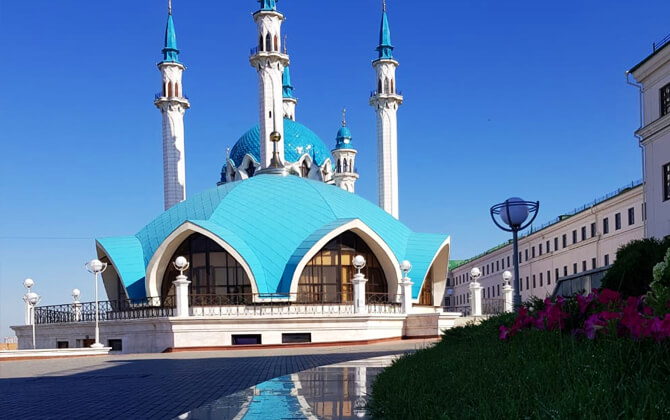
The Kazan Metro is more than just transport. It is also part of the city experience, with colorful stations and strong links to local identity.
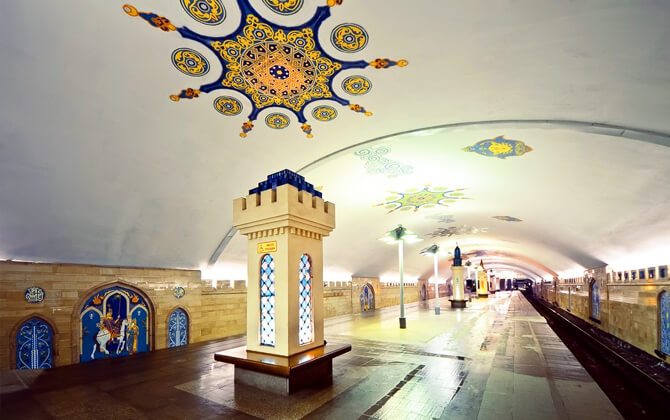
Kremlyovskaya is one of the most striking stations. Located near the Kazan Kremlin, it feels almost like an underground palace. Its design echoes the white-stone fortress above ground, and the station includes miniature references to Kremlin towers, mosques, and the leaning Söyembikä Tower. Eastern motifs and the dragon Zilant appear in the décor, and the same symbol can be seen outside near the entrance.
Ploshchad Tukaya is another memorable stop. Named after the Tatar poet Gabdulla Tukay, it features white and green marble along with figures from Tatar folk tales.
For visitors, the metro is practical as well. Stations are close to key sights such as the Kremlin and Bauman Street, the system is easy to understand, and trains often run every 5 to 6 minutes according to traveler-oriented descriptions in the draft. Clean stations and a safe feel add to its appeal.
Payment is straightforward, with travel cards, bank cards, and contactless smart tokens available. If you want a small keepsake, colorful presentation tokens without a chip are also mentioned.