The Minatomirai Line, officially the Minatomirai 21 Line, is a private underground railway in Yokohama, Japan. It runs from Yokohama Station to Motomachi-Chūkagai Station through the Minato Mirai 21 district and opened on 1 February 2004. Operated by Yokohama Minatomirai Railway, the line uses the MM route symbol and navy blue on the stations map. It has six stations and works as part of a wider public transport system through direct services with the Tokyu Toyoko Line, making transportation in central Yokohama simple and efficient.
| Key | Information |
|---|---|
| Official name | Minatomirai 21 Line |
| Common name | Minatomirai Line |
| Operator | Yokohama Minatomirai Railway Company |
| Opening date | 1 February 2004 |
| Route | Yokohama Station to Motomachi-Chūkagai Station |
| Length | 4.1 km / 2.5 miles |
| Stations | 6 |
| Route symbol | MM |
| Color on maps | Navy blue |
| Type | Underground city transport line |
Minato Mirai Line Map
Map of Minato Mirai Line showing different lines and stations. Click on the map to enlarge it or download the Minato Mirai Line map in PDF format.
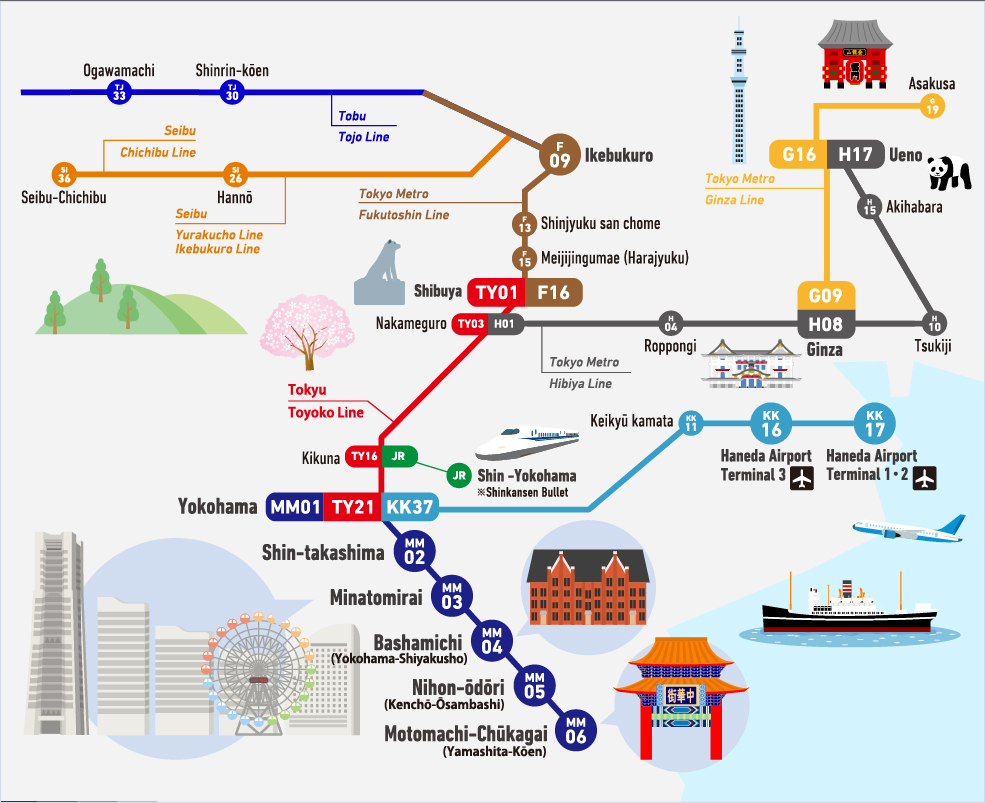
Minato Mirai Lines and Stations
The Minatomirai Line is an underground route in central Yokohama. It opened in 2004 and runs beneath the Minato Mirai 21 business district, linking Yokohama Station with Motomachi-Chūkagai Station. On route maps and station numbering, it is shown in navy blue with the MM symbol.
The line is closely tied to the Tokyu Toyoko Line, so many trains continue beyond Yokohama without requiring a transfer. That through-running setup is a big part of why the system feels so seamless for local transport and longer cross-city trips.
Line overview
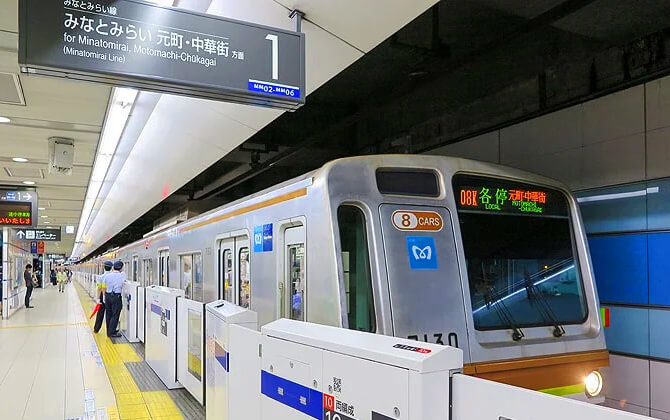
All trains run between Yokohama Station and Motomachi-Chūkagai Station. There are no intermediate terminal reversals. The whole route is underground, including sections beneath the Minato Mirai and Kannai districts, and some stations were built deep below ground because the line passes under reclaimed land and channels.
The service uses both 8-car and 10-car trains, depending on train type. Local services stop at every station. Express and Commuter Limited Express trains skip Shin-Takashima Station, while Limited Express and S-Train services stop at fewer stations.
Stations
The stations list includes six stops across the line.
| Station | Details |
|---|---|
| MM01 Yokohama | Major transfer station with through services to the Tokyu Toyoko Line and connections to many other railway lines. |
| MM02 Shin-Takashima | Serves the Yokohama Anpanman Children’s Museum, a short walk from the station. |
| MM03 Minatomirai | Useful for the Minato Mirai seafront district, including Yokohama Landmark Tower, Yokohama Museum of Art, and Cosmoworld. |
| MM04 Bashamichi | Convenient for the Kanagawa Prefectural Museum of Cultural History, the NYK Maritime Museum, and Akarenga Soko. |
| MM05 Nihon-ōdōri | Good for Yamashita Park and the Yokohama Archives of History. |
| MM06 Motomachi-Chūkagai | Serves Yokohama Chinatown, Motomachi Shopping Street, and the Yamate district. |
At Yokohama Station, the Minatomirai Line shares an underground station with the Tokyu Toyoko Line in the basement of the station building. That makes transfers straightforward and extends the route plan far beyond Yokohama itself.
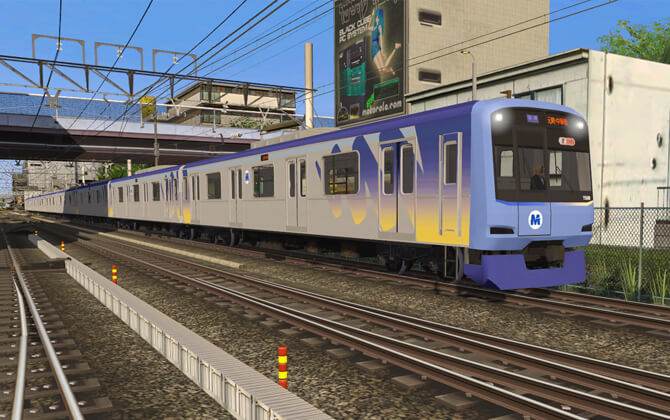
Timetable & Operating Hours
The Minatomirai Line timetable includes trains in both directions between Yokohama and Motomachi-Chūkagai. Service is designed around through-running, so many trains continue onto other lines. If you are checking operating hours, opening hours, opening times, working hours, timings today, or the last train, it is best to confirm the latest schedule today for your specific station and train type.
Several service patterns operate on the line, and stops vary by train category.
| Service detail | Timings |
|---|---|
| S-Train | Fully reserved seating service; on weekends and holidays it runs two and a half round trips. On the Minatomirai Line, it stops at Minatomirai and Motomachi-Chūkagai. |
| Limited Express | Runs during daylight hours on weekdays, and on weekends and holidays except early morning and late night. Stops at Yokohama, Minatomirai, and Motomachi-Chūkagai. |
| Commuter Limited Express | Runs during weekday morning and evening rush hours. Stops at all stations except Shin-Takashima. |
| Express | Runs all day and stops at all stations except Shin-Takashima. |
| Local | Stops at all stations. |
The running time on the line is very short. Commuter Limited Express, Limited Express, Express, and Limited Express (F-Liner) services take 2 minutes, while Local trains take 3 minutes.
Selected trains continue to destinations such as Shibuya, Ikebukuro, and, for the S-Train, the Seibu Ikebukuro Line and Seibu-Chichibu Station. Because of that, the route timetable is especially useful if you want a no-transfer path train from Yokohama into the wider Tokyo rail network.
Daytime frequency is steady, with regular local, express, and limited express departures. Still, departure timings, starting time, and closing time for a given service depend on the train type and destination, so checking the train schedule before you travel is worth it.
Accepted payment methods include PASMO and Suica IC cards, contactless credit cards, and cash.
A major disruption took place on 13 March 2026, when an overhead line outage between Ōkurayama Station on the Toyoko Line and Minatomirai Station caused two trains to stop. Both the Toyoko Line and Minatomirai Line were suspended for 9.5 hours before service resumed around 9:50 pm.
Minato Mirai Line Fares, Tickets and Cards
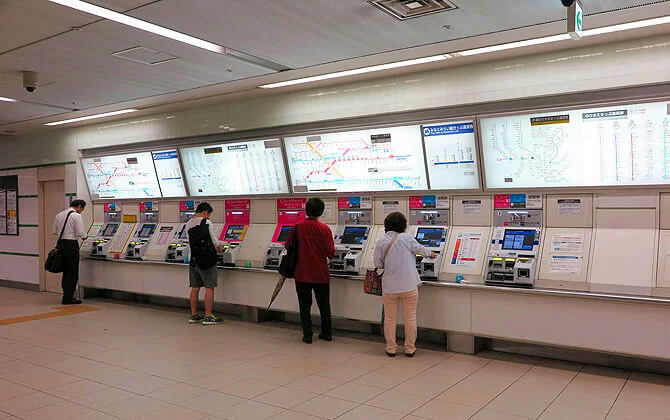
Standard ticket price on the Minatomirai Line ranges from ¥180 to ¥210, about $1.20 to $1.40. Tickets are sold at machines in every station.
If you ride more often, commuter pass options are available for 1, 3, and 6 months. These can be bought from station ticket machines or at the Season Ticket Counter at Yokohama Station.
For sightseeing, there is a day pass with unlimited rides. The Minatomirai Line One-Day Ticket costs ¥460 for adults and ¥230 for children, about $3.10 and $1.55.
The line accepts PASMO and Suica at the ticket gates. These cards can be used for fare payment, fare adjustment, recharge, and checking or printing usage history. You can also buy a new PASMO card and load a commuter pass for this railway line onto it.
Other IC cards accepted at automatic gates are Kitaca, manaca, toica, PiTaPa, ICOCA, Hayakaken, nimoca, and SUGOCA. At fare adjustment machines, these cards can be used only for fare adjustment and recharge.
If you want to enter a station without taking a train, you need an entry ticket. The cost is ¥190 for adults and ¥100 for children, about $1.30 and $0.70. IC cards cannot be used as entry tickets.
Student commuter passes require a student ID with a commuter pass certificate issued by designated schools, or other proof of commuting status.
For some interline trips, a fare discount of ¥20 for adults and ¥10 for children applies when using an interline ticket between Shin-Takashima, Minatomirai, or Bashamichi and specified stations on the Tokyu, Keikyu, or Sotetsu lines.
Connections to Other Systems
The Minatomirai Line is tightly integrated with other rail services in Yokohama and the wider Tokyo area. At Yokohama Station, it connects directly with the Tokyu Toyoko Line, and the two lines effectively operate as one through service without a crew change at the boundary.
Since 16 March 2013, trains have also continued via the Tokyu Toyoko Line onto the Tokyo Metro Fukutoshin Line. From there, services extend to the Tobu Tojo Line, the Seibu Yurakucho Line, and the Seibu Ikebukuro Line. Some trains also run as commuter express services on the Fukutoshin Line route.
The main interchange is Yokohama Station, where passengers can transfer to:
- Tokyu Toyoko Line
- JR Tokaido Line
- JR Keihin–Tohoku Line
- JR Negishi Line
- JR Yokohama Line
- JR Yokosuka Line
- JR Shonan–Shinjuku Line
- Sotetsu Main Line
- Yokohama Municipal Subway Blue Line
This through-running setup makes the line an important part of the wider transport network, linking central Yokohama with central Tokyo and beyond.
Airport Connections
The easiest airport connection for the Minatomirai Line is usually via Haneda Airport and the Keikyu Line. From Haneda Airport, Yokohama Station can be reached in about 25 to 30 minutes without transfers. From there, you can switch to the Minatomirai Line for Minatomirai and other stations.
The Keikyu fare from Haneda Airport to Yokohama is ¥397 by IC card or ¥400 by paper ticket, about $2.65 to $2.70. Trains leave from all three terminals, and the station is directly connected to the airport.
To reach Minatomirai, transfer at Yokohama Station. The walk between lines can take around 10 minutes, so give yourself a little extra time, especially on a first visit. If you are using a paper ticket, you will need a separate ticket for the Minatomirai Line.
For the trip back, take the Minatomirai Line to Yokohama Station and then board the Keikyu Line for Haneda Airport. The journey from Yokohama to the airport also takes around 25 to 30 minutes. If you are flying out, leaving Yokohama Station at least 2 hours before departure is a sensible buffer.
- Make sure your Keikyu train is heading to Yokohama.
- Avoid trains bound for central Tokyo or Chiba if you are going to Yokohama.
- Rush-hour services can be crowded, especially with luggage.
- An IC card such as Suica or PASMO makes transfers easier.
If you are traveling to or from Pacifico Yokohama, Minatomirai Station is the nearest stop and only a short walk from the venue area.
Parking near the Metro
If you are driving to the Minato Mirai area, several station parking and nearby parking options are available close to the metro. Parking charges vary quite a bit, so it helps to check the price and opening hours before you go.
| Station | Details |
|---|---|
| Minatomirai Public Parking Lot | 1,154 spaces; opening hours 7:00 to 24:00; parking charges are ¥280 per 30 minutes, about $1.90. Maximum parking charges per day are ¥1,600 on weekdays until 22:00 and ¥2,100 on weekends until 22:00, about $10.70 and $14.10. |
| Queen’s Parking Lot | 1,700 spaces; opening hours 7:00 to 24:00; price is ¥280 per 30 minutes, about $1.90. Maximum charge on weekdays is ¥1,600, about $10.70. |
| Landmark Parking Lot | 1,400 spaces; open 24 hours; fare is ¥280 per 30 minutes, about $1.90. No discounts available. |
| MARK IS Minatomirai Public Parking Lot | 900 spaces; opening times 8:45 to 23:00; cost is ¥280 per 30 minutes, about $1.90. No discounts available. |
| Yokohama Museum of Art Parking Lot | 169 spaces; working hours 10:00 to 21:00; ticket price is ¥500 per 30 minutes, about $3.35. No discounts available. This parking lot may not be available while the museum is closed for renovation. |
| GS Park Minatomirai Parking | 18 spaces; open 24 hours; parking charges are ¥300 per 20 minutes, about $2.00. Maximum charges are ¥2,500 for 12 hours and ¥2,000 for 5 hours, about $16.80 and $13.40. |
There is also bicycle parking at Minatomirai Station, and motorcycles under 125cc can be parked there as well.
Tips and Rules
Before boarding, buy a ticket from a vending machine with cash or use an IC card such as PASMO or Suica. If you are continuing onto other lines, an IC card is usually the easiest option.
Check the fare table at the machine, make sure you have the correct fare or enough balance on your card, and confirm your destination before entering the gates.
If you plan to ride more than once, a day pass can be a practical choice. It allows unlimited travel and works well for sightseeing along the route.
Small animals such as dogs, cats, and birds are allowed only if they are inside a crate with a total length, width, and height of less than 120 cm / 47.2 in, and the container must weigh less than 10 kg / 22 lb. No part of the animal may extend outside the crate.
At stations, train information is announced in four languages, including Korean. Because through services continue onto other railways, it is smart to double-check the destination display before boarding.
For a smooth and safe trip, review your fare, transfers, and service details in advance. Station facilities and stopping patterns can vary by station and train type.
Fun Facts
The Minatomirai Line is officially named the Minatomirai 21 Line, though almost everyone refers to it by its common name.
It opened on 1 February 2004 and runs for 4.1 km, or 2.5 miles, from Yokohama Station to Motomachi-Chūkagai Station.
The full route is underground. Because it passes beneath reclaimed land in the Minato Mirai and Kannai districts, stations had to be built deep below ground.
On maps, the line is marked with the MM symbol and navy blue color.
Even though it is operated by a separate company, it functions like an extension of the Tokyu Toyoko Line, with through services and no crew change at Yokohama.
Through-running also links the line with the Tokyo Metro Fukutoshin Line, and from there to the Tobu Tojo Line and Seibu Ikebukuro Line.
The stations list is short and simple: there are six stations in total.
Its construction cost was exceptionally high for such a short route, and it has been described as the most expensive per kilometer underground urban railway line in the world.
The line is closely connected to the redevelopment of Minato Mirai 21 and improved access to places like Yokohama Chinatown and Yamashita Park.
Unlike many railway companies in Japan, Yokohama Minatomirai Railway relies heavily on Tokyu staff and facilities for operations and maintenance.
History
Construction of the Minatomirai Line began in 1993, and the line opened to the public on 1 February 2004. It was built to serve the Minato Mirai 21 business district and improve rail access between central Yokohama, Kannai, and Motomachi-Chūkagai.
The project was part of a broader redevelopment plan for the waterfront area. Earlier proposals had been discussed for decades, but a final agreement to connect the new line to the Tokyu Toyoko Line was reached in June 1987. Yokohama Minatomirai Railway Company was established on 29 March 1989 and received its railway business license on 19 April 1990.
Groundbreaking took place on 24 November 1992. Construction took longer than first planned because of major reconstruction around Yokohama Station and geological difficulties. Test runs began in November 2003, and regular service started on 1 February 2004.
When the line opened, the former elevated Tokyu Toyoko Line section between Yokohama and Sakuragichō closed and was replaced by the new underground connection, allowing through services on the Minatomirai Line.
The system later expanded its network role. On 7 September 2012, the eight-car Tokyo Metro 10000 series entered service on the Minatomirai Line and Tokyu Toyoko Line. Then, on 16 March 2013, the new underground connection to the Tokyo Metro Fukutoshin Line allowed direct trains to continue farther across the wider rail network, including the Tobu Tojo Line, Seibu Yurakucho Line, and Seibu Ikebukuro Line.
Today, the line still operates as an extension of the Tokyu Toyoko Line, with trains passing through Yokohama without a crew change.
Future Extensions
The Minatomirai Line opened as a short underground route between Yokohama Station and Motomachi-Chūkagai Station, and extension ideas have been discussed over time as local transport needs changed.
Honmoku Extension
One proposed expansion would extend the line toward Honmoku. Right now, people in that area rely on bus services and then transfer to rail at stations on the Minatomirai Line or the JR Negishi Line. A direct rail link could improve access, but earlier discussion did not advance because local merchants were concerned about losing customers and the line already carried substantial construction debt.
There is also mention of plans to extend the Yokohama Municipal Subway Green Line in a loop to Motomachi-Chūkagai via Honmoku, which would make a Minatomirai extension less feasible.
Additional Rolling Stock Storage
Another future issue involves train storage. The line does not have its own depot, so trains are parked at Tokyu Railways’ Motosumiyoshi Rail Yard and sometimes at Motomachi-Chūkagai Station. Materials also mention plans to build additional parking track under Harbor View Park starting in 2020 to support operations as capacity needs grow.
Longer-Term Network Role
The line already functions as part of a wider through-service network with the Tokyu Toyoko Line and Tokyo Metro Fukutoshin Line. Because of that, any future expansion is more likely to focus on capacity and connections than on changing the line’s core role in the city transport system.
Minato Mirai Places of Interest
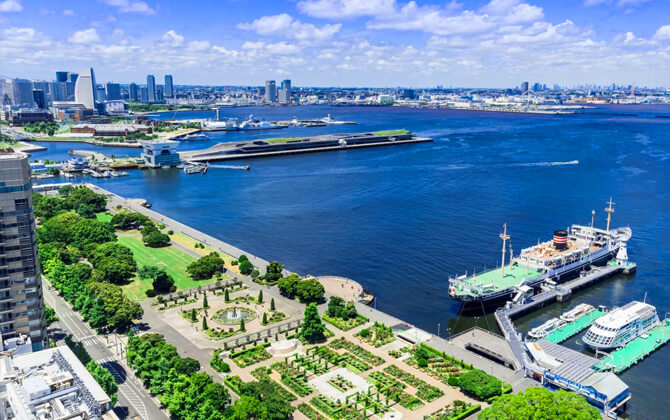
Minato Mirai is one of Yokohama’s best-known waterfront districts, with skyline views, shopping, museums, and easy access by public transport. For many visitors, this is the main area to explore along the Minatomirai Line.
The district covers a large area, so the best station depends on your destination. Minatomirai Station is the most convenient stop for the center of the waterfront, while Shin-Takashima, Bashamichi, Nihon-odori, and Motomachi-Chukagai are better for other nearby sights.
Some trains offer direct access from places such as Shibuya or Ikebukuro through the Tokyu Toyoko Line and Tokyo Metro Fukutoshin Line. Not every train does, though, so it is worth checking before boarding.
 Minato Mirai Places of Interest” width=”670″ height=”420″ />
What to see and do
Minato Mirai has a broad mix of shopping, entertainment, museums, and waterfront views. Shopping highlights include MARK IS Minatomirai, Queen’s Square, Landmark Plaza, Marine & Walk Yokohama, and the Yokohama Red Brick Warehouse.
For entertainment, Yokohama Cosmo World is a popular amusement park with a Ferris wheel, roller coasters, and arcade games. If you want something slower-paced, Manyo Club is a hot spring facility for a more relaxed visit.
Museums and cultural attractions include the Cup Noodles Museum, Mitsubishi Minatomirai Industrial Museum, Yokohama Museum of Art, and the Yokohama Port Museum at Nippon Maru Memorial Park. The Red Brick Warehouse is another major stop, combining preserved waterfront character with shops and events.
For views, popular spots include the Yokohama Air Cabin, Osanbashi Pier, and the observatory at Yokohama Landmark Tower. The district is also known for seasonal events such as harbor fireworks, Oktoberfest at the Red Brick Warehouse, Christmas markets, and winter ice skating.
Best stations for key attractions
- Shin-Takashima Station — useful for Yokohama Anpanman Children’s Museum.
- Minatomirai Station — best for Landmark Tower, Yokohama Museum of Art, Cosmo World, MARK IS Minatomirai, Queen’s Square, and many central attractions.
- Bashamichi Station — convenient for the Red Brick Warehouse area and nearby museums.
- Nihon-odori Station — a good stop for Yamashita Park and the surrounding waterfront.
- Motomachi-Chukagai Station — useful for Yokohama Chinatown, Motomachi Shopping Street, and the Yamate area.
If you plan to visit several places in one day, a pass such as the Yokohama Minatomirai Pass may be useful, as it offers unlimited rides on the Minatomirai Line and part of the JR Negishi Line.