Okinawa Monorail, better known as Yui Rail, is a straddle-beam monorail serving Naha and Urasoe in Okinawa, Japan. Operated by Okinawa Urban Monorail, Inc., it opened on August 10, 2003 as the first rail line in Okinawa since World War II and remains the only public transport rail system in Okinawa Prefecture. The route runs 17.0 km (10.6 miles) from Naha Airport Station to Tedako-Uranishi Station, covers 19 stations, and takes about 37 minutes end to end. Trains run daily, all services stop at every station, and the system is widely used for airport trips, city transport, and everyday local travel.
| Key | Information |
|---|---|
| System | Okinawa Urban Monorail (Yui Rail) |
| Route | Naha Airport Station to Tedako-Uranishi Station |
| Length | 17.0 km (10.6 miles) |
| Stations | 19 |
| Opening date | August 10, 2003 |
| Extension to Urasoe | October 1, 2019 |
| Operating hours | Daily from 6:00 a.m. to 11:30 p.m. |
| Frequency | About every 4 to 15 minutes |
| Running time | About 37 minutes end to end |
| Rolling stock | Okinawa Urban Monorail 1000 series electric multiple units |
| Accessibility | Barrier-free stations with elevators and escalators |
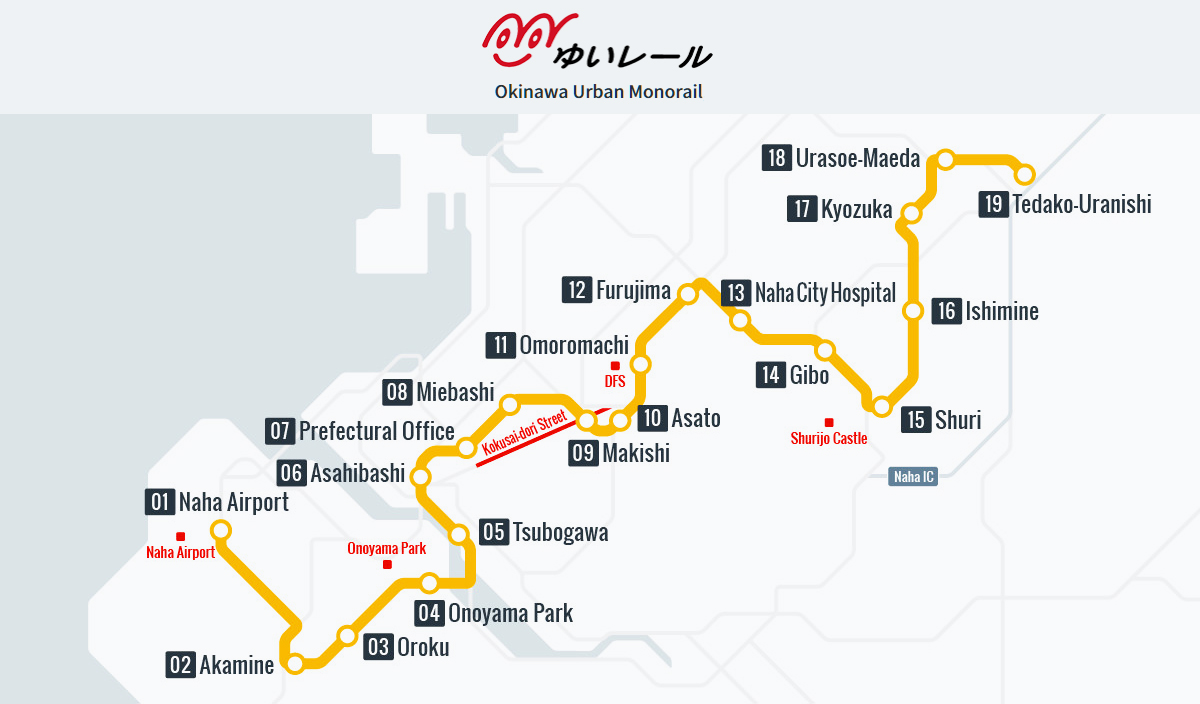
Okinawa Metro Map
Map of Okinawa Metro showing different lines. Click on the map to enlarge it or download the Okinawa Metro map in PDF format.
Lines and Stations
Yui Rail has one monorail route, linking Naha Airport with Tedako-Uranishi through Naha and Urasoe. It is the only rail system in Okinawa Prefecture, so for many visitors it is the easiest public transport option for airport access, downtown travel, and moving around the city.
The line opened on August 10, 2003 and was extended to Urasoe on October 1, 2019. All trains serve every station, though some services terminate at Shuri Station. The full route is 17.0 km (10.6 miles), and the average distance between stations is 0.93 km (0.58 miles).
| Station | Details |
|---|---|
| 01 Naha Airport | Western terminus of the line; directly connected to the airport domestic terminal; westernmost rail station in Japan |
| 02 Akamine | Southernmost rail station in Japan |
| 03 Oroku | Station on the main Yui Rail route |
| 04 Onoyama Park | Station on the main Yui Rail route |
| 05 Tsubogawa | Station on the main Yui Rail route |
| 06 Asahibashi | Useful for transfers to the Naha Bus Terminal and Naha wharf |
| 07 Prefectural Office | Central Naha station on the route |
| 08 Miebashi | Station on the main Yui Rail route |
| 09 Makishi | Convenient stop for central Naha |
| 10 Asato | Station on the main Yui Rail route |
| 11 Omoromachi | Access to T-Galleria duty-free shop |
| 12 Furujima | Station on the main Yui Rail route |
| 13 Naha City Hospital | Station on the main Yui Rail route |
| 14 Gibo | Station on the main Yui Rail route |
| 15 Shuri | Former eastern terminus before the Urasoe extension; some trains still terminate here |
| 16 Ishimine | Added as part of the Urasoe extension section beyond Shuri |
| 17 Kyozuka | Added as part of the Urasoe extension section beyond Shuri |
| 18 Urasoe-Maeda | Added as part of the Urasoe extension section beyond Shuri |
| 19 Tedako-Uranishi | Eastern terminus; bus terminal and Park and Ride access |
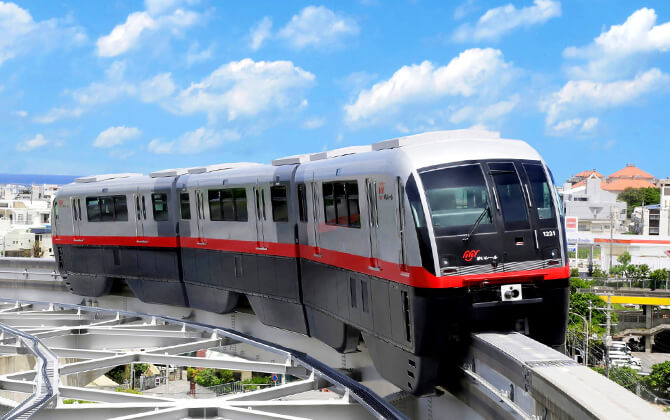
The stations map is simple because there is only one line, and that makes the stations list easy to follow. Trains use Okinawa Urban Monorail 1000 series units, all stations are barrier-free, and each station includes a piece of art. For timetable checks, passengers can select a station name and direction to see the next departures, up to two trains ahead.
Operating Hours
Yui Rail operating hours are daily from 6:00 a.m. to 11:30 p.m. The system runs year-round, so the opening hours and working hours stay broadly consistent across the network.
Train frequency is usually every 4 to 15 minutes, depending on the time of day. Since some services close out at Shuri instead of continuing to Tedako-Uranishi, it is worth checking the route timetable before you travel.
| Service detail | Timings |
|---|---|
| Starting time | 6:00 a.m. |
| Closing time | 11:30 p.m. |
| Operating days | Daily |
| Frequency | Every 4 to 15 minutes |
| Last train note | Some services terminate at Shuri Station |
| Running time | About 37 minutes end to end |
For the most accurate opening times, timings today, and schedule today, check the train schedule for your station and platform.
Fares and Tickets
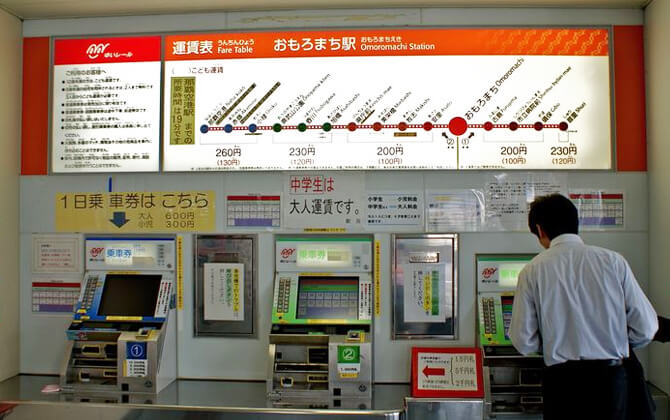
Yui Rail uses distance-based fares, with ticket options for single rides, day travel, and stored-value payment. You can buy tickets from station vending machines, and the system also accepts OKICA and major Japanese IC cards. For visitors comparing fare, price, and ticket price options, the choice is fairly straightforward.
QR one-way tickets are valid for one ride on the day of purchase. Child fares apply to passengers under 12. Up to two children under 6 may travel free with one adult, and the fare applies from the third child under 6.
| Ticket | Details |
|---|---|
| QR one-way ticket | Single journey; valid on the day of purchase |
| QR 1-day ticket | Adult ¥1,000 (about $6.60); Child ¥500 (about $3.30); valid for 24 hours after purchase |
| QR 2-day ticket | Adult ¥1,800 (about $11.90); Child ¥900 (about $5.90); valid for 48 hours after purchase |
| OKICA card | Prepaid card sold in amounts of ¥1,000, ¥2,000, ¥3,000, ¥4,000, ¥5,000, and ¥10,000, each including a ¥500 deposit |
| 1-day pass | Adult ¥800 (about $5.30) |
| 24-hour pass | Adult ¥1,000 (about $6.60) |
| 48-hour pass | Adult ¥1,800 (about $11.90) |
| Weekday Off-Peak 1-day pass | Adult ¥600 (about $4.00) |
| Ganju 1-day pass | Adult ¥300 (about $2.00) |
| Fare cap | When using contactless credit card payment, daily fare is capped at ¥800 (about $5.30) |
| Next-Station Ticket | When using OKICA for one stop, fare is discounted to ¥200 (about $1.30) |
| Naha Airport to Tedako-Uranishi | ¥390 (about $2.60) |
OKICA is the main stored-fare card. Touch the card at the gate when entering and exiting, and the fare is deducted automatically. The remaining balance is shown at the ticket gate. Cards can be reloaded in ¥1,000 units, but refunds are not processed at stations; for help, passengers are directed to the Naha Bus Office inside the airport terminal.
Commuter pass options are also available in 1-month, 3-month, and 6-month versions for commuter and student use. New passes can be bought from 7 days before the start date, while renewals are available from 14 days before. Discounts of 50% apply for holders of eligible physical, intellectual, or mental disability certificates, rounded up to the nearest ¥5.
There is no fare calculator in the provided information, but because the cost is distance-based, checking the vending machine or station fare information is the practical way to confirm the exact price.
Connections to Other Systems
Yui Rail is the main rail link in Naha and a key part of transportation in Okinawa. While the island does not have a broader rail network, the monorail connects neatly with bus services and helps tie together airport travel, city transport, and local transport across the area.
Asahibashi Station connects directly to the Naha Bus Terminal, an important bus hub for routes across Okinawa Island. Tedako-Uranishi Station also has a bus terminal, giving passengers another transfer point for onward travel.
The 2019 extension improved connections toward the Okinawa Expressway network. At Tedako-Uranishi, station parking is available through Park and Ride facilities, allowing drivers to leave the car and continue into Naha by monorail. The draft does not provide parking charges or parking charges per day.
The route also serves several key destinations in Naha. Omoromachi Station provides access to T-Galleria, Asahibashi supports travel to the Naha wharf, and the line is useful for reaching the business district, Kokusai-dori, and Shuri Castle.
For ticketing, Yui Rail accepts OKICA as well as major Japanese IC cards such as Suica. The draft also states that a one-day passport can be used on both Yui Rail and the Naha bus network.
Airport Connections
Naha Airport Station gives Yui Rail a direct airport route, and for most travelers it is the easiest way to start using public transport in Okinawa. The station is the western terminus of the line and connects directly to the domestic terminal, so there is no complicated transfer.
From the airport, trains call at every station along the route, including central Naha stops such as Asahibashi, Prefectural Office, Makishi, and Shuri, before continuing to Tedako-Uranishi. Full running time from Naha Airport to Tedako-Uranishi is about 37 to 38 minutes.
Naha Airport Station is the westernmost rail station in Japan, and nearby Akamine Station is the southernmost. It is a small detail, but one many visitors notice.
Airport ticketing is simple. QR one-way tickets are sold at vending machines, fares are distance-based, and child fares apply to passengers under 12. Up to two children under 6 may travel free with an adult.
| Key | Information |
|---|---|
| Starting point | Naha Airport Station |
| Direct airport access | Yes, connected to the domestic terminal |
| Route | Naha Airport to Tedako-Uranishi |
| Running time | About 37 to 38 minutes |
| Key transfer point | Asahibashi Station for the Naha Bus Terminal |
| Fare | ¥390 (about $2.60) from Naha Airport to Tedako-Uranishi |
The airport connection is also useful if you need bus links beyond central Naha, since Asahibashi offers the main transfer to the Naha Bus Terminal.
Facilities and Services
Yui Rail is designed as a practical, easy-to-use system. Stations have elevators, platform screen doors, and barrier-free access, making the line convenient for everyday passengers, travelers with luggage, and wheelchair users. Each station also includes a piece of art, which gives the network a more local feel.
Most stations are staffed, though some may be temporarily unstaffed because of manpower shortages. In some cases, one staff member may cover two adjacent stations.
Ticket vending machines handle QR one-way tickets, QR day tickets, and OKICA card sales and reloads. To travel, passengers select the destination and language at the machine, then use the QR barcode or card at the gate. The same tap method is used when leaving. The system also supports contactless credit card payment on available brands.
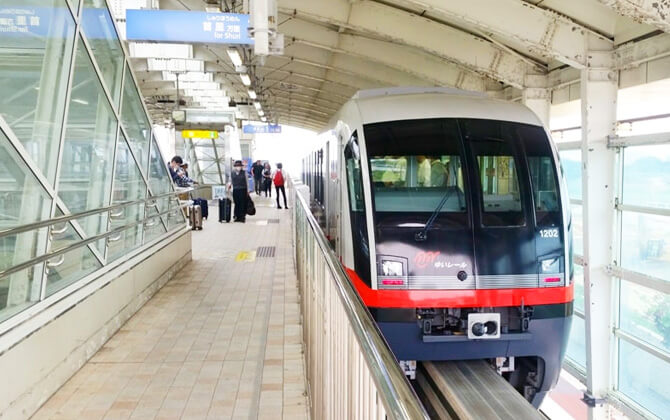
Timetable information is available at stations. At Naha Airport Station, for example, passengers can check departures for Platform 1 and Platform 2, and official timetable screens show the next two departures by station and direction.
Please queue in front of ticket machines, gates, elevators, and platform doors. It keeps things moving, especially at busy times.
| Ticket type | Use | Validity |
|---|---|---|
| QR one-way ticket | Single journey | Day of purchase |
| QR 1-day ticket | Unlimited rides | 24 hours from purchase |
| QR 2-day ticket | Unlimited rides | 48 hours from purchase |
| OKICA prepaid IC card | Stored-fare payment | Accepted for travel and reloadable |
Rules
These basic rules help keep the system safe and comfortable for everyone.
- All stations are smoke-free.
- Please avoid using phones in monorail cars, as this may disturb other passengers.
- Do not drop or throw objects onto the tracks or the road below the station.
- Do not step onto the tracks, as this is dangerous and involves high voltage.
- Do not lean against platform doors; step back and wait for the train.
- Please queue in front of ticket vending machines, ticket gates, elevators, and platform doors.
- If you bring a bicycle into a car, fold it or disassemble it and place it in a bicycle bag.
- When boarding, do not stop near the doors; move farther into the car.
Tips
If you are carrying large luggage, use the elevators available at all stations. It makes moving through the system much easier.
For a smoother trip, check the schedule or timetable before you travel, especially if you are heading beyond Shuri. Some trains terminate there, so the next departure is not always the one you want.
When the train arrives, let passengers get off first and keep clear of the doors. Simple, but it helps a lot on busy platforms.
If you are bringing a bicycle, make sure it is folded or disassembled and placed in a bicycle bag before boarding.
Historical Background
Passenger rail in Okinawa goes back much earlier than Yui Rail. Railway lines operated on Okinawa Island from 1914, but some later lost riders to bus services, while others were destroyed during World War II. After the war, reconstruction focused on roads rather than rail, the remaining tracks were removed, and Okinawa became heavily dependent on cars. By the time Okinawa returned to Japan in 1972, traffic congestion in and around Naha had become a major issue.
That same year, the monorail project began to take shape. A law supporting urban monorail construction was passed in 1972, and Naha started seriously considering a new public transport system. A 1973 report by government, prefectural, and city bodies pointed to the need for better transport. Two possible routes were studied, and the Kumoji River alignment was chosen over the Kokusai-Dori option. In 1977, the route plan was finalized and a third-sector operating model was selected. Okinawa Urban Monorail, Inc. was established on September 27, 1982.
The original schedule aimed for an opening in 1987, with an extension to Shuri by 1990, but the project was delayed. City bus routes had to be reorganized, and compensation talks with bus operators continued until 1994. Construction finally began in 1996. The line logo, station names, and the Yui Rail nickname were officially chosen on November 30, 1999, and the trains arrived in August 2002 for testing later that year.
Yui Rail opened on August 10, 2003, becoming the first rail line in Okinawa since World War II and the only public rail system in the prefecture. The first phase connected Naha Airport with Shuri. Later, in August 2011, the operator applied to build a 4.1 km (2.5 miles) extension from Shuri to Tedako-Uranishi in Urasoe City. Permission was granted in January 2012, construction was planned from March 2013, and revenue service on the extension began on October 1, 2019.
Today the line runs from Naha Airport to Tedako-Uranishi over 17.0 km (10.6 miles), serving 19 stations. It remains central to daily transport in Okinawa, linking the airport, central Naha, and Urasoe while also carrying a bit of the island’s postwar rail history.
Future Expansions
The biggest recent expansion was the Urasoe extension, which opened on October 1, 2019 and added four new stations. The line now terminates at Tedako-Uranishi, improving access to Urasoe City and strengthening links toward the Okinawa Expressway network.
Future improvements mentioned in the draft are focused not only on new track but also on operations. As demand increased, plans moved forward for more three-car formations, and three-car service began in 2023.
The system also planned broader acceptance of Suica and other major prepaid transport cards, making payment easier for both visitors and local passengers. At Tedako-Uranishi, parking facilities and a bus terminal were being developed to improve transfers toward northern Okinawa destinations.
Nearby Attractions
Yui Rail is a convenient way to reach many of Naha’s main sights, shopping areas, and transport hubs. The line makes it easier to explore without dealing with road traffic, especially if you are staying near the route.
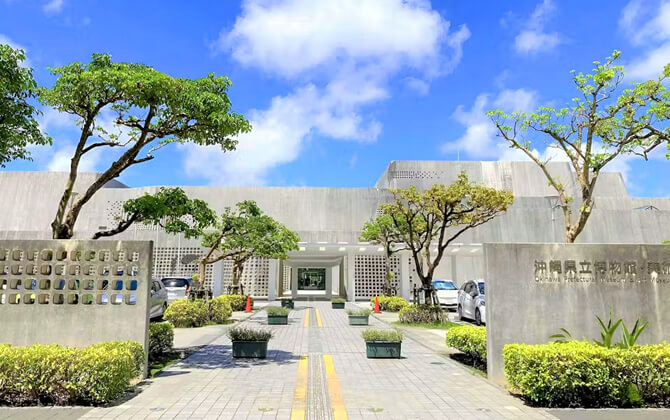
Key stops for sightseeing
- Naha Airport Station — directly connected to the domestic terminal and the most convenient starting point for many visitors.
- Asahibashi Station — direct access to the Naha Bus Terminal for travel beyond the monorail line.
- Kenchō-mae Station — useful for the northern entrance of Kokusai Dori, Naha’s main shopping and dining street.
- Makishi Station — a good base for Kokusai Dori, the Tsuboya Pottery District, and the Makishi Public Market area.
- Omoromachi Station — close to T Galleria by DFS, Naha Main Place, and the Okinawa Prefectural Museum & Art Museum.
- Shuri Station — the gateway to Shuri Castle Park, with local bus access for the uphill trip to the castle grounds.
- Tedako-Uranishi Station — eastern terminus with Park and Ride facilities and bus connections to other parts of Okinawa.
More places worth noting
Other stations also provide access to places such as Okuyama Park, Naminoue Shrine and Naminoue Beach, Sakaemachi Market, Kinjo-cho Stone Pavement Road, and the Urasoe Castle Ruins area.
For a full day out, the line works well for moving between cultural sites, shopping districts, and transport connections with minimal fuss.