The Empire Builder is Amtrak’s daily long-distance intercity train between Chicago and the Pacific Northwest, serving either Seattle, Washington, or Portland, Oregon. The route runs about 2,200 miles (3,540 km) and takes roughly 45 to 46 hours end to end, with one train daily in each direction. West of Spokane, the train splits into Seattle and Portland sections, making it one of the most distinctive routes in the Amtrak system.
| Key | Information |
|---|---|
| Train name | Amtrak Empire Builder |
| Route | Chicago to Seattle or Portland via Spokane |
| Distance | About 2,200 miles (3,540 km) |
| Running time | About 45 to 46 hours |
| Frequency | One train daily in each direction |
| Terminal stations | Chicago Union Station, Seattle King Street Station, Portland Union Station |
| Major scenic areas | Mississippi River, Great Plains, Glacier National Park, Rocky Mountains, Columbia River Gorge, Puget Sound |
| Service began | June 10, 1929 |
Amtrak Empire Builder Map
The Amtrak Empire Builder map shows all available stops. Click on the map to enlarge it or download the Amtrak Empire Builder map in PDF format.
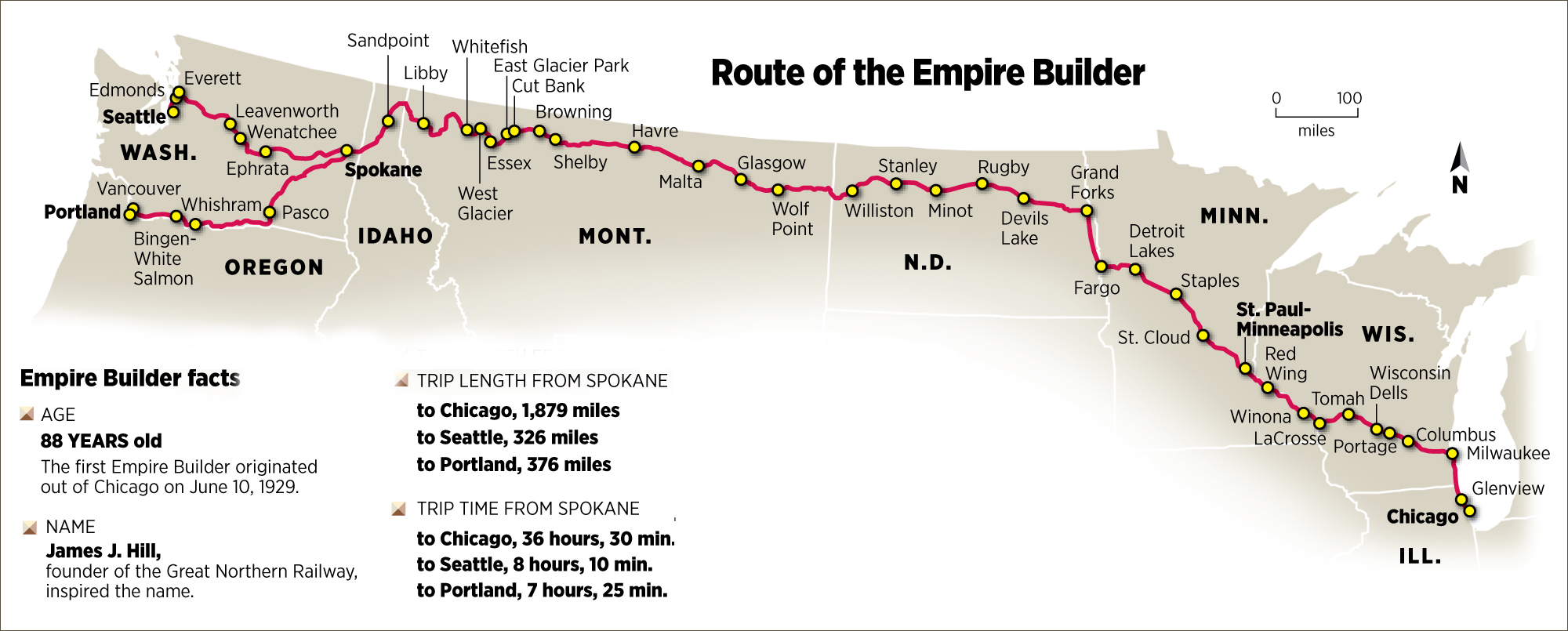
Stations and Major Stops
The Empire Builder stations list covers a long northern route across the United States. A stations map is especially useful because the train has two western branches after Spokane: one toward Portland and one toward Seattle.
| Station | Details |
|---|---|
| Chicago, IL – Union Station (CHI) | Eastern terminal |
| Glenview, IL (GLN) | Intermediate stop |
| Milwaukee, WI – Downtown (MKE) | Major intermediate stop |
| Columbus, WI (CBS) | Intermediate stop |
| Portage, WI (POG) | Intermediate stop |
| Wisconsin Dells, WI (WDL) | Popular stop |
| Tomah, WI (TOH) | Intermediate stop |
| La Crosse, WI – Amtrak Station (LSE) | Mississippi River area stop |
| Winona, MN (WIN) | Intermediate stop |
| Red Wing, MN (RDW) | Intermediate stop |
| St. Paul-Minneapolis, MN – Union Depot (MSP) | Major city stop and transfer point |
| St. Cloud, MN (SCD) | Intermediate stop |
| Staples, MN (SPL) | Intermediate stop |
| Detroit Lakes, MN (DLK) | Intermediate stop |
| Fargo, ND (FAR) | Major intermediate stop |
| Grand Forks, ND (GFK) | Intermediate stop |
| Devils Lake, ND (DVL) | Intermediate stop |
| Rugby, ND (RUG) | Intermediate stop |
| Minot, ND (MOT) | Service stop |
| Stanley, ND (STN) | Intermediate stop |
| Williston, ND (WTN) | Major intermediate stop |
| Wolf Point, MT (WPT) | Intermediate stop |
| Glasgow, MT (GGW) | Intermediate stop |
| Malta, MT (MAL) | Intermediate stop |
| Havre, MT (HAV) | Service stop |
| Shelby, MT (SBY) | Intermediate stop |
| Cut Bank, MT (CUT) | Intermediate stop |
| Browning, MT (BRO) | Glacier National Park gateway station |
| East Glacier Park, MT (GPK) | Glacier National Park gateway station |
| Essex, MT (ESM) | Intermediate stop |
| West Glacier, MT (WGL) | Glacier National Park gateway station |
| Whitefish, MT (WFH) | Major intermediate stop and popular stop |
| Libby, MT (LIB) | Intermediate stop |
| Sandpoint, ID (SPT) | Intermediate stop |
| Spokane, WA – Amtrak Station (SPK) | Split and join point for Seattle and Portland sections |
| Pasco, WA (PSC) | Portland section stop |
| Wishram, WA (WIH) | Portland section stop |
| Bingen-White Salmon, WA (BNG) | Portland section stop |
| Vancouver, WA (VAN) | Major Portland section stop |
| Portland, OR – Union Station (PDX) | Western terminal for the Portland section |
| Ephrata, WA (EPH) | Seattle section stop |
| Wenatchee, WA – Amtrak Station (WEN) | Seattle section stop |
| Leavenworth, WA – Icicle Station (LWA) | Popular Seattle section stop |
| Everett, WA (EVR) | Seattle section stop |
| Edmonds, WA (EDM) | Seattle section stop |
| Seattle, WA – King Street Station (SEA) | Western terminal for the Seattle section |
Popular stops include Chicago, Milwaukee, Wisconsin Dells, Minneapolis-St. Paul, West Glacier, Whitefish, Leavenworth, Portland, and Seattle.
Terminal Stations
The Empire Builder has three end-of-line stations. Chicago is the eastern terminal for both western branches, while Seattle and Portland serve as separate Pacific Northwest terminals.
| Station | Details |
|---|---|
| Chicago, IL – Union Station (CHI) | Eastern terminus for both route sections |
| Seattle, WA – King Street Station (SEA) | Western terminus for the Seattle section |
| Portland, OR – Union Station (PDX) | Western terminus for the Portland section |
Major Intermediate Stations
Major intermediate stations help shape the route, especially for transfers, service stops, and access to regional city transport. Key stops include Spokane, Havre, Minot, Saint Paul, Vancouver, Whitefish, Williston, Fargo, and Milwaukee.
| Station | Details |
|---|---|
| Milwaukee, WI – Downtown (MKE) | Major Wisconsin stop with regional rail connections |
| St. Paul-Minneapolis, MN – Union Depot (MSP) | Major Twin Cities stop |
| Fargo, ND (FAR) | Major North Dakota stop |
| Minot, ND (MOT) | Service stop |
| Havre, MT (HAV) | Service stop |
| Whitefish, MT (WFH) | Major Montana stop and Glacier-area gateway |
| Spokane, WA (SPK) | Split and join point for the Seattle and Portland sections |
| Vancouver, WA (VAN) | Major Portland section stop |
Glacier National Park Gateway Stations
Glacier National Park is one of the route’s biggest draws, and the Empire Builder gives travelers access through nearby Montana stations. East Glacier Park is less than 1 mile (1.6 km) from the historic Glacier Park Lodge, while West Glacier is close to the park entrance area.
| Station | Details |
|---|---|
| East Glacier Park, MT (GPK) | Gateway station near Glacier Park Lodge |
| West Glacier, MT (WGL) | Gateway station near the park entrance area |
| Browning, MT (BRO) | Glacier National Park gateway station |
The park, known as the Crown of the Continent, offers hiking, rafting, biking, fishing, floating, mountain waterfalls, visitor centers, and access to Going-to-the-Sun Road.
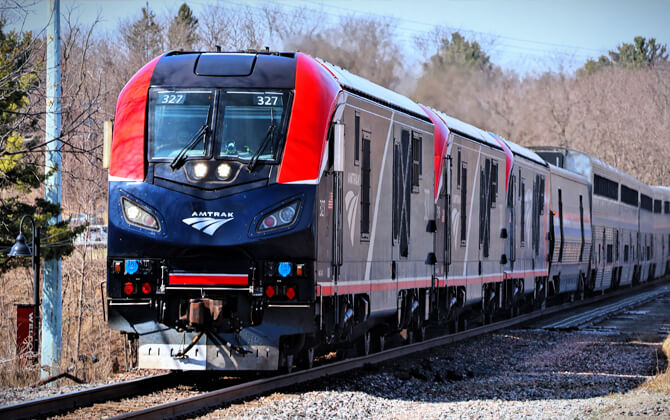
Route Overview
The Empire Builder is a long-distance public transport route linking Chicago with the Pacific Northwest. It crosses Illinois, Wisconsin, Minnesota, North Dakota, Montana, Idaho, Washington, and Oregon, then divides at Spokane for the final run to Seattle or Portland.
The train schedule is built around a three-day, two-night journey. For exact operating hours, opening times, timings today, starting time, last train, and closing time at a specific station, passengers should use the current timetable for their travel date, because times vary by stop and direction.
| Service detail | Timings |
|---|---|
| Frequency | One train daily in each direction |
| Running time | About 45 to 46 hours end to end |
| Route timetable | Chicago to Seattle or Portland, with the split and join at Spokane |
| Best daylight direction | Eastbound is often favored for daylight views of the Montana Rockies and the Mississippi River |
| Seasonal scenery note | Summer offers longer daylight for Glacier National Park and mountain views; January and February can bring dramatic snow scenery near Whitefish |
On board, the route includes Coach Class, sleeping accommodations, a Sightseer Lounge, a cafe, and dining service. The western end is especially scenic, with Puget Sound and the Cascades on the Seattle section and the Columbia River Gorge on the Portland section.
What Type of Train the Empire Builder Is
The Empire Builder is a daily long-distance intercity passenger train operated by Amtrak. It is not a metro, tramway, or local transport service; it is a cross-country rail route designed for overnight travel between major regions.
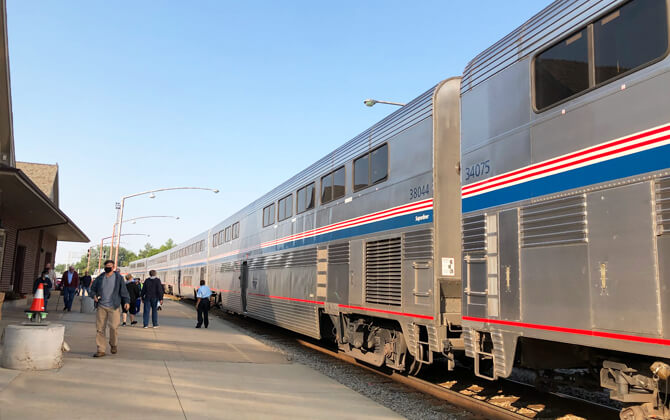
The train uses bilevel Superliner passenger cars west of the Mississippi River, except for the baggage car. Available accommodations include Coach Class and First Class Sleeper Service, with roomettes, bedrooms, bedroom suites, family bedrooms, and accessible bedrooms.
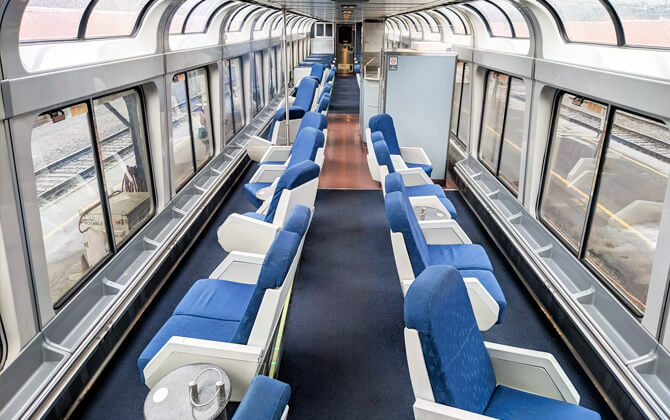
Onboard amenities include the Sightseer Lounge, cafe, dining car, coach seating, and private sleeping rooms. Trains may be powered by Siemens ALC-42 or GE Genesis locomotives.
Where the Train Splits and Joins
Spokane is the key operating point on the Empire Builder route plan. Westbound trains arrive there late at night and split into two sections: one continues to Seattle, and the other goes to Portland.
The Portland section carries the Sightseer Lounge, while the Seattle section carries the Dining Car. Eastbound, the process works in reverse: the Seattle and Portland sections start separately, combine at Spokane during the first night, and continue as one train to Chicago.
This split-and-join pattern returned when Amtrak added the Portland section in 1981. It also reflects an older operating tradition from the Great Northern Railway era.
Tickets, Fares, and Reservations
Reservations are recommended for the Empire Builder, especially for sleeper rooms and summer travel. The fare depends on when you travel, where you travel, and how many people are in your party, so the final ticket price can change by date and accommodation type.
Passengers can choose coach tickets or private sleeper reservations. If you are comparing fare, price, cost, or ticket options, treat the booking process as the practical fare calculator for your trip because availability and prices vary.
Meal service is available on the route, with dinner, breakfast, and lunch offered on both eastbound and westbound departures. On Trains 27 and 28, meal service is not offered between Spokane and Portland; instead, a cold catered meal is provided.
Coach Tickets
Coach tickets are the most affordable way to ride the Empire Builder. Coach seats partially recline, but passengers should be ready to sleep sitting up during the overnight portions of the trip.
Coach cars are typically near the front of the train, so the horn may be more noticeable at night. For a more comfortable two-night journey, a private room is the better option, though it comes at an added cost.
| Service detail | Timings |
|---|---|
| Eastbound Train 8 meal pattern | Dinner, breakfast, lunch, dinner, breakfast, lunch |
| Eastbound Train 28 meal pattern | Dinner, breakfast, lunch, dinner, breakfast, lunch |
| Westbound Train 7 meal pattern | Dinner, breakfast, lunch, dinner, breakfast |
| Westbound Train 27 meal pattern | Dinner, breakfast, lunch, dinner, breakfast |
Coach passengers may be able to buy meals in the dining car depending on availability, but it is best not to rely on that as the only meal plan.
Sleeper Reservations
Sleeper reservations are designed for travelers who want privacy and extra comfort on a long route. Empire Builder sleeping accommodations may include roomettes, bedrooms, bedroom suites, family bedrooms, and accessible bedrooms.
- Roomette
- Bedroom
- Bedroom Suite
- Family Bedroom
- Accessible Bedroom
Private-room passengers receive complimentary meals onboard, priority boarding, lounge access at major stations, and service from a dedicated First Class attendant. Room types and amenities can vary by train, so check the available options before booking.
Book early if you want a specific room type. Roomettes and bedrooms can sell out or become expensive, especially during busy travel periods.
Multi-City Tickets and Stopovers
Amtrak allows up to three stopovers on a one-way ticket. Each stopover may last no more than 23½ hours, counted from the scheduled arrival time of the inbound train to the scheduled departure time of the next train.
To book stopovers, choose multi-city in the booking engine or book by phone with an Amtrak agent. Lodging and meal costs in the stopover city are the passenger’s responsibility.
On the Empire Builder route, Glacier National Park is the standout stopover. Whitefish, Montana, is another practical option with points of interest within walking distance of the station. If you want to get off and re-board later, build that into a multi-city ticket rather than a simple one-way trip.
Amtrak Empire Builder Timetable and Schedule
The Empire Builder is one of Amtrak’s most popular long-distance trains. It travels approximately 2,200 miles (3,540 km) through eight states and serves both Seattle, Washington, and Portland, Oregon. The complete journey takes about 46 hours.
At Spokane, Washington, the train splits into two sections:
- Train 7/8 operates between Chicago and Seattle.
- Train 27/28 operates between Chicago and Portland.
Westbound Schedule (Chicago → Seattle / Portland)
| Station | Approximate Time |
|---|---|
| Chicago, IL | 3:05 PM |
| St. Paul–Minneapolis, MN | 11:13 PM |
| Spokane, WA | 3:49 AM (Day 3) |
| Portland, OR | 11:17 AM (Day 3) |
| Seattle, WA | 11:29 AM (Day 3) |
Eastbound Schedule (Seattle / Portland → Chicago)
| Station | Approximate Time |
| Seattle, WA | 4:55 PM |
| Portland, OR | 4:45 PM |
| Spokane, WA | Late Evening |
| St. Paul–Minneapolis, MN | Morning (Day 3) |
| Milwaukee, WI | Afternoon |
| Chicago, IL | Approximately 3:55 PM |
Schedules may vary slightly depending on the date and operating conditions.
Connections with Other Trains and Local Transit
The Empire Builder connects with Amtrak trains, commuter rail, intercity bus service, and local transit at several major stations. Chicago Union Station offers the broadest set of onward options, making it the route’s main transfer hub.
In Wisconsin and Illinois, Milwaukee and Glenview also provide useful connections to Hiawatha, Borealis, Metra, Pace, Amtrak Thruway, and local transport options. These links make the Empire Builder part of a wider transportation system, not just a stand-alone long-distance train.
Chicago Connections
Chicago Union Station connects the Empire Builder with multiple Amtrak long-distance and intercity trains, including California Zephyr, Cardinal, City of New Orleans, Floridian, Lake Shore Limited, Southwest Chief, and Texas Eagle.
Local and regional connections include Metra lines, Chicago L access at nearby stations, intercity buses such as Greyhound Lines and Megabus, plus CTA and Pace service. For riders using public transport before or after the Empire Builder, Chicago is the easiest transfer point on the route.
Seattle and Portland Connections
The Seattle section uses King Street Station, while the Portland section uses Union Station. Route numbers are 7 and 8 for the Seattle section and 27 and 28 for the Portland section.
West of Spokane, the train operates as two separate sections. Seattle connects riders to Pioneer Square, the Klondike Gold Rush Museum, Elliott Bay, and Pike Place Public Market. Portland connects with downtown sights, parks, public gardens, organic markets, the Willamette River, and access to the Columbia River Gorge.
The Sightseer Lounge is available from Chicago through Portland, making the Portland section especially appealing for viewing the Columbia River Gorge.
Amtrak Thruway and Regional Connections
Amtrak Thruway service extends the Empire Builder beyond the rail route. These connections are usually motorcoach services, but they can also include transit buses, vans, taxis, ferry boats, and commuter rail.
Thruway tickets are usually purchased with train tickets, and transfers are timed for through passengers. Major connection points along the route include Chicago, Milwaukee, Saint Paul, Spokane, Everett, Edmonds, Seattle, and Portland.
Depending on the station, passengers may connect to Amtrak services, commuter rail, light rail, streetcars, local buses, or regional bus operators.
Borealis and Other Regional Alternatives
For travel between Chicago and Saint Paul, the daily Borealis is the most relevant regional alternative. It operates between Chicago and Saint Paul via Milwaukee, follows a complementary schedule, and serves the same stations on that segment.
Borealis began service on May 21, 2024, as an Amtrak Midwest route. It extends the Chicago-Milwaukee Hiawatha service and doubled Amtrak frequency between Milwaukee and Saint Paul.
Choose Borealis for a corridor-focused Chicago-Twin Cities trip. Choose the Empire Builder for a single-seat long-distance journey across the Midwest, northern Plains, Montana, and the Pacific Northwest.
Airport Connections and Local Transfers
The Empire Builder serves major city stations in Chicago, Milwaukee, St. Paul-Minneapolis, Spokane, Portland, and Seattle, along with smaller stations across the route. Airport access is available in or near Portland, Seattle, Whitefish, Minot, Minneapolis, Milwaukee, and Chicago.
Chicago Union Station is the strongest transfer point, with Amtrak trains, Metra commuter rail, Chicago L service, intercity buses, CTA, and Pace. Still, passengers connecting to flights should allow extra time, especially because the full route has a 45 to 46 hour running time.
| Station | Details |
|---|---|
| Chicago, IL – Union Station (CHI) | Major transfer hub with regional public transport and airport-area access in the metro area |
| Milwaukee, WI – Downtown (MKE) | City station with regional connections |
| St. Paul-Minneapolis, MN – Union Depot (MSP) | Twin Cities stop with nearby metro-area airport access |
| Seattle, WA – King Street Station (SEA) | Western terminal with local transfers available in Seattle |
| Portland, OR – Union Station (PDX) | Western terminal with local transfers available in Portland |
Getting Between Major Stations and Nearby Airports
Chicago, Seattle, and Portland are the route’s end stations, and none of these three stations is especially close to the airport. Build in a buffer if you are making a same-day flight connection.
The route can also support local transfers in Milwaukee, Minneapolis-St. Paul, Whitefish, Minot, Portland, Seattle, and Chicago. Because the train crosses a wide part of the country, practical connection planning matters as much as the printed timetable.
Spokane is also important for rail passengers because the Seattle and Portland sections split and join there. If your route plan depends on one western branch, double-check the station and train number before you travel.
Accessibility and Passenger Rules
The Empire Builder offers accessible services and accommodations for passengers with disabilities, but availability varies by train and accommodation type. Reservations are often required for accessible space, and booking early is a smart move because accessible spaces are limited.
Accessible seating is available on all trains for passengers with mobility disabilities or passengers who need accessible features. Wheelchair space is also available for passengers who remain in an occupied wheelchair.
Service animals are permitted in all areas where passengers are allowed. Pets are permitted only on select trains, so travelers with small dogs or cats should review pet rules, carrier requirements, and fare details before booking.
Accessibility Services
Accessible seating, wheelchair space, station assistance, and accessible bedroom accommodations may be available on the Empire Builder. Some accessible bedroom reservations may require certification that the passenger needs one or more accessible features.
Passengers using wheeled mobility devices can request boarding and detraining assistance. Those who need policy modifications because of a disability should request them as far in advance as possible, and no later than 72 hours before departure when practical.
At staffed stations, Amtrak personnel may assist passengers to and from restrooms or with stairs. Courtesy wheelchairs are available at most staffed stations. Passengers should make specific assistance requests when reserving and should arrive at least one hour before departure.
Onboard Etiquette and Safety Rules
Follow crew instructions, keep your ticket and ID with you, and pay attention to safety announcements. Review the safety card in your seatback pocket and note the locations of emergency signs, fire extinguishers, first aid kits, and AED units.
Keep phones on vibrate, use headphones, speak quietly, and do not use the seat beside you for luggage or as a footrest. Smoking and vaping are prohibited anywhere onboard, including restrooms.
Never board or exit a moving train. Watch your step at platforms, stay behind the yellow safety surface, use handrails when walking through the train, and do not cross the tracks.
If an emergency occurs, remain calm and follow directions from Amtrak personnel or first responders. Report suspicious items or activity to Amtrak personnel or Amtrak Police.
Station Facilities and Boarding
Station facilities vary along the Empire Builder route. Selected stations offer checked baggage service, while passengers also have onboard luggage space in overhead racks. Disabled access is available through the lower level of the train and at all stations.
At major stations such as Seattle King Street Station, passengers may find a ticket office, checked bag service for longer trips, and a main waiting room. Boarding can be controlled, and not every entrance may be open at all times.
Boarding is often organized by accommodation type, with sleeping car passengers called before coach passengers. Red Cap service may be available, though it can be limited.
Onboard facilities include coach seating, first class sleeper service, dining, cafe service, and the Sightseer Lounge. In sleeper cars, baggage is stored on the lower level, and shower and toilet facilities are available for overnight travelers.
Brief History
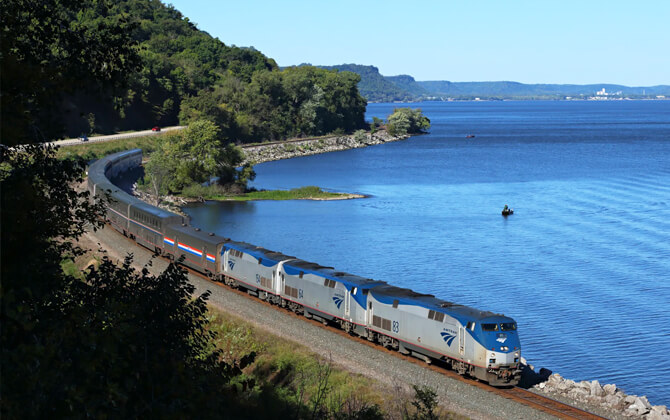
The Empire Builder began service on June 10, 1929, as the Great Northern Railway’s premier Chicago-to-Seattle train. It was named for James J. Hill, Great Northern’s founder, who was known as The Empire Builder for his role in building a successful transcontinental rail network.
After World War II, Great Northern introduced streamlined, diesel-powered trains. In 1947, the Empire Builder returned with modern equipment and a 45-hour schedule between Chicago and Seattle. Dome cars were added in 1955, giving passengers broader views of the Cascades, Glacier National Park, and other scenery.
Great Northern became part of Burlington Northern in 1970, and Amtrak retained the train when it took over most intercity passenger service in 1971. The Empire Builder later became the first national network train to receive Superliner equipment in 1979.
| Key | Information |
|---|---|
| First service | June 10, 1929 |
| Original operator | Great Northern Railway |
| Later private operator | Burlington Northern |
| Current operator | Amtrak |
| Current service pattern | Daily long-distance train between Chicago and Seattle or Portland |
Scenic Highlights Along the Route
The Empire Builder is one of Amtrak’s most scenic long-distance trains. Its route links river valleys, plains, mountain passes, national park gateways, and Pacific Northwest coastlines in a single trip.
Major highlights include the Mississippi River, the Great Plains, Glacier National Park, the Montana Rocky Mountains, the Cascade Mountains, Puget Sound, and the Columbia River Gorge. Summer is especially popular because longer daylight makes it easier to enjoy the views.
Mississippi River and Great Plains
From Minneapolis-Saint Paul, the train crosses the Mississippi River at Hastings, Minnesota, then continues through southeastern Minnesota cities on or near Lake Pepin before crossing the river again at La Crosse, Wisconsin.
Eastbound riders often get strong daylight views along the Mississippi River, one reason that direction is popular with scenery-focused travelers. Farther west, the landscape opens into the Great Plains as the route heads toward Montana.
Glacier National Park and the Rocky Mountains
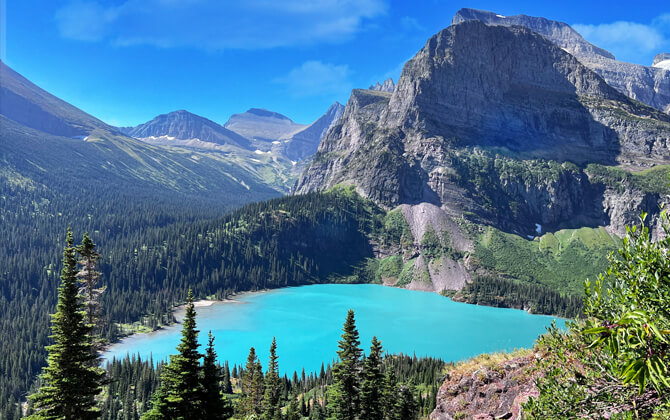
Glacier National Park and the Rocky Mountains are among the most memorable parts of the Empire Builder route. The train serves gateway stations such as East Glacier Park, West Glacier, Browning, and Whitefish, making the park reachable without driving the entire way.
In the park area, travelers can access lodges, trails, Going-to-the-Sun Road, mountain waterfalls, and visitor centers near Apgar, St. Mary, and Logan Pass. Wildlife sightings may include mountain goats, bighorn sheep, eagles, and osprey.
The mountain section is best in daylight. If scenery is your priority, summer and eastbound travel are often the strongest combination.
Cascades, Puget Sound, and Columbia River Gorge
The western end of the route offers two different scenic experiences. The Seattle section follows Puget Sound and crosses the Cascade Range via the Cascade Tunnel and Stevens Pass. The Portland section runs along the Washington side of the Columbia River Gorge.
For Puget Sound views, sit on the left when departing Seattle or on the right on westbound trains. For the Columbia River Gorge, choose the Portland section.
The Sightseer Lounge is a great place to watch the Pacific Northwest scenery unfold. The Seattle section has the dining car, the Portland section has the observation car, and the two sections combine at Spokane.