Metra is the primary commuter rail system for the Chicago metropolitan area, serving Chicago, its suburbs, and Kenosha, Wisconsin. Operated within the Regional Transportation Authority network, it runs 11 lines with 243 stations and is built mainly for longer-distance commuter travel rather than short urban subway trips.
| Key | Information |
|---|---|
| System | Metra commuter rail, reporting mark METX |
| Service area | Chicago metropolitan area, surrounding suburbs, and Kenosha, Wisconsin |
| Lines | 11 commuter rail lines |
| Stations | 243 stations systemwide |
| Downtown terminals | Union Station, Ogilvie Transportation Center, LaSalle Street Station, and Millennium Station |
| Transit role | Regional public transport for commuting, airport access, suburb-to-city trips, and selected local travel |
| Modern identity | The Metra name was adopted in 1985 |
Metra Chicago Rail — Commuter Train Map
A map of the Metra Chicago Rail showing all lines and stations. Click on the map to enlarge it or download the Metra Chicago Rail map in PDF format.
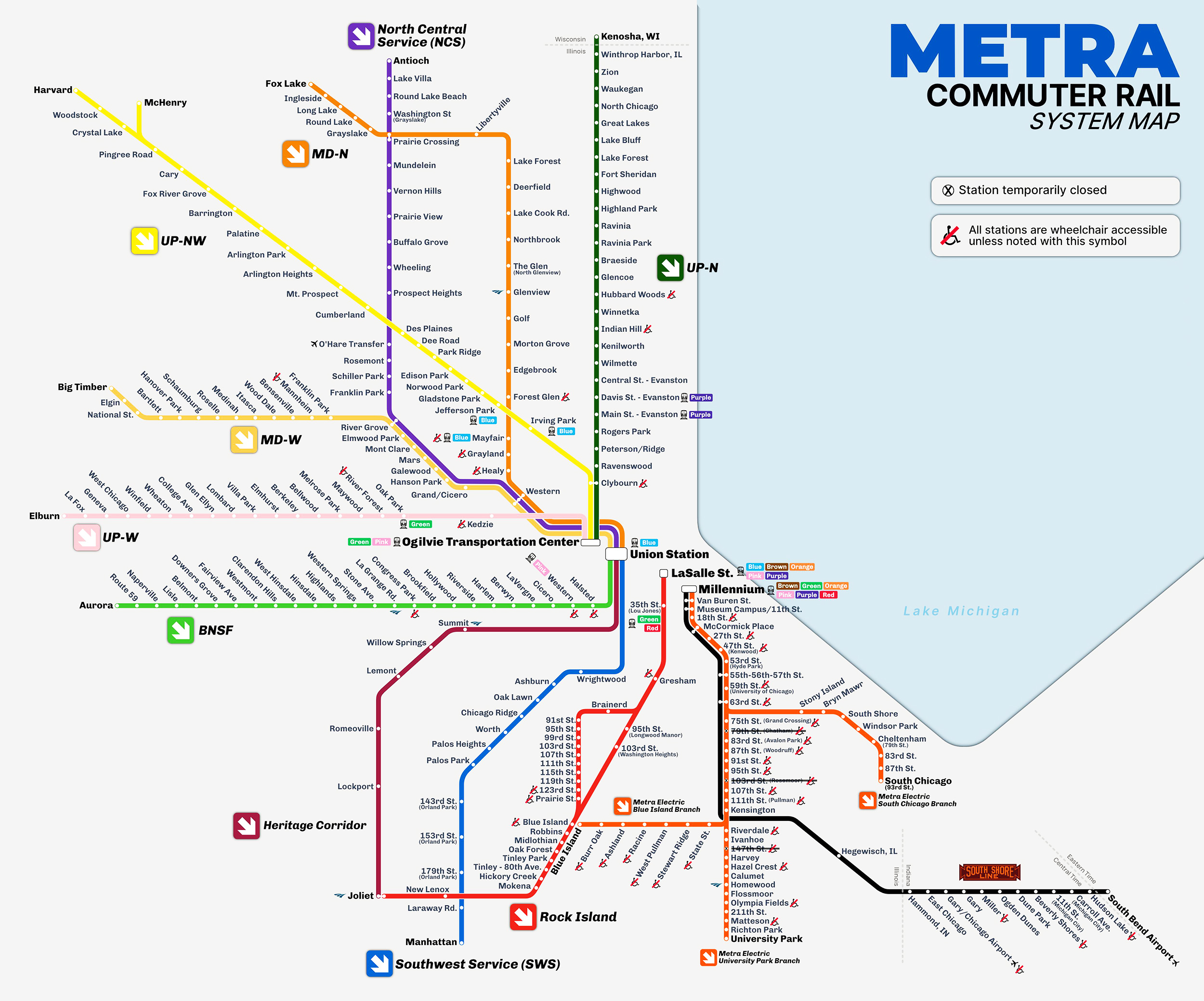
Lines, Routes, and Major Stations
Metra follows a hub-and-spoke route plan, with most trains running between downtown Chicago and suburban corridors. The system is useful for daily commuting, weekend trips, and longer regional journeys where CTA trains or buses do not provide a direct path.
Most routes run inbound to a Chicago terminal and outbound to a suburban terminus, though not every train covers the full route. The BNSF Line is operated by BNSF Railway under a purchase-of-service agreement; the other lines are operated through Metra’s commuter rail corporation.
Metra Lines by Corridor
The stations map and route timetable are organized around four downtown terminals. Distances below are shown in both miles and kilometers where they were available in the source material.
| Station | Details |
|---|---|
| BNSF Line | Union Station to Aurora; Metra’s busiest route, 37.5 miles / 60.4 kilometers. |
| Union Pacific North | Ogilvie Transportation Center to Kenosha, with most trains ending in Waukegan; 51.6 miles / 83.0 kilometers. |
| Union Pacific Northwest | Ogilvie Transportation Center to Harvard, with most trains ending in Crystal Lake; Metra’s longest route at 63.2 miles / 101.7 kilometers, with a weekday branch to McHenry except holidays. |
| Union Pacific West | Ogilvie Transportation Center to Elburn; 43.6 miles / 70.2 kilometers. |
| Milwaukee District North | Union Station to Fox Lake; 49.5 miles / 79.7 kilometers. |
| Milwaukee District West | Union Station to Big Timber Road in Elgin; 39.8 miles / 64.1 kilometers. Weekend and holiday service ends in downtown Elgin. |
| North Central Service | Union Station to Antioch; 52.8 miles / 85.0 kilometers. |
| Heritage Corridor | Union Station to Joliet; 37.2 miles / 59.9 kilometers, with weekday peak-direction service only. |
| Rock Island District | LaSalle Street Station to Joliet, including the Beverly Branch; about 40.0 miles / 64.4 kilometers. |
| Metra Electric District | Millennium Station to University Park; 31.5 miles / 50.7 kilometers, with branches to Blue Island and 93rd Street/South Chicago. |
| SouthWest Service | Union Station to Manhattan; 40.8 miles / 65.7 kilometers, with most trains ending at 179th Street/Orland Park. |
Metra Electric is different from the rest of the system. It uses overhead electric power, has high-level platforms with level boarding, and operates three service branches. Its main line north of Kensington/115th Street is also shared with the South Shore Line.
Metra has also advanced planning for expansion, including SouthEast Service, the Suburban Transit Access Route, and restored service toward Rockford with new stations planned in Belvidere and Rockford.
Downtown Chicago Terminals
Metra trains start from four downtown Chicago terminals. They are all within walking distance of the Loop and sit within about 1.2 miles / 1.9 kilometers of one another, so transfers can be made on foot, by bike, by local transport, or by other city transport options.
| Station | Details |
|---|---|
| Union Station | Terminal for BNSF, Heritage Corridor, Milwaukee District North, Milwaukee District West, North Central Service, and SouthWest Service. Also connects with Amtrak. |
| Ogilvie Transportation Center | Terminal for Union Pacific North, Union Pacific Northwest, and Union Pacific West. |
| LaSalle Street Station | Terminal for the Rock Island District. |
| Millennium Station | Terminal for the Metra Electric District and western terminus of the South Shore Line, located under Millennium Park near Randolph Street and Michigan Avenue. |
Important Suburban Stations
Metra’s stations list stretches across Cook, DuPage, Kane, Lake, McHenry, and Will counties, plus Kenosha in Wisconsin. These stops matter for commuters, reverse commuters, and riders making local trips across the region.
| Station | Details |
|---|---|
| Naperville | Busy suburban station serving a large commuter market. |
| Elmhurst | Important suburban stop with strong commuter demand. |
| Joliet | Major outer terminal and connection point for multiple services. |
| Elgin | Important terminal area on the Milwaukee District West corridor. |
| Fox Lake | Terminal on the Milwaukee District North Line. |
| Harvard | Outer terminal on the Union Pacific Northwest Line. |
| University Park | Outer terminal on the Metra Electric main line. |
| Hyde Park, South Shore, and Pullman | Chicago neighborhood stations with useful city-suburb connectivity. |
| Ravenswood, Oak Park, and Rogers Park-area stations | Key access points for Chicago neighborhoods and inner-ring communities. |
| Ravinia Park | Seasonal stop in the Metra system. |
| Auburn Park | Station under construction on the Rock Island District as of May 2024. |
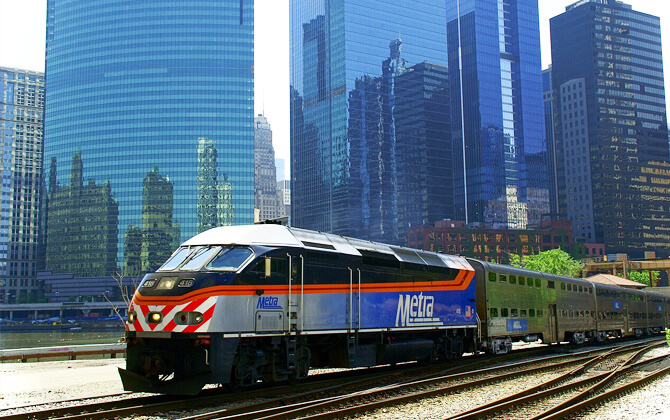
Fares, Tickets, and Ventra App
Metra uses a distance-based fare system, so the ticket price depends on the zones between your starting station and destination. Downtown Chicago is Zone 1. Since February 1, 2024, Metra has used four fare zones instead of the previous 10-zone structure.
The Ventra app combines Metra mobile ticketing with CTA and Pace fare management. You can buy a Metra ticket, store passes, load value, check balances, and view real-time arrival and departure information for public transport across the Chicago area.
Most Metra tickets and passes can be purchased from ticket vending machines where available, and all ticket types can be bought in the Ventra app. If a machine was available at your departure station and you buy a One-Way Ticket onboard instead, a $5 surcharge applies, which is USD 5.
Ticket and Pass Types
- One-Way Ticket: valid for a single trip between selected zones.
- Day Pass: unlimited rides for one calendar day between selected zones; it expires at 3 a.m. the next day.
- Day Pass 5-Pack: five Day Passes between selected zones, available only in the Ventra app and shareable between passengers.
- Saturday or Sunday Day Pass: unlimited travel on Saturday, Sunday, or certain holidays.
- Weekend Pass: unlimited travel on Saturday and Sunday, available only in the Ventra app.
- Monthly Pass: unlimited rides for one calendar month between selected zones.
- Regional Connect Pass: available for Metra Monthly Pass holders in the Ventra app for $30, which is USD 30, and provides unlimited CTA and Pace rides for the same month.
- Regional Day Pass: starting June 20, 2025, available only in the Ventra app and can be added to a Metra Day Pass for CTA and Pace travel.
The cost of each trip depends on your zones and fare product. If you are comparing a one-way fare with a pass, use the official fare information before buying, because prices and pass availability can change.
Reduced Fares and Special Fare Programs
The Regional Transportation Authority coordinates reduced fare and ride-free programs for the region. Eligible riders may include seniors, customers with disabilities, Medicare cardholders, low-income riders with an Access card, K-12 students, and active duty military personnel.
Older adults age 65 and over who do not qualify for a ride-free program may qualify for a reduced fare permit. People with qualifying disabilities may also apply, usually with proof of disability. Medicare cardholders may be eligible with verification of Medicare status.
Reduced fare permits do not auto-renew. Riders with expired or soon-to-expire permits must reapply. Lost, stolen, or damaged reduced fare cards can also be replaced through the RTA process.
Metra offers reduced fare rides for active duty military personnel with military ID. Active duty military personnel must buy a One-Way or 10-Ride reduced fare ticket from a ticket agent or onboard the train; the discount does not apply to monthly tickets.
CTA allows active-duty U.S. military personnel and qualifying disabled veterans to ride CTA for free. Pace offers free rides to active duty U.S. military personnel in uniform when they see the bus operator.
Schedule and Frequency
Metra schedule details vary by line, direction, weekday, weekend, and holiday. For timings today, riders should check the current timetable before leaving, especially if they need the first train, last train, a connection, or a late return.
Metra’s operating hours are not the same across all lines. Opening hours, opening times, starting time, closing time, and working hours depend on the route and day of travel. Frequency is strongest during weekday rush periods, while off-peak and weekend service can have longer gaps.
The Metra Electric District is one of the most frequent parts of the system and has more trains than any other Metra line. Its train schedule includes main line service to University Park plus branches to South Chicago and Blue Island.
| Service detail | Timings |
|---|---|
| Metra Electric weekday total | 131 trains: 64 inbound and 67 outbound. |
| Metra Electric main line weekdays | 27 inbound trains from University Park, 4 from Homewood, and 3 from Kensington/115th Street; outbound service includes 3 trains to Kensington/115th Street, 4 to Homewood, and 26 to University Park. |
| South Chicago branch weekdays | 20 inbound and 22 outbound trains. |
| Blue Island branch weekdays | 10 inbound and 12 outbound trains. |
| Saturday Metra Electric service | 41 roundtrip trains: 21 on the main line to University Park, 16 on the South Chicago branch, and 4 on the Blue Island branch. |
| Sunday and holiday Metra Electric service | 22 trains: 12 roundtrips on the main line to University Park and 10 trains on the South Chicago branch. |
| Daily branches | Main line and South Chicago branch run daily. |
| Blue Island branch | No Sunday or holiday service. |
| Sunday service pattern | Hourly north of 63rd Street and every 2 hours south of 63rd Street. |
Many Metra Electric express trains run throughout the day in both directions, and weekday and Saturday timetables are unusually similar for a commuter rail line. On other routes, the route timetable may be more peak-focused.
Weekend, and Holiday Service
Weekend and holiday service is generally less frequent than weekday service, and the schedule today can differ a lot by line. Trains may start later, run less often, and close earlier in the evening.
Some route patterns change on weekends. The Milwaukee District West Line runs to downtown Elgin on weekends and holidays, while some services do not operate at all. The Metra Electric Blue Island branch does not run on Sundays or holidays.
Metra also uses reduced or Sunday-style schedules on major holidays. These timetables may bring fewer trains, longer gaps, or canceled trips, so checking service alerts before travel is a smart move.
Weekend fare products are available for longer trips. A Saturday or Sunday day pass gives one passenger unlimited travel on a Saturday, Sunday, or certain holidays, while the Weekend Pass is sold in the Ventra app for Saturday and Sunday travel.
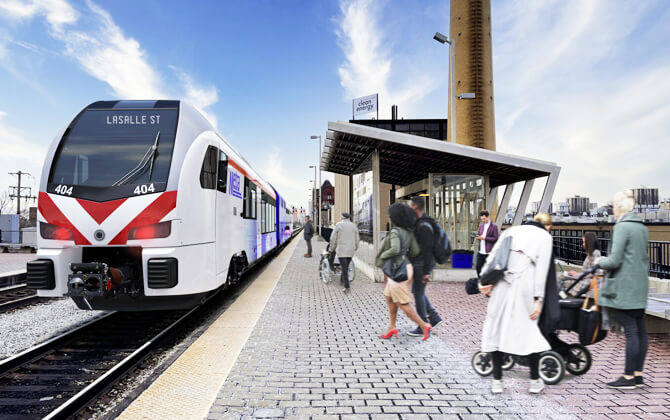
Connections with Other Transit Systems
Metra is part of the wider Chicago transportation network, with connections to CTA trains and buses, Pace suburban buses, Amtrak, the South Shore Line, and selected intercity bus services. The four downtown terminals make it possible to switch between Metra and other local transport in the city center.
Fares are separate between CTA, Metra, and Amtrak. Metra Monthly Pass holders can use regional pass options for CTA and Pace, depending on the pass product and current rules.
CTA Trains and Buses
CTA rail and bus service connects with Metra at downtown terminals and at several transfer points outside the Loop. Useful examples include Irving Park and Jefferson Park Transit Center on the Union Pacific Northwest Line, Evanston Davis Street on the Union Pacific North Line, and Oak Park on the Union Pacific West Line.
- CTA serves Chicago and nearby suburbs with rapid transit and buses.
- Metra links downtown Chicago with suburbs on 11 commuter rail lines.
- CTA and Pace buses connect with many Metra stations.
- Metra is better for longer commuter trips, while CTA is usually better for short city trips.
Pace Buses
Pace buses serve the Chicago suburbs, with many routes connecting directly to Metra stations and CTA services. Major Pace routes generally run daily into the mid-evening, often every 30 to 60 minutes.
You can use a Ventra Card on Pace. For trips that mix CTA, Metra, and Pace, regional trip planning tools can help compare the best path train, bus, or transfer combination.
Amtrak and South Shore Line Connections
Union Station is the main Chicago hub for Metra and Amtrak transfers. Ogilvie Transportation Center is close enough to reach Union Station on foot, and Millennium Station and LaSalle Street Station are also within short downtown walking distance.
The South Shore Line starts at Millennium Station and runs between Chicago and Northwest Indiana, continuing toward South Bend. It shares much of the Chicago portion of the Metra Electric District as far south as 63rd Street.
Passenger transfers between Metra Electric and the South Shore Line are available at shared stations, including 55th-56th-57th Street. At shared Electric District stations, eastbound South Shore trains only pick up passengers, while westbound trains only drop off passengers.
Transfers Between Downtown Terminals
Union Station, Ogilvie Transportation Center, LaSalle Street Station, and Millennium Station are close enough that many riders transfer by walking. This is often the simplest way to change between Metra lines downtown.
Because different lines use different terminals, always confirm your station before travel. A route plan that says Chicago does not always mean the same downtown terminal.
Airport Connections
Metra serves O’Hare International Airport through O’Hare Transfer station on the North Central Service. Midway International Airport does not have a direct Metra station, but it can be reached by connecting to the CTA Orange Line.
Airport trips by Metra require extra attention to the train schedule, because O’Hare Transfer service is limited and weekday-only. For many airport travelers, CTA may be the more direct city transport option.
O’Hare Airport via Metra
O’Hare Transfer station is on the North Central Service, on the northeast side of the airport near Zemke Boulevard and Mannheim Road. It sits just outside the Multi-Modal Facility.
From the terminals, ride the Airport Transit System to the O’Hare Multi-Modal Facility, then connect to Metra. The Airport Transit System also links Terminals 1, 2, 3, and 5, and Pace buses stop at the lower level of the ATS station.
As of February 15, 2024, O’Hare Transfer was served by 12 trains on weekdays, six in each direction. There is no weekend service, so it works best for specific weekday trips rather than flexible airport travel.
The station is 18.6 miles / 29.9 kilometers from Chicago Union Station. Tickets can be purchased from the conductor on the train, and fares are based on Metra’s zone system.
Midway Airport Connections
Metra does not directly serve Chicago Midway International Airport. The practical rail connection is the CTA Orange Line, which runs between Midway and the downtown Loop.
At Midway, the accessible Orange Line station is east of the terminal and connected by an enclosed walking path. Follow signs for CTA Trains or Trains to City.
Normal running time to downtown is about 20 to 25 minutes. Service operates all day except overnight hours, when alternate service is available on the N62 Archer bus.
If you are connecting from Metra, a common route is to ride into downtown Chicago and transfer to the Orange Line. CTA transfers can be made with a Ventra Card, Ventra Ticket, contactless bankcard, or mobile wallet.
Parking at Metra Stations
Station parking is available at many Metra stops, but rules, spaces, permits, and payment methods vary by municipality. Some lots use daily fees, some use permits, and some accept mobile payments.
At Vernon Hills station on the North Central Service, parking includes 680 spaces. Daily parking charges are $1.75 per space, which is USD 1.75. The village also offers a two-month prepaid permit for $55, which is USD 55.
Vernon Hills also has seven long-term parking spaces with a fee of $1.75, or USD 1.75, and a maximum stay of 10 days, excluding Saturdays, Sundays, and holidays. The Passport Parking mobile app is available there and includes a $0.37 transaction charge, which is USD 0.37.
Passport Parking is available at selected stations, including 143rd, 153rd Street, 179th Street, Barrington, Bartlett, Blue Island, Brookfield, Buffalo Grove, Central Street, Chicago Ridge, Cicero, Clarendon Hills, Crystal Lake, Davis Street, Deerfield, Des Plaines, Elmhurst, Glenview, Harvard, Hinsdale, Joliet, Oak Park, Palatine, Schaumburg, Vernon Hills, Wheaton, Wilmette, Winfield, and Worth.
Parking charges per day and monthly permit rules can change by station, so check the station parking details before you drive. Lock your vehicle, take your keys, and keep valuables out of sight.
How to Ride Metra
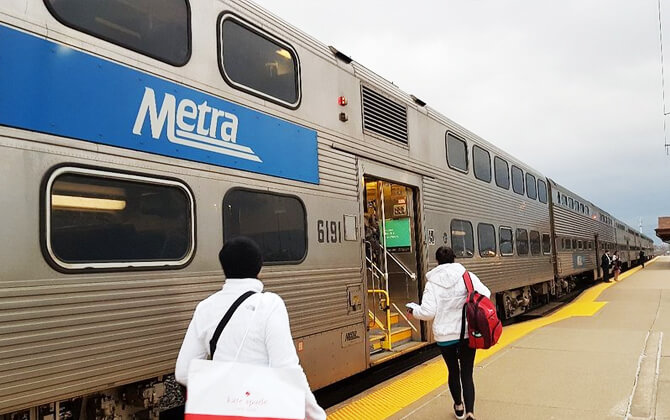
Start by matching your origin and destination on the Metra map, then confirm the line, downtown terminal, timetable, and fare zone. Metra does not work like the CTA subway: you board the train first, and the conductor checks your ticket onboard.
- Choose your line and station pair. Each Metra line has a full name and an abbreviation, such as Union Pacific North and UP-N.
- Check the schedule, including departure time, arrival time, last train, and any service alerts.
- Buy the right ticket or pass before boarding when possible.
- Arrive early, especially at downtown terminals where platforms can be busy or confusing for first-time riders.
- Board the correct train and keep your ticket ready for inspection.
- Listen for announcements and track your stop during the ride.
Zone 1 includes all four downtown terminals and some nearby city stops. As you travel farther from downtown, you move into higher-numbered zones, and the fare usually changes with the distance.
The Ventra app is often the easiest way to buy and store Metra tickets. Open the app, select Metra tickets, choose your line, origin, destination, and ticket type, then pay digitally with an accepted payment method.
Onboard Rules and Passenger Policies
Metra’s onboard rules are designed to keep trains comfortable, safe, and accessible. A little courtesy goes a long way, especially during rush periods.
- Smoking: all Metra trains are smoke-free.
- Pets: small pets in enclosed protective carriers are allowed on weekends only. Carriers may not block seats, aisles, or pathways.
- Trash: use onboard receptacles and keep the train clean.
- Quiet Cars: available on morning inbound and evening outbound rush-hour trains, with limited phone calls, low-volume conversations, and muted devices.
- Alcohol: alcoholic beverages are allowed except during certain events and festivals.
- Lost items: passengers can ask about lost articles at the downtown terminus for their line or by phone.
- Baggage: there is no checked baggage. Bags must not block aisles or seats.
Quiet Cars are marked with decals and signage. Conductors may step in when needed, but the policy also depends on passengers keeping noise down themselves.
Bikes and scooters are allowed on all trains when space is available. Riders must be able to carry them on and off without motor assistance, and large or heavy e-bikes and e-scooters may be restricted under safety rules.
Monthly permit and daily fee parking are available at many stations, but Metra does not administer most parking lots. Local municipalities or parking contractors usually manage them.
Tips and Accessibility
All Metra train lines are fully accessible, and most stations are fully or partially ADA accessible. Before traveling, confirm whether your station is fully accessible, partially accessible, or not accessible.
Accessible features can include ramps, elevators, clearer pathways, tactile warning strips, accessible parking, and accessible restrooms where available. Train schedules identify accessible stations with the ADA access symbol.
Boarding assistance depends on the line. On the Metra Electric Line, all cars are accessible and conductors use a bridge plate to close the platform gap. On other lines, each train has at least one lift-equipped railcar marked with the International Symbol of Accessibility.
If you need to use a lift, stand at least five feet / 1.5 meters from the platform edge and wait for the conductor’s instructions. Passengers who are deaf or hard of hearing may want to tell the conductor their stop when boarding or during ticket collection.
Service animals are permitted on Metra and may ride in any open car. Accessible seating areas are available on accessible railcars, and some cars have accessible restrooms nearby.
Brief History of Metra
Chicago has been a major rail hub since the 19th century, and commuter rail service in the region dates back to lines that opened in the 1850s, including the Illinois Central Railroad in 1856.
By the mid-1970s, many private railroads operating commuter trains were under financial pressure. The Illinois General Assembly created the Regional Transportation Authority in 1974 to fund and plan regional transit operations, including commuter rail.
In 1983, the RTA reorganized commuter rail into a new Commuter Rail Division, and the board first met on June 8, 1984. The Metra name was adopted in 1985 to give the region’s commuter rail network a single identity.
Metra later added the North Central Service in 1996, extended several routes in the 2000s, and invested in rolling stock, stations, tracks, signals, bridges, and support facilities. Today it remains a core part of transportation in Chicago and the surrounding suburbs.
Future Plans and Service Improvements
Metra’s near-term plans focus on funding, fares, and keeping service stable. The Metra Board approved a proposed US$1.1 billion budget that includes fare increases next year, the first across-the-board fare increase since 2018.
Because fares must be rounded to the nearest quarter for onboard collection, Metra says increases would range from 13% to 15%, depending on the fare product and zones traveled.
Metra has warned that the 2027 and 2028 outlook could be much more difficult without state legislative support. Without new funding, the plan could include up to 40% in service cuts and layoffs.
Capital work continues across the network. The 2026 construction program includes work at 20 stations, replacement of 22 grade crossings, bridge repairs, crosstie replacement, and upgrades to track, electrical, signal, and communications systems.
Metra is also preparing the Metra Electric Line for future service expansion, including signal and interlocking improvements. Bridge rehabilitation is a major priority because more than half of Metra’s 446 bridges are over a century old, and the agency has developed a 20-year plan to replace or rehabilitate 210 bridges.
Most construction work is planned for off-peak hours and weekends to reduce rider impact, although some delays may still happen.
Nearby Attractions and Destinations by Metra
Metra can be a practical way to reach suburban attractions, festivals, parks, sports, and local events without driving or paying for downtown parking. It is especially useful when a destination sits near one of the commuter rail stations.
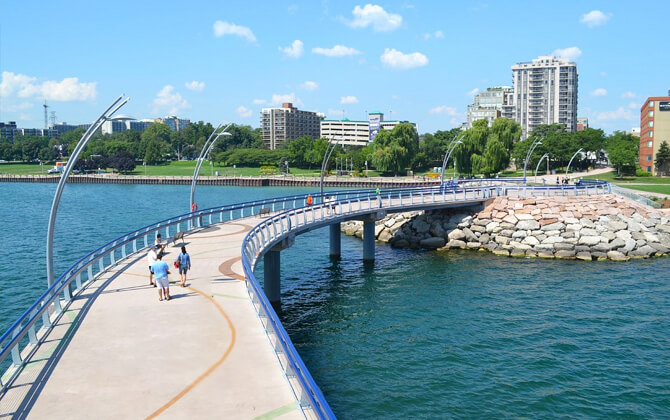
- La Grange Road: ride the BNSF Line to La Grange for the annual Pet Parade.
- Union Station or Ogilvie Transportation Center: head downtown for Wrigley Field and a Cubs game connection.
- Hinsdale: visit Burlington Park for Uniquely Thursdays, a summer evening series with music, vendors, and a beer and wine tent.
- Oak Park: see outdoor Shakespeare and classic works at Oak Park Festival Theatre in Austin Gardens.
- Lombard: visit Lilacia Park during Lilac Time, with seasonal events centered on lilacs, tulips, and free park admission.
- Hollywood: reach Brookfield Zoo by taking the BNSF Line to the Zoo Stop and walking two blocks northeast.
- Elmhurst: take the Union Pacific line to the annual Memorial Day Parade and post-parade military ceremony in Wilder Park.
FAQ
These quick answers cover common Metra questions for visitors, commuters, and first-time riders.
Is Metra the same as the Chicago subway?
No. Metra is Chicago’s commuter rail system, while the Chicago subway is part of the CTA rapid transit network.
Metra mainly connects downtown Chicago with the suburbs on 11 rail lines. CTA is usually better for frequent city travel, while Metra is designed for regional trips and longer commuter runs.
Can I use a Ventra Card or app on Metra?
Yes, but Metra requires a Metra ticket or pass. The Ventra app lets you buy Metra mobile tickets, while the physical Ventra Card is mainly used for CTA and Pace.
In the app, choose Metra tickets, select your line, origin, destination, ticket type, and payment method. After boarding, activate the ticket and show it to the conductor.
Does Metra run to O’Hare Airport?
Yes. Metra serves O’Hare through O’Hare Transfer on the North Central Service, connected to the airport by the Airport Transit System.
Service is limited and weekday-only. As of February 15, 2024, the station had 12 trains per weekday, six in each direction. For many travelers, the CTA Blue Line is the more direct public transport option.
Does Metra go to Midway Airport?
No. There is no Metra station directly at Midway Airport.
Use the CTA Orange Line for direct rail service between Midway and the Loop. Metra riders can travel downtown first, then transfer to the Orange Line.
Are Metra trains good for tourists?
Yes, especially for trips between downtown Chicago and the suburbs or for attractions near Metra stations. The system has 11 lines and 243 stations, giving visitors useful access beyond the city center.
For short trips inside Chicago, CTA may be more convenient. Metra works best when your destination follows one of its regional rail corridors.
Can I bring a bike, scooter, pet, or luggage on Metra?
Bikes and scooters are allowed on all trains when space is available, but access is first-come, first-served. They must fit within Metra’s size rules and be carried on and off without motor assistance.
Small pets in enclosed protective carriers are allowed on weekends only. Luggage is allowed, but there is no checked baggage, and items must not block aisles, doors, or seats.
How do I know which Metra line to take?
Use the Metra map, stations list, and timetable to match your starting station with your destination. Also confirm the downtown terminal, since Metra lines do not all use the same Chicago station.
Line names and abbreviations are used together, such as Union Pacific North and UP-N. If you are new to Metra, arrive early and check signs, platforms, and departure boards before boarding.
What should I do if my train is delayed?
Check service alerts, station announcements, onboard announcements, and line updates. If the delay happens before you leave, consider alternate transportation.
Some delays are resolved quickly by crews, while others depend on weather, freight traffic, emergencies, or dispatching conditions. During major disruptions, Metra may reduce speeds or use alternate schedules when needed.