Tokyo Metro is a major rapid transit system serving Tokyo and the wider metropolitan area. Operated by Tokyo Metro Co., Ltd., it opened in 1927 as the Tokyo Underground Railway and became the first subway system in Asia. Today the system has 9 lines, 11 routes, 180 stations, and 195.0 km (121.2 mi) of track, making it a core part of public transport, local transport, and city transport in Tokyo.
| Key | Information |
|---|---|
| Operator | Tokyo Metro Co., Ltd. |
| Opened | 1927, originally as the Tokyo Underground Railway |
| Network size | 9 lines, 11 routes, 180 stations, 195.0 km (121.2 mi) |
| Daily ridership | About 6.52 million passengers per day, with approximately 6.84 million passenger trips per day in fiscal year 2024 |
| Service area | Tokyo and the Tokyo metropolitan area, with through-running links to other operators |
| Typical operating hours | About 5:00 AM to midnight |
Metro Map of Tokyo
Map of Tokyo Metro showing different lines. Click on the map to enlarge it or download the Tokyo Metro map in PDF format.
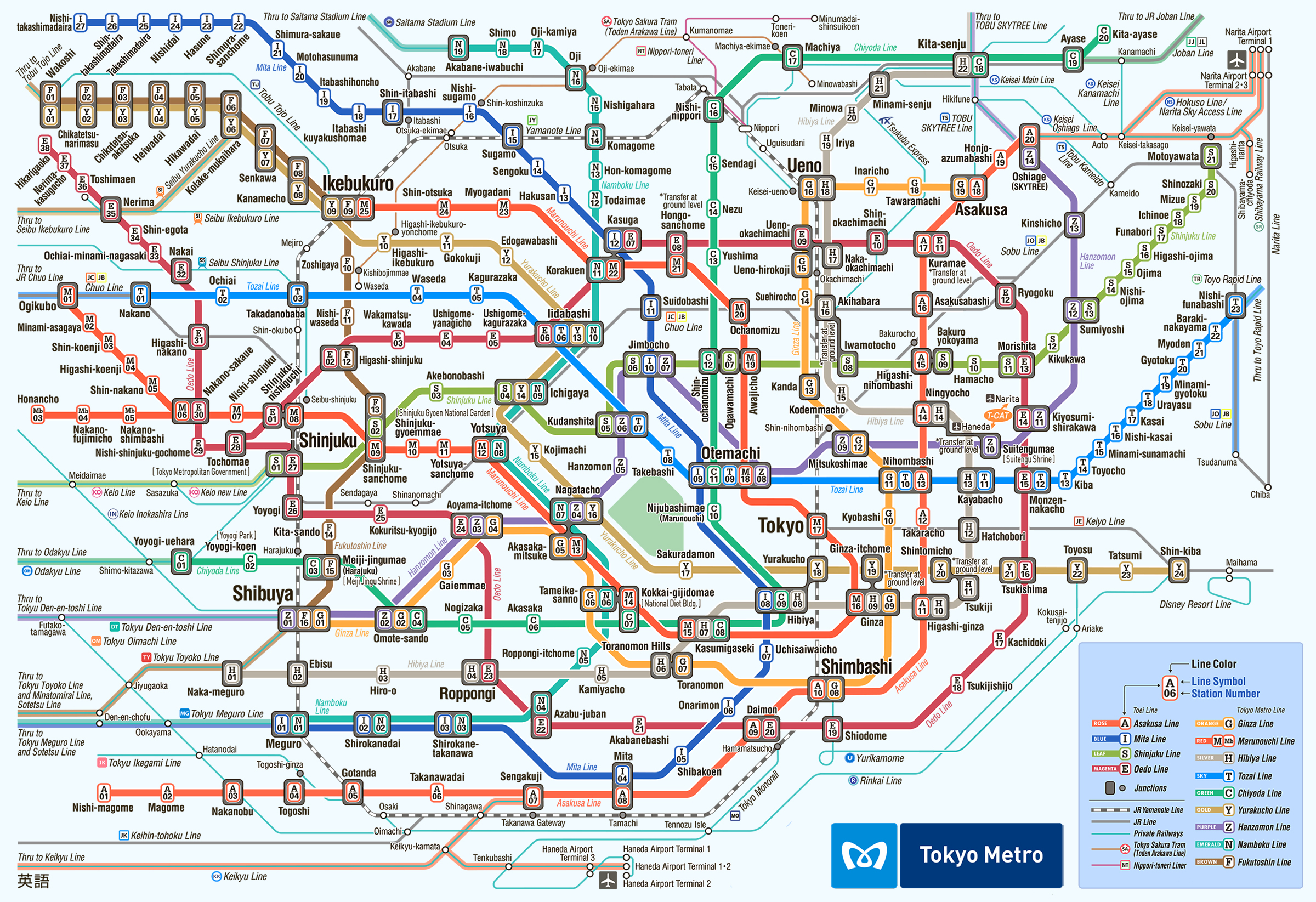
Tokyo Metro’s Lines and Stations
Tokyo Metro uses a clear color-coded route map, station numbers, and multilingual signs to help riders move across the network. The stations map is especially useful when checking a route plan, finding transfer points, or confirming the path train services take through central Tokyo.
Station numbers combine a line letter and a number. The letter identifies the subway line, while the number marks the station on that line. These codes appear in colored circles that match the line color, so it is easier to confirm your direction, count the stations before a transfer, and avoid boarding the wrong train.
The Tokyo Metro stations list covers the Ginza Line, Marunouchi Line, Hibiya Line, Tozai Line, Chiyoda Line, Yurakucho Line, Hanzomon Line, Namboku Line, and Fukutoshin Line. Conventional station and line names are shown alongside the station numbers, which helps both visitors and daily commuters.
| Station | Details |
|---|---|
| Shibuya Station | Major interchange point for Tokyo Metro and other rail services. |
| Tokyo Station | Important central transfer area for passenger movement across the city. |
| Ueno Station | One of the major hubs connected with Tokyo Metro services. |
| Ōtemachi Station | Key interchange station in central Tokyo. |
| Ikebukuro Station | Major transfer hub served by Tokyo Metro routes and other railway operators. |
| Shinjuku Station | Major hub for transfers between Tokyo Metro, JR, Toei Subway, and private railway services. |
Fare and Ticketing Information
Tokyo Metro uses distance-based fares. Regular ticket machines are available at every Tokyo Metro station, and single paper tickets are sold in set fare amounts based on how far you travel.
The fares include a station barrier-free fee of ¥10, about $0.07, for adults. Children aged 6 to 11 pay about half the adult fare after that fee is added.
| Distance | Regular ticket fare | IC card fare |
|---|---|---|
| 1–6 km (0.6–3.7 mi) | ¥180, about $1.20; child ¥90, about $0.60 | ¥178, about $1.19; child ¥89, about $0.59 |
| 7–11 km (4.3–6.8 mi) | ¥210, about $1.40; child ¥110, about $0.73 | ¥209, about $1.39; child ¥104, about $0.69 |
| 12–19 km (7.5–11.8 mi) | ¥260, about $1.73; child ¥130, about $0.87 | ¥252, about $1.68; child ¥126, about $0.84 |
| 20–27 km (12.4–16.8 mi) | ¥300, about $2.00; child ¥150, about $1.00 | ¥293, about $1.95; child ¥146, about $0.97 |
| 28–40 km (17.4–24.9 mi) | ¥330, about $2.20; child ¥170, about $1.13 | ¥324, about $2.16; child ¥162, about $1.08 |
You can use the Tokyo Metro Transfer Planner and Fare/Transfer Search as a fare calculator before you ride. If your ticket price is too low for the distance traveled, pay the difference before exiting. If the boarding station is unknown, the cost is calculated from the terminus.
Regular tickets are valid only on the day of purchase and become invalid after you exit the ticket gate. Refunds are available only for valid, unused tickets; the handling fee is ¥170, about $1.13, or ¥220, about $1.47, when transferring to or from other companies’ trains.
For visitors, the Tokyo Subway Ticket can be a better price if you plan several rides. It covers Tokyo Metro and Toei Subway lines for 24, 48, or 72 hours from the travel starting time. Adult prices are ¥1,000, about $6.67, for 24 hours; ¥1,500, about $10.00, for 48 hours; and ¥2,000, about $13.33, for 72 hours. Child fares are half price.
- Ticket types: regular single ticket, PASMO IC card, Tokyo Subway Ticket, and Tokyo Subway Ticket QR.
- Pass options: 24-hour, 48-hour, and 72-hour subway passes are available for Tokyo Metro and Toei Subway travel.
- Where to buy: ticket vending machines, commuter-pass counters, airports, subway stations, tourist information centers, and other sales points depending on ticket type.
- Day pass note: a pass can be useful when your route includes several subway trips in one day.
Operating Hours of Tokyo Metro
Tokyo Metro operating hours generally run from about 5:00 AM to midnight. These opening hours make the subway useful for early commutes, sightseeing, evening trips, and most daily transport needs, but late-night riders should always check the last train before heading out.
Service is frequent through much of the day. Trains commonly arrive every 2 to 5 minutes, though the frequency, working hours, and exact timings can vary by line, direction, weekday, Saturday, or holiday.
| Service detail | Timings |
|---|---|
| Typical starting time | Around 5:00 AM |
| Typical closing time | Around midnight, with the last train usually before or close to midnight |
| Usual train frequency | Every 2 to 5 minutes on many services |
| Weekends and holidays | Timetable and opening times may differ slightly from weekday schedules |
| Planning advice | Check the route timetable, train schedule, schedule today, and timings today before traveling late or during holidays |
The official timetable is the best place to confirm running time, route details, and whether a line will close earlier than expected on the day you travel.
How to Use Tokyo Metro
Start by choosing the right ticket. For a simple one-way ride, buy a regular ticket from a multilingual vending machine. If you expect to use public transport often, a rechargeable IC card such as PASMO or Suica is easier: tap in at the ticket gate, ride, then tap out at your destination.
If you plan several subway trips, a 1-, 2-, or 3-day subway pass may reduce the total fare. Regular Tokyo Metro and Toei tickets are not the same, and Tokyo Metro lines are not covered by JR Passes, so check your route before buying.
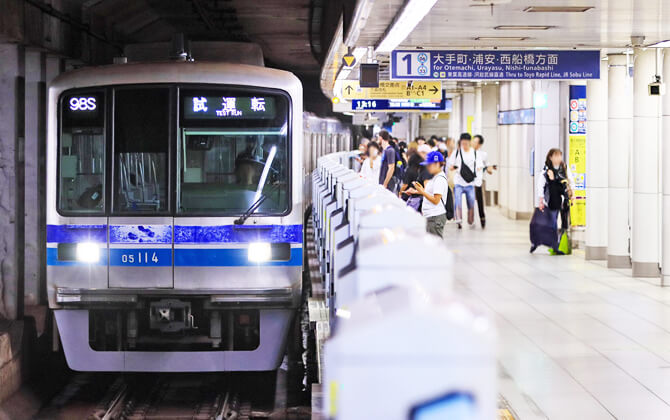
Once inside the station, confirm the line color, station number, and direction on the overhead signs. Keep paper tickets until the end of the trip because you need them to exit. If you miss your stop, you can usually ride back without paying extra; just follow the signs and adjust your route calmly.
For a smoother trip, check the operating hours, train schedule, and route timetable before leaving. Rush hour is busiest in the morning and evening, while many stations offer free Wi-Fi that can help you check routes and travel updates on the go.
Connections to Other Systems
Tokyo Metro is tightly connected with the wider transportation in Tokyo. The system links with JR East, Toei Subway, private railways, buses in the broader city transport network, and through-running services that continue beyond the subway.
Through-running lets trains operate directly onto other companies’ lines. That means many passengers can travel from the suburbs into central Tokyo without changing trains, which is one reason Tokyo Metro works as part of a larger metropolitan rail system rather than a stand-alone subway.
- Chiyoda Line through-runs with JR East’s Jōban Line and Odakyu’s Odawara and Tama lines.
- Tōzai Line connects with JR East’s Chūō-Sōbu Line and Sōbu Main Line, as well as the Tōyō Rapid Line.
- Yūrakuchō Line continues onto the Tōbu Tōjō Line and the Seibu Ikebukuro Line via the Seibu Yūrakuchō Line.
- Hanzōmon Line runs with Tokyu’s Den-en-toshi Line and also links to Tobu lines.
- Namboku Line connects with the Saitama Rapid Railway Line and Tokyu’s Meguro Line.
- Fukutoshin Line has through services with Tobu and Seibu lines, plus Tokyu’s Tōyoko Line and the Minatomirai Line.
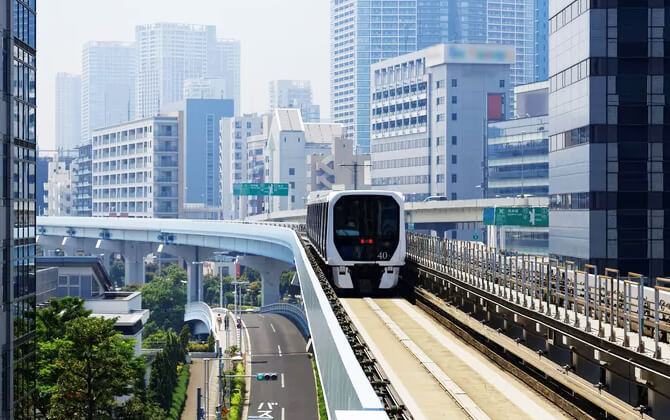
Major transfer points include Shinjuku, Ikebukuro, Shibuya, Tokyo, Ueno, and Ōtemachi. Tokyo also has trams and tramway-style services in its broader transport landscape, but Tokyo Metro itself is a subway system focused on high-frequency urban rail travel.
Airport Connections
Tokyo Metro can be reached from both Narita Airport and Haneda Airport using rail, bus, and combined ticket options. The best choice depends on your arrival airport, destination, and whether you want airport transport bundled with subway travel.
From Narita Airport, common options include the Keisei Skyliner & Tokyo Subway Ticket and the Limousine & Subway Pass. These combine airport access with a Tokyo Subway 24-hour, 48-hour, or 72-hour Ticket for Tokyo Metro and Toei Subway lines.
- Keisei Skyliner & Tokyo Subway Ticket: includes a Tokyo Subway Ticket and Keisei Skyliner limited express tickets for one-way or round-trip travel.
- Limousine & Subway Pass from Narita: includes a Tokyo Subway Ticket and one-way Airport Limousine bus tickets between Narita Airport and downtown Tokyo.
From Haneda Airport, you can use the One-Day Subway Pass from Haneda Airport or the Limousine & Subway Pass. The Keikyu Line, Tokyo Monorail, and airport limousine buses are also practical ways to reach central Tokyo before transferring to Tokyo Metro.
- One-Day Subway Pass from Haneda Airport: includes a return ticket between Haneda Airport and Sengakuji Station on the Keikyu Line, plus a One-day Combination Ticket for Tokyo Metro and Toei Subway.
- Limousine & Subway Pass from Haneda: includes a Tokyo Subway Ticket and one-way Airport Limousine bus tickets between Haneda Airport and downtown Tokyo.
Tips and Rules
Tokyo Metro is clean, orderly, and easy to navigate once you understand the signs, ticket gates, and platform markings. It is also generally safe, but basic awareness and good etiquette make the trip smoother for everyone.
If you arrive by air, you can buy subway tickets at airport counters or from ticket machines after reaching the city. Tourist information counters may also sell the 24-, 48-, and 72-hour tickets. For single trips, use the fare chart, station name search, or station number search before buying a paper ticket.
At the platform, follow the line color, line name, station number, arrows, and illuminated signs. Let passengers exit before boarding, line up at the marked spots, and move into the carriage so the doors stay clear.
Inside the train, keep your phone on silent mode, avoid calls, and keep conversations quiet. Do not eat or drink on commuter trains. Hold backpacks and large luggage close to you, or place items on the overhead rack where possible.
Priority seats are for passengers who need them, including elderly riders, pregnant passengers, people with disabilities, and those traveling with small children. During morning rush hour, some lines may have women-only cars; the platform and carriage signs show where they apply.
Parking Facilities
Tokyo Metro stations are usually served by nearby underground parking facilities rather than easy street parking, especially in central Tokyo. Station parking is typically self-service, time-controlled, and subject to posted vehicle-size rules.
Single-space parking meters require you to park within the marked lines and confirm the indicator shows zero minutes before parking. Payment must be made in advance, and the meter accepts ¥100 coins, about $0.67, only. Do not park a large vehicle across two spaces, and do not exceed the time limit.
Pay-and-display parking also requires correct positioning within the marked space. Pay at the sidewalk machine, collect the ticket, and place it inside the vehicle on the windshield so attendants can check it. These machines accept a ¥1,000 bill, about $6.67; a ¥500 coin, about $3.33; or ¥100 coins, about $0.67.
Parking in Tokyo is often difficult and expensive, so check the posted parking charges, payment methods, time limits, and vehicle restrictions before entering. Standard parking charges per day are not provided for Tokyo Metro stations, so daily cost depends on the facility you use.
History
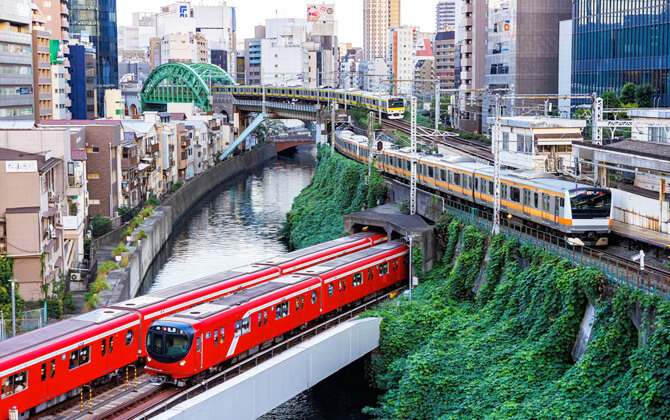
Tokyo Metro history begins with the Tokyo Underground Railway Company, established on August 29, 1920. Construction of the first section between Asakusa and Ueno started in 1925, and the first subway section opened on December 30, 1927. That route became the foundation of today’s Ginza Line.
In 1939, reciprocal through-service began between Asakusa and Shibuya, linking the Tokyo Underground Railway Company Line with the Tokyo Rapid Railway Company. The Teito Rapid Transit Authority, or TRTA, was established on July 4, 1941, and the subway network expanded steadily after World War II.
Growth continued through the 1950s, 1960s, 1970s, and 1980s, with openings and extensions on the Marunouchi, Hibiya, Ogikubo, Tozai, Chiyoda, Yurakucho, Hanzomon, and Namboku lines. Through-services with other railways also became a defining part of the system.
The 1990s and 2000s brought major milestones and serious incidents. The Namboku Line opened in 1991, the Subway Sarin Gas Attack occurred in 1995, and Tokyo Metro Co., Ltd. was created on April 1, 2004 after the privatization of the TRTA.
After 2004, modernization continued. PASMO launched in 2007, the Fukutoshin Line opened in 2008, and station Wi-Fi, digital signage, and other customer services followed. Through-service on the Fukutoshin Line expanded in 2013 with the Tokyu Toyoko and Yokohama Minatomirai Lines.
Recent changes include the opening of Hibiya Line Toranomon Hills Station in 2020, new railway business licenses for extensions in 2022, and through-service via the Sotetsu Shin-Yokohama Line and Tokyu Shin-Yokohama Line in 2023. Tokyo Metro was listed on the Tokyo Stock Exchange Prime Market on October 23, 2024.
| Year | Date | Event |
|---|---|---|
| 1920 | Aug. 29 | Establishment of the Tokyo Underground Railway Company |
| 1927 | Dec. 30 | Opening of the first subway section between Asakusa and Ueno |
| 1941 | Jul. 4 | Establishment of the Teito Rapid Transit Authority, or TRTA |
| 2004 | Apr. 1 | Birth of Tokyo Metro Co., Ltd. |
| 2008 | Jun. 14 | Opening of the Fukutoshin Line |
| 2024 | Oct. 23 | Listed on the Tokyo Stock Exchange Prime Market |
Future Extensions
Tokyo Metro’s future expansion plans focus on two permitted extensions: the Yurakucho Line extension from Toyosu to Sumiyoshi and the Namboku Line extension from Shirokane-Takanawa to Shinagawa. Both are planned for completion in the mid-2030s.
The Yurakucho Line extension is expected to add 4.8 km (3.0 mi) of new track and improve service around the Toyosu waterfront redevelopment area. The Namboku Line extension will add 2.5 km (1.6 mi) and connect Shinagawa with multiple rail lines, including the Tokaido Shinkansen and the under-construction Chūō Shinkansen.
Construction began on both extensions in November 2024. Tokyo Metro has also said new line construction will continue as part of its broader investment strategy.
Separately, the Ōedo Line has a long-discussed future extension beyond Hikarigaoka in Nerima Ward toward Oizumi-Gakuen-cho. This planned route is about 4 km (2.5 mi) and includes three planned stations: Doshida, Oizumimachi, and Oizumi-Gakuen-cho.
The main issue is cost. Estimates rose from about ¥60–70 billion, roughly $400–467 million, to about ¥150 billion, roughly $1 billion. The route beyond Oizumi-Gakuen-cho, including possible future service toward Saitama Prefecture, remains difficult to realize.
Interesting Facts
Tokyo Metro opened in 1927 as the Tokyo Underground Railway, making it the first subway system in Asia. It remains the larger of Tokyo’s two subway operators and carries millions of passengers every day.
The network has 9 lines, 11 routes, 180 stations, and 195.0 km (121.2 mi) of track. Eight lines were inherited from the former TRTA, while the Fukutoshin Line opened later in 2008.
Among Tokyo’s 23 special wards, only Ōta, Setagaya, and Katsushika do not have Tokyo Metro stations or lines, although through-running arrangements still connect travel demand in those areas with other operators.
Tokyo Metro was listed on the Tokyo Stock Exchange Prime Market on October 23, 2024. Even after the public offering, the national government and the Tokyo Metropolitan Government still hold a combined 50% of the shares.
Its extensive through services with other railways help connect central Tokyo with surrounding areas, making the system a key part of daily transportation in Greater Tokyo.
Nearby Attractions
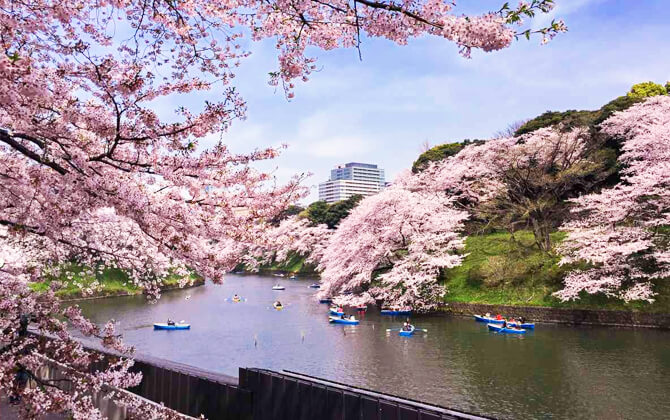
Tokyo Metro puts many central Tokyo attractions within easy reach, especially around Chiyoda and nearby Akasaka. For a short walk, options include Kojimachi Izumiya, Hirakawa Tenmangu Shrine, Oishi Fossils Galery of Mizuta Memorial Museum, and Toyoukeinari Shrine.
For gardens and quieter stops, Hotel New Otani Japanese Garden and Tokyo Garden Terrace Kioicho are close by and easy to combine with a walk through the area. Other nearby places include Shimizudani Park, Kioizaka, Chidoriga-fuchi Park, and Akasaka Palace, which is listed about 20 minutes away.
The area also has hands-on local experiences, including cooking classes such as Taisho Sushi Making Tokyo, Japanese Cooking Class Tokyo, Musubi Cooking Class, and Cooking Sun Tokyo.
- Best for short walks: Kojimachi Izumiya, Hirakawa Tenmangu Shrine, Toyoukeinari Shrine.
- Best for gardens and green space: Hotel New Otani Japanese Garden, Shimizudani Park, Chidoriga-fuchi Park.
- Best for cultural stops: Tokyo Garden Terrace Kioicho, Akasaka Palace, National Engei Hall.
These nearby attractions make Tokyo Metro a practical starting point for sightseeing, gardens, and local experiences in central Tokyo.