The Nagoya Municipal Subway, officially called Nagoya City Rapid Transit, is the rapid transit system serving Nagoya in Aichi Prefecture, Japan. Operated by the Nagoya City Transportation Bureau, it opened in 1957 and has grown to six lines, 87 stations, and a total route length of 93.3 km (58.0 mi). Around 90 percent of the stations are underground. The system covers all 16 wards of Nagoya except Moriyama and also reaches Akaike in Nisshin. It plays a central role in city transport and public transport across Greater Nagoya, working alongside suburban railways, buses, and other local transport options.
| Key | Information |
|---|---|
| Official name | Nagoya City Rapid Transit |
| Common name | Nagoya Municipal Subway / Nagoya Subway |
| Operator | Nagoya City Transportation Bureau |
| Opened | 1957 |
| Lines | 6 |
| Stations | 87 |
| Network length | 93.3 km (58.0 mi) |
| Underground stations | About 90% |
| Coverage | All Nagoya wards except Moriyama, plus Akaike in Nisshin |
| Mascot | Hatchii, introduced in 2002 |
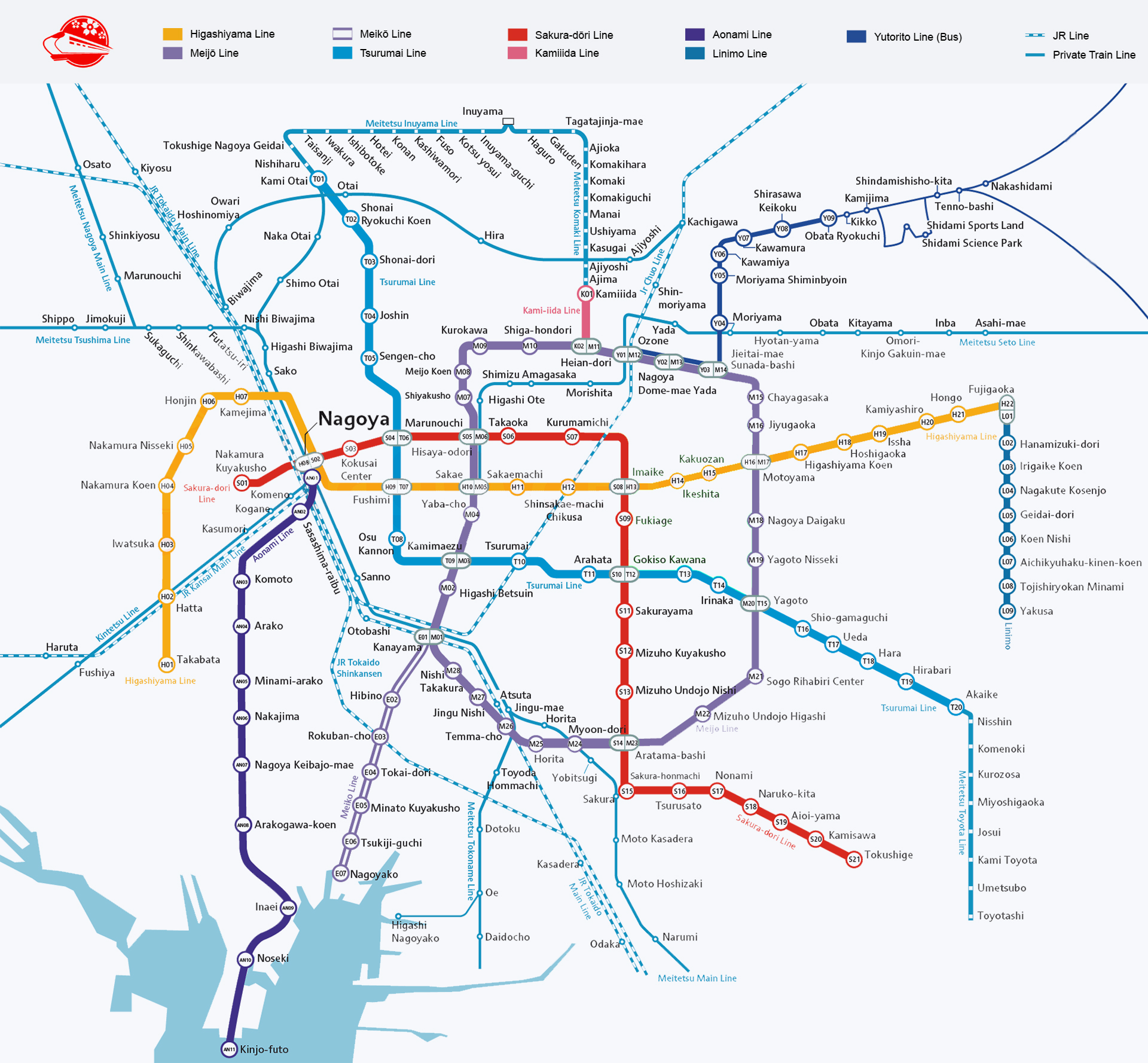
Map of Nagoya Municipal Subway
Map of Nagoya Metro showing different lines. Click on the map to enlarge it or download the Nagoya Metro map in PDF format.
Lines and Stations
The Nagoya subway system has 87 stations across 93.3 km (58.0 mi). The first part to open was on the Higashiyama Line, with Sakae Station and Fushimi Station entering service on November 15, 1957. Today, the network reaches all 16 wards of Nagoya except Moriyama-ku, and Akaike Station in Nisshin is the only station outside the city.
There are six lines in the system: Higashiyama Line, Meijo Line, Meiko Line, Tsurumai Line, Sakura-dori Line, and Kamiiida Line. Some services are operationally linked. The Meiko Line and Meijo Line partly run as a combined service, while the Kamiiida Line and Tsurumai Line connect with Meitetsu lines through through services.
Line summary
| Station | Details |
|---|---|
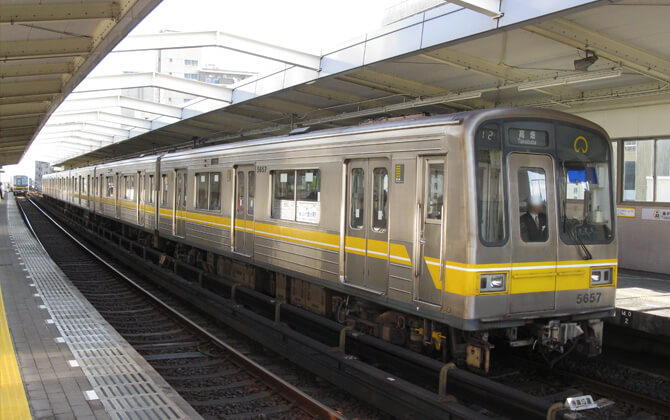
| Higashiyama Line | 22 stations; 20.6 km (12.8 mi); first opened 1957; last extension 1982; route from Takabata to Fujigaoka |
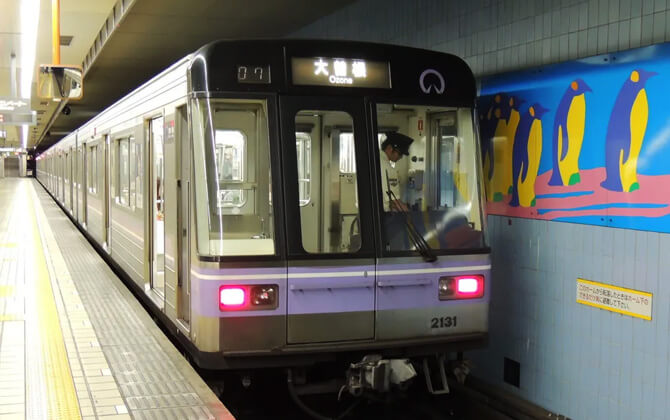
| Meijo Line | 12 stations; 8.9 km (5.5 mi); first opened 1965; last extension 1971; route from Kanayama to Ozone via Sakae |
| Meiko Line | 7 stations; 6.0 km (3.7 mi); first opened 1971; no later extension listed; route between Kanayama and Nagoyako |
| Tsurumai Line | 20 stations; 20.4 km (12.7 mi); first opened 1977; last extension 1993; route from Kamiotai to Akaike |
| Sakura-dori Line | 21 stations; 19.1 km (11.9 mi); first opened 1989; last extension 2011; route from Taiko-dori to Tokushige |
| Kamiiida Line | 2 stations; 0.8 km (0.50 mi); first opened 2003; no later extension listed; route from Kamiiida to Heian-dori |
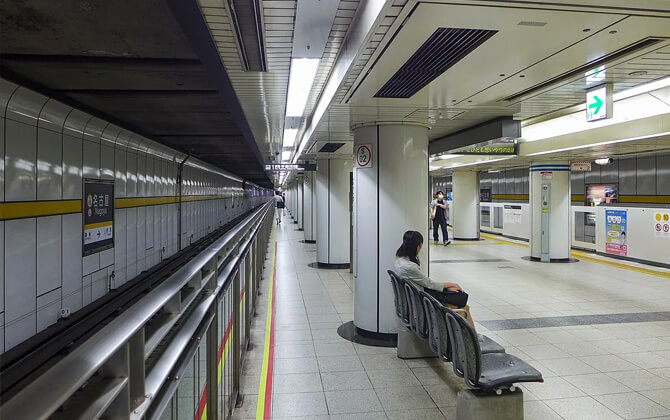
For a quick route plan, the Higashiyama Line is one of the most useful cross-city lines, while the Meijo Line works as a loop and helps with transfers. Major interchange stations include Nagoya, Kanayama, Sakae, Fushimi, and Ozone. Nagoya Station links the Higashiyama and Sakura-dori lines with JR Central and other railways, so it is one of the key points on any stations map or stations list.
Station numbering was introduced in 2004. On January 4, 2023, four stations were renamed: Nakamura Kuyakusho became Taiko-dori, Shiyakusho became Nagoyajo, Temma-cho became Atsuta Jingu Tenma-cho, and Jingu Nishi became Atsuta Jingu Nishi.
Prices, tickets, and cards
Nagoya Subway fare is distance-based. Adult one-way ticket price ranges from 200 yen (about $1.32) to 340 yen (about $2.25), while child fares start from 100 yen (about $0.66). If you plan several rides in a day, a pass can reduce total cost.
Main ticket options include the Nagoya City Bus & Subway 1-Day Ticket, the Nagoya Subway 24-Hour Ticket, and the Weekend Eco Ticket. There is also a bus-only day pass and a separate pass for the Me~guru sightseeing bus. Some special tickets may include discounts at tourist attractions when shown on entry.
MANACA is the main transport card in Nagoya. It works as both a ticketing card and e-money card and can be used on the subway, city buses, Me~guru bus, Meitetsu trains, the Aonami Line, and the Yutorito Line. You simply tap in and out. TOICA is also sold locally, and other major IC cards such as Suica, ICOCA, and SUGOCA are usable in compatible areas.
MANACA and TOICA each cost 2,000 yen (about $13.23), including a 500 yen deposit (about $3.31) and 1,500 yen in stored value (about $9.92). Cards can be purchased at subway ticket vending machines.
If you transfer between a city bus and the subway within 90 minutes, you may receive a discount of 80 yen (about $0.53) for adults and 40 yen (about $0.26) for children. MANACA also earns mileage points that can later be used toward subway or bus fare.
| Ticket | Adult | Child | Validity |
|---|---|---|---|
| Nagoya City Bus & Subway 1-Day Ticket | 870 yen (about $5.75) | 430 yen (about $2.84) | Every day |
| Nagoya Subway 24-Hour Ticket | 760 yen (about $5.03) | 380 yen (about $2.51) | Every day |
| Weekend Eco Ticket | 620 yen (about $4.10) | 310 yen (about $2.05) | Saturdays, Sundays, public holidays, and the 8th day of each month |
| Bus 1-Day Ticket | 620 yen (about $4.10) | 310 yen (about $2.05) | Every day |
| Me~guru Sightseeing Bus 1-Day Ticket | 500 yen (about $3.31) | 250 yen (about $1.65) | Tuesday to Sunday |
Tickets and cards are available at subway station counters and machines, the i Center at Oasis 21, the Kanayama Tourist Information Center, and other listed sales points. If you want a quick fare calculator in practice, the easiest method is still checking the fare chart at the station or using an IC card.
Schedule, calendar, and timetables
The Nagoya Municipal Subway runs every day and is practical for both daily trips and sightseeing. The source material does not provide full systemwide operating hours, opening hours, opening times, working hours, starting time, closing time, last train information, or timings today by line. It does make clear that timetable details vary by line, direction, and station, so checking the exact train schedule for your station is the best approach.
For many trips, choosing the right ticket or pass matters more than carrying a printed route timetable. Several ticket options are organized around the day or travel period and can make planning easier.
| Service detail | Timings |
|---|---|
| Subway network | Runs every day; exact timetable, schedule today, and train schedule depend on line, direction, and station |
| Tsurumai Line timetable | Source material notes frequent daytime departures and service into the late evening |
| Me~guru sightseeing bus schedule on weekdays | One bus every 30 to 60 minutes |
| Me~guru sightseeing bus schedule on weekends and holidays | One bus every 20 to 40 minutes |
| Me~guru operating days | Tuesday to Sunday; if Monday is a holiday, it does not operate on the following weekday |
Useful ticket options by date and time include the Weekend Eco Ticket for Saturdays, Sundays, public holidays, and the 8th of each month, the Nagoya Subway 24-Hour Ticket, the Nagoya City Bus & Subway 1-Day Ticket, and the Nagoya City Bus 1-Day Ticket.
Tickets and passes are sold at many locations, including the i Center at Oasis 21, the Kanayama Tourist Information Center, ticket counters at subway stations, stationmaster offices, Manaca ticket machines, selected special ticket machines, city bus offices, Transportation Bureau Service Centers, and some commuter ticket sellers. Some tickets are also available on city buses.
Connections
The Nagoya Municipal Subway is tightly integrated with the wider transport system in Greater Nagoya. Important interchange stations include Nagoya, Kanayama, Sakae, Ozone, Fujigaoka, and Hatta, where passengers can connect with JR Central, Meitetsu, Kintetsu, the Aonami Line, and Linimo.
JR Central connections are especially important at Nagoya and Kanayama. Nagoya Station links directly to the Tokaido Shinkansen and the Tokaido Main Line through underground passageways. Other JR connections include the Chuo Main Line at Nagoya, Kanayama, Tsurumai, Chikusa, and Ozone, plus the Kansai Main Line at Nagoya and Hatta.
Meitetsu connections extend the subway route far beyond the city center. Transfers are available to the Meitetsu Nagoya, Tokoname, Inuyama, Tsushima, Seto, and Toyota lines. The Kamiiida Line works as an extension of the Meitetsu Komaki Line, while the Tsurumai Line has through service with the Meitetsu Toyota Line and Meitetsu Inuyama Line.
Other useful links include the Kintetsu Nagoya Line at Nagoya and Hatta, the Aonami Line at Nagoya, and Linimo at Fujigaoka. Together, these connections make the subway a core part of transportation in Nagoya and the surrounding region.
Connection to the airport
The municipal subway does not have a direct airport route. Chubu Centrair International Airport is about 35 km (21.7 mi) south of the city, so airport access relies on Meitetsu suburban rail rather than the subway itself.
The airport is served by Central Japan International Airport Station on the Meitetsu Airport Line. This station connects directly to Access Plaza and the passenger terminal building without stairs. The fastest option is the μ-SKY Limited Express, with a running time of about 28 minutes between the airport and Nagoya.
For subway users, the main transfer point is Meitetsu Nagoya Station. It connects with the Higashiyama Line and the Sakura-dori Line, making it the key interchange for airport travel.
Some airport trains require a First Class Car Ticket called a μticket if you want to use first class cars on μ-SKY Limited Express, Rapid Limited Express, or Limited Express services. Ordinary cars only need the regular train ticket.
| Station | Details |
|---|---|
| Central Japan International Airport to Nagoya | Use the Meitetsu Airport Line via Meitetsu Nagoya Station; fastest travel time is about 28 minutes on μ-SKY |
Parking near the Metro
The source material does not list station parking locations, parking charges, or parking charges per day near Nagoya subway stations. Instead, it gives contact points for travel and access information.
If you need current details about station access, local transport, or city transport around a station area, the City Bus and Subway Telephone Information Center can help.
- City Bus and Subway Telephone Information Center: 052-522-0111
- ANA International Flights Booking Information: 052-320-4040
These numbers may be useful when checking transport arrangements before you travel.
Tips in Metro Nagoya
Nagoya Subway is generally straightforward to use, especially compared with larger systems like Tokyo or Osaka. For many visitors, it feels simpler and less overwhelming.
Your trip may start at Nagoya Station, a major transport hub shared with JR, Shinkansen, Meitetsu, and Kintetsu services. The subway entrance is not always obvious, so look for the Japanese word 地下鉄 and the smaller English word Subway.
For sightseeing, the Higashiyama Line is handy for central districts such as Fushimi, Sakae, and Osu. The Sakura-dori Line is another useful cross-city route and can feel less crowded on some sections. The Meijo Line, as a loop, is especially convenient when changing lines.
If you use paper tickets, choose the fare by distance rather than by destination. Check the fare chart or stations map near the ticket machines, select the amount, pay in cash, and collect your ticket and change. At the gates, insert the ticket when entering and exiting, and take it back if required.
If you are short on fare, use a Fare Adjustment Machine before leaving the paid area. When transferring between subway lines, follow the Transfer signs. In most cases, you do not need to exit the gates.
For the easiest trip, use MANACA or another compatible IC card. It is quicker, cashless, and simple. If something goes wrong, station staff, the Transportation Bureau Service Center at Nagoya Station, and gate intercoms can help. Even without Japanese, showing your ticket, card, or route plan usually works.
Small mistakes are common and usually easy to fix. Wrong direction, low card balance, or transfer confusion do happen, but the system is designed to be manageable and safe for first-time riders.
History
The history of the Nagoya Municipal Subway begins with rapid population growth in the early 20th century. By 1934, Nagoya had passed one million residents, and the city tramway network was heavily overcrowded. That pushed officials to consider a subway system similar to those in Tokyo and Osaka.
In 1936, Nagoya City announced its first municipal subway plan. It proposed seven lines totaling about 52 km (32.3 mi), to be built in two phases. The project was later shelved because of high construction costs and preparations for the Nagoya Pan-Pacific Peace Exposition. In 1939, a revised four-line plan totaling about 29 km (18.0 mi) was announced, but planning was suspended again after the outbreak of World War II.
Post-WWII expansion
After the war, a new four-line plan totaling about 43 km (26.7 mi) was announced in January 1946 as part of reconstruction and the creation of a high-speed urban railway network. On January 19, 1950, the Ministry of Construction designated about 48.4 km (30.1 mi) of planned route for the Nagoya Reconstruction Urban Planning High-Speed Railway Network.
Construction of the Nagoya-Sakaemachi section began in August 1954, and prototype train testing started in 1956 on a city tram line. The first subway section opened on November 15, 1957, between Nagoya and Sakaemachi, now Sakae. The opening fare was 15 yen for adults and 8 yen for children, and one test ticket was distributed to each household in Nagoya City.
Chronology
- November 15, 1957 – Line 1, now the Higashiyama Line, opens between Nagoya and Sakaemachi.
- June 15, 1960 – Line 1 opens between Sakaemachi and Ikeshita.
- April 1, 1963 – Line 1 opens between Ikeshita and Higashiyama koen.
- October 15, 1965 – Line 2, now the Meijo Line, opens between Sakaemachi and City Hall.
- June 1, 1966 – Station names are changed, including Sakaemachi to Sakae and Fushimimachi to Fushimi.
- March 30, 1967 – Line 1 opens between Higashiyama koen and Hoshigaoka, and Line 2 opens between Sakae and Kanayama.
- April 1, 1969 – Line 1 opens between Hoshigaoka and Fujigaoka, and between Nagoya and Nakamura koen.
- May 1, 1969 – Line 1 becomes officially known as the Higashiyama Line, and Line 2 as the Meijo Line.
- December 10, 1970 – Kamiyashiro Station opens on the Higashiyama Line.
- March 29, 1971 – The Meijo Line opens between Kanayama and Nagoya Port, now the Meiko Line.
- March 30, 1974 – Line 4 opens between Kanayama and Aratamabashi.
- March 18, 1977 – The Tsurumai Line opens between Fushimi and Yagoto.
- October 1, 1978 – The Tsurumai Line opens between Yagoto and Akaike.
- July 29, 1979 – Mutual through service begins between the Tsurumai Line and the Meitetsu Toyota Line.
- November 27, 1981 – The Tsurumai Line opens between Joshin and Fushimi.
- September 21, 1982 – The Higashiyama Line opens between Nakamurakoen and Takahata, completing the line.
- September 6, 1984 – The Tsurumai Line opens between Shonai Ryokuchi Park and Joshin.
- September 10, 1989 – The Sakuradori Line opens between Nakamura-Kuyakusho and Imaike; Hisaya-odori Station opens on the Meijo Line.
- August 12, 1993 – The Tsurumai Line opens between Kami-Odai and Shonai Ryokuchi Koen, completing the line; through service begins with the Meitetsu Inuyama Line.
- March 30, 1994 – The Sakuradori Line opens between Imaike and Nonami.
- January 19, 2000 – Line 4 opens between Ozone and Sunadabashi.
- March 27, 2003 – The Kamiiida Line opens between Heian-dori and Kamiiida; through service begins with the Meitetsu Komaki Line.
- December 13, 2003 – Line 4 opens between Sunadabashi and Nagoya Daigaku.
- October 6, 2004 – The Meijo Line opens between Nagoya-Daigaku and Aratamabashi, completing the line; Line 4 is renamed the Meijo Line and circular operation begins; station numbering is introduced.
- March 27, 2011 – The Sakuradori Line opens between Nonami and Tokushige.
- January 4, 2023 – Station names are changed, including Nakamura-Kuyakusho to Taiko-dori and Shiyakusho to Nagoyajo.
Today, the system includes six lines, 87 stations, and 93.3 km (58.0 mi) of route.
Future Extensions
The available material does not describe any confirmed new subway lines or officially approved near-term network expansion. What it does show is that development has usually happened in phases, shaped by city planning, construction costs, and operational priorities.
Earlier proposals for further expansion existed but were not realized. At present, the clearest future projects in the source material are modernization works rather than extension of the route network.
These include ongoing efforts to elevate parts of the network by viaduct, with the area around Mikawa Chiryu Station expected to be elevated by 2031, and barrier installation work on the Tsurumai Line, which began with Shonai Ryokuchi Koen Station in October 2024 and is targeted for systemwide completion in 2026.
The material also mentions broader redevelopment around Nagoya Station and related transport facilities, but not as a subway expansion project.
Fun Facts
The Nagoya Municipal Subway opened in 1957 and now operates six lines over 93.3 km (58.0 mi), with 87 stations. About 90 percent of the stations are underground, which gives the system a very compact urban character.
The subway is also a major part of the wider rail system in Greater Nagoya. Together with suburban railways, the region has 47 rail lines, and the subway accounts for about 38 percent of daily rail ridership, roughly 3 million passengers.
In 2002, the system introduced Hatchii as its official mascot. Another notable update came on January 4, 2023, when four stations were renamed, including Taiko-dori and Nagoyajo.
The lines also differ technically. The Higashiyama, Meijo, and Meiko lines use standard gauge and 600 V DC third rail power, while the Tsurumai, Sakura-dori, and Kamiiida lines use narrow gauge and 1,500 V DC overhead supply.
One more practical detail: all stations have elevators, and NAGOYA Free Wi-Fi is available at 85 stations, with Kami-Otai and Kami-Iida as the only exceptions.
Nearby Attractions
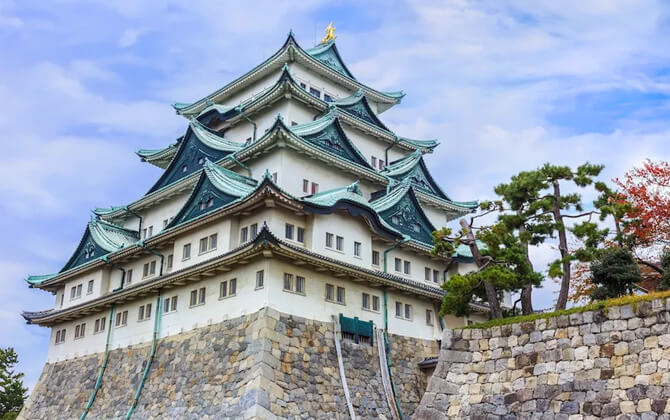
The subway makes it easy to reach several of Nagoya’s best-known attractions, so it is a useful part of any city transport plan.
- Nagoya Castle — A major landmark reached from Shiyakusho Station on the Meijo Line.
- Nagoya Science Museum — Accessible from Fushimi Station on the Higashiyama and Tsurumai lines.
- Nagoya Port Public Aquarium — Reached from Nagoyako Station on the Meiko Line.
These stops are a good starting point if you want to combine sightseeing with efficient public transport around central Nagoya.