The Fukuoka City Subway is the rapid transit system serving Fukuoka, Japan. Operated by the Fukuoka City Transportation Bureau, it has three lines—the Airport Line, Hakozaki Line, and Nanakuma Line—and 36 individual stations when interchange stations are counted twice. The system is a key part of public transport and city transport in Fukuoka, with direct airport access, automatic platform gates at every station, ATO operation with drivers on board as a precaution, and distance-based fare pricing. It is especially handy for transportation in central Fukuoka, with downtown reachable from Fukuoka Airport in about 10 minutes.
| Key | Information |
|---|---|
| System | Fukuoka City Subway |
| Operator | Fukuoka City Transportation Bureau |
| Lines | Airport Line, Hakozaki Line, Nanakuma Line |
| Stations | 36 individual stations, with Hakata and Nakasu-Kawabata counted twice as interchange stations |
| Operating hours | About 5:30 am to 0:25 am |
| Frequency | About every 4 to 8 minutes |
| Airport access | Fukuoka Airport to downtown in about 10 minutes |
| Ticketing | Distance-based fare, ticket machines at all stations, day pass and IC card options |
| IC card | Hayakaken, introduced in March 2009 |
| Safety features | Automatic platform gates at all stations |
Fukuoka City Subway Map
Map of Fukuoka City Subway showing different lines and stations. Click on the map to enlarge it or download the Fukuoka City Subway map in PDF format.

Lines and Stations
The Fukuoka City Subway system has three lines: the Airport Line, the Hakozaki Line, and the Nanakuma Line. The Airport Line runs from Meinohama to Fukuoka Airport, the Hakozaki Line runs from Nakasu-Kawabata to Kaizuka, and the Nanakuma Line runs from Hashimoto to Hakata.
Nakasu-Kawabata is the main transfer station between the Airport Line and the Hakozaki Line. Some Hakozaki Line trains continue onto the Airport Line, so passengers can travel between Kaizuka and Meinohama or Nishijin without changing trains.
For anyone checking a stations map, route plan, or stations list, the network is compact and easy to understand. The subway runs from about 5:30 am to 0:25 am, and train frequency is usually every 4 to 8 minutes.
| Station | Details |
|---|---|
| Airport Line | Route: Meinohama – Fukuoka Airport. Stations: Fukuokakuko, Higashi-Hie, Hakata, Gion, Nakasu-Kawabata, Tenjin, Akasaka, Ohorikoen, Tojinmachi, Nishijin, Fujisaki, Muromi, Meinohama. |
| Hakozaki Line | Route: Nakasu-Kawabata – Kaizuka. Stations: Kaizuka, Hakozaki-Kyudaimae, Hakozaki-Miyamae, Maidashi-Kyudaibyoinmae, Chiyo-Kenchoguchi, Gofukumachi, Nakasu-Kawabata. |
| Nanakuma Line | Route: Hashimoto – Hakata. Stations: Tenjin-minami, Watanabe-dori, Yakuin, Yakuin-odori, Sakurazaka, Ropponmatsu, Befu, Chayama, Kanayama, Nanakuma, Fukudai-mae, Umebayashi, Noke, Kamo, Jiromaru, Hashimoto. |
The subway has 36 individual stations in total, with Hakata and Nakasu-Kawabata counted twice because they function as interchanges. Every station has automatic platform gates, and each one also has its own logo.
Schedule and Frequency
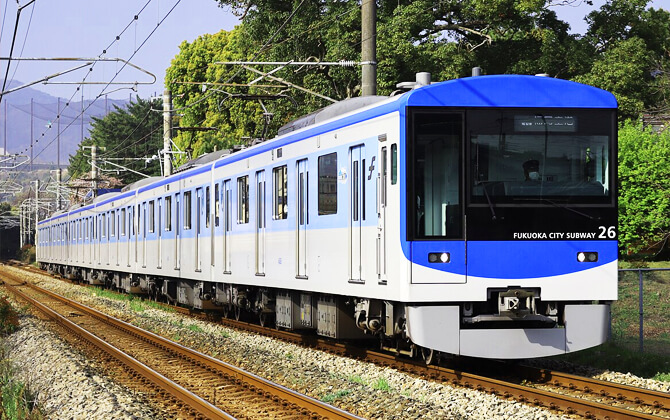
The Fukuoka City Subway operates daily from about 5:30 am to 12:25 am, so its operating hours, opening hours, and working hours cover most of the day. During these opening times, trains usually run every 4 to 8 minutes.
If you are checking timetable information, schedule today details, or timings today before heading out, station-specific information and route timetable tools are available for all three lines. That helps when you need the starting time, running time, transfer details, or the last train.
Nakasu-Kawabata is an important transfer point in the train schedule. You can switch between the Airport Line and the Hakozaki Line there, and some Hakozaki Line trains continue onto the Airport Line, which makes the route more convenient.
| Service detail | Timings |
|---|---|
| Daily operating hours | About 5:30 am to 12:25 am |
| Starting time | About 5:30 am |
| Closing time | About 12:25 am |
| Frequency | Every 4 to 8 minutes |
| Last train | Varies by station and line within the daily service window |
Tickets and Pricing
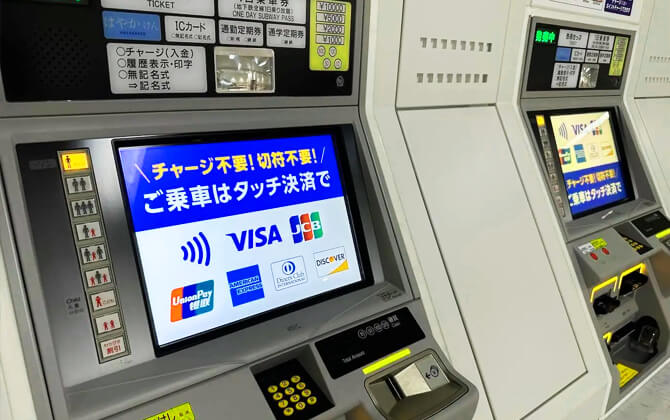
Fukuoka City Subway fare is based on distance traveled. Tickets for the subway, JR Chikuhi Line, and Nishitetsu Kaizuka Line can be bought at ticket machines in all subway stations.
Adult and Child Fares
| Passengers | Details | Fares |
|---|---|---|
| Adults | 12 years and above | Adult fares |
| Children | 6 to 11, inclusive | Child fares |
| Children | 1 to 5, inclusive | Free |
| Infants | Under 1 year | Free |
Toddlers traveling alone, without an adult or child companion, must pay a child fare.
1 Day Pass
The day pass gives unlimited travel on all Fukuoka City Subway lines for one day. It is valid on the Airport Line, Hakozaki Line, and Nanakuma Line, and a ticket bought at a ticket machine is valid only on the date of purchase.
| Passengers | Fares |
|---|---|
| Adult | 640 yen (about $4.28) |
| Child | 320 yen (about $2.14) |
| Handicapped Person Discount | 320 yen (about $2.14) |
1 Day Passes are available at all ticket machines. If you plan several rides in one day, this pass can be a practical way to manage ticket cost and price.
Subway IC Card “HAYAKAKEN”
HAYAKAKEN is the subway smart card. It works on all subway lines and on trains and bus services in Japan that display the IC mark. It can also be used as electronic money in IC-marked stores, and points are earned according to monthly subway fare use.
Card purchase options are 1,000 yen, 2,000 yen, 3,000 yen, 4,000 yen, 5,000 yen, and 10,000 yen, each including a 500 yen deposit.
| Type | Passengers | User | Characteristics |
|---|---|---|---|
| Unregistered | For adults | Anyone | No registration required; cannot be reissued if lost; for adult use only |
| Registered HAYAKAKEN | For adults, children, discounted fares | Only the registered person | Name, gender, date of birth, and telephone number must be registered; can be reissued if lost |
| HAYAKAKEN Commuter Pass | For adults, children, discounted fares | Only the registered person | Commuter pass function is registered on this card; available as a regular or student commuter pass; can be reissued if lost |
You can use the stored fare on the card to buy regular tickets and 1 Day Passes. Machines with the HAYAKAKEN logo and the Customer Service Center handle registered cards, while commuter pass machines are used for pass purchases and renewals.
HAYAKAKEN Points
Points are added on the 10th of the following month based on the total subway fare used during the month. Accumulated points can be charged and then used for passenger fares or as electronic money in specified areas around Japan.
The validity period runs from the month the points are earned until the end of the corresponding month in the following year. If they are not charged within that period, they expire.
One-Station Point
When you use HAYAKAKEN in a one-station area, 60 points are added per ride, or 30 points for child and discounted fares. Points can also be earned if you travel one station beyond your commuter pass area or board one station before it.
The maximum number of point additions per month is ten. Points are added when passing through automatic gates, but not when traveling only within the regular commuter pass area.
1 point = 1 yen.
FUKUOKA TOURIST CITY PASS
The FUKUOKA TOURIST CITY PASS is a one-day pass for unlimited rides on buses, trains, subways, and ferries, with extra benefits at tourist facilities. It is useful if you want local transport beyond the subway alone.
| Area | Adult | Child |
|---|---|---|
| Fukuoka City | 2,500 yen (about $16.72) | 1,250 yen (about $8.36) |
| Fukuoka City and Dazaifu | 2,800 yen (about $18.72) | 1,400 yen (about $9.36) |
This pass is valid for one day only and is not available for the Dazaifu Liner Bus “Tabito.” It can be purchased at designated locations including Hakata Port International Terminal General Information Counter, Fukuoka City Subway Customer Service Centers at Tenjin and Hakata Station, Hakata Station General Information Center, and Fukuoka City Tourist Information Center Tenjin.
Connections
The Fukuoka City Subway connects well with other rail services and is a core part of public transport in the city. At Hakata Station, passengers arriving by Shinkansen can transfer to the subway station below JR Hakata Station and continue easily into central Fukuoka.
The Airport Line links directly with Fukuoka Airport, making access especially simple. From Tenjin or Hakata, the airport is just a short ride away.
Nakasu-Kawabata is another key interchange, where passengers can change between the Airport and Hakozaki Lines. Some Hakozaki Line trains continue onto the Airport Line, allowing direct travel between Kaizuka and Meinohama or Nishijin without a transfer.
There are also useful connections to other rail networks.
- Meinohama Station connects with the JR Chikuhi Line.
- Kaizuka Station connects with the Nishitetsu Kaizuka Line.
The Nanakuma Line runs between Hashimoto and Hakata, while the Airport and Hakozaki Lines form the main interchange pattern through the center. Service runs from around 5:30 am to 0:25 am, with frequent trains through the day.
Connection with the Airport
Fukuoka-kuko (Airport) Station is directly connected to the south side of the Domestic Terminal Building by escalator, so the path train connection from subway to airport is straightforward.
If you are heading to the Domestic Terminal Building, follow the station connection after the ticket gate. From the Domestic Terminal Building ticket gate, use the South Elevator or an escalator to reach Arrivals on 1F, then continue to the airline ticket counters. For Security Checkpoint/South, use the South Elevator or an escalator to Departures on 2F. For Security Checkpoint/North, use the Central Elevator or an escalator to Departures on 2F, then head right.
To reach the International Terminal Building, pass through the Domestic Terminal Building and take the free shuttle bus. From the subway station, use the escalator from Exit 1A or 2A to 1F, go to Bus Stop 1, and board the shuttle. Wheelchair and stroller users are asked to go through the Domestic Terminal Building ticket gate and use the South Elevator to 1F before heading to Bus Stop 1.
Coming from the airport to the subway is simple too. After entering the Domestic Terminal Building, go to the B2F Access Hall, where the subway ticket gate is located. The South Elevator or the escalators connecting directly to the Access Hall are the easiest options. From Arrivals/South, use the South Elevator or escalators; from Arrivals/North, head to the right. If you are departing from the International Terminal Building, take the free shuttle bus to the Domestic Passenger Terminal Building/South Bus Boarding Area, where subway entrances 1A and 1B are nearby.
Please check the terminal map for other routes and barrier-free access information.
Tips and Advice
If you need help with fare, timetable, or lost-and-found issues, the Subway Helpline at Tenjin Station east entrance is available at 092-734-7800 from 8:00 to 20:00 every day.
Foreign-language telephone interpretation is also available at all subway station customer service counters. This free service covers 17 languages and runs from 8:00 to 20:00, seven days a week.
When looking for an entrance, check for the Fukuoka City Subway logo, station number, and station symbol at street level. It makes finding the right station much easier.
Ticket vending machines are available at all stations and offer English instructions. Check the fare on the overhead map first, then press the matching fare button. Keep in mind that the machines do not accept ¥1 or ¥5 coins.
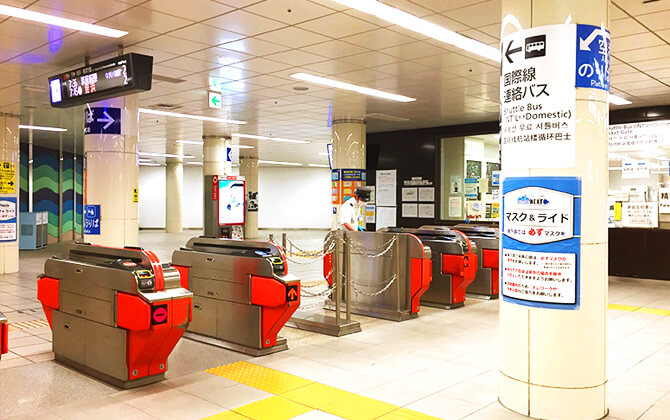
If you are using a regular ticket or day pass, insert it into the automated gate and take it back after validation. If you have a HAYAKAKEN card, tap it firmly on the reader when entering and exiting.
Before boarding, check the destination and departure time on the information boards. Between Meinohama and Tenjin, trains to Fukuoka-kuko and Kaizuka use the same platforms, so a quick check can save you from taking the wrong train.
If possible, avoid peak hours, especially with luggage. Morning and evening trains can get crowded, and coin lockers at major stations can make sightseeing easier.
Basic manners matter too: avoid using your cell phone inside the cars, do not rush onto trains, offer seats when needed, and keep noise down. It is a safe and easy system to use, but a little attention goes a long way.
If you expect to ride often, an IC card is usually the easiest option. HAYAKAKEN is the local card, and IC cards from other cities may also work.
Rules
Fukuoka City Subway provides clear guidance for buying a ticket, entering stations, and riding safely. Follow posted instructions at each station and check the information boards before boarding.
Tickets and IC Cards
Ticket vending machines are available at all stations and can be switched to English. Fare buttons light up according to the amount inserted, and the machines do not accept ¥1 or ¥5 coins. After purchase, collect both your ticket and your change.
If you use a regular ticket or day pass, insert it into the automated gate and retrieve it at the other end. If you use a HAYAKAKEN card, press it firmly against the card reader to open the gate.
Passenger Conduct
- Use cell phones carefully inside subway cars.
- Do not rush onto trains.
- Use seats considerately.
- Do not shout or make unnecessary noise.
Train and Platform Safety
Always confirm the train destination and departure time on the information boards in concourses and on platforms. Between Meinohama Station and Tenjin Station, trains bound for Fukuoka-kuko and Kaizuka stop at the same platforms, so check carefully before boarding.
The last station is also shown on subway cars. Let passengers get off first, follow platform markings, and if the train is crowded, hold the handrails or straps securely.
Fares and Passes
The fare is generally based on distance. Child fares apply to elementary school students aged 6 to 11, while infants aged 1 to 5 may ride free under the stated conditions. A child fare is required for unaccompanied children.
The one-day pass allows unlimited travel on all Fukuoka City Subway lines for one day, and tickets bought at ticket machines are valid only on the date of purchase.
IC Card Use
HAYAKAKEN can be used on all subway lines and on other trains and bus services in Japan that display the IC mark. It also works as electronic money in participating stores. Registered HAYAKAKEN and HAYAKAKEN Commuter Pass cards can be reissued if lost; unregistered cards cannot.
Points and Transfers
Points are earned when riding the subway with HAYAKAKEN, and charged points can be used for fares or electronic money in specified areas. One-Station Point rewards also apply in certain cases, including travel one station beyond a commuter pass area or one station before it.
When connecting to the JR Chikuhi Line or Nishitetsu Kaizuka Line, use the designated line-selection and fare-selection steps on the ticket machine.
Service Help
For fare calculator questions, schedule inquiries, or lost-and-found help, contact the Subway Helpline at Tenjin Station east entrance: 092-734-7800. Telephone interpretation in 17 languages is available at all subway station customer service counters from 8:00 to 20:00 daily, including holidays.
Fun Facts
The Fukuoka City Subway is unusual in Japan because its operator runs subway services only and does not operate any bus lines.
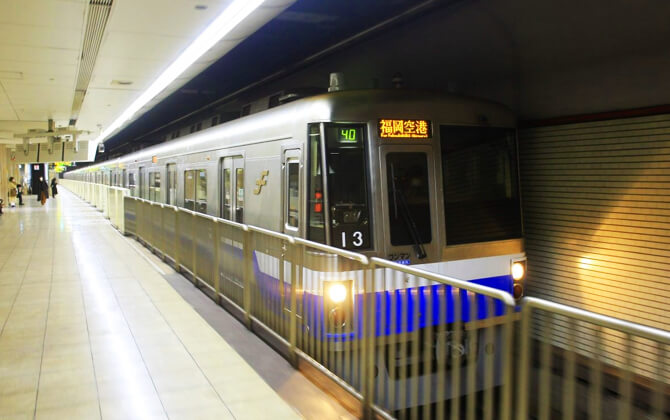
All stations have automatic platform gates, and every line uses ATO operation, with drivers still present as a safety precaution.
One of the system’s standout features is the Airport Line, the only subway line in Japan with a direct connection to an airport.
From Fukuoka Airport, downtown Fukuoka can be reached in about 10 minutes. That makes it one of the most accessible major-city airports around.
Hayakaken, the system’s rechargeable smart card, was introduced in March 2009. Since 2010, it has also been compatible with other major IC cards such as nimoca, SUGOCA, and Suica.
Each station has its own logo, symbol mark, and symbol color, which gives the stations map a distinctive look.
The network consists of three lines, and Hakata plus Nakasu-Kawabata are counted twice because they are interchange stations.
The Nanakuma Line is the newest part of the system, with its first section opening in 2005 and its latest extension opening in 2023.
Fares are distance-based, and tickets can be purchased at machines in every station.
History
The Fukuoka City Subway was developed to ease urban traffic congestion and support high-speed public transport in a growing city. Plans for the system appeared in the Fukuoka City Master Plan on June 20, 1961, and the city council formally approved a high-speed transportation project on December 22, 1973. A local railway license was granted on August 22, 1974, and construction began on November 12, 1975.
The system opened in stages over several decades. The first section, between Muromi and Tenjin on the Airport Line, opened on July 26, 1981. More sections followed in 1982 and 1983 on the Airport and Hakozaki lines. The Hakozaki Line was then extended in 1984 and 1986, and later completed through to Kaizuka. On March 3, 1993, the Airport Line was extended from Hakata to Fukuoka Airport, becoming the first subway line in Japan to connect directly to an airport.
The network expanded again with the opening of the Nanakuma Line between Hashimoto and Tenjin-minami on February 3, 2005. The most recent expansion came on March 27, 2023, when the Nanakuma Line was extended from Tenjin-minami to Hakata.
- June 20, 1961: The Fukuoka City Master Plan includes a proposal for a high-speed circular railway within the city.
- December 22, 1973: The Fukuoka City Council passes a resolution for a high-speed transportation project.
- August 22, 1974: A local railway license is granted for the Meinohama–Hakata section and the Nakasu-Kawabata–Kaizuka section.
- November 12, 1975: Construction begins.
- July 26, 1981: The Airport Line section from Muromi to Tenjin opens.
- April 20, 1982: The Airport Line section from Tenjin to Nakatsu-Kawabata and the Hakozaki Line section from Nakatsu-Kawabata to Gofukumachi begin operations.
- March 22, 1983: The Airport Line section from Muromi to Meinohama and the section from Nakatsu-Kawabata to Hakata open.
- April 27, 1984: The Hakozaki Line section from Gofukumachi to Maidashi-Kyudaibyoinmae begins service.
- March 3, 1985: Hakata station on the Airport Line is moved to Hakata railway station.
- January 31, 1986: The Hakozaki Line section from Maidashi-Kyudaibyoinmae to Hakozaki-Kyudaimae begins service.
- November 12, 1986: The Hakozaki Line section from Hakozaki-Kyudaimae to Kaizuka begins operations.
- March 3, 1993: The Airport Line section from Hakata to Fukuoka Airport opens to the public.
- February 3, 2005: The Nanakuma Line section from Hashimoto to Tenjin-minami opens.
- March 27, 2023: The Nanakuma Line section from Tenjin-minami to Hakata opens.
Future Expansions
The Fukuoka City Subway has kept evolving since opening in 1981, with major extensions already completed on the Kūkō Line, Hakozaki Line, and Nanakuma Line. The latest milestone was the Nanakuma Line extension from Tenjin-Minami to Hakata Station via Kushida Shrine Station on March 27, 2023.
The main planned expansion is a further extension of the Nanakuma Line to Fukuoka Airport. Announced by Mayor Sōichirō Takashima on November 21, 2022, the project is expected to run east from Hakata Station for around 3.0 km (1.9 miles) to the airport’s international terminal. That would finally give the international terminal a rail connection.
Fukuoka City is also preparing service improvements on the Nanakuma Line. New trains are planned between fiscal years 2026 and 2027, with the goal of increasing frequency from 17 to 21 services per hour by fiscal year 2027. The added trains are intended to ease rush-hour crowding after the Hakata extension increased demand.
Further frequency improvements are also planned for the Airport Line and Hakozaki Line, where service levels are expected to rise by March 2025. These upgrades are part of wider efforts to improve capacity across the system.
Sights to See by Train
Fukuoka City Subway is one of the easiest ways to reach many of the city’s best-known attractions. If you are using a day pass, it makes sense to build your route around stations with several nearby sights.
Airport Line
- Hakata Area – Convenient for JR Hakata City, KITTE Hakata, hotels, and the bus terminal. A practical stop for shopping and souvenirs.
- Canal City Hakata – A large commercial complex with shopping, food, and entertainment in one place.
- Tenjin Area – A major downtown district with shopping facilities, Tenjin Underground Shopping Mall, and night-time food stalls.
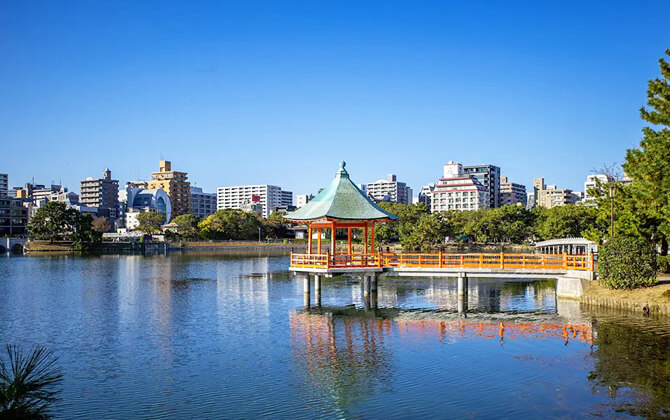
- Ohori Park – A spacious park with walking paths, a pond, and a nearby Japanese garden.
- Fukuoka Art Museum – Located in Ohori Park, with exhibitions ranging from antique to modern and contemporary art.
- Fukuoka Tower – A seaside tower with panoramic views of Fukuoka City and Hakata Bay.
- Fukuoka City Museum – A place to learn about the history and culture of Fukuoka, including the National Treasure Gold Seal.
Hakozaki Line
- Nakasu Yatai Street – Famous food stalls where you can try local dishes such as tonkotsu ramen, oden, yakitori, and gyoza.
- Kawabata Shopping Arcade – A long-established shopping street with local specialties, traditional crafts, and a retro feel.
- Hakozaki Shrine and the Flower Garden – A historic shrine area with a flower garden and special benefits available with the one-day pass.
Nanakuma Line
- Kushida Shrine and Hakata History Museum – A key stop for learning about Hakata’s traditional culture and the Hakata Gion Yamakasa festival.
- Hakata Machiya Folk Museum – A museum focused on the lifestyle and crafts of Hakata in the Meiji and Taisho periods.
- Fukuoka City Zoological and Botanical Garden – A family-friendly attraction combining a zoo and a botanical garden.
- Yusentei Park – A quiet Edo-period Japanese stroll garden known for seasonal scenery.
For first-time visitors, a balanced route using Hakata, Tenjin, Kushida Shrine, and Ohori Park is especially convenient. If food is the priority, add Nakasu in the evening. For history and traditional culture, focus on Kushida Shrine, Hakata Machiya Folk Museum, and Hakozaki Shrine.
Because major stations such as Hakata and Tenjin are well connected, the subway makes it easy to combine sightseeing, shopping, and dining without wasting time.