Public transportation in Hamburg is built around the HVV system, which brings together U-Bahn, S-Bahn, buses, regional trains, and harbour ferries under one network. It is an integrated city transport system that makes getting around Hamburg straightforward for both locals and visitors. Tickets can be used across different modes of transport, and the network is organized into fare rings centered on the Alster Lakes.
| Key | Information |
|---|---|
| Transport authority | hvv |
| Main modes | U-Bahn, S-Bahn, buses, regional trains, harbour ferries |
| Fare structure | Five rings: A, B, C, D, E |
| City coverage | Rings A and B |
| Outer coverage | Rings C, D, and E, up to about 60 kilometres (37 miles) from the center |
| Weekday train operating hours | 4:30 a.m. to 0:30 a.m. the next morning |
| Weekend train service | U-Bahn and S-Bahn run 24 hours from Friday through Sunday |
| Tourist ticket option | Hamburg CARD |
| National pass option | Deutschlandticket: €58 per month (about $63), subscription only |
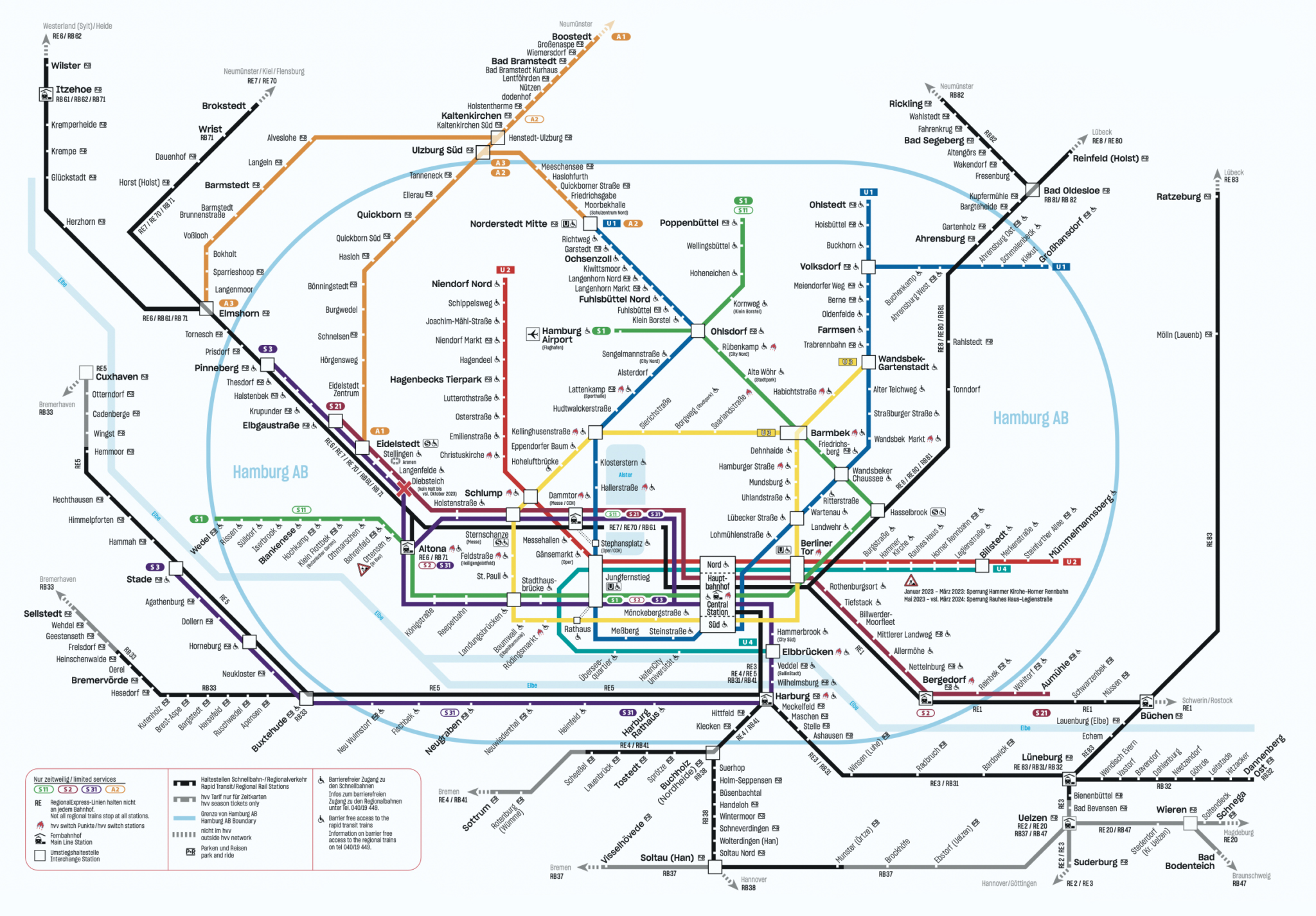
Map of Public Transportation in Hamburg
Map of Public Transportation in Hamburg showing different lines and stations. Click on the map to enlarge it or download the Metro map in PDF format.
Hamburg and its System
Hamburg has an extensive public transport network of rapid transit, regional trains, buses, and harbour ferries, all operated within the hvv system. For day-to-day travel, the setup is simple: one integrated ticketing system, broad city coverage, and plenty of ways to switch between train, bus, and ferry.
Ticket options include single, day, and weekly tickets valid on buses, trains, and ferries. If you travel often, monthly or annual tickets usually offer the best value. Visitors often choose the Hamburg CARD, which combines free city transport with discounts on cultural and leisure activities. Since 1 May 2023, the Deutschlandticket has also been available as a subscription for unlimited local and regional transport across Germany at €58 per month (about $63).
The core of the network is the U-Bahn and S-Bahn. As of January 2025, Hamburg has four U-Bahn lines, four S-Bahn lines, and nine regional rail services, with expansion planned later in the decade. The rail network is backed up by metro buses, express buses, sprinter buses, and regional buses.
Ferries are a distinctive part of transportation in Hamburg. Six ferry lines serve the harbour and the River Elbe, with routes numbered from 61 upward. All ferries stop at Landungsbrücken, and regular hvv tickets are valid on board.
The fare system is divided into five rings. Rings A and B cover the city area, while Rings C, D, and E stretch farther out, up to about 60 kilometres (37 miles) from the center. Some regional trains are included in the fare as well.
For everyday travel, the operating hours are practical. On weekdays, U-Bahn and S-Bahn services run from 4:30 a.m. to 0:30 a.m. the next morning. After midnight, night buses cover major routes. From Friday through Sunday, the U-Bahn and S-Bahn operate around the clock, and bus services follow similar timings.
If you need help, staff are available at information desks in larger stations and at the Service Point at Central Station. Accessibility information is also available through hvv service channels.
Hamburg U-Bahn and S-Bahn Trains
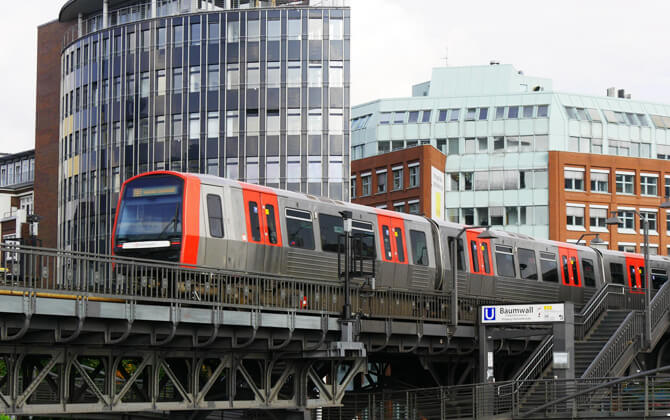
Hamburg’s U-Bahn and S-Bahn trains are the backbone of the city’s public transport system. They connect central districts with suburbs and the wider region, and they work as part of the larger hvv network alongside buses, ferries, and regional rail.
As of January 2025, the system includes four U-Bahn lines, four S-Bahn lines, and nine regional rail services. More expansion is planned by the end of the decade, so the route plan is expected to keep growing.
The rail network sits within a wider transport system that also includes buses and ferry routes. Fare rings A and B cover the city, while C, D, and E reach farther out, up to about 60 kilometres (37 miles) from Hamburg.
Operating hours
If you are checking opening hours, working hours, or timings today for the rail system, the standard weekday train schedule runs from 4:30 a.m. to 0:30 a.m. the next morning. That means the starting time is early enough for most commuters, while the closing time is just after midnight.
From Friday through Sunday, U-Bahn and S-Bahn trains run 24 hours. On other nights, night buses cover main routes after the last train. For schedule today details, route timetable changes, or train schedule updates, it is best to check current hvv information.
| Service detail | Timings |
|---|---|
| Weekday U-Bahn and S-Bahn operating hours | 4:30 a.m. to 0:30 a.m. the next morning |
| After midnight on weekdays | Night buses on main routes |
| Friday to Sunday | 24-hour U-Bahn and S-Bahn service |
Tickets and travel options
Single, daily, and weekly tickets are available from hvv ticket machines and are valid on buses, trains, and ferries. For frequent travel, monthly or annual passes are usually the cheapest option.
The Hamburg CARD is especially useful for visitors because it includes free transport across the city and discounts on cultural and leisure activities. Day passes are cheaper after 9:00 a.m.
If you work in Hamburg, it may also be worth checking whether your employer participates in the Deutschlandticket for employees program.
Useful travel notes
- Train frequency is generally good on the main U-Bahn and S-Bahn routes.
- Night buses run after midnight on major corridors.
- Ferries can be used with standard hvv tickets.
- Ticket machines support English.
For most visitors, the rail system is the easiest way to move around the city. It is fast, integrated, and simple to combine with local transport options such as buses and ferries.
Hamburg Bus Systems
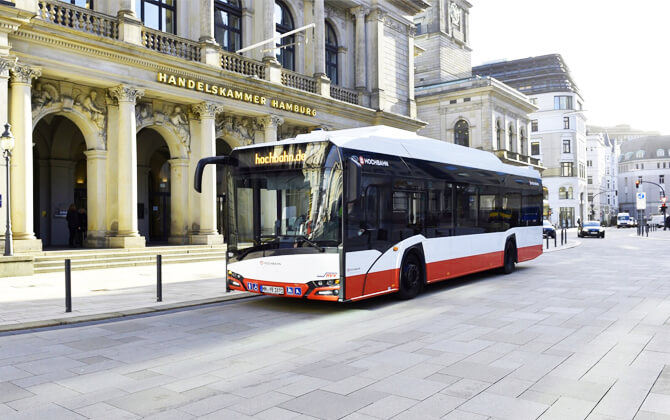
Hamburg’s bus system is a major part of local transport and fills the gaps where rail does not go directly. The network includes metro buses with frequent service, plus express buses, sprinter buses, and regional buses that connect stations with outer districts and nearby towns.
Buses are part of the hvv system, so the same ticket works across buses, trains, and ferries. That makes transfers easy and keeps trip planning simple.
Bus services generally follow similar operating patterns to the rail network. On weekdays, they run from early morning until after midnight, with night buses covering main routes late at night. From Friday through Sunday, buses follow similar timings to the 24-hour U-Bahn and S-Bahn service.
You can buy a bus ticket at hvv ticket machines, in the mobile app, or from the bus driver. Available options include single tickets, day tickets, weekly tickets, monthly tickets, and annual tickets. For visitors, the Hamburg CARD is a practical pass because it includes free city transport and discounts on attractions and leisure activities.
The fare rings also matter for bus travel. Rings A and B cover the city, while Rings C, D, and E extend into the surrounding area. If your route goes beyond central Hamburg, check which zone your ticket needs to cover.
- Metro buses provide frequent city connections.
- Express, sprinter, and regional buses extend the network beyond central Hamburg.
- Bus tickets are valid across buses, trains, and ferries within the hvv system.
- Night buses run on main routes after midnight.
- Bus travel is easy to combine with rail and ferry services.
HVV Railway Network
If you need a stations map, route map, or route plan for public transport in Hamburg, hvv provides a range of network maps and fare zone plans. These help with route planning, ticket coverage, and station access, especially if you are combining trains with buses or ferries.
Available materials include an overview of the rapid transit network, a live plan showing which lifts are currently usable, and several fare zone maps that show where your ticket is valid. There are also maps for MetroBus lines, Xpress buses, night buses, overnight services, and harbour ferries.
The hvv railway network is part of a wider public transport system that includes rapid transit, regional trains, buses, and ferries. It is organized into five rings centered around the Alster Lakes. Rings A and B cover the city area, while Rings C, D, and E extend out to about 60 kilometres (37 miles).
For route planning, it helps to use the timetable, route timetable, and fare zone information together. Help is also available at information desks in larger stations, at the Service Point at Central Station, or through the hvv website.
Harbour Ferries in Hamburg
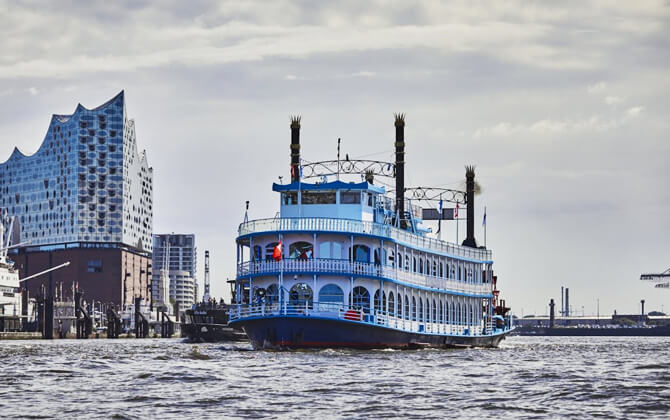
Hamburg’s harbour ferries are both practical and memorable. For some people, they are part of the daily commute across the Elbe. For others, they are a low-cost alternative to a harbour cruise, with great views of ships, docks, and riverfront landmarks.
The ferries are operated by HADAG and form part of the hvv public transport network, so you can use them with a valid hvv ticket. They stop at Landungsbrücken, which makes them easy to add to a regular route or a sightseeing day.
Line 62 is probably the best-known route. It starts at Landungsbrücken pier 3 in St. Pauli and passes sights such as Fischmarkt, Cruise Centre Altona, and Dockland. Line 73 also stands out, serving the musical theatres opposite Landungsbrücken and continuing into the port and Wilhelmsburg.
Other useful routes include line 61 to Neuhof via Waltershof, line 75 between Landungsbrücken and Steinwerder, and line 72, which stops at Arningstraße and continues below the Elbphilharmonie. In Finkenwerder, passengers can change to line 64 for Teufelsbrück.
Bikes are allowed on all ferries, which makes them a smart option if you want to combine cycling with water transport.
The HADAG fleet has 26 ferry boats, from older vessels dating to the 1960s to newer models. Some already use hybrid engines with diesel and electricity, supported by systems that reduce emissions. Renovation work is ongoing, with the aim of becoming Germany’s first zero-emission ferry service.
If you are planning a ferry ride, avoid peak commuting periods if possible. Ferries are popular with regular passengers too, so they can get busy.
| Station | Details |
|---|---|
| Landungsbrücken | Main hub for all harbour ferries |
| Fischmarkt | Served by line 62 |
| Cruise Centre Altona | Served by line 62 |
| Dockland | On the popular line 62 route |
| Musical theatres stop | Served by line 73 opposite Landungsbrücken |
| Wilhelmsburg | Reached by line 73 |
| Neuhof | Reached by line 61 via Waltershof |
| Steinwerder | Served by line 75 |
| Arningstraße | Served by line 72 |
| Finkenwerder | Interchange for line 64 |
| Teufelsbrück | Reached by line 64 from Finkenwerder |
Using bikes to get around Hamburg
Getting around Hamburg by bike is practical and enjoyable. The city is cycle-friendly, with wide avenues, bike lanes, and parks that make short and medium trips easy.
If you want to rent a bike, StadtRAD Hamburg is the local bike-share system. You can hire a bike from one of the 120 service points across the city. To register, you need a debit card, credit card, or HVV customer card.
The first 30 minutes are free. After that, the cost is €0.10 per minute or €24 per day, which is about $0.11 per minute or $26 per day. You can even keep the fare at zero by returning the bike to a station within 30 minutes of each departure.
Bikes also combine well with public transport in Hamburg, especially with ferries and rail. It is a flexible way to cover the last part of a journey.
Airport Connections
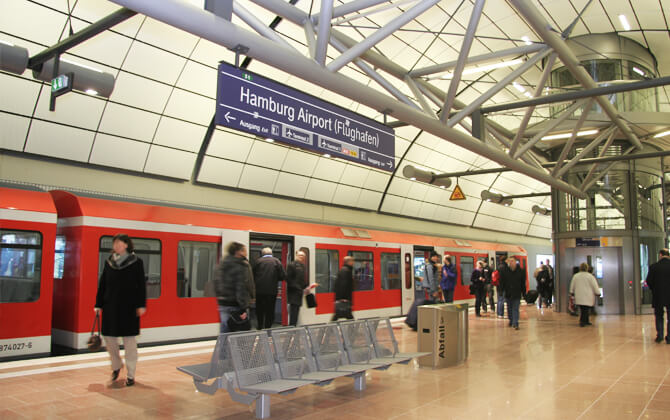
Hamburg Airport has several convenient connections to the city. The fastest public transport option is the S-Bahn line S1, which runs from Hamburg Central Station to the airport every 10 minutes and takes about 25 minutes. The station, Hamburg Airport (Flughafen), is directly accessible from Terminals 1 and 2 by elevator, escalator, and stairs.
If you prefer the bus, stops are directly in front of Terminal 1 on Level 0, the arrivals level. Bus routes connect the airport with different parts of Hamburg and are especially useful for destinations that are not directly on the S-Bahn route.
Taxis are available in front of Terminals 1 and 2 on the arrivals level. For a more relaxed and safe journey, advance booking is recommended, especially if you want to avoid waiting. The taxi center also offers fixed prices for pre-booked trips within and outside Hamburg, and you can pay in cash or by debit or credit card.
If you are driving, reach the airport via the A7, exit at Schnelsen Nord, then continue on the Airport Bypass or Zeppelinstrasse. The airport can also be reached through central Hamburg. Travelers with light luggage can also get there by bike or on foot.
| Service detail | Timings |
|---|---|
| S-Bahn S1 frequency | Every 10 minutes |
| S-Bahn running time to Hamburg Central Station | About 25 minutes |
| Station | Details |
|---|---|
| Hamburg Airport (Flughafen) | S-Bahn station for the airport, directly accessible from Terminals 1 and 2 |
| Terminal 1 bus stops | Located in front of Terminal 1 on Level 0 |
| Taxi ranks | In front of Terminals 1 and 2 on the arrivals level |
Tips and Rules
To make travel easier, it helps to stay near a stop or station. In the city center and around many major sights, walking works well, but the hvv network is usually the better option for longer trips, airport transfers, and journeys across the Elbe.
Before You Travel
Buy your ticket before boarding unless you already have a valid pass or city card. The HVV App is the easiest way to buy tickets, check the timetable, and look up the schedule today. Ticket machines are available at U-Bahn and S-Bahn stations, and the HVV Onlineshop is another option if you want to sort it out in advance.
- Single tickets are suitable for one journey.
- Day tickets are practical if you plan several rides in one day.
- Group day tickets work well for families or small groups of up to 5 people.
- The Hamburg CARD combines public transport with attraction discounts.
- The Hamburg City Pass includes unlimited HVV travel in the AB area for the duration of the pass.
Understanding the Network
Hamburg’s transport system is integrated, so one ticket can cover U-Bahn, S-Bahn, buses, regional trains within the system, and HADAG harbour ferries. For most visitors, the AB fare area is enough for nearly all major tourist destinations.
- U-Bahn: best for central Hamburg and inner districts.
- S-Bahn: useful for the airport, Hauptbahnhof, Altona, and suburban connections.
- Buses: helpful for areas not directly served by rail.
- Harbour ferries: a scenic part of the regular network, including line 62 between Landungsbrücken and Finkenwerder.
Useful Travel Rules
- Validate or activate your ticket correctly before traveling.
- Keep your ticket with you, as inspections are regular.
- The fine for traveling without a valid ticket is 60.00 EUR, about $65.
- Follow platform signs carefully, especially on the U-Bahn and S-Bahn, where directions are separated.
- Check current service information in the HVV App or on the HVV website, especially for regional trains, because disruption or construction work may affect the schedule.
Planning for Comfort and Safety
If you are staying in Hamburg for a few days, plan routes in advance and choose accommodation near a station or stop. It saves time and makes late returns easier.
During busy periods, stations and vehicles can be crowded, so allow extra time for transfers. Hamburg also offers useful accessibility features, including elevators, ramps, low-floor buses, and clear signage. If barrier-free travel matters for your trip, check the HVV app or website before you go.
Simple Practical Tips
- Download the HVV App before your trip.
- Choose the ticket that matches your stay and how much you expect to travel.
- Use the U3 for many major visitor stops.
- Take ferry line 62 for a scenic ride included in the standard ticket system.
- Use buses, ferries, or rail to fill the gaps between attractions.
With a little planning, getting around the city feels easy quite quickly.
Getting Around in Hamburg

Hamburg gives you several easy ways to move around: public transport, bikes, ferries, taxis, and shared cars. The city transport network is well connected, so switching from one mode to another is usually simple.
The core of the system is HVV, Hamburg’s integrated public transport association. It covers U-Bahn, S-Bahn, buses, and ferries under one ticketing system, which makes transfers practical for both visitors and residents.
Public transport
HVV services include underground trains, suburban trains, buses, and ferries. Tickets come as single, day, group, weekly, and monthly options, and they are valid across the network. The Hamburg CARD is useful for visitors because it includes unlimited HVV travel and discounts at many museums, restaurants, and shops.
For frequent travel, monthly or annual passes can lower the overall fare. The Deutschlandticket is also available as a subscription and gives unlimited access to local and regional public transport across Germany.
On weekdays, trains and buses run from early morning into the night, with night buses covering major routes after midnight. On weekends, U-Bahn and S-Bahn services run 24 hours from Friday to Sunday.
Other ways to travel
Hamburg is a bike-friendly city, and the StadtRAD bike-sharing system is handy for short trips. The first 30 minutes are free, and bikes can be returned to any station in the network.
Ferries are another useful option. HVV ferries run along the Elbe and are included in regular HVV tickets. Walking also works well, especially in the compact center and pedestrian areas.
Taxis and ride-sharing services are widely available, and hourly car rentals can be useful if you need extra flexibility. If you want a mix of convenience and choice, Hamburg really delivers.
Useful travel tips
- Avoid peak commuting periods if you want less crowded journeys.
- Most public transport options include accessibility features.
- Information desks and service points are available at larger stations.
- Apps such as HVV, Google Maps, StadtRAD Hamburg, DB Navigator, and MOIA can help with routes, tickets, and real-time updates.