The Tbilisi Metro is the rapid transit system serving Tbilisi, the capital of Georgia. It opened on 11 January 1966 as the fourth metro system in the former Soviet Union and remains one of the city’s most important public transport options. Operated by the Tbilisi Transport Company, the system has two lines, 23 stations, deep underground platforms, and a simple flat fare that makes daily transport across the city fast and affordable.
| Key | Information |
|---|---|
| City | Tbilisi, Georgia |
| Opened | 11 January 1966 |
| Operator | Tbilisi Transport Company |
| Lines | 2 |
| Stations | 23 |
| Network length | 27.3 km (17.0 mi) by current line totals |
| Daily role | Core part of local transport and city transport in Tbilisi |
| Annual ridership noted | 113.827 million passengers in 2017 |
| Main transfer point | Station Square |
Tbilisi Metro Map
Map of Tbilisi Metro showing different lines and stations. Click on the map to enlarge it or download the Tbilisi Metro map in PDF format.
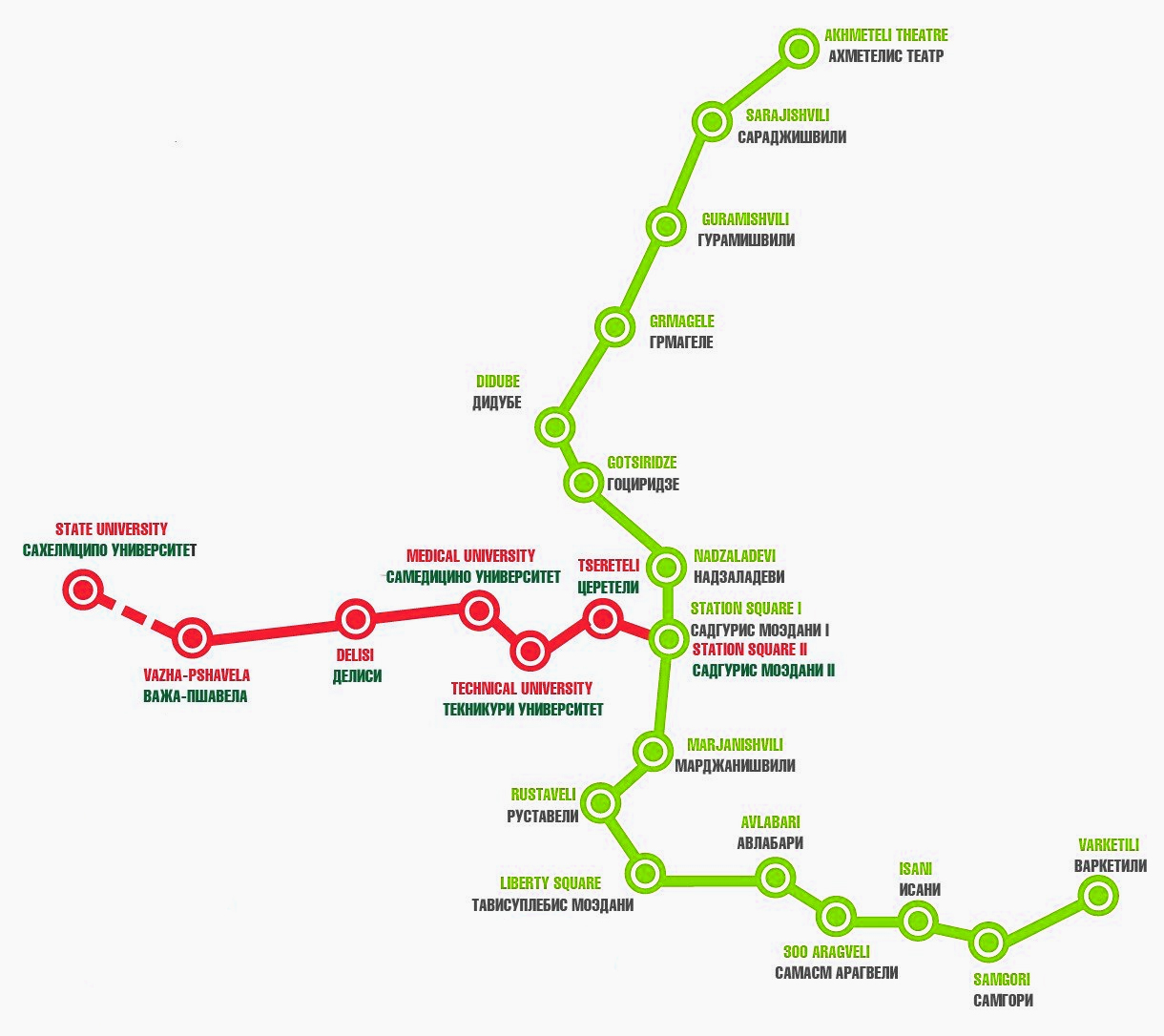
Tbilisi Metro Lines and Stations
The Tbilisi Metro network has two lines and 23 stations. The Akhmeteli–Varketili Line opened in 1966 and runs across 16 stations. The Saburtalo Line opened in 1979 and serves 7 stations. Together, they form a compact but useful route system for getting across major parts of the city.
The first section opened with six stations in 1966. Since then, the metro has grown in stages, including extensions in 2000 and 2017. Most stations are underground, and several sit deep below street level, a feature often associated with ex-Soviet metro design.
| Line | Opened | Length | Stations |
|---|---|---|---|
| Akhmeteli–Varketili Line | 1966 | 19.6 km (12.2 mi) | 16 |
| Saburtalo Line | 1979 | 7.7 km (4.8 mi) | 7 |
| Total | 27.3 km (17.0 mi) | 23 |
Of the 23 stations, 21 are underground and 2 are at surface level. Station Square is the only transfer point between the two lines, so it is the key station to know when planning a route or checking a stations map.
| Station | Details |
|---|---|
| Akhmeteli Theatre | One end of the Akhmeteli–Varketili Line |
| Varketili | Opposite end of the Akhmeteli–Varketili Line |
| Station Square | Main transfer station between the two metro lines |
| Vazha-Pshavela | Saburtalo Line station extended to in 2000 |
| State University | Newest station mentioned, opened in 2017 on the Saburtalo Line |
| Rustaveli | Deepest station in the network, with a platform 60 meters (197 feet) below the surface |
| Avlabari | One of the stations renamed during the 1990s |
| Didube | Important interchange area for buses and onward transport |
The stations list is not long, which makes the system easy to understand. For most journeys, your route plan comes down to choosing the correct line, direction, and whether you need to change at Station Square.
Schedule and Timetables
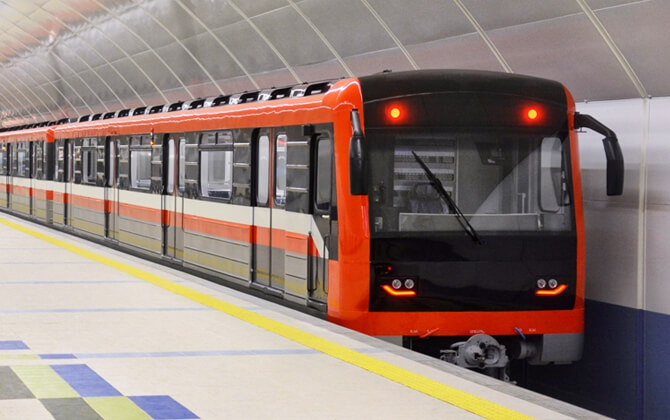
Tbilisi Metro operating hours are simple: trains run every day from 6:00 a.m. to midnight. These opening hours apply on weekdays and Sundays alike, so the starting time and closing time are easy to remember.
Train frequency changes during the day. At peak times, trains arrive about every 2.5 minutes. Off-peak, the interval is usually around 5 to 6 minutes. Late in the evening, running time between trains can stretch to about 12 minutes before stations close.
| Service detail | Timings |
|---|---|
| Opening times and working hours | Daily, 6:00 a.m. to midnight |
| Starting time | 6:00 a.m. |
| Closing time | Midnight |
| Peak-hour frequency | About every 2.5 minutes |
| Off-peak frequency | About every 5 to 6 minutes |
| Late-evening frequency | Up to about 12 minutes |
| Last train period | Before midnight; allow extra time for transfers |
If you need a route timetable for metro-connected services, check the relevant timetable before departure. Some connected transport schedules are listed for Today and Tomorrow, while others are organized by weekdays and weekends. For schedule today or timings today, it is best to confirm the train schedule and bus timings before you travel.
Tariffs, Tickets, and Cards
The Tbilisi Metro uses a flat-fare system. One metro ride costs 1 GEL (1₾, about $0.38). With cashless payment, that fare works as a 90-minute package for the metro and city buses, so you can change lines or continue by bus without paying again during that window.
There is no complicated fare calculator for a basic metro trip because the ticket price is flat. The main cost difference depends on whether you pay per ride or use a pass.
| Ticket or card | Price |
|---|---|
| Single metro fare | 1 GEL (about $0.38) |
| MetroMoney card | 2 GEL (about $0.76) |
| 1 day pass | 3 GEL (about $1.14) |
| 1 week pass | 20 GEL (about $7.60) |
| 1 month pass | 40 GEL (about $15.20) |
| 3 month pass | 100 GEL (about $38.00) |
| 6 month pass | 150 GEL (about $57.00) |
| 1 year pass | 250 GEL (about $95.00) |
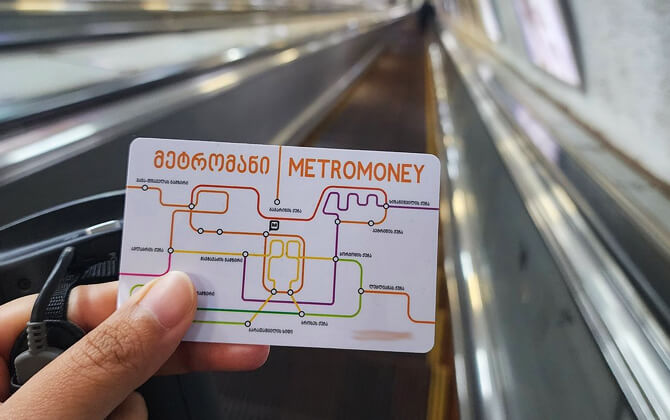
The MetroMoney card is sold at metro station ticket offices and Bank of Georgia express branches, where it can also be topped up. Top-ups are available through self-service terminals and banking apps as well.
Contactless bank cards and phone payments are accepted too. If you use cashless payment correctly, the 90-minute transfer window remains active. The Baghebi–University cable car is included in the city transport tariff package, while popular tourist cable cars are paid separately.
The 90-minute rule applies only with cashless payment. If you pay cash on a bus where that is still possible, each boarding is charged separately.
Connections to Other Systems
The Tbilisi Metro is relatively small, so it does not cover every neighborhood. Still, it works well as part of wider transportation in Tbilisi, especially when combined with buses. Bus stops near several stations help passengers continue to areas beyond the underground network.
Didube is one of the strongest interchange points in the system. It is located near Tbilisi’s central bus station, which makes it useful for buses to other cities, tourist destinations, and outer parts of the capital.
Station Square 1 is another major node. It connects the two metro lines and provides access to central areas, rail services, and nearby bus connections. For many visitors, this is the easiest place to switch between metro, bus, and longer-distance transport.
The metro also links indirectly with Tbilisi International Airport by bus, although there is no direct rail service. For airport travel, use Station Square and continue by bus line 37.
Connection with the Airport
Tbilisi Metro does not run directly to Tbilisi International Airport, which is southeast of the city center. To reach the airport by public transport, take the metro to Station Square 1 or Station Square 2, then change to bus line 37.
The bus stop is in front of the metro entrance. Bus line 37 is operated by the Tbilisi Transport Company and runs to the airport terminal area. The ride takes about 35 to 40 minutes, and the fare is listed as 50 tetri, or 0.50 GEL (about $0.19).
The bus stops directly in front of the main airport terminal, so the final walk is short. In the opposite direction, look for bus line 37 at the terminal area and ride toward Station Square, where you can continue by metro.
Taxi stands, bus stops, and car rental services are also available outside the terminal buildings. A taxi is faster, but the airport bus is the more affordable public transport option for reaching the metro.
Rules and Regulations
Tbilisi Metro uses cashless entry at the gates. Passengers tap a rechargeable transport card, contactless bank card, or mobile wallet at the turnstile. There is no need to tap out when leaving the station.
Two cards are especially useful. MetroMoney works for single journeys and can be reloaded. The blue Travel Card is aimed at frequent riders and supports timed subscriptions such as 1 day, 1 week, 1 month, and longer passes. Each person needs their own Travel Card, and sharing is not allowed.
If you transfer within the 90-minute MetroMoney validity period, tap again as usual; the system should not charge a second fare. For the blue Travel Card, the same plastic card can be reused or reloaded with a different subscription.
Top-ups are available at metro ticket offices and orange self-service machines inside stations and around the city. These machines accept cash only and do not give change.
Basic etiquette keeps the ride safe and comfortable. Keep noise low, give up seats for elderly passengers, pregnant women, and children, and stay clear of the platform edge. Photography inside the metro is technically prohibited.
Inspectors may check tickets and cards during trips, so make sure your fare is valid before boarding. Traveling without a valid fare can lead to a fine of 20 GEL (about $7.60).
Accessibility remains limited. Metro stations do not have lifts, and escalators can be long and fast-moving. For passengers with limited mobility, taxis may be a more practical option.
History
The idea of a metro in Tbilisi came from the city’s rapid growth in the 19th and 20th centuries. As Georgia’s capital and a major political, cultural, industrial, and transport center in Transcaucasia, Tbilisi needed a faster way to move people through a difficult urban landscape.
Construction began in 1952, before the city had reached a population of one million. The first section opened on 11 January 1966 with six stations, making Tbilisi Metro the first and only metro system in Georgia and the fourth in the former Soviet Union.
The 1990s were difficult. Many Soviet-era station names changed, but the system also faced financial problems after the breakup of the Soviet Union. Electricity shortages disrupted service, and the metro became associated with crime and safety problems. Security and administrative reforms in the early 2000s helped reduce those issues.
Modern expansion continued in stages. Vazha-Pshavela station opened in 2000, and State University station followed in 2017. The extension toward State University had begun in 1985, stopped in 1993, and restarted in 2015 with financial support from the Asian Development Bank. It opened to passengers on 16 October 2017 along with the Delisi–Vazha-Pshavela tunnel.
Modernization has included station rehabilitation, train improvements, and upgrades to other facilities. In 2006, city budget funding supported this work. By 2018, a Siemens digital signaling system was operating on the Delisi to State University segment, making it the only part of the network with post-Soviet signaling equipment.
Future Expansions
The Tbilisi Metro has long had expansion plans, though many remain frozen. Earlier ideas included a third line and a Soviet-style triangle layout with six radii meeting in the city center, but these projects have not been built.
In October 2018, a new proposal described seven stations on a line connecting central Tbilisi with the southeastern outskirts and Tbilisi Shota Rustaveli Airport. The route was planned as an overground line from Samgori metro station to Lilo market, with a possible extension to Rustavi, about 30 km (18.6 mi) from the capital. According to the available information, the project has not started and is no longer actively mentioned by the ruling party.
Recent planning has focused more on modernization than immediate network expansion. The Tbilisi Metro Modernization Project includes feasibility studies and preliminary designs for rehabilitating two depots and a tunnel. Separate reform plans also include accessibility upgrades, new entrances, and rehabilitation work at multiple stations, with completion expected by 2029.
The system is also preparing for fleet renewal. New rolling stock is being procured to replace aging cars scheduled for decommissioning between 2025 and 2030. For now, the next phase looks like a mix of infrastructure renewal, better accessibility, and long-term route development.
Fun Facts
- The Tbilisi Metro opened on 11 January 1966 and became the fourth metro system in the former Soviet Union, after Moscow, Saint Petersburg, and Kyiv.
- The system was built partly because Tbilisi’s long shape along the Mtkvari River, steep streets, and narrow central areas made surface transport difficult.
- Many stations are deep and decorated in a style linked to other ex-Soviet metro systems.
- Rustaveli is the deepest station, with its platform 60 meters (197 feet) below the surface.
- The network has two lines, 23 stations, and a total line length of 27.3 km (17.0 mi).
- In 2017, the metro carried 113.827 million passengers.
- Some stations were renamed after the fall of the Soviet Union, including Gotsiridze, Nadzaladevi, Station Square 1, and Avlabari.
- Two stations are at surface level, while most are underground.
- Trains can reach 60–80 km/h (37–50 mph), while average trip speed is a little over 33 km/h (20.5 mph).
- The MetroMoney card allows passengers to re-enter or transfer within 90 minutes without paying again when the rule applies.
Tourism and Sightseeing
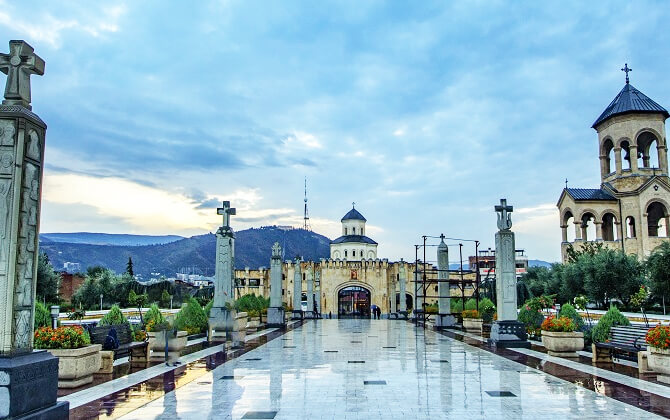
Tbilisi is easy to explore with the metro, especially when you combine it with buses, walking, and cable cars. A stations map helps with quick planning, but many central sights are also close enough to connect on foot once you exit the metro.
Old Tbilisi is the best place to start. Its winding streets, hidden cafés, bakeries, street art, restored houses, and weathered backstreets give the area its character. One especially eye-catching spot is the colorful glass house at the corner of Lado Asatiani and Betlemi streets.
- Tbilisi Sioni Cathedral
- Jvaris Mama Church
- Lower Betlemi Church
- Saint George’s Armenian Cathedral
- Narikala Fortress
- Jumah Mosque
- Metekhi Church
For viewpoints, take the cable car to the upper station, see Mother Georgia up close, and continue toward Narikala Fortress. Rike Park, across the river, is another good stop for views and a slower walk.
Rustaveli Avenue is one of the city’s main boulevards and includes major buildings such as the Parliament of Georgia, the Georgian National Opera Theater, the Rustaveli State Academic Theater, and the Georgian Museum of Fine Arts. Liberty Square, Marjanishvili, the Dry Bridge market, David Aghmashenebeli Avenue, and Fabrika all show different sides of the city.
Architecture fans will find art-nouveau facades, Soviet-era buildings, mosaics, bas-reliefs, and brutalist landmarks. Notable places include the Former Ministry of Automobile Roads, the skybridge at Nutsubidze Plato, the Archaeology Museum, the Museum of Modern Art, and decorative details in and around several metro stations.
Green spaces are part of the route plan too. Mtatsminda Park is reached by funicular and offers views and amusement rides. Vake Park is another relaxed option, with a memorial, a cable car to Turtle Lake, and access by bus.
| Station | Details |
|---|---|
| Rustaveli | Useful for Rustaveli Avenue and central sightseeing |
| Liberty Square | Good starting point for Old Tbilisi and central streets |
| Avlabari | Handy for historic areas and nearby landmarks |
| Station Square | Main transfer point and useful for rail and bus connections |
| Marjanishvili | Good for David Aghmashenebeli Avenue and nearby neighborhoods |
| Technical University | Useful for exploring another side of the city |
| Isani | A practical station for reaching eastern parts of Tbilisi |