Changsha Metro is the rapid transit system serving Changsha and Xiangtan. The system opened on April 29, 2014, when Line 2 started service, making Changsha the 18th city in mainland China with a metro system. Today, the network has six operating lines, a total length of 217.78 km (135.32 miles), and 140 stations. It links major districts, railway hubs, and Huanghua Airport, making it a key part of public transport and city transport in the region.
| Key | Information |
|---|---|
| Official name | Changsha Metro (长沙轨道交通) |
| First opening | April 29, 2014 |
| First line | Line 2 |
| Lines in operation | 6 |
| Network length | 217.78 km (135.32 miles) |
| Stations | 140 |
| Airport connection | Line 6 to Huanghua Airport T1 & T2 |
| Coverage | Changsha and Xiangtan |
Changsha Metro Map
Map of Changsha Metro showing different lines and stations. Click on the map to enlarge it or download the Changsha Metro map in PDF format.
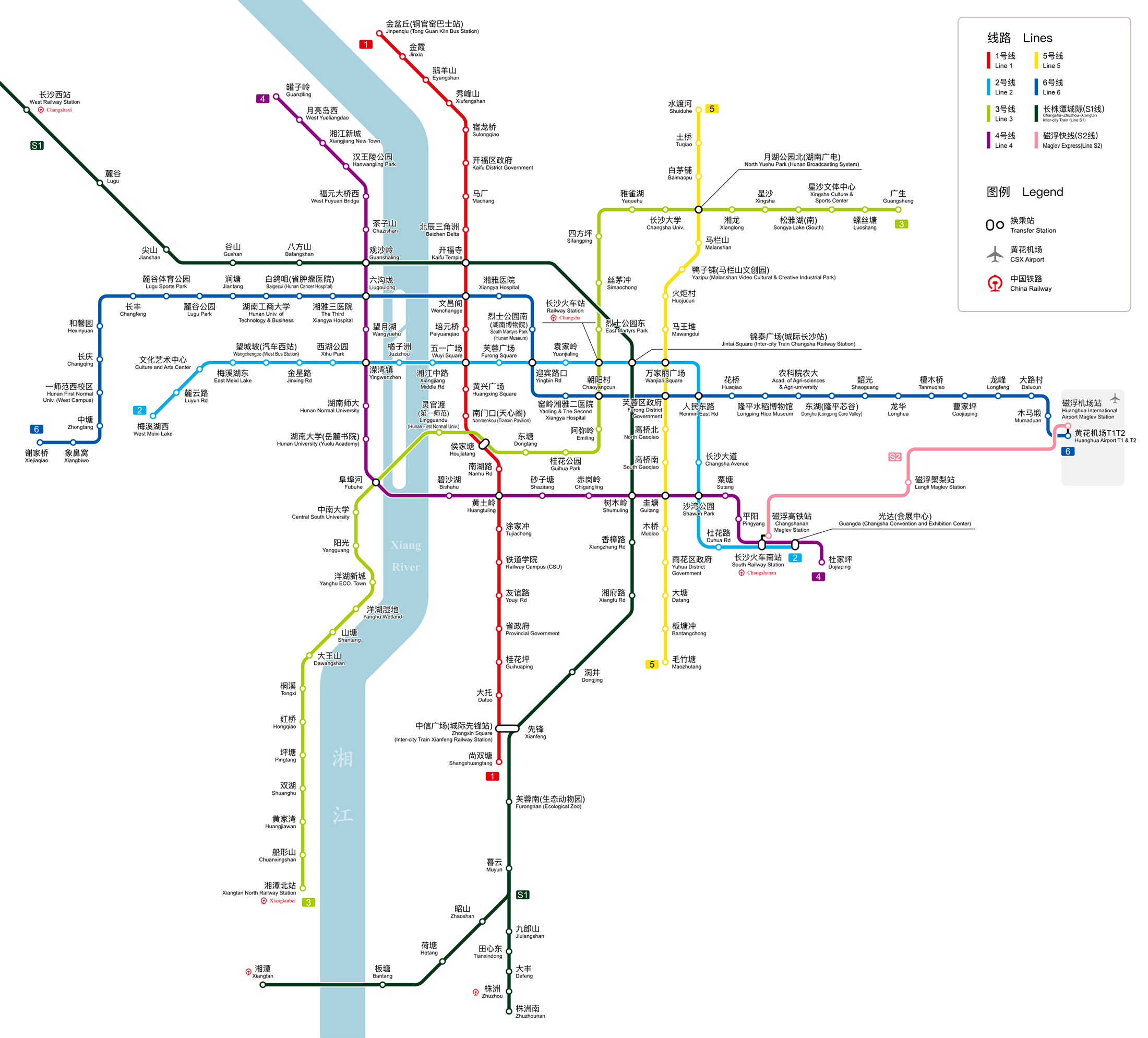
Changsha Metro Lines and Stations
As of June 2024, Changsha Metro has six operating metro lines and one maglev line, with Line 7 under construction. For transportation in Changsha, the metro is one of the easiest ways to get around. Station signs, onboard route maps, and announcements are available in both Chinese and English, which helps first-time riders quite a bit.
Lines in service
| Station | Details |
|---|---|
| Line 1 | Opened in June 2016. Runs from Kaifu District Government Station in the north to Shangshuangtang Station in the south. It has 20 stations, including 19 underground stations and one elevated station, and connects with Lines 2, 3, 4, 6, the CZT Intercity Railway, and the planned Line 8. |
| Line 2 | Opened in April 2014. This route serves major passenger hubs including Changsha West Station, Changsha Railway Station, and Changsha South Railway Station. It has 19 stations on the main section, plus a westward extension to the Meixi Lake area. The line is underground throughout. |
| Line 3 | Started trial operation in June 2020. Runs southwest to northeast with 25 underground stations. It connects Yuelu, Tianxin, Yuhua, Furong, Kaifu Districts, and Changsha County, with transfers to Lines 1, 2, 4, 5, and 6. |
| Line 4 | Opened to trial operation in May 2019. The line is 33.5 km (20.82 miles) long and serves Wangcheng, Yuelu, Tianxin, Yuhua Districts, and Changsha County. It has 25 underground stations and transfer links with Lines 1, 2, 3, 5, 6, and the CZT Intercity Railway. |
| Line 5 | Started trial operation in June 2020. Runs north-south in the eastern part of the main urban network. It is 22.5 km (13.98 miles) long, passes through Yuhua, Furong, and Kaifu Districts and Changsha County, and has 18 stations. |
| Line 6 | Started operation in June 2022. It is the longest metro line in Changsha and the first one with a direct airport connection. The line is 48.1 km (29.89 miles) long, has 34 stations, and connects with Lines 1, 2, 3, 4, and 5. |
Line 7
Line 7 is under construction and is planned to begin operation in 2027.
Quick facts about the network
- The first operational line was Line 2, which began service on April 29, 2014.
- The system connects major railway stations and the airport, so it plays a central role in local transport.
- Transfer stations are clearly marked, and many lines connect directly with other metro lines or the CZT Intercity Railway.
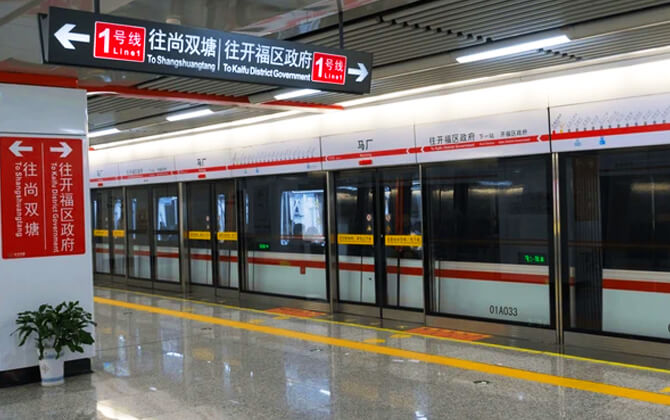
Changsha Metro Timings and Schedule
Changsha Metro runs every day, with a general starting time of 6:30 am. The system usually closes at 23:00, though actual train schedule details depend on line, direction, and station. If you need the last train or exact route timetable for a specific stop, it is smart to check before setting off.
For Line 2, trains run between Guangda and West Meixi Lake, and the full running time is about 50 to 55 minutes. First and last train timings differ by station, so the timetable below is the most useful way to plan your route.
| Service detail | Timings |
|---|---|
| General metro operating hours | Daily from 6:30 to 23:00 |
| Line 2 route | Guangda to West Meixi Lake |
| Line 2 full journey running time | About 50 to 55 minutes |
| Schedule notes | First and last train times vary by station and direction |
| Station | Details |
|---|---|
| Guangda | To West Meixi Lake: first train 06:30, last train 22:30 |
| South Railway Station | To Guangda: 06:37 to 23:15; to West Meixi Lake: 06:33 to 22:33 |
| Duhua Road | To Guangda: 06:35 to 23:13; to West Meixi Lake: 06:35 to 22:35 |
| Shawan Park | To Guangda: 06:32 to 23:10; to West Meixi Lake: 06:31 to 22:37 |
| Changsha Avenue | To Guangda: 06:30 to 23:08; to West Meixi Lake: 06:33 to 22:40 |
| East Renmin Road | To Guangda: 06:36 to 23:05; to West Meixi Lake: 06:30 to 22:43 |
| Wanjiali Square | To Guangda: 06:34 to 23:03; to West Meixi Lake: 06:32 to 22:45 |
| Jintai Square | To Guangda: 06:31 to 23:00; to West Meixi Lake: 06:34 to 22:47 |
| Changsha Railway Station | To Guangda: 06:30 to 22:59; to West Meixi Lake: 06:30 to 22:49 |
| Yuanjialing | To Guangda: 06:37 to 22:57; to West Meixi Lake: 06:32 to 22:51 |
| Yingbin Road | To Guangda: 06:35 to 22:55; to West Meixi Lake: 06:34 to 22:53 |
| Furong Square | To Guangda: 06:33 to 22:53; to West Meixi Lake: 06:30 to 22:55 |
| Wuyi Square | To Guangda: 06:32 to 22:51; to West Meixi Lake: 06:32 to 22:57 |
| Middle Xiangjiang Road | To Guangda: 06:30 to 22:49; to West Meixi Lake: 06:33 to 22:59 |
| Juzizhou | To Guangda: 06:39 to 22:47; to West Meixi Lake: 06:35 to 23:01 |
| Yingwanzhen | To Guangda: 06:37 to 22:45; to West Meixi Lake: 06:30 to 23:03 |
| Xihu Park | To Guangda: 06:34 to 22:43; to West Meixi Lake: 06:32 to 23:05 |
| Jinxing Road | To Guangda: 06:32 to 22:40; to West Meixi Lake: 06:34 to 23:08 |
| Wangchengpo | To Guangda: 06:30 to 22:38; to West Meixi Lake: 06:30 to 23:10 |
| East Meixi Lake | To Guangda: 06:36 to 22:36; to West Meixi Lake: 06:32 to 23:12 |
| Culture and Arts Center | To Guangda: 06:34 to 22:34; to West Meixi Lake: 06:34 to 23:14 |
| Luyun Road | To Guangda: 06:32 to 22:32; to West Meixi Lake: 06:36 to 23:16 |
| West Meixi Lake | To Guangda: first train 06:30, last train 22:30 |
Line 2 transfer stations are useful for route planning. Changsha Railway Station connects with Line 3. Wuyi Square connects with Line 1. Shawan Park, South Railway Station, Guangda, and Yingwanzhen connect with Line 4, while Wanjiali Square connects with Line 5.
The schedule may change during important holidays or special events, so if you need exact timings today, check station notices before departure.
Changsha Metro Fares, Tickets and Cards
Changsha Metro fare is based on distance, and the cost is low compared with many other transport options. The starting fare is ¥2 (about $0.28) for trips within 6 km (3.73 miles). After that, the ticket price rises step by step, with a maximum fare of ¥8 (about $1.11) for a full journey.
| Service detail | Timings |
|---|---|
| Fare basis | Distance-based pricing |
| Station | Details |
|---|---|
| 0-6 km (0-3.73 miles) | Fare: ¥2 (about $0.28). Example: short central trips. |
| 6-16 km (3.73-9.94 miles) | Fare: ¥3-4 (about $0.42-$0.56). Example: Wuyi Square to Orange Island. |
| 16-26 km (9.94-16.16 miles) | Fare: ¥5-6 (about $0.69-$0.83). Example: Wuyi Square to Changsha Railway Station. |
| 26+ km (16.16+ miles) | Fare: ¥7-8 (about $0.97-$1.11). Example: Wuyi Square to Huanghua Airport. |
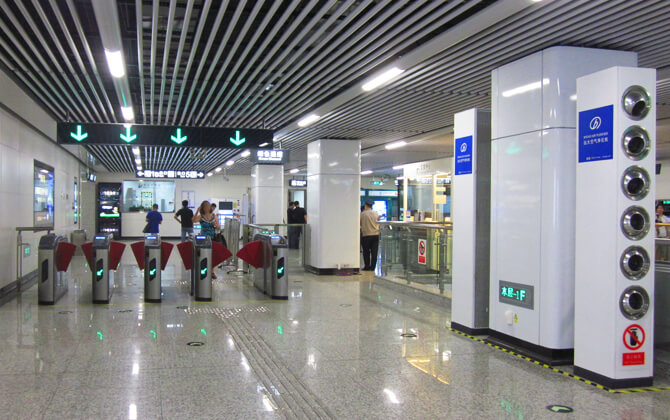
You can pay in several ways. The metro supports QR code payment through Alipay, WeChat Pay, UnionPay, and the Changsha Metro app. Single-trip ticket machines are also available at stations, with payment by cash or mobile payment.
For QR code trips, scan at the fare gate when entering and again when leaving. If you use a single-trip ticket, buy it at the machine and tap it to enter and exit. Machines have English buttons, so they are fairly easy to use.
If you are staying in Changsha for more than two days, a card or pass can save time. The National Transportation Card works on Changsha Metro and buses and is also valid in many other Chinese cities. The Changsha local card is another option, and both cards can give a 5% discount on subway rides.
The Xiaoxiang Card can be used across Changsha bus, metro, and maglev services. Non-real-name cards are open to foreigners. Based on the available information, this card gives a 10% discount on subway and maglev rides and a 30% discount on buses.
- Best for short stays: QR code payment or a single-trip ticket.
- Best for longer stays: a transit card.
- Best for airport trips: Line 6, with a ticket price of up to ¥8 (about $1.11).
Connections to Other Systems
Changsha Metro is closely integrated with other rail services in the city and across the wider Changsha-Zhuzhou-Xiangtan area. The network connects with the Changsha-Zhuzhou-Xiangtan Intercity Railway, and Line 3 has a seamless connection with the West Ring Line linking Changsha and Xiangtan.
Line 6 gives direct access to Huanghua Airport, making it the city’s airport rail route. The metro also connects with the Changsha Maglev Express. Broader rail links include the Beijing-Guangzhou Passenger Dedicated Line, the Shanghai-Kunming Passenger Dedicated Line, the Beijing-Guangzhou Railway, the Shijiazhuang-Changsha Railway, and the Chongqing-Xiamen High-Speed Railway through the intercity railway system.
Within the metro system, several transfer stations connect major routes and make cross-city transport easier, both inside Changsha and toward Xiangtan.
Airport Connections
Changsha Metro connects directly with Changsha Huanghua International Airport through Line 6. This route runs east-west and links the airport with downtown Changsha, serving Huanghua Airport T1 and T2 station. For many travelers, it is the simplest public transport option.
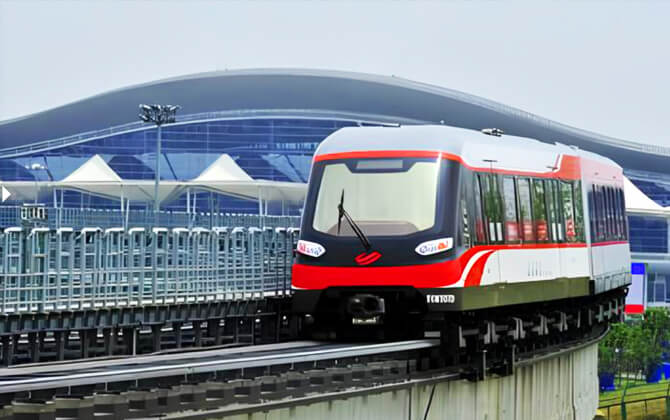
For a faster airport transfer between the terminals and Changsha South Railway Station, the Maglev Express is also available. It works well for passengers continuing by metro or high-speed rail.
If you are heading to the airport from the city, Line 6 is the main metro route to use. It is especially practical if you want to avoid relying on a taxi or bus.
- Metro connection: Line 6 to Huanghua Airport T1 and T2.
- Rail connection: Maglev Express between Changsha South Railway Station and the airport.
- Best for: direct travel between the airport and the city center.
Parking near the Metro
Changsha South Railway Station is a major transport hub where the metro connects with maglev trains, city buses, taxis, and long-distance buses. If you are switching between different forms of local transport, this is one of the most practical places to do it.
According to the station layout, station parking is available on the lower levels. The metro entrance is linked to the station’s transfer areas, which makes moving between the platforms, parking, and the railway station more straightforward.
If you are arriving by car, use the access point that matches your direction of travel. Passengers traveling north-south are advised to enter via West Square, while east-west travelers should use East Square.
- Parking lots: located on the lower levels of the station.
- Metro access: connected through the station transfer areas.
- Best entry for north-south trips: West Square.
- Best entry for east-west trips: East Square.
For downtown transfers, Metro Lines 2 and 4 stop at Changsha South Train Station, and bilingual signs guide passengers between the railway entrance and the metro platforms.
No parking charges or parking charges per day are listed in the available information.
Tips and Rules
Changsha Metro is an easy and generally safe way to reach major attractions, railway stations, and the airport. Working hours are usually 6:30 AM to 11:00 PM, while Line 6 runs a bit later and the last train may reach 11:00 PM. Schedules can change on holidays or during special events, so check the station bulletin or the Changsha Metro app before you go.
For tickets and payment, foreign travelers can use the official app, the Alipay mini-program, a transit card, or a single-journey ticket. The quickest option is mobile payment: open Alipay, enter the transport section, choose Changsha Metro, and generate a QR code for entry and exit. If you prefer a physical ticket, station machines have English prompts and accept cash or QR code payment.
Fares are distance-based, and short trips are inexpensive. In practice, the metro is usually much cheaper than a taxi and works well for sightseeing and airport transfers. If you stay more than two days, a transit card may save time and lower the price slightly.
When riding, follow the usual routine: find the station entrance, pass security, get your ticket or QR code ready, scan at the gate, and let passengers exit before boarding. On the train, watch the screens and listen for announcements. At your destination, follow Exit signs and check the stations map before leaving the station.
Several services are designed to help different passengers. Seniors, children under 14, and other eligible groups may ride free with valid documents. Stations also provide service counters, wheelchair ramps, courtesy waiting rooms, and mother-and-baby rooms. If you need help, station staff can assist, and the metro operator provides an escort service phone number.
- Keep an eye on the last train time.
- Have your QR code or ticket ready before reaching the gate.
- Follow English signs for entrances, exits, transfers, and station facilities.
- Avoid rush hours if you want a more comfortable trip.
- Check station information in advance if you travel with luggage or need accessibility support.
Fun Facts
Changsha Metro is still a relatively new system. It opened in 2014 and has already grown to six lines and more than 140 stations.
It is especially convenient for travelers because it connects major hubs such as Huanghua Airport, Changsha Railway Station, and South Railway Station.
Many popular sights are easy to reach by subway, and some can be visited within 30 minutes on the metro.
The system is designed for convenience, with Chinese-English signage and ticketing support for mobile payment options such as Alipay and WeChat.
Fare levels are low compared with many other transport choices. An airport ride on Line 6 costs only ¥8, or about $1.11.
Line 6 is the airport line, and it runs later than the other lines, with a last train at 11:00 PM.
The network is also known for being reliable and is described as almost never late.
Using the metro can help riders avoid Changsha’s busiest rush hours, typically 7:30-9:00 a.m. and 5:30-7:00 p.m.
History
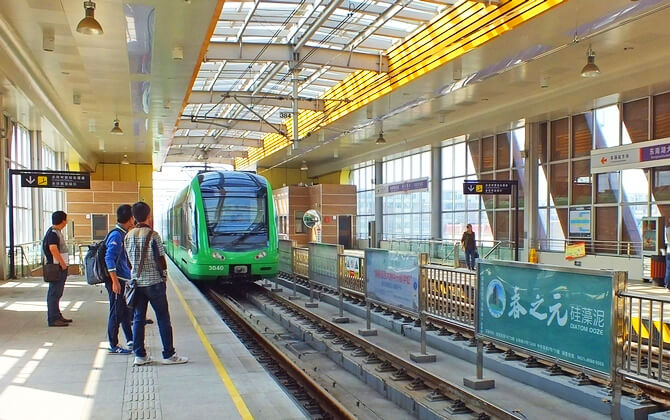
The history of Changsha Metro began on April 29, 2014, when Line 2 opened as the system’s first operational line. That made Changsha the 18th city in mainland China to launch a rapid transit system.
Line 2 was the starting point for the network’s expansion. Construction began in 2009, and after about 4 years and 7 months of work, passenger test runs started at the end of April 2014. The line was later extended in December 2015.
Line 1 followed. Construction started in 2010, and the line opened on June 28, 2016. A northern extension from Kaifu District Government to Jinpenqiu opened in 2024.
Expansion continued with Line 4, which started construction on December 31, 2014 and opened on May 26, 2019. Line 3 began construction on January 3, 2014 and opened on June 28, 2020, with a southern extension added on June 28, 2023. Line 5 started construction in 2015 and opened on June 28, 2020.
Line 6 opened on June 28, 2022 and connected the airport with the downtown area. Its middle section had started construction on November 28, 2017.
By 2024, the network had grown to six operating lines with a total length of 217.78 km (135.32 miles) and 140 stations. Future plans include more extensions and new lines, including Line 7 and Line 8.
Over the past decade, Changsha has built its urban rail network step by step, and the system has become an important part of transportation in the Changsha, Zhuzhou, and Xiangtan city cluster.
Future Extensions
The Changsha Metro expansion program includes several short-term projects at different stages of planning and construction. Some are already being built, while others remain planned without a confirmed opening date.
Short-term expansion projects
| Station | Details |
|---|---|
| Line 1 (North Extension Phase 2) | Dingzizhen to Jinpenqiu. Status: Planned. Planned opening: TBA. Length: 4.63 km (2.88 miles). Stations: 2. |
| Line 2 (West Extension) | Changsha West Railway Station to West Meixi Lake. Status: Under construction. Planned opening: 28 December 2025. Length: 14.5 km (9.01 miles). Stations: 11. |
| Line 4 (North Extension) | Baimaxiang to Guanziling. Status: Under construction. Planned opening: 28 June 2028. Length: 15.26 km (9.48 miles). Stations: 9. |
| Line 5 (South Extension) | Maozhutang to Datuo East. Status: Planned. Planned opening: TBA. Length: 8.43 km (5.24 miles). Stations: 7. |
| Line 5 (North Extension) | Shuiduhe to Weisan Road. Status: Planned. Planned opening: TBA. Length: 3.65 km (2.27 miles). Stations: 2. |
| Line 6 (East Extension) | Huanghua Airport T1 & T2 to Huanghua Airport T3. Status: Under construction. Planned opening: 28 June 2026. Length: 3.62 km (2.25 miles). Stations: 1. |
| Line 7 | Wulipai to Yuntang. Status: Under construction. Planned opening: 28 June 2027. Length: 17 km (10.56 miles). Stations: 16. |
| Line 7 (East Extension) | East Coash Station to Wulipai. Status: Planned. Planned opening: TBA. Length: 5.46 km (3.39 miles). Stations: 5. |
| Line 8 | Loop Line to Loop Line. Status: Planned. Planned opening: TBA. Length: 55.5 km (34.49 miles). Stations: 32. |
Line 1 is expected to continue north from Jinpenqiu in a second phase. Line 2, Line 4, Line 6, and Line 7 also have further extension plans. Line 5 has both south and north extensions planned, and the south extension has also been described in an environmental impact report as a 9.54 km (5.93 miles) underground project with 7 stations, running from Datuopu Station to Maozhutang Station, with construction planned from 2025 to 2029.
Among airport-related projects, Line 6 is planned to extend eastward from Huanghua Airport T1 and T2 to Huanghua Airport T3. Line 7 is under construction between Wulipai and Yuntang, with an eastern extension also listed as planned. Line 8 remains a proposed loop line, aimed at creating a wider system with stronger transfer capacity.
These projects show the network continuing to grow outward from the city core, with future extensions intended to improve airport access, strengthen cross-city connections, and support public transport across Changsha and the surrounding urban area.
Nearby Attractions
Changsha Metro makes it easy to reach many of the city’s best-known sights with a short ride. If you are planning a simple sightseeing day, the subway is a practical way to move between cultural landmarks, parks, and shopping streets.
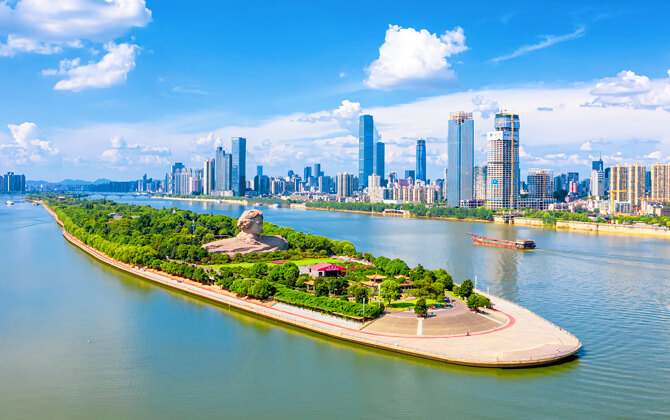
- Orange Isle — one of Changsha’s best-known riverside spots, famous for scenic walks and firework shows.
- Yuelu Mountain and Yuelu Academy — a classic mix of nature and history, with Aiwan Pavilion and other historic sites nearby.
- Hunan Provincial Museum — a major museum focused on Hunan’s history and the Mawangdui Han Tombs.
- Taiping Street — a well-preserved old street popular for walking and local snacks.
- Huangxing Pedestrian Street and Pozi Street — busy city-center areas for shopping, food, and a lively evening atmosphere.
- Tianxin Pavilion — a historic city landmark tied to Changsha’s long history.
- Window of the World — a large theme park suitable for families and amusement rides.
For many first-time visitors, the easiest metro-linked attractions to combine are Orange Isle, Yuelu Mountain, Hunan Provincial Museum, and the central walking streets around Wuyi Square and Huangxing Square.
If you want a balanced day out, pair a museum visit with a riverside stop or an old street walk. It is an easy way to see both the historical and modern sides of Changsha.