The Wilmington/Newark Line is a SEPTA Regional Rail commuter route serving the Philadelphia area, southeastern Pennsylvania, and northern Delaware. It runs on the southern portion of Amtrak’s Northeast Corridor, with local service toward Marcus Hook, Wilmington, Churchmans Crossing, and Newark. It is SEPTA’s longest Regional Rail line, and its service pattern is important to check before you ride: Newark trains operate only during weekday peak periods, while weekend trains terminate at Wilmington.
| Key | Information |
|---|---|
| System | SEPTA Regional Rail |
| Route | Center City Philadelphia to Wilmington and, on weekday peak trains, Newark, Delaware |
| Main corridor | Amtrak Northeast Corridor |
| Public transport areas served | Philadelphia, Delaware County, northern Delaware, Wilmington, and Newark |
| Newark service | Weekday peak trains only |
| Weekend service | Trains terminate at Wilmington |
| Delaware funding | Supported in part by the Delaware Department of Transportation and DART First State |
Wilmington Newark Line Map
The Wilmington Newark Line map shows all available stops. Click on the map to enlarge it or download the Wilmington Newark Line map in PDF format.
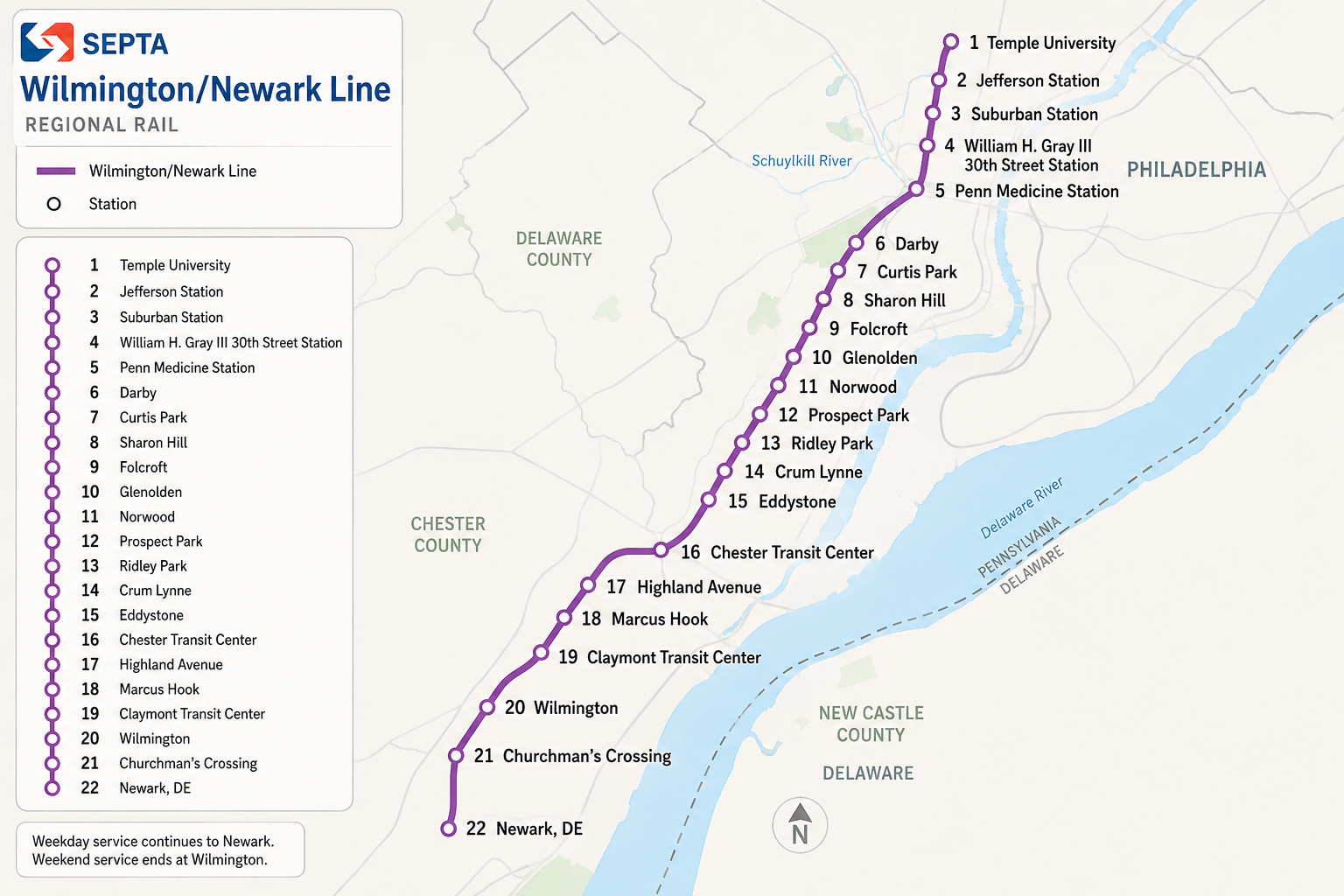
Stations and Fare Zones
The Wilmington/Newark Line stations are grouped across Center City Philadelphia, Delaware County, and northern Delaware. SEPTA fare zones on this route include Zone CC in Center City, Zone 2 and Zone 3 in Pennsylvania, and Zone 4 in Delaware. For riders checking a stations map or stations list, the key point is simple: only weekday peak trains continue beyond Wilmington to Newark.
Evening and weekend fare rules apply to trips to, from, or via William H. Gray III 30th Street Station, Suburban Station, and Jefferson Station on weekdays after 7:00 PM, and all day on Saturdays, Sundays, and major holidays.
| Station | Details |
|---|---|
| Penn Medicine Station | Pennsylvania, Zone CC; first stop after the Center City Commuter Connection |
| Darby | Pennsylvania, Zone 2 |
| Curtis Park | Pennsylvania, Zone 2; connects with SEPTA Suburban Bus 115 |
| Sharon Hill | Pennsylvania, Zone 2; connects with SEPTA Suburban Bus 115 |
| Ridley Park | Pennsylvania, Zone 3 |
| Crum Lynne | Pennsylvania, Zone 3; connects with SEPTA Suburban Bus 114 |
| Eddystone | Pennsylvania, Zone 3; connects with SEPTA City Bus 37 |
| Chester T.C. | Pennsylvania, Zone 3; connects with SEPTA City Bus 37 and several SEPTA Suburban Bus routes |
| Highland Avenue | Pennsylvania, Zone 3 |
| Marcus Hook | Pennsylvania, Zone 3; last Pennsylvania station before Delaware |
| Claymont | Delaware, Zone 4; connects with DART First State routes 13 and 61 and SEPTA Suburban Bus 113 |
| Wilmington | Delaware, Zone 4; major stop for SEPTA, Amtrak, DART First State, and Greyhound |
| Churchmans Crossing | Delaware, Zone 4; connects with DART First State route 64 |
| Newark | Delaware, Zone 4; served by weekday peak SEPTA trains and limited Amtrak service |
Former stops shown in station materials include Academy, Baldwin, Lamokin Street, Trainer, Naaman, and Edge Moor.
Center City Philadelphia Stations
The line uses the Center City Commuter Connection, so trains continue through downtown Philadelphia rather than ending at a suburban terminal. As of 2026, most weekday trains operate through the tunnel to and from Lansdale/Doylestown Line points, while weekend Wilmington trains run through to and from Chestnut Hill East.
| Station | Details |
|---|---|
| Penn Medicine Station | University City stop and key connection point for SEPTA Regional Rail and local bus service |
| William H. Gray III 30th Street Station | Major Center City rail hub with SEPTA and Amtrak connections |
| Suburban Station | Core downtown Philadelphia station |
| Jefferson Station | Downtown Philadelphia station within the Center City tunnel |
| Temple University | Through-service station north of Center City |
Delaware Stations
In Delaware, the Wilmington/Newark Line operates in Zone 4. These stations are useful for local transport in New Castle County, DART First State bus connections, and longer trips that involve Amtrak.
| Station | Details |
|---|---|
| Claymont | Opened in 1991; connects with DART First State routes 13 and 61 and SEPTA Suburban Bus 113 |
| Wilmington | Restored to SEPTA service in 1989; major downtown station with Amtrak, SEPTA Regional Rail, DART First State buses, and Greyhound Lines |
| Churchmans Crossing | Opened in 2000; connects with DART First State route 64 |
| Newark | SEPTA service began in 1997; connects with limited Amtrak service, DART First State routes 10, 33, and 46, and Cecil Transit 4 |
Wilmington Station is on Front Street between French and Walnut Streets in downtown Wilmington. Newark Station is at Mopar Drive and South College Avenue and has no SEPTA weekend or holiday service.
Key Intermediate Stations
Between Center City Philadelphia and Delaware, the route serves a series of intermediate local stops. These stations make the line useful not only for longer Regional Rail trips, but also for city transport and local transport within Delaware County.
| Station | Details |
|---|---|
| Penn Medicine Station | First station after the Center City Commuter Connection |
| Darby, Curtis Park, and Sharon Hill | Zone 2 Pennsylvania stations on the route |
| Ridley Park, Crum Lynne, Eddystone, Chester T.C., and Highland Avenue | Zone 3 Pennsylvania stations with several local bus connections |
| Marcus Hook | Final Pennsylvania stop before the line enters Delaware |
| Wilmington | Main Delaware transfer point for Amtrak, DART First State, Greyhound, and SEPTA |
| Churchmans Crossing and Newark | Northern Delaware stations served by limited SEPTA patterns, with Newark limited to weekday peak trains |
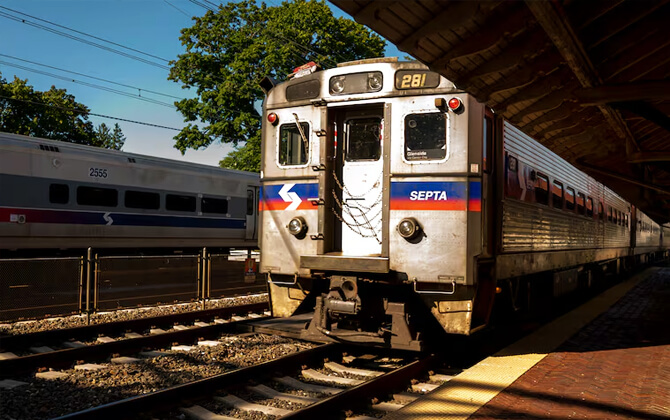
Schedule, Frequency, and Real-Time Updates
The Wilmington/Newark Line schedule changes by day, direction, and destination. For the most accurate train schedule, route timetable, schedule today, and timings today, check current real-time departures before traveling. Service to Newark is limited, so do not assume every Wilmington train continues south.
A temporary FIFA schedule applies from June 14 to June 27 only. On FIFA game days, the last regularly scheduled trains are extended to provide service from Center City to Claymont Transit Center.
| Service detail | Timings |
|---|---|
| Weekday operating span | Generally 4:53 AM to 6:30 PM |
| Weekday frequency | About 37 to 230 minutes, depending on station and direction |
| Marcus Hook service | Hourly or better in the core pattern |
| Wilmington service | Every two hours or better in the core pattern |
| Newark service | Weekday peak trains only |
| Weekend frequency | Generally every two hours, with trains terminating at Wilmington |
| Typical full route running time | Approximately 81 minutes |
Weekday Service
On weekdays, most service runs between Philadelphia and Wilmington, while only peak trains continue to Newark. The starting time and opening times vary by station, but the general weekday operating hours are from 4:53 AM to 6:30 PM. Frequency ranges from 37 to 230 minutes, so checking the timetable is essential.
| Service detail | Timings |
|---|---|
| Monday to Friday working hours | 4:53 AM to 6:30 PM |
| Train frequency | 37 to 230 minutes |
| Newark trains | Weekday peak periods only |
| QuietRide Car | Available Monday through Friday, 4:00 AM to 7:00 PM, when three or more cars are open |
| Through service | As of 2026, most weekday trains operate through the Center City tunnel to and from Lansdale/Doylestown Line points |
The last train and closing time depend on direction and station, so always verify the current route plan before you go.
Weekend and Holiday Service
On Saturdays, Sundays, and major holidays, all Wilmington/Newark Line trains terminate at Wilmington. Weekend trains do not continue to Newark. As of 2026, weekend Wilmington trains run through to and from Chestnut Hill East on the Chestnut Hill East Line.
| Service detail | Timings |
|---|---|
| Saturday service | Trains terminate at Wilmington |
| Sunday service | Trains terminate at Wilmington |
| Major holiday service | Trains terminate at Wilmington |
| Weekend Newark service | No SEPTA service to Newark |
| Typical weekend frequency | About every two hours |
For event periods or temporary changes, check the current SEPTA timetable before traveling.
Fares, Tickets, and Payment Options
Wilmington/Newark Line fare and ticket choices depend on your stations, zone, time of travel, and payment method. SEPTA payment options include a SEPTA Key Card, SEPTA Key Quick Trip, and cash. If you are comparing the price of SEPTA with Amtrak or other transportation in the corridor, remember that SEPTA and Amtrak are separate systems and require separate tickets.
For the exact ticket price, use current SEPTA fare information as a fare calculator before your trip. The cost can vary by zone and by whether you ride during evening, weekend, or major holiday fare periods.
Fare Zones and Travel Time Rules
The line includes Zone CC stations in Center City, Zone 2 and Zone 3 stations in Pennsylvania, and Zone 4 stations in Delaware. Evening and weekend fares apply to trips to, from, or via William H. Gray III 30th Street Station, Suburban Station, and Jefferson Station after 7:00 PM on weekdays and all day on Saturdays, Sundays, and major holidays.
One-way tickets cover one continuous trip between the stations printed on the ticket. Beginning July 1, 2024, one-way tickets have a 30-day expiration and are non-refundable.
SEPTA Key, Contactless Payment, and Cash
SEPTA accepts contactless payment on bus, Metro, and Regional Rail, including credit and debit cards as well as Apple Pay, Google Pay, and Samsung Pay. Multi-rider contactless payment is available on all SEPTA services, though contactless payment is not available for travel to or from New Jersey.
A SEPTA Key Card is a reloadable contactless card that can store passes and Travel Wallet funds. The card costs $4.95 (USD $4.95), and that cost is refunded to your Travel Wallet if you register the card within 30 days of purchase.
You can load Daily, Weekly, or Monthly Passes, plus Travel Wallet funds, at fare kiosks, online, or through the SEPTA App. Cash is accepted at SEPTA Key Fare Kiosks, SEPTA Sales Offices, and most external retailers. SEPTA also accepts cash for travel on its services; exact fare is required for transit trips.
Passes for Frequent Riders
Weekly passes provide unlimited trips between two rail stations from 12:01 AM Saturday through 6:00 AM the following Saturday. They go on sale beginning Thursday and remain available through Tuesday.
Monthly passes allow unlimited trips between two rail stations during a calendar month and remain valid until noon on the first business day of the following month. They can be purchased beginning at 5:00 PM on the 19th of the previous month through the 10th day of the valid month.
Ten-trip tickets include ten one-way trips and are valid for 30 days. SEPTA also offers discounts for eligible riders: children ages 5 to 11 save 50 percent, and up to three children age 4 and under ride free with a passenger paying a valid fare. On weekends and holidays, up to two children ages 5 to 11 can ride free with a passenger paying a valid fare.
Students at participating post-secondary schools may be eligible for student monthly passes through the University Partnership Program, with a 25 percent discount off regular monthly pass fares.
Transfers and Connections
The Wilmington/Newark Line connects with SEPTA Regional Rail, SEPTA city and suburban buses, DART First State, Greyhound, and Amtrak at different points along the route. For many riders, Wilmington is the most important Delaware transfer point, while Center City Philadelphia provides the broadest rail connections.
Useful bus links include SEPTA Suburban Bus 115 at Curtis Park and Sharon Hill, SEPTA Suburban Bus 114 at Crum Lynne, SEPTA City Bus 37 at Eddystone, and several SEPTA bus routes at Chester T.C. Marcus Hook connects with SEPTA Suburban Bus 119.
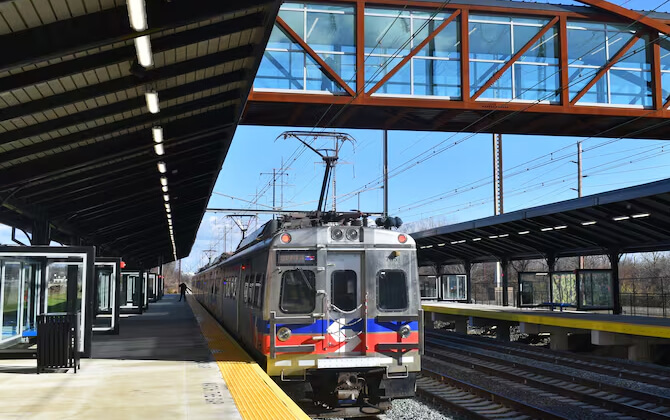
Connections in Center City Philadelphia
Most weekday Wilmington/Newark Line trains operate through the Center City tunnel to and from Lansdale/Doylestown Line points. Weekend Wilmington trains run through to and from Chestnut Hill East, giving riders a direct through-service pattern across the SEPTA Regional Rail system.
| Station | Details |
|---|---|
| Penn Medicine Station | Regional Rail and SEPTA City Bus connections, including routes 40 and LUCY |
| William H. Gray III 30th Street Station | Major SEPTA and Amtrak transfer station |
| Suburban Station | Central downtown connection point |
| Jefferson Station | Downtown connection point in the Center City tunnel |
| Temple University | Through-service station north of Center City |
On FIFA game days from June 14 to June 27 only, the last regularly scheduled trains are extended from Center City to Claymont Transit Center.
DART First State Connections in Delaware
DART First State links the Wilmington/Newark Line with local transport in Delaware, especially around Claymont, Wilmington, Churchmans Crossing, and Newark. These connections are important for transportation in New Castle County because SEPTA rail service to Newark is limited.
| Station | Details |
|---|---|
| Claymont | DART First State routes 13 and 61, plus SEPTA Suburban Bus 113 |
| Wilmington | DART First State routes 2, 5, 6, 10, 11, 13, 14, 18, 20, 28, 33, 35, 40, 301, and 305; also near Wilmington Transit Center |
| Churchmans Crossing | DART First State route 64 |
| Newark | DART First State routes 10, 33, and 46, plus DART Connect Newark and Cecil Transit 4 |
Amtrak Connections at Wilmington and Newark
The Wilmington/Newark Line shares the Northeast Corridor with Amtrak, but SEPTA and Amtrak tickets are not generally interchangeable. A separate ticket is required for Amtrak travel.
At Wilmington, riders can connect with Amtrak services including Acela, Cardinal, Carolinian, Crescent, Northeast Regional, Silver Meteor, and Vermonter. Newark also has limited Amtrak Northeast Regional service, along with local bus connections.
Because only weekday peak SEPTA trains run to Newark, weekend riders heading beyond Wilmington should plan another option.
Airport Connections
The Wilmington/Newark Line can be part of an airport trip, but it is not a direct airport rail line. For Philadelphia International Airport, riders typically transfer to the Airport Line in Philadelphia. For Newark Liberty International Airport, Amtrak provides direct service from Wilmington, while Greyhound service reaches Newark Penn Station and requires transfers to reach the airport.
Amtrak Northeast Regional trains run directly from Wilmington to Newark Liberty International Airport every day, about every three hours, with a typical journey time of about 1 hour 34 minutes. Tickets on that service cost $21–$210 (USD $21–$210). Driving from Wilmington to Newark Airport is about 176.9 km (109.9 mi) and takes approximately 2 hours 6 minutes.
Getting to Philadelphia International Airport
To reach Philadelphia International Airport by SEPTA, take the Wilmington/Newark Line to University City or Penn Medicine Station, then transfer to the Airport Line for your terminal. If you connect at 30th Street Station, you can also transfer there to the Airport Line.
Travel time by SEPTA is usually around 75 to 90 minutes, depending on connections. From Newark, it can take longer because SEPTA service to Newark runs only during weekday peak periods. The Airport Line runs every half hour, but the Wilmington/Newark Line is less frequent, so missed connections can mean a long wait.
For cost comparison, the SEPTA trip is generally cheaper, with fares for the two zones adding up to about $8 (USD $8) each. A rideshare from Newark to PHL may be faster and more convenient, but it can cost around $50 (USD $50), depending on time of day.
Some travelers also use shuttle services such as Delaware Express, while others drive or take a taxi when timing matters more than price. American Airlines also has a special bus connection between ILG and PHL where eligible passengers check in and clear security at ILG before being taken airside at Philadelphia.
Parking, Bike Access, and Station Amenities
Wilmington Station has paid parking nearby, with car park access available 24/7 via Martin Luther King Jr. Blvd. The station is also part of the Wilmington Transit Center, which includes parking and DART First State bus service. Current station parking details and parking charges should be checked before travel, especially if you need parking charges per day.
Bike access is available at Wilmington through dedicated bicycle facilities. The station lists 20 rack spaces, and the transit center also provides bicycle racks. Covered bike parking is available under an open porch near the station building.
Station amenities at Wilmington include free Wi-Fi, restrooms, a ticket office, an information desk, lost and found services, luggage carts, taxi access, benches, power outlets, water fountains, and a small security office. Restroom use is listed with a fee of $0.50 (USD $0.50). Accessibility features include ramps and restroom access.
How to Ride the Wilmington/Newark Line
Start by checking the current schedule, route plan, and real-time departures. Service patterns vary, and the path train takes depends on the day: weekday peak trains can reach Newark, while weekend trains close their southbound SEPTA service at Wilmington.
Use the Transit app to view upcoming train times, station-specific alerts, and real-time train locations on a map. This is especially helpful when you need opening hours, opening times, closing time, last train information, or service changes for today.
Before boarding, confirm whether you are riding SEPTA or Amtrak. They share parts of the corridor, but they use separate tickets and fare rules. Keep your ticket, SEPTA Key, or proof of payment accessible during the ride.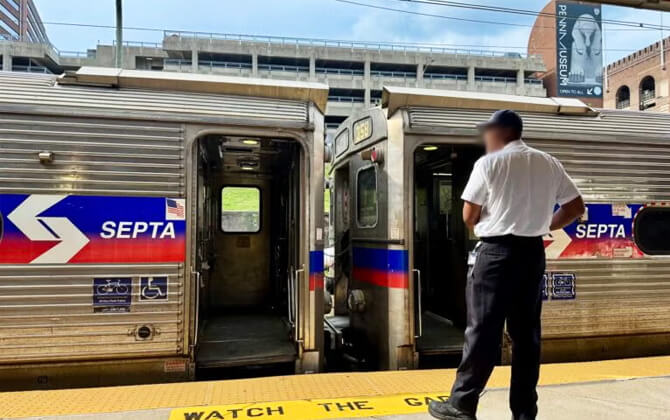
Tips for First-Time Riders
Arrive early enough to find the right track and platform, especially at Wilmington’s Joseph R. Biden Jr. Railroad Station. Listen for announcements and check display boards before boarding.
Travel light if you can, stay behind platform safety lines, and keep an eye on service alerts close to departure time. The Northeast Corridor is busy, and real-time updates can save you from surprises.
If you are traveling to Newark, double-check the timetable before you leave. Newark service is limited to weekday peak trains, and there is no SEPTA weekend or holiday service to Newark.
Rules, Safety, and Passenger Tips
For a safe ride, keep aisles clear, store larger items in overhead racks or under seats when possible, and use electronic devices at a volume that does not disturb other passengers. Smoking is not allowed on trains, in stations, or on platforms.
- Buy or prepare your ticket before boarding when possible.
- Watch the gap between the platform and the train.
- Use extra caution in rain or snow.
- Stand behind the safety line while waiting.
- Never get on or off a moving train.
- Cross tracks only at designated locations.
- Never go around lowered gates at a grade crossing.
- Stay alert, because trains may arrive quietly.
- Do not go near overhead electrified lines.
In an emergency, listen for crew announcements. If there is smoke or fire, move to an adjoining car and evacuate through the nearest exit only when instructed.
Brief History
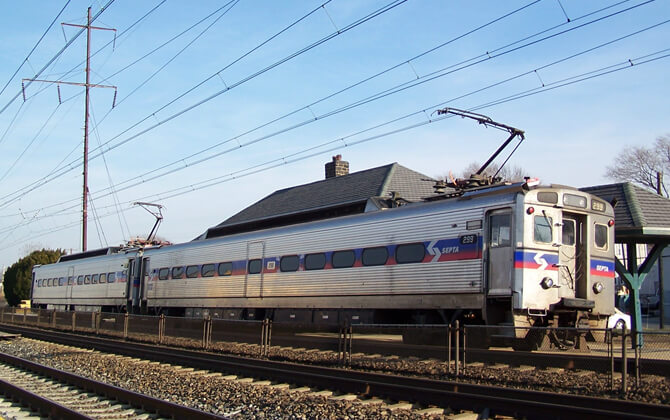
The Wilmington/Newark Line has a long history tied to the development of rail transportation in the Philadelphia and Delaware corridor. North of Wilmington, the route was originally built by the Philadelphia, Wilmington and Baltimore Railroad. The original alignment opened on January 17, 1838, and a realignment north of Chester opened on November 18, 1872.
South of Wilmington, the line was built by the Wilmington and Susquehanna Railroad and opened on July 31, 1837. The Pennsylvania Railroad gained control in the early 1880s. Electrified service between Philadelphia and Wilmington began on September 30, 1928, and electrified operation was extended to Newark and beyond to Washington, D.C., on February 10, 1935.
SEPTA assumed operations on January 1, 1983. Delaware service was initially eliminated, with trains ending at Marcus Hook, then restored to Wilmington on January 16, 1989. Claymont reopened in 1991, Newark service began on September 2, 1997, and Churchmans Crossing opened in 2000 as an infill station.
On July 25, 2010, SEPTA renamed the route from R2 Newark to the Wilmington/Newark Line as part of a systemwide naming change. Positive train control was activated on May 1, 2017. Service was suspended on April 9, 2020 during the COVID-19 pandemic, resumed between 30th Street Station and Wilmington on May 10, 2020, and returned to Newark on January 25, 2021.
Ridership ranged from about 2.5 to 2.8 million annually between FY 2013 and FY 2019 before dropping sharply during the pandemic. The modern route also reflects years of restoration and expansion in Delaware service.
Places to Visit Along the Line
The Wilmington/Newark Line connects riders with Center City Philadelphia, Delaware County communities, downtown Wilmington, the Brandywine Valley, and Newark. It is useful for commuting, day trips, campus travel, and regional public transport.
Along the wider corridor, riders can reach areas near Wilmington Train Station, Churchmans Crossing, Christiana Mall, and other New Castle County destinations. Wilmington and the Brandywine Valley are associated with attractions such as Hagley Museum and Library, Winterthur Museum, Garden & Library, the Delaware Museum of Nature and Science, the Brandywine Museum of Art, Longwood Gardens, and Rodney Square.
Wilmington and the Riverfront
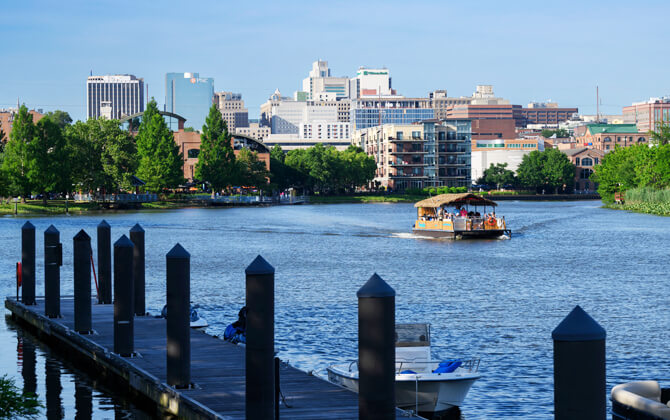
Wilmington is one of the line’s key destinations and a practical stop for exploring downtown Delaware. Wilmington Station is close to the historic downtown and the Riverfront, so it works well for a walkable day trip.
The Riverfront includes 2.1 km (1.3 mi) of waterfront walking, dining, and attractions. The Grand Opera House and other historic venues add to the area’s appeal. From William H. Gray III 30th Street Station, the ride to Wilmington takes just under an hour.
University of Delaware and Newark
For travel between the University of Delaware’s Newark campus and Wilmington, the Wilmington/Newark Line is the most direct weekday rail option. Trains run between Newark Train Station at STAR Campus and Wilmington Amtrak Station, with the trip taking about 20 minutes and costing about $4 (USD $4) each way.
This is a commuter schedule. There is no midday SEPTA service between Newark and Wilmington, and there is no SEPTA service between Newark and Wilmington on weekends. Weekday trains to Wilmington leave Newark in the morning, while weekday trains back to Newark begin in the late afternoon.
Other options between Newark and Wilmington include DART bus service, taxi, rideshare, and University of Delaware transportation options such as the Motor Pool or college and department vans.
Center City Philadelphia
In Center City Philadelphia, the Wilmington/Newark Line serves major rail hubs including Penn Medicine Station, 30th Street Station, Suburban Station, Jefferson Station, and Temple University. Most weekday trains continue through the Center City tunnel, giving riders direct access to the city center.
The line is one of the main Regional Rail links between Philadelphia, southeastern Pennsylvania, and northern Delaware. Since service patterns vary by day, check the train schedule before making plans, especially for weekend travel or trips to Newark.
FAQ
Is the Wilmington/Newark Line a commuter rail line?
Yes. The Wilmington/Newark Line is part of SEPTA Regional Rail, SEPTA’s commuter rail system in the Philadelphia area. It connects southeastern Pennsylvania and northern Delaware, including Marcus Hook, Wilmington, Churchmans Crossing, and Newark.
SEPTA provides the commuter rail service, while Amtrak operates intercity trains on the same corridor. Their tickets are not generally interchangeable.
Does the Wilmington/Newark Line go to Newark, Delaware every day?
No. SEPTA service to Newark, Delaware operates only on weekday peak trains. On weekends and major holidays, all Wilmington/Newark Line trains terminate at Wilmington.
If Newark is your destination, check the current timetable carefully before you travel.
Which Wilmington/Newark Line stations are in Delaware?
The Delaware stations are Claymont, Wilmington, Churchmans Crossing, and Newark. They are all in Zone 4.
| Station | Details |
|---|---|
| Claymont | Delaware Zone 4 station with DART First State and SEPTA bus connections |
| Wilmington | Major Delaware station with SEPTA, Amtrak, DART First State, and Greyhound connections |
| Churchmans Crossing | Delaware Zone 4 station with DART First State route 64 |
| Newark | Southern SEPTA endpoint on weekday peak trains only |
How do I pay for the Wilmington/Newark Line?
You can pay with a SEPTA Key Card, SEPTA Key Quick Trip, or cash. SEPTA also accepts contactless payment on Regional Rail, including credit and debit cards and supported mobile wallets.
If you transfer to Amtrak or another operator, you need a separate ticket unless a specific exception is announced.
Can I use an Amtrak ticket on SEPTA or a SEPTA ticket on Amtrak?
No, SEPTA and Amtrak tickets are not generally interchangeable. A SEPTA ticket does not cover Amtrak service, and an Amtrak ticket does not normally cover SEPTA commuter rail.
One limited exception is that Amtrak paper tickets and e-Tickets purchased for the same date of travel may be accepted on SEPTA Regional Rail between William H. Gray III 30th Street Station, Suburban Station, and Jefferson Station. Present the ticket at the faregate barcode reader and to the conductor for visual confirmation.
Can I bring a bike on the Wilmington/Newark Line?
Bike access is available at Wilmington Station through racks and covered bicycle parking. On-board bicycle rules can depend on current SEPTA policy, crowding, and train conditions, so check the latest rules before traveling with a bike.
At stations, walk your bike on platforms and keep it clear of doors, aisles, and accessibility areas.
Is there parking at Wilmington/Newark Line stations?
Yes, parking is available at several stations, but options and costs vary. Wilmington Station has paid parking nearby and parking access through Wilmington Transit Center. Claymont, Churchmans Crossing, and Newark are described as having generally free parking in the provided station information.
Wilmington is the station where riders are most likely to encounter paid parking or a busier garage, especially during weekday morning peak times. Arriving early can make the trip easier.