The Mumbai Suburban Railway, often called the local train system or simply the locals, is the backbone of public transport in the Mumbai Metropolitan Region. It combines dedicated suburban corridors with commuter rail services on main lines, making it one of the most important city transport networks in India. The system stretches for about 450 kilometres (279.6 miles), runs 2,342 train services, and carries more than 7.5 million passengers a day. Its operating hours are generally from 4:00 AM to 1:00 AM, with some services running later, sometimes until 2:30 AM or 3:00 AM. It was also the first suburban rail network in India and remains one of the oldest railway systems in Asia.
| Key | Information |
|---|---|
| System | Mumbai Suburban Railway |
| Type | Suburban rail and commuter transport system |
| Coverage | About 450 kilometres (279.6 miles) |
| Daily ridership | More than 7.5 million passengers |
| Annual ridership | About 2.64 billion passengers |
| Daily services | 2,342 train services |
| Opening hours | Usually from 4:00 AM to 1:00 AM |
| Late services | Some trains continue until 2:30 AM or 3:00 AM |
| Operators | Western Railway and Central Railway |
| Historical note | First suburban rail network in India and one of the oldest in Asia |
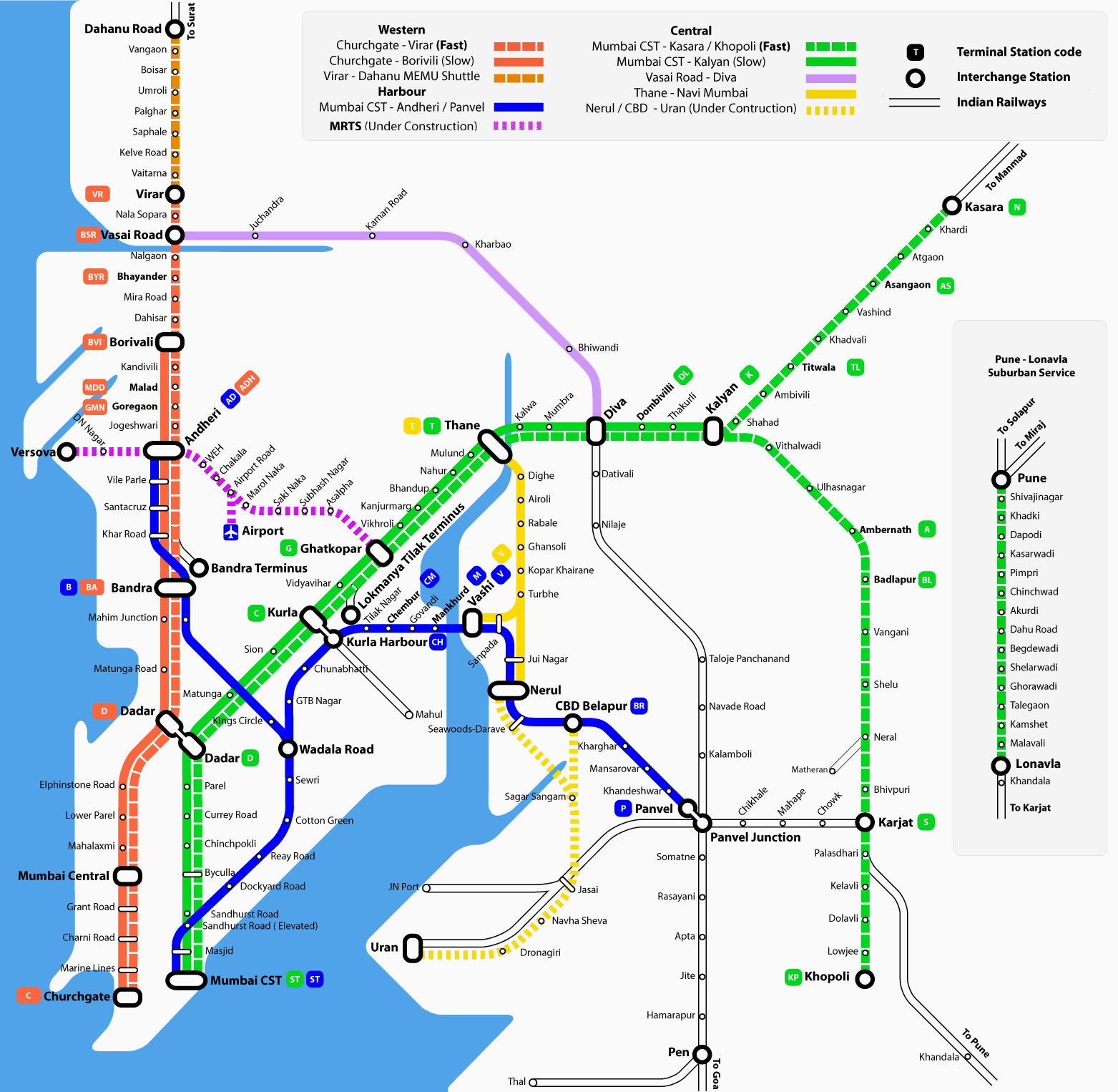
Map of Mumbai Suburban Railway
Map of Mumbai Metro showing different lines. Click on the map to enlarge it or download the Palma Metro map in PDF format.
Lines and Stations
The Mumbai Suburban Railway route plan is built around seven main corridors: the Western Line, Central Line, Harbour Line, Trans-Harbour Line, Port Line, Vasai Road-Roha Line, and the Panvel-Karjat Line. Together, these routes form the core of transportation in Mumbai and the wider metropolitan region.
The system is operated by Western Railway and Central Railway. Some sections use dedicated suburban tracks, while others share infrastructure with long-distance and freight traffic. Slow services stop at every station, while fast trains skip selected stations before continuing as slow services farther out.
Main corridors
- Central Line runs from Chhatrapati Shivaji Maharaj Terminus to Kalyan Junction, then branches toward Kasara and Khopoli.
- Western Line runs from Churchgate north through the western suburbs to Dahanu Road.
- Harbour Line connects Chhatrapati Shivaji Maharaj Terminus with Goregaon and Panvel.
- Trans-Harbour Line links Navi Mumbai and Thane.
- Vasai Road-Roha Line acts as a connecting chord between different suburban and railway corridors.
- Port Line, also called the Nerul-Uran line, connects Navi Mumbai with Uran.
- Panvel-Karjat Line is an upcoming suburban corridor with five planned stations: Panvel, Chikhale, Mohope, Chowk, and Karjat.
Key interchange stations
| Station | Details |
|---|---|
| Dadar | Connects the Central Line and Western Line. |
| Kurla | Connects the Central Line and Harbour Line. |
| Sandhurst Road | Connects the Central Line and Harbour Line. |
| Thane | Connects the Central Line and Trans-Harbour Line. |
| Vashi | Important interchange point on the Harbour and Trans-Harbour corridors. |
| Nerul | Important interchange point on the Harbour and Trans-Harbour corridors. |
| Andheri | Connects the Western Line with the Harbour Line. |
Selected stations on the network
| Station | Details |
|---|---|
| Chhatrapati Shivaji Maharaj Terminus | Central Line and Harbour Line terminal station. |
| Dadar | Major interchange on the Central Line and Western Line. |
| Thane | Major interchange on the Central Line and Trans-Harbour Line. |
| Panvel | Terminal and transfer station on the Harbour Line, Vasai Road-Roha Line, and Panvel-Karjat Line. |
| Vasai Road | Transfer station on the Western Line and Vasai Road-Roha Line. |
| Andheri | Transfer station on the Western Line and Harbour Line. |
Some stations handle long-distance rail services as well, while others are used only for suburban trains. For anyone checking a stations map or building a route, interchange points like Dadar, Thane, Kurla, and Andheri are especially important.
Schedule and Frequency
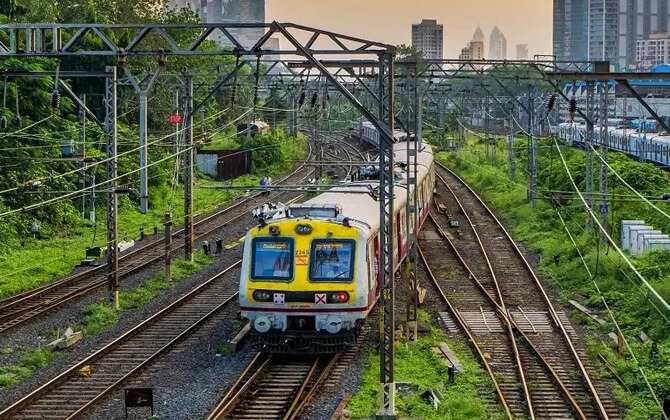
The Mumbai Suburban Railway timetable is not always rigid to the minute. At en route stations, trains may depart up to 3 minutes before the scheduled time. At originating stations, though, departures follow the train schedule.
Operating hours are generally from about 4:00 AM to 1:00 AM. On some late-night services, opening times effectively extend until 2:30 AM or even 3:00 AM. If you are checking timings today, schedule today details, or the last train and closing time for a specific route, it is best to verify the latest timetable before travel.
| Service detail | Timings |
|---|---|
| General operating hours | About 4:00 AM to 1:00 AM |
| Late services on some routes | Up to 2:30 AM or 3:00 AM |
| Peak frequency on busiest sections | Roughly every 3 minutes |
| Off-peak frequency | Usually every 5 to 10 minutes |
| Late-night frequency | About every 20 to 30 minutes |
| Other suburban routes | Typically every 10 to 30 minutes |
| Departure rule at en route stations | May leave up to 3 minutes before scheduled time |
| Departure rule at originating stations | Leave at scheduled time only |
Service patterns vary by route and train type. Slow trains stop at every station. Fast trains skip selected stops, which can cut running time on longer journeys. So if you are planning by route timetable, timings, or frequency, check whether your train is fast or slow before boarding.
Prices, Tickets, and Cards
Mumbai Suburban Railway fare depends on distance, class, and ticket type. Single-journey tickets are available in second class and first class, and AC EMU fares apply on selected distance slabs. Monthly pass prices also vary by distance.
For single trips, the minimum ticket price is ₹5 ($0.06) in second class, ₹25 ($0.30) in first class, and ₹35 ($0.42) for AC EMU on the shortest distance slabs. Children above 5 years and under 12 years pay half the adult fare, subject to the minimum fare. The minimum child fare is ₹5 ($0.06) in second class, ₹25 ($0.30) in first class, and ₹35 ($0.42) in AC EMU. CIDCO surcharge is charged separately where applicable.
How to Buy Tickets
You can buy a single ticket or a return ticket. Return tickets are valid until midnight of the next day on weekdays. If bought on Friday, they stay valid until Monday for the return journey. Travel should begin within one hour of purchase.
Tickets are sold at booking counters at suburban stations, with payment accepted in cash and through digital modes. ATVMs are also available and can issue AC EMU, first class, and second class single and return tickets, platform tickets, and season ticket renewals for adults and children.
Smart Card and ATVM Use
A Smart Card can be used with ATVMs to buy tickets. It is sold at booking offices in suburban stations and can be recharged when needed. Each recharge gives 3% extra value.
- Smart Card cost: ₹70 ($0.84), including a refundable deposit of ₹50 ($0.60) and recharge value of ₹20 ($0.24).
- Minimum recharge: ₹20 ($0.24).
- Maximum recharge: ₹9,500 ($114.46).
- Cancellation charges: ₹30 ($0.36).
- Validity: 1 year after the last recharge.
ATVMs also support online payment by QR code. If you are looking for a card option instead of buying paper tickets each time, this is the main one mentioned for the suburban system.
Other Ticketing Options
Under the JTBS scheme, passengers can buy unreserved tickets from counters outside stations by paying ₹2 extra per passenger ($0.02) and ₹5 extra on season tickets ($0.06). Tourist tickets are also available for unlimited travel on the Mumbai suburban sections of Western Railway and Central Railway in 1-day, 3-day, and 5-day options.
Monthly Season Ticket Fares
| Station | Details |
|---|---|
| 1-5 kilometres (0.6-3.1 miles) | First class monthly pass: ₹325 ($3.92); Second class monthly pass: ₹100 ($1.20) |
| 6-10 kilometres (3.7-6.2 miles) | First class monthly pass: ₹325 ($3.92); Second class monthly pass: ₹100 ($1.20) |
| 11-15 kilometres (6.8-9.3 miles) | First class monthly pass: ₹440 ($5.30); Second class monthly pass: ₹100 ($1.20) |
| 116-120 kilometres (72.1-74.6 miles) | First class monthly pass: ₹1,765 ($21.27); Second class monthly pass: ₹440 ($5.30) |
| 121-125 kilometres (75.2-77.7 miles) | First class monthly pass: ₹1,780 ($21.45); Second class monthly pass: ₹440 ($5.30) |
| 126-130 kilometres (78.3-80.8 miles) | First class monthly pass: ₹1,850 ($22.30); Second class monthly pass: ₹440 ($5.30) |
| 191-195 kilometres (118.7-121.2 miles) | First class monthly pass: ₹2,525 ($30.42); Second class monthly pass: ₹615 ($7.41) |
| 196-200 kilometres (121.8-124.3 miles) | First class monthly pass: ₹2,530 ($30.48); Second class monthly pass: ₹615 ($7.41) |
| 201-205 kilometres (124.9-127.4 miles) | First class monthly pass: ₹2,610 ($31.45); Second class monthly pass: ₹615 ($7.41) |
| 206-210 kilometres (128.0-130.5 miles) | First class monthly pass: ₹2,615 ($31.51); Second class monthly pass: ₹700 ($8.44) |
| 321-330 kilometres (199.5-205.1 miles) | First class monthly pass: ₹3,800 ($45.79); Second class monthly pass: ₹955 ($11.51) |
| 331-340 kilometres (205.7-211.3 miles) | First class monthly pass: ₹3,885 ($46.81); Second class monthly pass: ₹955 ($11.51) |
| 341-350 kilometres (211.9-217.5 miles) | First class monthly pass: ₹3,975 ($47.90); Second class monthly pass: ₹955 ($11.51) |
| 481-490 kilometres (298.9-304.5 miles) | First class monthly pass: ₹5,185 ($62.47); Second class monthly pass: ₹1,300 ($15.66) |
| 491-500 kilometres (305.1-310.7 miles) | First class monthly pass: ₹5,270 ($63.49); Second class monthly pass: ₹1,385 ($16.69) |
For station-to-station fare details, official fare tables give examples by route and class on the Western Line. If you need an exact fare calculator result, you will need the current station pair and class.
Connections with Other Systems
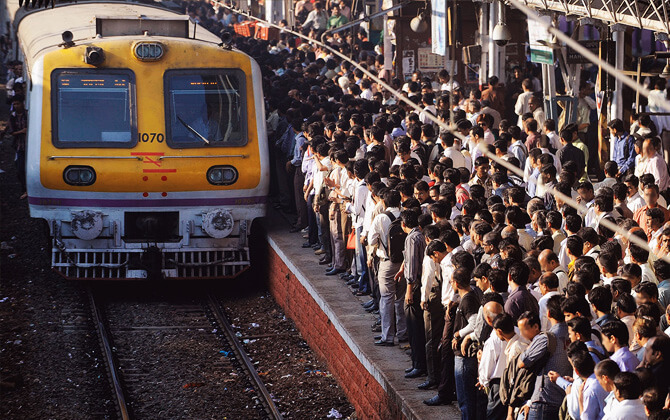
The Mumbai Suburban Railway is closely tied to the wider Indian Railways network and remains central to transportation in the region. Fast services support links with long-distance trains, while some corridors are shared with freight and intercity traffic.
The Central Line connects with the Western Line at Parel and Dadar, and with the Harbour Line at Sandhurst Road and Kurla. Dadar is also listed as a station shared with Indian Railways, while CSMT connects with the Harbour Line and Indian Railways services.
Beyond the main city, the Harbour Line links CSMT with Goregaon and Panvel, with an interchange at Kurla and a split at Vashi toward Thane and Panvel. The Trans-Harbour Line connects Thane with Navi Mumbai. The Vasai Road-Roha Line works as a bypass route linking the Western, Central, and Harbour lines, and also connects Panvel with the Konkan Railway. The Nerul-Uran Port Line adds direct access from Nerul and CBD Belapur to Uran and JNPT.
Integration with other urban transport systems is also planned. Mumbai Metropolitan Region Development Authority has identified 34 metro stations for integration with 39 suburban railway stations on the Central and Western corridors. Planned links also include the Monorail and the proposed pod taxi system at Bandra-Kurla Complex. According to the available material, the BKC pod taxi system will connect Kurla West and Bandra East, while Sant Gadge Maharaj Chowk Monorail station will connect to Mahalaxmi station on the Western Line.
Future expansion will strengthen these links further. A proposed suburban corridor on the Vasai Road-Roha route is intended to improve connectivity, while the upcoming Panvel-Karjat line will add five stations within the metropolitan area.
Connections to the Airport
Mumbai airport is not directly served by the suburban railway, so airport access usually involves a road transfer after the train ride. For Terminal 1, the nearest practical suburban station is Vile Parle on the Western Line. Andheri and Santacruz are also useful Western Line options. On the Central Line, Kurla is the nearest major station for an onward road transfer.
Andheri is especially useful because it also connects with Mumbai Metro Line 1. Ghatkopar can also help if you plan to switch to the metro. For Terminal 2, metro stations such as Airport Road and Marol Naka are close to the international terminal.
- Western Line: Vile Parle, Santacruz, and Andheri are the main suburban stations for airport access.
- Central Line: Kurla is the nearest major station for an airport transfer by road.
- Metro connections: Andheri and Ghatkopar offer useful interchange options for airport-bound passengers using public transport.
If you are heading to the airport, leave extra time for the final transfer, especially during peak road traffic.
System Rules
The Mumbai Suburban Railway follows strict safety and travel rules. Passengers are expected to follow staff instructions and use the system safely at all times.
Tips and Advice
Mumbai local trains can feel intense at first, but a bit of planning helps a lot. The network spans more than 465 kilometres (288.9 miles) and carries millions every day, so it pays to understand the basics before you travel.
Know your route before you leave. The main lines are Western, Central, and Harbour, and many trips depend on choosing the right fast or slow service. Checking the stations list in advance can save time.
If possible, avoid the busiest periods, usually 8:00 AM to 10:30 AM and 6:00 PM to 8:30 PM. Morning travel toward the south and evening travel toward the north are often the most crowded.
Buy the right ticket and check the class carefully. First class is usually less crowded, while second class costs much less. Ladies coaches and compartments for differently-abled passengers are also available.
Platform signs and train indicators can be confusing at first. Ask for help if needed. It is normal, and locals do it too.
Slow trains stop everywhere. Fast trains stop only at key stations. For longer journeys, a fast local can be a real time-saver, but only if your stop is on that service pattern.
Board quickly, but stay safe. Trains stop only briefly, often for just a few seconds. Let people get off first, then step in without pushing. If you miss one, another usually comes soon.
Keep your belongings close and stay alert, especially during crowded periods. It also helps to prepare for your exit one station early so you can reach the door in time.
Use the correct station exit whenever possible. At larger stations, choosing the right side can save you a surprisingly long walk.
- Follow the queue system while waiting for the train.
- Stand behind the yellow line on the platform.
- Keep right on escalators and let others pass on the left.
- Offer seats to elderly passengers, pregnant women, and physically challenged people.
- Use dustbins and help keep stations and trains clean.
- Keep luggage in a way that does not inconvenience other passengers.
- Stay alert and report suspicious objects or activity to staff.
- Use earphones when listening to music.
- Do not board or get off a moving train.
- Do not lean against train doors.
- Do not cross the yellow line.
- Do not litter, smoke, or damage railway property.
- Do not carry inflammable or hazardous materials.
- Do not enter or exit a station without a valid ticket.
- Do not cause nuisance to other passengers.
Breaking the rules may lead to fines or legal action. The source material also states that dangerous materials, offensive materials, live animals, and birds are not allowed on the Mumbai Metro Railway, and that people suffering from declared infectious or contagious disease must not travel, except in the specific case mentioned for a closed non-infective leprosy patient carrying a medical certificate. Security personnel may use sniffer dogs for security purposes.
A Glimpse into History
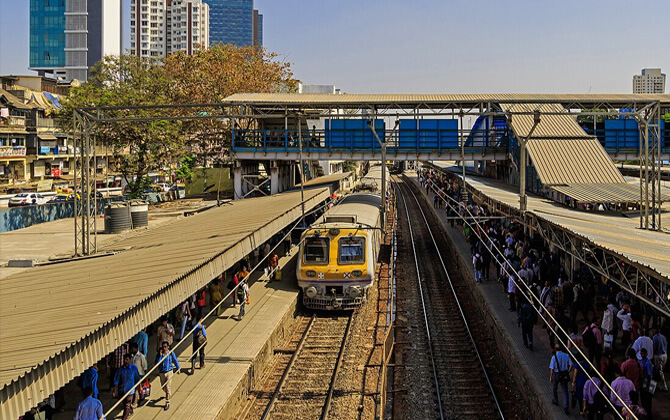
The Mumbai Suburban Railway grew out of the first passenger railway built by the British East India Company and is described as the oldest railway system in Asia. The first train ran between Bori Bunder and Thane on 16 April 1853, covering 34 kilometres (21.1 miles) in 57 minutes, with a halt at Sion to refill water tanks.
Another major service began in April 1867 between Virar and Bombay Backbay, later extended to Colaba in 1873. A key milestone came on 3 February 1925, when the first EMU service started from Victoria Terminus to Coorla Harbour on the Central Line using 1.5 kV DC traction. EMU service on the Western Line began on 5 January 1928, and by 2016 the entire network had been converted to 25 kV, 50 Hz AC traction.
Over time, the system expanded from a single 34-kilometre (21.1-mile) route into a vast suburban rail network serving the whole Mumbai Metropolitan Region. Its history is really a story of steady growth, electrification, and constant adaptation to demand.
Future Expansions
Mumbai Suburban Railway expansion is moving forward through ongoing and planned projects under the Mumbai Urban Transport Project framework. The aim is to add capacity, reduce congestion, and improve connectivity.
On the Central Railway side, the main projects include the CSMT-Kurla 5th and 6th line, the Panvel-Karjat Suburban Corridor, the Kalyan-Asangaon 4th line, the Kalyan-Badlapur 3rd and 4th line, the Kalyan-Kasara 3rd line, the Airoli-Kalva elevated suburban corridor link, the Nilaje-Kopar double chord line, the Badlapur-Karjat 3rd and 4th line, and the Asangaon-Kasara 4th line.
On the Western Railway side, planned works include the Mumbai Central-Borivali 6th line, the Harbour Line extension from Goregaon to Borivali, the Borivali-Virar 5th and 6th line, the Virar-Dahanu 3rd and 4th line, and the Naigaon-Juichandra double chord line.
Other upgrades include new and expanded terminuses, more platforms, new pit lines, and maintenance improvements at Jogeshwari, Vasai Road, Mumbai Central, Bandra Terminus, and Dadar. The wider expansion programme also includes new 12-car rakes and better integration with metro stations.
By 2030, these projects are expected to raise train-handling capacity and support future passenger demand more effectively.
Interesting Facts
The Mumbai Suburban Railway is one of the busiest commuter rail systems in the world, carrying more than 7.5 million passengers daily and about 2.64 billion annually.
It is also described as the oldest railway system in Asia. The first train ran on 16 April 1853 between Bori Bunder, now Chhatrapati Shivaji Maharaj Terminus, and Thane, covering 34 kilometres (21.1 miles) in about 57 minutes.
The network covers more than 450 kilometres (279.6 miles) and runs 2,342 train services every day. Around 40% of Indian Railways’ daily commuters use this system.
The first EMU service on the Central Line started in 1925, and the whole network was converted to 25 kV, 50 Hz AC traction by 2016.
Some trains are built for very high capacity. A 12-car train can carry 3,504 passengers, while a 9-car train can carry 2,628 passengers. The first AC local train entered commercial service on Western Railway in December 2017.
The system is also known for its distinctive operating style. Many services run with open doors and windows for natural ventilation and quicker boarding, as trains often stop for only about 10 seconds at a station.
At the same time, overcrowding remains severe. During peak hours, more than 4,500 passengers may be packed into a train designed for around 2,000.
The network has also been affected by major tragedies, including bomb attacks in 1993, 2003, 2006, and the 2008 Mumbai attacks at Chhatrapati Shivaji Terminus.
Views from the Mumbai Metro
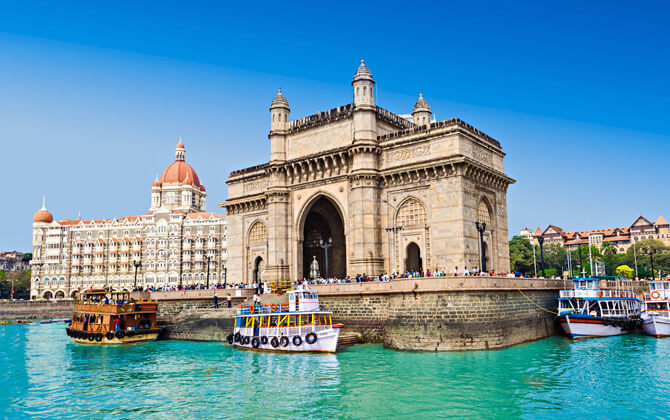
Mumbai Metro Line 1 runs between Versova and Ghatkopar and connects suburban areas that are mainly residential. For many visitors, the ride itself is part of the appeal, not just the transport value.
Because the stations on Line 1 are above ground, passengers get broad views of the city along the way. The metro is also often appreciated by public transport enthusiasts for its clean design and the overall travel experience.
The metro is still limited in scope, so for many tourists it works better as a way to observe the city than as a complete sightseeing solution. Even so, the elevated route gives a clear look at suburban Mumbai and everyday urban life below.
- Current operational corridor: Versova to Ghatkopar.
- Station type: above ground.
- Best suited for: travellers interested in the ride and city views.
- Noted for: a pleasant experience for public transport enthusiasts.