Kolkata Metro Railway is the rapid transit system serving Kolkata and the wider Kolkata Metropolitan Region in West Bengal, India. Opened in 1984, it was the first rapid transit system in South Asia. The metro now runs 5 color-coded lines with 58 stations over 73.42 km (45.62 miles), using underground, at-grade, and elevated sections. It operates with both broad-gauge and standard-gauge tracks on a 750 V DC third-rail system, and it is the only metro system in India controlled entirely by Indian Railways.
| Key | Information |
|---|---|
| System | Kolkata Metro Railway |
| Type | Rapid transit / public transport system |
| Opened | 1984 |
| Region served | Kolkata and Kolkata Metropolitan Region, West Bengal, India |
| Operational lines | 5 |
| Stations | 58 |
| Network length | 73.42 km (45.62 miles) |
| Power supply | 750 V DC third rail |
| Operating hours | 06:30 to 22:44 IST |
| Daily ridership | More than 800,000 passengers |
| Daily train trips | Around 300 |
Map of the Kolkata Metro
Map of Kolkata Metro showing different lines. Click on the map to enlarge it or download the Kolkata Metro map in PDF format.
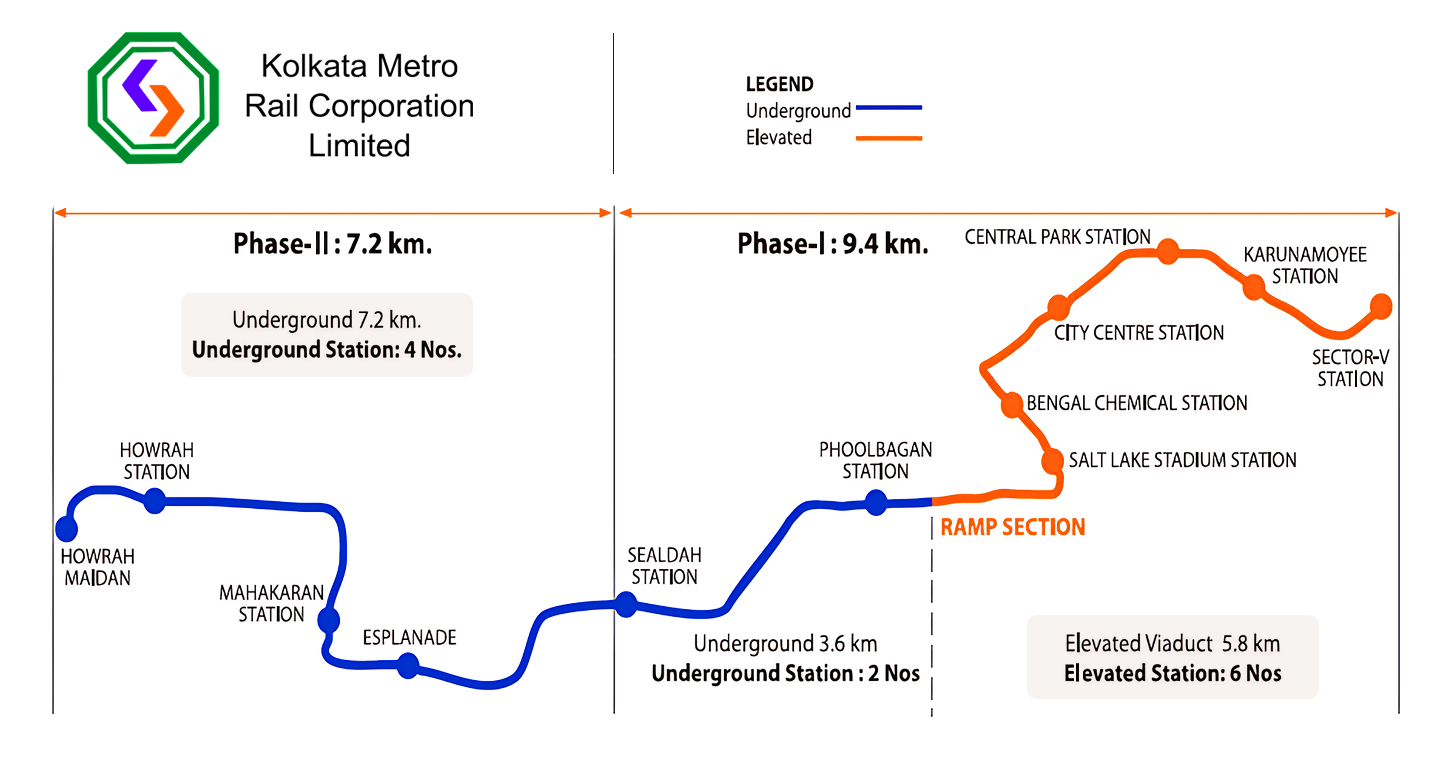
Lines and Stations of the Kolkata Metro
Kolkata Metro is a five-line city transport system with 58 operational stations and a total route length of 73.42 km (45.62 miles). The network covers Kolkata and nearby urban areas through a mix of underground, elevated, and at-grade infrastructure. As of 2025, the operational route plan includes the Blue Line, Green Line, Purple Line, Yellow Line, and Orange Line.
The Blue Line is the longest line in the system. The Green Line stands out for its river-crossing section and major interchange role. Several stations also connect with suburban and national rail services, which makes the metro an important part of transportation in Kolkata and the broader local transport network.
Operational lines
| Station | Details |
|---|---|
| Blue Line | 26 stations, running from Dakshineswar to Kavi Subhash. |
| Green Line | 12 stations, running from Howrah Maidan to Salt Lake Sector V. |
| Purple Line | 7 stations, running from Joka to Majerhat. |
| Yellow Line | 4 stations, running from Noapara to Jai Hind. |
| Orange Line | 9 stations, running from Kavi Subhash to Beleghata. |
Key station and line features
The Blue Line was the first metro route in India and opened in stages between 1984 and 2021. The Green Line includes the underwater tunnel below the Hooghly River, and Howrah station is the deepest metro station in India at 34 m (0.03 km / 112 ft / 0.02 miles). Esplanade is a major interchange station, while Jai Hind became the largest metro station in India in August 2025.
Important interchange stations include Noapara, Kavi Subhash, Esplanade, Salt Lake Sector-V, and Jai Hind. These transfer points shape the stations map and help passengers move more easily across the system.
Station layout and operation
Station design varies by corridor. In the central business area, many stations are underground with island platforms, while newer extensions often use elevated side-platform layouts. Daily train service generally runs from 06:30 to 22:44 IST, with around 300 trips a day.
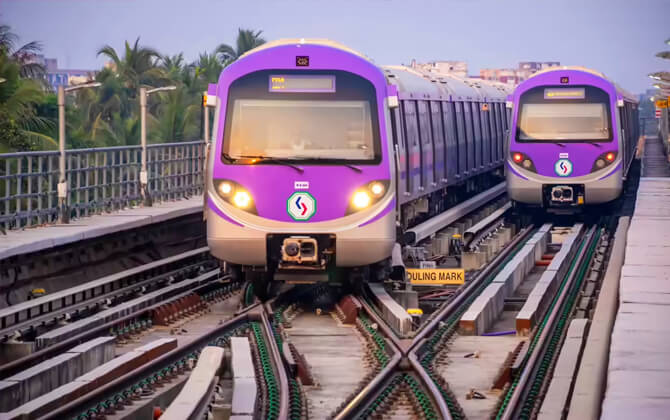
Schedules, Timetables, and Calendar
Kolkata Metro publishes timetable information for passenger service, with separate train schedule details for weekdays and Sundays. The available route timetable covers the North-South corridor, including the Blue Line, and shows first train and last train timings in both directions.
The timetable material also lists lines referenced in the schedule area, including the East-West Line, Joka-Esplanade corridor, Kavi Subhash-Beleghata corridor, and the Noapara-Jai Hind Bimanbandar line. For trip planning, station-by-station timings are shown for Kavi Subhas to Dum Dum or Noapara and for the reverse route.
| Service detail | Timings |
|---|---|
| Regular operating hours | 06:30 to 22:44 IST |
| One updated service window noted for November 2024 | 06:50 to 22:40 IST |
| Weekday service | Monday to Saturday; early morning departures and service into the late evening |
| Sunday service | Starts later than weekday service |
| Timetable format | Organized by direction and day type |
| Coverage | Station-level first and last train timings for the main North-South corridor |
| Review note | Source materials last reviewed on 26-04-2023 |
| Last updated note | Timetable pages indicate March 26, 2026 |
Train Signaling System and Departure Frequency
Kolkata Metro uses a 750 V DC third-rail system and a mix of signaling arrangements across the network. On parts of the system, automatic signaling is already in place. From Kavi Subhash to Noapara, three-aspect automatic signaling is provided along with centralized monitoring of the MSDAC system.
A proposed upgrade to Communication Based Train Control is intended to improve reliability and increase frequency. According to the available information, it could reduce the minimum gap between trains from 5 minutes to 90 seconds. Work is also underway to replace the old stainless steel third rail with aluminium, which is expected to reduce energy loss and help address voltage drops.
Trains generally run between 06:30 and 22:44 IST, though one service update mentions 06:50 to 22:40 IST as the working hours in November 2024. Earlier material mentions 358 daily services, while later data refers to around 300 train trips per day. Trains usually stop for about 10 to 20 seconds at each station, depending on crowding.
The system also uses train describers, auto train charting, LED signals, digital countdown clocks, and station display boards showing the terminating station, current time, scheduled arrival time, and estimated arrival time in Bengali, Hindi, and English. Some connected sections were still being unified after line connection works, so signaling integration remains part of ongoing expansion.
Fares, Tickets, and Cards
Kolkata Metro is known for low-cost public transport. The fare structure is distance-based, and the ticket price depends on the line and length of travel. The starting fare is Rs. 5 (about $0.06), and different lines use different zone-based or station-to-station fare tables.
| Zone | Distance | Line 1 Fare | Line 2 Fare |
| I | 0 – 2 km (0 – 1.24 miles) | Rs. 5 (about $0.06) | Rs. 5 (about $0.06) |
| II | 2 – 5 km (1.24 – 3.11 miles) | Rs. 10 (about $0.12) | Rs. 10 (about $0.12) |
| III | 5 – 10 km (3.11 – 6.21 miles) | Rs. 15 (about $0.18) | Rs. 20 (about $0.24) |
| IV | 10 – 20 km (6.21 – 12.43 miles) | Rs. 20 (about $0.24) | Rs. 30 (about $0.36) |
| V | 20 – 30 km (12.43 – 18.64 miles) | Rs. 25 (about $0.30) | – |
The Green Line, Purple Line, Orange Line, and Blue Line also have separate station-to-station fare tables. In practice, that works as a route-based fare calculator for passengers choosing between different stations.
Smart Cards
Smart Cards give bonus ride value on recharge, so they are a practical option for regular travel.
| Recharge Value | Ride Value |
| Rs. 100 (about $1.20) | Rs. 110 (about $1.32) |
| Rs. 200 (about $2.40) | Rs. 220 (about $2.64) |
| Rs. 300 (about $3.60) | Rs. 330 (about $3.96) |
| Rs. 500 (about $6.00) | Rs. 550 (about $6.60) |
| Rs. 1000 (about $12.00) | Rs. 1100 (about $13.20) |
A General Smart Card was introduced in 2013. Online smart card recharge became available on 1 July 2020.
Tourist Smart Cards
Tourist Smart Cards act like a short-term pass for unlimited rides during their validity period.
- Tourist Smart Card I: Rs. 250 (about $3.00), valid for one day
- Tourist Smart Card II: Rs. 550 (about $6.60), valid for three days
- Refundable security deposit: Rs. 60 (about $0.72) for both cards
Child Policy
Up to three children with a height of 90 cm (0.9 m / 2.95 ft) or less can travel free when accompanied by an adult. This rule does not apply to group bookings. Children above 90 cm are charged the full fare.
Interconnections with Other Systems
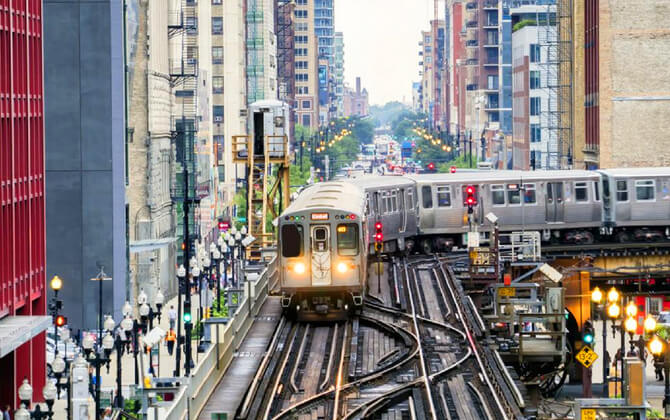
Kolkata Metro is closely integrated with the city’s wider transport network. Several stations work as interchange points with suburban rail and other metro corridors, making transfers easier between the central city, railway terminals, the airport corridor, and surrounding districts.
Suburban rail links are especially important because the Kolkata Suburban Railway is the city’s largest commuter rail system. Metro stations such as Esplanade, Sealdah, Howrah, Dum Dum, and Majerhat provide key transfer options between rapid transit and regional rail services.
The Blue Line connects with suburban rail at Dum Dum, Baranagar, Dakshineswar, and New Garia-related transfer points mentioned in planning material. It also links with other metro corridors at Esplanade and Kavi Subhash. The Green Line strengthens travel between Salt Lake, Sealdah, and Howrah, with major interchange value at Esplanade, Sealdah, and Howrah.
The Purple Line has interchange facilities with the Blue Line and Green Line at Esplanade, and with the Blue Line at Park Street. The Orange Line adds more cross-line connectivity at Kavi Subhash with the Blue Line, at Salt Lake Sector-V with the Green Line, and at Teghoria/VIP Road with the Green Line. The Yellow Line connects with the Blue Line at Noapara and was planned with a strong interchange role in the airport and north Kolkata corridor.
Some stations were specifically upgraded for easier transfers. Esplanade was expanded with a subway to support interchange among the Blue Line, Green Line, and future Purple Line, while new four-platform interchange stations were built at Noapara and Kavi Subhash.
Beyond rail, the metro also fits into Kolkata’s broader public transport system by serving major roads, business districts, and urban corridors. It plays a central role in city transport and everyday local transport across the metro area.
Connection to the Airport
Kolkata Metro now has a direct rail link to Netaji Subhas Chandra Bose International Airport through the Yellow Line. The airport station, Jai Hind Bimanbandar, is part of the operational Phase 1 stretch between Noapara and the airport.
At present, the Yellow Line has four stations: Noapara, Dumdum Cantonment, Jessore Road, and Jai Hind. Passengers can travel from the airport to Noapara and change there to the Blue Line for onward transport to other parts of the city.
The airport station connects to the terminal through an 80 m (0.08 km / 262 ft / 0.05 miles) tunnel with walkalators and escalators. Passengers reach the terminal through Gate 1A, and external elevators provide access to the departure level. Airport authorities have also planned further improvements, including possible airline check-in counters at arrival level and a separate security hold area for metro passengers.
The Orange Line is also planned to serve the airport area. Its airport section was redesigned after an objection from the Airports Authority of India, and the station was shifted underground about 150 m (0.15 km / 492 ft / 0.09 miles) from the terminal building. Under the revised route plan, the Orange Line is expected to continue toward Barasat, while the Yellow Line would terminate at Jai Hind.
- Yellow Line: direct service between Noapara and Jai Hind Airport
- Blue Line connection: available at Noapara
- Airport terminal access: tunnel, walkalators, escalators, and elevators
Amenities and Services at Stations
Kolkata Metro stations offer a practical mix of passenger amenities for daily travel. At many stations, you can find booking counters with set opening hours and working hours, seating, drinking water, lifts, escalators, and wheelchairs. Some stations also have ATMs, food outlets, chemist stalls, televisions, and WiFi.
Ticketing is handled through counters as well as smart travel options. Smart Tokens and Smart Cards are used across the system, and recharge facilities are available at stations through dedicated machines. Refund services are also offered for eligible Smart Cards at booking counters.
Passenger information is provided through CCTV-linked displays, station announcements, display boards, and digital countdown clocks. These show train-related details in Bengali, Hindi, and English. On board, trains include lighting, seating, fans, announcements, and destination boards.
Cleanliness is treated as a priority. Housekeeping staff work at stations, regular cleaning drives are carried out, and mechanized cleaning is used at selected locations. Passengers are also asked not to litter, spit, or carry inflammable items into station premises.
Metro Railway handles complaints through its grievance redressal system, with replies issued within defined time limits depending on the case. Additional commuter facilities such as digital lockers and relaxation chairs have also been introduced at selected stations.
- Booking counters operate during specified opening times
- Adequate counters help reduce waiting time
- Smart Card refunds are available in eligible cases
- Display systems and announcements provide service information
- Basic amenities include seating, drinking water, lifts, escalators, and wheelchairs
- Housekeeping and maintenance support station cleanliness
- Passenger complaints are handled through the railway grievance system
Safety
Kolkata Metro Railway places strong emphasis on safe operations, station management, and emergency preparedness. Safety features include automatic signalling on the North-South corridor, CBTC on the East-West corridor, and platform screen doors on the Green Line. All stations are equipped with CCTV cameras, metal detectors, and baggage scanners, while the Railway Protection Force provides security. Smoking is prohibited in metro premises.
The system follows detailed rules covering access control, crowd management, emergency response, fire and smoke incidents, electrical safety, and protection of trains, stations, and track infrastructure. Staff also receive regular training for fire emergencies inside tunnels and on viaducts.
Safety measures are applied when structural concerns are identified. At Kavi Subhash station, cracks in the last four columns of the Line-1 Up platform led to the closure of the Line-1 platforms as a precaution. Trains were terminated at Shahid Khudiram, while empty rakes continued to the station for reversal and depot access.
Passenger safety is also supported through reserved seating. After an earlier trial of reserving two whole compartments for women was dropped, the current arrangement reserves seat sections for women, senior citizens, and physically challenged passengers. Four-seat sections at each end of a coach are reserved for senior citizens and physically challenged passengers, while the two middle seat sections are reserved for women.
Metro Railway also responds to ground stability issues when required. In one incident, subsidence damaged around 80 houses and affected more than 600 people. The issue was later checked using grouting.
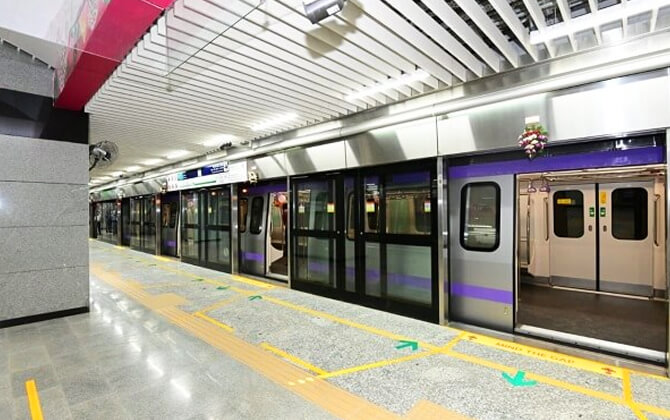
History
The idea of an underground railway in Kolkata goes back to the early 20th century. In 1919, a committee set up by W. E. Crum at the Imperial Legislative Council session in Shimla recommended a metro line for the city, with a proposed route from Bagmari in the east to Benaras Road, Salkia, in Howrah in the west. A similar east-west connection was proposed again in 1921, but the plans were not pursued in 1923 because of lack of funds.
The project idea returned in 1949 and 1950 when Chief Minister Bidhan Chandra Roy reconsidered an underground railway for Kolkata. A French survey was carried out, but no firm plan emerged. To address the city’s transport problems, the Metropolitan Transport Project was set up in 1969. With support from Soviet specialists, Lenmetroproekt, and East German engineers, it prepared a 1971 master plan for five rapid-transit lines totaling 97.5 km (60.58 miles). Top priority was given to the north-south corridor between Dum Dum and Tollygunge, and the work was approved on 1 June 1972.
Construction of the North-South Metro began in 1973-74 after the foundation stone was laid by Prime Minister Indira Gandhi on 29 December 1972. The project faced financial shortages, utility shifting issues, court injunctions, and irregular material supply. Even so, the first section opened on 24 October 1984 between Esplanade and Bhowanipore, now Netaji Bhawan. Service later extended north to Dum Dum and south to Tollygunge, and the originally planned stretch became fully operational on 27 September 1995.
The Blue Line kept growing. The southern extension from Tollygunge to New Garia opened in phases between 2009 and 2010. In the north, the line reached Noapara in 2013 and then Dakshineswar in 2021.
Planning for the East-West Metro also started with the 1971 master plan. The corridor was intended to connect Bidhannagar with Howrah via Sealdah and Esplanade. It was sanctioned in 2008, the foundation stone was laid in 2009, and construction began the same year. Kolkata Metro Rail Corporation was created to implement it, though ownership later shifted to the Ministry of Railways. The line faced major engineering challenges, including the H-piles under Esplanade and the Bowbazar mishap, but sections opened in phases from 2020 onward.
From 2011-2012 onward, the Railway Ministry announced further lines and extensions, including the Green Line, Purple Line, Yellow Line, Pink Line, and Orange Line. New interchange stations were developed at Noapara, Kavi Subhash, and Esplanade, and several Blue Line stations were upgraded and renamed. Over time, Kolkata Metro grew from one pioneering line into a multi-line urban rail system.
Future Extensions
Kolkata Metro expansion remains focused on better cross-city links, airport access, and service into growing suburban areas. Several projects are under construction, while others are sanctioned or proposed for later stages.
Projects under construction
- Purple Line: Majerhat to Esplanade, 5 stations, tentative completion year 2028
- Yellow Line: Jai Hind to Michael Nagar, 2 stations, tentative completion year 2027
- Orange Line: Beleghata to Jai Hind, 15 stations, tentative completion year 2026
These works are expected to add 22 stations and 28.53 km (17.73 miles) to the network.
Further sanctioned extensions
- Yellow Line: Michael Nagar to Barasat
- Pink Line: Baranagar to Barrackpore
These sanctioned projects account for another 22 stations and 31.74 km (19.72 miles).
Proposed extension
- Purple Line Branch: Mahanayak Uttam Kumar to Diamond Park, 4 stations, 8.5 km (5.28 miles)
Metro Railway has also indicated a broader long-term expansion outlook. One reported projection suggests the network could reach about 130 km (80.78 miles), with links such as Beleghata to the airport and other corridor connections under discussion or in progress.
Significant Modifications
Kolkata Metro has undergone several major changes as part of modernization and expansion. New interchange stations have been created to improve passenger movement across the network. Noapara and Kavi Subhash were developed as four-platform interchange stations, while Esplanade was upgraded with a subway link for transfers between the Blue, Green, and future Purple lines. Additional interchanges were added at Salt Lake Sector-V, IT Centre, and Jai Hind.
The network has also seen route changes. The Purple Line was revised to extend to Eden Gardens instead of Esplanade, while the Yellow Line was reworked after objections from the Airports Authority of India. The Orange Line alignment was modified so that Jai Hind station would be underground rather than elevated, and the line was later planned to continue toward Barasat.
Infrastructure upgrades have been another major part of the story. Blue Line services and station amenities were improved, many stations were renamed, and Metro Railway started replacing the steel third rail on the Blue Line with a more conductive aluminium third rail. A signaling upgrade from the Indian Railways system to CBTC has also been proposed.
Operational adjustments came with these changes. The Kavi Subhash Blue Line platforms were temporarily closed for reconstruction after structural issues were detected, with trains terminating at Shahid Khudiram. On the Green Line, different sections have also operated with different train control modes, and the Esplanade-Sealdah stretch was cleared for service after meeting safety recommendations.
Nearby Attractions
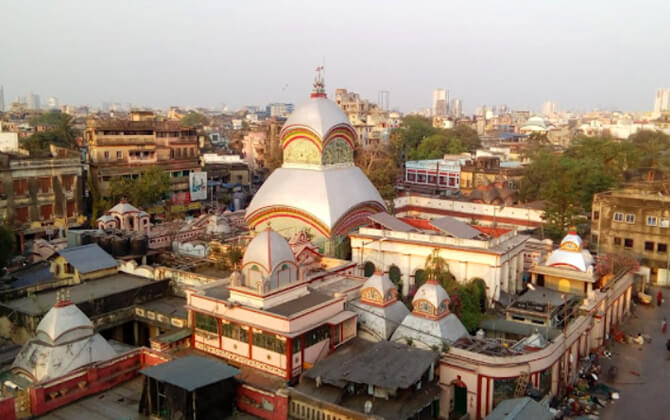
Kolkata Metro makes it easier to reach several well-known places across the city, so it is a practical option for sightseeing as well as everyday transport. Attractions near the network include Netaji Subhash Chandra Bose International Airport near Dum Dum, the Jain temple at Belgachia, and Jorasanko Thakur Bari near Mahatma Gandhi Road.
Other stations provide access to major cultural and heritage sites. Park Street connects to the Indian Museum, Maidan is convenient for Birla Planetarium, Aurobindo Bhavan, and St. Paul’s Cathedral Church, while Rabindra Sadan gives access to Victoria Memorial and Nandan.
| Station | Details |
|---|---|
| Dum Dum | Netaji Subhash Chandra Bose International Airport |
| Belgachia | Parashnath Temple |
| Mahatma Gandhi Road | Thakurbari, Mahajati Sadan, Eden Gardens, Shahid Minar |
| Park Street | Indian Museum |
| Maidan | Birla Planetarium, Aurobindo Bhavan, St. Paul’s Cathedral Church |
| Rabindra Sadan | Rabindra Sadan, Victoria Memorial, Nandan |
| Netaji Bhavan | Netaji Subhash Chandra Bose’s house and Netaji Research Bureau |
| Kalighat | Kalighat Kali Temple |
| Rabindra Sarovar | Rabindra Sarovar Lake |
For visitors moving around Kolkata, the metro is one of the simplest ways to reach museums, religious sites, cultural centers, and major landmarks without relying only on road transport.
Fun Facts
Kolkata Metro opened in 1984 as the first rapid transit system in South Asia. It is also the only metro system in India that is fully controlled by Indian Railways.
The network combines underground, at-grade, and elevated sections, and it uses both broad-gauge and standard-gauge tracks with a 750 V DC third-rail system.
- Howrah station on the Green Line is the deepest metro station in India at 34 m (0.03 km / 112 ft / 0.02 miles).
- The network includes the largest underground metro station in India.
- Jai Hind station on the Yellow Line became the largest metro station in India in August 2025.
The metro carries more than 800,000 passengers on around 300 daily train trips.
Its history stretches across decades, from the first underground section in 1984 to newer corridors such as the Green, Purple, Orange, and Yellow lines.
During Durga Puja, the metro runs special night-long services to help passengers travel more easily for pandal-hopping.
In 2008, Kolkata Metro tried reserving two full compartments for women, but the idea was later dropped. Today, reserved seating is provided in selected sections for women, senior citizens, and physically challenged passengers.