The Chicago Transit Authority, or CTA, operates Chicago’s main public transport network, including CTA Bus and the “L” rail system. CTA serves the City of Chicago and 35 surrounding suburbs, with buses forming the largest surface transit network in the system. The bus network has 127 routes, more than 18,000 daily trips, and nearly 11,000 bus stops, with local, express, limited-stop, Jump, special-event, and Night Owl service.
| Key | Information |
|---|---|
| Operator | Chicago Transit Authority |
| Service area | Chicago and 35 surrounding suburbs |
| Transit modes | CTA Bus and CTA “L” rail |
| Bus routes | 127 routes |
| Daily bus trips | More than 18,000 trips |
| Bus stops | Nearly 11,000 stops across the region |
| Average CTA weekday rides | 953,787 rides across CTA service |
| Night service | Several routes provide 24-hour Owl Service |
| Regional connections | Metra and Pace connect with CTA at many locations |
Chicago Transit Authority (CTA Bus) Map
The Chicago Transit Authority (CTA Bus) map shows all available stops. Click on the map to enlarge it or download the Chicago Transit Authority map in PDF format.
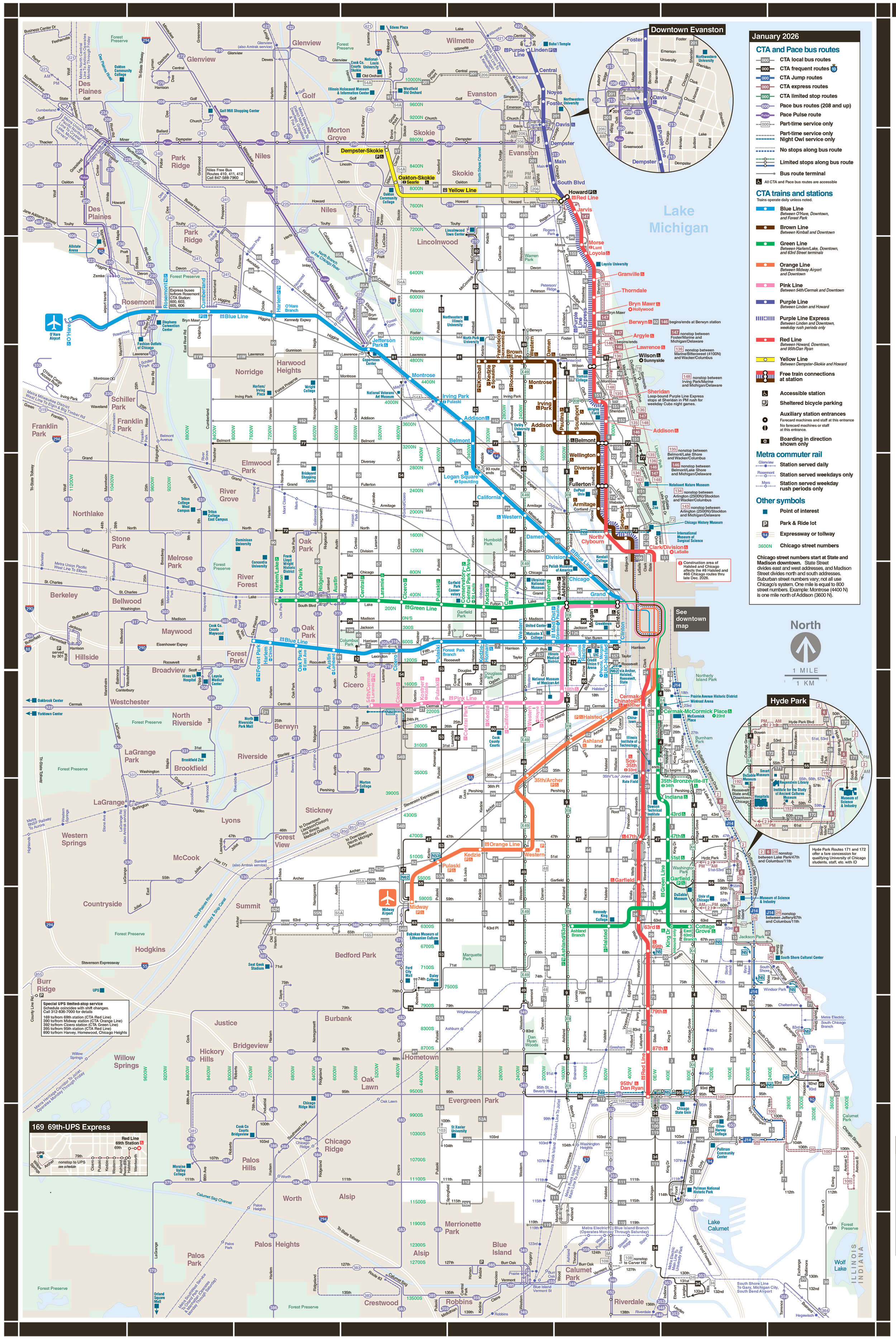
Routes and Bus Stops
CTA bus routes cover Chicago through a wide network of local, express, limited-stop, Jump, and Night Owl services. Some routes run every day, while others operate only during weekday rush periods, evenings, weekends, summer periods, or special events. For a route plan, route timetable, stations map, or stations list style view of stops, CTA riders use the system map, the route page, and the CTA System Guide.
First and last buses in a timetable refer to departures from the route terminal. If you board mid-route, the bus will arrive later than the terminal time shown, so check the train schedule-style bus timetable or live tracker for your exact stop.
Current routes with alerts include N5, 6, 7, 11, 21, 26, 29, 36, 37, 43, 47, 49, 49B, X49, 50, 56, 60, 62, 67, 68, 71, 80, 81, 84, 87, 88, 90, 91, 124, 125, 157, and 192.
Examples of active CTA bus routes include 1 Bronzeville/Union Station, 3 King Drive, 4 Cottage Grove, 8 Halsted, 9 Ashland, 10 Obama Presidential Center/Museum of Science & Industry Express, 12 Roosevelt, J14 Jeffery Jump, 21 Cermak, 29 State, 53 Pulaski, 56 Milwaukee, 124 Navy Pier, and 125 Water Tower Express. Route patterns, terminals, and garages vary, so always confirm the stop, direction, and operating hours before you ride.
Local, Express, Night Owl, and Special Event Routes
CTA labels bus service by how the route operates: Local, Express, Jump, Limited-stop, and Owl. Most scheduled routes have timetables, but not every bus travels to the end of the line. Check the destination sign before boarding, especially on routes with branches or service patterns that change by time of day.
Night Owl routes provide all-night service and are marked with the Owl symbol. On destination signs, overnight buses usually show the letter N before the route number. Some routes run only during rush hour, on weekdays, or during special periods such as summer.
Special event service is also part of CTA bus operations. The United Center Express, for example, serves Bulls and Blackhawks games and selected events at United Center, with buses sometimes running every few minutes after events for up to one hour. CTA buses are generally accessible and equipped with bike racks.
Major Corridors and Transfer Points
The CTA Bus network connects Chicago with nearby communities including Forest Park, Evanston, Skokie, Oak Park, Summit, Cicero, Berwyn, North Riverside, Rosemont, Evergreen Park, Oak Lawn, Park Ridge, Harwood Heights, Norridge, Lincolnwood, and Wilmette. It also works alongside CTA Rail, Metra, Pace, and other local transport services shown on the CTA system map.
| Station | Details |
|---|---|
| Union Station and Ogilvie Transportation Center | Routes such as 120 Ogilvie/Streeterville Express, 121 Union/Streeterville Express, 128 Soldier Field Express, and 130 Museum Campus connect rail terminals with nearby destinations. |
| The Loop | Routes including 7 Harrison, 12 Roosevelt, 24 Wentworth, 29 State, 36 Broadway, 56 Milwaukee, 126 Jackson, 134 Stockton/LaSalle Express, 135 Clarendon/LaSalle Express, and 136 Sheridan/LaSalle Express support downtown city transport. |
| Streeterville | Routes 2 Hyde Park Express, 3 King Drive, 29 State, 120 Ogilvie/Streeterville Express, 121 Union/Streeterville Express, 134 Stockton/LaSalle Express, 135 Clarendon/LaSalle Express, and 136 Sheridan/LaSalle Express connect this area with the rest of the city. |
| Major north-south corridors | Routes 8 Halsted, 9 Ashland, 50 Damen, 52 Kedzie, 53 Pulaski, 56 Milwaukee, 71 71st/South Shore, 151 Sheridan, and 152 Addison cover long citywide travel patterns. |
| South Side corridors | Routes 4 Cottage Grove, 6 Jackson Park Express, 28 Stony Island, 34 South Michigan, 59 59th/61st, and 71 71st/South Shore provide key neighborhood and lakefront links. |
For exact stop locations, route maps, schedule today details, and general working hours, use the CTA System Guide or Bus Tracker before traveling.
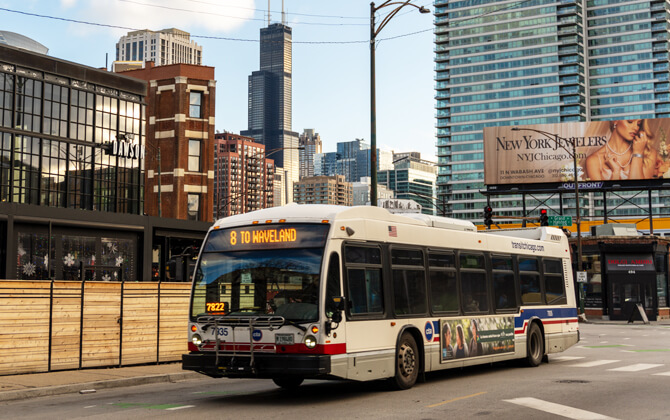
Schedule, Frequency, and Service Alerts
CTA Bus service is supported by route schedules, system status updates, and service alerts. The CTA System Status Snapshot covers bus and “L” service, while CTA Bus Tracker shows estimated arrival times and buses on a map. It is the quickest way to check timings today when your route may be delayed or rerouted.
Each route page includes timetable information, service spans, and alerts for planned or active changes. Temporary reroutes can happen because of street blockages, police activity, construction, or special events. Riders can also sign up for CTA Updates by text or e-mail and choose the routes and travel times that matter to them.
| Service detail | Timings |
|---|---|
| Service span | Shown from the first bus at the terminal of origin through the last bus at the terminal of origin. |
| Mid-route stops | Buses reach these stops later than the terminal starting time or closing time shown in schedules. |
| Holiday service | Sunday schedules apply on New Year’s Day, Memorial Day, Independence Day, Labor Day, Thanksgiving, and Christmas, including observed dates when applicable. |
| Night Owl buses | Generally run about every 30 minutes. |
| Loop overnight transfers | Several overnight routes are timed around State/Washington, typically leaving at 10 and 40 minutes past the hour. |
| Night Owl network | 18 bus routes and two “L” train lines operate 24 hours a day, every day. |
| Most other “L” lines | Usually run from about 4:00 a.m. to 1:00 a.m.; check the individual timetable. |
First and Last Bus Times
CTA opening times and closing time vary by route, day, and where you board along the line. Published first bus and last bus times show terminal departures, not the exact time at every stop. If you are catching a bus midway along the route, use the schedule, trip planner, or Bus Tracker for a more accurate arrival estimate.
For late trips, do not rely only on the printed last bus time. Check live arrivals when possible, because service alerts, reroutes, and delays can change your running time.
Frequent Network and Night Owl Service
CTA buses form a regular network that runs from early morning into late evening, with frequency changing by route and time of day. Major routes may run often, while other routes have longer waits outside peak periods. Planning ahead with a route timetable or tracker makes the trip much easier.
Night Owl service is available year-round through 18 bus routes and the Red and Blue “L” lines, which operate 24 hours a day. Overnight bus routes are marked with the Night Owl symbol, and destination signs usually show N before the route number. These trips may follow different patterns from daytime service, so check the schedule before you go.
Holiday Schedules, Reroutes, and Delays
CTA service may change during holidays, major events, construction, and short-term disruptions. Sunday schedules apply on New Year’s Day, Memorial Day, Independence Day, Labor Day, Thanksgiving, and Christmas, including observed dates when applicable.
Planned reroutes can affect routes such as #21 Cermak, #56 Milwaukee, #J14 Jeffery Jump, #20 Madison, #22 Clark, #60 Blue Island/26th, #126 Jackson, #130 Museum Campus, and #151 Sheridan. When service changes, allow extra travel time and follow posted boarding instructions.
Rail delays can also affect bus-to-train connections. For example, Orange Line boarding changes and minor delays may occur during track maintenance between Pulaski and Western. Always check current alerts before traveling, especially if you are connecting to a last train or a time-sensitive bus.
Fares, Tickets, and Ventra
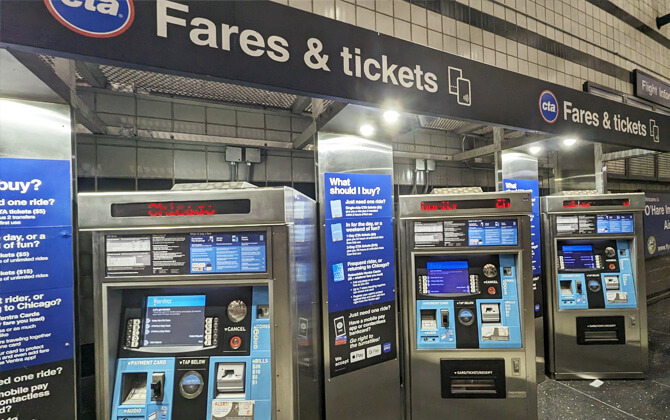
CTA bus fare depends on how you pay. Cash is accepted on buses, but no transfers are issued when paying in cash. For transfers, use Ventra value, a Ventra Card, a disposable Ventra Ticket, or an accepted contactless payment method.
Single-Ride Ventra Tickets cost US$3.00, including the ticket price, up to two transfers within two hours, and a limited-use media fee. New Ventra Cards and Tickets can be purchased at Ventra vending machines. A special US$5.00 fare applies when boarding the CTA Blue Line at O’Hare and paying with transit value or buying a Single-Ride Ticket; it does not apply when using a pass.
Bus Fare Options
The standard CTA bus fare is lower with Ventra than with cash. If you pay cash on board, have the exact fare ready and remember that cash payment does not include transfers.
| Fare type | Ventra full fare | Ventra reduced fare | Cash fare | Cash reduced |
|---|---|---|---|---|
| CTA Bus fare | US$2.25 | US$1.10 | US$2.50 | US$1.25 |
| CTA “L” train fare | US$2.50 | US$1.25 | US$2.50 | US$1.25 |
| Pace Bus fare | US$2.00 | US$1.00 | US$2.25 | US$1.10 |
| Pace Premium Bus fare | US$4.50 | US$2.25 | US$4.50 | US$2.25 |
| CTA/Pace transfers | Free | Free | Free | Free |
| Pace transfer to Premium Route | US$2.50 | US$1.25 | N/A | N/A |
Children under 7 ride free with a fare-paying customer. Reduced fares are available only to eligible riders with the proper RTA-issued Reduced Fare permits or other qualifying status.
Ventra Card, Ventra App, and Contactless Payment
Ventra is the main payment system for CTA and Pace. You can use a Ventra Card, disposable Ventra Ticket, contactless bankcard, or mobile wallet such as Apple Pay, Google Pay, or Samsung Pay. Tap the same card or device each time so the system can apply eligible transfers.
The Ventra app lets you check your card balance, add value or passes, manage autoload, view ride and purchase history, plan trips, track transit, and receive account alerts. You can also add a Ventra Card to iPhone, Apple Watch, or Google Pay for tap-and-go travel.
Cash can still be used on buses, at Ventra vending machines, and at more than 1,000 Ventra retailers to add value or buy selected cards, tickets, and passes.
Transfers, Passes, and Reduced Fares
Transfers between CTA and Pace are free for up to two additional rides within two hours when you pay with an eligible Ventra or contactless fare method. Cash riders do not receive transfers, so the total cost can be higher if your trip requires more than one bus or train.
| Pass | Full fare | Reduced fare |
|---|---|---|
| 1-Day CTA/Pace Pass | US$5.00 | — |
| 3-Day CTA/Pace Pass | US$15.00 | — |
| 7-Day CTA/Pace Pass | US$20.00 | — |
| 30-Day Pace Pass | US$60.00 | US$30.00 |
| 30-Day Pace Premium Pass | US$140.00 | US$70.00 |
| 30-Day CTA/Pace Pass | US$75.00 | US$35.00 |
Passes offer unlimited rides for one person and can be loaded to a Ventra transit account or contactless bankcard. Some passes are sold as disposable Ventra tickets at vending machines.
Starting June 20, 2025, the Regional Day Pass can be purchased only in the Ventra app. Riders can buy a Metra Day Pass for a selected zone and add a CTA/Pace Day Pass. The Regional Day Pass provides unlimited CTA and Pace rides and expires 24 hours after activation. Metra tickets and passes are distance-based and can be purchased in the Ventra app.
Connections with other system
The CTA system map shows CTA Bus, CTA Rail, and connecting services provided by other transit agencies in Chicago and surrounding communities. Metra and Pace connect with CTA at many points, which makes regional transportation in Chicago easier to plan.
Within the CTA system, buses and trains are designed to work together. Bus routes serve neighborhoods, cross-town corridors, downtown transfer points, and rail stations, while the “L” provides faster rail movement across longer corridors. Free transfers between all “L” routes are available at designated locations.
Transferring Between CTA Bus and the “L”
You can transfer between CTA buses and the “L” using the same Ventra Card, Ventra Ticket, contactless bankcard, or mobile wallet. Tap the same payment method when boarding your next bus or entering a rail station so the fare system recognizes the transfer window.
The transfer window allows up to two additional rides within two hours when using eligible fare methods. This is useful if your trip starts on a local bus, continues by “L” train, and ends with another bus ride.
Before transferring, check the route, platform, and destination sign. Some downtown stations and bus stops serve several routes, and a quick check can save you from taking the wrong path train-style connection or boarding in the wrong direction.
Regional Connections with Metra and Pace
CTA, Metra, and Pace form the main regional public transit network. Metra operates commuter rail from downtown Chicago terminals to the suburbs, while Pace operates suburban bus routes. CTA buses and rail lines connect with both systems at many locations.
Metra fares are separate, but Metra monthly ticket holders can use a Link-Up Pass on CTA. Metra tickets can also be purchased in the Ventra app using credit, debit, or transit value in a registered Ventra account.
Pace connects with CTA on many suburban and city-edge routes, and newly purchased unlimited-ride passes can be accepted across CTA and Pace where eligible. For regional trip planning, riders can use the RTA Trip Planner or call 312-836-7000.
Airport Connections
CTA is one of the easiest ways to reach Chicago’s airports without paying for taxis or airport parking charges. O’Hare is served by the Blue Line, and Midway is served by the Orange Line. CTA bus routes also connect with airport rail service and nearby transportation centers.
Station parking and parking charges per day are not needed for most airport trips if you use CTA from the city, but always check local station information if you plan to drive to a Park and Ride lot before boarding.
Getting to O’Hare via CTA Bus and the Blue Line
The CTA Blue Line provides 24-hour rapid transit service between Chicago-O’Hare International Airport and the Forest Park terminal via downtown Chicago. It is one of the most affordable city transport options for O’Hare, with service running every day.
At O’Hare, the accessible Blue Line station is in the lower level concourse and connects directly to Terminals 1, 2, and 3. From Terminal 5, take the Airport Transit System to Terminals 2 or 3, then follow signs for “CTA Trains” or “Trains to City.” From Terminals 1, 2, and 3, the walk from baggage claim to the train is usually under 10 minutes.
The trip from O’Hare to downtown on the Blue Line typically takes about 40 to 45 minutes. CTA bus routes connect with the Blue Line, so you can continue beyond the airport by bus or transfer downtown to other CTA lines. Check the current schedule and alerts before traveling, especially if station access changes or a Park and Ride lot is temporarily closed.
Getting to Midway via CTA Bus and the Orange Line
The CTA Orange Line provides direct rail service between Midway Airport and downtown Chicago, running daily from early morning through late evening. The accessible Midway station is just east of the terminal and connected by an enclosed walkway. Follow signs for “CTA Trains” or “Trains to City,” and use the orange line painted on the ground as a visual guide.
Orange Line trains go to the downtown Loop, operate clockwise around the Loop, and return to Midway. Normal travel time between Midway and downtown is 20 to 25 minutes.
For overnight airport trips, the N62 Archer bus provides service between Midway Terminal and downtown. Southwest Side Night Owl routes connecting with N62 include N63, N49, and N9. Night Owl connections between the Red Line, Blue Line, and several bus routes can be made at Washington/State, where buses generally depart at 10 and 40 minutes past the hour.
How to Ride CTA Bus
Riding CTA Bus is simple. Find your stop and wait near the sign where the operator can see you. Bus stops are usually one or two blocks apart. In Evanston, buses stop at corners, so stand where the driver can see you and flag the bus as it approaches.
Before you leave, check CTA Bus Tracker or the Ventra app for arrival times. When the bus arrives, read the destination sign on the front or side. Some stops serve several routes, so confirm the route number, route name, and direction before boarding. If you are unsure, ask the driver.
Have your fare ready and pay as you board through the front door. During the ride, stops are announced audibly and visually. When you want to get off, pull the stop request cord or press a stop request button. If you use a wheelchair or another wheeled mobility device in a wheelchair position, press the yellow strip near you to let the operator know you need to exit.
Use the rear door to exit when possible. It keeps boarding faster and helps the bus stay closer to schedule. Once on board, move away from the front, keep aisles clear, and store bags so other riders can move through the bus.
Accessibility and Rider Rules
CTA is working toward a bus and rail system that is accessible to everyone. More than 70% of the system is accessible, key ADA station upgrade requirements have been met, and CTA continues accessibility work through maintenance, repairs, refurbishments, station upgrades, and the All Stations Accessibility Program.
CTA buses are equipped with lifts or ramps. Riders may ask the operator to deploy the lift or ramp when needed, and no explanation is required. CTA policy allows the lift or ramp to be used at any customer’s request, including riders without visible disabilities.
Priority seating is required under the Americans with Disabilities Act. On buses, it is generally near the front and marked with wheelchair and cane accessibility symbols. Riders using wheelchairs or other mobility devices may ask the operator for help with securement. CTA recommends riding secured for safety, while each rider decides how much assistance to accept.
Stops are announced automatically through audio and visual systems. If a ramp is not deployed, a stop is not announced, or another accessibility issue occurs, note the time, location, and vehicle or employee ID, then report the issue to CTA.
Paratransit service in the CTA service area is provided by Pace throughout the six-county RTA region. It is for riders whose disability or health condition prevents them from using CTA and/or Pace fixed-route services for some or all trips. Only riders certified by the Regional Transportation Authority are eligible for ADA Paratransit.
RTA also manages reduced fare and ride free programs for CTA, Metra, and Pace. Eligible riders with qualifying disabilities can apply for a Reduced Fare Permit, and some Illinois residents enrolled in the Benefit Access Program may ride free on CTA buses and trains.
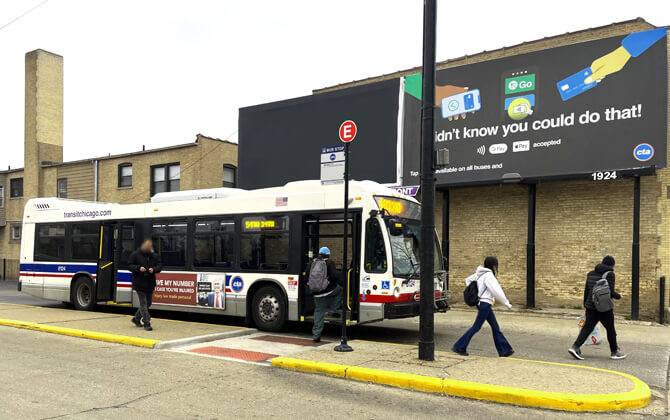
Useful Tips for Tourists and Daily Riders
Give yourself extra time, especially during rush hours, events, bad weather, or construction. CTA buses are reliable for many trips, but traffic and reroutes can affect running time. A few minutes of planning can save a long wait at the stop.
- Check live arrivals with CTA Bus Tracker or the Ventra app before walking to the stop.
- Confirm the route number and destination sign before boarding.
- Use Ventra or contactless payment if your trip needs transfers.
- Board through the front door and exit through the rear door when possible.
- Move toward the back after paying so other riders can board.
- Keep aisles and doors clear, especially with luggage, strollers, or shopping bags.
- Use headphones and keep calls or audio quiet.
- Check alerts before late-night trips, airport connections, and special-event travel.
Major delays can happen, so keep your travel time flexible when you can. If the next bus is far away, a nearby route, a short walk, or a bus-to-“L” connection may be faster.
Brief History of CTA Bus
The Chicago Transit Authority was created by state legislation in 1945 and began operations on October 1, 1947, after acquiring the assets of the Chicago Rapid Transit Company and the Chicago Surface Lines. On October 1, 1952, CTA purchased the Chicago Motor Coach system, making it the sole operator of Chicago transit.
CTA modernized surface transit over time, replacing streetcars with buses and phasing out trolleybus service by 1973. In cities that use the terms trams or tramway, those words often refer to street-running rail; in Chicago’s CTA history, the older streetcar network gave way to bus service.
As of January 2025, CTA operated about 2,000 buses on 127 routes, serving more than 10,000 bus stops. The bus network covers about 1,516 miles, or about 2,440 kilometers, and carries hundreds of thousands of passenger trips on an average weekday.
CTA has also updated its fleet. In 2014, it ordered new buses from Nova Bus and received its first electric buses from New Flyer. All CTA buses are accessible, with ramps available on every bus.
Bus Improvements and Future Plans
CTA’s Bus Vision Project is studying how to evaluate, redesign, and improve the bus network. The Bus Vision Framing Report analyzes the current system and sets up public conversations about service, network structure, and rider needs.
Community engagement is central to the project. CTA is gathering feedback from riders, partner agencies, and the public through surveys, outreach, and related activities. Recommendations based on that engagement are expected to guide the future bus network redesign.
CTA is also working on service-quality improvements, including bus priority measures, Better Streets for Buses planning with the Chicago Department of Transportation, fleet electrification, and corridor-level upgrades such as expanded Transit Signal Priority.
Fleet electrification remains a major expansion priority. CTA has operated electric buses since 2014 and has a long-term goal of converting the full bus fleet to electric vehicles by 2040.
Popular Places You Can Reach by CTA Bus
CTA buses serve many of Chicago’s major attractions, shopping areas, museums, colleges, sports venues, and regional transfer points. Some routes are special or seasonal, so check the route map, schedule, and service days before you go.
- O’Hare Airport
- Midway Airport
- Chinatown
- United Center
- Wrigley Field
- Guaranteed Rate Field
- McCormick Place
- Navy Pier
- Museum of Science & Industry
- Brookfield Zoo
- Lincoln Park Zoo and Conservatory
- Field Museum
- Shedd Aquarium/Oceanarium
- Art Institute of Chicago
- Water Tower Place
- North Michigan Avenue shopping area
- Garfield Park Conservatory
- Illinois Holocaust Museum & Information Center
- Fashion Outlets of Chicago
- Allstate Arena
- Chicago State University
CTA bus maps also include suburban destinations such as shopping centers, universities, museums, historic districts, and local government facilities. In some cases, inset maps show special routes and rush-period buses from Metra stations.
FAQ
What is CTA Bus? CTA Bus is the bus network operated by the Chicago Transit Authority, the public transit agency serving Chicago and nearby suburbs. CTA also operates the Chicago “L” rail system.
How extensive is the CTA bus network? CTA has about 2,000 buses, 127 routes, more than 10,000 posted bus stops, and a route network of about 1,516 miles, or about 2,440 kilometers.
Are CTA buses accessible? Yes. CTA buses are accessible and have ramps or lifts. Riders can ask the operator to deploy the ramp or kneel the bus when needed.
How much is the CTA bus fare? The standard CTA bus fare is US$2.25 with Ventra and US$2.50 with cash. Reduced fares are available for eligible riders.
What payment methods are accepted? CTA accepts Ventra Cards, Ventra disposable tickets, contactless credit or debit cards, mobile wallets, passes, and cash on buses.
Does CTA offer free transfers? Yes, when you use an eligible Ventra or contactless payment method, you can receive up to two free transfers within two hours.
How can I check CTA bus arrivals? Use CTA Bus Tracker, the Ventra app, other transit apps, or text CTA BUS 550 to 41411 for estimated arrivals. Digital signs at many stops and stations also show arrival estimates.
Are bike racks available? Yes. CTA buses have bike racks.
Best Practices for Peak Hours and Late-Night Trips
For a calmer ride, avoid the busiest weekday windows when your schedule allows. Morning rush hours generally run from 6:30 a.m. to 9:30 a.m., and the evening rush usually runs from about 3:30 p.m. to 6:30 p.m. If you can travel between 9:30 a.m. and 3:30 p.m., buses are often less crowded.
During peak hours, check live arrivals and consider nearby stops or routes. A small change in departure time or boarding location can make a noticeable difference. For late-night trips, confirm Night Owl service, frequency, and transfer points before you leave.
Common Mistakes to Avoid
Do not board without checking the route number and destination sign. Many Chicago stops serve multiple routes, and some routes have branches or short-turn trips.
Avoid stopping near the front after paying. Move back so other riders can board. Use the rear door to exit when possible, keep bags off seats, give priority seating to riders who need it, and avoid eating, drinking, or playing loud audio on board.
What to Do If Service Changes
If service changes, check CTA alerts, CTA Bus Tracker, and the Ventra app before traveling. CTA posts current disruptions, planned reroutes, elevator outages, and weekly service change summaries.
You can also sign up for CTA Updates by text or e-mail and choose the routes and travel times you use most. For unexpected delays, allow extra travel time and watch for posted boarding instructions at stops and stations.