Public transportation in Brasilia includes buses, the Brasilia Metro, taxis, and airport links, with Rodoviária do Plano Piloto acting as the main hub for city transport. The system follows the city’s planned layout, but getting around is not always simple: buses cover the widest area, the metro helps on key corridors and satellite-city routes, and taxis are useful when distances are long or public transport is less convenient.
| Key | Information |
|---|---|
| Main transport hub | Rodoviária do Plano Piloto |
| Main public transport modes | Bus, metro, taxi |
| Metro network | About 42.4 km / 26.3 miles, 24 stations |
| Metro lines | Green Line and Orange Line |
| Best for broad city coverage | Bus services |
| Key safety note | Stay alert on crowded vehicles and at busy stations |
Public Tansportation Map In Brasilia
Map of Public Tansportation in Brasilia showing different lines and stations. Click on the map of Public Tansportation Map to enlarge it.
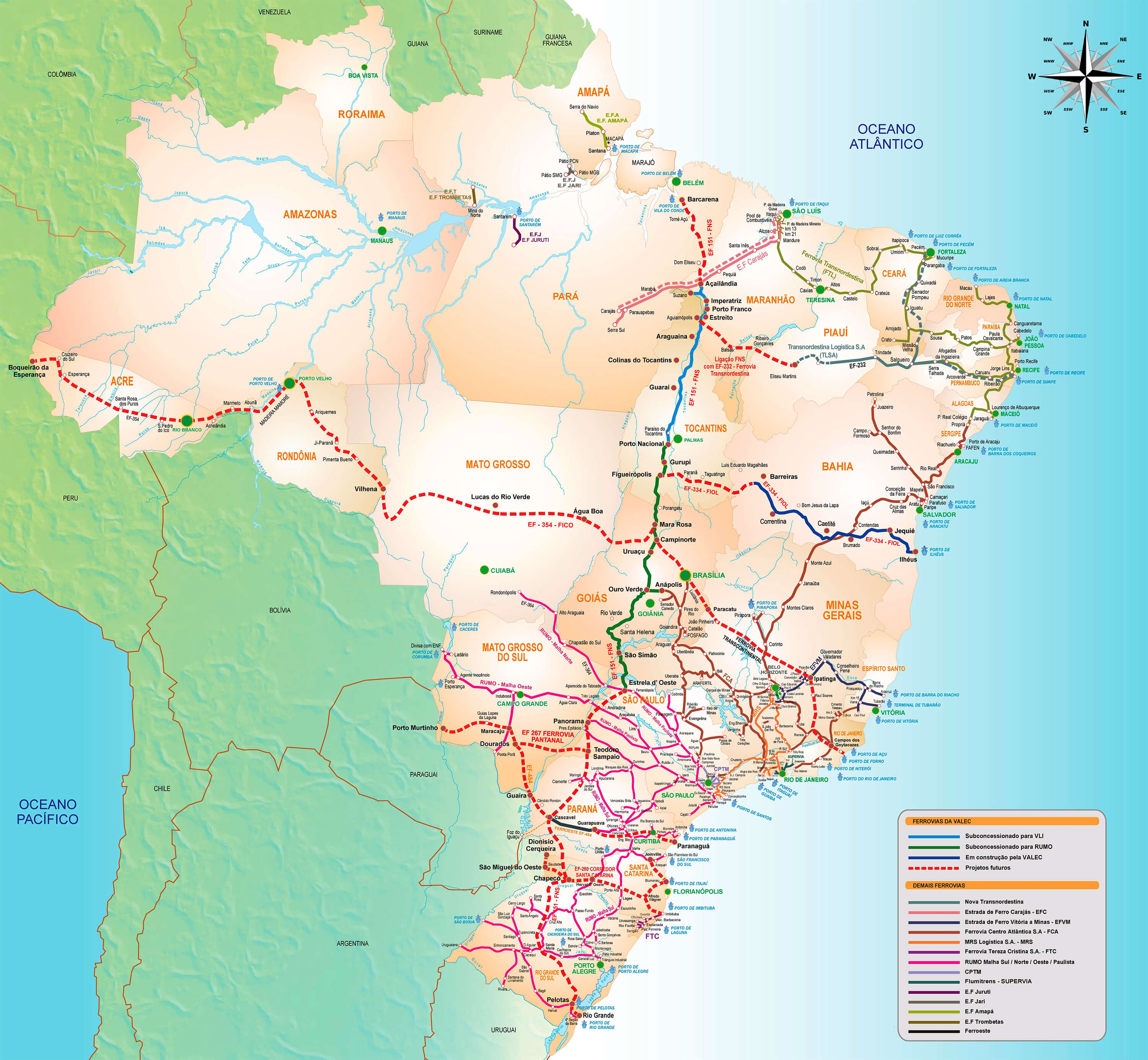
Public Tansportation in Brasilia
Brasilia was designed for about 500,000 people, but today more than 4.2 million live and work here. Because the capital was built around roads and cars, public transport can feel less convenient than many visitors expect.
The main hub is Rodoviária do Plano Piloto, right in the center. From here, buses connect the Federal District and nearby areas, including Goiás. They are essential for daily transportation in Brasilia, though peak-hour trips can be crowded, especially on routes to the satellite cities.
If you can, avoid bus travel between 7:00 am and 8:30 am, and again from 5:00 pm to 7:00 pm. Night service is much more limited, with fewer vehicles in operation. Frequency can be unpredictable, so it helps to leave extra time in your schedule.
The metro starts at Rodoviária do Plano Piloto and reaches Asa Sul, Park Shopping, Feira do Guará, Águas Claras, Taguatinga, Ceilândia, and Samambaia. It is generally reliable, but rush-hour trains can get extremely full.
For most trips, buses remain the backbone of local transport, while the metro works well on a smaller set of routes. Keep an eye on your belongings, especially during busy periods, as crowded vehicles and stations can attract pickpockets.
- Rodoviária do Plano Piloto is the main public transport interchange.
- Buses connect central Brasilia, the Federal District, and surrounding areas.
- Rush-hour buses are often crowded, and night service is reduced.
- The metro is useful but the system is limited in coverage.
- On crowded routes, stay alert and keep bags close.
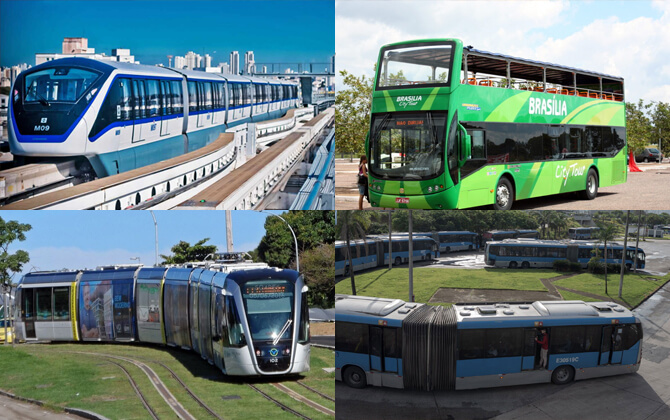
Brasilia Metro
Brasília’s metro, Metrô-DF, is a compact but important part of public transport in the city. It offers a practical route for travel between the central area, major commercial districts, and several satellite cities.
The system has two lines running on ground-level and elevated tracks. In total, the network covers about 42.4 kilometers (26.3 miles) and includes 24 stations.
Metro lines
- Green Line (Linha Verde): Central to Ceilândia
- Orange Line (Linha Laranja): Central to Samambaia
Both lines begin at Central Station and share tracks between Central and Águas Claras before splitting toward their final destinations.
Basic network summary
| Line | Year Opened | Type | Length (km) | Stations | Starting Station | Ending Station |
|---|---|---|---|---|---|---|
| Green Line (Linha Verde) | 2001 | Ground/Elevated | 20.9 | 15 | Central | Ceilândia |
| Orange Line (Linha Laranja) | 2001 | Ground/Elevated | 21.5 | 9 | Central | Samambaia |
Operating hours
| Service detail | Timings |
|---|---|
| Weekday operating hours | 06:00 to 23:30 |
| Sunday and public holiday opening hours | 07:00 to 19:00 |
| Schedule note | Opening times and closing time may vary slightly on special dates or by station |
For timings today, schedule today, or the last train on a holiday, it is best to check official notices before you travel.
Fares and tickets
The metro uses a flat fare system. A single ticket costs R$5 (about US$1.00). Discounted fares are available for eligible groups such as students, seniors, and people with disabilities when valid ID is shown.
- Single-trip ticket
- Reloadable card (Bilhete Único)
- Electronic payment on a trial basis at some stations
There is no fare calculator mentioned here, so the simplest way to estimate cost is to use the flat ticket price.
Useful travel notes
The metro is air-conditioned, and major stations have English station names and directions, though announcements are mainly in Portuguese. Wi-Fi is limited, so mobile data can be useful. Stations include stairs and lifts, with access controlled by electronic barriers.
For everyday transport, the metro is one of the most reliable ways to cross Brasilia without traffic. For sightseeing, though, it is less handy once you need places far from the line.
Taxis in Brasilia
Taxis in Brasilia are available, but they are usually not the cheapest option. In general, fares are higher than in many other Brazilian cities, and the city’s long distances can push the price up quickly.
The road layout often means detours and loops, so even a short-looking route can cost more than expected. Because of that, many travelers stick to buses or the metro when they can.
If you need a taxi, calling a radio taxi is usually the better move than trying to hail one on the street. Radio taxis may offer discounts of around 30% to 40% per trip, and they are also considered safer because drivers can call for help if needed.
You can also ask your hotel to arrange one. In practice, that is often easier than looking for a taxi on the street, where availability can be limited.
Airport Connections
Brasília Airport is well linked to the city by public transport. The airport is about 15 kilometers (9.3 miles) from the city center, so the trip takes around 20 minutes by car or taxi and about 40 minutes by bus.
Most travelers use a bus to reach either Asa Sul, the nearest metro station, or Rodoviária de Brasília / Plano Piloto, the main bus terminal downtown. From Rodoviária, you can transfer to another bus or continue by metro from Estação Central.
Public bus options are straightforward and useful for airport-to-city transport.
- Bus line 102.6/102.7 to Asa Sul metro station
- Bus lines 102/102.1 to Rodoviária de Brasília / Plano Piloto
- Executive bus lines 113, 113.1, and 113.2 for a more comfortable ride
Bus fare to the city center is R$3.80 (about US$0.76), and the fare to Asa Sul metro station is R$2.70 (about US$0.54). Executive buses cost R$12.00 (about US$2.40) for a single ticket. Tickets are bought from the driver, ideally with exact cash.
The executive bus schedule runs every half hour and serves the north, center, and south of the city, as well as Centro de Convenções Ulysses Guimarães. The airport bus stop is near International Arrivals.
Metro connections are available via Asa Sul and Central, which link to both metro lines. The draft also states a metro ticket price of R$5.50 (about US$1.10) for this section, with tickets sold from station machines and Cartão Flex noted as a potentially cheaper option.
Rodoviária Interestadual can also be reached by bus from the airport for onward travel elsewhere in Brazil. If you arrive late and city bus services have already stopped, a taxi or private transfer is the practical fallback.
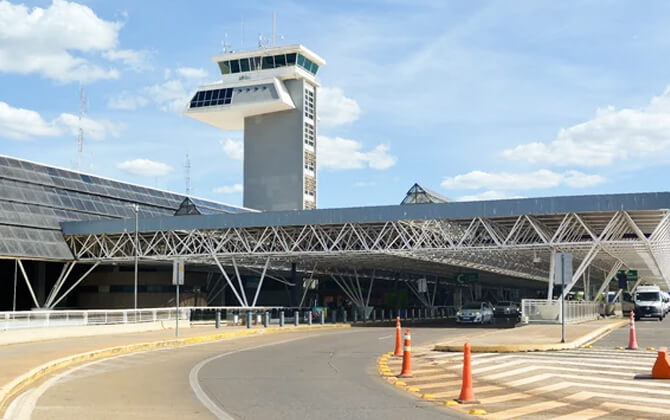
Bus services in Brasilia
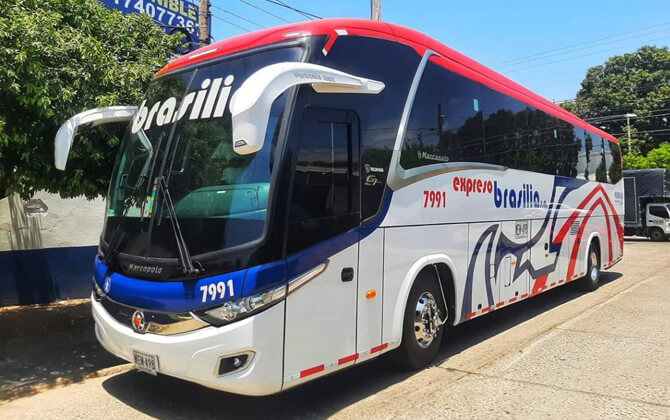
For most people, the bus system is the most useful part of public transportation in Brasilia. It gives broad coverage across the city center and beyond, so for many trips, this is the transport option you will use most.
The main terminal is Rodoviaria in the center. Most routes start there or pass through it, which makes transfers easier and turns it into the key point on the city’s route plan.
Brasilia also has red-and-white minibuses known as zebrinha. They are handy for getting between central districts and places such as the airport, Esplanada dos Ministerios, and other major avenues. On secondary streets and through the superquadras, these vehicles add extra coverage alongside regular buses.
One detail catches many visitors out: a bus may only stop if someone wants to get off, unless you signal it. So yes, flagging the bus matters.
Brasilia Bus Station, or Rodoviária de Brasília, is one of the most modern bus stations in Brazil. It is near the street Epia and includes accessibility assistance, wheelchairs and stretchers, lost property services, ATMs, station parking, shops, cafés, restrooms, and paid showers.
Right in front of it, the urban bus station connects passengers to different parts of the city. The metro station is also nearby, which makes Rodoviaria the main interchange for city transport.
When the midday heat is intense, buses are often the easiest way to move around without long walks.
| Station | Details |
|---|---|
| Rodoviaria | Main bus hub in the city centre |
| Zebrinha | Red and white minibuses useful for central districts |
| Areas served | City centre, neighbourhoods, airport, Esplanada dos Ministerios, major avenues |
Tips and Rules
Brasilia’s public transport system is useful, though not always easy for first-time visitors. The metro is clean, safe, and fast, but its stations and route coverage are limited. Buses reach many more areas, including central districts and satellite cities, yet service can be crowded and less predictable.
Plan around Rodoviária do Plano Piloto. It is the city’s main interchange, and many routes connect through it. If you stay in a central area, short walks can work, but the city is not especially pedestrian-friendly, so do not count on walking everywhere.
Try to avoid peak hours if possible. Buses are typically busiest from 7:00 am to 8:30 am and from 5:00 pm to 7:00 pm. Metro services can also be packed during those working hours, especially on satellite-city routes. At night, service is reduced, so your travel options narrow quickly.
Keep valuables secure. Pickpocketing is a real risk on crowded vehicles and at busy stops, so avoid displaying your phone and keep bags close.
Choose transport based on the trip. The metro is better for faster travel without traffic, while buses are more practical for wider coverage. Taxis cost more, but they can save time when public transport is not convenient.
Build flexibility into your timetable. Bus frequency is not always consistent, and connections may take longer than expected. A little buffer helps.
If you are visiting as a tourist, keeping things simple is often the best strategy: stick to the main routes, ask your hotel for help when needed, and avoid depending on late-night public transport.
Getting around in Brasilia
Brasilia offers several ways to get around, and public transport is often the most practical choice because of the city’s size and layout. The main options are buses, the metro, taxis, ride-hailing services, and car rental. Walking and cycling can work within some neighborhoods, but they are usually better for shorter local journeys.
Buses are the main public transport mode. The network reaches Brasilia and its satellite towns, and the central hub makes route changes easier. Fares are affordable, and some streets have exclusive bus lanes that help reduce running time during busy periods. Even so, buses can be crowded at peak times.
The metro is another useful option. The draft describes two main lines in a Y-shaped system serving 27 stations across about 42 kilometers (26.1 miles). It connects central Brasilia with key residential areas and runs from early morning to late evening. Single tickets and rechargeable cards are available, and stations include lifts and escalators for accessibility.
Taxis and ride-hailing services are widely available if you want more direct, flexible transport. Car rentals also make sense if you plan to explore at your own pace or travel beyond the city limits.
Brasilia’s urban design shapes the way people move. The large residential superquadras support some walking inside neighborhoods, but the city’s overall scale makes longer walks impractical. Cycling is possible in some areas thanks to bike lanes, though it is not the main form of local transport.
In day-to-day use, getting around in Brasilia usually works best with a mix of bus and metro, with taxis or ride-hailing filling the gaps when needed.