Porto Alegre Metro, also called Trensurb or Trem, is the main rapid transit system serving Porto Alegre and the northern suburbs of the metropolitan area in Brazil. It has one main route, 22 stations, and a network length of about 43.8 km (27.2 mi), carrying roughly 175,000 passengers a day. The system opened in March 1985, links Porto Alegre with Canoas, Esteio, Sapucaia do Sul, São Leopoldo, and Novo Hamburgo, and also includes an airport people mover connection. Trains use 1,600 mm gauge track with 3,000 VDC overhead power, the average spacing between stations is about 2 km (1.2 mi), and average running time speed is around 50 km/h (31 mph), with a top speed of 90 km/h (56 mph).
| Key | Information |
|---|---|
| System name | Porto Alegre Metro / Trensurb |
| Location | Porto Alegre metropolitan area, Brazil |
| Lines | 1 main line plus an airport people mover connection |
| Stations | 22 |
| Network length | 43.8 km (27.2 mi) |
| Daily ridership | About 175,000 users |
| Opening | March 1985 |
| Airport link | Included in the system, no separate ticket needed |
| Proposed expansion | Line 2, 19 km (11.8 mi) to Cachoeirinha |
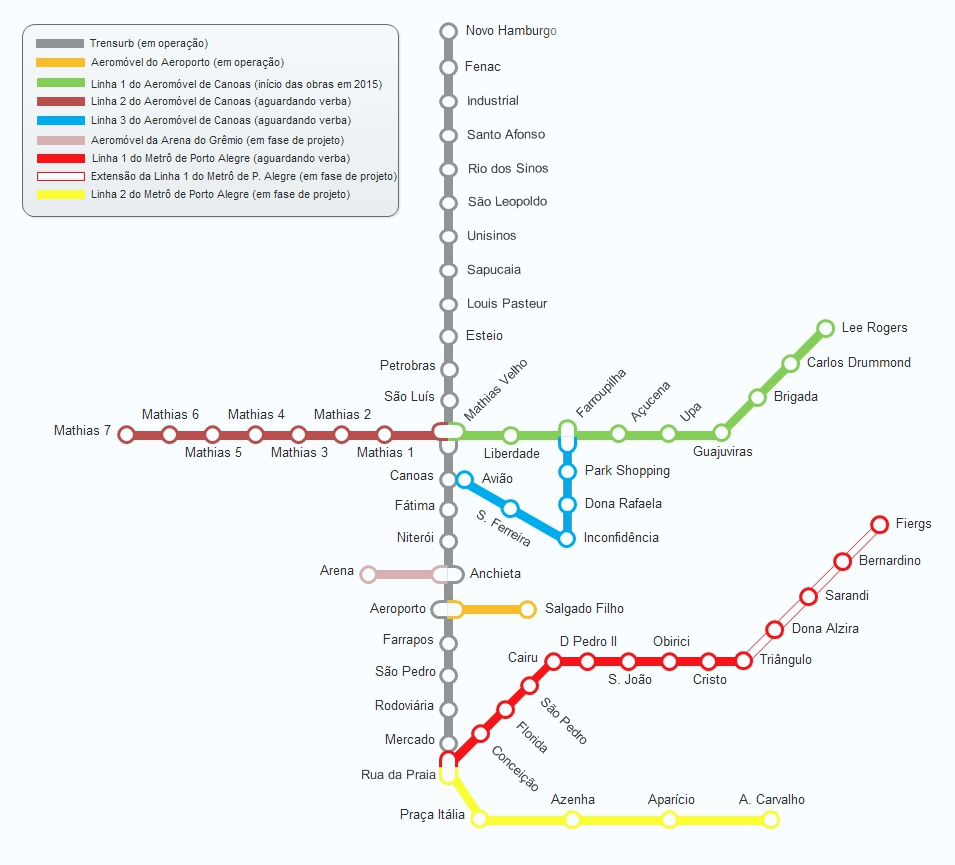
Porto Alegre Metro Map
-Map of Porto Alegre Metro showing different stations. Click on the map to enlarge it or download the Porto Alegre Metro map in PDF format.
Lines and Stations
The Porto Alegre Metro system has one operating line and a separate airport connection people mover. Together, they form the core of public transport on this corridor, with 22 stations across a 43.8 km (27.2 mi) route.
| Station | Details |
|---|---|
| 1 Azul | Mercado to Novo Hamburgo; opened in 1985; length 43.8 km (27.2 mi); 22 stations; running time about 53 minutes; operating hours 05:00 AM to 11:20 PM |
| Airport connection People Mover | Trensurb to Infraero; opened in 2013; length 0.814 km (0.51 mi); 2 stations; running time about 2 minutes; opening hours 06:30 AM to 11:20 PM |
Line 1 was inaugurated on March 2, 1985, between Mercado and Sapucaia do Sul, then extended in stages to Unisinos, São Leopoldo-Museum, and Novo Hamburgo. Its route connects Porto Alegre with Canoas, Esteio, Sapucaia do Sul, São Leopoldo, and Novo Hamburgo along a north-south axis.
The airport connection is a fully automated people mover linking Aeroporto station with Terminal 1 of Salgado Filho International Airport. Travel time is about 90 seconds.
Stations
| Station | Details |
|---|---|
| Mercado | Porto Alegre; opened 1985 |
| Rodoviária | Porto Alegre; opened 1985 |
| São Pedro | Porto Alegre; opened 1985 |
| Farrapos | Porto Alegre; opened 1985 |
| Aeroporto | Porto Alegre; opened 1985 |
| Anchieta | Porto Alegre; opened 1985 |
| Niterói | Canoas; opened 1985 |
| Fátima | Canoas; opened 1985 |
| Canoas/La Salle | Canoas; opened 1985 |
| Mathias Velho | Canoas; opened 1985 |
| São Luís/Ulbra | Canoas; opened 1985 |
| Petrobrás | Canoas; opened 1985 |
| Esteio | Esteio; opened 1985 |
| Luiz Pasteur | Sapucaia do Sul; opened 1985 |
| Sapucaia | Sapucaia do Sul; opened 1985 |
| Unisinos | São Leopoldo; opened 1997 |
| São Leopoldo | São Leopoldo; opened 2000 |
| Rio dos Sinos | São Leopoldo; opened 2012 |
| Santo Afonso | Novo Hamburgo; opened 2012 |
| Industrial | Novo Hamburgo; opened 2013 |
| Fenac | Novo Hamburgo; opened 2013 |
| Novo Hamburgo | Novo Hamburgo; opened 2013 |
The average distance between stations is about 2 km (1.2 mi). Trains run at an average speed of 50 km/h (31 mph) and can reach 90 km/h (56 mph).
Schedule and Timetables
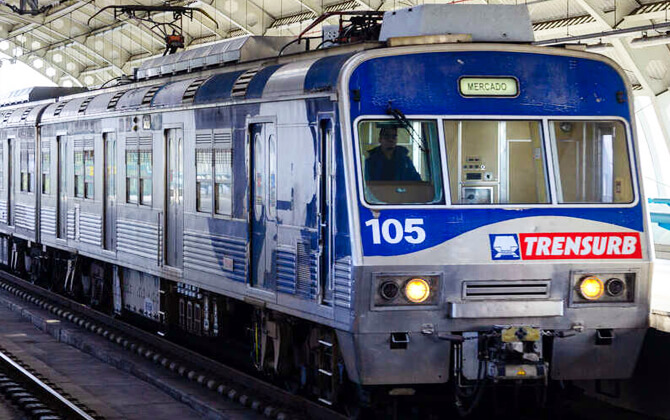
The Porto Alegre Metro schedule runs daily. Trains generally operate from 5:00 AM to 11:00 PM, while station access starts at 4:50 AM. Unisinos station stays open a little longer, until 11:10 PM. If you are checking timings today, it is worth noting that the airport connection follows a different timetable.
Line 1 Azul runs between Mercado and Novo Hamburgo. The airport connection people mover links Trensurb with Infraero and has its own operating hours from 6:30 AM to 11:20 PM.
| Service detail | Timings |
|---|---|
| Stations opening time | Daily from 4:50 AM |
| Metro working hours | 5:00 AM to 11:00 PM daily |
| Unisinos station closing time | 11:10 PM |
| Line 1 Azul route timetable | Mercado to Novo Hamburgo, 05:00 AM to 11:20 PM |
| Airport connection schedule | Trensurb to Infraero, 06:30 AM to 11:20 PM |
The airport people mover is part of the same system, so no separate ticket is required. The trip between the airport station and Terminal 2 takes about 90 seconds.
Tariffs, Tickets, and Cards
The Porto Alegre Metro fare system includes a few payment options. A single ticket costs R$1.70, about US$0.34, and allows unlimited travel within the system boundaries.
Integrated metro and bus tickets are also available, with price levels that vary by area of the city. Exact fare calculator details are not provided in the source material.
For regular travel, the SIM card is available in four versions:
- SIM Passagem Antecipada for general and frequent use
- SIM Vale-Transporte for workers with pre-loaded tickets from their company
- SIM Idoso for passengers aged 65 and over
- SIM Unitário for passengers who mainly use the metro
The system also works with the Integrated Transport Card, known as TRI, and the TEU card, or Metropolitan Ticket. These options make local transport and integrated city transport trips more flexible.
Interactions with Other Systems
The Porto Alegre Metro is closely tied to the wider public transport network. Its main job is to connect central Porto Alegre with the northern suburbs, while the bus network covers areas the rail system does not reach. In other words, it works best as part of a broader transportation in the metro area, not as a stand-alone system.
Several stations allow direct or easy interchange with bus services. Mercado has a fully integrated bus terminal, Rodoviária connects with the city’s main long-distance bus station, and Farrapos sits near a major bus operator terminal.
The fare system also supports this integration. Along with the standard metro ticket, there are combined metro and bus fares that vary by zone. Passengers can also use SIM, TRI, and TEU cards for integrated transport.
One of the most important links is the airport connection. Aeroporto station connects with Salgado Filho International Airport through a people mover shuttle, making transfers simple. No extra ticket is needed.
The metro also complements other transport modes in the city. Long-distance bus travel is available through Mercado and Rodoviária, and the network has been planned with future links in mind, including another shuttle line in Canoas and a possible connection from Anchieta station to Arena do Grêmio.
Connections to the Airport
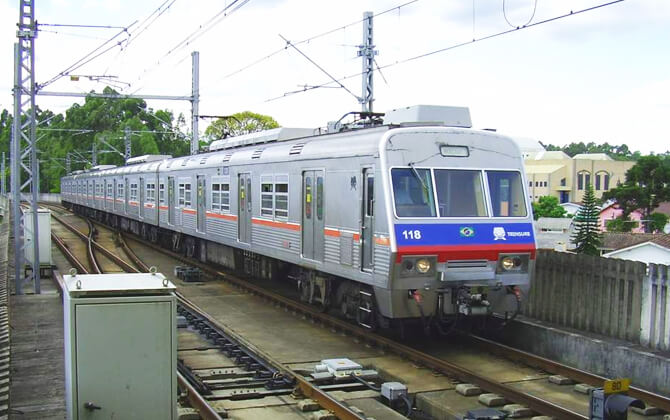
Porto Alegre has a dedicated airport link called the Metro-Airport Connection, or Conexão Metrô-Aeroporto. This people mover connects Aeroporto station on the metro with Terminal 1 of Salgado Filho International Airport.
The service is operated by Trensurb. It has a single elevated track, two stations, and a length of 814 m, or 0.814 km (0.51 mi). The line opened to the public on 10 August 2013 and began commercial operation on 7 May 2014.
The airport link is part of the metro system, so interchange is free and passengers do not need a separate ticket. The trip takes about 90 seconds.
After the 2024 Rio Grande do Sul floods damaged the track, the Aeromóvel has been out of service. It is scheduled to return in 2026.
- Type: People mover / airport rail link
- System: Porto Alegre Metro
- Status: Out of service
- Stations: 2
- Length: 814 m / 0.814 km (0.51 mi)
Rules and Regulations
Passengers are expected to follow a few basic rules to keep the Porto Alegre Metro safe and comfortable.
- Animals are not allowed, except for service animals such as guide dogs for disabled or blind passengers.
- Unauthorized artistic performances are not allowed in metro facilities.
- Large parcels that may disturb other passengers are not permitted.
- Bicycles are allowed on weekdays from 9:30 to 11:00, from 14:00 to 16:00, and from 21:00 to 23:25.
- On Sundays, bicycles are allowed at any time.
If you plan to bring a bike, check the bicycle transport timetable before you travel.
Advice
Before using the Porto Alegre Metro, keep in mind that the system mainly connects the city center with the northern suburbs. It is practical, safe, and low-cost, but it is not a full citywide network.
Pick the ticket or card that fits your trip. A single ticket works well for occasional riders, while SIM and other integrated options are better for regular passengers or anyone combining metro and bus travel.
Check the timetable before you leave. The train schedule usually runs from 5:00 AM to around 11:15 PM, with different frequency depending on weekdays, Saturdays, and Sundays. The airport people mover follows its own opening times, so plan extra time for transfers.
If you are traveling with a bicycle, watch the permitted time windows on weekdays. On Sundays, access is much easier because bikes are allowed all day.
Because the network has only one main rail route and an airport connection, many trips in Porto Alegre still need buses or other city transport. That’s why the metro works best as one part of a wider public transport journey.
Historical Background
The history of Porto Alegre Metro starts with the need to improve transport between Porto Alegre and the northern towns of the metropolitan area. As road traffic became harder to manage, BR-116 was left carrying most of the demand to cities such as Canoas, Esteio, Sapucaia do Sul, São Leopoldo, and Novo Hamburgo.
Construction of Line 1 began in 1980. The first section was designed to connect the city center with the northern suburbs, and the line officially opened on 2 March 1985. Initial service ran between Mercado and Sapucaia, with 15 stations over 27 km (16.8 mi).
The route was extended several times after that. It reached Unisinos in December 1997, São Leopoldo-Museum in November 2000 after two months of trial operation, and Novo Hamburgo in two phases opened in July 2012 and on 21 December 2013.
Another important step came in 2013 with the airport connection. This 0.814 km (0.51 mi) people mover links Estação Aeroporto with Terminal 1 of Salgado Filho International Airport. It is part of the same system, so no separate ticket is needed. The service has operated since August 2013 and uses the Aeromovel design, an atmospheric railway technology first developed in Porto Alegre in the late 1970s.
Today, the metro has 22 stations and a total route length of 43.8 km (27.2 mi). It remains a key part of public transport for the metropolitan region.
Future Expansions
The main planned expansion is Line 2. It has been proposed as a 19 km (11.8 mi) route from the city centre to Cachoeirinha, with around half of the alignment underground. In 2019, the estimated cost was US$2.9 billion.
The system has already grown gradually, with extensions to Unisinos in 1997, São Leopoldo-Museum in 2000, and Novo Hamburgo in 2012 and 2013. Those projects show the pattern of expansion over time.
Another addition already completed is the automated people mover connecting Estação Aeroporto and Terminal 1 of Salgado Filho International Airport. It has been part of the system since August 2013, with no separate ticket required.
Based on the available information, Line 2 remains the main future expansion proposal for the metro network.
Fun Facts
- The system was built mainly to connect Porto Alegre with northern satellite cities in the metropolitan area.
- It operates as a single-line metro with an additional airport people mover.
- Porto Alegre Metro is one of eight metro systems in Brazil.
- It has 22 stations and carries around 175,000 users per day.
- Trains average 50 km/h (31 mph) and can reach 90 km/h (56 mph).
- The average spacing between stations is about 2 km (1.2 mi).
- The airport connection was the first commercial installation in the world using the Aeromovel design.
- About 60% of the system’s users come from Canoas.
Tourism and Sightseeing
Porto Alegre and the surrounding cities are important tourist centers, shaped by a temperate climate, European influence, and a maritime atmosphere. The metro is not really a sightseeing attraction by itself, but it can still help with a few practical trips.
- São Pedro Theatre: in the historic center, reachable from Mercado station with a walk of about five blocks. It is known for its architecture and reasonable prices.
- Santa Casa Historical and Cultural Centre: this museum focuses on the medical history of southern Brazil and is close to Mercado and Rodoviária stations.
- Arena do Grêmio: a key stop for football fans. Get off at Anchieta station and walk along Padre Leopoldo Bretano Avenue.
For visitors, the metro is best used as a simple transport option between central Porto Alegre and the northern suburbs, rather than as the main way to reach most tourist attractions.