Recife Metro, known in Portuguese as Metrô do Recife and commonly called MetroRec, is the rapid transit system serving the Metropolitan Region of Recife in Pernambuco, Brazil. Operated by the federally owned Companhia Brasileira de Trens Urbanos (CBTU), the system combines metro service with diesel-powered VLT light rail lines and connects key suburbs, bus terminals, and Recife/Guararapes International Airport.
| Key | Information |
|---|---|
| System name | Recife Metro, Metrô do Recife, MetroRec |
| Location | Metropolitan Region of Recife, Pernambuco, Brazil |
| Operator | Companhia Brasileira de Trens Urbanos (CBTU) |
| Core metro network | 29 stations across 39.5 km (24.5 mi) of track |
| Additional services | Two diesel-powered VLT light rail lines |
| Opened | March 11, 1985 |
| Main power and track | 1,600 mm gauge track with overhead power on the metro network |
| 2018 ridership | 102,089,000 passengers across the combined system |
| Airport connection | Aeroporto station on the South Line, linked to the terminal by a covered walkway |
Recife Metro Map
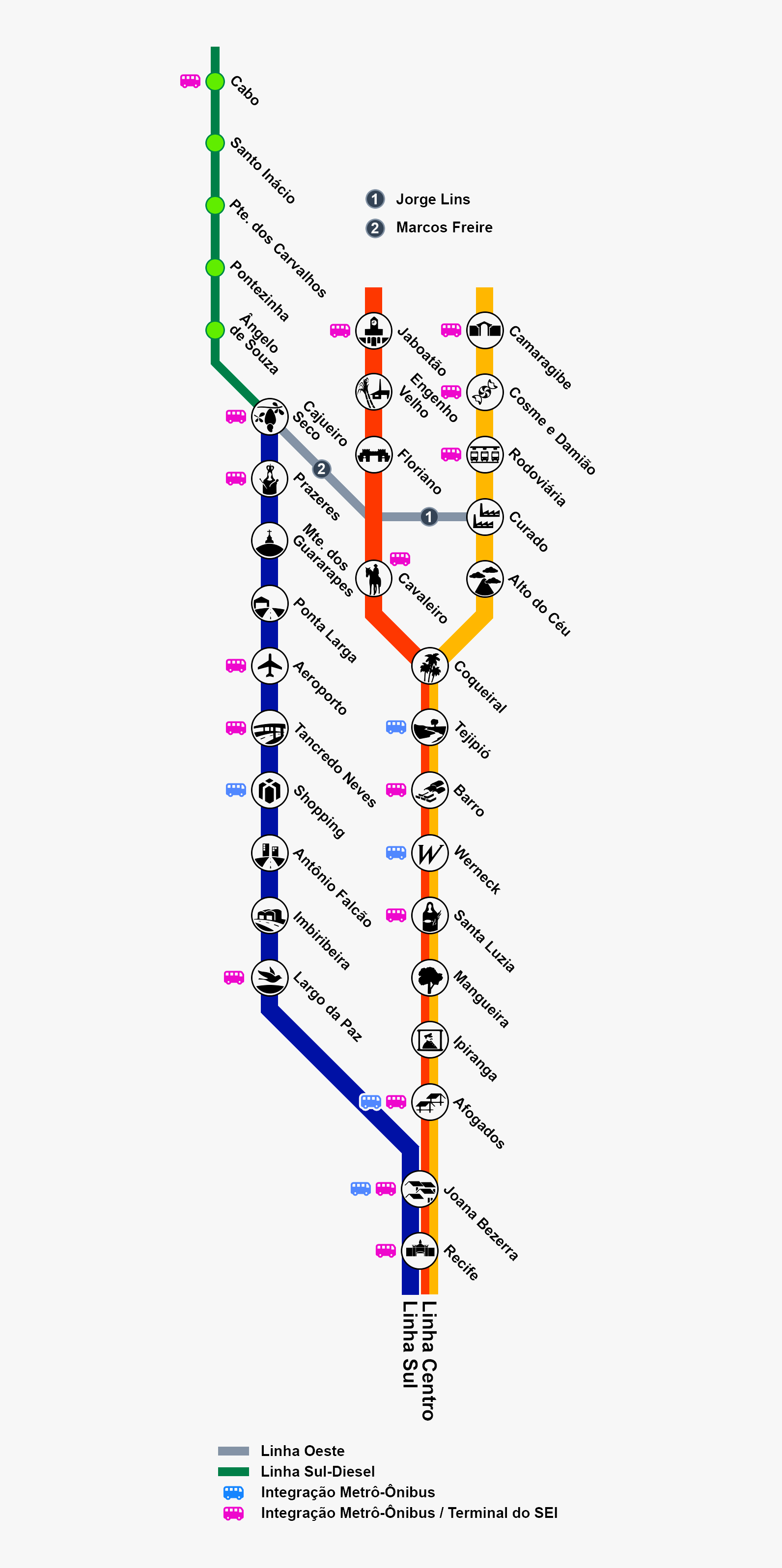
Map of Recife Metro showing different lines. Click on the map to enlarge it or download the Recife Metro map in PDF format.
Lines and Stations of Recife Metro
The Recife Metro system has five rail services in total: three metro lines and two diesel-powered VLT light rail lines. The main metro route network covers 39.5 km (24.5 mi), with lines named after the areas they serve rather than by number.
Center Line 1 runs from Recife to Camaragibe. It shares the original central section with Center Line 2 as far as Coqueiral, serves 15 stations, and has a listed running time of 28 minutes.
Center Line 2 also starts at Recife and shares track with Center Line 1 to Coqueiral. From there, it continues toward Jaboatão through Cavaleiro, Floriano, and Engenho Velho. This branch serves 14 stations, with a listed running time of 24 minutes.
The South Line connects Recife with Cajueiro Seco. It has 13 stations and a listed running time of 25 minutes, passing through Joana Bezerra, Largo da Paz, Imbiribeira, Aeroporto, and other stops before reaching its terminal.
- Center Line 1 route: Recife → Camaragibe
- Center Line 2 route: Recife → Jaboatão
- South Line route: Recife → Cajueiro Seco
- VLT route: Cabo de Santo Agostinho → Cajueiro Seco
- VLT route: Curado → Cajueiro Seco
The VLT network uses metre-gauge diesel vehicles. It links Cabo de Santo Agostinho with Recife and also helps connect the Center-1 and South lines through suburban areas. For trip planning, the stations list below is useful alongside a stations map or route plan.
| Station | Details |
|---|---|
| Recife | Main starting point for the metro lines; also noted for bus integration and access to nearby sightseeing areas. |
| Joana Bezerra | Important interchange area with bus terminal access. |
| Afogados | Metro station mentioned in the system materials; also noted for bus integration. |
| Ipiranga | Station on the Recife Metro network. |
| Mangueira | Station on the Recife Metro network. |
| Santa Luzia | Station with adjacent bus terminal access. |
| Edgar Werneck | Station with adjacent bus terminal access. |
| Barro | Station with adjacent bus terminal access. |
| Tejipió | Station with adjacent bus terminal access. |
| Coqueiral | Shared section point for Center Line 1 and Center Line 2. |
| Alto do Céu | Station on the Recife Metro network. |
| Curado | Station and VLT route point mentioned in the system materials. |
| Rodoviária | Station with access to regional and long-distance bus services. |
| Cosme e Damião | Station with bus integration; used for special event boarding at Arena de Pernambuco when service is extended. |
| Camaragibe | Terminal of Center Line 1 and also connected with BRT Via Libre services. |
| Cavaleiro | Station on the Center Line 2 branch toward Jaboatão. |
| Floriano | Station on the Center Line 2 branch toward Jaboatão. |
| Engenho Velho | Station on the Center Line 2 branch toward Jaboatão. |
| Jaboatão | Terminal of Center Line 2 and a bus integration point. |
| Largo da Paz | South Line station with bus terminal access. |
| Imbiribeira | South Line station. |
| Antonio Falcão | South Line station mentioned in the system materials. |
| Recife Shopping Center | Station name mentioned in the source materials. |
| Tancredo Neves | South Line station with bus integration. |
| Aeroporto | Airport station on the South Line, connected to Recife/Guararapes International Airport by a passenger bridge and covered walkway. |
| Porta Larga | South Line station; useful for access toward Guararapes National Historical Park. |
| Monte dos Guararapes | South Line station; useful for access toward Guararapes National Historical Park. |
| Prazeres | South Line station with bus terminal access. |
| Cajueiro Seco | South Line terminal and VLT connection point with bus integration. |
| Jorge Lins | VLT station mentioned in the system materials. |
| Marcos Freire | VLT station mentioned in the system materials. |
| Ângelo de Souza | VLT station mentioned in the system materials. |
| Pontezinha | VLT station mentioned in the system materials. |
| Ponte dos Carvalhos | VLT station mentioned in the system materials. |
| Santo Inácio | VLT station mentioned in the system materials. |
| Cabo | VLT station serving Cabo de Santo Agostinho. |
Station design is one of the system’s most practical features. MetroRec uses audio announcements, station-specific wall colors, and pictograms, so passengers can identify stops even without relying only on written names.
Operating Hours and Timetables
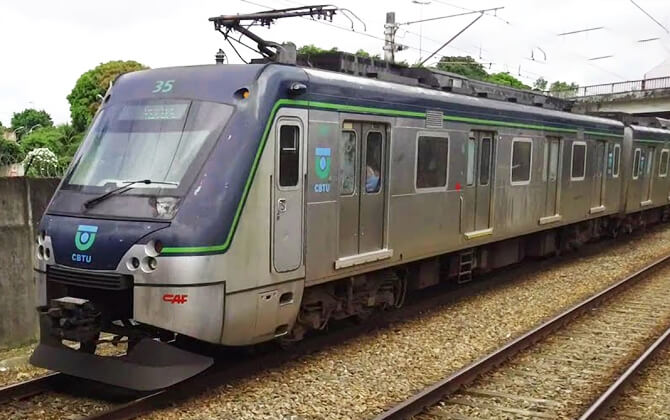
Recife Metro operating hours are simple on the three main metro lines. Center Line 1, Center Line 2, and the South Line run daily from 5:00 AM to 11:00 PM. In other words, the usual starting time is 5:00 AM, and the standard closing time is 11:00 PM.
For today’s schedule, the core metro opening hours and working hours are the same unless special service changes apply. Frequency varies by line: Center Line 1 and Center Line 2 run every 4 to 7 minutes depending on demand, while the South Line keeps an 8-minute interval.
| Service detail | Timings |
|---|---|
| Center Line 1 opening times | Daily, 5:00 AM to 11:00 PM |
| Center Line 2 opening times | Daily, 5:00 AM to 11:00 PM |
| South Line opening times | Daily, 5:00 AM to 11:00 PM |
| Center Line 1 and Center Line 2 frequency | Every 4 to 7 minutes, depending on demand |
| South Line frequency | Every 8 minutes |
| Cajueiro Seco-Cabo VLT train schedule | Monday to Friday, 5:21 AM to 8:47 PM; Saturday until 3:15 PM |
| Curado-Cajueiro Seco VLT route timetable | Monday to Friday, first train at 5:49 AM and last train at 8:31 PM; Saturday until 2:13 PM |
The VLT lines have shorter service periods and lower frequency than the main metro. The Cajueiro Seco-Cabo VLT usually runs at intervals ranging from about one hour to forty minutes. The Curado-Cajueiro Seco VLT has longer gaps between trains, especially outside peak periods.
On days with matches, shows, or other events at Arena de Pernambuco, CBTU may extend service based on demand. In those cases, Cosme e Damião is the only station open for boarding, while the other stations are used only for alighting.
Fares, Tickets, and Cards
Recife Metro has a straightforward fare structure. A basic ticket allows unlimited travel across the system without time or distance restrictions and costs R$1.60, about $0.42-$0.46 USD. For most simple metro trips, that ticket price is the main cost to know.
Passengers can also use integrated tickets for combined metro and bus travel. These fares depend on the travel ring, so the price changes if your route includes wider local transport connections.
- Ring A integrated fare: R$2.15, about $0.56-$0.62 USD
- Ring B integrated fare: R$3.25, about $0.85-$0.93 USD
Tickets can be bought at station ticket offices, and the system also accepts prepaid transportation cards such as the VEM card. Cash payments are also mentioned in the source materials.
If you are comparing the fare for a metro-only ride with a metro-plus-bus journey, think of the travel ring as the practical fare calculator. A day pass is not described in the provided system details, so check the ticket type before you start a longer trip.
Integration with Other Transport Systems
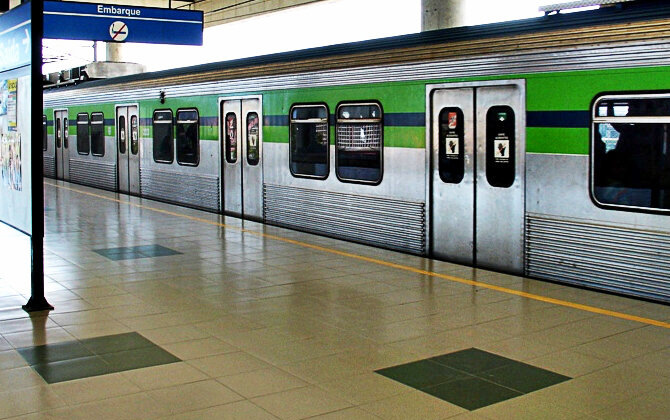
Recife Metro is closely linked with public transport across the metropolitan region. The metro works alongside a large bus network operated by around 18 companies and coordinated by the Grande Recife Consórcio de Transporte. For daily city transport, this integration is one of MetroRec’s biggest advantages.
Several stations have adjacent bus terminals, including Recife, Joana Bezerra, Afogados, Santa Luzia, Edgar Werneck, Barro, Tejipió, Cosme e Damião, Camaragibe, Jaboatão, Largo da Paz, Tancredo Neves, Aeroporto, Prazeres, Cajueiro Seco, and Rodoviária.
The SEI system, short for Sistema Estrutural Integrado, lets passengers continue by bus using integrated ticket options. Rodoviária station is especially important because it connects with bus services to most parts of Brazil.
The regional transport consortium also manages the BRT Via Libre system. Its north-south corridor has 25 stations and around 66,000 users per day, while the east-west corridor has 15 stations and serves more than 50,000 users daily. Camaragibe, on the east-west corridor, is also the terminus of Center Line 1.
- Bus integration: SEI linked services allow continued travel with integrated ticket options.
- Regional transport: Rodoviária station connects with long-distance bus services.
- BRT links: BRT Via Libre connects key municipalities with Recife.
- Airport access: Aeroporto station links the South Line with Recife/Guararapes International Airport.
Connections to the Airport
Recife Metro provides direct access to Recife/Guararapes International Airport, also known as Gilberto Freyre Airport, through Aeroporto station on the South Line. The station is only a few meters from the terminal and is connected by a passenger bridge and covered walkway.
That makes the metro a practical option for airport passengers who want a simple route between the platform and terminal area. It is also useful for commuters traveling through the southern corridor of Recife.
A Brief History of Metro
The history of Recife Metro begins in the early 1980s. The federal government created the Metrorec consortium in September 1982, and construction started in January 1983 with funding from the World Bank.
The metro officially opened on March 11, 1985, with the first section entering service. It was later taken over by Companhia Brasileira de Trens Urbanos, the federally owned operator that still runs the system.
The network expanded in stages after the first phase. A major expansion began in 1998 and included electrification of the South Line and an extension of the Center Line. Between February 2005 and March 2009, the metro grew to its current 39.5 km (24.5 mi) length. The diesel line was later converted into light rail, and a station was added to the Center Line.
Today, MetroRec forms part of a wider transportation system that includes metro, VLT light rail, bus connections, and BRT links between Recife and nearby suburbs in Pernambuco.
Future Expansions
Since the last expansion in 2010, Recife Metro has focused mainly on modernizing existing facilities and systems, especially around the VLT lines project. Several future expansion ideas have been mentioned, but they do not yet have a firm timeline.
One key proposal is an 11 km (6.8 mi) extension intended to connect several VLT systems in the municipality of Ipojuca. That points to a route plan centered on developing light rail while keeping it connected to the wider metro network.
Other materials refer to projects under study for the South Line and additional VLT development. For now, the direction is gradual: more modernization, stronger integration, and careful expansion between metro, VLT, and other transport services.
Tips for Travelers
Recife Metro is easy to use, but a little planning helps. Check the timetable before you go, especially if your trip includes VLT service or a Saturday ride.
- Choose the right ticket if you plan to combine metro and bus travel, because integrated fares depend on the travel ring.
- Check the schedule today before using the VLT lines, where opening times are shorter and frequency is lower than on the metro.
- Allow extra time for airport trips, particularly if you are carrying luggage.
- Use SEI bus terminals when you need to continue beyond the metro stations.
- For sightseeing or transfers, confirm the best route and timing before you start.
If you are traveling with baggage, keep it manageable. The airport link is convenient, but crowded trains and station passages are easier when you are not carrying too much.
Fun Facts
MetroRec has several details that make it stand out in Brazil’s urban rail network.
- The stations were designed with more than written names: each one uses audio announcements, a distinct wall color, and a pictogram for identification.
- Recife Metro was the third metro system in Brazil, after São Paulo and Rio de Janeiro.
- The system combines a conventional metro, a former diesel line, and two light rail lines.
- Construction began in 1983, and passenger service started in 1985.
- The airport connection is unusually direct, with Aeroporto station only a few meters from the terminal.
Tourism and Sightseeing
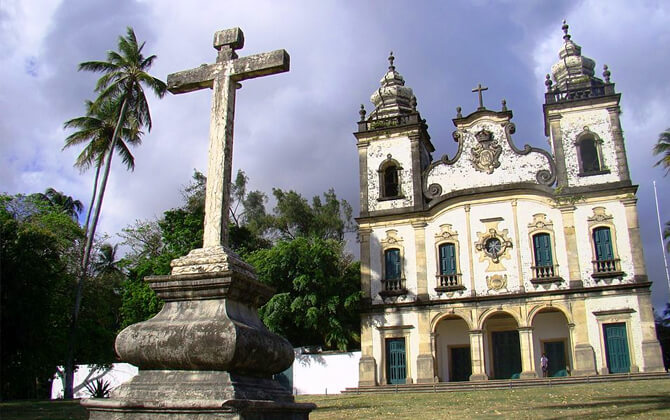
Recife is a coastal city shaped by rivers, waterways, islands, and islets. Its historic center reflects the city’s past, while the skyline shows its role as an economic hub in northeastern Brazil. For visitors, the metro is a practical way to reach several sightseeing areas without relying only on road transport.
Museum of the City of Recife – Fort of Five Points: This museum is a few blocks south of Recife station and is housed in the Forte de São Tiago das Cinco Pontas. The building stands on top of an older Dutch fort and hosts exhibitions and events focused on Recife’s history.
Guararapes National Historical Park: This 3.6 sq km (1.4 sq mi) park is in Jaboatão dos Guararapes. It includes Morro de los Guararapes, associated with the Battle of Guararapes and the defeat and expulsion of the Dutch from the city. The park can be reached from Porta Larga station or Monte dos Guararapes station on the South Line.
Desert Dock Museum, Cais do Sertão: Near Recife station, this museum opened in 2014 and is dedicated to the Sertão, a semi-desert region of northeastern Brazil known for its musical and social traditions. It includes many references to Luiz Gonzaga, a major figure in the baião genre.
For tourists, the metro works well for combining city travel with short cultural stops, especially around Recife station and the southern areas served by the network.