The Vienna U-Bahn is the rapid transit system serving Vienna, Austria. The five-line metro network covers 83.1 kilometers (51.6 miles) of route, serves 109 stations, and carried 459.8 million passengers in 2019. The modern U-Bahn opened on 25 February 1978, after test operations began in 1976, though parts of the U4 and U6 trace their roots to the Stadtbahn system opened in 1898.
| Key | Information |
|---|---|
| System | Vienna U-Bahn, the city’s rapid transit metro system |
| Lines | U1, U2, U3, U4, and U6 |
| Route length | 83.1 kilometers (51.6 miles) |
| Stations | 109 stations |
| Modern opening date | 25 February 1978 |
| Older origins | Parts of U4 and U6 developed from the Stadtbahn, opened in 1898 |
| Operator | Wiener Linien |
| Typical operating hours | About 05:00 to around 01:00, with all-night service on selected nights |
Vienna U-Bahn Map
Map of Vienna U-bahn Underground Metro System showing different lines and stations. Click on the map to enlarge it or download the Vienna U-bahn map in PDF format.
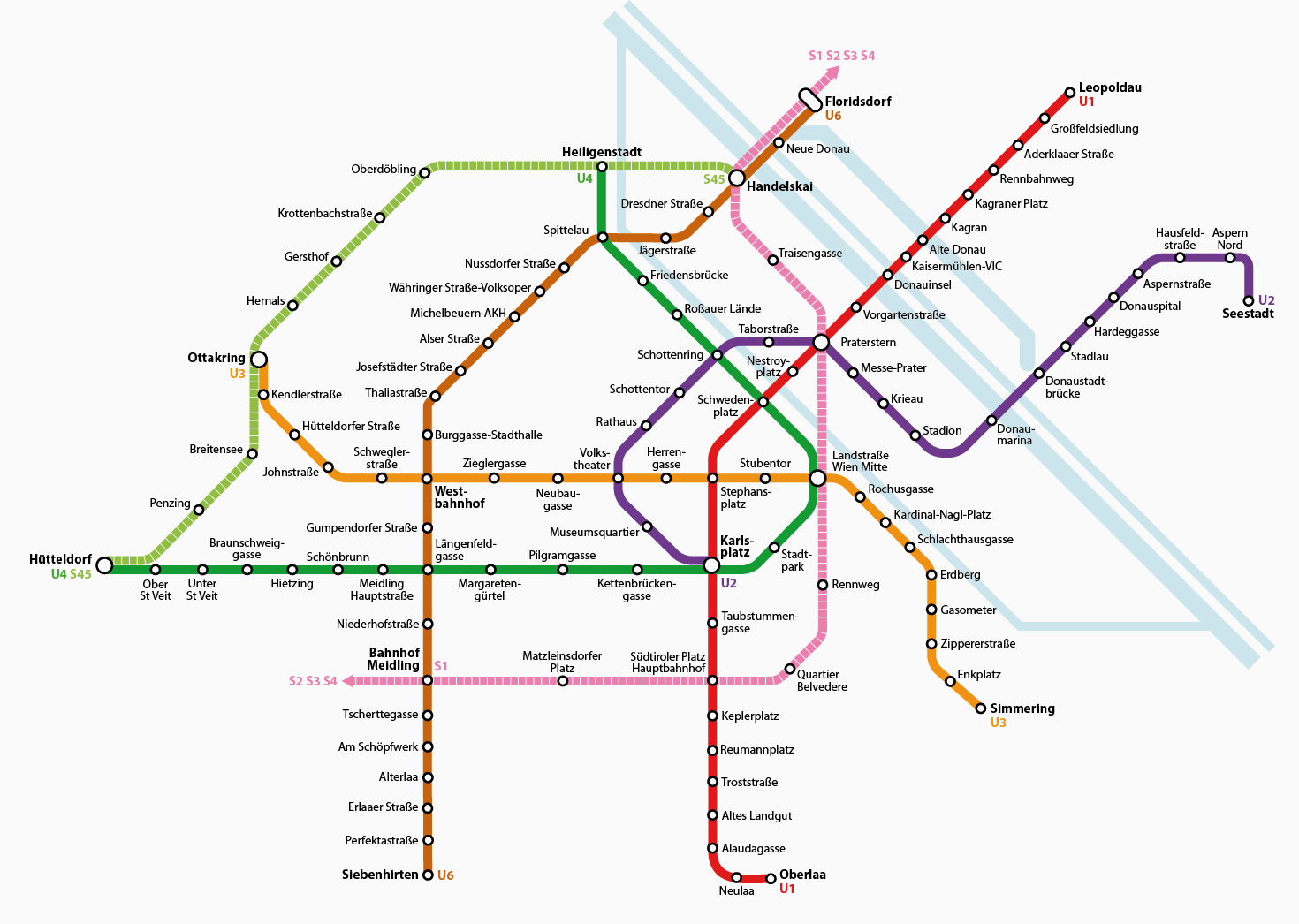
Vienna U-Bahn Lines and Stations
The Vienna U-Bahn has five active lines: U1, U2, U3, U4, and U6. Each line uses the “U” prefix and a distinct color on signs, route maps, and station displays, which makes the system easy to read even on a first visit. The network is closely linked with Vienna public transport, including trams, buses, and S-Bahn services.
For planning a route, the stations map and stations list are especially useful around major transfer points. The path train signs are clear in stations, and the route plan is simple: follow the line color, check the direction, and confirm the platform before boarding.
| Line | Colour | Route | Length | Stations |
|---|---|---|---|---|
| U1 | Red | Oberlaa – Leopoldau | 19.2 km (11.9 mi) | 24 |
| U2 | Purple | Karlsplatz – Seestadt | 17.2 km (10.7 mi) | 20 |
| U3 | Orange | Ottakring – Simmering | 13.5 km (8.4 mi) | 21 |
| U4 | Green | Hütteldorf – Heiligenstadt | 16.5 km (10.3 mi) | 20 |
| U6 | Brown | Siebenhirten – Floridsdorf | 17.4 km (10.8 mi) | 24 |
Several stations stand out for their history, architecture, or role in the wider city transport network. Some U4 and U6 stations still show the influence of the historic Stadtbahn, while parts of U2 and U6 grew from earlier underground tramway tunnels.
| Station | Details |
|---|---|
| Karlsplatz | Major interchange for U1, U2, and U4. |
| Stephansplatz | Central station served by U1 and U3. |
| Westbahnhof | Important transfer station on U3 and U6. |
| Landstraße | Serves the Wien Mitte area and connects with U3 and U4. |
| Schottenring | Interchange station for U2 and U4. |
Future expansion will add more stations, including stops connected with the new U5 project. Planned future stations mentioned for the network include Frankhplatz, Matzleinsdorfer Platz, and Reinprechtsdorfer Straße.
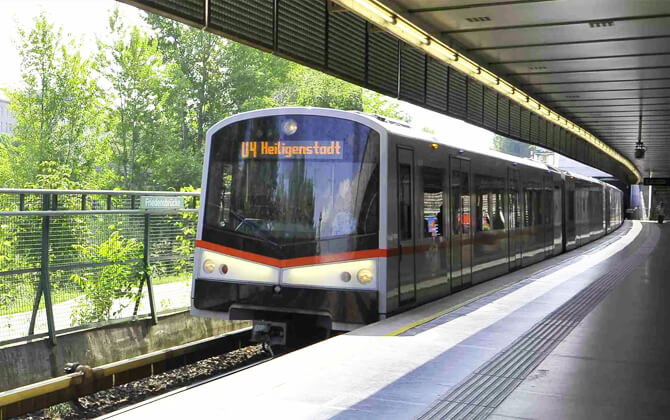
Operation Schedule and Timetables
The Vienna U-Bahn operating hours usually run from about 05:00 until around 01:00. During the day, train frequency is high, with services typically every two to five minutes. After 20:00, the interval can stretch to about eight minutes.
On Friday and Saturday nights, and on evenings before public holidays, the U-Bahn runs all night at 15-minute intervals. Vienna NightLine buses supplement these overnight services, so late travel across the city remains practical.
For exact opening hours, opening times, working hours, closing time, last train information, and timings today, check the current Wiener Linien timetable before you travel. The schedule today may vary by line, special event, or public holiday.
| Service detail | Timings |
|---|---|
| Starting time | About 05:00 |
| Regular closing time | Around 01:00 |
| Daytime frequency | About every 2 to 5 minutes |
| Evening frequency after 20:00 | Up to about every 8 minutes |
| Night service | Every 15 minutes on Friday and Saturday nights and before public holidays |
| Peak hours | Usually 07:00 to 09:00 and 16:00 to 18:00 |
Peak periods can be busy, especially on central routes and at major interchange stations. If you need a quieter ride, avoid the morning and late-afternoon rush where possible.
Fares, Tickets, and Cards
Vienna’s local transport is mostly part of the VOR fare union, so one ticket usually covers the metro, tram, bus, night bus, and commuter rail within the city. Inside Vienna, the system uses a flat fare. You only need an extra ticket when traveling beyond the city boundary, including to the airport.
VOR tickets are not valid on private Westbahn trains, the City Airport Train, or Vienna Airport Lines buses. For trips outside Vienna, ticket machines and apps can help check the current ticket price and act as a simple fare calculator.
| Type | Price | Remarks |
|---|---|---|
| Single ticket | €2.40 (about $2.60) | Valid for one journey within one zone. Changes are allowed, but circular trips or returns to the starting point are not. |
| Half-price ticket for children and dogs | €1.20 (about $1.30) | Valid for one journey within one zone. |
| Senior citizens’ ticket | €1.50 (about $1.60) | Valid for one journey for senior citizens over the age of 62. |
| 1-day pass | €5.80 (about $6.30) | Valid for unlimited travel for one adult within Vienna on the day of validation until 01:00 the following day. |
| 24/48/72-hour pass | €8 / €14.10 / €17.10 (about $8.65 / $15.25 / $18.45) | Valid for unlimited travel for one adult within Vienna for 24, 48, or 72 hours from validation. |
| Vienna City Card 24/48/72 hours | €17 / €25 / €29 (about $18.40 / $27 / $31.30) | Includes unlimited travel within Vienna plus discounts and benefits at museums, sights, theaters, concerts, shops, restaurants, and cafés. |
| 8-day ticket | €40.80 (about $44.05) | Each strip is valid for one person for unlimited travel in Vienna on the day of validation until 01:00 the following day. |
| Weekly travel pass | €17.10 (about $18.45) | Valid for unlimited travel within Vienna in the specified calendar week, Monday to Sunday. |
| Monthly travel pass | €51 (about $55.10) | Valid for unlimited travel within Vienna in the specified calendar month. |
| Annual travel pass | €365 (about $394.20) | Valid for unlimited travel within Vienna for 12 calendar months. A passport picture is required. |
Children up to the age of six travel free. Children up to 15 also travel free on Sundays, public holidays, and during school holidays in Vienna. Carrying ID can help confirm a child’s age if asked.
Tickets are sold at metro station machines, Wiener Linien ticket offices marked with a K on city maps, railway stations, most tobacconists with the blue Wiener Linien sign, and through apps. Single tickets can also be bought on trams and buses, but they cost more there.
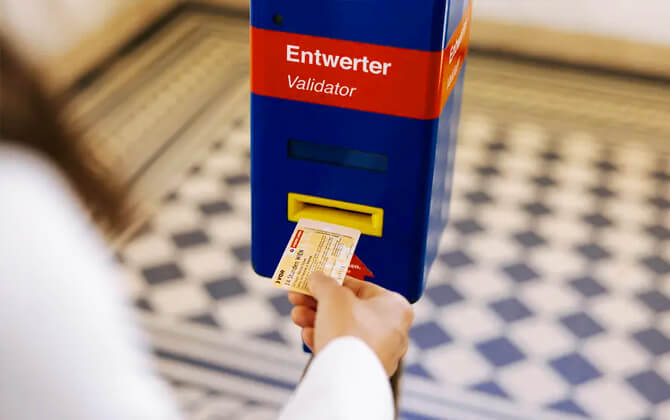
Vienna uses an honesty system with inspections instead of entry barriers. Travel without a valid ticket can lead to a penalty fare, so validate the ticket before riding when validation is required.
Interconnections
The Vienna U-Bahn is built into the wider public transport network, making transfers between metro, trams, buses, and S-Bahn services straightforward. For transportation in Vienna, this integrated system is one of the biggest advantages: one city ticket can cover several modes of local transport within the VOR area.
Several U-Bahn lines connect directly with major rail and interchange stations. U3 links Westbahnhof and Landstraße – Wien Mitte with the city center, U4 serves Hütteldorf and Heiligenstadt, and U6 connects important points such as Westbahnhof and Längenfeldgasse. U2 also supports key transfers at Karlsplatz, Volkstheater, Schottenring, and Praterstern.
The network’s interconnections also reflect its history. Parts of U4 and U6 came from the former Stadtbahn, while sections of U2 and U6 began as underground tunnels for earlier tram routes. That inherited structure still helps passengers transfer efficiently across central Vienna.
For regional journeys and airport access, stations such as Landstraße – Wien Mitte and Hauptbahnhof connect the U-Bahn with the broader rail system.
Airport Connection
The S7 S-Bahn line provides an affordable direct connection between Vienna Airport and the city center. It runs every 30 minutes and stops at Wien Mitte/Landstraße and Wien Praterstern, where passengers can transfer to the S-Bahn and U-Bahn network.
The running time is about 20 minutes to Wien Mitte/Landstraße and just under 30 minutes to Wien Praterstern. The airport station is barrier-free, sheltered from the weather, and only a few minutes’ walk from the terminal area.
For S7 or REX7 travel between the airport and the city center, passengers need tickets for two fare zones: one from the airport to the Vienna city boundary at Schwechat Bahnhof, and one for travel within Vienna.
- Adults: €5.40 (about $5.85)
- Children and teenagers aged 6 to 14 inclusive: €2.70 (about $2.90)
- Children under 6: free
Passengers with a Vienna City Card or multi-day Wiener Linien tickets only need an extra ticket from the airport to the Vienna city boundary for €2.20 (about $2.40). With the Vienna City Card + Airport Transfer and the Vienna City Card Airport Transfer + Hop-On Hop-Off, the airport journey is included.
Tickets must be valid and validated before travel where required. They are available through ÖBB ticket machines, ÖBB ticket counters, and the ÖBB Ticket app.
Tips and Guidelines
Vienna’s city transport is frequent, clean, efficient, and usually easy to navigate. Wiener Linien runs the U-Bahn network, and its tickets and passes cover all city subway and train services plus nearly all tram and bus services.
If you are staying for more than a short visit, a pass often works better than buying a single ticket for every ride. A day pass, 24-hour pass, weekly pass, or Vienna City Card can reduce the cost if you plan several trips.
There are no ticket barriers at most U-Bahn entrances, but travel is not free. Inspectors can check tickets on trains or near platform exits, so buy and validate your fare before boarding.
Some tickets must be stamped in the yellow or orange validators found in trams, buses, and at U-Bahn and S-Bahn entrances. A single ticket is valid for a continuous journey from point A to point B, with changes allowed as long as the trip stays direct.
The U-Bahn is also practical for sightseeing. St. Stephen’s Cathedral, Schönbrunn Palace, and the Prater are all within reach, and the train schedule is frequent enough that you rarely need to wait long during the day.
For safer and smoother travel, stand on the right on escalators, let people exit before boarding, and keep door areas clear. Dogs must be on a lead and muzzled, bicycles are only allowed at certain times, and eating is not permitted on subway trains.
Metro Etiquette and Rules
The Vienna U-Bahn works well because passengers generally keep things orderly. The basic rules are simple: let people move, keep noise down, and respect the posted house rules in stations and on trains.
When doors open, wait to the side and let passengers leave before you board. On escalators, stand on the right and leave the left side free for people walking up or down.
Take off bulky backpacks in crowded trains, hold a strap or bar when the train moves, and make space for strollers, elderly passengers, and people with mobility or visual impairments. Pushchairs, other vehicles, and sports equipment are not allowed on escalators.
Keep phone calls brief and quiet. Loud music, shouting, or sound played without headphones is not welcome, especially during busy commuting hours.
Strong-smelling food is best avoided on board. Greasy kebabs, noodles, pizza slices, and similar food can make the ride unpleasant for other passengers.
Wiener Linien house rules prohibit smoking, including e-cigarettes, excessive noise, blocked escape or traffic routes, unattended luggage, improper waste disposal, and damage or misuse of facilities.
Violations can lead to removal from the station or vehicle, cleaning fees, damage claims, or bans from the premises. Station areas are also under permanent video surveillance for security reasons, and staff may ask passengers to identify themselves.
Parents are responsible for their children on platforms and trains. Keep children close, watch them near platform edges, and secure pushchairs so they do not roll away.
Fun Facts
The modern Vienna U-Bahn is younger than it may feel. Test operations began in 1976, and the first newly built modern section opened in 1978.
Before the U-Bahn, Vienna had the Stadtbahn, which opened in 1898. Parts of today’s U4 and U6 still follow routes linked to that older railway system designed by Otto Wagner.
The line numbering is not strictly chronological. Vienna had U6 long before it had U5, and the first U-Bahn route to open later became part of U4.
U-Bahn trains can reach a maximum speed of 80 km/h (50 mph), while the average speed is around 32.5 km/h (20.2 mph).
Karlsplatz is one of the busiest stations in the system and has 26 escalators, the most of any Vienna U-Bahn station.
One meter of U-Bahn rail weighs 50 kg (110 lb), a small detail that hints at the engineering behind the network.
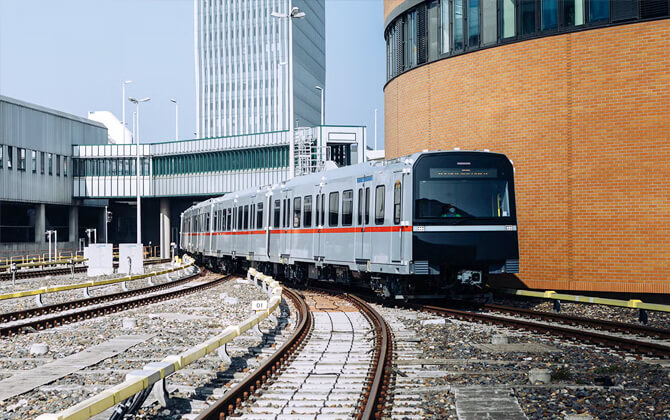
The U6 is unusual within the system. Its wagons are narrower than those on other lines, and its trains have air conditioning because much of the route runs above ground and can get hotter in summer.
No Vienna U-Bahn line runs completely underground. Every line comes to the surface at some point.
The station name Donauinsel contains every vowel at least once, making it a neat linguistic curiosity in the stations list.
The familiar female voice used in U-Bahn announcements is named Angela.
Wiener Linien’s station sound design is meant to echo the rhythm of The Blue Danube by Johann Strauss II, with gongs developed together with a sound consultant.
History
Ideas for an underground railway in Vienna go back to the 1840s. For decades, the city saw proposals and concession requests for a subway system, but most were never approved or built. One early plan was Heinrich Sichrowsky’s 1844 proposal for a pneumatic railway, which failed because investors could not be found.
A major step came with the Vienna Stadtbahn. Work began in 1892 on a four-line system that opened in stages between 1898 and 1901. Some routes, especially the Wiental and Danube Canal lines, later became part of today’s U4, and several Otto Wagner stations remain in use.
After the First World War, the Stadtbahn was electrified and integrated with the tram network in 1925. Plans for a full U-Bahn, however, were repeatedly delayed by economic problems, political debate, and then the Second World War.
Postwar proposals continued, but Vienna did not commit to building a modern subway network until the late 1960s. On 26 January 1968, the city council approved construction of the basic network. Work began on 3 November 1969 at Karlsplatz, where new lines were planned to meet.
The first modern U-Bahn service opened on 25 February 1978 on U1 between Reumannplatz and Karlsplatz. The initial network was completed on 3 September 1982.
The next major phase focused on U3 and U6. U6 was created from the former Stadtbahn belt line and opened in stages from 1989 onward. The entirely new U3 opened in 1991, followed by extensions to Ottakring in 1998 and Simmering in 2000.
Expansion continued in the 2000s. U1 reached Leopoldau in 2006, and U2 reached the stadium in 2008, Aspernstraße in 2010, and Seestadt in 2013. Another U1 extension from Reumannplatz to Oberlaa opened on 2 September 2017, adding five stations and 4.6 kilometers (2.9 miles) of route.
A future U5 had been discussed since the late 1960s. The project was announced again in early 2014, with further Vienna U-Bahn expansion scheduled across 2026–2032.
Future Expansions
Vienna’s future U-Bahn expansion centers on the U2xU5 project, described as the city’s largest infrastructure and climate protection initiative. It will extend U2 southward and create the new U5, adding capacity for 300 million additional passengers per year and easing pressure on busy lines and routes such as U3, U6, 6, 43, and 13A.
The project is planned in two construction phases. In the first phase, U5 will take over the existing section between Karlsplatz and Rathaus and continue to Frankhplatz. At the same time, U2 will be rerouted onto a new southern branch toward Matzleinsdorfer Platz.
In the second phase, U5 will be extended further to Hernals, while U2 will continue from Matzleinsdorfer Platz to Wienerberg. The new U5 will also introduce fully automatic operation in Vienna, with platform screen doors added at existing stations on the current U2 section.
The U5 service to Frankhplatz is expected to begin in 2030, at the same time as U2 reaches Matzleinsdorfer Platz. The wider U2xU5 project is scheduled for completion in the mid-2030s.
- 300 million additional passengers per year
- 550 million car kilometers (about 342 million car miles) saved annually
- 12 new underground stations in the final expansion
- 11 kilometers (6.8 miles) of new route in the final phase
Longer-term ideas have also been mentioned, including a possible extension of U5 beyond Hernals to Dornbach.
Nearby Attractions
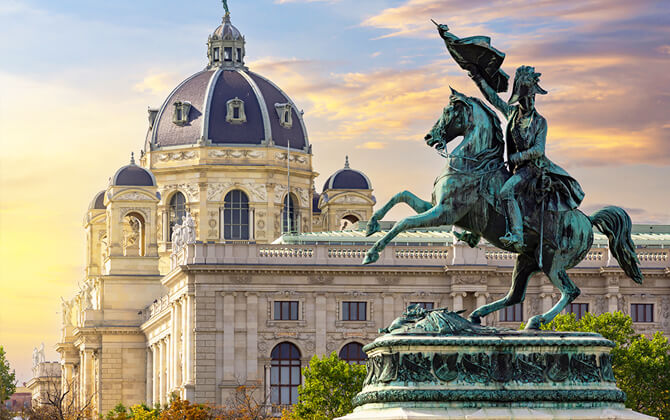
The Vienna U-Bahn makes sightseeing simple, with major landmarks, museums, shopping areas, and unusual local sights reachable by metro. It is a practical way to combine several stops in one day without taxis or private transfers.
U6 is useful for visitors interested in architecture, culture, and local character. Along this line, notable places include the Islamic Center at Neue Donau, the Millennium Tower at Handelskai, the Hundertwasser-designed Spittelau waste incineration plant, the Volksoper at Währinger Straße, the Vienna Public Library at Burggasse, Westbahnhof and BahnhofCity Wien West, and the Schnaps Museum at Längenfeldgasse.
Other U-Bahn routes connect with many of Vienna’s best-known attractions, including Schönbrunn Palace, the Prater and its famous Ferris wheel, Stephansplatz in the historic center, the Hofburg, Karlskirche, Donauinsel, and the Vienna Central Station area with its BahnhofCity shopping center.
Great overview of the Vienna U-Bahn! The detailed map and information on the routes and hours are incredibly helpful for planning my trip. I appreciate the tips on ticket options too. Looking forward to exploring the city using the U-Bahn!