The Staten Island Ferry is a fare-free passenger ferry operated by the New York City Department of Transportation. It runs across New York Harbor between Whitehall Terminal in Lower Manhattan and St. George Terminal on Staten Island, covering 5.2 miles (8.4 km) in about 25 minutes. For commuters, it is a key public transport link; for visitors, it is also one of the easiest ways to see the harbor, the Statue of Liberty, Ellis Island, Governors Island, and the Lower Manhattan skyline.
| Key | Information |
|---|---|
| Service type | Fare-free passenger ferry |
| Operator | New York City Department of Transportation |
| Route | Whitehall Terminal in Manhattan to St. George Terminal on Staten Island |
| Distance | 5.2 miles (8.4 km) |
| Running time | About 25 minutes each way |
| Operating hours | 24 hours a day, 7 days a week |
| Frequency | Every 15 to 20 minutes during weekday rush hours; every 30 minutes at other times |
| Fare | Free; ticket price is US$0 ($0) |
| History | Service on this corridor began in 1817; New York City took control in 1905; the ferry has been fare-free since 1997 |
Staten Island Ferry Map
The Staten Island Ferry map shows the route and terminals. Click on the map to enlarge it or download the Island Ferry map in PDF format.
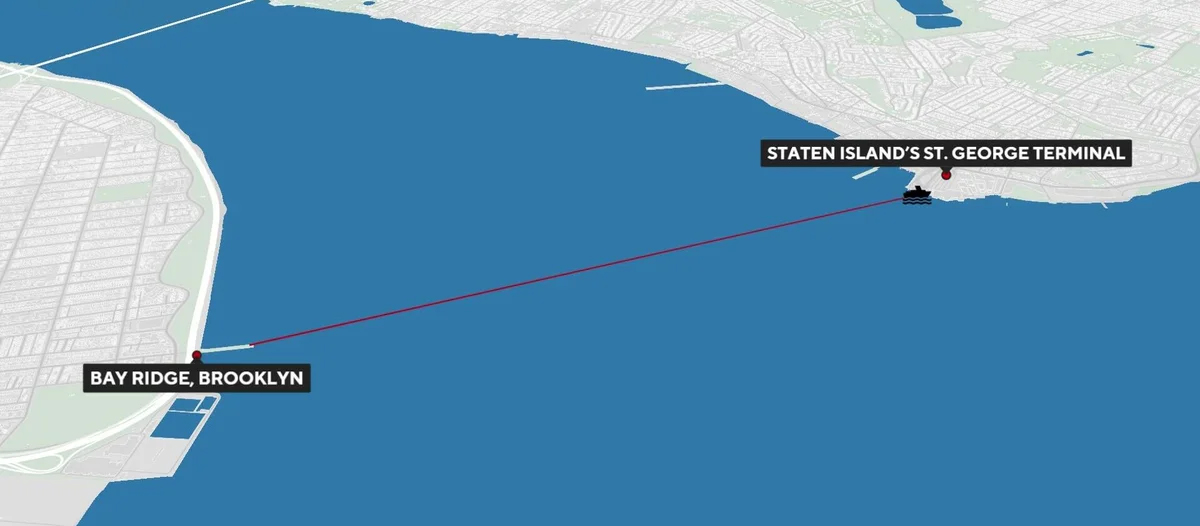
Staten Island Ferry Terminals and Route
The Staten Island Ferry route is simple: one direct crossing between Manhattan and Staten Island. The route plan uses two terminals, so the stations list is short, easy to understand, and useful for anyone checking a stations map before traveling.
| Station | Details |
|---|---|
| Whitehall Terminal | Located at 4 South Street in Lower Manhattan, near the Battery. Passengers can connect to the New York City Subway and several local bus routes. |
| St. George Terminal | Located at 1 Bay Street in St. George, Staten Island. Connections are available to the Staten Island Railway and many bus routes at the St. George Bus Terminal. |
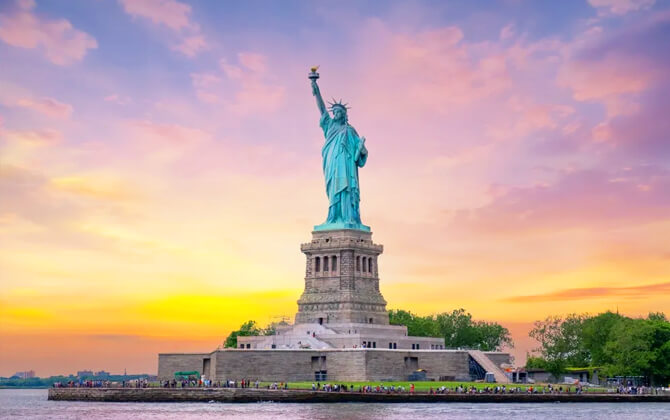
The ferry crosses New York Harbor in about 25 minutes. Along the way, riders get views of the Downtown Jersey City skyline, Lower Manhattan, the Statue of Liberty, Ellis Island, Governors Island, and the Verrazzano-Narrows Bridge.
With MetroCard fare cards, passengers from Manhattan can exit a subway or bus near Whitehall, ride the ferry for free, and make a free second transfer to a train or bus at St. George. Passengers traveling from Staten Island can also transfer to a subway or bus in Manhattan after the ferry ride.
The Staten Island Ferry is administered separately from NYC Ferry and carries almost 22 million riders annually. It remains one of the most important local transport links between Staten Island and Manhattan.
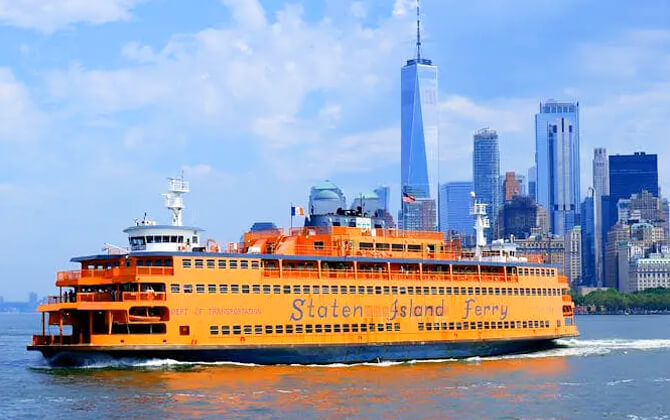
Staten Island Ferry Tickets and Fares
The Staten Island Ferry is free. You do not need a ticket, pass, day pass, card, or fare calculator to ride between Manhattan and Staten Island. The fare is US$0 ($0), and the ticket price is US$0 ($0) in both directions.
Be careful around anyone trying to sell ferry tickets. Since the ferry is fare-free, any offer to sell you a Staten Island Ferry ticket is not legitimate.
The ferry has been free for foot passengers since July 4, 1997. Earlier fares increased over time, from 5 cents in 1897 to 10 cents in 1972, 25 cents in 1975, and 50 cents in 1990.
The route remains one of New York City’s most useful transit links because it is the only non-vehicular mode of transport between Staten Island and Manhattan.
Is the Staten Island Ferry Free?
Yes. The Staten Island Ferry is free to ride, and the cost is US$0 ($0). No ticket is needed at either terminal.
If you use a MetroCard, you can transfer between subway or bus service and the ferry, and in some cases continue with a free second transfer after the ferry ride. That makes the ferry especially useful for daily travel between Manhattan and Staten Island.
The price does not change by time of day, weekend, or holiday. It is always free for passengers.
Staten Island Ferry Schedule
The Staten Island Ferry schedule runs every day of the year. The ferry does not have normal opening hours or closing time, because service operates 24/7. In practical terms, there is no last ferry, and the route stays open day and night unless service is disrupted by severe weather, reduced visibility, or other operating conditions.
| Service detail | Timings |
|---|---|
| Running time | About 25 minutes between St. George and Whitehall |
| Operating hours | 24 hours a day, 7 days a week |
| Weekday rush hours | 6:00 AM to 9:30 AM and 3:30 PM to 8:00 PM |
| Rush-hour frequency | Every 15 to 20 minutes |
| Off-peak frequency | Every 30 minutes |
| Weekend frequency | Every 30 minutes throughout the day and night |
| Holiday schedule | Weekend schedule on listed major holidays |
All timings may change without notice, so check schedule today updates before you travel, especially during severe weather or reduced visibility.
Weekday Schedule
On weekdays, the train schedule-style pattern is easiest to read by frequency rather than by listing every departure. The ferry runs continuously from both terminals, with extra service during the morning and evening rush.
| Service detail | Timings |
|---|---|
| Starting time | Service is continuous from 12:00 AM and runs through the day |
| Morning rush hours | 6:00 AM to 9:30 AM, with boats every 15 to 20 minutes |
| Evening rush hours | 3:30 PM to 8:00 PM, with boats every 15 to 20 minutes |
| Other weekday times | Generally every 30 minutes |
| Route timetable note | Departures run from both St. George Terminal and Whitehall Terminal |
Because the ferry works around the clock, the usual questions about opening times, closing time, or the last train do not apply to the ferry itself. If you are connecting to another form of city transport, allow extra time for transfers.
Weekend Schedule
Weekend service is straightforward. Ferries depart every 30 minutes from both terminals, usually on the hour and half hour.
| Service detail | Timings |
|---|---|
| Saturday service | Every 30 minutes, all day and night |
| Sunday service | Every 30 minutes, all day and night |
| Typical departure pattern | On the hour and half hour from each terminal |
| Trip time | About 25 minutes each way |
Holiday Schedule
The Staten Island Ferry uses the weekend schedule on New Year’s Day, Martin Luther King, Jr. Day, Presidents’ Day, Memorial Day, Juneteenth, Independence Day, Labor Day, Thanksgiving Day, and Christmas Day.
| Service detail | Timings |
|---|---|
| Holiday frequency | Every 30 minutes throughout the day |
| Departure pattern | On the hour and half hour from each terminal |
| Applies to | New Year’s Day, Martin Luther King, Jr. Day, Presidents’ Day, Memorial Day, Juneteenth, Independence Day, Labor Day, Thanksgiving Day, and Christmas Day |
Holiday timings today may change without notice, so give yourself some flexibility if you are traveling around a major event or bad weather.
Late Night and 24/7 Service
The ferry runs late at night and early in the morning, making it a rare 24/7 transportation option between Staten Island and Manhattan. Overnight frequency is generally every 30 minutes.
| Service detail | Timings |
|---|---|
| Late-night service | Available every day |
| Overnight frequency | Generally every 30 minutes |
| Working hours | 24 hours a day, 7 days a week |
| Close or closing time | No regular closing time because the ferry operates continuously |
During docking, boarding, and service changes, follow crew instructions and listen for announcements. That matters most during late-night trips, when fewer people may be moving through the terminals.
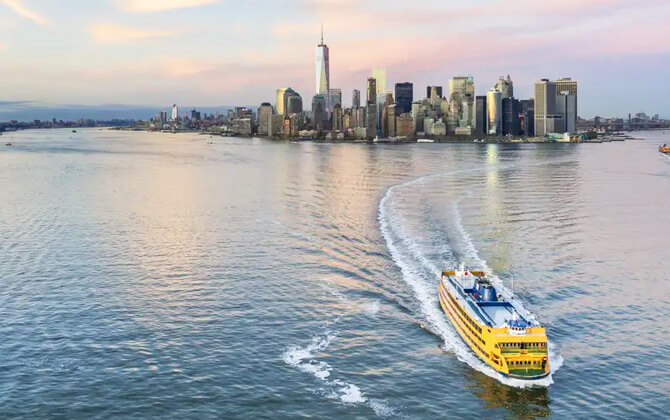
Getting There
The ferry connects Whitehall Ferry Terminal in Lower Manhattan with St. George Ferry Terminal on Staten Island. Both terminals are tied into nearby public transport, so the route works well for commuters, visitors, and anyone planning a simple harbor crossing.
Whitehall Ferry Terminal is at 4 South Street and is accessible by subway and MTA bus routes. St. George Ferry Terminal is at 1 Bay Street and connects with MTA buses and the Staten Island Railway.
Plan a little extra time for boarding and transfers, especially if you are connecting to a bus, subway, or railway service. The crossing itself takes about 25 minutes.
Public Transportation
At Whitehall Terminal, passengers can connect to the New York City Subway and several local bus routes. At St. George Terminal, transfers are available to the Staten Island Railway and multiple bus routes at the St. George Bus Terminal.
The ferry is the main direct mass-transit connection between Staten Island and Manhattan, apart from NYC Ferry’s St. George route. It is also a practical part of transportation in New York City, serving commuters and visitors with frequent, fare-free service.
MetroCard users can make transfers between the ferry and local transport in Manhattan or Staten Island. The ferry itself stays free, so the only fare you may pay is for the connecting subway, train, or bus service.
Parking
Parking depends on which side of the route you are using. Staten Island offers more station parking options, while free parking near Whitehall Terminal in Lower Manhattan is difficult to find.
| Station | Details |
|---|---|
| Prince’s Bay | Free Park & Ride lot available |
| Huguenot | Free Park & Ride lot available |
| Annadale | Free Park & Ride lot available |
| Dongan Hills | Free Park & Ride lot available |
| Great Kills | Municipal parking lot available |
| Stapleton | Municipal parking lot available |
| Other Staten Island Railway stations | Metered and free on-street parking may be available |
At St. George Ferry Terminal, the Ferry Terminal South Municipal Parking Field is located at 1 Bay Street, next to the terminal on Richmond Terrace. It has 222 spaces, including spaces for people with disabilities, and operates 24 hours a day as an unattended metered facility with pay-and-display service.
Parking charges at the St. George Ferry Terminal South lot are US$2 ($2) per hour for short-term metered parking and a maximum of US$16 ($16) per 18 hours for long-term metered parking. The listed information does not provide parking charges per day.
The Staten Island Courthouse Garage and Parking Lot at 54 Central Avenue has 721 spaces, including spaces for people with disabilities, electric vehicle charging spaces, compact vehicle spaces, and motorcycle parking. Monthly parking permits are available for some spaces through the garage manager, Parking Systems Plus.
Near Whitehall Terminal, nearby garages and lots are available, but free parking is scarce. Whitehall Street near the terminal does not allow parking, and State and Water streets do not have parking near the ferry terminal. Bridge and Moore Streets may have limited street parking, though spaces are hard to find.
Passenger Safety and Rules
To keep the ferry safe for passengers and employees, everyone using the terminals and vessels must follow NYC DOT rules of conduct. Permission to use the ferry and terminals depends on following those rules.
The following conduct is prohibited:
- Disorderly, unsafe, or disruptive behavior
- Littering, spitting, or creating unsanitary conditions
- Bathing, showering, shaving, washing, changing clothes, or remaining undressed in public restrooms or other terminal and ferry areas
- Lying down on seats or benches, taking more than one seat, or placing belongings where they block others
- Smoking or using electronic cigarettes onboard ferries or in enclosed terminal spaces
- Remaining in a terminal or on a ferry for any purpose other than transit or another NYC DOT-authorized purpose
- Leaving property unattended or blocking pedestrian traffic and waiting areas
- Unauthorized carrying of firearms or weapons
- Skateboarding, roller skating, or riding bicycles, scooters, or other vehicles or devices, except a wheelchair required for transit
- Playing audible devices without earphones
- Feeding any animal
- Bringing pets into terminals or onboard ferries, except service animals as defined by the Americans with Disabilities Act, unless the animal is caged and/or muzzled
- Destroying, marking, or putting graffiti on any facility or vessel
- Interfering with boarding doors, public announcement systems, intercommunication systems, or other installed equipment
- Distributing or posting literature or advertisements, or campaigning, without an NYC DOT permit
- Commercial video, photography, or audio recording without an NYC DOT permit
Bicycles and non-motorized scooters must be walked through terminals and ferries. Bicycles must board via the lower level, and bicyclists are subject to all passenger rules.
During docking, stay off stairs, ramps, and landings until the ferry has fully stopped. In an emergency, listen for announcements, follow crew instructions, and note the location of life jackets on the vessel.
Passengers who do not comply may be subject to arrest, summons, denial of boarding, or removal from the terminal.
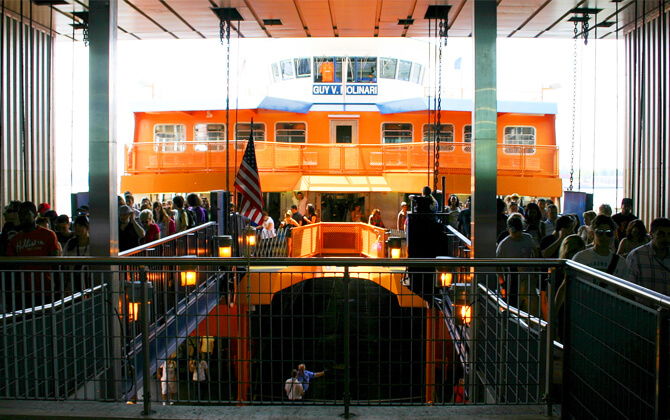
Current Vessels
The Staten Island Ferry fleet includes nine boats in four classes: Barberi, Austen, Molinari, and Ollis. As of 2025, all nine vessels run on renewable diesel.
The newest ferries are the Ollis class: Staff Sergeant Michael H. Ollis, Sandy Ground, and Dorothy Day. These 4,500-passenger ferries were commissioned in 2014. The first two began carrying passengers in early 2022, followed by Dorothy Day in early 2023. They were built by Eastern Shipbuilding to a design by Elliott Bay Design Group, with Voith Schneider propulsion and 10,000 horsepower.
The Molinari class includes Guy V. Molinari, Senator John J. Marchi, and Spirit of America. These sister ships each carry 4,427 passengers and have a crew of 16. They are 310 feet long, 70 feet wide, and have a service speed of 16 knots. Spirit of America entered service on April 4, 2006.
The Barberi class consists of Andrew J. Barberi and Samuel I. Newhouse. Built in 1981 and 1982, these vessels each have a crew of 15 and can carry 6,000 passengers, making them the highest-capacity vessels in the world at that figure. Each boat is 310 feet long and 69 feet 10 inches wide.
The Austen class includes Alice Austen and John A. Noble, which began service in 1986. Each carries 1,107 passengers with a crew of 9 and is smaller than the other ferry classes.
On a typical weekday, five boats make 117 trips and carry approximately 45,000 passengers. During rush hours, the ferry operates on a four-boat schedule with departures every 15 minutes. On weekends, three boats make 96 trips across the harbor each day.
Brief History
The history of the Staten Island Ferry goes back to 1817, when the Richmond Turnpike Company began steamboat service between Manhattan and Staten Island. Cornelius Vanderbilt had launched an earlier private ferry service in 1810, but the 1817 route became the foundation for the service that continued.
During the 19th century, the ferry changed ownership several times. It was bought by Cornelius Vanderbilt in 1838, merged with competitors in 1853, sold to the Staten Island Railroad Company in 1864, and transferred to the Baltimore and Ohio Railroad in 1884. New York City took control in 1905.
In the early 20th century, ferry routes also connected Staten Island with Brooklyn. Those services were gradually discontinued as automobile travel grew. By the mid-1960s, the Manhattan route remained because of public demand, and by 1967 it was the only commuter ferry in New York City.
The ferry has long been known for its low cost and has been fare-free since 1997. Today, it remains a vital direct transit link between Staten Island and Manhattan.
Interesting facts
The Staten Island Ferry has been operated by the City since 1905 and remains one of New York City’s best-known public transport services. The 5.2-mile (8.4 km) run between St. George Terminal and Whitehall Terminal takes about 25 minutes.
The ferry operates 24 hours a day, 365 days a year. In 2023, its annual on-time performance was 96%, and the boats make more than 40,000 trips each year.
Service is frequent throughout the week. On a typical weekday, five boats make 117 trips and carry about 45,000 passengers. During rush hours, the ferry uses a four-boat schedule with 15 minutes between departures. On weekends, three boats make 96 trips across the harbor each day.
The fleet includes several classes of boats. The Ollis Class has three 4,500-passenger ferries. The Molinari Class consists of three sister ships, each carrying 4,427 passengers with a crew of 16. The fleet also includes the Barberi Class and the Austen Class, plus the high-speed utility boat American Legion for emergency response.
Several vessels have names tied closely to Staten Island and New York. Staff Sergeant Michael H. Ollis honors a New Dorp resident who was killed in Afghanistan. Sandy Ground recognizes the history of Black New Yorkers on Staten Island. Dorothy Day is named for the Catholic peace activist who lived and worked on Staten Island.
Between rush hours, boats are regularly fueled and maintained, while terminals are cleaned around the clock. Terminal supervisors at both Whitehall and St. George help keep service aligned with the published timetable.
Nearby Attractions
The Staten Island Ferry is close to waterfront landmarks, museums, parks, and cultural sites on both sides of the harbor. Whether you start at Whitehall Terminal or arrive at St. George Terminal, there are several nearby places worth adding to your route.
- The Staten Island September 11th Memorial is about 1.08 km (0.67 miles) away and honors Staten Island residents killed in the September 11 attacks of 2001 and the 1993 World Trade Center bombing.
- National Lighthouse Museum is roughly 1.1 km (0.68 miles) away and covers the maritime history of lighthouses in the United States.
- The Noble Maritime Collection is around 3.23 km (2.01 miles) away and focuses on the region’s maritime heritage and art.
- Staten Island Children’s Museum is about 3.27 km (2.03 miles) away and offers interactive exhibits for children and families.
- Snug Harbor Cultural Center & Botanical Garden is about 3.32 km (2.06 miles) away and combines arts, history, and gardens in a restored former home for retired sailors.
- Staten Island Museum is around 3.31 km (2.06 miles) away and is Staten Island’s oldest cultural institution.
- Alice Austen House is about 3.57 km (2.22 miles) away and preserves the historic home of pioneering photographer Alice Austen.
- Verrazzano-Narrows Bridge is around 4.83 km (3.00 miles) away and spans the Narrows between Staten Island and Brooklyn.
- Staten Island Zoo is about 5.01 km (3.11 miles) away and is the borough’s only zoo.
- Fort Wadsworth is approximately 5.14 km (3.19 miles) away and includes a former military installation on Staten Island’s northeastern shore.
Near the Manhattan terminal, Lower Manhattan attractions include The Battery, the National Museum of the American Indian, the Museum of Jewish Heritage, Fraunces Tavern Museum, Federal Hall, the New York Stock Exchange, and the Charging Bull.
On the Staten Island side, the St. George area connects easily to the National Lighthouse Museum, the September 11 memorial, and the broader Snug Harbor cultural complex.