Tren Urbano, or Urban Train, is an automated rapid transit system serving Puerto Rico’s San Juan metropolitan area, including San Juan, Guaynabo, and Bayamón. It is the Caribbean’s first rapid transit system, running on one route with 16 stations over 10.7 miles (17.2 km). The system is part of public transport in the region and connects with buses, the Cataño Ferry, taxis, and shuttles under the wider Integrated Transit Authority network.
| Key | Information |
|---|---|
| System type | Automated rapid transit |
| Area served | San Juan, Guaynabo, and Bayamón, Puerto Rico |
| Route | Single line between Sagrado Corazón and Bayamón |
| Length | 10.7 miles (17.2 km) |
| Stations | 16 |
| Full running time | About 29 minutes |
| Opening hours | Generally 05:50 to 23:20 daily |
| Regular fare | Commonly listed at US$1.50 |
| Operator | Alternate Concepts, Inc. (ACI) |
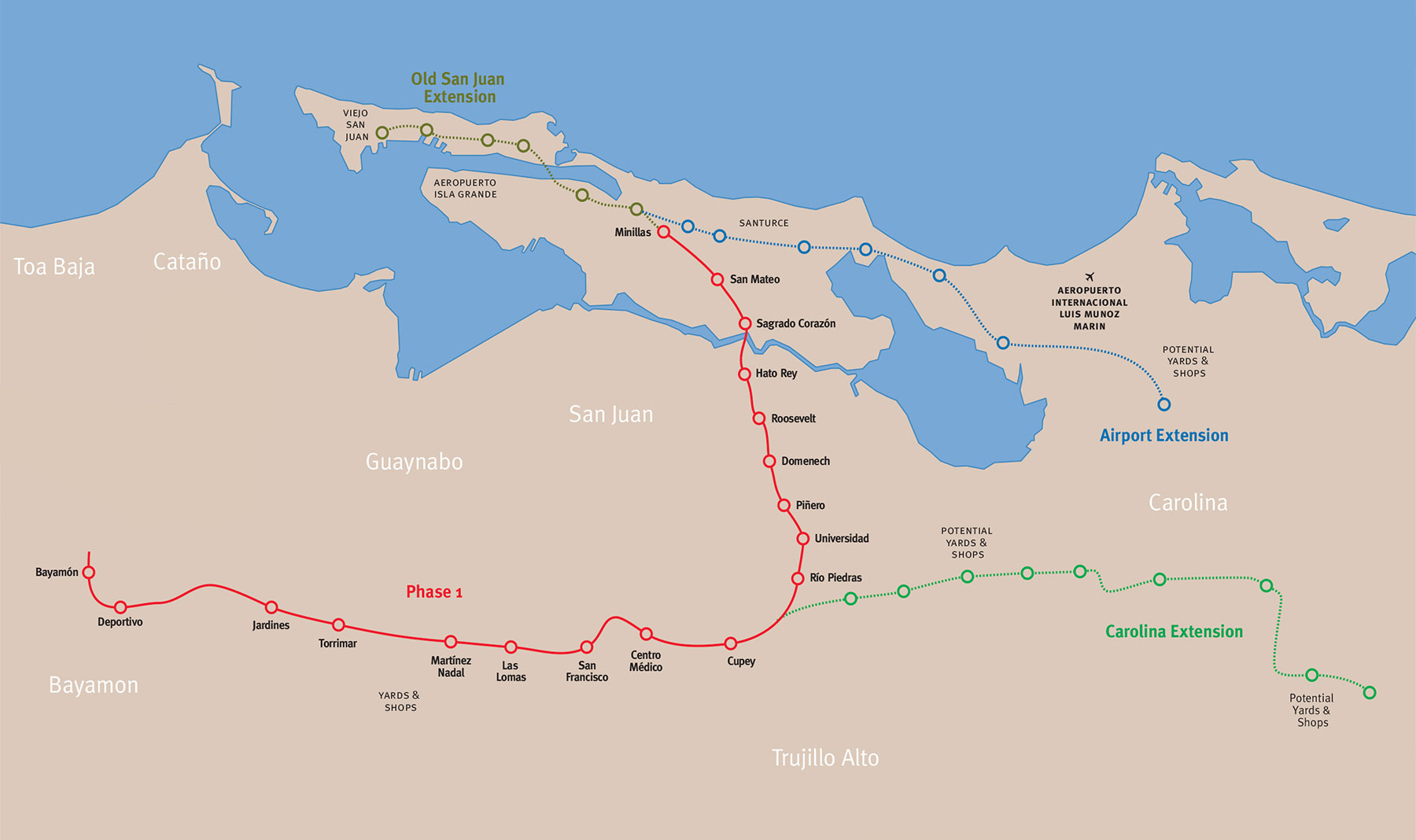
Tren Urbano San Juan Map
Map of San Juan Tren Urbano showing different stations. Click on the map to enlarge it or download the Tren Urbano map in PDF format.
Tren Urbano Lines and Stations
Tren Urbano is Puerto Rico’s only rapid transit system, and for now it operates as a single-line service. The route links Sagrado Corazón with Bayamón, passing through key parts of the San Juan metropolitan area. For trip planning, a stations map is especially useful because the line does not cover every major district.
The stations list runs from north to south: Sagrado Corazón, Hato Rey, Roosevelt, Domenech, Piñero, Universidad, Río Piedras, Cupey, Centro Médico, San Francisco, Las Lomas, Martínez Nadal, Torrimar, Jardines, Deportivo, and Bayamón.
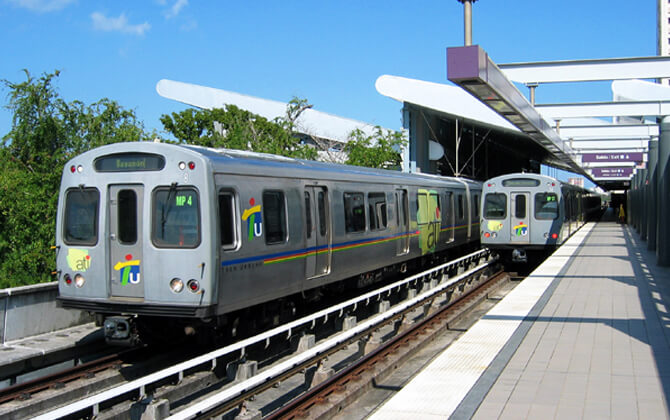
Station designs vary across the system, with elevated, at-grade, open-cut, and underground structures. Each station was built for six-car trains and has its own architectural style and artwork.
The route timetable is simple: trains operate every day, usually from 05:50 to 23:20, and a full end-to-end trip takes about 29 minutes. Five stations also work as bus terminals: Sagrado Corazón, Piñero, Cupey, Martínez Nadal, and Bayamón.
As built, the route does not directly serve Old San Juan, Santurce, Luis Muñoz Marín International Airport, or several other important parts of the metro area. Expansion ideas have been discussed, including a possible extension from Sagrado Corazón toward Minillas in Santurce.
| Station | Details |
|---|---|
| Sagrado Corazón | Terminal; bus terminal |
| Hato Rey | Station on the main route |
| Roosevelt | Station on the main route |
| Domenech | Station on the main route |
| Piñero | Bus terminal; airport bus connection |
| Universidad | Station near the University of Puerto Rico area |
| Río Piedras | Station on the main route |
| Cupey | Bus terminal |
| Centro Médico | Station on the main route |
| San Francisco | Station with park-and-ride facilities |
| Las Lomas | Station on the main route |
| Martínez Nadal | Bus terminal; park-and-ride facilities |
| Torrimar | Station with park-and-ride facilities |
| Jardines | Station with park-and-ride facilities |
| Deportivo | Station on the main route |
| Bayamón | Terminal; bus terminal; park-and-ride facilities |
Timetable and Frequency
Tren Urbano operating hours are generally 05:50 to 23:20 every day. These opening times make the system useful for commuting, errands, and some evening trips, though you should still check the schedule today before you travel.
The starting time is early morning, the closing time is late evening, and the last train service ends around 23:20. The full running time between Sagrado Corazón and Bayamón is about 29 minutes.
Frequency changes during the day. Peak-period trains are more frequent, while late-evening, weekend, and public-holiday service runs at wider intervals.
| Service detail | Timings |
|---|---|
| Daily working hours | 05:50 to 23:20 |
| Full route running time | About 29 minutes |
| Weekday morning peak frequency | Every 8 minutes from 06:20 to 08:20 |
| Weekday daytime frequency | Every 12 minutes from 08:20 to 16:20 |
| Weekday afternoon peak frequency | Every 10 minutes from 16:20 to 18:00 |
| Evening frequency | Every 16 minutes from 18:00 to 23:20 |
| Saturday, Sunday, and public holiday frequency | Every 16 minutes |
If you are checking timings today, focus on the first train, last train, and current frequency. The line does close overnight, so late-night trips may require another form of city transport.
Fares, Tickets, and Passes
Tren Urbano uses a zonal fare system, so the ticket price can depend on the distance traveled. A standard one-way ticket is listed between US$1.50 and US$2.25, with the regular fare commonly shown as US$1.50.
Discounts are available for eligible riders. Students, seniors, and persons with disabilities can receive a 50% discount with valid identification; some fare information lists this reduced price as US$0.75. Children under six and passengers aged 75 and over ride free.
For repeated trips, passes can lower the overall cost. Available options include a Day Pass for US$5.00, a Weekly Pass for US$15.00, a 30-day Pass for US$50.00, and a 90-day Pass for US$90.00. These passes allow unlimited use of Tren Urbano and AMA buses during the valid period.
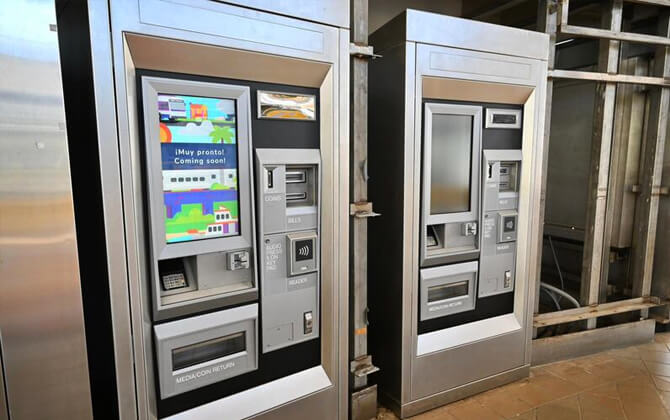
Tickets and passes are sold at automated ticket machines in the stations. Payment options include cash, debit card, Visa, and MasterCard. The system also refers to smart cards and single-journey tickets.
Regular fare tickets include a two-hour transfer window for AMA bus connections. If the bus route is E20, an extra US$0.50 is charged. Once the transfer limit expires, you need a new ticket to enter the system again.
Because the fare is distance-based, check the ticket machine before paying rather than relying only on a fare calculator. Stations also provide accessibility features and real-time information displays, which helps when you need to confirm the price, ticket type, or route plan on the spot.
Connections with Other Systems
Tren Urbano works as part of the wider transportation in the San Juan metropolitan area. It connects with AMA buses, Metro Urbano, the Cataño Ferry, taxis, shuttles, and park-and-ride facilities, making it more useful as part of a local transport plan than as a stand-alone system.
Metro Urbano is a bus rapid transit service linking Bayamón Station with Toa Baja along the José de Diego Highway, PR-22. It opened on September 16, 2012.
The Cataño Ferry, also overseen by the Integrated Transport Authority, connects Cataño with Old San Juan. The ferry operates nonstop and departs every half hour.
The Metropolitan Bus Authority, or AMA, operates 30 routes, including three express routes, across San Juan. Five Tren Urbano stations double as bus terminals: Sagrado Corazón, Piñero, Cupey, Martínez Nadal, and Bayamón.
For bicycles, the system includes bike parking at several stations and offers the Bici-Tren option, which allows bicycles on board under time-based rules.
Future transport connections have also been discussed, including extensions toward Carolina, Old San Juan, Caguas, and a possible link with a future tram line serving the historic district and the airport area.
Connections with the Airport
Tren Urbano does not go directly to Luis Muñoz Marín International Airport. The practical airport link is the E40 express bus, which departs from Piñero Station and travels to the airport via the Mall of San Juan.
This bus connection lets arriving and departing passengers include Tren Urbano in their route, but it is not a one-seat rail trip. Build in time for the transfer, especially if you are traveling with luggage.
Park and Ride
Tren Urbano includes station parking for riders who prefer to drive part of the way and continue by train. Eight stations or connected facilities provide a total of 3,106 parking spaces.
Park-and-ride facilities are located at Bayamón, Torrimar, Jardines, Martínez Nadal, San Francisco, Sagrado Corazón, Cupey, and the Toa Baja Park & Ride, which connects with Metro Urbano service from Bayamón Station.
Bicycle parking is also available at several locations: Sagrado Corazón, Capetillo, Bayamón, Piñero, Iturregui, Covadonga in Old San Juan, and Martínez Nadal.
For station parking, check posted rules before leaving your car. Parking charges, including any parking charges per day, are not listed in the available system details here.
History
Rail transport in Puerto Rico dates back to the late 19th century, when regional rail systems began under Spanish rule. During the first half of the 20th century, under American rule, trains carried both passengers and goods and supported the sugarcane industry.
San Juan also had a street tramway network from 1901 to 1946, known as the Trolley de San Juan. Operated by the Porto Rico Railway, Light and Power Company, it stretched for more than 20 miles (32.2 km) and linked San Juan with Santurce. At its peak, it was one of Puerto Rico’s most modern electric streetcar systems and carried nearly 10 million passengers a year.
In the 1950s, industrial growth, wider car ownership, improved roads and highways, and the closure of sugarcane mills reduced the role of rail transport. Traffic in the San Juan metropolitan area kept growing, and the need for a new mass transit system became clearer.
Rapid rail proposals for San Juan appeared in 1967. A major 1971 T.U.S.C.A. study, funded by the Puerto Rico Planning Board and the U.S. federal government, recommended an islandwide elevated transit system and a new community development program.
In 1989, the Puerto Rico Department of Transportation and Public Works formally adopted a rail project for the San Juan metro area. By 1992, several alignments had been considered, and the selected design served part of the metropolitan area but not Old San Juan. The name Tren Urbano was then chosen for the system.
In 1993, the Federal Transit Administration selected the project as a Turnkey Demonstration Project under the Intermodal Surface Transportation Efficiency Act of 1991. Seven design-build contracts were awarded in 1996 and 1997 for Phase 1.
Siemens AG was among the companies involved in construction. It received a concession to design and build the line and rolling stock and to operate the system for the first five years. The contract, awarded in July 1996, was the first of its kind in North America.
Construction faced delays, disputes between the government and contractors, and investigations into possible fund mismanagement. The total project cost reached US$2.28 billion.
The system officially opened on December 19, 2004. Free weekend service began first, followed by weekday free service in April 2005. Ridership climbed to 40,000 daily users by the end of the free period, then dropped to 24,000 by late 2005, below the 2010 projection of 110,000.
Paid service started on June 6, 2005. Average weekday boardings were 28,179 in 2006 and 27,567 in 2007, before rising to 36,500 in the third quarter of 2008.
Tren Urbano has continued to face criticism for limited coverage. It does not directly serve Old San Juan, Santurce, Luis Muñoz Marín International Airport, or several surrounding municipalities. During the COVID-19 pandemic, service was suspended by executive order to help slow the spread of the virus.
Future Expansion
Tren Urbano was planned as the first phase of a larger rail network for the San Juan metropolitan area, but later phases were never built. The system therefore remains a single 10.7-mile (17.2 km) route with 16 stations serving San Juan, Guaynabo, and Bayamón.
Several expansion ideas have been discussed over the years, including service from Sagrado Corazón toward Santurce and Old San Juan, as well as possible extensions to Carolina, the airport area, and Caguas. A two-way tunnel south of Río Piedras Station was already built for a future extension along 65th Infantry Avenue, and earlier plans also identified a possible transfer to a future tram line.
In February 2023, ATI launched the Tren Urbano Northwest Extension Alternatives Analysis to study a possible extension from Sagrado Corazón toward the Convention Center District and Old San Juan. The study reviewed four options: bus rapid transit on Avenida Ponce de León, light rail on Fernández Juncos, a heavy rail extension to Minillas followed by BRT, and a heavy rail plus light rail option continuing into the Convention Center District.
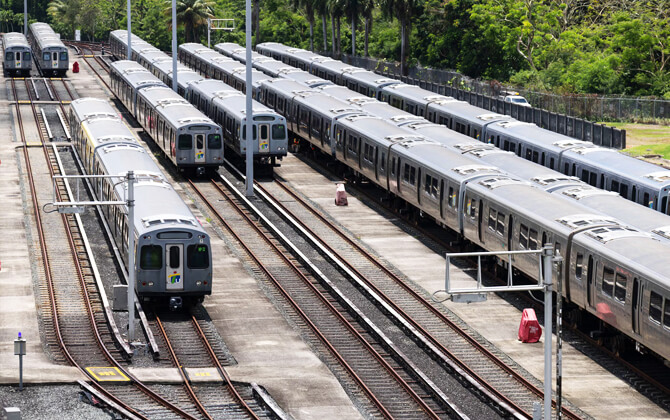
The current system was built with expansion in mind. Stations were designed for six-car trains, and the fleet and facilities are already in place. Still, any future expansion depends on the planning process, a locally preferred option, federal funding requests, engineering, environmental review, and construction approval.
For now, the most concrete step is the ongoing corridor evaluation. ATI has indicated that a final report is expected in 2026.
Advice
Tren Urbano is a practical choice if you want a low-cost way to move around San Juan, Guaynabo, and Bayamón. Riders often describe it as clean, modern, and more reliable than the bus.
Plan the route before you go. The line is useful, but it does not reach every major destination, including the airport, Santurce, and Old San Juan. From Old San Juan, you may need a bus connection, such as the M3, to reach the first station.
Sort out payment before boarding. A train pass can also work as a bus pass, but one rider noted that cards are accepted at stations and not on the bus, so loading your pass in advance is a smart move.
Check the operating hours and train schedule before traveling, especially if you are riding near the closing time. For a safe and simple first trip, daylight hours are often easier if you do not know the area well.
Use Tren Urbano as one part of a wider city transport plan. It can be a good budget-friendly way to reach Hato Rey, Universidad, and Bayamón, and some passengers say the views make the ride worthwhile even without a specific stop in mind.
Interesting facts
Tren Urbano means Urban Train in English, and it is the first rapid transit system in the Caribbean.
The system serves San Juan, Guaynabo, and Bayamón on one route with 16 stations over 10.7 miles (17.2 km) of track.
Station types are mixed: 10 are elevated, four are at grade or in open cuttings, and two are underground.
The system was designed for six-car trains. Its fleet consists of 74 stainless steel cars assembled at the Siemens plant in Florin, California.
Trains can reach a maximum speed of 62 mph (100 km/h). The average operating speed is 20.6 mph (33.2 km/h), including stops, and the system uses 750 V DC third rail electrification.
The project was expensive and complex. Delays and disputes affected construction, and the total project cost reached US$2.28 billion.
Tren Urbano officially opened on December 19, 2004, and paid service began on June 6, 2005. At launch, weekend service was free, with weekday free rides added later during the introductory period.
The system complements other public transport in the area, including AMA buses, the Cataño Ferry, taxis, and shuttles. The broader network is managed by the Integrated Transit Authority, while Tren Urbano is operated by Alternate Concepts, Inc.
There is a practical side too: several stations have parking facilities, bicycles are allowed under certain rules, and service was temporarily halted during the COVID-19 pandemic.
What to see from the Tren Urbano
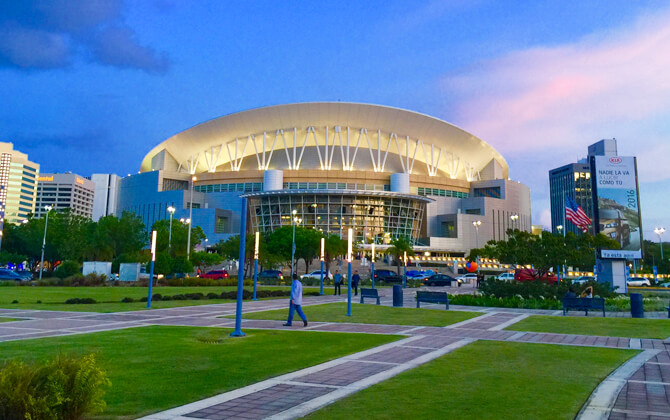
Tren Urbano can be interesting even if you ride it simply to look around. Many stations are elevated or at ground level, so the route gives a broad view of the urban landscape across Bayamón, Guaynabo, and San Juan.
- San Juan’s financial district: Near Hato Rey Station, you can reach Milla de Oro, a central part of the Financial District of San Juan with many of the island’s major banks and financial groups.
- José Miguel Agrelot Coliseum: This major concert and performance venue is located next to Hato Rey Station.
- University of Puerto Rico: Near Universidad Station, you will find the largest campus of the University of Puerto Rico. One of its best-known features is La Torre, the clock tower designed by architect Rafael Carmoega.
- Francisco Oller Museum: A short walk from Bayamón Station leads to the political center of the municipality and the Francisco Oller Museum, next to Plaza de Recreo. The building dates from 1907 and was originally the mayor’s office.
The ride also gives a quick sense of the wider metropolitan area, especially where the train runs above street level.
Full Ride!
Enjoy the full journey on the Tren Urbano in the video below. This allows you to experience the journey from your comfort zone, giving you a glimpse of the system’s infrastructure, stations and the scenic views of the surrounding areas.