Tren Urbano is Puerto Rico’s automated rapid transit system for the San Juan metropolitan area, with service through San Juan, Guaynabo, and Bayamón. The single-line system runs 17.2 km (10.7 mi), serves 16 stations, and forms part of wider public transport and city transport in the capital region. It is the first rapid transit system in the Caribbean and connects with buses, taxis, shuttles, ferry services, station parking, and bicycle facilities.
| Key | Information |
|---|---|
| System | Tren Urbano, an automated rapid transit line in Puerto Rico |
| Service area | San Juan, Guaynabo, and Bayamón |
| Route length | 17.2 km (10.7 mi) |
| Stations | 16 stations on one route |
| Operator | Alternate Concepts, Inc. (ACI) |
| Network authority | Integrated Transit Authority (ATI) |
| Ridership | 4,438,400 rides in 2025, with about 21,100 passengers per weekday in the fourth quarter of 2025 |
| Main limitation | No direct rail service to Old San Juan, Santurce, or Luis Muñoz Marín International Airport |
San Juan Metro Map
Map of San Juan Tren showing different lines. Click on the map to enlarge it or download the San Juan Metro map in PDF format.

Puerto Rico’s Railways: A Glimpse into San Juan
Rail transportation in Puerto Rico goes back to the late 19th century, when regional railways developed under Spanish rule and later continued under American rule. San Juan also had an electric street tramway from 1901 to 1946, known as the “Trolley” de San Juan. At its peak, the tramway carried nearly 10 million passengers a year.
By the 1950s, wider car ownership, new highways, industrial change, and the decline of agriculture reduced the role of rail transport. Traffic congestion in the San Juan metropolitan area later renewed interest in a modern mass transit system. Proposals for rapid rail appeared in 1967, and a 1971 study recommended an islandwide elevated transit system.
The modern Tren Urbano project was adopted in 1989, and the name was selected in 1992. The system opened on December 19, 2004, with paid service beginning on June 6, 2005. Early ridership was strong during the free-service period, although later use remained below original projections.
Today, Tren Urbano is still a key part of transportation in San Juan. It is compact, but it links several important urban and suburban districts and supports the broader local transport network.
Lines and Stations
Tren Urbano has one route between Bayamón and Sagrado Corazón. The line is 17.2 km (10.7 mi) long and includes 16 stations across Bayamón, Guaynabo, and San Juan. Ten stations are elevated, four are at grade or in open cuttings, and two are underground.
All stations were built to handle six-car trains. Each station also has its own architectural style and artwork, with ticket vending machines, accessibility features, and real-time information displays available in the system.
| Station | Details |
|---|---|
| Sagrado Corazón | Terminal station and bus terminal; connected to onward public transport options |
| Hato Rey | Serves the Hato Rey area and nearby financial district |
| Roosevelt | Station on the central section of the line |
| Domenech | Station on the San Juan section of the route |
| Piñero | Bus terminal and connection point for airport-bound bus service |
| Universidad | Serves the University of Puerto Rico area |
| Río Piedras | Station in the Río Piedras area |
| Cupey | Bus terminal and station on the southern part of the line |
| Centro Médico | Serves the medical district, including the Puerto Rico Medical Services Administration area |
| San Francisco | Station with parking spaces available |
| Las Lomas | Station on the route toward Guaynabo and Bayamón |
| Martínez Nadal | Bus terminal, parking location, and nearby maintenance and operations facility |
| Torrimar | Station with parking spaces available |
| Jardines | Station with parking spaces available |
| Deportivo | Station with parking spaces available |
| Bayamón | Terminal station, bus terminal, parking location, and connection point for Metro Urbano |
The stations list shows why the line is useful for some cross-metro trips, even though the stations map does not extend into Old San Juan, Santurce, or the airport. Five stations also work as bus terminals: Sagrado Corazón, Piñero, Cupey, Martínez Nadal, and Bayamón.
Several stations provide station parking, including San Francisco, Martínez Nadal, Torrimar, Jardines, Deportivo, and Bayamón. Terminal tracks at both Bayamón and Sagrado Corazón can store two train sets each.
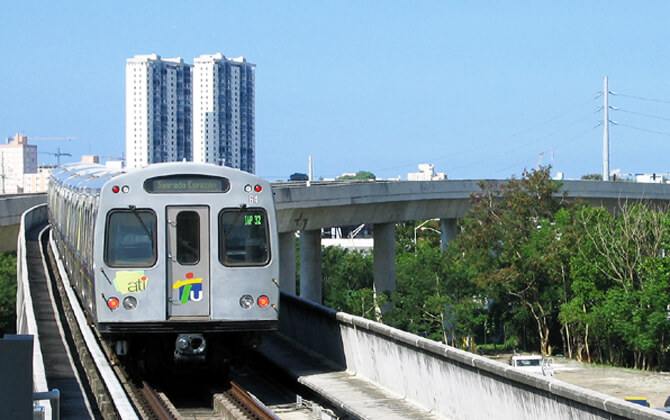
Operation Times and Frequencies
San Juan’s Tren Urbano operates daily, with a starting time of 5:50 am and a closing time of 11:30 pm. These opening hours make the system useful for commuting, daytime errands, and many evening trips, but the last train timing matters if you plan to stay out late.
| Service detail | Timings |
|---|---|
| Opening times | Service starts at 5:50 am |
| Closing time | Service ends at 11:30 pm |
| Peak-period frequency | Trains run every 8 minutes |
| Off-peak frequency | Trains run every 16 minutes |
| Average weekday frequency | About every 12 minutes |
| Weekend frequency | About every 16 minutes |
| Saturdays, Sundays, and public holidays | Waiting time is generally 16 minutes |
For schedule today, timings today, and the current train schedule, it is best to plan around the standard timetable and allow extra time for bus transfers. The route timetable is simple because there is only one line, but frequency changes between peak and off-peak periods.
Fare Structure, Tickets, and Passes
The standard Tren Urbano one-way fare is US$1.50. Since Puerto Rico uses the U.S. dollar, the local fare and dollar price are the same. The fare system is easy to understand, so most riders do not need a fare calculator for regular trips.
Discounted fares are available for eligible passengers. Students, seniors, and persons with disabilities receive a 50% discount with valid identification. Seniors aged 60 to 74 are listed for reduced fares, while passengers aged 75 and over and children under six ride free.
- Single ticket price: US$1.50
- Reduced fare: US$0.75 for eligible riders
- Day pass: US$5.00
- Weekly pass: US$15.00
- Monthly pass: US$60.00
- 90-day pass: US$90.00
Tickets, cards, and passes can be purchased from automated ticket vending machines throughout the system. Payment options include cash, debit card, Visa, and MasterCard.
A regular ticket also includes a transfer option to AMA buses within a two-hour window. If the selected bus route is E20, an additional US$0.50 is charged.
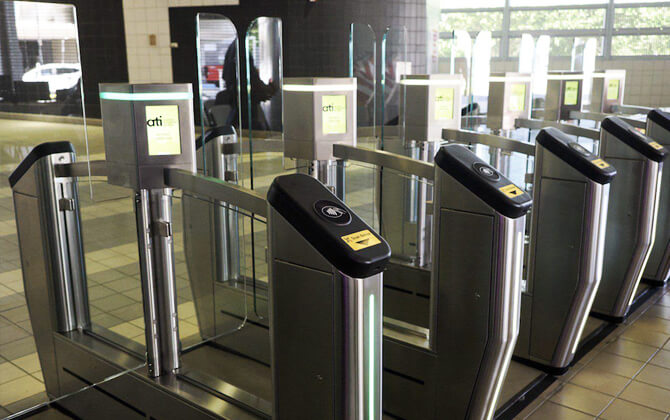
Interconnections with Other Systems
Tren Urbano is part of the wider San Juan public transport network coordinated by the Integrated Transit Authority. It connects with the Metropolitan Bus Authority, the Cataño Ferry, taxis, shuttles, and park-and-ride facilities, making it more useful than the rail map alone might suggest.
The most direct intermodal link is Metro Urbano, a bus rapid transit service connecting Bayamón Station with Toa Baja. This route covers 16.5 km (10.3 mi) and began service on September 16, 2012. It replaced articulated buses with an exclusive lane on the José de Diego Highway, PR-22.
Bus connections matter because the rail line does not cover every major destination. Five stations function as bus terminals: Sagrado Corazón, Piñero, Cupey, Martínez Nadal, and Bayamón. The regular fare includes an AMA bus transfer within two hours, with an added charge on route E20.
The Cataño Ferry links Cataño with Old San Juan and runs non-stop every half hour. The AMA bus network also serves the metropolitan area through 30 routes, including three express routes, giving passengers more reach beyond the rail route.
The system has not always been perfectly integrated with other local transport services. Coordination with AMA and AcuaExpreso was noted as a challenge, and future ideas have included links to a tram line toward Old San Juan, a new line toward Carolina, and a possible connection with a Caguas rail project at Cupey Station.
Access to the Airport
Tren Urbano does not go directly to Luis Muñoz Marín International Airport. The practical route plan is to use the train and then connect by bus, especially from Piñero Station.
One airport-bound option is the E40 express bus from Piñero Station to the airport via the Mall of San Juan. Airport bus stops are on the second level, at departures, by terminals A, D, and E. AMA buses do not allow luggage; only small carry-on items are permitted.
- From SJU Airport to Isla Verde: take T5 or D53
- From SJU Airport to Condado, including the Ashford Avenue area: take D53
- From SJU Airport to Old San Juan: take T5 or D53
- From SJU Airport to the Convention Center: take D53
- From Old San Juan to Tren Urbano: take E10 or T3
- From Isla Verde to Tren Urbano: take D45
- From Condado to Tren Urbano: take T21
- From the Convention Center to Tren Urbano: take T9 or C35
AMA bus service operates Monday through Friday from 5:00 am to 8:00 pm, and on Saturdays and holidays from 6:00 am to 8:00 pm. There is no Sunday service. The bus fare is US$0.75 and includes a transfer to Tren Urbano within a two-hour window.
Bici-Tren (Bicycle-Train)
Bici-Tren allows passengers to take bicycles on the train with a Bici-Pass. It is a useful option for riders who want to combine cycling with rail travel, especially where the route does not reach the final destination directly.
To obtain a Bici-Pass, users must apply at Río Piedras Station between 10:00 am and 6:00 pm. Requirements include attending a course on bicycle rules, being over 18 or having consent from a parent or guardian, providing a passport-sized photograph, and signing the rules.
Bicycle capacity depends on the time of day. During peak hours, from 7:00 to 9:00 am and from 3:00 to 6:00 pm, up to two bicycles are allowed per carriage. During normal hours, weekends, and public holidays, up to four bicycles may be carried. Folding bicycles are permitted at all times.
Parking near the motorway
Tren Urbano was planned with park-and-ride access at several stations, so drivers can leave a car and continue by train. This is especially helpful for suburban passengers using the line for part of a longer trip.
Eight stations and facilities on the route provide a total of 3,106 parking spaces: Bayamón, Torrimar, Jardines, Martínez Nadal, San Francisco, Sagrado Corazón, Cupey, and the Toa Baja Park & Ride connected to Metro Urbano from Bayamón Station.
Parking is not limited to cars. Bicycle parking is available at Sagrado Corazón, Capetillo, Bayamón, Piñero, Iturregui, Covadonga in Old San Juan, and Martínez Nadal.
Published details here do not list parking charges or parking charges per day, so check posted station parking rules before leaving a vehicle. For many riders, the station parking setup is still a practical bridge between driving and public transport.
Brief Historical Overview
Puerto Rico’s rail history began in the late 19th century, and rail remained important under U.S. rule during the first half of the 20th century. It supported passenger movement, freight, and the sugarcane industry. In San Juan, the Trolley de San Juan tramway operated from 1901 to 1946, with more than 32.2 km (20 mi) of track between San Juan and Santurce.
As cars, roads, and industrial change reshaped the island, rail transport declined. Later, growing congestion in the San Juan metropolitan area pushed planners toward a new mass transit system.
Formal planning for rapid rail began in 1967. A 1971 T.U.S.C.A. study recommended an islandwide elevated transit system, but the project moved ahead only in 1989, when Puerto Rico’s Department of Transportation and Public Works adopted a San Juan rail proposal. In 1993, the Federal Transit Administration selected Tren Urbano as a Turnkey Demonstration Project.
Design-build contracts followed in 1996 and 1997, including a Siemens AG contract for the line, rolling stock, and early operation. Tren Urbano was inaugurated on December 19, 2004. Free weekend service began first, later expanded to weekdays in April 2005, and paid service started on June 6, 2005.
During the free-service period, ridership reached 40,000 daily users. It later fell below the early forecasts, but the system continued to operate as the main rail backbone of San Juan’s urban transport network.
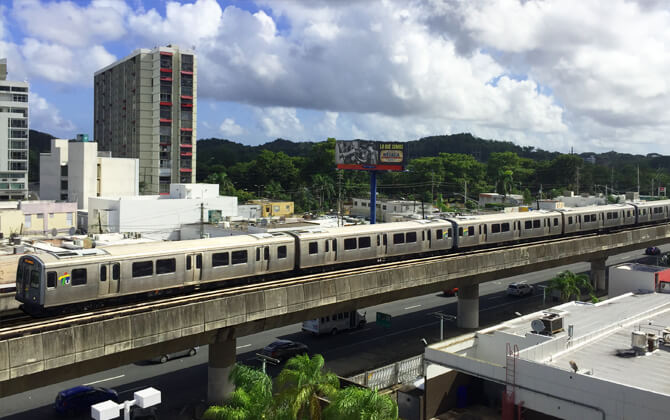
Planned Expansion
Tren Urbano was built with expansion in mind. Stations can handle six-car train sets, and the system was designed for a minimum headway of 90 seconds, giving it far more theoretical capacity than current ridership requires.
Even with that potential, the network remains a single 17.2 km (10.7 mi) line. It does not directly serve Old San Juan, Santurce, or Luis Muñoz Marín International Airport, which has limited its reach and shaped long-running expansion discussions.
Phase 1A proposed extending the line west from Sagrado Corazón to Minillas in Santurce. The planned 1,500-meter corridor, equal to 1.5 km (0.9 mi), would include two stations, San Mateo and Minillas, and a possible transfer to a future tram line linking Old San Juan and the airport. This phase was approved by the United States Environmental Protection Agency.
Later proposals included service toward Carolina, a tramway from Sagrado Corazón to Old San Juan, and a possible route to Caguas from Centro Médico or Cupey. A short tunnel south of Río Piedras Station was also built for a future extension along 65th Infantry Avenue.
More recent studies have looked again at expansion west of Sagrado Corazón, including possible connections to the Convention Center District and Old San Juan. As of 2019, however, there were no official plans to expand Tren Urbano.
Useful Advice
Tren Urbano is easy to use, but plan around its working hours. Service ends at 11:30 pm, so late-night trips may require a taxi, shuttle, bus, or another form of transport.
Before you board, check whether your trip needs an AMA bus transfer. A regular fare includes a transfer window, but if you leave the station and return later, you must pay again. The rail system also does not directly cover Old San Juan or the airport, so the last leg may need another mode.
The standard train cost is US$1.50, while students and seniors aged 60 to 74 pay US$0.75. Children under six and seniors over 75 ride free. If you plan several trips, a day pass or longer pass may be better value than separate tickets.
Ticket machines are available at stations for single fares and stored-value cards. The system is also being upgraded to support contactless payment, including debit and credit cards, Apple Pay, Google Pay, Samsung Pay, and smart watches.
If you are carrying bags or connecting to a bus, use the main transfer stations when possible: Sagrado Corazón, Piñero, Cupey, Martínez Nadal, and Bayamón. For sightseeing, choose stations carefully, since the line mainly serves the metro corridor through San Juan, Guaynabo, and Bayamón.
Interesting Facts
- Tren Urbano is Puerto Rico’s first rapid transit system and the first rapid transit system in the Caribbean.
- The route is 17.2 km (10.7 mi) long and has 16 stations serving San Juan, Guaynabo, and Bayamón.
- Most of the line is elevated, but it also includes at-grade sections and two underground stations.
- Each station has its own architectural design, and many stations include artwork by Puerto Rican artists.
- The system was officially inaugurated on December 19, 2004, decades after rapid rail proposals for San Juan first appeared in 1967.
- During the free-service period, daily ridership reached 40,000 passengers.
- The fleet includes 74 stainless steel Siemens cars. Each car can carry 72 seated and 108 standing passengers.
- Trains can reach 100 km/h (62 mph), although the average running time is slower because of station stops.
- Five stations double as bus terminals: Sagrado Corazón, Piñero, Cupey, Martínez Nadal, and Bayamón.
- There is no direct rail service to Old San Juan or the airport, but the system connects with buses and the Cataño Ferry.
- Expansion remains a recurring topic, especially the approved Phase 1A concept from Sagrado Corazón toward San Mateo and Minillas.
Sightseeing from the Tren Urbano
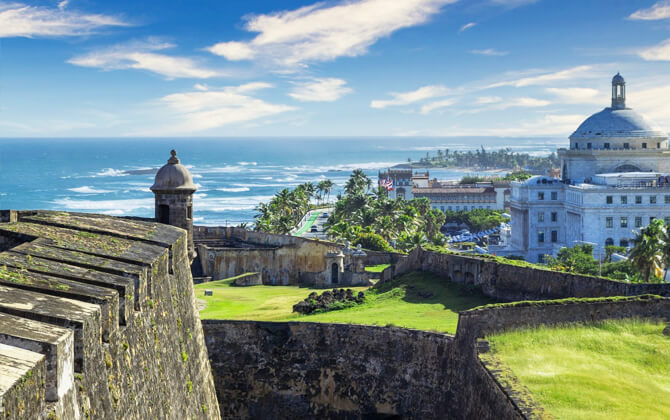
Tren Urbano is not only a practical rail route through San Juan, Bayamón, and Guaynabo. Because much of the line is elevated, it also works as a simple sightseeing ride with views over the metro area.
From the train, passengers can notice the Financial District of San Juan, the José Miguel Agrelot Colisseum, the University of Puerto Rico, and the Francisco Oller Museum area in Bayamón. Stations such as Hato Rey, Universidad, and Bayamón are useful for exploring parts of the city beyond Old San Juan and the beach districts.
Old San Juan remains one of the city’s major attractions, and its historic center and forts were declared a UNESCO World Heritage Site in 1983. Tren Urbano does not enter the historic district, but it connects with other transport modes that help visitors move around the wider region.
Some passengers ride the line simply for the view. With elevated stations, open sections, and only two underground stops, the trip can feel like a moving observation point. Elevators at many stations and Wi-Fi access also make the system easier to use.
- Financial District of San Juan: visible near Hato Rey, including the Milla de Oro area.
- José Miguel Agrelot Colisseum: a major venue for concerts and events.
- University of Puerto Rico: near Universidad Station, including the well-known clock tower, La Torre.
- Francisco Oller Museum: near Bayamón Station, close to the Plaza de Recreo.
For visitors who want to combine views with mobility, the line also offers parking at selected stations and bicycle parking at several stops. Even with a limited network, it gives a clear look at how San Juan spreads across its metropolitan area.