The Kuala Lumpur Monorail, or KL Monorail, is Malaysia’s only operational monorail system and a key part of the Klang Valley Integrated Transit System. Operated by Rapid Rail under the Rapid KL brand, it appears as Line 8 in light green on the stations map. The fully elevated route runs 8.6 km (5.3 miles) between KL Sentral and Titiwangsa, serving 11 stations through central areas such as Brickfields, Bukit Bintang, and Chow Kit, with links to LRT, MRT, ERL, and KTM Komuter services.
| Key | Information |
|---|---|
| System | KL Monorail, operated by Rapid Rail under Rapid KL |
| Route | KL Sentral to Titiwangsa |
| Line length | 8.6 km (5.3 miles) |
| Stations | 11 elevated stations |
| Opening date | 31 August 2003 |
| Map color | Light green, Line 8 |
| Main role | City transport link across central Kuala Lumpur with connections to other rail systems |
Kuala Lumpur Subway Map
Map of Kuala Lumpur Metro showing different lines. Click on the map to enlarge it or download the Kuala Lumpur map in PDF format.
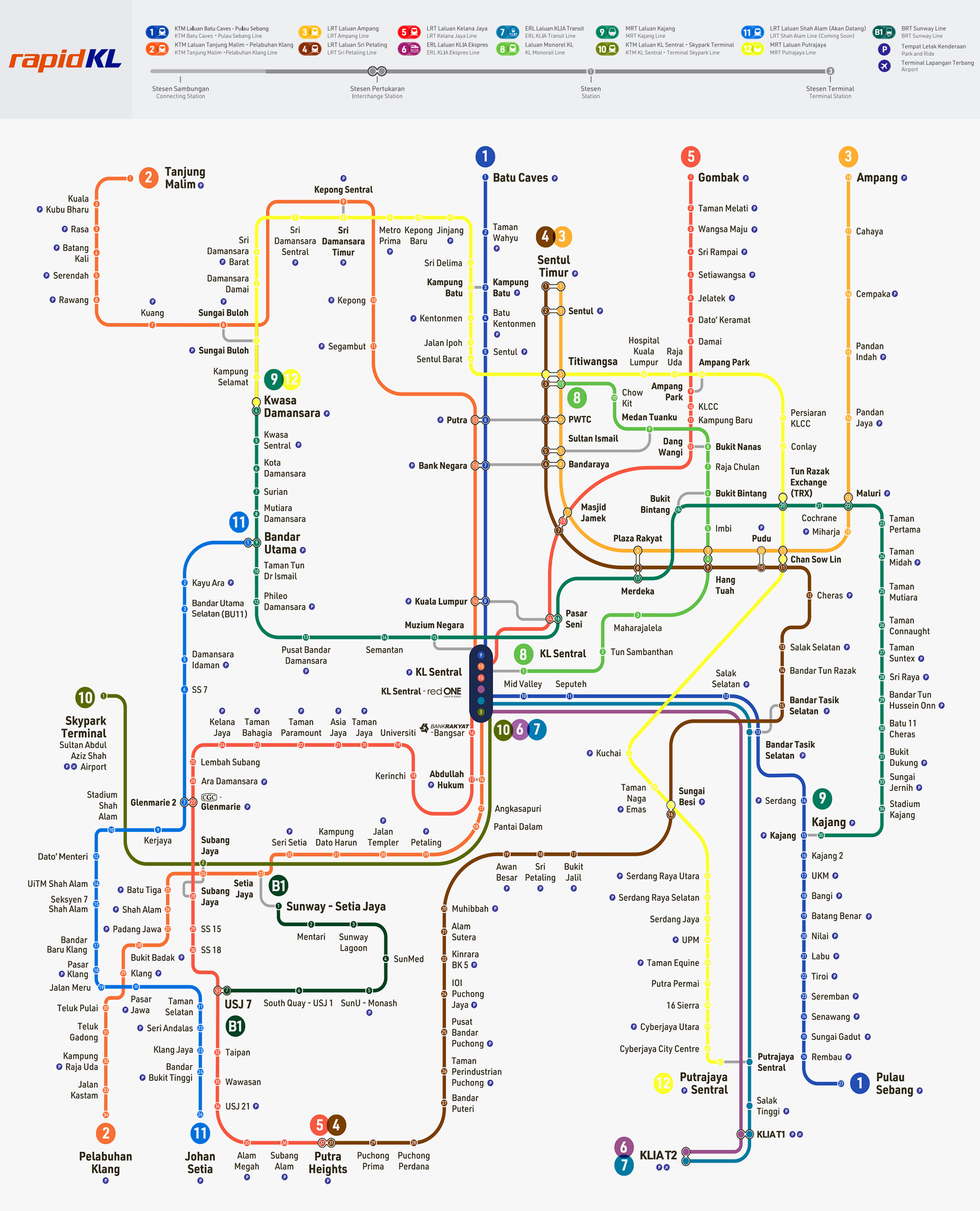
Lines and Stations
The KL Monorail has a single route and is the only monorail line in Malaysia. It runs from KL Sentral in the south to Titiwangsa in the north, connecting busy inner-city districts and making transfers to other public transport systems easier. Since opening on 31 August 2003, the route plan has stayed the same: 11 stations along 8.6 km (5.3 miles) of elevated track.
For anyone checking the stations list or planning a simple path train trip through the city centre, this is a compact but useful line.
Main Stations
| Station | Details |
|---|---|
| KL Sentral | Southern terminus and major transport hub |
| Tun Sambanthan | Serves the Brickfields area |
| Maharajalela | Near Jalan Maharajalela and Merdeka Stadium |
| Hang Tuah | Interchange with the LRT Ampang and Sri Petaling Lines |
| Imbi | Close to Berjaya Times Square |
| Bukit Bintang | Key stop for shopping and entertainment |
| Raja Chulan | Near the central business district |
| Bukit Nanas | Connects with Dang Wangi on the LRT Kelana Jaya Line |
| Medan Tuanku | Linked to Sultan Ismail on the LRT Ampang and Sri Petaling Lines |
| Chow Kit | Serves the Chow Kit district |
| Titiwangsa | Northern terminus and interchange station |
Station Features
All monorail stations are elevated. Ticket facilities are located at ground level or on the first floor, while platforms sit on the top level and are separated from the tracks by fencing. The two termini use a single-track Spanish solution layout, and the depot is located between KL Sentral and Tun Sambanthan.
Some stations were built longer than the former two-car trainsets, reflecting early expansion plans. Selected stops, including Bukit Bintang and KL Sentral, have also been upgraded to improve access and passenger convenience.
Planned and Proposed Extensions
Earlier planning for the tramway-style monorail system included wider expansion, but only the downtown branch was built. Proposed extensions have included KL Sentral to Happy Garden/Jalan Klang Lama, Happy Garden to Sunway, and Titiwangsa to Matrade.
Schedule and Frequency
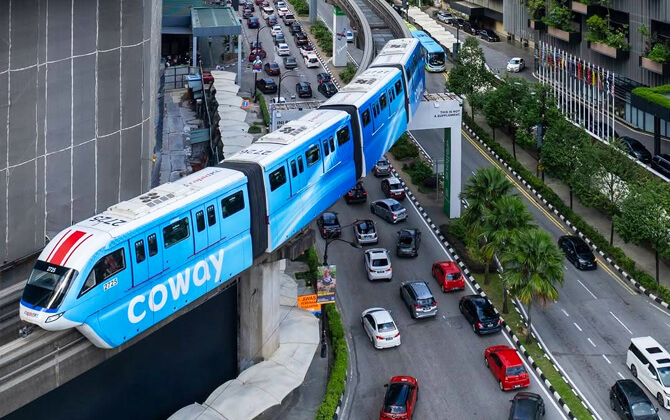
The KL Monorail timetable runs daily. Stations generally open at 6:00 AM from Monday to Sunday, though on special days some may have earlier opening times. Because closing time can vary by station, it is worth checking the destination station before you travel, especially for schedule today or timings today.
The first train starting time is 6:00 AM. The last train leaves KL Sentral at 11:30 PM for Titiwangsa, while the last train from Titiwangsa toward KL Sentral departs at 11:50 PM.
Typical frequency is about every 5 minutes. During peak periods, the train schedule improves to around 3 to 5 minutes, while late evening services run less often.
Monday to Friday
| Service detail | Timings |
|---|---|
| 06:00–07:00 | Every 12 minutes |
| 07:00–09:00 | Every 5 minutes |
| 09:00–12:00 | Every 7 minutes |
| 12:00–14:00 | Every 6 minutes |
| 14:00–16:30 | Every 7 minutes |
| 16:30–19:00 | Every 5 minutes |
| 19:00–21:00 | Every 7 minutes |
| 21:00–22:00 | Every 8 minutes |
| 22:00–24:00 | Every 12 minutes |
Saturday
| Service detail | Timings |
|---|---|
| 06:00–07:00 | Every 12 minutes |
| 07:00–10:00 | Every 8 minutes |
| 10:00–11:00 | Every 7 minutes |
| 11:00–20:00 | Every 6 minutes |
| 20:00–23:00 | Every 8 minutes |
| 23:00–24:00 | Every 12 minutes |
Sunday and Public Holiday
| Service detail | Timings |
|---|---|
| 06:00–08:00 | Every 12 minutes |
| 08:00–10:00 | Every 8 minutes |
| 10:00–20:00 | Every 7 minutes |
| 20:00–22:00 | Every 8 minutes |
| 22:00–24:00 | Every 12 minutes |
This route timetable reflects the published schedule in the draft source. For the latest operating hours, working hours, running time details, and service timings, travellers should check official Rapid KL information.
Ticket Pricing
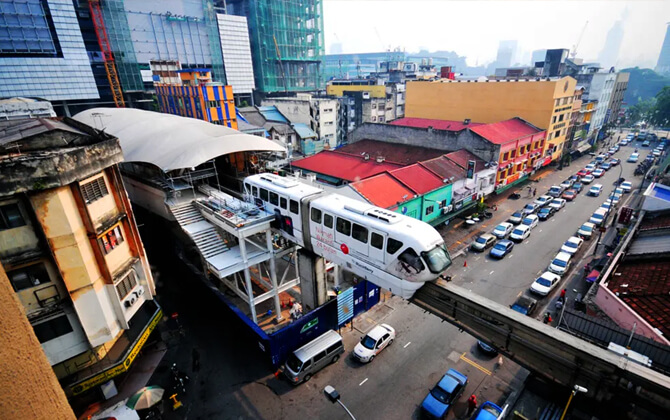
The KL Monorail uses a distance-based fare system, so the fare and ticket price depend on how far you travel. Single-trip tickets are usually bought as tokens from station counters or vending machines. For cashless travel, passengers can use a Touch ‘n Go card.
From KL Sentral, the fare starts at RM1.30 (about US$0.28) to Tun Sambanthan and rises to RM4.10 (about US$0.87) to Titiwangsa. This gives a useful snapshot of the cost across the line, even though there is no fare calculator included in the source material.
| Destination | Fare from KL Sentral |
|---|---|
| Tun Sambanthan | RM1.30 (about US$0.28) |
| Maharajalela | RM2.20 (about US$0.47) |
| Hang Tuah | RM2.80 (about US$0.60) |
| Imbi | RM3.10 (about US$0.66) |
| Bukit Bintang | RM2.50 (about US$0.53) |
| Raja Chulan | RM2.80 (about US$0.60) |
| Bukit Nanas | RM3.10 (about US$0.66) |
| Medan Tuanku | RM3.40 (about US$0.72) |
| Chow Kit | RM3.70 (about US$0.79) |
| Titiwangsa | RM4.10 (about US$0.87) |
Unlimited travel passes such as My50, MyCity, and MyTourist can also be used on the system if you already have one. Depending on your trip, a pass or day pass may offer better value than buying a separate ticket each time.
Connections to Other Systems
The KL Monorail is woven into Kuala Lumpur public transport and helps connect the city centre with the wider rail network. Its route links KL Sentral in the south with Titiwangsa in the north while serving shopping, business, and residential areas along the way.
Main interchange points include the following stations:
| Station | Details |
|---|---|
| KL Sentral | Connections to KTM Komuter, KTM ETS, KTM Skypark Link, LRT Kelana Jaya Line, ERL services including KLIA Ekspres and KLIA Transit, and a link bridge to Muzium Negara on the MRT Kajang Line |
| Hang Tuah | Interchange with the LRT Ampang Line and LRT Sri Petaling Line |
| Bukit Bintang | Connection with the MRT Kajang Line and pedestrian access toward the LRT Kelana Jaya Line |
| Bukit Nanas | Connection with Dang Wangi on the LRT Kelana Jaya Line via a covered walkway |
| Medan Tuanku | Connection with Sultan Ismail on the LRT Ampang and Sri Petaling Lines via an elevated walkway |
| Titiwangsa | Interchange with the LRT Ampang Line, LRT Sri Petaling Line, and MRT Putrajaya Line; a proposed MRT Circle Line interchange has also been noted |
Several stations also give access to GoKL City Bus services within walking distance, which adds another option for local transport and city transport trips. There is no direct airport train connection from the monorail itself, so airport-bound passengers usually transfer at KL Sentral.
Connections to the Airport
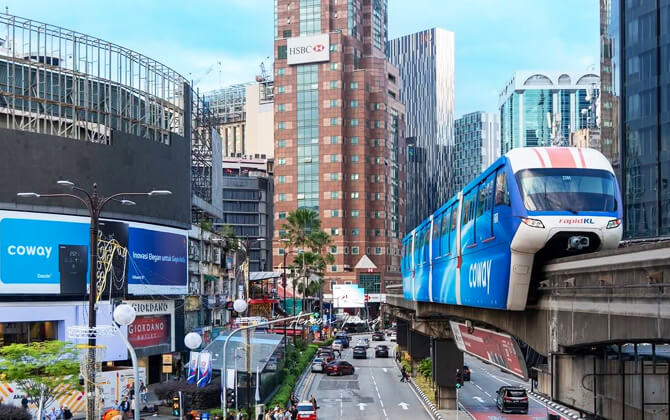
The KL Monorail does not run directly to Kuala Lumpur International Airport. For transportation in Kuala Lumpur to KLIA Terminal 1 or Terminal 2, the key transfer point is KL Sentral.
The usual route is simple: take the monorail to KL Sentral, then transfer to KLIA Ekspres or KLIA Transit. Because KL Sentral is the city’s main rail hub, this is the most practical rail-based airport connection.
- No direct KL Monorail service to the airport
- Transfer at KL Sentral for KLIA Ekspres or KLIA Transit
- KL Sentral is the main hub for wider rail connections across Kuala Lumpur
Regulations and Etiquette
Using the KL Monorail is straightforward, and following a few basic rules helps keep the system safe and orderly. Riders should board calmly, avoid blocking doors, and let passengers get off first.
On-board rules
Eating and drinking are not allowed on board. Alcohol and illegal substances are prohibited, and entering the system under the influence of alcohol is strictly forbidden. Opening train doors while the train is moving is also not allowed.
Priority seats are reserved for passengers who need them, including older adults, pregnant women, and people with disabilities. When trains are crowded, try not to lean on gates or push toward the doors before they open fully.
Platform and escalator etiquette
Stand behind the yellow line while waiting. On escalators, stand on the left and keep the right side clear for people passing through.
Follow station signs and announcements, especially at busy interchanges and when checking train direction. A little patience goes a long way here.
Bicycles and safety
Only folding bicycles are allowed, and they must stay within the required folded size. Passengers under 14 must be accompanied by a parent or guardian when bringing a bicycle into the system.
Passengers remain responsible for their bicycles at all times, and the operator may refuse carriage if a bike creates a safety risk or disrupts service. During busy periods, keep personal belongings close and stay aware of your surroundings.
Parking near the Metro
Station parking information is very limited in the available source material. Medan Tuanku Monorail Station, for example, is specifically listed as having no parking.
If you are driving, the practical option is to use parking near larger transport hubs and then walk to the monorail. KL Sentral is the easiest access point for onward rail transfers, while Muzium Negara, Bukit Bintang, Dang Wangi, Sultan Ismail, and Titiwangsa also connect with nearby rail services.
No exact parking charges or parking charges per day are given in the source, so travellers should check local station parking or nearby commercial parking facilities before the trip and allow extra time for the final walk.
- Station parking details are not provided in the source material
- Medan Tuanku Station is specifically marked as having no parking
- KL Sentral is the most practical access point for onward transport connections
History
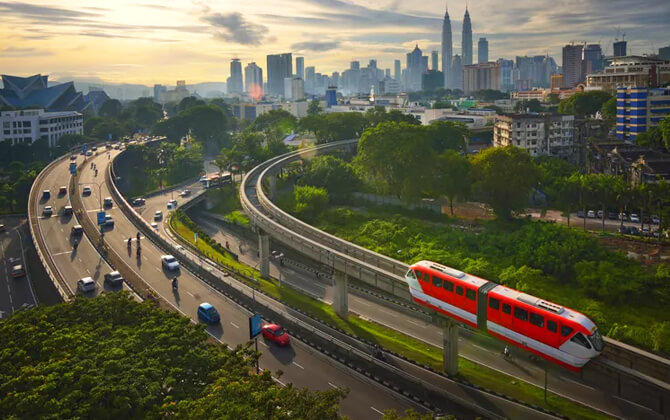
The Kuala Lumpur Monorail was first proposed by Kuala Lumpur City Hall in January 1990 after cabinet approval in June 1989. Early plans described a 14 km (8.7 miles), 22-station system expected to carry more than 34,000 passengers a day on a 20-minute loop through the commercial core, at an estimated cost of RM143 million (about US$30.4 million).
Work was supposed to begin in June 1990 but was postponed to May 1991 after preparatory tenders were considered too expensive. The project was delayed again and later revised. Although the original concept included two branches and a larger network, only the downtown branch was eventually built.
Construction restarted under Hitachi, then stopped in December 1997 because of the Asian financial crisis. When work resumed in July 1998, MTrans took over, built its own rolling stock locally, and completed the project at a cost of MYR1.18 billion (about US$251 million). The line opened on 31 August 2003 with 11 stations over 8.6 km (5.3 miles), linking KL Sentral with Titiwangsa through the Golden Triangle.
At opening, KL Monorail System Sdn Bhd held a 40-year concession to operate the line. Since then, the route and number of stations have not changed. In April 2007, talks began on selling the line to Prasarana Malaysia, and after default notices and receivership proceedings, Prasarana signed a sale-and-purchase agreement on 28 November 2007 and took over operations and the BPM loan.
The first fleet consisted of 10 permanently coupled 2-car trainsets, similar in design to the Seattle Center Monorail’s ALWEG trains. Each train carried 158 passengers during regular service. Even with capacity limits at peak times, the monorail has remained an important transport link in central Kuala Lumpur.
Future Expansion Plans
The KL Monorail was designed with expansion in mind, and some stations were built longer than the original two-car trains. Still, network growth has been limited, and the broader expansion concept was never fully built.
Historical planning materials described a 14 km (8.7 miles), 22-station system in two phases, with later branches toward areas such as Mid Valley, Abdullah Hukum, Jalan Klang Lama, and Kampung Pasir. Another proposal under the Kuala Lumpur Linear City plan outlined a larger system with 16 km (9.9 miles) of twin-track guideway beams, 20 elevated stations, two depots, and 14 monorail trains, but no active progress has been noted.
More recently, Prasarana has carried out the KL Monorail fleet expansion project to improve service and prepare the system for larger trainsets. Works mentioned in the source include platform automatic gates, a new signalling system, depot construction, station upgrades, and universal access improvements. The main aim has been to introduce 4-car trains with greater capacity.
In 2026, it was announced that three additional train sets would be added to the fleet. Beyond that, proposed extension phases have included:
- Phase 1: KL Sentral to Happy Garden/Jalan Klang Lama
- Phase 2: Happy Garden to Sunway, later replaced by the LRT Kelana Jaya Line extension and BRT Sunway Line
- Phase 3: Titiwangsa to Matrade
At this stage, these remain proposed expansion plans rather than confirmed construction projects.
Tourist Attractions Around the Subway
The KL Monorail is handy for sightseeing because its stations sit close to some of Kuala Lumpur’s best-known shopping, heritage, and leisure areas. If you want an easy day out, you can ride the line, stop where something catches your eye, and continue later on the same route.
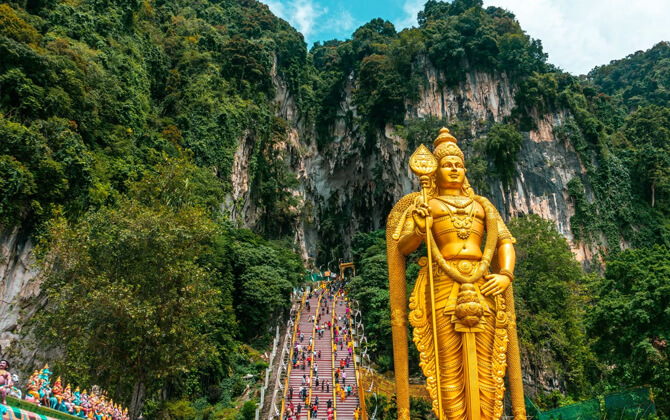
- KL Sentral is a good starting point for Little India in Brickfields, known for sari shops, spice stores, Indian sweets, garlands, and banana leaf rice.
- Maharajalela gives access toward Chinatown, with Chan She Shu Yun Temple along the way before the busy trading streets begin.
- Hang Tuah is close to the former Pudu Prison area, while Imbi sits next to Berjaya Times Square with its indoor theme park and many shops.
- Bukit Bintang is a major stop for shopping, with access to Lot 10, Sungei Wang Plaza, Pavilion KL, Starhill Gallery, and Fahrenheit 88.
- Bukit Nanas is useful for Bukit Nanas Forest Reserve, KL Tower, and the Telekom Museum, which is housed in a historic 1924 building.
- Chow Kit is the stop for Chow Kit Wet Market, a lively local market area with produce, seafood, fruit stalls, and souvenir shops.
- Titiwangsa is the gateway to Titiwangsa Lake Garden, where visitors can enjoy open space, lake activities, and weekend pony or horse-carriage rides for children.
A full trip along the line can easily fill most of the day, depending on how many stops you make.