Rapid Rail Malaysia, formally Rapid Rail Sdn Bhd, operates Kuala Lumpur and the Klang Valley’s Rapid KL rail system. The network is part of the city’s public transport and local transport backbone, covering LRT, MRT, and monorail services under Prasarana Malaysia. It includes three LRT lines, two MRT lines, and the KL Monorail, with further expansion planned or under construction.
| Key | Information |
|---|---|
| Operator | Rapid Rail Sdn Bhd, a subsidiary of Prasarana Malaysia |
| Network | Rapid KL rail system in Kuala Lumpur and the Klang Valley |
| Services | Three LRT lines, two MRT lines, and one monorail line |
| Main role | Urban rail transportation in Malaysia, supporting daily city transport and commuter travel |
| Typical starting time | Around 6:00 AM on most lines |
| Typical closing time | Before midnight, with the last train varying by line and station |
| Daily ridership | More than 260,000 commuters daily as of September 2022 |
| Rail technology | Standard gauge rail on LRT and MRT lines; ALWEG straddle beam on the KL Monorail |
Malaysia Rapid Rail Map
Map of Malaysia Rapid Rail showing different lines. Click on the map to enlarge it or download the Rapid Rail map in PDF format.
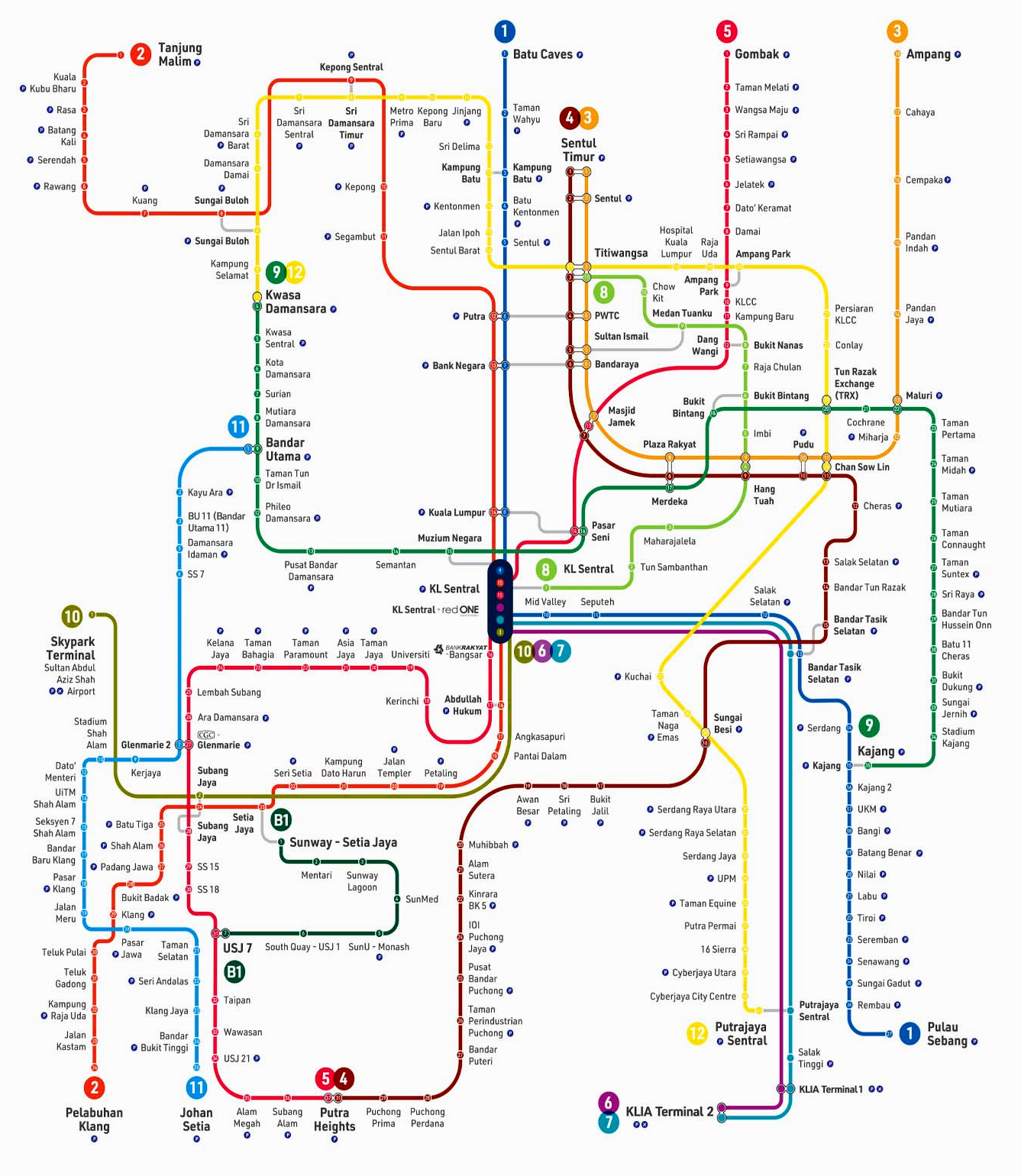
Rapid Rail Lines and Stations
Rapid Rail operates the main rail route network for Kuala Lumpur and the Klang Valley. The system links central business areas, residential districts, transport hubs, and outer growth corridors, so it is widely used for commuting as well as cross-city trips.
The current Rapid KL rail system includes the Ampang Line, Sri Petaling Line, Kelana Jaya Line, KL Monorail, MRT Kajang Line, and MRT Putrajaya Line. Together, these lines form the core stations map for rail-based public transport in the city.
| Line | Stations | Route |
|---|---|---|
| Ampang Line | 18 | Sentul Timur to Ampang |
| Sri Petaling Line | 29 | Sentul Timur to Putra Heights |
| Kelana Jaya Line | 37 | Gombak to Putra Heights |
| KL Monorail | 11 | KL Sentral Monorail to Titiwangsa |
| MRT Kajang Line | 33 | Kwasa Damansara to Kajang |
| MRT Putrajaya Line | 36 | Kwasa Damansara to Putrajaya Sentral |
The Ampang Line and Sri Petaling Line share part of the same system and meet at Chan Sow Lin. The Kelana Jaya Line runs from Gombak to Putra Heights and connects with the Ampang and Sri Petaling lines at Masjid Jamek and Putra Heights. The KL Monorail serves the central urban corridor between KL Sentral and Titiwangsa, while the MRT lines extend rail access toward areas such as Sungai Buloh, Kajang, Cyberjaya, and Putrajaya.
| Station | Details |
|---|---|
| Masjid Jamek | Interchange between the Kelana Jaya Line, Ampang Line, and Sri Petaling Line |
| Putra Heights | Southern interchange for the Kelana Jaya Line and Sri Petaling Line |
| Chan Sow Lin | Split point where the Ampang and Sri Petaling branches meet |
| KL Sentral | Major transport hub connecting Rapid KL with other rail services |
| Titiwangsa | Important northern interchange station served by central-city rail connections |
Station designs vary. The Kelana Jaya Line includes elevated, underground, and at-grade stations, while the Ampang and Sri Petaling lines combine elevated and surface-level sections. For a practical route plan, passengers usually check the stations list and interchange points before choosing their path by train.
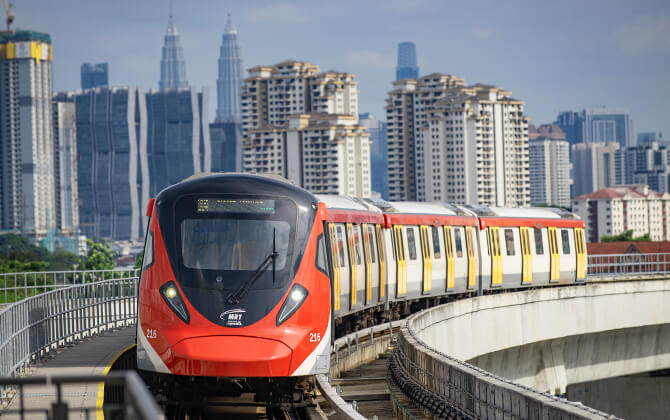
Timetable & Operating Hours
Rapid KL rail opening hours are generally built around daily urban travel. Most lines begin service at about 6:00 AM and close before midnight, including weekends and public holidays. Actual opening times, working hours, and last train timings can differ by branch, direction, and station.
Train frequency changes through the day. During peak periods, some services run every few minutes, while off-peak intervals are longer. If you need the schedule today or timings today, check the latest train schedule before you travel, especially for late-night trips, public holidays, or special events.
| Service detail | Timings |
|---|---|
| Typical starting time | Around 6:00 AM |
| Typical closing time | Usually before midnight |
| Ampang Line frequency | About 3 minutes in the CBD and 6 minutes outside the CBD during reported peak periods |
| Sri Petaling Line frequency | About 3 minutes in the CBD and 6 minutes outside the CBD during reported peak periods |
| Kelana Jaya Line frequency | About 3 minutes during reported peak periods, with a 2-minute target noted for Q4 2024 |
| KL Monorail frequency | About 7 minutes, with a 5-minute target noted for Q1 2026 |
| MRT Kajang Line frequency | About 4 minutes during reported peak periods |
| MRT Putrajaya Line frequency | About 4 to 5 minutes during reported peak periods |
| Weekday intervals | Minimum intervals of about 3 minutes and maximum intervals of about 14 minutes have been noted |
| Sunday and public holiday intervals | Less frequent service may apply, with headways of about 8 to 15 minutes |
For route timetable checks, the Rapid KL app and official operator channels are the most useful options. They help with route planning, service alerts, and station-specific last train information.
Rapid Rail Fares and Tickets
Rapid Rail fares in Malaysia depend on the service, distance, or zones travelled. On Rapid KL LRT, MRT, and Monorail services, the fare calculator is built into the ticketing system: tap in at the start of your trip and tap out at the end, and the correct fare is deducted automatically.
Passengers can use single journey tokens, stored-value cards, Touch ‘n Go, MyRapid cards, and selected travel passes. Token tickets are useful for occasional trips, while a card or pass is usually easier for regular city transport users.
Fare Structure
Rapid KL rail fares are generally distance-based or zone-based. Short journeys start from about RM 1.10, which is roughly US$0.25, while longer cross-network trips can reach about RM 6.40, roughly US$1.35. Exact ticket price and cost may change, so check the latest fare at the station before travelling.
| Fare type | Price |
|---|---|
| 1 zone | RM 1.10, about US$0.25 |
| Same or adjacent zones | RM 2.00, about US$0.45 |
| Across 2 zone boundaries | RM 3.40, about US$0.75 |
| 4 or more zones | RM 4.80 to RM 6.40, about US$1.00 to US$1.35 |
| Short distance trip, 1 to 3 km or 0.6 to 1.9 miles | RM 1.20 to RM 2.10, about US$0.25 to US$0.45 |
| Medium distance trip, 4 to 10 km or 2.5 to 6.2 miles | RM 2.40 to RM 3.60, about US$0.50 to US$0.80 |
| Long distance trip, 11 to 20 km or 6.8 to 12.4 miles | RM 3.90 to RM 5.50, about US$0.85 to US$1.20 |
| Longer distance trip, 21 km or 13 miles and above | RM 6.00 and above, about US$1.30 and above |
A single journey token is available from Token Vending Machines or Customer Service Offices at LRT, MRT, Monorail, and BRT stations. Stored-value options include Touch ‘n Go, MyRapid cards, and MyKad with Touch ‘n Go enabled.
Concession fares are available for senior citizens, students, and persons with disabilities, with a 50% discount calculated from the cash fare rate. Regular users can also consider passes. The MY50 Travel Pass costs RM 50, about US$11, and gives 30 days of unlimited travel on LRT, MRT, BRT, Monorail, Rapid KL buses, and MRT feeder buses. The MyRapid Smart weekly pass costs RM 50, about US$11, while the monthly option costs RM 200, about US$43. A separate MyRapid Monthly Pass is listed at RM 100 per month, about US$21, for unlimited travel on Rapid KL rail and bus services.
Rapid Kota Pass is an unlimited daily pass for Malaysians on Rapid KL LRT, MRT, Monorail, BRT, Rapid KL buses, and MRT feeder buses. Rapid Kembara Pass is aimed at tourists and offers unlimited rides across Rapid KL rail and bus services in the Klang Valley.
Example adult fares include RM 2.40, about US$0.50, from Gombak to KL Sentral; RM 2.80, about US$0.60, from KL Sentral to Putra Heights; and RM 6.40, about US$1.35, from Kwasa Damansara to Kajang.
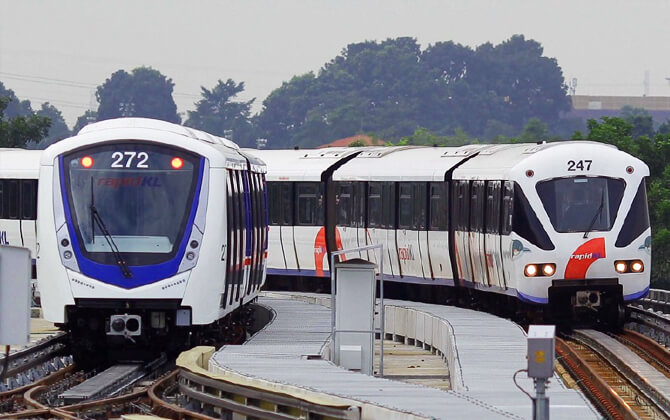
Parking
Station parking is available at selected park and ride facilities. Parking charges at the listed new LRT stations are RM 4 per entry per day, about US$0.85. This parking charges per day rate applies after the end of the free parking promotion.
The fee applies at Ara Damansara, Glenmarie, USJ21, Alam Megah, Subang Alam, and Putra Heights stations. Motorcycle bays and bicycle racks remain free of charge.
These facilities were opened with the new stations to encourage LRT use among commuters, especially nearby residents. Park only in designated lots inside the park and ride areas. Parking along roads or road shoulders can disrupt traffic and may lead to summonses or towing.
Feeder bus services also serve these stations, giving passengers another way to reach the rail network without driving.
Tips and Rules
Rapid Rail Malaysia and the Land Public Transport Agency have prepared passenger guidance to help commuters use the system safely. It is useful for first-time riders, tourists, and anyone who wants a quick guide to station rules, facilities, and train etiquette.
- Follow safety notices, staff instructions, and posted procedures at stations and on trains.
- Stay on designated walking paths and do not enter restricted areas.
- Never go near or onto the railway tracks.
- Do not touch the third rail.
- Learn the location of fire evacuation points and fire-fighting equipment where relevant.
- Use station and train facilities responsibly.
- Keep enough balance on your Touch ‘n Go card before travelling.
- Check the schedule, operating hours, and opening times before your trip, especially on weekends and public holidays.
- Use the MyRapid KL app for route planning, train schedule updates, and service notices.
- Ask station staff if you are unsure about a route, platform, ticket, or interchange.
During peak hours, expect crowds and longer waits. Keep your belongings secure, follow crowd-management signs, and allow extra running time for transfers. Small habits make the system safer and smoother for everyone.
History
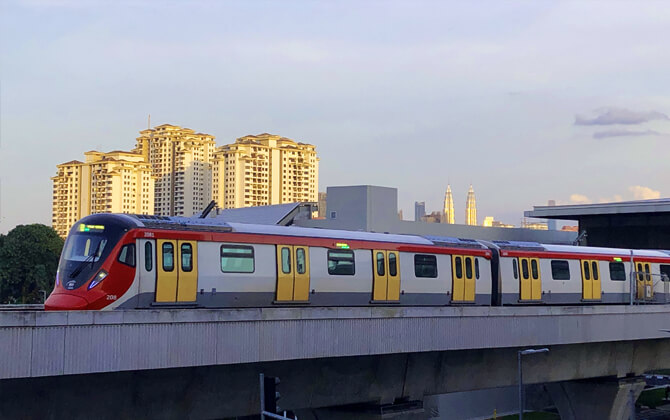
The history of Rapid Rail Malaysia is closely tied to the development of rail transportation in Kuala Lumpur and the Klang Valley. Early plans to modernise commuting began in 1984, when details of a light rapid transit system study for Kuala Lumpur were released. The proposal faced scepticism, mainly because financing was a major concern.
The study proposed an urban and suburban LRT system powered by overhead electric lines, with 18 stations between Petaling Jaya and Sentul. Although implementation was targeted for 1984 and completion for 1988, the project did not move ahead at that time.
Progress came later when the Government of Malaysia signed an agreement with Sistem Transit Aliran Ringan Sdn Bhd, known as STAR. The STAR LRT opened in full in 1998, with 36 stations along two routes: Sentul Timur to Ampang and Sentul Timur to Sri Petaling.
A second LRT system was developed by Projek Usahasama Transit Ringan Automatik Sdn Bhd, or PUTRA. The PUTRA LRT ran from Gombak to Kelana Jaya and included an underground section, making it Malaysia’s first underground railway. It became fully operational in 1999 and complemented the STAR network.
Both STAR and PUTRA later ran into financial difficulties. In 2002, the government bailed out both companies, and Prasarana Malaysia took over ownership of the lines. In 2004, the routes were rebranded under Rapid KL: the STAR Line became the LRT Ampang Line and LRT Sri Petaling Line, while the PUTRA Line became the LRT Kelana Jaya Line. Rapid Rail then assumed operations of the three lines.
The KL Monorail was commissioned in the 1990s to serve central Kuala Lumpur. After delays and ownership changes, it became fully operational in 2003. It was later sold to Prasarana Malaysia, placed under Rapid Rail, and integrated into the Rapid KL system in 2007.
In 2010, plans were announced for a new MRT system to complement the existing metro network. Mass Rapid Transit Corporation Sdn Bhd was founded in 2011 as the project and line owner, while Rapid Rail received the concession to operate MRT services. The MRT Kajang Line entered full revenue service in 2017, and Rapid Rail began managing the MRT Putrajaya Line in 2023.
Rapid Rail was officially established after a corporate restructuring exercise in 2013, although its operational roots go back to 2002. Since then, the system has become a central part of public transport in Kuala Lumpur.
Future Extensions
Rapid Rail and Malaysia’s wider rail network continue to grow through urban and intercity projects. In the Klang Valley, the Shah Alam Line is under construction and targeted to open in June 2026. The Circle Line has also been approved, with phased openings noted for December 2028 and 2030. These projects are intended to expand rail coverage and improve the wider route plan around Kuala Lumpur.
In Penang, MRT Corp opened a three-month Public Inspection period from February 24 to May 24, 2026, for the Revised Railway Scheme of the LRT Mutiara Line extension between Penang Island and Seberang Perai. The updated plan includes a cross-sea rail link of about 6 km, or 3.7 miles, between KOMTAR and Penang Sentral, with an end-to-end trip expected to take about eight minutes.
The revision reflects changes to the Penang South Reclamation development. As the project was reduced from three islands to one, 3.15 km, or 2 miles, of alignment and three stations were omitted, while 1.5 km, or 0.9 miles, of alignment will be retained. Station A1, also called PSR A, has been reclassified as a provisional station for future development.
Other updates include stations at Penang Sentral and Bagan Luar as a provisional station, plus a secondary depot at Tapak Pesta in Sungai Dua for train stabling. Penang Sentral is expected to act as a mainland gateway connecting ferry, KTMB rail, and bus services, with around 1,000 additional parking bays planned.
The LRT Mutiara Line is expected to span about 29.67 km, or 18.4 miles, with 20 stations and two provisional stations. Operations are planned for December 2031.
Malaysia is also preparing a high-speed electric train service between Johor Bahru and Kuala Lumpur, scheduled to begin on December 12, 2025. Later phases are expected to extend the route to Butterworth and Padang Besar. The wider network is also set to be strengthened by the Johor Bahru-Singapore RTS Link, expected to be completed by the end of 2026.
Nearby Attractions
The Rapid KL Monorail is one of the easiest ways to reach central Kuala Lumpur attractions without sitting in traffic. It is especially useful for shopping, sightseeing, and short city trips.
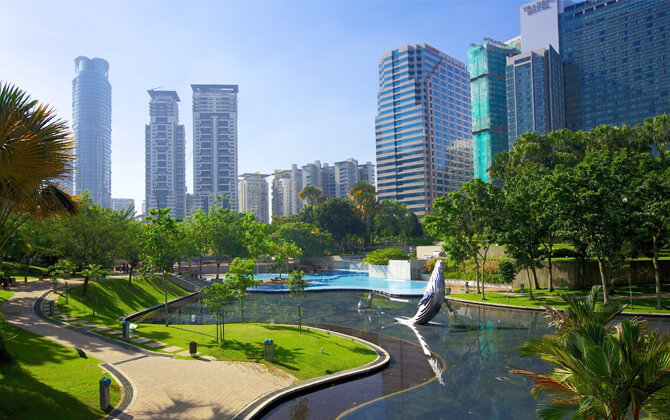
- Pavilion Kuala Lumpur — A major shopping mall in Bukit Bintang, about 7 minutes from RapidKL Monorail.
- KLCC – Bukit Bintang Pedestrian Walkway — A convenient walking link between two key city areas, about 8 minutes away.
- KLCC Park — A popular green space near the city centre, about 15 minutes away.
- Petronas Twin Towers — One of Kuala Lumpur’s most recognisable landmarks, about 17 minutes away.
- Aquaria — An aquarium at the Kuala Lumpur Convention Centre, about 10 minutes away.
- Kuala Lumpur Convention Centre — A central venue close to KLCC, about 8 minutes away.
- Bintang Walk — A lively area for shopping and walking, about 9 minutes away.
- MinNature Malaysia — A nearby attraction for visitors interested in detailed miniature displays, about 14 minutes away.
Other nearby stops include spas, bars, and cultural spots. For visitors planning a day in the city, the monorail gives simple access to shopping, entertainment, and some of Kuala Lumpur’s best-known landmarks.