The Yamanote Line, or Yamanote-sen, is a JR East railway loop in Tokyo, Japan. It is one of the city’s busiest public transport routes, connecting major areas such as Marunouchi, Ginza, Shinagawa, Shibuya, Shinjuku, Ikebukuro, Ueno, and Tokyo Station. The everyday service runs the full 34.5 km (21.4 mi) loop, stops at every station, and takes about one hour to complete a circuit. JR East also uses the name internally for a 20.6 km (12.8 mi) corridor between Shinagawa and Tabata via Shinjuku, where local Yamanote trains share the route with the parallel Yamanote Freight Line. It is part of Tokyo’s rail system, not a tramway or trams, and its green color and simple loop shape make it easy to recognize.
| Key | Information |
|---|---|
| Operator | East Japan Railway Company, known as JR East |
| System type | Circular railway loop for city transport in central Tokyo |
| Route length | 34.5 km (21.4 mi) full loop |
| Internal JR East corridor | 20.6 km (12.8 mi) between Shinagawa and Tabata via Shinjuku |
| Stations | 30 stations, all served by every train |
| Running time | About 1 hour for one complete loop |
| Starting time | Generally from 4:26 am, depending on station |
| Closing time | Service usually ends around 1:20 am the next day |
| Basic fare | From 150 yen, about $1.00, for a paper ticket over 1–3 km (0.6–1.9 mi) |
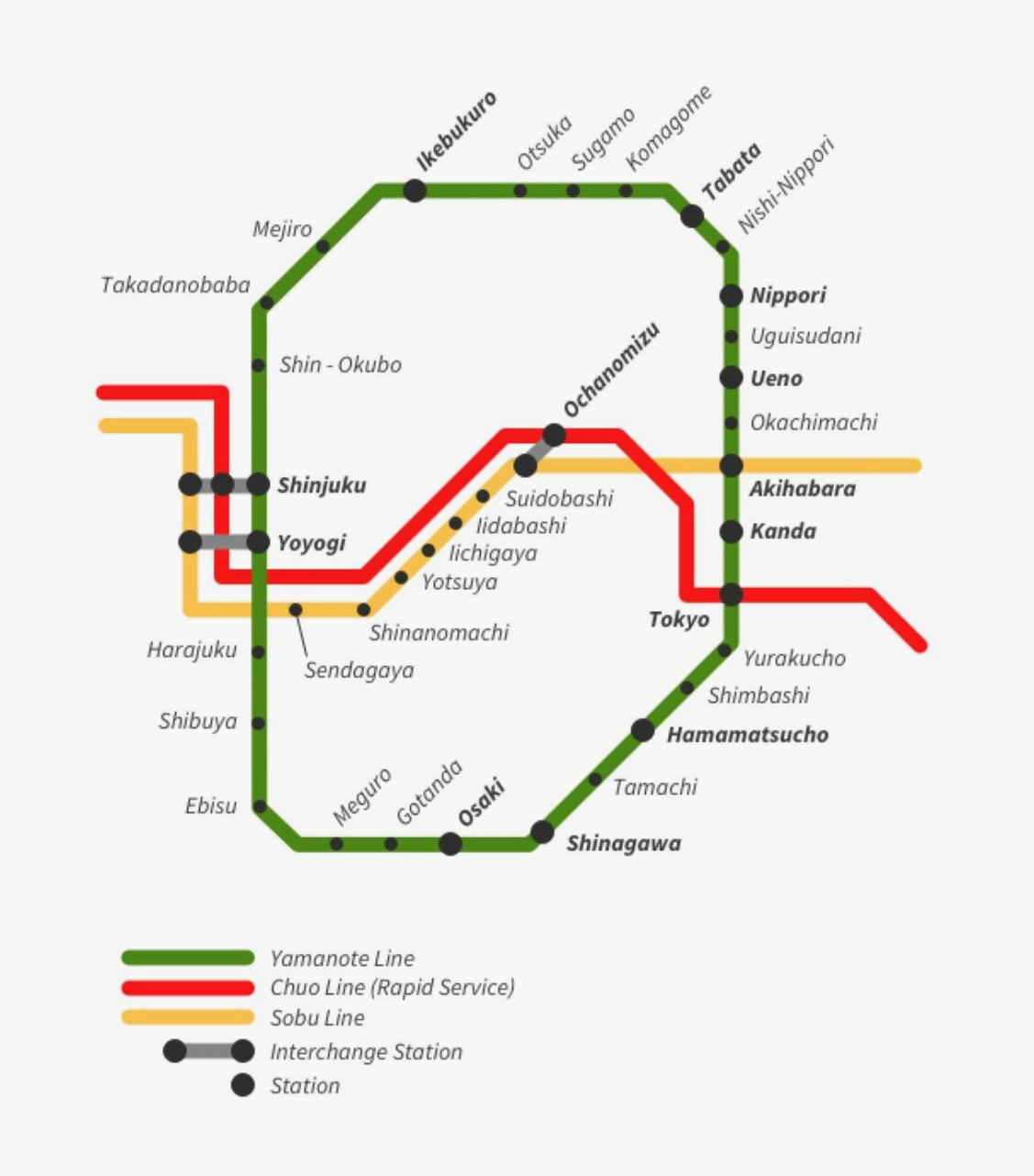
Yamanote Line Map
Map of Yamanote Line showing various stations. Click on the map to enlarge it or download the Yamanote Line map in PDF format.
Stations of Yamanote Line
The Yamanote Line stations list covers 30 stops around central Tokyo. Most stations connect with other JR lines, subway services, or private railways, which is why this route is so useful for local transport and transportation in Tokyo.
All Yamanote Line trains are local trains, so every train stops at every station. A stations map is especially helpful because the loop links several major hubs, including Shinjuku, Shibuya, Ikebukuro, Ueno, Tokyo, Shinagawa, and Yūrakuchō.
Station order on the loop
| Station | Details |
|---|---|
| Clockwise, outer circle | Shinagawa → Shibuya → Shinjuku → Ikebukuro → Tabata → Ueno → Tokyo → Shinagawa |
| Counter-clockwise, inner circle | Shinagawa → Tokyo → Ueno → Tabata → Ikebukuro → Shinjuku → Shibuya → Shinagawa |
Stations by side of the loop
| Station | Details |
|---|---|
| Nippori | North side of the loop |
| Nishi-Nippori | North side of the loop |
| Tabata | North side of the loop |
| Komagome | North side of the loop |
| Sugamo | North side of the loop |
| Ōtsuka | North side of the loop |
| Ikebukuro | North side of the loop and a major transfer area |
| Mejiro | North side of the loop |
| Takadanobaba | West side of the loop |
| Shin-Ōkubo | West side of the loop |
| Shinjuku | West side of the loop and one of Tokyo’s biggest transfer hubs |
| Yoyogi | West side of the loop |
| Harajuku | West side of the loop |
| Shibuya | West side of the loop and a major interchange station |
| Ebisu | West side of the loop |
| Meguro | West side of the loop |
| Gotanda | West side of the loop |
| Ōsaki | South side of the loop and the operational start and terminus for timetabling |
| Shinagawa | South side of the loop and a major interchange station |
| Takanawa Gateway | South side of the loop; opened in March 2020 |
| Tamachi | South side of the loop |
| Hamamatsuchō | South side of the loop |
| Shimbashi | South side of the loop |
| Yūrakuchō | South side of the loop near the Ginza area |
| Tokyo | East side of the loop and a major interchange station |
| Kanda | East side of the loop |
| Akihabara | East side of the loop |
| Okachimachi | East side of the loop |
| Ueno | East side of the loop and an important interchange station |
| Uguisudani | East side of the loop |
Key stations and transfer points
| Station | Details |
|---|---|
| Shinjuku | Major transfer hub with many onward rail connections |
| Ikebukuro | Major transfer hub with connections to several lines |
| Shibuya | Important interchange station on the western side of the route |
| Ueno | Important interchange station on the eastern side of the loop |
| Tokyo | Major station for travel through central Tokyo |
| Shinagawa | Important interchange station on the southern side |
| Takanawa Gateway | Opened in March 2020, the first new station on the line since Nishi-Nippori in 1971 |
| Ōsaki | Used as the operational start and terminus for timetable purposes |
For travelers, the stations list is the easiest way to understand the route plan. Major destinations are spread around the full loop, and most stops offer onward travel by JR line, subway, or private railway.
Timetable & Operating Hours
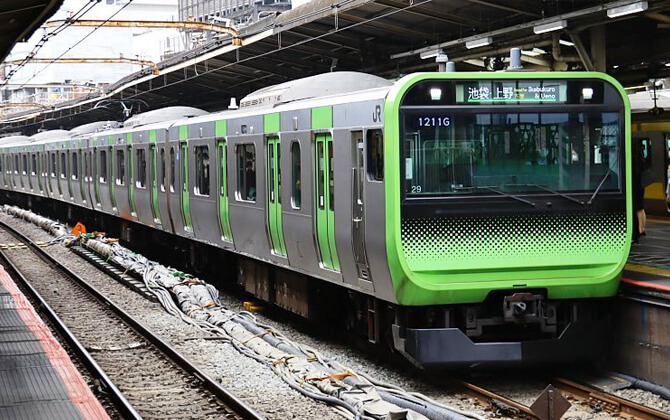
The Yamanote Line timetable runs from early morning until after midnight. Opening hours, opening times, working hours, and exact timings today vary slightly by station, so check the train schedule for your departure stop before you travel, especially if you need the first or last train.
| Service detail | Timings |
|---|---|
| Starting time | Service generally starts at 4:26 am, depending on station |
| Closing time | Service usually ends around 1:20 am the next day |
| Last train | Varies by station and direction, so check the route timetable before late-night travel |
| Rush-hour frequency | About every 2.5 minutes |
| Off-peak frequency | Usually every 3.5 to 4 minutes |
| Running time | About 1 hour for one complete loop |
| Service pattern | All trains stop at every station |
| Typical delays | When delays happen, they are usually no more than 5 minutes |
| Holiday schedule | Timetable changes may apply on December 31 and January 1 |
For schedule today planning, remember that the line runs often, but the close of service is not the same at every station. If you are traveling late, check the last train and the correct loop direction before entering the platform.
Yamanote Line Fares
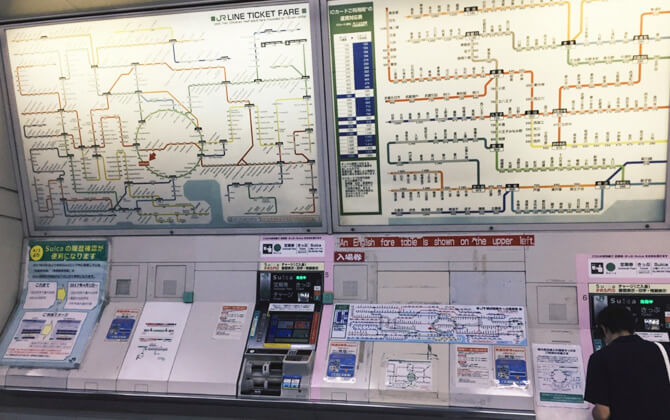
Yamanote Line fares are distance-based, so the ticket price depends on how far you travel. For paper tickets bought with cash, the cost starts at 150 yen, about $1.00, for 1–3 km (0.6–1.9 mi), then increases by distance.
Because the Yamanote Line is a loop, the fare relationship can feel different from a simple point-to-point route. Check the station fare chart for your destination and use it like a fare calculator before buying a ticket.
| Distance | Paper ticket fare | Approx. price in USD |
|---|---|---|
| 1–3 km (0.6–1.9 mi) | 150 yen | About $1.00 |
| 4–6 km (2.5–3.7 mi) | 170 yen | About $1.15 |
| 7–10 km (4.3–6.2 mi) | 180 yen | About $1.20 |
| 11–15 km (6.8–9.3 mi) | 210 yen | About $1.40 |
| 16–20 km (9.9–12.4 mi) | 280 yen | About $1.90 |
An IC card such as Suica or Pasmo is usually the most convenient option and normally gives slightly lower prices than paper tickets. Paper tickets are still available, and the Japan Rail Pass covers the Yamanote Line. If you are considering a day pass for wider travel, compare it with the normal fare for your planned rides.
Rules and Tips
The Yamanote Line is easy to use once you know the basics. Before boarding, confirm whether you need the Inner Loop or Outer Loop; choosing the wrong direction can add a long detour. Station signs, platform displays, and onboard announcements all help you follow the route.
Every train stops at every station, and stops are usually short. Stay alert and move toward the door a couple of stations before your destination. If you miss your stop, get off at the next station and take a train in the opposite direction instead of riding the full loop.
Use an IC card if possible. It keeps the ticket process simple and works well across Tokyo’s transport system. For a safer and smoother trip, avoid blocking doors, let passengers exit first, and keep luggage close to your feet during busy periods.
- Confirm the correct loop before boarding.
- Let passengers exit before you enter.
- Stand near the door if your stop is coming soon.
- Use English signs and station numbers if you do not read Japanese.
- Plan extra time at large stations such as Shinjuku, Shibuya, and Tokyo Station.
- Check the last train if you are traveling late at night.
Women-only cars are available on some trains during weekday morning rush hours. Bilingual signs also make the line friendly for visitors, so this quick guide is enough to get most first-time riders moving with confidence.
Parking
Most Yamanote Line stations sit in busy urban districts, so station parking is usually found in nearby public car parks rather than directly at the platform area. Options range from small local lots to large multi-storey facilities, with availability and price changing by location and time of day.
Parking charges in central Tokyo can be high, especially around Shibuya, Shinjuku, and Ikebukuro. Rates are usually charged by the hour and may include daily limits, so check parking charges per day before leaving your car for longer stays.
Parking apps and websites such as Times, Navitime, and Park24 can help you compare locations, check prices, and sometimes reserve a space before arrival. For cheaper access to public transport, park and ride facilities on the outskirts may be a better choice.
- Research parking options before you travel.
- Check real-time availability where possible.
- Expect higher parking charges in central Tokyo.
- Consider park and ride if city parking is too expensive.
- Ask your hotel whether guest parking is included or available for an extra charge.
Tips for parking near the Yamanote Line
If you need to park near the Yamanote Line, choose the station area carefully. Central hubs are convenient but often crowded and expensive, while less busy areas or outer park and ride locations may reduce stress and cost.
For short visits, bicycle parking can also be practical at many stations. It is often easier than driving into the busiest districts, especially when your final destination is only a short walk from the train.
History
The history of the Yamanote Line began on 1 March 1885, when the Nippon Railway Company opened service between Shinagawa Station in the south and Akabane Station in the north. Another section, between Ikebukuro and Tabata, opened on 1 April 1903. The two lines were merged and named the Yamanote Line on 12 October 1909.
The line was electrified on 16 December 1909, soon after the Ōsaki–Shinagawa section was double-tracked on 30 November. The loop was completed in 1925, when the double-tracked, electrified section between Kanda and Ueno opened on 1 November. That link created a north–south connection through Tokyo Station and the city’s business center. A parallel freight line was also completed that year along the inner side of the loop between Shinagawa and Tabata.
Before World War II, the Ministry of Railways did not allow private suburban railway companies to build new lines crossing the Yamanote Line from their terminal stations into central Tokyo. Many services therefore ended at Yamanote Line stations, helping new urban centers grow around major transfer points, especially Shinjuku and Ikebukuro.
The modern Yamanote Line took clearer shape on 19 November 1956, when it was separated from the Keihin-Tōhoku Line and received its own tracks along the eastern side between Shinagawa and Tabata. Yamanote trains still used Keihin-Tōhoku tracks at times, especially on holidays and during off-peak hours, until rapid services began on the Keihin-Tōhoku Line in 1988.
Later changes reshaped operations. A major explosion on the Yamanote Freight Line in Shinjuku in 1967 led to freight traffic being diverted to the Musashino Line. To relieve congestion, the freight line was then used by Saikyō Line and Shōnan-Shinjuku Line trains, as well as some limited express services such as the Narita Express.
Automatic train control arrived on 6 December 1981, followed by digital ATC on 30 July 2006. JR East introduced station numbering in the Tokyo area on 20 August 2016, giving Yamanote Line stations the prefix JY.
On 14 March 2015, the Ueno-Tokyo Line began service, linking the Tōhoku Main Line and Jōban Line to the Tōkaidō Main Line and easing pressure on the busy Ueno–Tokyo section. On 14 March 2020, Takanawa Gateway Station opened between Shinagawa and Tamachi, becoming the first new station on the line since Nishi-Nippori in 1971.
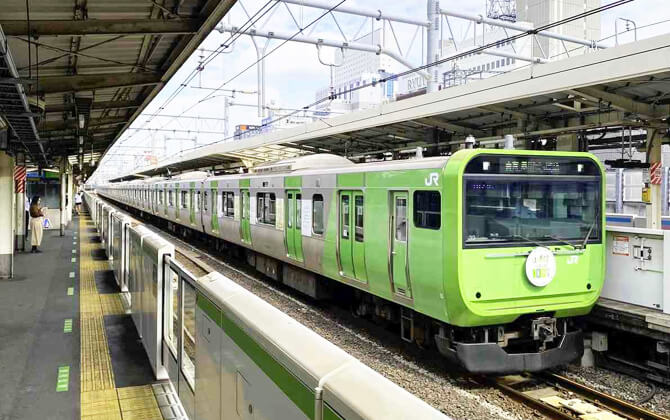
In August 2025, JR East announced government approval for an average fare increase of 7.1% from March 2026, the first blanket fare hike since 1987. On 16 September 2025, JR East also announced two specially designed E235 series trainsets to mark 100 years since the completed Yamanote loop route opened.
Future Extensions
The available information points to future expansion through operations and station-area development rather than a major new route extension. The clearest recent change was Takanawa Gateway Station, which opened in March 2020 between Shinagawa and Tamachi as part of JR East’s redevelopment of the former railyard area.
Automation is another major future change. JR East has been conducting trial runs for driverless operation on the line, with the goal of introducing the system around 2028. The company also announced plans to introduce ATACS and high-performance ATO on the Yamanote and Keihin-Tōhoku lines, along with a move toward single-man crew operation across the 2025–2031 period, depending on the system.
The Takanawa Gateway project is also tied to redevelopment around the surrounding yard. Land on the west side is intended for high-rise office development and an international business center connected with the Shinkansen and Haneda Airport.
JR East’s 2025 announcement of special E235 series trainsets for the 100th anniversary of the completed loop shows that future changes may include commemorative service and branding as well as infrastructure and operations.
Nearby Attractions
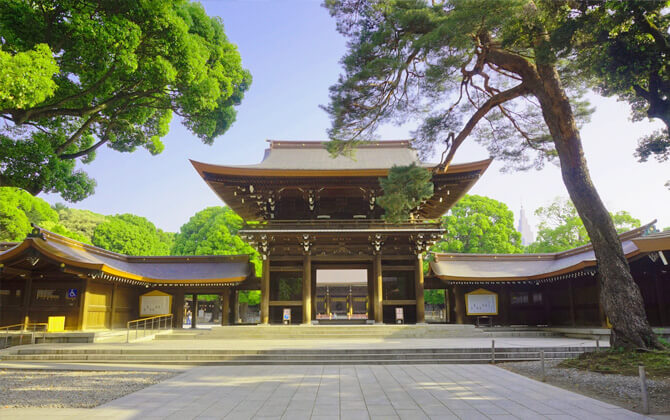
The JR Yamanote Line is one of the easiest routes for sightseeing across central Tokyo. You can reach culture, shopping, entertainment, and nightlife without changing trains often.
- Harajuku: Meiji Shrine, Omotesando Hills, and Takeshita Street are within easy reach of Harajuku Station.
- Shibuya: Shibuya Crossing, the Hachiko Statue, and Shibuya Center Street make this one of Tokyo’s most recognizable urban districts.
- Ikebukuro: Sunshine City offers shopping, an aquarium, an observatory, and indoor entertainment near the station.
- Ueno: Ueno Park, Ueno Zoo, and the Tokyo National Museum make the area strong for nature, history, and family-friendly visits.
- Akihabara: Electric Town is known for electronics, anime, manga, video games, maid cafes, and Yodobashi Akiba.
- Shinjuku: Shinjuku Gyoen National Garden and Kabukicho offer a mix of calm green space and energetic nightlife.
Other useful stops for visitors include Tokyo Station, Ebisu, Shinagawa, and Hamamatsuchō. That mix of stations makes the Yamanote Line a practical path train travelers can follow for a full day of sightseeing around central Tokyo.