The Toei Subway is a major rapid transit system in Tokyo, Japan, operated by the Tokyo Metropolitan Bureau of Transportation. It is one of Tokyo’s two subway operators, alongside Tokyo Metro, and runs four lines across 109.0 kilometers (67.7 miles) of route. The system opened with the Asakusa Line in 1960 and now serves key districts such as Shinjuku, Asakusa, Roppongi, and Ryogoku, with through services to several private railway networks.
| Key | Information |
|---|---|
| System | Toei Subway, operated by the Tokyo Metropolitan Bureau of Transportation |
| City | Tokyo, Japan |
| Lines | 4 lines: Asakusa, Mita, Shinjuku, and Ōedo |
| Route length | 109.0 kilometers (67.7 miles) |
| First opened | 1960, with the Asakusa Line |
| Daily ridership | About 2.85 million passengers per day as of 2023 |
| Main role | Public transport and city transport across Tokyo’s 23 special wards, with links to suburban railways and airports |
Toei Subway Map
Map of Toei Subway showing different lines and stations. Click on the map to enlarge it or download the Toei Subway map in PDF format.
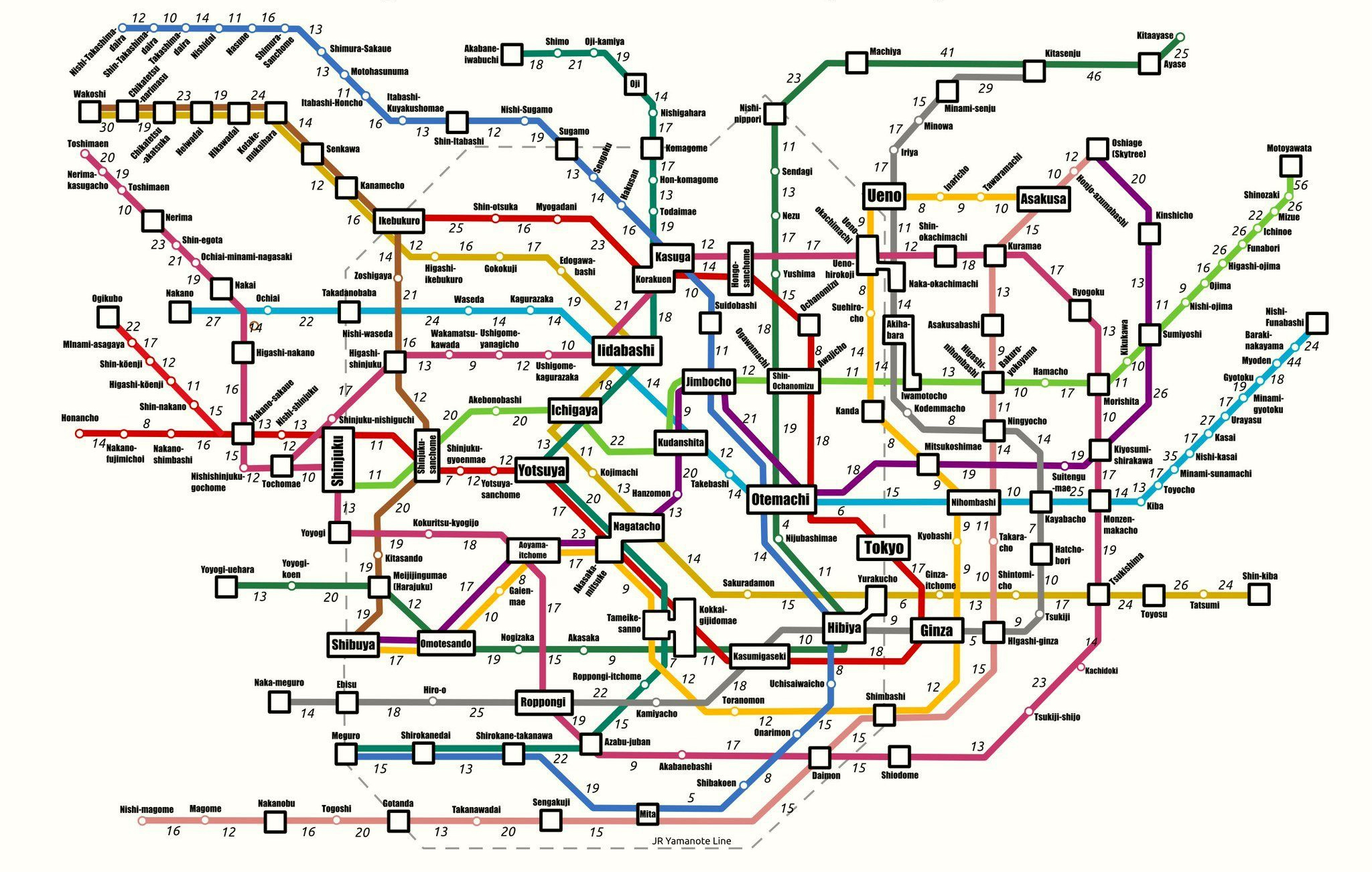 Map” width=”2048″ height=”1301″ />
Toei Subway Lines
The Toei Subway network has four lines: the Asakusa Line, Mita Line, Shinjuku Line, and Ōedo Line. Together, they form a useful route plan for central Tokyo and connect major stations including Shinjuku, Asakusa, Roppongi, and Ryogoku.
Although Toei Subway and Tokyo Metro are separate systems, transfers are possible under specific fare rules. In a few places, passengers can move between the networks without passing through a ticket gate, which makes the stations map easier to use on certain journeys.
| Line | Color | Route | Stations | Opened |
|---|---|---|---|---|
| Asakusa | Rose | Nishi-magome – Oshiage | 20 | 1960 |
| Mita | Blue | Meguro – Nishi-takashimadaira | 27 | 1968 |
| Shinjuku | Lime | Shinjuku – Moto-Yawata | 21 | 1978 |
| Ōedo | Magenta | Hikarigaoka – Tochōmae via Tochōmae, Roppongi, and Ryōgoku | 38 | 1991 |
Several lines also work as through routes with other railway networks. The Asakusa Line connects with Keikyū and Keisei-related lines, the Mita Line with Tokyu and Sōtetsu services, and the Shinjuku Line with the Keio network.
The system uses three different track gauges, which is unusual for rapid transit. It is one reason the Toei Subway can connect with a wide range of local transport and suburban rail services.
Toei Subway Hours
Toei Subway opening hours generally begin around 5:00 a.m., with service running until around midnight. The exact opening times, closing time, and last train depend on the line, direction, and station, so check the timetable before very early or late trips.
| Service detail | Timings |
|---|---|
| Typical starting time | Around 5:00 a.m. |
| Typical working hours | From early morning until around midnight |
| Last train and closing time | Usually between 11:30 p.m. and 12:30 a.m. the next day, depending on the route |
| Peak morning frequency period | About 7:30 a.m. to 9:30 a.m. |
| Peak evening frequency period | About 5:30 p.m. to 7:30 p.m. |
For timings today, use the train schedule or a route timetable for your exact station and direction. This matters most if you are traveling with luggage, catching an airport train, or planning a late-night path train across multiple systems.
Fares, Tickets and Cards
Toei Subway fare options include single tickets, day passes, combined subway tickets, and IC cards. The best ticket price depends on how far you travel, whether you transfer to Tokyo Metro, and how many rides you plan to take in one day.
| Ticket | Recommended for | Price |
|---|---|---|
| Toei 1Day Pass | One-day trips on Toei Subway, Toei Bus, Tokyo Sakura Tram, and Nippori-Toneri Liner | Adult: 700 yen (about US$4.70); Child: 350 yen (about US$2.30) |
| Tokyo Subway Ticket | Visitors from outside Japan and eligible domestic visitors who want unlimited Toei Subway and Tokyo Metro travel for 24, 48, or 72 hours | 24 hours: Adult 1,000 yen (about US$6.70), Child 500 yen (about US$3.30); 48 hours: Adult 1,500 yen (about US$10), Child 750 yen (about US$5); 72 hours: Adult 2,000 yen (about US$13.30), Child 1,000 yen (about US$6.70) |
| 1Day Ticket for Toei Subway and Tokyo Metro | One-day unlimited travel on both subway networks | Adult: 1,100 yen (about US$7.30); Child: 550 yen (about US$3.70) |
| Tokyo Combination Ticket | One-day travel on Toei Subway, Toei Bus, Tokyo Sakura Tram, Nippori-Toneri Liner, Tokyo Metro, and JR lines in Tokyo’s 23 wards | Adult: 1,720 yen (about US$11.50); Child: 860 yen (about US$5.70) |
| Greater Tokyo Pass | Five-day travel on railways, trams, and Toei buses operated by 13 companies in the Kanto area | Adult: 6,500 yen (about US$43.30); Child: 3,250 yen (about US$21.70) |
| IC Cards | Longer stays and regular travel across Toei services | Starts from 1,000 yen (about US$6.70), including a 500 yen deposit (about US$3.30) |
The Toei 1Day Pass is valid only on the day of use. Advance tickets are valid for one day within six months of purchase, while same-day tickets are valid only on the day of sale.
The Tokyo Subway Ticket gives unlimited access to all Toei Subway and Tokyo Metro lines for 24, 48, or 72 hours from the travel starting time during the valid period. A QR ticket version is also available, letting passengers ride with a QR code within the selected time period.
Tokyo Metro and Toei Subway use different initial fare settings. If you transfer between the two systems with a regular paper ticket, you may need another ticket or an additional fare. IC cards are usually the simplest option, and they also help when you want to compare cost with a fare calculator.
Connections to Other Systems
Toei Subway is separate from Tokyo Metro, but the two networks are closely connected. Passengers using prepaid rail passes or IC cards can transfer more easily, while regular paper ticket users may need a special transfer ticket or a second fare.
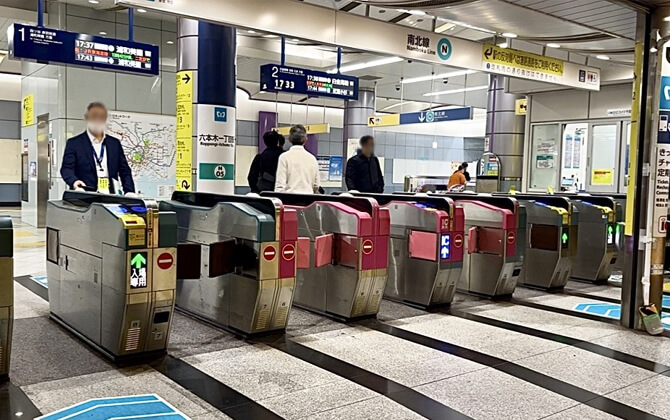
Two transfer points allow passengers to change between Toei Subway and Tokyo Metro without passing through a ticket gate.
| Station | Details |
|---|---|
| Meguro to Shirokane-Takanawa | The Mita Line shares platforms with the Tokyo Metro Namboku Line on this section. |
| Kudanshita | The Shinjuku Line shares a platform with the Tokyo Metro Hanzomon Line. |
Through services also extend Toei Subway trains beyond the core subway route. This is especially helpful for transportation in Tokyo and nearby areas, including commuter trips and airport access.
| Line | Through services |
|---|---|
| Asakusa Line | Keikyu Kurihama Line and Keikyu Airport Line via the Keikyu Main Line |
| Asakusa Line | Keisei Oshiage Line, Keisei Main Line, Keisei Narita Airport Line, Hokusō Line, Keisei Higashi-Narita Line, and Shibayama Railway |
| Mita Line | Tokyu Meguro Line |
| Shinjuku Line | Keio New Line and Keio Sagamihara Line via the Keio Line |
These connections make the Toei Subway useful beyond central Tokyo, including links toward Haneda Airport and Narita Airport on the Asakusa Line.
Airport Connections
The Toei Asakusa Line is the main airport route in the Toei Subway system. Through services with the Keikyu and Keisei networks make it possible to reach Haneda Airport and Narita Airport without changing lines in many cases.
For Haneda Airport, Keikyu trains run through onto the Asakusa Line. Central Tokyo stops such as Shimbashi and Ginza can be reached in about 30 minutes, and the Airport Limited Express mentioned in the source material reaches Haneda Airport’s domestic terminal in 35 minutes.
From Haneda, follow signs for Keikyu trains bound for Shinagawa, Higashi-ginza, and Asakusa. Check the platform and departure board before boarding, especially if you are using the airport train schedule during busy hours.
For Narita Airport, the Asakusa Line connects with the Keisei network. From Oshiage, travelers can use the Keisei Main Line or Narita Sky Access Line. Access Express trains can reach Narita Airport Terminal 1 in as little as 51 minutes from Oshiage, while typical travel from Oshiage to Narita is about 55 to 75 minutes depending on service.
A limited express ticket is not needed for trains that connect to the Asakusa Line, including Access Express services. Skyliner trains do not connect to the Asakusa Line and require a limited express ticket.
If you are not using a PASMO or Suica IC card, you may need to buy a transfer ticket or pay a separate fare when changing lines.
Parking near the Metro
Parking near Toei Subway stations depends heavily on the station area. Around Shinjuku, the parking information provided includes 190 spaces with hourly parking charges. Some restrictions apply from November 18, 2024 to March 23, 2025 because of construction work.
Station access in the Shinjuku area is convenient. Shinjuku Station is about 6 minutes on foot from the JR Yamanote, Chuo, Saikyo, Odakyu, and Keio lines. Nishi-Shinjuku Station on the Tokyo Metro Marunouchi Line is about 2 minutes away, Tochomae Station on the Toei Subway Ōedo Line is about 1 minute away, and Shinjuku Station on the Toei Subway Shinjuku Line is about 11 minutes away.
For questions about this parking facility, contact Repark Service Co., Ltd. Parking Management Office at 0120-933-900. The office is located by the 1st floor exit gate and is open from 7:00 to 23:00, with phone support available 24 hours.
| Parking option | Details |
|---|---|
| Roppongi Hills parking | Free parking is available for customers based on purchase amount. With 5 points or more, customers receive 2 hours free; 10 points or more gives 4 hours free; 30 points or more gives 24 hours free. The maximum is capped at 30 points. |
| AXIS Building parking | Paid underground parking near Roppongi Station. The fee is 300 yen per 30 minutes (about US$2), and the facility operates from 8:00 to 22:00. |
| Nearby station parking access | Access is convenient from stations such as Roppongi, Azabu-juban, and Tochomae. |
Parking charges per day vary by facility and benefit rules. The AXIS Building parking facility also has vehicle size and weight limits, and its underground location helps protect cars from wind, rain, and ultraviolet rays.
Rules and Tips
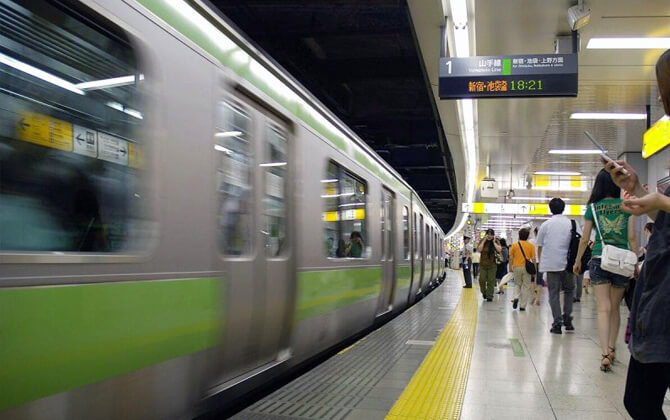
Toei Subway accepts PASMO and Suica, including Mobile Suica, at all stations. These IC cards also work with other transport IC cards nationwide, which makes public transport transfers easier.
Set your phone to silent mode on trains and avoid phone calls inside the car. Near courtesy seats on crowded trains, passengers are asked to turn phones off.
If you travel with a baby stroller, keep the child strapped in, hold the stroller firmly, and use the stopper when parked on platforms or inside trains. Take your child out before using escalators or stairs, and do not rush onto a train that is about to depart.
Inside stations, do not walk on escalators. Every station has a Universal Access Toilet with accessibility space, handrails, and ostomate washing facilities. Locations can be checked on the Bureau of Transportation’s 3D map.
Toei Subway is designed with safety in mind. The system uses earthquake-resistant structures, seismometers on all subway lines, and service restrictions during strong shaking when needed. Stations and trains also include fire alarms, sprinklers, emergency generators, exit signs, fire extinguishers, flame-resistant materials, and flood-protection measures.
If a fire occurs on a train, move to a safe car and contact crew through the intercom. In principle, the train proceeds to the next station, where passengers can evacuate after arrival.
Follow station numbers, line symbols, and platform signs carefully. Tokyo stations can be busy, so allow extra running time when changing lines.
Services
Toei Transportation provides several passenger services across the subway, bus, tramway, and other local transport networks. Ticket machines and booths at many stations support multiple languages, and IC card charging is available at machines in all stations.
Free Wi-Fi is available at major stations and on selected train and bus services. Interpreter support is available by telephone at stations, and concierges are deployed at major stations that receive many foreign visitors.
Accessibility services include elevators, multipurpose toilets, wheelchair spaces, priority seating, braille guidance blocks, emergency call points, and station staff call points on platforms.
Toei ticket and pass products also connect the subway with Toei Bus, Tokyo Sakura Tram, the Nippori-Toneri Liner, Tokyo Metro, JR lines within Tokyo’s 23 wards, and other railways covered by selected passes. For many visitors, a day pass or IC card is the easiest way to keep the fare simple.
History
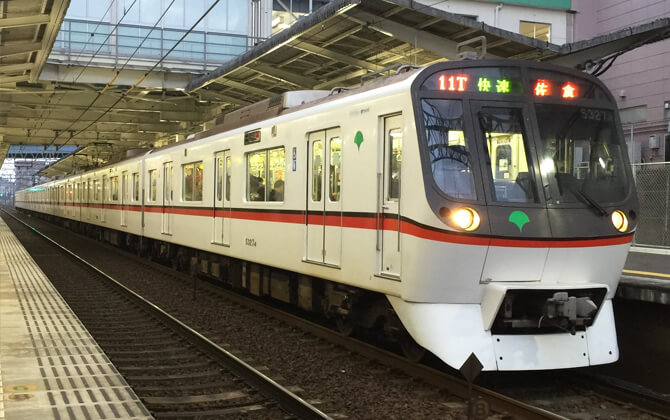
The history of the Toei Subway goes back to 1920, when Tokyo City announced its first formal subway development proposal through Tokyo City Notification No. 2 of 1920. The plan designated seven routes and reflected the city’s policy of public ownership and municipal operation of urban transport.
The Great Kantō Earthquake in 1923 severely damaged central Tokyo and changed planning priorities. In 1925, the Ministry of Home Affairs issued Notification No. 56 of 1925, formally designating five routes. Tokyo City secured operating licenses for four of them but could not obtain final approval to begin construction because of heavy debt from earthquake reconstruction.
During that period, the only subway line in operation was what is now the Ginza Line, built and run by two private companies. In 1941, after the outbreak of World War II, the Japanese government integrated those companies to form the Teito Rapid Transit Authority, later the predecessor of Tokyo Metro.
In the 1950s, rapid population growth and worsening road traffic reduced the effectiveness of existing city transport, including trams. In 1954, the Tokyo Metropolitan Assembly adopted a resolution to build a public subway system alongside the existing network.
Construction began in 1958 after the Tokyo Metropolitan Government and the Tokyo Metropolitan Bureau of Transportation obtained a license for the first line between Kuramae and Magome. The first Toei Subway section opened on the Asakusa Line in 1960, with through services to the Keisei Line.
The network expanded with the Mita Line in December 1968, the Shinjuku Line in December 1978, and the Ōedo Line in December 1991. The Mita Line was later extended between Meguro and Mita stations, and the Ōedo Line entered full operation.
The subway carried an average of 2.34 million passengers per day in 2008 and reported a profit of 12.2 billion yen in 2009 (about US$81.3 million). In FY2024, daily ridership remained substantial, including 1,480,760 passengers on the Shinjuku Line and 1,777,914 on the Ōedo Line.
Future Extensions
The main future extension discussed for the Toei Subway is the Ōedo Line expansion beyond Hikarigaoka toward Oizumi-Gakuen-cho. The line already has extension-related facilities beyond Hikarigaoka, and land has been secured in stages along the planned route.
The planned route is about 4 kilometers (2.5 miles) long and is intended to run under roads. Three proposed stations are Doshida, Oizumimachi, and Oizumi-Gakuen-cho.
| Station | Details |
|---|---|
| Doshida | Proposed station on the Ōedo Line extension route beyond Hikarigaoka |
| Oizumimachi | Proposed station on the planned route toward Oizumi-Gakuen-cho |
| Oizumi-Gakuen-cho | Proposed terminal area for the extension currently discussed |
Some parts of the route area have already been prepared, including transportation plazas and land readjustment areas intended to reduce construction and compensation costs. Nerima Ward has supported the project for years through an extension promotion fund, signage preparation, and station-area planning.
Cost remains the major obstacle. Recent estimates place the project at about 150 billion yen (about US$1.0 billion), much higher than earlier projections, and profitability is still a concern. Officials have also considered a possible future continuation beyond Oizumi-Gakuen-cho toward Saitama Prefecture, but that section remains unresolved.
If the extension is built, Nerima Ward expects shorter travel times to major destinations such as Shinjuku and Ikebukuro, along with stronger development around the line.
Nearby Attractions
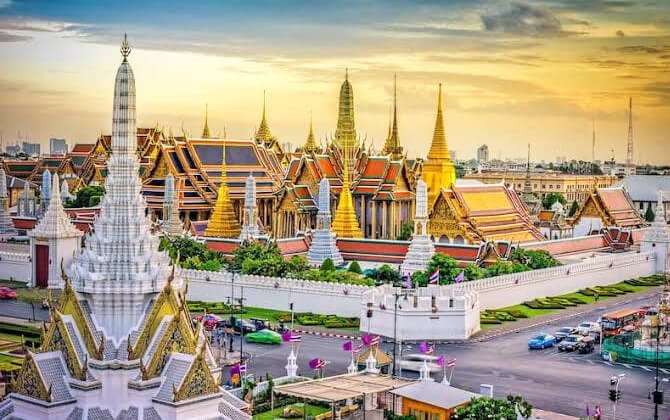
Toei Subway stations give easy access to many well-known Tokyo attractions. Around Shinjuku, visitors can reach the Tokyo Metropolitan Government Building Observation Decks, the Tokyo Metropolitan Government Buildings, and Tokyo Night & Light.
The Asakusa Line is useful for classic Tokyo sightseeing. It connects the Asakusa area, Kaminarimon Gate, Tokyo Skytree, Sumida Park, and Sumida Aquarium, making it a practical route for short city walks.
Other places reachable by Toei Subway include Tokyo Tower and Zojoji Temple on the Mita Line, as well as Ryogoku Kokugikan and the Edo-Tokyo Museum near Ryogoku Station on the Ōedo Line. For shopping and city walks, the network also connects areas such as Ginza, Nihonbashi, Shibuya, and Ueno Park.
| Station | Details |
|---|---|
| Shinjuku | Tokyo Metropolitan Government Building Observation Decks and Tokyo Night & Light |
| Asakusa | Kaminarimon Gate and the Senso-ji Temple area |
| Oshiage | Tokyo Skytree, Sumida Aquarium, and the surrounding Sumida area |
| Ryogoku | Ryogoku Kokugikan and Edo-Tokyo Museum |
| Ginza, Nihonbashi, Shibuya, and Ueno Park | Shopping areas, museums, landmarks, and lively streets reachable via the Toei Subway network and connecting transport |