The Sapporo Municipal Subway is the rapid transit system serving Sapporo, Hokkaido, Japan. Operated by the Sapporo City Transportation Bureau, it is the only subway system on Hokkaido and the only subway in Japan that runs entirely on rubber-tired trains. The network has three lines, 49 stations, and a total route length of 48 km (29.8 miles). Opened in 1971 before the 1972 Winter Olympics, it now forms a core part of public transport and city transport in Sapporo, carrying about 630,000 passengers per day in 2024.
| Key | Information |
|---|---|
| System | Sapporo Municipal Subway |
| Operator | Sapporo City Transportation Bureau |
| Lines | Namboku Line, Tozai Line, Toho Line |
| Stations | 49 stations |
| Total length | 48 km (29.8 miles) |
| Main interchange | Odori Station |
| Daily ridership | About 630,000 passengers in 2024 |
| Payment | Paper ticket, SAPICA card, and compatible IC cards |
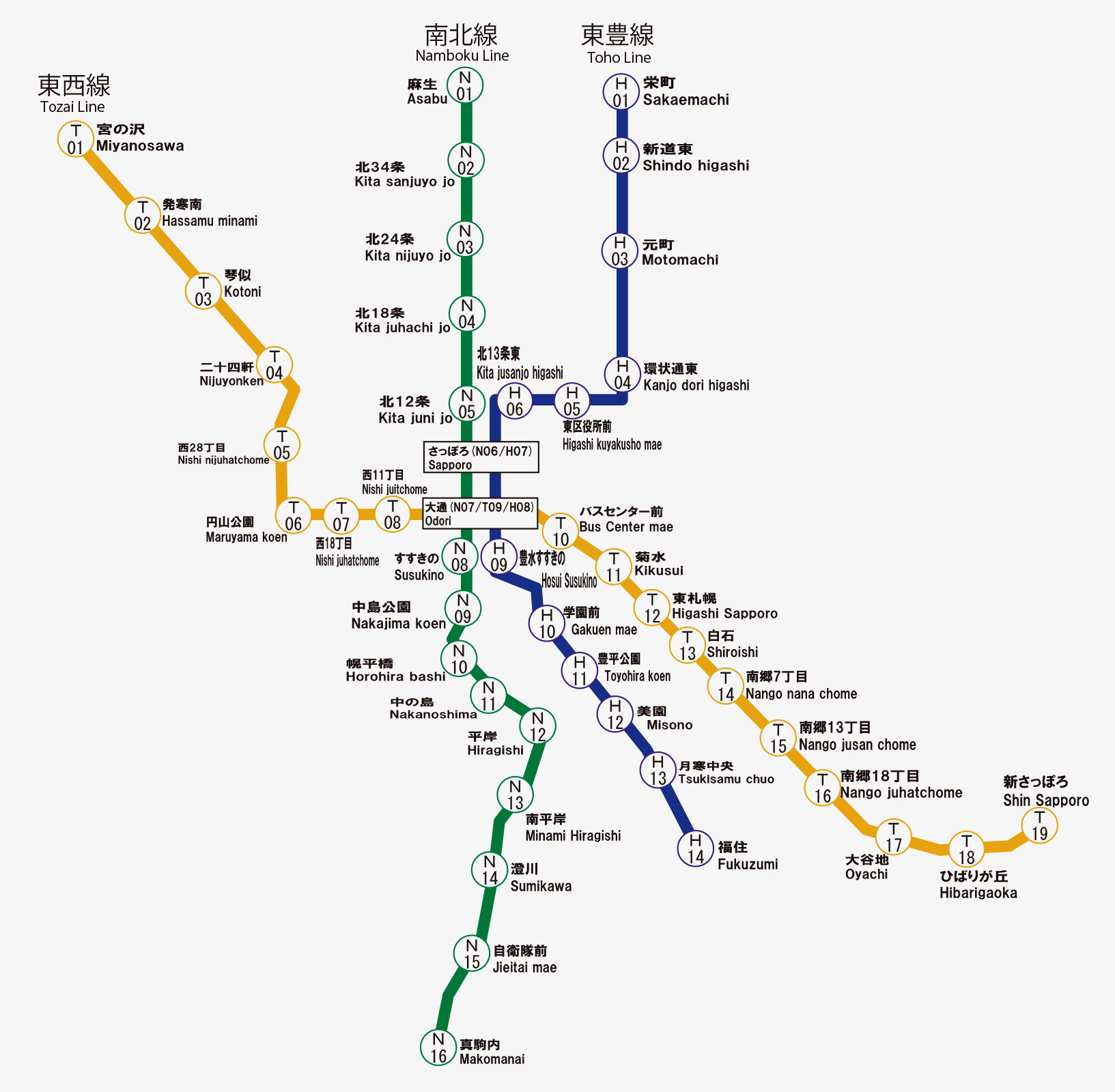
Sapporo Municipal Subway Map
Map of Sapporo Municipal Subway showing different lines and stations. Click on the map to enlarge it or download the Sapporo Municipal Subway map in PDF format.
Sapporo Municipal Subway Lines
The Sapporo Municipal Subway has three lines: the green Namboku Line, the orange Tozai Line, and the blue Toho Line. Together, they create a simple route plan for crossing the city north to south, east to west, and through the northeast corridor.
All three lines meet at Odori Station, the main transfer point in the system. The Namboku and Toho lines also connect with JR Hokkaido main lines at Sapporo Station. Streetcar and tramway connections are available at Odori and Susukino, which helps when combining subway rides with local transport above ground.
Most of the network is underground. The main exception is the section of the Namboku Line south of Hiragishi Station, which is covered rather than fully underground. For trip planning, the stations map and stations list are especially useful because the lines share a compact city-center interchange.
| Line | Name | First opened | Length | Stations |
|---|---|---|---|---|
| Namboku Line | North-South Line | 1971 | 14.3 km (8.9 miles) | 16 |
| Tozai Line | East-West Line | 1976 | 20.1 km (12.5 miles) | 19 |
| Toho Line | Higashi-Toyohira Line | 1988 | 13.6 km (8.5 miles) | 14 |
All lines use rubber-tired trains running on two flat roll ways, guided by a single central rail. It is one of the features that makes the Sapporo system stand out from other subway networks in Japan.
Sapporo Municipal Subway Hours
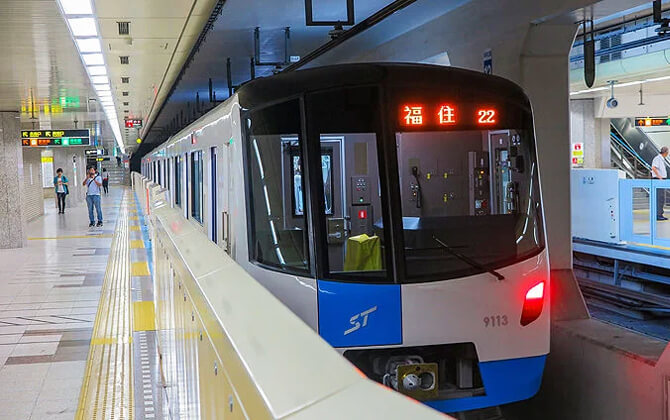
The Sapporo Municipal Subway operates daily and does not run 24 hours. General operating hours are about 6:00 to 24:00, while some information describes the opening hours as 6:15 until midnight. For practical trip planning, treat the starting time as early morning and the closing time as around midnight.
Station-to-station running time is usually quick, with many rides taking roughly 2 to 3 minutes between stops. Train frequency is highest during rush hours and remains regular through the rest of the day.
| Service detail | Timings |
|---|---|
| Opening times | About 6:00, with some information listing 6:15 |
| Working hours | Daily until around 24:00 |
| Closing time | Around midnight |
| Last train | Plan around the midnight close; check the station timetable for the exact last train |
| Morning rush frequency | Every 3 to 4 minutes |
| Evening rush frequency | Every 5 minutes |
| Rest-of-day frequency | Every 5 to 7 minutes |
| Typical running time between stations | About 2 to 3 minutes |
For timings today, schedule today, or a specific train schedule, check the station timetable before traveling, especially if you are taking the first or last train. Route timetable information is also useful when changing lines at Odori or Sapporo Station.
Fares, Tickets and Cards
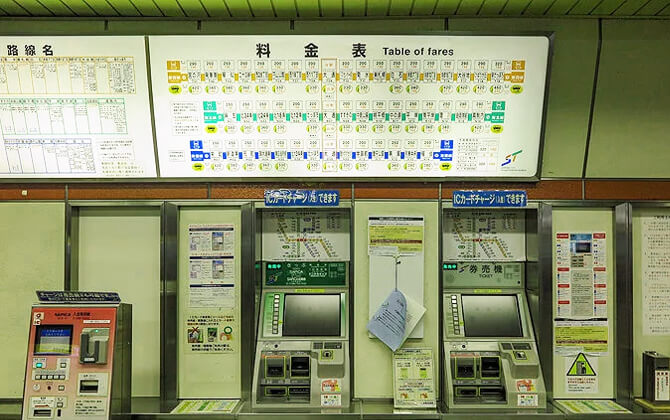
Sapporo Municipal Subway fare is based on distance. A single ride costs ¥210 to ¥380, about US$1.40 to US$2.55. Station fare tables show the ticket price for each trip and work as a practical fare calculator before you buy.
Tickets and cards are sold at station ticket-vending machines. The machines accept cash, and some also accept credit cards. If you plan several rides in one day, a pass can reduce the total cost.
The One-Day Ticket for Subway Use gives unlimited subway rides for one day. It costs ¥830 for adults, about US$5.55, and ¥420 for children, about US$2.80.
The Donichika Ticket is a one-day subway day pass for Saturdays, Sundays, national holidays, and the year-end/New Year holiday period from December 29 to January 3. It costs ¥520 for adults, about US$3.45, and ¥260 for children, about US$1.75. Both day tickets are sold at subway ticket-vending machines and commuter pass sales offices.
SAPICA is the local IC card for Sapporo. It can be used on the municipal subway and streetcar systems, as well as on JR Hokkaido Buses, Jotetsu Buses, and Hokkaido Chuo Buses. Tap the card at the ticket gate or fare box, then recharge it when needed.
- SAPICA Open IC Card: for adults and transferable among users. The price is ¥2,000, about US$13.35, including ¥1,500, about US$10.00, usable for transportation and a ¥500 deposit, about US$3.35.
- SAPICA Registered IC Card: for the named cardholder only. Registration requires the user’s name, date of birth, gender, and telephone number. Cards for children require proof of identity. Lost cards can be reissued for a ¥500 handling charge, about US$3.35, and a ¥500 deposit, about US$3.35. The card price is ¥2,000, about US$13.35, including ¥1,500, about US$10.00, usable for transportation and a ¥500 deposit, about US$3.35.
Other compatible IC cards can also be used on Sapporo municipal transportation, including Kitaca, Suica, PASMO, manaca, TOICA, PiTaPa, ICOCA, Hayakaken, nimoca, and SUGOCA.
| Ticket or card | Price |
|---|---|
| Single ride fare | ¥210 to ¥380, about US$1.40 to US$2.55 |
| One-Day Ticket for Subway Use | Adults ¥830, about US$5.55; children ¥420, about US$2.80 |
| Donichika Ticket | Adults ¥520, about US$3.45; children ¥260, about US$1.75 |
| SAPICA card | ¥2,000, about US$13.35 |
Connections to Other Systems
The Sapporo Municipal Subway is closely integrated with other transport services in the city. Odori Station links all three subway lines, while Sapporo Station connects the Namboku and Toho lines with JR Hokkaido services. The subway also connects with the streetcar network at Odori and Susukino, so trams can be part of a short city-center trip.
Bus transfers are available as well. Odori Station is connected by an underground walkway to Bus Center-Mae Station and the nearby bus center. Sapporo Station is the main hub for city buses and highway buses, making it one of the most important points for public transportation in Sapporo.
Ticketing is partly shared across systems. Kitaca, issued by JR Hokkaido, can be used on the Sapporo Municipal Subway, and so can other IC cards in the Nationwide Mutual Usage Service, such as Suica and Pasmo. SAPICA, however, cannot be used on other rail networks.
Central underground shopping corridors connect with exits at Sapporo Station, Susukino Station, and Odori Station. That makes transfers more comfortable in winter and gives passengers an easy way to move through the city center without going outside.
Airport Connections
Sapporo is served by Okadama Regional Airport and New Chitose Airport. Both can be reached using the subway network with rail or bus connections, though the route depends on the airport.
Okadama Airport is relatively close to central Sapporo. It is accessible via Sakae Station on the Toho Line, about 1.2 km (0.75 miles) away. Bus services also link the airport with Odori Station and Sapporo Central Station, while Hokkaido Chuo Bus serves Sakae, Shinoro, and Asabu stations.
New Chitose Airport, the larger airport on Hokkaido, has a railway station on the JR Chitose Line. Trains run to Sapporo Station, where passengers can transfer to the Namboku and Toho subway lines. The trip from New Chitose Airport to Sapporo Station takes about 36 to 39 minutes and costs ¥1,070, about US$7.15.
Bus services, including Hokkaido Chuo Bus, also connect New Chitose Airport with Sapporo and Asabu subway stations. For most travelers, Sapporo Station is the main airport rail transfer point, while Odori remains the central subway interchange.
Sapporo Municipal Subway Parking
The Sapporo Municipal Subway offers park-and-ride facilities at almost all stations, which is useful if you are combining car travel with the train. Station parking can save time when city-center roads are busy.
Parking charges vary from ¥60 to ¥170, about US$0.40 to US$1.15. Monthly parking passes are also available for passengers who use the service regularly. The provided parking information lists the basic fee range, but not separate parking charges per day.
If you plan to park and ride, factor in the subway schedule as well. Trains generally run from about 6:15 until midnight, with shorter waits during rush hours and 5 to 7 minute intervals through much of the day.
Tips and Rules
Using the Sapporo Municipal Subway is easy, but a few simple habits make the trip smoother. Keep your ticket or card with you until the ride is complete, and check the route map before entering the gates.
Ticket-vending machines are available at stations, and English can be selected on the screen. To buy a ticket or one-day card, insert the required fare, choose the ticket type and travel section, then take your ticket and change. Child and welfare buttons are available when needed.
If you are using SAPICA, choose the SAPICA charge button, select open or registered card, pick the recharge amount, insert cash, and take your card and change. Tap the card at the reader when entering and leaving.
For paper tickets, insert the ticket into the gate when entering and take it back if it is returned. You will need it again at your destination. When leaving, insert the same ticket into the exit gate.
If your ticket does not cover the full distance, use the fare adjustment machine near the gates. It shows the extra amount due. After payment, you receive an adjusted-fare ticket and can exit normally.
At Sapporo Station, the Namboku Line and Toho Line are not connected inside the same paid area. To transfer there, use the yellow transfer ticket gate, take the ticket that comes out, and re-enter for your next line within 30 minutes.
For a direct transfer from the subway to a streetcar or bus, buy a transfer ticket at the machine. The ticket is returned at the gate and should be placed in the fare box when you get off the streetcar or bus.
- Keep your ticket, pass, or card until the end of your trip.
- Check the route and fare before buying a ticket.
- Use English screens on vending machines if needed.
- Allow extra time when transferring at Sapporo Station.
- The system is designed to be safe and straightforward, but winter crowds can still slow movement through busy stations.
History
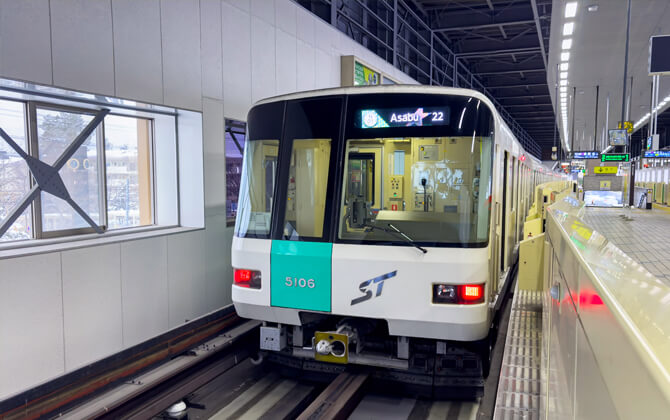
The history of the Sapporo Municipal Subway began with the city’s rapid growth in the 1960s and the need for reliable urban transport in a snowy, cold climate. A permit application was submitted in March 1968, and construction started the following year.
The first section, the Namboku Line, opened in December 1971, just before the 1972 Sapporo Winter Olympics. It became the foundation of the city’s modern public transport system.
Expansion continued over the following decades. The Tozai Line began service in 1976, the Namboku Line was extended in 1978, the Tozai Line reached Shin-Sapporo in 1982, and the Toho Line opened in 1988. Further extensions followed in 1994 and 1999, creating the present three-line network.
Fare and ticketing systems changed too. SAPICA was introduced on all subway lines in January 2009, and Suica and other compatible transport cards were accepted from June 2016.
Safety improvements were added across the network. Movable platform fences began to be installed in 2008 and were completed on all three lines by 2016.
Future Extensions
Sapporo is considering a possible subway expansion as part of its fiscal year 2026 budget review. The discussion is linked to bus service reductions caused by a shortage of bus drivers, which has affected everyday transportation in the city.
The 2026 general budget is expected to exceed ¥1.3 trillion, about US$8.67 billion, for the first time. Funding may support a feasibility review of network changes, including route studies, station planning, and early coordination work. Public safety improvements are also being prioritized within the same budget framework.
At this stage, the plan is about examination, not construction. Possible funding sources include local taxes, national grants, and municipal bonds. The next signs to watch would be study terms, council discussions, and any requests for proposals.
If the review shows strong ridership potential, better travel times, and acceptable costs, the project could move toward detailed design. Early work might include surveys, environmental assessments, and route comparisons. Risks remain, including construction cost inflation, utility relocation, and staffing shortages.
For passengers, an extension could improve reliability, reduce transfers, and strengthen links with existing rail and bus services. For the city, it could support wider transport planning across Hokkaido as travel demand changes.
Nearby Attractions
The Sapporo Municipal Subway is handy for reaching many of the city’s main attractions. Central stations are close together, so it is easy to combine a short ride with walking.
| Station | Details |
|---|---|
| Odori Station | Best for Odori Park, Sapporo TV Tower, Sapporo Clock Tower, Tanukikoji Shopping Arcade, and Nijo Fish Market. |
| Sapporo Station | Useful for major shopping and dining areas, including JR Tower, Daimaru, Stellar Place, and the underground passage to the JR station. |
| Hosui-Susukino Station and Susukino Station | Convenient for the city’s nightlife and entertainment district. |
| Nakajima-Koen Station | Serves Nakajima Park, a large central park with walking paths and seasonal scenery. |
| Maruyama-Koen Station | Nearest subway stop for Maruyama Zoo, reached by walking through the park. |
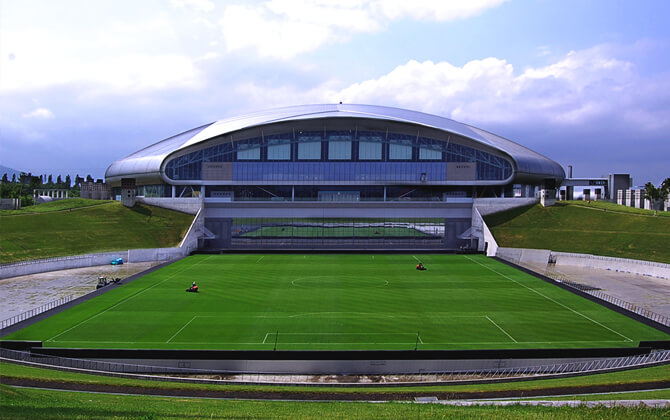
| Fukuzumi Station | Convenient for Sapporo Dome. |
| Sakaemachi Station | Useful for Sapporo Community Dome. |
| Higashi-Kuyasho-Mae Station | Useful for the Sapporo Beer Museum. |
| Tsukisamu-Chuo Station | Useful for Tsukisamu Gymnasium. |
For sightseeing, Odori Station and Sapporo Station are the two most practical bases. They keep the route simple and give quick access to central Sapporo by subway.