The Chiba Urban Monorail is a suspended urban transport system in Chiba, Japan, and one of the city’s most distinctive ways to travel. Operated by Chiba Urban Monorail Co., Ltd., it is a two-line SAFEGE-type system and, at 15.2 kilometres (9.4 miles), the world’s longest suspended monorail. The first section opened in 1988, and the network reached its current layout in 1999. Today, it links central Chiba with surrounding districts and key destinations through elevated stations, regular service, and a route that doubles as both practical public transport and a local attraction. Passengers can buy a ticket from station machines or use PASMO and Suica cards, with trains running from early morning until around midnight.
| Key | Information |
|---|---|
| System type | Suspended SAFEGE-type urban monorail |
| Location | Chiba, Japan |
| Operator | Chiba Urban Monorail Co., Ltd. |
| Network length | 15.2 kilometres (9.4 miles) |
| Lines | 2 |
| First opening | 1988 |
| Current network completed | 1999 |
| Payment | Station ticket machines, PASMO, Suica |
| Opening hours | From early morning until around midnight |
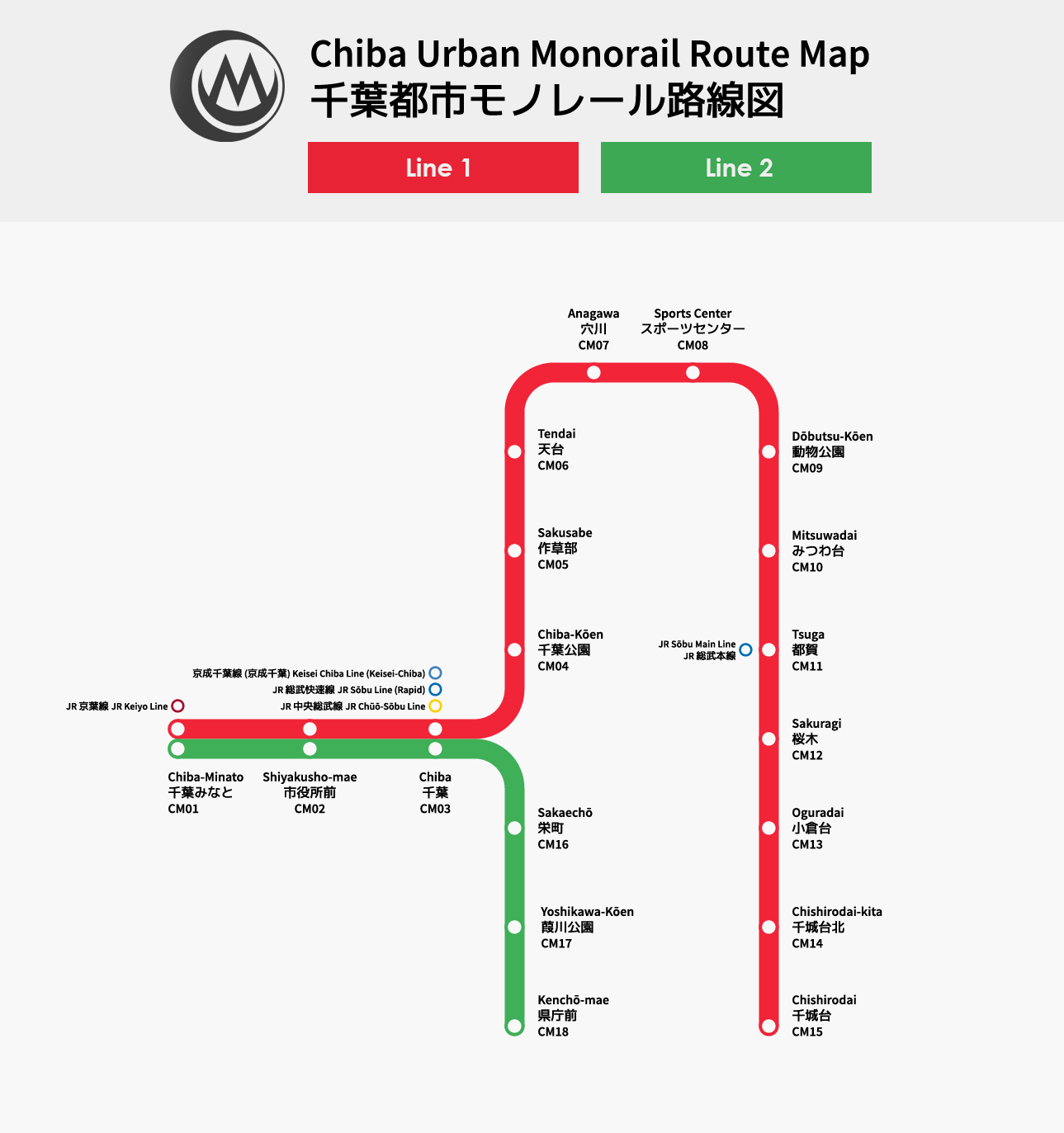
Chiba Chiba Urban Monorail Map
Map of Chiba Urban Monorail showing different lines. Click on the map to enlarge it or download the Chiba Metro map in PDF format.
Lines and Stations
The Chiba Urban Monorail system has two lines. Together, Line 1 and Line 2 form the current route plan across the city, with elevated stations and regular service linking central Chiba, the port area, and suburban districts. If you are looking for a stations map or stations list, the two routes below cover the full network.
Line 1
Line 1 runs between Chibaminato Station and Kenchō-mae Station. The route is 3.2 kilometres (2.0 miles) long and includes four intermediate stops.
| Station | Details |
|---|---|
| CM01 Chibaminato | Line 1 terminus |
| CM02 Shiyakusho-mae | Intermediate station |
| CM03 Chiba | Major interchange station |
| CM16 Sakaechō | Intermediate station |
| CM17 Yoshikawakōen | Intermediate station |
| CM18 Kenchō-mae | Line 1 terminus |
Line 2
Line 2 connects Chibaminato Station and Chishirodai Station. This route is 13.5 kilometres (8.4 miles) long and has 13 intermediate stops.
| Station | Details |
|---|---|
| CM01 Chibaminato | Line 2 terminus |
| CM02 Shiyakusho-mae | Intermediate station |
| CM03 Chiba | Major interchange station |
| CM04 Chibakōen | Intermediate station |
| CM05 Sakusabe | Intermediate station |
| CM06 Tendai | Intermediate station |
| CM07 Anagawa | Intermediate station |
| CM08 Sports Center | Intermediate station |
| CM09 Dōbutsukōen | Intermediate station |
| CM10 Mitsuwadai | Intermediate station |
| CM11 Tsuga | Interchange station |
| CM12 Sakuragi | Intermediate station |
| CM13 Oguradai | Intermediate station |
| CM14 Chishirodai-Kita | Intermediate station |
| CM15 Chishirodai | Line 2 terminus |
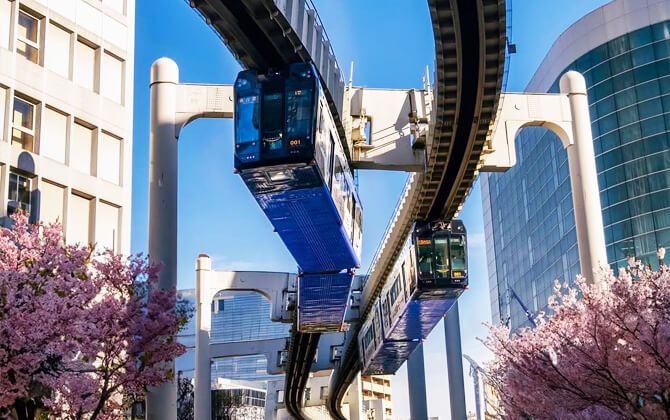
The system opened in stages. The first section of Line 2, between Sports Center and Chishirodai, opened on March 28, 1988. It was extended between Chiba Station and Sports Center on June 12, 1991. Line 1 started between Chiba-Minato and Chiba on August 1, 1995, and the extension to Kenchō-mae opened on March 24, 1999.
Fare and Tickets
Fares are calculated by distance. The standard fare starts at 200 yen (about $1.33) and goes up to 520 yen (about $3.47), depending on the stations you travel between. If you need a fare calculator, use the fare table at the station to match your departure and arrival points.
Examples from the fare table include an adult ticket price of 210 yen (about $1.40) from Chibaminato to Yoshikawakoen, and a child fare of 110 yen (about $0.73) from Shiyakushomae to Kenchomae.
Tickets are sold at station ticket machines, and PASMO and Suica cards are accepted. Cash can also be used. ICOCA cards are not accepted.
There are also special pass options. The Holiday Free Pass costs 600 yen (about $4.00) for adults and 300 yen (about $2.00) for children, and it is valid on Saturdays, Sundays, and holidays. The 2-Day Free Pass costs 1,000 yen (about $6.67) for adults and 300 yen (about $2.00) for children, and is also available on weekends and holidays.
Monorails run from around 5:30 am to midnight, so the system works well for both daily transport and day trips around the city.
Operating Hours
The monorail operates daily from around 6:00 am to 12:00 am, although some timetable information lists the first train starting time as 5:37 am and the last train at 0:01. Exact operating hours, opening times, and closing time can vary by line and direction. On weekends and holidays, service may start a little later.
Trains generally run every 15 minutes, with better frequency during rush hours. For timings today, schedule today, or the most accurate train schedule, check the current timetable at the station. If you are planning around the last train or need route timetable details, it is worth verifying before travel.
| Service detail | Timings |
|---|---|
| Typical daily operating hours | Around 6:00 am to 12:00 am |
| Earliest first train listed in source materials | 5:37 am |
| Latest last train listed in source materials | 0:01 |
| Weekend and holiday starting time | May be slightly later |
| Frequency | About every 15 minutes, more often during rush hours |
Connections to Other Systems
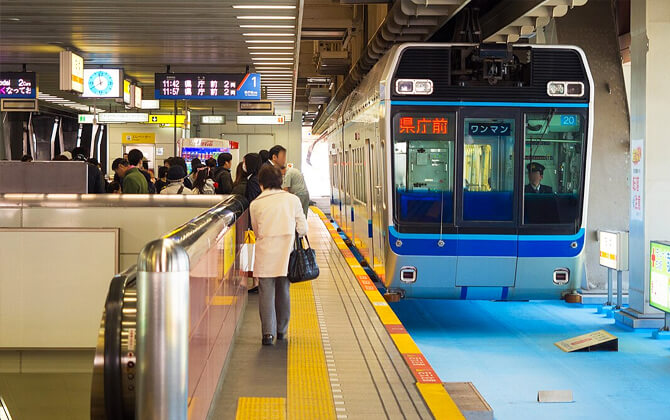
The Chiba Urban Monorail is well integrated with other public transport in central Chiba, making transfers straightforward if you are using local transport or wider city transport across the region. The main interchange stations are Chibaminato, Chiba, and Tsuga.
- Chibaminato Station: connection to the JR Keiyō Line.
- Chiba Station: connection to the JR Sōbu Main Line, JR Chūō-Sōbu Line, Uchibō Line, Sotobō Line, Narita Line, and the Keisei Chiba Line.
- Tsuga Station: connection to the JR Sōbu Main Line and the Narita Line.
Several stations also give direct access to major destinations in the city, including Chiba Port, downtown Chiba, Chiba City Park, the Sports Park, Chiba Zoo, and government offices near Kenchō-mae.
For payment, passengers can use single tickets or contactless cards. Suica and PASMO are accepted, and this system is one of the few in Japan limited to those two cards rather than the wider mutual-use IC network.
Airport Connections
The Chiba Urban Monorail does not serve an airport directly. Still, it is a practical part of transportation in Chiba for airport-bound passengers because it connects easily to Chiba Station, where travelers can transfer to JR East lines and continue toward Narita International Airport.
For airport access, the key transfer point is Chiba Station. The monorail links downtown Chiba, the port area, and important city districts, so it often works as the first step in the route to the airport.
- Best transfer point: Chiba Station
- Airport access: JR connections from Chiba Station toward Narita International Airport
- Payment: Suica and PASMO accepted
Tickets are available from station machines, and trains run from early morning until around midnight, with slightly later opening hours on weekends and holidays.
Facilities and Services
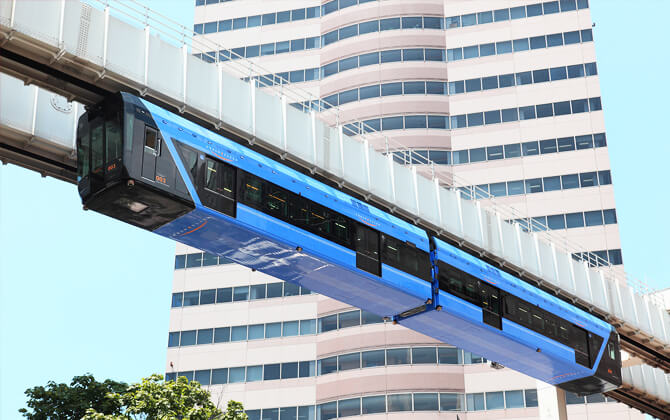
The Chiba Urban Monorail is a suspended SAFEGE-type transport system with elevated stations and double-tracked routes. It serves central Chiba, suburban areas, and key transfer points such as Chiba, Chibaminato, and Tsuga.
Passengers can buy individual tickets from station machines or pay with PASMO and Suica cards. The network has a total length of 15.2 kilometres (9.4 miles), making it the world’s longest suspended monorail system.
Accessibility information in the source materials notes that not all stations have handicap toilets, ostomate restrooms, or written communication support. Service runs from early morning until around midnight, and a day pass is available through the Holiday Free Pass and the 2-Day Free Pass.
Rules
Tickets are based on the station-to-station fare table, so it is important to check the correct departure and arrival points before you travel. The upper table shows adult fares, and the lower table shows child fares.
For example, an adult trip between Chibaminato and Yoshikawakoen costs 210 yen (about $1.40), while a child trip between Shiyakushomae and Kenchomae costs 110 yen (about $0.73). It sounds simple, but checking the right fare table matters.
Tips
The system is easy to use, and a few practical tips can make the ride smoother.
- Use a Suica or PASMO card, or buy a ticket from the station machine.
- Fares are distance-based, from 200 yen (about $1.33) to 520 yen (about $3.47).
- Trains run from about 5:30 am to midnight, so there is plenty of flexibility for sightseeing.
- If you plan to make several trips, a pass can be a useful money-saving option.
- For a more comfortable ride, avoid the busiest morning and evening commuting periods.
- Stations are elevated, so expect escalators or elevators when entering and leaving.
- The suspended route offers wide city views, so the trip itself is part of the experience.
Historical Context
The Chiba Urban Monorail was developed as a new urban transport solution in the 1970s, when congestion was rising and a subway was seen as too expensive. Chiba officials chose the suspended SAFEGE design partly because it offered protection from rain, snow, and ice.
Chiba Urban Monorail Co., Ltd., the third-sector operator, was established on March 20, 1979 with investment from the city of Chiba. Mitsubishi Heavy Industries designed and built the system, drawing on earlier experience with suspended monorails including the Higashiyama Park Monorail and the Shonan Monorail.
The network opened in stages. Line 2 started service between Sports Center and Chishirodai on March 28, 1988, then extended to Chiba Station on June 12, 1991. Line 1 opened between Chiba-Minato and Chiba on August 1, 1995, and the extension to Kenchō-mae followed on March 24, 1999. At that point, Line 2 travel time was reduced by about 10%, and automatic ticket machines were installed at all stations.
Later years brought both modernization and financial pressure. In 2006, Chiba Prefecture withdrew funding because ridership was below expectations. The same year, a train collided with the arm of a crane truck between Sakusabe and Chiba-Kōen on Line 2. Four-car trains ended on March 19, 2007, and PASMO was introduced on March 14, 2009. Type 0 Urban Flyer trains entered service on July 8, 2012, and station numbering was added on February 20, 2019.
Plans for further extension were discussed for years, including routes toward Chiba Municipal Aoba Hospital and toward Inage and Inage-kaigan, but these were later shelved. On September 4, 2019, Chiba City announced it would discontinue the hospital-route expansion plan and would not introduce a monorail on the Inage route. A fire on September 9, 2020 temporarily disrupted service on all lines, and total ridership reached 500 million passengers by May 31, 2021.
Future Expansions
There were plans to extend Line 1 by 3.4 kilometres (2.1 miles) and add six stations between Chiba Municipal Aoba Hospital and Kenchō-mae, but the proposal was cancelled because it was considered unprofitable.
Another expansion plan would have extended the route from Anagawa Station to Inage and Inage-kaigan Station. However, on September 4, 2019, Chiba City announced that it would discontinue the hospital-route extension and would not introduce a monorail on the Inage route.
Source materials also mention that future plans may include extending Line 1 to Chiba University, with a long-term goal of expanding the line up to 40 kilometres (24.9 miles).
Nearby Attractions
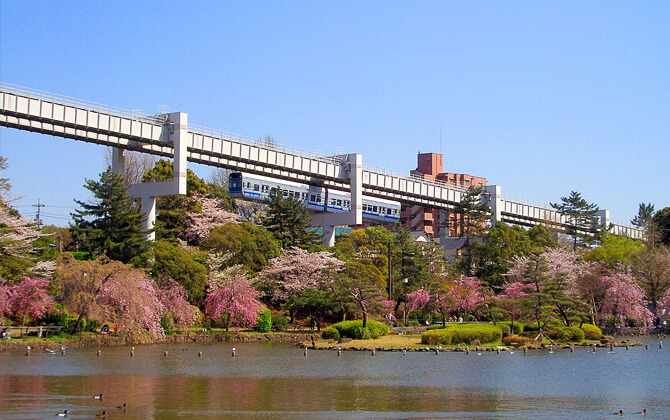
The monorail is not just useful transport. It is also a convenient way to reach many of Chiba’s main sights without getting caught in road traffic.
- Downtown Chiba — department stores and connections to JR and Keisei rail services; Chiba Station.
- Chiba City Park — a large pond, lotus flowers in summer, and teahouses; Chiba-Koen Station.
- Chiba Fine Arts Museum and Myoken-Hongu Temple — with views of the monorail crossing the Yoshikawa canal; Yoshikawakoen Station.
- Sports Park — a venue for regional sporting events including baseball and athletics; Sport Center Station.
- Chiba Zoo and Park; Dobutsu-koen Station.
- Chiba’s major hospital; Mitsuwadai Station.
- Chiba Harbor — with a beach, harbor tower, and JR Keiyo Line connection; Chiba-Minato Station.
- Administrative buildings and Inohana Garden with its castle; Kenchō-mae Station.
For getting around these places, the fare ranges from 200 yen (about $1.33) to 520 yen (about $3.47). Tickets are available from station machines, and Suica or PASMO cards can also be used. Trains run from about 5:30 am until midnight.