The Düsseldorf Stadtbahn is the city’s urban light rail system and a core part of public transport in Düsseldorf and the wider Rhine-Ruhr region. Together with the S-Bahn Rhein-Ruhr, plus tramway and bus services, it supports everyday transportation in and around the city. Several lines continue beyond Düsseldorf to places such as Neuss, Meerbusch, Krefeld, Duisburg, and Ratingen. The system began underground operation in stages from 1981, the key inner-city tunnel opened in 1988, and the Wehrhahn line expanded the network again in 2016. According to the draft source, the network has ten lines, 135 Rheinbahn vehicles, and route length figures listed as 85.5 km (53.1 miles) and later 98.7 km (61.3 miles) in Rheinbahn’s 2020 annual report.
| Key | Information |
|---|---|
| System | Urban light rail network in Düsseldorf |
| Operator | Rheinbahn, with U79 shared with Duisburger Verkehrsgesellschaft (DVG) |
| Coverage | Düsseldorf and nearby cities including Neuss, Meerbusch, Krefeld, Duisburg, and Ratingen |
| Network role | Backbone of city transport alongside the S-Bahn, trams, and bus network |
| Route length | 85.5 km (53.1 miles), later listed as 98.7 km (61.3 miles) |
| Line length | 188.2 km (116.9 miles) |
| Stations | 161 |
| Vehicles | 135 Rheinbahn vehicles |
| Major milestones | First tunnel section opened in 1981; inner-city tunnel opened in 1988; Wehrhahn line opened on 21 February 2016 |
Düsseldorf Stadtbahn Map
Map of Düsseldorf Stadtbahn showing different lines. Click on the map to enlarge it or download the Düsseldorf Stadtbahn map in PDF format.
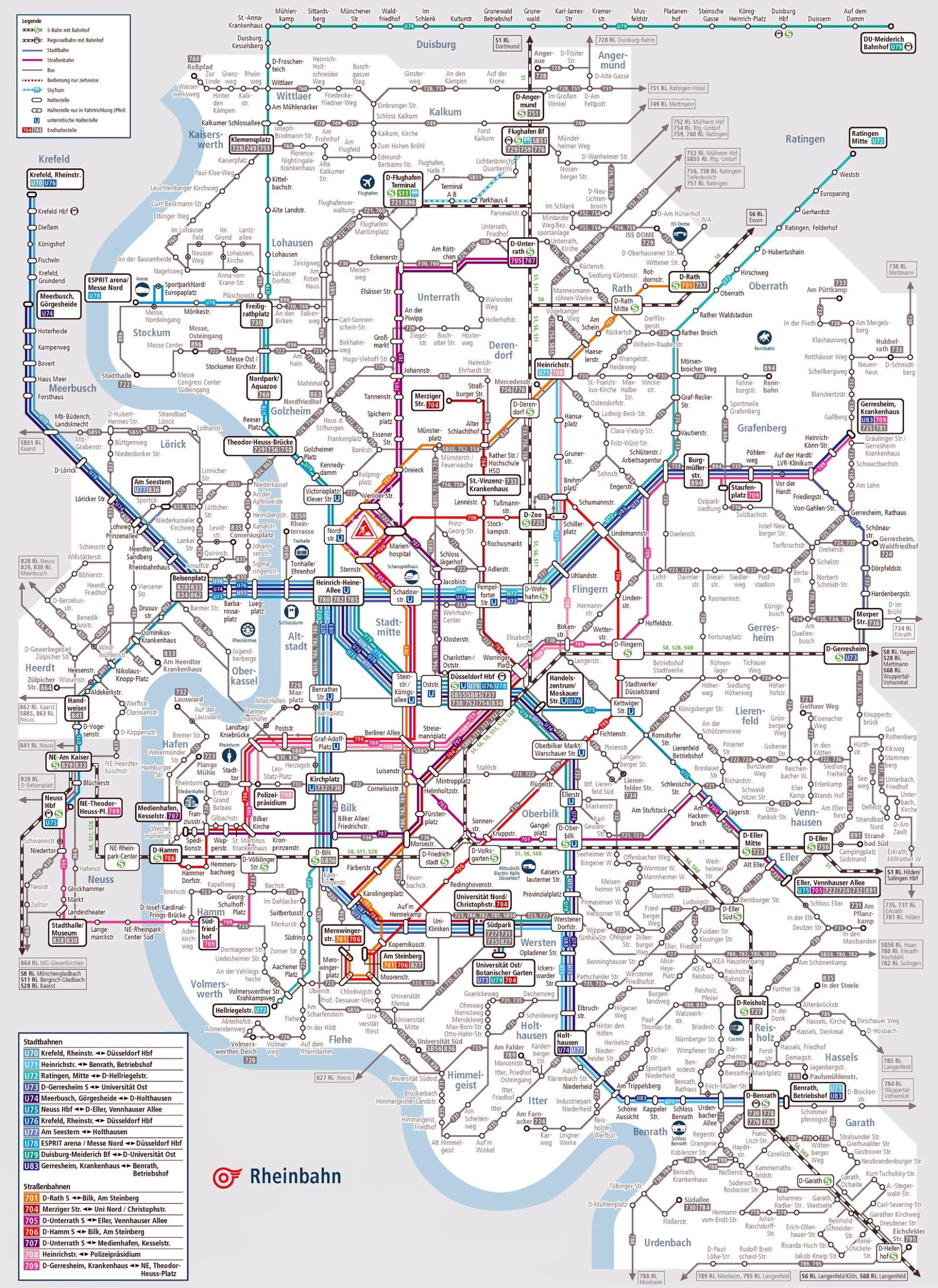
Exploring the Lines and Stations of the Düsseldorf Stadtbahn
The Düsseldorf Stadtbahn is central to local transport and city transport across Düsseldorf and nearby parts of the Rhine-Ruhr area. Together with the S-Bahn Rhein-Ruhr, it connects major districts inside the city and links Düsseldorf with surrounding destinations such as Neuss, Meerbusch, Krefeld, Duisburg, and Ratingen.
The network currently includes the lines U70, U71, U72, U73, U74, U75, U76, U77, U78, U79, and U83. Across the system, there are 161 stations, and many stops are served by more than one route. In the city centre, key sections run underground between the old town and the main station.
Current lines and key service patterns
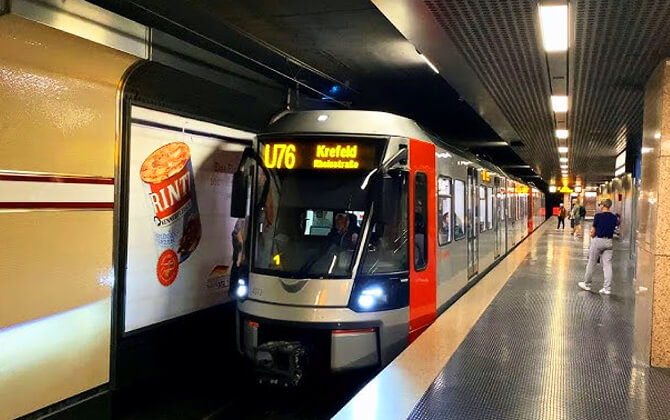
Some lines have distinct operating patterns. U70 is an express service that runs only during rush hours and skips some stops on the U76 route. U77 does not run on Sundays or public holidays. U79 is jointly operated with DVG, which shows the network’s wider regional role.
Below is a stations list and route plan overview for the current and planned lines mentioned in the draft.
| Station | Details |
|---|---|
| U70 | Krefeld, Rheinstraße – Krefeld Hauptbahnhof – Düsseldorf Lörick – Düsseldorf Heinrich-Heine-Allee – Düsseldorf Steinstraße/Königsallee – Düsseldorf Oststraße – Düsseldorf Hauptbahnhof; opening 1988; 22.4 km (13.9 miles); 21 stations, 5 underground |
| U71 | Düsseldorf Rath S – Düsseldorf Heinrichstrasse – Düsseldorf Wehrhahn (S) – Düsseldorf Heinrich-Heine-Allee – Düsseldorf Bilk (S) – Düsseldorf Hellriegelstraße; opening 2016; 20.3 km (12.6 miles); 25 stations, 6 underground |
| U72 | Ratingen Mitte – Düsseldorf Wehrhahn (S) – Düsseldorf Heinrich-Heine-Allee – Düsseldorf Bilk (S) – Düsseldorf Südpark – Düsseldorf Holthausen – Düsseldorf Benrath Betriebshof; opening 2016; 15.4 km (9.6 miles); 43 stations, 6 underground |
| U73 | Düsseldorf Gerresheim (S) – Düsseldorf Wehrhahn (S) – Düsseldorf Heinrich-Heine-Allee – Düsseldorf Bilk (S) – Düsseldorf Südpark – Düsseldorf Universität Ost; opening 2016; 20.3 km (12.6 miles); 29 stations, 6 underground |
| U75 | Neuss Hauptbahnhof – Düsseldorf Heinrich-Heine-Allee – Düsseldorf Steinstraße/Königsallee – Düsseldorf Oststraße – Düsseldorf Hauptbahnhof – Düsseldorf Lierenfeld Betriebshof – Düsseldorf Vennhauser Allee; opening 1993; 15.6 km (9.7 miles); 28 stations, 6 underground |
| U76 | Krefeld Rheinstraße – Krefeld Hauptbahnhof – Meerbusch Görgesheide – Düsseldorf Lörick – Düsseldorf Heinrich-Heine-Allee – Düsseldorf Steinstraße/Königsallee – Düsseldorf Oststraße – Düsseldorf Hauptbahnhof – Düsseldorf Holthausen; opening 1988; 23.0 km (14.3 miles); 37 stations, 7 underground |
| U77 | Düsseldorf Am Seestern – Düsseldorf Heinrich-Heine-Allee – Düsseldorf Steinstraße/Königsallee – Düsseldorf Oststraße – Düsseldorf Hauptbahnhof – Düsseldorf Lierenfeld Betriebshof; opening 1994; 11.6 km (7.2 miles); 16 stations, 6 underground |
| U78 | Düsseldorf Hauptbahnhof – Düsseldorf Oststraße – Düsseldorf Steinstraße/Königsallee – Düsseldorf Heinrich-Heine-Allee – Düsseldorf Freiligrathplatz – MERKUR SPIEL-Arena/Messe Nord; opening 1988; 7.6 km (4.7 miles); 17 stations, 7 underground |
| U79 | Düsseldorf Universität Ost/Botanischer Garten – Düsseldorf Hauptbahnhof – Düsseldorf Oststraße – Düsseldorf Steinstraße/Königsallee – Düsseldorf Heinrich-Heine-Allee – Düsseldorf Freiligrathplatz – Düsseldorf Wittlaer – Duisburg Grunewald – Duisburg Hauptbahnhof – Duisburg-Meiderich Südbahnhof; opening 1988; 41.3 km (25.7 miles); 50 stations, 15 underground |
| U80 | Düsseldorf Universität Ost/Botanischer Garten – Düsseldorf Hauptbahnhof – Düsseldorf Oststraße – Düsseldorf Steinstraße/Königsallee – Düsseldorf Heinrich-Heine-Allee – MERKUR SPIEL-Arena/Messe Nord; planned; 7.6 km (4.7 miles); 20 stations, 9 underground |
| U81 | Neuss Hauptbahnhof – Düsseldorf Airport – Ratingen West; planned opening 2026; length not listed; 17 stations, 2 underground |
| U82 | Düsseldorf Benrath Betriebshof – Düsseldorf Hauptbahnhof – Flughafen Bahnhof; opening listed as 2025; length not listed; 31 stations, 9 underground |
| U83 | Düsseldorf Gerresheim-Krankenhaus – Düsseldorf Wehrhahn (S) – Düsseldorf Heinrich-Heine-Allee – Düsseldorf Bilk (S) – Düsseldorf Hellriegelstraße; opening 2016; 18.3 km (11.4 miles); 35 stations, 6 underground |
Stations, tunnels, and network reach
The network grew noticeably with the opening of the Wehrhahn line on 21 February 2016. At that stage, route length reached 85.5 km (53.1 miles) and line length 188.2 km (116.9 miles). Rheinbahn’s 2020 annual report later listed route length as 98.7 km (61.3 miles). The system is operated with 135 Rheinbahn vehicles, and U79 uses rolling stock shared with DVG.
Several tunnel sections shape the network. Since 1988, the inner-city tunnel has carried trains underground on the busy axis between the old town and the main station. The Wehrhahn line added another tunnel corridor, while other routes combine underground and street-level running.
In total, the Stadtbahn serves 161 stations across Düsseldorf and neighboring cities. Of these, 31 were newly built as underground stations or as stops designed to metro standards. The stations map also extends onto Duisburg territory, with tunnel, elevated, and surface stops included.
Future expansion and planned lines
Future expansion focuses on new links, especially U81 and U82. Construction on U81 began in late 2019. Its first section is intended to connect Düsseldorf Hauptbahnhof with the airport. The opening was first expected in 2025, but the draft says it was postponed to the second quarter of 2026.
Planned future stations include Düsseldorf Flughafen Terminal, Musikhochschule/Kennedydamm, Messe-Süd, Theodor-Heuss-Brücke, and Resser Platz. These projects point to continued growth around airport access and cross-city transport.
Rolling stock on the network
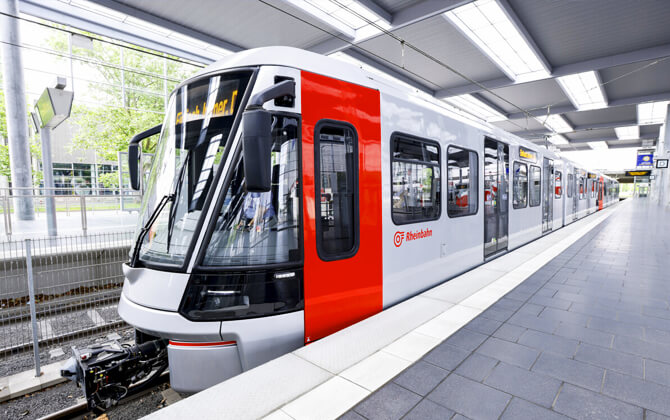
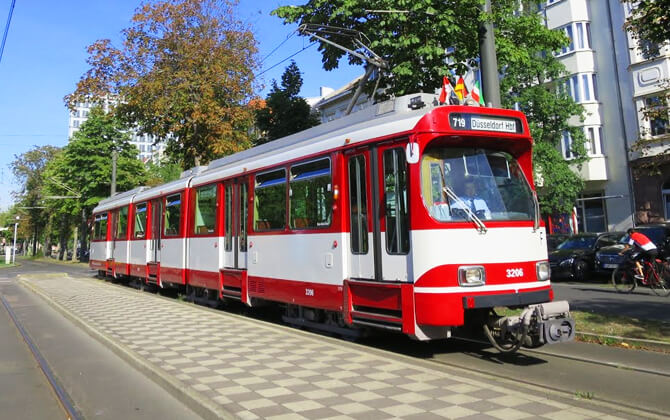
The Düsseldorf Stadtbahn fleet includes 135 trainsets. Older vehicles include Düwag B80D six-axle articulated LRVs, while GT8SU eight-axle sets are mainly used on U75 and U78. Lines U71 to U73 and U83 are operated by NF8U low-floor trainsets. From 2022 onward, 59 HF6 LRVs built by Alstom subsidiary Bombardier Transportation are being delivered to replace older GT8SU and B80D units.
With underground corridors, shared-city lines, and cross-border services, the system remains a practical part of everyday public transport in Düsseldorf.
Schedule, Timetables, and Calendar
The Düsseldorf Stadtbahn does not run 24 hours a day, and the timetable varies by line. Some services run only on weekdays, while others operate daily, including public holidays. So if you are checking opening hours, operating hours, or timings today, line-specific details matter.
The general working hours listed in the source are:
| Service detail | Timings |
|---|---|
| Monday to Friday operating hours | 4:15 am to 12:00 am |
| Weekends and holidays opening times | 4:15 am to 2:30 am |
Examples of line-by-line train schedule information for weekdays are shown below. These entries reflect starting time and closing time examples from the draft, not a full route timetable for every stop.
| Service detail | Timings |
|---|---|
| U70 | Opens at Krefeld, Rheinstraße station at 6:38 am and closes at Düsseldorf Hbf at 5:33 pm |
| U71 | Opens at D-Mörsenbroich, Heinrichstraße at 12:11 am and closes at D-Benrath Betriebshof at 12:34 am the next day |
| U72 | Opens at Ratingen Mitte, Weststraße at 12:22 am and closes at D-Volmerswerth, Hellriegelstraße at 12:29 am the next day |
| U73 | Opens at D-Gerresheim at 12:07 am and closes at D-Universität Ost/Botanischer Garten at 11:44 pm |
| U74 | Opens at Mb. Görgesheide at 7:06 am and closes at Holthausen at 12:20 am |
| U75 | Opens at Neuss Hbf at 12:37 am and closes at Vennhauser Allee at 3:27 am the next day |
| U76 | Opens at Krefeld, Rheinstraße at 12:09 am and closes at Düsseldorf Hbf at 1:11 am the next day |
| U77 | Opens at D-Am Seestern at 12:04 am and closes at Holthausen at 12:05 am the next day |
| U78 | Opens at D-ESPRIT Arena/Messe Nord at 6:41 am and closes at Düsseldorf Hbf at 10:22 pm |
| U79 | Opens at Duisburg Meiderich Bf at 5:32 am and closes at D-Universität Ost at 9:41 am |
| U83 | Opens at D-Gerresheim at 4:39 am and closes at Benrath Btf at 9:58 pm |
Planned maintenance can also affect the schedule today. The draft mentions servicing from 31 March at 11:45 pm to about 1 April at 2:00 am. During that time, login to a DB customer account is unavailable, and bookings that require account login, including BahnCard bookings, cannot be made. Travel information and bookings without login are not affected.
For station-based timetable details, Düsseldorf Hbf provides departure information, days of operation, and timetable changes. If you need the last train, frequency, running time, or route timetable for a specific trip, checking live information is the safest option.
Fares, Tickets, and Subscriptions
In Düsseldorf, fare levels depend on the travel zone. For trips within the city limits, the draft says you need price level A3. Tickets and subscriptions are available for short rides, regular commuting, and longer stays.
The Stadtbahn uses a trust-based fare system. There are no turnstiles at stations, but inspectors may ask to see your ticket. Tickets can be bought from Rheinbahn machines, and some need validation before travel.
| Type | Average cost |
|---|---|
| Short distance ticket (Kurzstrecke) | €1.70 (about $1.84) |
| Single ticket (EinzelTicket) | €3.00 (about $3.25) |
| Happy hour ticket | €3.30 (about $3.57) |
| 4erTicket for 4 journeys | €11.00 (about $11.90) |
| 10erTicket for 10 journeys | €23.40 (about $25.31) |
| 30-day pass Ticket1000 | €80.50 (about $87.02) |
| 30-day pass Ticket1000 after 09:00 a.m. | €59.70 (about $64.54) |
| YoungTicketPLUS monthly pass | €73.70 (about $79.67) |
| YoungTicketPLUS for a year | €62.95 (about $68.05) |
Common ticket types
- Short distance tickets (Kurzstrecke) are valid for a maximum of 3 rides within 20 minutes.
- Single tickets (EinzelTicket) are valid for 2 hours in the same direction, so they are not for a return trip.
- Happy hour tickets allow travel in the whole Zone A between 6 p.m. and 6 a.m. the next morning.
- 24-hour tickets are valid from the time of purchase until local public transport shuts down.
- Ticket1000 is a 30-day pass for unlimited travel during the month.
- Ticket1000 after 09:00 a.m. works in the same way, but only after 9 a.m.
- Ticket2000 is similar to Ticket1000 and also allows a bike onboard, lending the pass to other people, and taking 1 passenger for free.
For occasional travel, Rheinbahn also offers the 4erTicket, 10erTicket, 24-hour ticket, and KombiTicket. For regular use, there are subscriptions such as Ticket2000, Ticket1000, YoungTicketPLUS, and the DeutschlandTicket family.
If you want one pass for sightseeing and transport, the DüsseldorfCard can be a practical option. It includes free travel by bus and train in Düsseldorf and the surrounding area, plus discounts on selected attractions.
If you are comparing fare, price, ticket price, or cost for a visit, a short trip may only need a single ticket, while a day pass or monthly card can make more sense for repeated travel. The draft does not include a fare calculator, but the zone-based system is the basis for pricing.
Transit Connections
The Düsseldorf Stadtbahn connects with buses and trains run by other operators, including VRS and AVV. It also links with other Rheinbahn services such as bus routes, Regionalexpress, Regionalbahn, trams, the S-Bahn, NachtExpress, and Schnellbus services.
Route maps make it easier to see which lines are running and where transfers are available. Besides the general stations map, Düsseldorf also provides special maps for night lines and for stops with barrier-free access information.
Düsseldorf Hauptbahnhof is the city’s main interchange and also the nearest underground station mentioned in the draft for access to Düsseldorf International Airport. From the airport, passengers can take Regionalbahn line RE6 toward Dormagen Bf and get off at Düsseldorf Hauptbahnhof. The journey takes about 7 minutes, and a Zone A3 stamp is required.
Connection to the Airport
Düsseldorf International Airport is easy to reach by public transport. The airport is served by two rail stations: Düsseldorf Flughafen on the east side of the airport grounds and Düsseldorf Flughafen Terminal in the basement of the terminal building.
By train
More than 350 trains stop each day at Düsseldorf Flughafen, from S-Bahn services to ICE trains. The SkyTrain carries passengers from the station building directly to the terminal. The S-Bahn S11 is the only line that stops at Düsseldorf Flughafen Terminal; it runs from Bergisch Gladbach via Düsseldorf central station to the airport.
SkyTrain
The fully automatic SkyTrain takes about seven minutes to travel from Düsseldorf Flughafen station to the terminal. It serves Düsseldorf Flughafen station, Car Park P4/P5, Terminal A/B, and Terminal C.
| Service detail | Timings |
|---|---|
| SkyTrain operating hours | Daily from 3:45 a.m. to 0:45 a.m. |
| SkyTrain frequency | Every 5 to 7 minutes depending on passenger volume |
| SkyTrain closing time / no service | No service between 0:45 a.m. and 3:45 a.m. |
Accepted tickets
- Valid VRR and VRS tickets
- Special DB tickets such as City plus and NRW-Ticket
- DeutschlandTicket
- Flughafen Düsseldorf GmbH car park tickets, valid for up to 9 persons
- Online bookings for parking garages of Flughafen Düsseldorf GmbH
- DüsseldorfCard and DüsseldorfCard Plus
- Rail&Fly tickets
Bus connections
There are bus stops in front of the main Arrivals hall and at Düsseldorf Flughafen railway station. Scheduled bus services include routes to Tannenhof/Gothaer Weg via Düsseldorf main station, Ratingen, Düsseldorf-Wittlaer-Bockum, Kaarst-Rathaus, Theodor-Heuss-Brücke, Ratingen-Ost, and Mercedesstraße. Special buses also run for trade fair events in Düsseldorf and Essen.
FlixBus connections
FlixBus stops at platform 14 in front of the central arrivals area. Lines connect the airport with destinations including Dortmund, Paris, Bayreuth, Amsterdam, Tübingen, Groningen, München, Brüssel, Berlin/Hannover, Gent, Leverkusen, and Orléans.
DüsseldorfCard Plus allows free travel from Düsseldorf Airport throughout the Rhine-Ruhr and Rhine-Sieg transport network, from Dortmund to Bonn.
Future connection
The new U81 line is under construction and will connect Düsseldorf Airport to the existing Stadtbahn system. The first section between the airport and Freililigrathplatz is planned to open in the second quarter of 2026. Later, the route is expected to continue west toward Neuss, Meerbusch, and Krefeld, and east via the airport railway station toward Ratingen.
Travel Tips
Düsseldorf is straightforward to explore with Rheinbahn. The network includes Stadtbahn, trams, buses, and links to the wider rail system, so getting around becomes much easier once you know your line and ticket options.
Plan ahead and check schedule information in real time. Public transport generally runs between 9 a.m. and midnight according to the draft, but exact opening times and timings vary by line and mode. Late in the evening, on weekends, or when heading to outer districts, waiting times may be longer.
Choose the right mode for your trip. The Stadtbahn or U-Bahn is usually the fastest way across the city and is easy to spot by the white U on a blue sign. Trams work well for short trips in the centre, buses help with transfers and suburban areas, and S-Bahn trains are better for reaching other cities along the Rhine and in the Ruhr area.
Buy and validate your ticket correctly. Tickets can be purchased at station machines, from bus drivers, or in the VRR or Rheinbahn app. If you have a paper ticket, validate it in a yellow or red machine before boarding. Digital tickets can usually be activated in the app.
Know the main fare zone. Most visitors staying in the city only need Zone A3. For a quick hop, a short-distance ticket may be enough. For heavier use, single tickets, a day pass, or a 30-day pass may work better. If you are visiting for a short stay, the Düsseldorf Card or Düsseldorf Welcome Card can be convenient because they include unlimited travel for a set period.
Travel off-peak when you can. Buses are usually less frequent than trams or trains, and suburban services can become less regular in the evening or on weekends. If you are out late, NachtExpress buses may help after regular service ends.
Keep your belongings secure. Düsseldorf is generally safe, but crowded trams and buses can still attract pickpockets during busy periods.
If you are staying near the central station or major sights, public transport will usually get you there quickly and at a reasonable cost.
Regulations
The Düsseldorf Stadtbahn is part of the VRR fare system, so a valid ticket is required across the network. Ticket inspectors may check passengers at any time, and the draft states that travelling without a validated ticket can lead to a fine of €40 (about $43.24).
- Smoking is not allowed on trains or in stations.
- Park and Ride facilities are available.
- Bicycle parking is available at many stations, including Düsseldorf Hauptbahnhof, which can accommodate up to 500 bikes.
- Emergency equipment such as intercoms, emergency levers, and escape windows should only be used in a real emergency.
The system operates without turnstiles, so following ticket rules is important. The draft mentions station parking and bicycle parking, but it does not list parking charges or parking charges per day.
Interesting Facts
The Düsseldorf Stadtbahn is one of the foundations of the city’s public transport system, alongside the S-Bahn Rhein-Ruhr. Trams and bus routes add extra coverage across the city.
Some routes continue beyond Düsseldorf into neighboring cities including Neuss, Meerbusch, Krefeld, Duisburg, and Ratingen.
A major turning point came in 1988, when the inner-city tunnel opened and the busiest axis between the old town and the main station could run fully underground.
The network expanded again with the Wehrhahn line, which opened on 21 February 2016. After that, route length reached 85.5 km (53.1 miles) and line length 188.2 km (116.9 miles). Rheinbahn’s 2020 annual report later listed route length as 98.7 km (61.3 miles).
Today, the system is operated with 135 Rheinbahn vehicles. Line U79 is a shared operation between Rheinbahn and DVG.
The original concept in the 1960s was not a Stadtbahn but a classic subway system. Those plans were later revised in favor of a light rail system for the wider Rhine-Ruhr region.
The Düsseldorf Stadtbahn has 161 stations in total, spread across Düsseldorf as well as Neuss, Meerbusch, Krefeld, Duisburg, and Ratingen.
Heinrich-Heine-Allee is the central interchange of the network and, together with the main station, one of the city’s most important transfer hubs.
Some stations are arranged on multiple underground levels. Steinstraße/Königsallee and Oststraße stand out for this design.
The Wehrhahn line is 3.4 km (2.1 miles) long and opened after nine years of construction. Its underground stations were individually designed by Düsseldorf artists.
Tracing the History of Stadtbahn
Plans for a subway system in Düsseldorf began in the 1960s, when the city was looking for a stronger and smoother public transport network. On 19 December 1968, the city council decided to start construction, and on 24 March 1973 the first spade hit the ground in Fischerstraße. From there, major works followed both underground and at street level.
By the late 1970s and into the 1980s, the project had already reshaped important parts of the city. The first section was completed in 1981, and the opening of the inner-city tunnel in 1988 marked a major change, allowing trains to run underground between the old town and the main station. That also laid the foundations for the modern high-floor Stadtbahn network.
The network kept growing. In 1993, the tunnel toward Eller was extended, and from 1996 to 2002 the route through Oberbilk was built. Another major milestone came with the Wehrhahn line: construction started in 2007, and the line opened on 21 February 2016. Its 3.4 km (2.1 miles) tunnel brought four light rail lines underground and opened a new chapter for Düsseldorf city transport.
Today, the Stadtbahn is closely tied to the city’s development. Major nodes such as Heinrich-Heine-Allee, the main station, and the Wehrhahn corridor show how the system has evolved over time.
Future Expansions
On 21 November 2024, Düsseldorf’s city council approved the target concept for the Stadtbahn and tram network. The plan sets out which routes should be studied first for expansion and looks at technical feasibility as well as expected passenger demand.
Six projects are being pursued as priorities through feasibility studies:
- North tangent: a new link between Seestern and Staufenplatz, with possible options extending to Grafental or Flingern Süd.
- Rath / Unterrath / Lichtenbroich / Airport Terminal concept: a broader study for lines 701, 705, and 707, including a possible new depot in Rath.
- Schlesische Straße – Nachbarschaftspark Lierenfeld: linked to barrier-free station upgrades in Eller and a possible extension of U77 to Vennhauser Allee.
- Südpark – Uni West and Uni Ost corridor: extensions with strong passenger potential, including links toward Münchener Straße, Niederheid, Hassels, Benrath, Garath, and Hellerhof.
- South tangent: a possible extension of line 706 via Südring into Neuss.
- East tangent: a later feasibility study for the Benrath / Gerresheim / Airport corridor, to be prepared after the other five studies.
Two additional projects are also being followed because of wider network and urban development needs: a possible line swap between 704 and 707 between Pempelfort and the main station, and a tram link from Stadttor via Erftplatz to Medienhafen, with a later extension toward Hamm.
Some schemes are already part of planning documents, including U80, U81 construction phases 2 to 4, and the U73 extension to Glasmacherviertel. The city estimates that the feasibility studies will require about 0.3 million euros per year over seven years, funded through the public transport allocation under section 11(2) of the NRW public transport law.
Nearby Attractions
Many of Düsseldorf’s best-known attractions are easy to reach from Düsseldorf Central Station by Stadtbahn. If you want a simple route through the city, this network makes sightseeing pretty efficient.
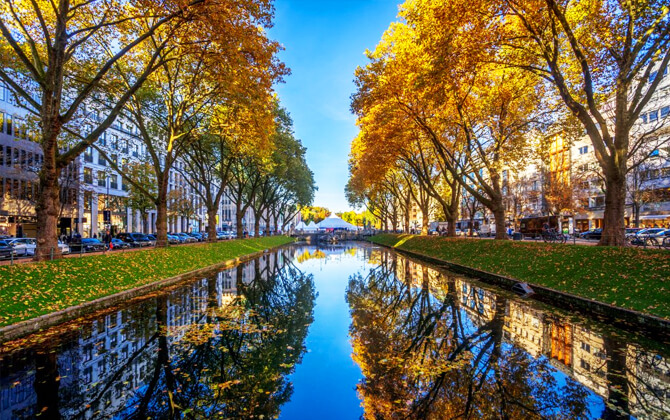
- Königsallee is only about 7 minutes away. From Düsseldorf Hbf, take the U78 toward D-ESPRIT Arena/Messe Nord, get off at Heinrich-Heine-Allee, and walk into the city centre.
- Altstadt can be reached in about 14 minutes. From Düsseldorf Hbf, take the U75 toward Neuss Hauptbahnhof, get off at Tonhalle/Ehrenhof, then continue on foot.
- Benrath Palace takes around 29 minutes. From Düsseldorf Hbf, take the U77 toward D-Holthausen, change at Holthausen to the U83 toward D-Benrath Btf, and get off at Schloss Benrath.
- Kaiserswerth is about 12 minutes away. From Düsseldorf Hbf, take the U78 toward D-ESPRIT Arena/Messe Nord, get off at Golzheimer Platz, and walk toward Kaiserswerther Straße.
- Kunstsammlung Nordrhein-Westfalen can be reached in about 10 minutes. From Düsseldorf Hbf, take the U78 toward D-ESPRIT Arena/Messe Nord, get off at Heinrich-Heine-Allee, and walk to Grabbeplatz.
Useful stations for sightseeing include Heinrich-Heine-Allee, Tonhalle/Ehrenhof, Schloss Benrath, and Golzheimer Platz. These stops give practical access to shopping streets, museums, the old town, and historic districts.
According to the draft, all major attractions and points of interest are located in Zone A, so you may not need tickets for farther zones if your trip stays within central Düsseldorf.