The Minsk Metro is the rapid transit system of Minsk, the capital of Belarus. Construction began in 1977, and the system opened on 29 June 1984 as the ninth metro in the USSR. Today, it has 3 lines, 36 stations, and a total route length of 44.89 kilometres (27.89 miles). It is the country’s only metro system and one of the fastest ways to get around the city. A notable feature is its shallow construction: because Minsk sits on almost level ground with very dry soil, stations are built close to the surface rather than deep underground.
| Key | Information |
|---|---|
| System | Minsk Metro |
| City | Minsk, Belarus |
| Opened | 29 June 1984 |
| Construction started | 1977 |
| Lines | 3 |
| Stations | 36 |
| Total length | 44.89 kilometres (27.89 miles) |
| Ridership in 2023 | 233.9 million passengers, about 640,800 per day |
| Ridership in 2013 | 328.3 million passengers, about 899,450 per day |
| Notable feature | Shallow stations close to the surface |
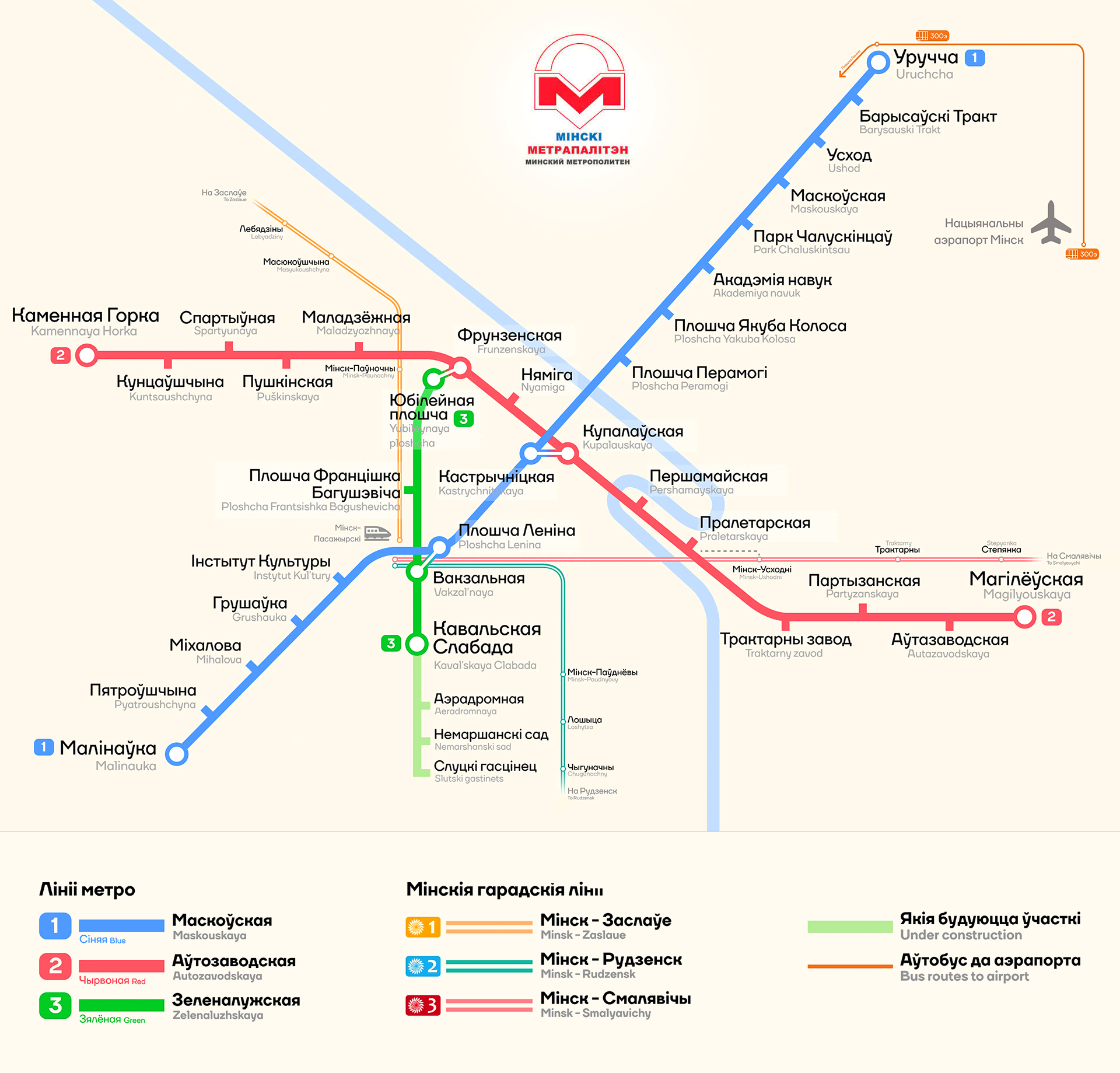
Minsk Metro Map
Map of Minsk Metro showing different lines. Click on the map to enlarge it or download the Minsk Metro map in PDF format.
Interactive Map of Minsk Metro
Lines and stations
The Minsk Metro route plan currently includes three lines and 36 stations. Since opening on 29 June 1984, the system has grown from an eight-station section into a city transport network that covers key parts of Minsk. The total route length is 44.89 kilometres (27.89 miles).
| Station | Details |
|---|---|
| Maskowskaya Line | Opened in 1984; 19.1 kilometres (11.87 miles); 15 stations; named after Moscow. |
| Awtazavodskaya Line | Opened in 1990; 18.1 kilometres (11.25 miles); 14 stations; named after the Automobile Plant. |
| Zyelyenaluzhskaya Line | Opened in 2020; 7.6 kilometres (4.72 miles); 7 stations; named after Zyalyony Luh. |
| Total network | 44.8 kilometres (27.84 miles) and 36 stations. |
Line 1 opened in 1984, Line 2 in 1990, and Line 3 started service in 2020. The third line began with four stations, from Yubileynaya ploshcha to Kavalskaya Slabada, and was later extended.
Several extensions opened ahead of schedule, including parts of the Awtazavodskaya and Maskowskaya lines. The system keeps expanding, but the current stations remain the backbone of daily public transport in Minsk.
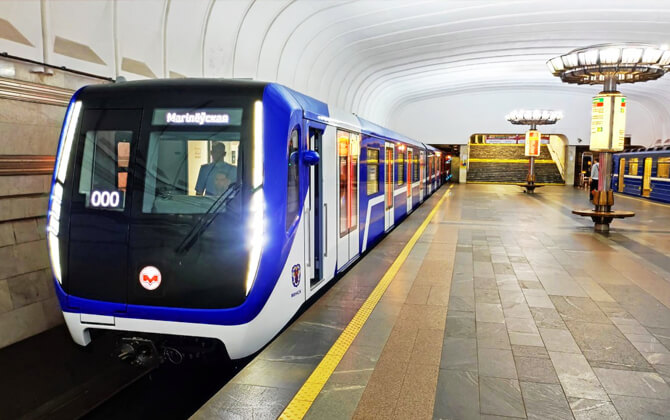
As for station design, 25 stations are pillar-span and 11 are vaulted. Because the metro was built close to the surface, local ground conditions shaped both the construction and the look of the stations map across the network.
Payment types and discounts
Minsk Metro offers several ticket and pass options, from single rides to monthly travel. In the 2025 fare table, a single journey ticket price is 0.90 BYN, about $0.28, and can be used with a token or QR code.
For regular travel, discounted fares are available. A 10-journey ticket costs 8.10 BYN, about $2.52, and includes a 10% discount. A 30-journey ticket costs 22.5 BYN, about $7.00, with a 17% discount. A standard monthly pass costs 52 BYN, about $16.17, while a student monthly pass costs 26 BYN, about $8.08, with a student ID.
The system accepts cash, bank cards, Apple Pay, Google Pay, and the Belarus Bank App. If you buy digitally, QR code entry is available. The ticket interface is described as simple, though Chinese is not currently supported.
Refund rules are limited. Unused tokens can be refunded on the same day, while electronic tickets are non-refundable. So yes, it helps to choose the right fare before you buy. There is no fare calculator mentioned in the available information.
Operating Hours
The Minsk Metro operating hours usually run from 05:30 to 00:40. In practice, the starting time for the first trains from terminal stations is around 05:32-05:33, while the last train from terminal stations leaves at about 00:42-00:43.
Train frequency changes through the day. In peak periods, trains typically run every 2-3 minutes. During the day and later in the evening, the waiting time is usually 5-12 minutes. The average running time between stations is about 2 minutes.
On major national celebrations, opening times and closing time may be extended. These schedule changes are normally announced 1-2 days in advance.
Typical Service Pattern
| Service detail | Timings |
|---|---|
| Opening time | 05:30 |
| Closing time | 00:40 |
| First trains from terminal stations | About 05:32-05:33 |
| Last train from terminal stations | About 00:42-00:43 |
| Peak-hour frequency | Every 2-3 minutes |
| Off-peak frequency | Every 5-12 minutes |
| Average station-to-station running time | About 2 minutes |
If you need the timetable, route timetable, or schedule today, it is worth checking before a late trip or a public holiday. That is the best way to confirm timings today and avoid missing the last train before the metro close time.
Transportation Links
The Minsk Metro is well integrated with local transport, including bus, trolleybus, and tramway services. Many stations work as transfer points, which makes the system an important part of transportation in Minsk and its wider city transport network.
Maskoŭskaja Line
| Station | Details |
|---|---|
| Uruchcha | Bus 15, 15d, 27, 31, 33, 77, 80, 86, 89e, 99, 113s, 139, 153, 153d, 155, 172e, 300e; trolleybus 2, 37, 41, 61, 62. |
| Barysaŭski trakt | Bus 15, 27, 77, 80, 113c, 139; trolleybus 37, 41, 61. |
| Uschod | Bus 25, 27, 34, 64, 80, 89e, 91, 95, 113c, 145c, 165; trolleybus 41, 42. |
| Maskoŭskaja | Bus 13, 25, 34, 35, 37, 64, 80, 91, 95, 100, 113с, 115e, 145с, 165. |
| Park Čaliuskincaŭ | Bus 25, 37, 89e, 91, 100. |
| Akademiya Nauk | Bus 20c, 25, 37, 59, 76e, 89e, 100, 115e; trolleybus 33, 34, 35, 54, 61, 92. |
| Plošča Jakuba Kolasa | Bus 19, 25, 100, 115e; trolleybus 22; trams 1, 5, 6, 11. |
| Plošča Pieramohi | Bus 18, 19, 26, 39, 100, 111; trams 1, 3, 4, 6, 11. |
| Kastryčnickaja | Bus 1, 69, 100, 111. |
| Plošča Lienina | Bus 1, 3s, 40, 46, 47s, 50s, 69, 78, 79, 79d, 81e, 100, 102, 111, 115e, 119c, 123, 127, 151e, 175e; trolleybus 3, 4, 5, 6, 7, 16, 20, 30, 36, 44, 58; trams 1, 2, 4, 7. |
| Instytut Kuĺtury | Bus 4, 4d, 6, 10, 32s, 40, 45, 47s, 50s, 53, 73, 100, 101, 111, 163; trams 8, 11, 12, 23, 27, 43, 51, 63, 64. |
| Hrušaŭka | Bus 49, 74c; trams 12, 23, 36, 40, 53. |
| Michalova | Bus 57, 74c, 84, 90, 118c, 166, 196; trams 8, 10, 31, 36, 39, 40, 47, 53, 63, 66. |
| Piatroŭščyna | Bus 57, 74c, 75, 84, 103, 118c, 122e, 150, 170e; trams 10, 25, 32, 40, 64; suburban bus 277, 324, 325, 355, 357, 363, 402. |
| Malinaŭka | Bus 28, 30s, 96, 97, 103, 104, 114s, 120e, 132, 134s, 147, 147d, 150, 170e; trolleybus 10, 25. |
Aŭtazavodskaja Line
| Station | Details |
|---|---|
| Kamiennaja Horka | Bus 8, 11, 12, 17, 36, 42, 54, 60, 83e, 125, 137, 138, 140, 144c, 159, 187, 188c; trolleybus 9, 13, 25, 31, 48, 52. |
| Kuntsevshchina | Bus 29, 62e, 101, 116, 121, 149, 152s, 184s; trolleybus 13, 31. |
| Sportivnaya | Bus 11, 28, 29, 41, 50s, 54, 62e, 77, 126, 152s, 163; trolleybus 13, 31, 44, 77. |
| Pushkinskaya | Bus 49, 50c, 62e, 107, 124, 130, 163; trolleybus 4, 10, 13, 33, 38, 39, 44, 47, 55, 68, 77. |
| Molodyozhnaya | Bus 40, 46, 50s, 78, 163; trolleybus 4, 7, 9, 13, 44, 57. |
| Frunzenskaya | Bus 40, 50; trolleybus 9, 13, 14, 57. |
| Niamiha | Bus 1, 24, 38, 57, 69, 73, 91, 119s, 163, 188s; trolleybus 12, 29, 37, 40, 46, 53. |
| Kupalaŭskaja | Bus 100, 111, 115e. |
| Pieršamajskaja | Bus 127. |
| Pralietarskaja | Bus 14, 18, 26, 37, 39, 57. |
| Traktarny zavod | Bus 2c, 14, 43, 43d, 84, 106; trolleybus 49, 59; trams 3, 6, 7, 9. |
| Partyzanskaja | Bus 9, 9d, 56, 59, 70, 79, 79d, 93, 198e; trolleybus 3, 16, 17, 34, 35, 35d, 67; trams 3, 6, 7, 9. |
| Aŭtazavodskaja | Bus 9, 9d, 16, 21, 22, 87c, 93, 117c, 117cd; trolleybus 3, 16, 17, 26, 30, 34, 67, 92. |
| Mahilioŭskaja | Bus 9, 9d, 21, 58, 61, 66, 72, 72d, 88c, 93, 94c, 110, 110a, 112c, 129, 148c, 160, 160a, 161, 161a, 161c, 168, 168a, 198e; trolleybus 3, 34, 60, 67. |
There is no direct metro route to Minsk International Airport, but passengers can transfer from Plošča Lienina station to bus 300 at the nearby Tsentralnyi bus terminal. The trip takes about 60 minutes, and buses run every 40 minutes. Tickets can be bought from the driver.
The metro also operates daily from 5:30 a.m. to 1:00 a.m. according to this transport link information, making it useful for most of the day even though it is not a 24-hour system.
Airport Connection
Minsk Metro has no direct connection to Minsk National Airport (MSQ). If you are heading to the airport, the most practical public transport option is to take the metro to Uručča station and then continue by bus 300 to the terminal. The same bus route also serves the city centre from the Central Bus Station area.
Another option is a taxi or ride-hailing service such as Yandex Go. It is faster, but the price is higher. According to the available information, a taxi from the city centre to the airport usually costs around 15-20 BYN, or about $4.66-$6.22.
- Metro fare: 1.00 BYN, about $0.31, for a single trip at any distance.
- Metro operating hours: about 5:30 AM to 00:40 AM.
- Bus 300: around every 15 minutes in some schedules, with a trip of about 30 minutes from Uručča to the airport.
- Airport bus stop: near the terminal, with official schedule details recommended for the latest stop information.
All metro lines are covered by one token or card for a single journey, and transfers between lines are free. If you are planning transportation in Minsk from the airport into the city, bus 300 is the main public transport link, while a taxi is the quickest choice.
Tips and Rules
The Minsk Metro is easy to use, but a few local rules make the trip smoother. Stations are close to the surface, the system is clearly signed, and transfers are simple. Still, it helps to know how ticketing, station access, and late-night travel work before you head underground.
Getting in and moving around
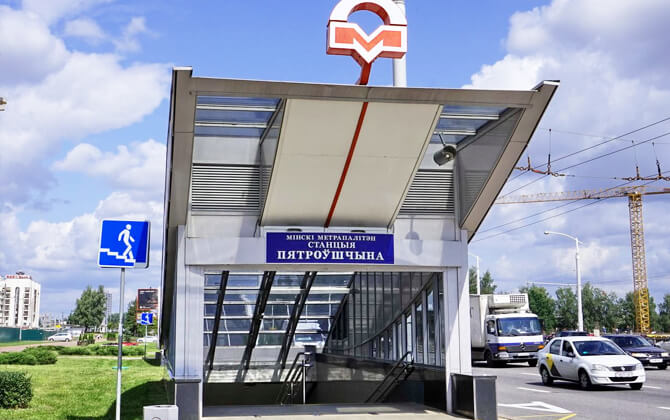
Most stations are reached through pedestrian underpasses marked with a red “M”. Some central stations have entrances inside buildings, but they are also easy to spot. Inside, keep to the right on escalators and in passages. Trains usually come every 2-3 minutes in rush hour, while daytime frequency can be lower.
If you need to change lines, there is no extra cost. The transfer point is Kastrychnitskaja / Kupałaŭskaja. To stay oriented, check the stations map and the numbered stops shown in the cars. All stations except Pieršamajskaja have island platforms, which makes boarding fairly straightforward.
Ticketing and payment
You can use a token, a travel card, or contactless bank card payment. A token is valid for one trip and costs 0.65 BYN, about $0.20. To enter, place it in the turnstile and wait for the green indicator. Contactless Visa or Mastercard cards, as well as smartphones with NFC, can also be used.
Travel cards come in several formats, including cards with a fixed number of trips and cards valid for several days or longer periods. If you buy a swipe card, remember that the card itself has a deposit cost, which can be returned when you hand the card back.
Opening hours and late-night travel
The metro opens at 5:30 a.m. and closes at 12:40 a.m. First and last trains can vary slightly by terminal station, so check the timetable and route before early or late trips. On major public holidays and national celebrations, working hours may be extended, though announcements usually come shortly beforehand.
If you are changing lines late at night, do not leave it to the very last train unless you are sure about your connection. Missing that transfer can be a real hassle.
Safety and conduct
Follow normal metro etiquette: let passengers get off before boarding, stay clear of the platform edge, and keep your belongings with you. Large bags may be checked by security, and stations may have metal detectors, X-ray screening, CCTV, and personal inspection areas. These checks are part of the regular safety routine, and the system is considered safe.
Do not smoke, travel while intoxicated, or carry dangerous substances. Also avoid sitting on escalator steps, blocking doors, or placing children and bags on seats. Staff monitor the system closely to keep service orderly.
Accessibility and practical tips
Stations opened after 2001 have elevators, and many newer stations are better adapted for passengers with limited mobility. If step-free access matters for your trip, it is best to check the station in advance. The metro also has tactile guide lines at platform edges for visually impaired passengers, and mobile phone service is available throughout the network.
Station names are shown in Belarusian and Russian, and each station has its own number. If you are not sure where to get off, use the line maps in the cars and in stations. During rush hour, people move fast, but calmly following the flow usually works best.
History
Between the 1950s and 1970s, Minsk grew into a city of more than one million residents. Plans for a rapid transit system appeared in the late 1960s. The Council of Ministers of the USSR approved construction on 4 February 1977, work began on 3 May 1977, and tunneling started on 4 November 1977.
The first line opened to passengers on 30 June 1984, making Minsk the ninth metro system in the Soviet Union. That original section had eight stations. Since then, the metro has expanded into a three-line system with 36 stations and a total length of 44.89 kilometres (27.89 miles).
After the collapse of the Soviet Union, metro construction in Minsk continued through the 1990s without interruption. That was unusual among former Soviet systems, and some experts connect it to the slower reform of the planned economy in Belarus, which supported further expansion.
Several extensions followed. The final phase of the Aŭtazavodskaja Line, originally planned for 2006, opened in late 2005. The northern extension of the Maskoŭskaja Line, initially scheduled for 2008, opened on 7 November 2007. In November 2012, three new stations opened on the southern end of the line, followed by one more in June 2014.
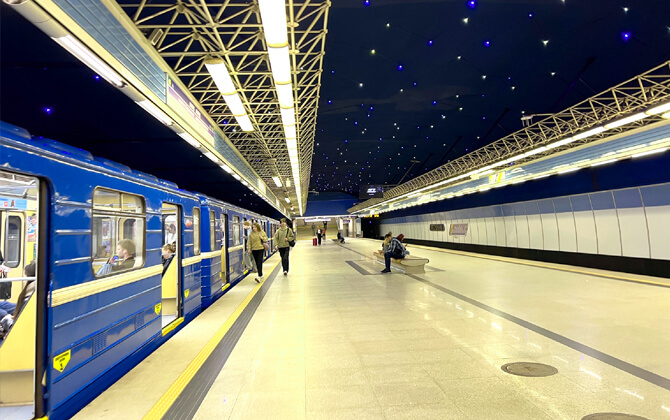
Construction of the first phase of Line 3, the Zyelyenaluzhskaya Line, started in 2014 and included four stations from Yubileynaya ploshcha to Kavalskaya Slabada. This section opened on 6 November 2020. The second phase began in 2018 and opened on 30 December 2024, extending the line to Slutski Hastsinets and adding a depot at the southern terminal.
In 2016, Minsk Metro ordered 10 train units from Stadler Rail, including six four-car and four five-car trainsets to replace older rolling stock. The Stadler M110/M111 trains entered service in February 2020.
Timeline
| Segment | Line | Date opened |
|---|---|---|
| Instytut Kultury-Maskoŭskaja | Maskowskaya | 30 June 1984 |
| Maskoŭskaja-Uschod | Maskowskaya | 30 December 1986 |
| Traktarny zavod-Frunzenskaya | Awtazavodskaya | 31 December 1990 |
| Pieršamajskaja | Awtazavodskaya | 28 May 1991 |
| Frunzenskaya-Puškinskaja | Awtazavodskaya | 3 July 1995 |
| Traktarny zavod-Avtazavodskaya | Awtazavodskaya | 7 November 1997 |
| Avtazavodskaya-Mogilevskaya | Awtazavodskaya | 5 September 2001 |
| Puškinskaja-Kamyennaya Horka | Awtazavodskaya | 7 November 2005 |
| Uschod-Uručča | Maskowskaya | 7 November 2007 |
| Instytut Kultury-Piatroŭščyna | Maskowskaya | 7 November 2012 |
| Piatroŭščyna-Malinaŭka | Maskowskaya | 3 June 2014 |
| Jubiliejnaja plošča-Kavaĺskaja Slabada | Zyelyenaluzhskaya | 6 November 2020 |
| Kavaĺskaja Slabada-Slutski Hastsinets | Zyelyenaluzhskaya | 30 December 2024 |
The construction history also reflects local technical conditions. Minsk is built on level ground with very dry soil, so its stations are underground but not deep-level. Of the current 36 stations, 25 are pillar-span and 11 are vaulted.
Future Development
The Minsk Metro expansion continues, with the Zyelyenaluzhskaya Line now established as the third line. Its first phase opened in 2020, and the second followed on 30 December 2024. As of 2025, the line has seven stations and is planned to extend further north to the residential area of Zyalyony Luh.
A fourth metro line is also under discussion. It is planned as a circular route linking the south and north of Minsk and reducing pressure on the busiest parts of the system. According to the available plans, it would include new interchange stations and a depot, with densely populated districts served first.
The development scheme has changed over time. Earlier plans for the fourth line included 17 stations, while later reports reduced that number to 16, with some stations removed from consideration. The project is still being finalized, so the final route may differ from earlier versions.
Future growth is also tied to broader transport planning in Minsk, including stronger links with satellite cities and improvements across the city transport network.
Fun Facts
The Minsk Metro is the only metro system in Belarus and the ninth one built in the USSR. Construction began in 1977, and passenger service started on 30 June 1984.
All stations are underground, but none are deep-level. Because the city stands on almost level ground with dry soil, stations are relatively close to the surface. That gives the system a different feel from many other ex-Soviet networks.
Architecture is one of its most interesting features. Many stations have their own design, with Belarusian national motifs, Soviet themes, and newer high-tech elements in more recent stations.
The system has kept expanding after the Soviet period. The Zyelyenaluzhskaya line opened in 2020 and was extended again in 2024.
In 2016, Minsk Metro ordered Stadler Rail trains to replace older rolling stock. The Stadler M110/M111 sets entered service in February 2020.
Security and passenger facilities are extensive, with CCTV, emergency communication devices, metal detectors, scanners, and security staff. Many stations also have elevators or lifts.
The network is built for practical transfers, and passengers do not pay extra when changing between metro lines. With opening hours from early morning until after midnight, it remains a central part of daily transport in Minsk.
Tourist Attractions
The Minsk Metro Museum offers a behind-the-scenes look at the city’s main transport system. It is located at Mogilevskaya station and focuses on metro history, from the first ideas discussed in the 1960s to the opening of the first line on 29 June 1984.
The exhibition includes photographs of shaft drilling, station construction, the launch of the first test train in March 1984, the grand opening, and the first passengers. It helps visitors follow the route from idea to reality and understand how the metro became part of everyday life in Minsk.
One of the most interesting exhibits is a real driver’s cab donated by the Moscow Metro. Visitors can sit in the seat, use the control panel, and get a feel for what driving a metro train is like. There is also a section of railway track with a flaw detection trolley, plus central and station control panels, coin-changing machines, tokens, passes, uniforms from different periods, communication equipment, and counting machines.
Other displays include symbolic station keys, postage stamps, souvenirs from guests, complaint and suggestion books, and films about metro history and subway safety. A photo section shows how station and train design changed over time, along with key moments such as new line openings and anniversary celebrations.
The museum operates on a voluntary basis and is free of charge. Tours are available only for organized groups of 5 to 20 people by prior arrangement, and each visit lasts about 1 hour 20 minutes. Booking is available on weekdays via the phone numbers listed on the official Minsk Metro website.
It is a good stop for schoolchildren, students, transport enthusiasts, tourists, and anyone curious about how the system works. It also pairs well with a walk around the Mogilevskaya station area if you want to see a bit of Minsk transport history up close.