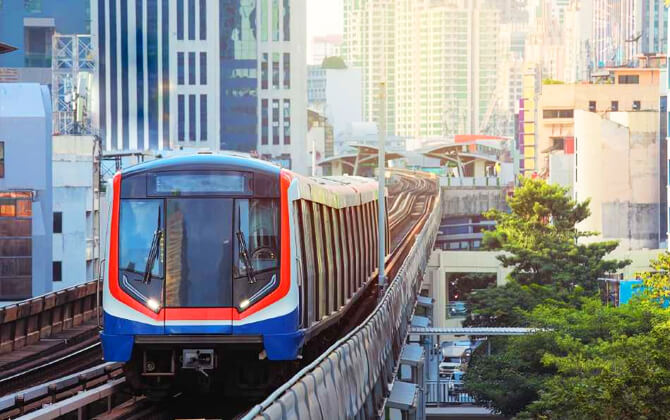
The Bangkok Mass Transit System, better known as the BTS Skytrain, is an elevated rapid transit system in Bangkok, Thailand. It is operated by Bangkok Mass Transit System PCL under a concession from the Bangkok Metropolitan Administration. The network has 62 stations across three lines and stretches 70.05 kilometers (43.53 miles), making it one of the city’s most important public transport links for business districts, shopping areas, residential neighborhoods, and tourist spots.
| Key | Information |
|---|---|
| System name | Bangkok Mass Transit System (BTS Skytrain) |
| Type | Elevated rapid transit system |
| Operator | Bangkok Mass Transit System PCL (BTSC) |
| Owner of lines | Bangkok Metropolitan Administration (BMA) |
| Lines | Sukhumvit Line, Silom Line, Gold Line |
| Stations | 62 |
| Route length | 70.05 km (43.53 miles) |
| Main interchanges | Siam, Krung Thon Buri |
| Formal name | The Elevated Train in Commemoration of HM the King’s 6th Cycle Birthday |
Bangkok SkyTrain Map
Map of Bangkok Sky Train System showing different lines and stations. Click on the map to enlarge it or download the Bangkok Sky Train System map in PDF format.

Bangkok Sky Train Lines
The BTS Skytrain system has three lines: the Sukhumvit Line, the Silom Line, and the Gold Line people mover. Together, they form a practical route plan for getting around central Bangkok and several outer districts without sitting in traffic.
The Sukhumvit Line runs north and south-east, ending at Khu Khot and Kheha. The Silom Line serves the Silom and Sathon Road areas and ends at National Stadium and Bang Wa. The Gold Line runs from Krung Thon Buri to Khlong San and serves Iconsiam.
Siam is the main interchange station between the Sukhumvit and Silom lines, while Krung Thon Buri connects with the Gold Line. Beyond the BTS, the wider city transport network also includes MRT lines, the Bus Rapid Transit system, the Airport Rail Link, and the SRT Red Lines.
Key BTS lines at a glance
| Station | Details |
|---|---|
| Sukhumvit Line | Runs from Khu Khot to Kheha |
| Silom Line | Runs from National Stadium to Bang Wa |
| Gold Line | Runs from Krung Thon Buri to Khlong San |
| Siam | Main interchange between the Sukhumvit Line and Silom Line |
| Krung Thon Buri | Interchange between the BTS network and the Gold Line |
The system is formally known as the Elevated Train in Commemoration of HM the King’s 6th Cycle Birthday.
Fares, Tickets and Cards
The BTS uses several fare systems, so the fare, ticket price, and total cost depend on the line and usually on distance or the number of stations traveled. If you want to check the price before you go, use the official fare calculator or look at the fare board in the station.
Fare rates by line
Different Bangkok rail lines use different fare rules.
- Green Line (Sukhumvit Line and Silom Line): 17-65 THB ($0.47-$1.81) per trip.
- Gold Line: 16 THB ($0.45) for a single journey.
- Yellow Line: 15-45 THB ($0.42-$1.25) per single journey.
- Pink Line: 15-45 THB ($0.42-$1.25) per single journey.
The Green Line uses one fare calculation for both the Sukhumvit and Silom lines. The Gold, Yellow, and Pink lines each have separate fare systems.
With a Rabbit Card, promotions may reduce the regular fare. For the Green Line, the BTS SkyTrain One-Day Pass costs 150 THB ($4.17) and allows unlimited travel for one day.
Bangkok BTS ticket types
- Single Journey Ticket: a plastic card bought from ticket machines or station ticket offices, valid only on the date of purchase.
- Rabbit Card: a prepaid card that can be topped up and used on the Sukhumvit, Silom, Gold, Yellow, and Pink lines.
- BTS One-Day Pass: a day pass valid on the Green Line for one day at a fixed price.
- EMV Contactless Card: accepted on the Yellow and Pink lines.
Single Journey Tickets can be used on the Green, Gold, Yellow, and Pink lines. One ticket can also be used when transferring between the BTS Green Line, Yellow Line, and Pink Line, although the fare is still calculated separately for each line. The Gold Line still requires a separate single journey ticket.
The Rabbit Card costs 200 THB ($5.56), including a 100 THB ($2.78) card issuance fee and 100 THB ($2.78) initial value. It can also be used on the Chao Phraya Express Boat.
The EMV contactless card can be used on the Yellow and Pink lines, but not on the BTS Green Line or Gold Line.
Where to buy BTS tickets
Most people buy a ticket from station machines. Some accept only coins, while others also take banknotes and QR code payments. Ticket offices sell tickets too, but cash only.
Depending on the machine, accepted cash may include 1, 2, 5, and 10 THB coins, plus 20, 50, and 100 THB banknotes. Larger notes are not accepted.
How to use your ticket
At the gate, tap your ticket or card to enter. Keep the ticket with you, because single journey cards must be inserted into the gate when you exit. If you use a stored-value card, just tap again on the way out.
For EMV contactless payment, there is usually a separate swing gate near the ticket office. Tap out with the same card you used to enter.
Money-saving tips
- Use a Rabbit Card if you want quicker station access and possible promotions.
- Choose the One-Day Pass if you expect to ride the Green Line several times in one day.
- Check online booking offers, as discounts are sometimes available.
For the Green, Yellow, and Pink lines, the fare calculator can help you confirm the exact ticket price before travel. Other Bangkok rail systems use different calculators and separate fare rules.
Bangkok Sky Train Hours
The BTS runs every day from 6:00 AM to midnight. These operating hours, opening hours, and working hours make it a reliable option for daily transport, sightseeing, and evening trips across Bangkok.
The first trains usually leave the end stations at about 6:00 AM. The last train generally departs close to midnight, though the exact closing time varies by station and is usually between 11:30 PM and 12:00 AM.
Peak periods are typically 7:00 AM to 9:00 AM and 4:00 PM to 7:00 PM. If you want a more comfortable ride, mid-morning, early afternoon, or after 7:30 PM is usually easier.
For fares, single rides start at 16 THB ($0.45) and can go up depending on distance. If you plan to ride more than once, a Rabbit Card or day pass may make more sense.
| Service detail | Timings |
|---|---|
| Daily service | 6:00 AM to midnight |
| Peak hours | 7:00 AM to 9:00 AM and 4:00 PM to 7:00 PM |
| Best travel window | After 10:00 AM and before 4:30 PM, or after 7:30 PM |
| Last train | Usually between 11:30 PM and 12:00 AM depending on station |
Schedule
The BTS Green Line operates daily from 06:00 to midnight. On the Sukhumvit Line, the first train departs from the terminal station at 05:15, while on the Silom Line the starting time is 05:30 from the terminal.
Depending on the station and direction, the last train may run slightly after midnight. Frequency is usually every 3-5 minutes during peak hours and every 5-6 minutes during off-peak periods.
If you are checking the timetable or train schedule today, keep in mind that opening times, timings, and running time details can vary by line, direction, and day type. Official route timetable formats list weekday and weekend schedules separately.
| Service detail | Timings |
|---|---|
| Green Line operating hours | Daily, 06:00 to midnight |
| Sukhumvit Line first train | 05:15 from the terminal station |
| Silom Line first train | 05:30 from the terminal station |
| Peak frequency | Every 3-5 minutes |
| Off-peak frequency | Every 5-6 minutes |
Connections to Other Systems
The BTS Skytrain is closely linked with Bangkok’s wider public transport system, so combining rail, boat, and local transport is fairly straightforward. Within the BTS itself, Siam is the main interchange, and Krung Thon Buri links to the Gold Line.
Several BTS stations also connect to other rail and transport services across the city.
| Station | Details |
|---|---|
| Mo Chit | Connection to MRT Blue Line |
| Asok | Connection to MRT Blue Line |
| Sala Daeng | Connection to MRT Blue Line |
| Bang Wa | Connection to MRT Blue Line |
| Phaya Thai | Connection to Airport Rail Link |
| Wat Phra Sri Mahathat | Connection to MRT Pink Line |
| Samrong | Connection to MRT Yellow Line |
| Saphan Taksin | Nearby Sathon Pier for Chao Phraya Express Boat |
These links make the BTS a practical part of transportation in Bangkok, whether you are heading to business districts, shopping areas, riverside spots, or airport services. Some stations also connect directly to nearby buildings and amenities through skybridges, which can make transfers easier.
Airport Connections
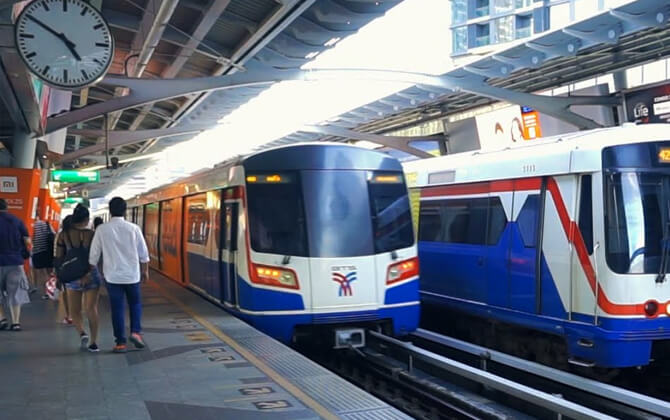
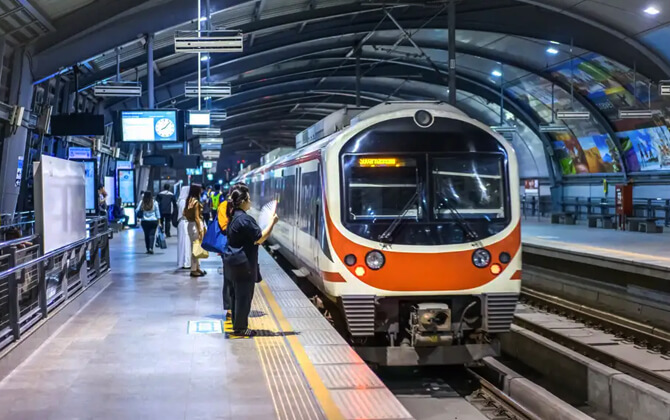
The BTS does not go directly to Suvarnabhumi Airport. Instead, the usual route is to take the BTS to Phaya Thai and transfer to the Airport Rail Link, a safe and low-cost alternative to a bus or taxi.
The Airport Rail Link City Line runs 28 kilometers (17.40 miles) and stops at six stations between the airport and downtown Bangkok. The trip from Suvarnabhumi Airport to Phaya Thai takes about 26 minutes. Trains run daily from 05:30 to midnight.
The Airport Rail Link station is on the basement level at Suvarnabhumi Airport. The line connects to the MRT at Makkasan and to the BTS at Phaya Thai, so continuing your journey by city transport is simple.
Airport Rail Link stations
| Station | Details |
|---|---|
| Suvarnabhumi Airport A1 | Airport station |
| Lad Krabang A2 | Intermediate station |
| Ban Thap Chang A3 | Intermediate station |
| Hua Mak A4 | Intermediate station |
| Ramkhamhaeng A5 | Intermediate station |
| Makkasan A6 | Interchange to MRT Phetchaburi |
| Ratchaprarop A7 | Convenient for the Pratunam area |
| Phayathai A8 | Interchange to BTS Sukhumvit Line |
Fares and tickets
Standard fares range from 15 to 45 THB ($0.42-$1.25), depending on distance. A trip from Suvarnabhumi Airport to Makkasan costs 35 THB ($0.97), while the fare to Phaya Thai is 45 THB ($1.25). Children under 12 years old and under 90 centimeters tall travel free.
Tickets are usually sold as single-trip tokens at station machines that accept Thai Baht cash. As of December 2025, contactless credit and debit card payment is also available, including mobile wallets.
Useful transfer notes
If you are heading to Sukhumvit Road, Makkasan is a useful stop because MRT Phetchaburi is a short walk away. For the Pratunam area, Ratchaprarop is convenient. For the BTS Skytrain, Phaya Thai is the key interchange.
The Airport Rail Link does not serve Don Mueang Airport. If you land at Suvarnabhumi, just follow signs to the basement level and look for the City Line station.
Parking
Station parking near BTS stops can be tricky, especially at busy times, but there are Park & Ride options near some stations. Several parking locations are available near major BTS stations, which helps drivers switch from car to train more easily.
Silom Line
| Station | Details |
|---|---|
| BTS Sala Daeng | Charn Issara Tower 1 Parking, Yada Building Parking, Liberty Square Parking, Rama Land Building Parking, Nishitetsu Hotel Croom Bangkok Silom Parking |
| BTS Chong Nonsi | Amara Surawong Hotel Parking, Somerset Park Suanplu Parking, Bangkok City Tower Parking, Holiday Inn Express Bangkok Sathorn Parking, Marriott Executive Apartments Sathorn Vista Parking |
| BTS Krung Thon Buri and Gold Line stations | Krung Thon Buri Park & Ride |
Sukhumvit Line
| Station | Details |
|---|---|
| BTS Ari | SP (IBM) Building Parking |
| BTS Phaya Thai | Siripinyo Building Parking, Unicorn Phaya Thai Parking |
| BTS Chit Lom | KPI Tower Parking |
| BTS Phloen Chit | JW Marriott Sukhumvit Parking, Shama Sukhumvit Soi 2 Bangkok Parking, ONE CITY CENTRE Parking, Plaza Athenee Parking, 208 Building Wireless Road Parking, GPF Wireless Parking |
| BTS Nana | JLK Tower Parking, LYF Sukhumvit 8 Bangkok Hotel Parking, Shama Sukhumvit Soi 2 Bangkok Parking, Two Pacific Place Parking, Hyatt Regency Bangkok Sukhumvit Hotel Parking, Nana Land Sukhumvit Parking, Ibis Bangkok Sukhumvit 4 Parking |
| BTS Asok | Interchange 21 Building Parking, Sermmitr Tower Parking, Shama Lakeview Asoke Hotel Parking, Sotetsu Grand Fresa Bangkok Parking, Solaria Nishitetsu Hotel Bangkok Parking |
| BTS Ekkamai | Somerset Ekkamai Parking |
| BTS Thonglor | Waterford Thonglor 11 Parking, Staybridge Suites Thonglor Parking, Waterford Diamond Tower Sukhumvit 30/1 Parking |
| BTS Samrong | BTS Samrong Park & Ride |
| BTS Ha Yaek Lat Phrao | Phahonyothin 22 Parking |
Some Park & Ride facilities offer daily or monthly options, and some have more than 500 spaces for BTS passengers. One car park is open daily from 5:00 AM to 2:00 AM. Free station parking for BTS passengers is also available at Wave Place on Saturdays and Sundays from 6:00 AM to 10:00 PM with ticket stamping at BTS Phloen Chit station.
Published parking charges, parking charges per day, and capacity limits vary by location. Some facilities have different rates for BTS users and non-users, and rules can change, so it is worth checking details before you travel.
Parking is prohibited in the indented areas of central road islands beneath BTS stations except for BTS maintenance vehicles. Use only designated spaces.
Rules and Tips
The BTS is an elevated, air-conditioned system and is generally a comfortable way to travel in Bangkok. It is also one of the easiest ways to avoid road traffic when using public transport around the city.
If you plan to ride more than once, a Rabbit Card can be handy. Single tickets and a day pass are also available if you do not want a stored-value card.
The system runs daily from 6:00 AM to midnight, so checking the timetable and schedule today before a late trip is a smart move. To avoid the heaviest crowds, skip peak periods if you can.
The BTS has two main lines, the Sukhumvit Line and the Silom Line, plus the Gold Line people mover. Before boarding, check the direction and final station carefully.
Passengers are expected to follow staff instructions and posted notices to keep the system safe and orderly.
- No smoking in stations or on trains.
- No eating or drinking in trains or paid areas.
- No animals, except guide dogs for blind passengers.
- No weapons, dangerous objects, or hazardous materials.
- No littering, spitting, or damaging station or train property.
- No loud noise or behavior that disturbs other passengers.
- No blocking doors, platforms, or restricted areas.
Keep your belongings close, stand behind the yellow line, and let passengers off before you board. If you are traveling with children, take extra care when getting on and off the train.
If something falls onto the track, do not try to retrieve it yourself. Ask staff for help.
Some fare rules can be confusing, especially for Rabbit Card users on certain sections. If in doubt, ask station staff before boarding.
History
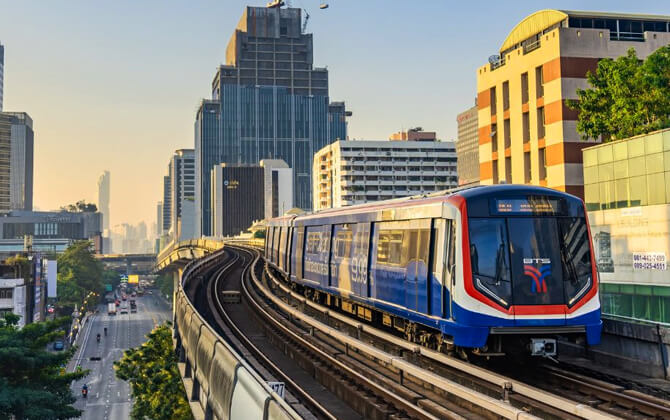
The history of the BTS goes back to the early 1980s, when Bangkok began planning a mass transit system to deal with severe traffic congestion. An earlier version of the project, known as the Lavalin Skytrain, was cancelled in June 1992 because of political interference.
After that project stalled, the Bangkok Metropolitan Administration moved ahead with a new plan for elevated rail lines along Sukhumvit and Silom Roads. Deputy Governor Captain Kritsada Arunwong na Ayutthaya and his team found a private investor, and Keeree Kanjanapas later founded the Bangkok Transit System Corporation to finance and deliver the project. In its early years, the system was sometimes called the Thanayong Skytrain.
Siemens supplied the railway technology, and Italian-Thai Development acted as the Thai contractor. The name Skytrain was later adopted by the press. The original depot was planned for Lumphini Park, but public objections led to its relocation to Phahonyothin Road near the old northern and northeastern bus terminal at Mo Chit.
The BTS Skytrain opened on 5 December 1999 and was inaugurated by Princess Maha Chakri Sirindhorn. Early ridership was lower than expected, at around 200,000 passenger trips per day, but use grew steadily over time.
The network expanded in stages. The Silom Line extension to Wongwian Yai opened in 2009, followed by the Sukhumvit Line extension to Bearing in 2011. Further Silom Line extensions to Talat Phlu and Bang Wa opened in 2013. The Sukhumvit Line reached Samrong in 2017 and Kheha in 2018. Additional Green Line sections opened in 2019 and 2020, and Saint Louis Station entered service in February 2021.
Ridership growth followed the network’s expansion and improved accessibility, including new escalators, side bridges, malls, and skywalk connections. By 2017, the BTS fleet included 52 four-car trains, and 46 more were ordered to increase capacity. Daily use later fell significantly during the COVID-19 pandemic in Thailand.
Future Extensions
The BTS system still has several planned expansion projects, including confirmed proposals and others that remain under planning or have been postponed. These extensions are intended to improve links to suburban areas and strengthen connections with other rail systems.
Sukhumvit Line
- North: a further 9 km (5.59 miles), five-station extension from Khu Khot to Wongwaen-Lam Luk Ka is planned for construction by 2029.
- East: a 7 km (4.35 miles), five-station extension from Kheha to Bang Pu is also planned for 2029.
- Spur line: a proposed link from Bang Na to Suvarnabhumi Airport would end at the future South Passenger Terminal, although it may instead be built as a light rail line.
- Lam Luk Ka Extension: listed as postponed.
- Tamru Extension: also listed as postponed.
- Infill station between Ari and Saphan Khwai: a planned station at Sena Ruam is listed as postponed.
Silom Line
- South: one proposal would extend the line from Bang Wa to Taling Chan, with a connection to the SRT Light Red Line.
- Further south: another planned section would continue from Taling Chan to Bang Rak Noi Tha It, linking with the MRT Purple Line.
- West: a short extension from National Stadium to Yot Se is planned, but no timeframe has been announced.
- System changes: the future southern extension includes plans for a new main depot and is expected to begin only after Saphan Taksin is renovated into a double-track station.
Gold Line
- Prachadhipok Extension: this one-station extension from Khlong San to Prachadhipok is listed as postponed.
Bangkok Sky Train Places to Visit
The BTS is one of the easiest ways to reach many of Bangkok’s best-known attractions. It connects shopping districts, cultural sites, parks, and river transport, so it works well for a full day out.
For first-time visitors, a few stations are especially useful as starting points. Many also have connections to MRT or boat services, which adds flexibility.
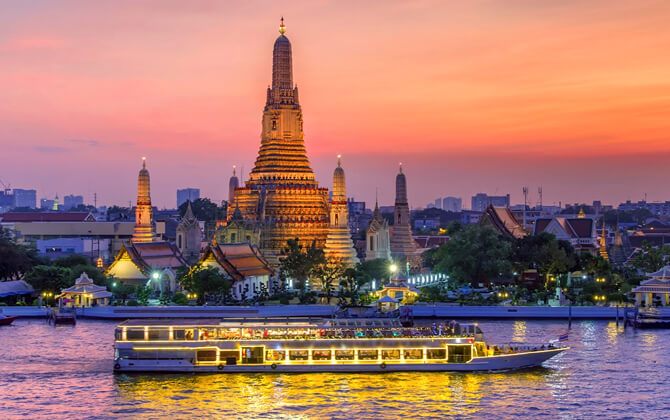
| Station | Details |
|---|---|
| Siam BTS station | For Siam Paragon, Siam Discovery, Siam Square, LINE Village, and Apex Scala Theatre |
| National Stadium BTS station | For Bangkok Art and Culture Centre, MBK Center, and Jim Thompson House |
| Chit Lom BTS station | For CentralWorld, Big C Supercenter, and Erawan Shrine |
| Mo Chit BTS station | For Chatuchak Weekend Market, Chatuchak Park, and Bangkok Butterfly Garden |
| Asok station | For Terminal 21 and Benjakitti Park |
| Saphan Taksin | For Sathorn Pier and river connections along the Chao Phraya |
If you are planning a shopping day, Siam, Chit Lom, and Asok are especially practical. For markets and open space, Mo Chit is the best-known stop. For museums and art, National Stadium is a strong pick.
How to choose the right BTS stop
Start with what you want to do, then choose the nearest station from the stations list. Siam and Chit Lom are great for malls and central sightseeing. Mo Chit is the go-to stop for local markets. National Stadium works well for museum visits, and Saphan Taksin is the easy choice if you want to continue by river boat.
Whichever route you pick, the BTS is a convenient way to combine sightseeing, food, and shopping in one day.