The Staten Island Railway is a rapid transit line serving Staten Island, New York City. Operated by the New York City Transit Authority Department of Subways for the Staten Island Rapid Transit Operating Authority, the system runs one active route between St. George and Tottenville along the borough’s east side. It operates 24 hours a day, seven days a week, connects directly with the Staten Island Ferry at St. George, and appears on official New York City Subway maps even though it has no direct rail link to the subway.
| Key | Information |
|---|---|
| System | Staten Island Railway, also known as SIR |
| Type | Rapid transit and local transport in Staten Island |
| Active route | Main Line between St. George and Tottenville |
| Route length | 14 miles / 22.5 kilometers |
| Stations | 21 active stations |
| Operating hours | 24 hours a day, seven days a week |
| Fare | $3 / USD $3, collected only at St. George and Tompkinsville |
| Main connection | Staten Island Ferry at St. George |
| Rolling stock | R211S subway cars, with R44 cars kept as a contingency fleet |
| Ridership | 5,437,400 in 2025, or about 18,400 per weekday in the fourth quarter of 2025 |
Staten Island Railway Map
Map of Staten Island Railway showing the various Stations. Click on the map to enlarge it or download the Staten Island Railway map in PDF format.
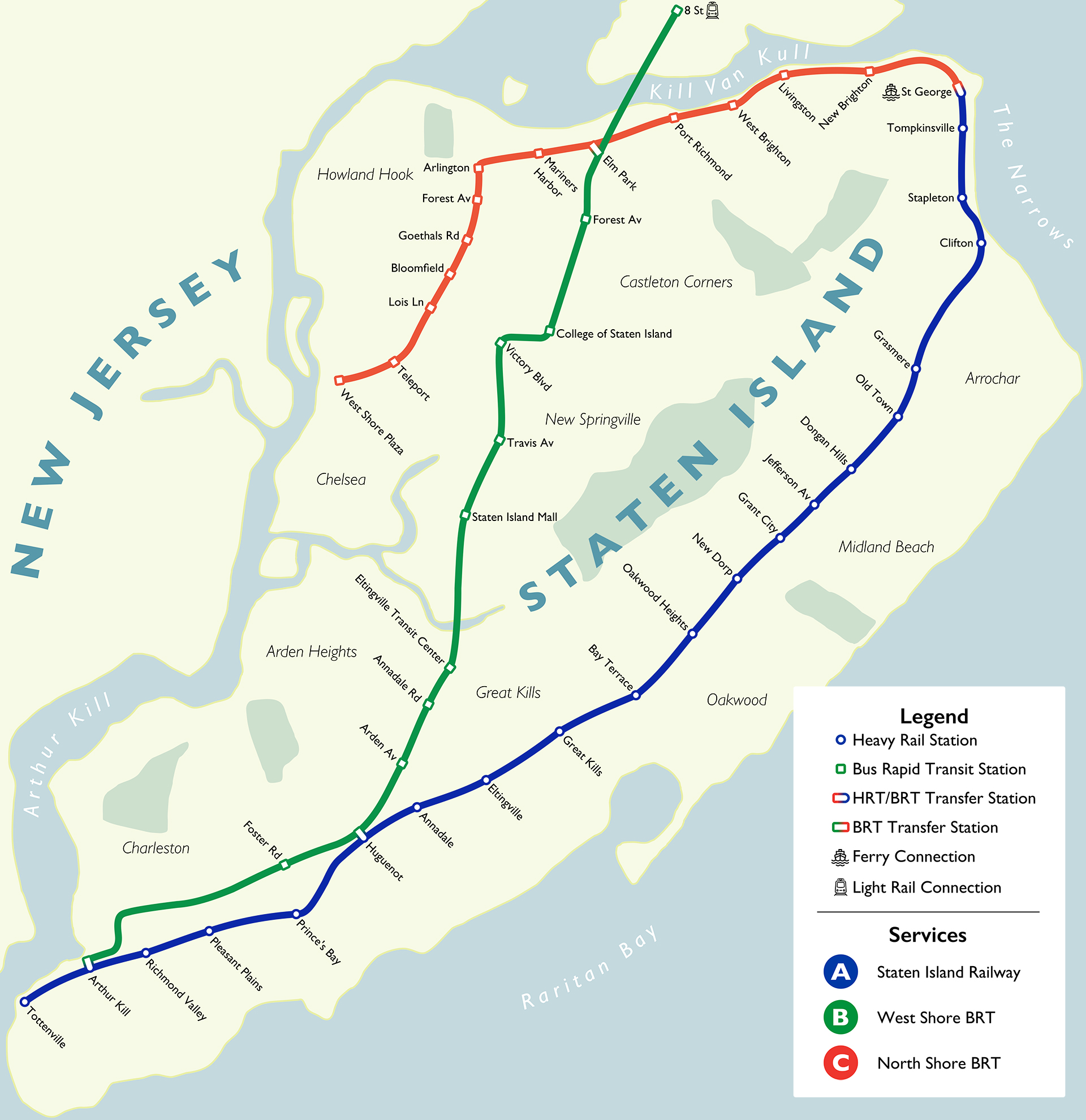
Staten Island Railway Stations and Lines
The Staten Island Railway has one active passenger line: the Main Line. It runs between St. George in the north and Tottenville in the south, following the east side of Staten Island. For trip planning, the route plan is simple: all active SIR stations are on the same line, and most trains are timed around Staten Island Ferry service.
The active route covers 14 miles / 22.5 kilometers and includes 21 stations. St. George is the main passenger hub, with direct access to the ferry terminal, while Tottenville is the southern terminus. Many stations are built above ground on embankments or in open cuts below street level.
St. George and Tompkinsville are the only stations with turnstiles. Accessibility or modernization improvements are noted at St. George, Tompkinsville, Dongan Hills, Great Kills, New Dorp, Tottenville, and Arthur Kill. Arthur Kill opened in 2017 and replaced the former Atlantic and Nassau stations.
Former passenger service also operated on the North Shore Branch and South Beach Branch, both of which closed in 1953. A small part of the North Shore Branch still sees freight use, while the South Beach Branch was abandoned and demolished, with only a few remnants visible. A possible in-fill station in Rosebank has also been discussed to reduce the long gap between Grasmere and Clifton.
| Station | Details |
|---|---|
| St. George | Opened March 7, 1886; northern terminus and connection to the Staten Island Ferry. |
| Tompkinsville | Opened July 31, 1884; one of the two SIR fare collection stations. |
| Stapleton | Opened July 31, 1884; municipal parking is available nearby. |
| Clifton | Opened April 23, 1860; formerly known as Vanderbilt’s Landing. |
| Grasmere | Opened around 1886; connection to the S53 bus to Bay Ridge, Brooklyn. |
| Old Town | Opened in 1937; formerly Old Town Road. |
| Dongan Hills | Opened April 23, 1860; noted for accessibility or modernization improvements. |
| Jefferson Avenue | Opened in 1937. |
| Grant City | Opened April 23, 1860. |
| New Dorp | Opened April 23, 1860; noted for accessibility or modernization improvements. |
| Oakwood Heights | Opened April 23, 1860; formerly Richmond, then Court House, then Oakwood. |
| Bay Terrace | Opened in the early 1900s; formerly Brendan, then Whitlock. |
| Great Kills | Opened April 23, 1860; formerly Gifford’s, with municipal parking nearby. |
| Eltingville | Opened April 23, 1860; bus connections to Staten Island Mall and Brooklyn. |
| Annadale | Opened May 14, 1860; park-and-ride facilities are available. |
| Huguenot | Opened June 2, 1860; formerly Bloomingview, then Huguenot Park. |
| Prince’s Bay | Opened June 2, 1860; formerly Lemon Creek, then Princes Bay. |
| Pleasant Plains | Opened June 2, 1860. |
| Richmond Valley | Opened June 2, 1860; the former West Shore Line diverges south of the station. |
| Arthur Kill | Opened January 21, 2017; replaced Nassau and Atlantic. |
| Tottenville | Opened June 2, 1860; southern terminus. |
Former and freight routes are part of the broader SIR system history. The North Shore Branch closed to passenger service in 1953, with a small western portion still used for freight. The South Beach Branch opened in 1888, was extended in 1893, and closed in 1953. The Travis Branch runs from Arlington Yard to Fresh Kills and was extended to the Staten Island Transfer Station in 2007. The West Shore Line was a non-electrified spur south of Richmond Valley that once served construction and industrial traffic.
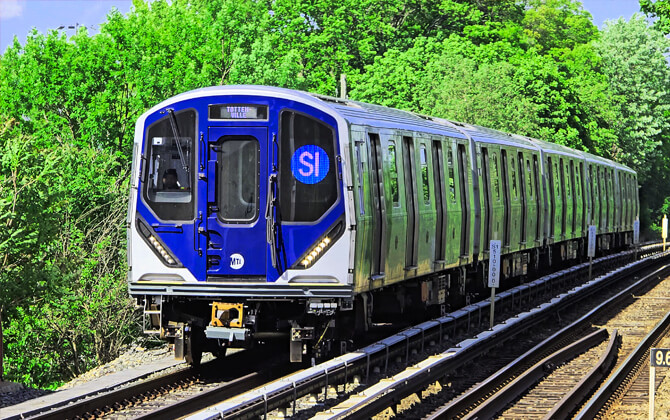
Staten Island Railway Operating Hours
The Staten Island Railway operating hours are straightforward: service runs 24 hours a day between St. George and Tottenville. That means the opening hours, opening times, working hours, and closing time are effectively continuous; the line does not close for regular overnight shutdowns.
Effective November 2, 2025, trains operate around the clock, and St. George provides the key connection with Staten Island Ferry service to Manhattan. For timings today, riders should still check current service notices, especially around holidays or planned changes.
| Service detail | Timings |
|---|---|
| Regular service | 24 hours a day, seven days a week |
| Starting time | Continuous service; no daily system start time is listed |
| Closing time | No regular closing time; the railway operates overnight |
| Last train | No final daily train is listed because service runs 24/7 |
| Route timetable | St. George to Tottenville, with most trains timed for Staten Island Ferry connections |
| Sunday holiday schedule | New Year’s Day, Memorial Day, Labor Day, Thanksgiving Day, and Christmas Day |
| Saturday holiday schedule | Martin Luther King Day, Presidents Day, and Independence Day |
| Pre-holiday service | Early departure get-a-way schedules may operate on the evening before select holidays |
Schedules may change for holidays, service work, or ferry coordination. The train schedule and frequency should be checked before travel when timing is important, particularly for late-night trips, holiday travel, or a ferry connection at St. George.
Fare information for the timetable notice is simple: tap and ride with a contactless credit or debit card, smartphone, wearable device, or OMNY Card. Use the same card or device for both legs of your trip to receive a free transfer. OMNY Card vending machines are available at all stations.
Staten Island Railway Fare
As of January 2026, the Staten Island Railway fare is $3 / USD $3, the same base ticket price as the New York City Subway and MTA buses. Fare payment is required only when entering or exiting at St. George and Tompkinsville. Trips that do not begin or end at either of those stations are free.
Payment is available with OMNY, and MetroCards with remaining balance are also accepted. Because the fare is integrated with subway and bus transfers, many riders pay no additional cost for the SIR if it is part of a continuous public transport trip. With a flat price, most riders do not need a fare calculator for a standard trip.
| Key | Information |
|---|---|
| Base fare | $3 / USD $3 |
| Ticket price | Same as the New York City Subway and MTA buses |
| Fare collection points | St. George and Tompkinsville only |
| Accepted payment | OMNY and MetroCard with remaining balance |
| Free rides | Trips not starting or ending at St. George or Tompkinsville |
| Transfers | Free transfers are available when using the same card or device for both legs of the trip |
Before the one-fare zone was introduced in 1997, fares were collected by onboard conductors at stations other than St. George. Later, to address fare avoidance at Tompkinsville, the MTA installed turnstiles there and opened a new station facility in 2010. OMNY readers were installed at St. George and Tompkinsville in December 2019.
MetroCard sales ended on December 31, 2025, although existing cards can still be used until the balance is depleted or the card expires.
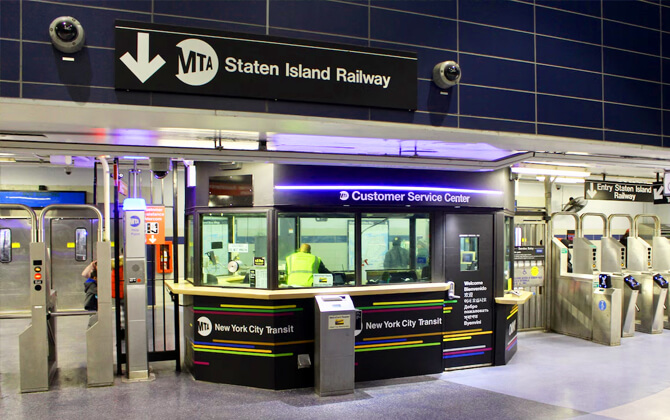
Connections to Other Systems
The Staten Island Railway has no direct rail connection to the New York City Subway system. Still, it is integrated into New York City transport through free transfers to New York City Transit bus and subway lines, and it appears on official subway maps.
St. George is the main interchange. The station is accessible from inside the Staten Island Ferry Terminal, and most trains are timed to connect with ferry departures and arrivals. For many commuters, this is the practical path: train to St. George, ferry to Manhattan, then subway or bus if needed.
At St. George, riders can also connect with a wide range of NYCT bus routes. The fare system supports many continuous trips across local transport, city transport, bus, ferry, and subway services without paying again, as long as transfer rules are followed.
Several proposals have suggested connecting the SIR directly to the subway network, including tunnel and bridge-based concepts, but none has been built. The passenger railway is also separated from the national rail network, even though parts of the former freight system once connected beyond Staten Island.
Airport Connections
The Staten Island Railway does not provide direct service to any of New York City’s six airports.
For John F. Kennedy International Airport, a public transportation trip is possible but involves several transfers. One suggested route starts at Grasmere station, where the S53 bus stops at Clove Rd / Grasmere. From there, riders can continue to 4 Av / 86 St, transfer to the New York City Subway R line at 86 St, then travel via Atlantic Avenue–Barclays Center and Jamaica Station before transferring to AirTrain JFK.
The same route can be used in reverse from JFK to Staten Island. Taxis and rental cars are also available near airport terminals for travelers who want a more direct option.
Parking
Station parking is available at selected Staten Island Railway stations, though not at every stop. Free park-and-ride facilities are available at Huguenot, Prince’s Bay, Annadale, and Dongan Hills.
Municipal parking lots are available at Great Kills and Stapleton. At other SIR stations, riders may find metered or free on-street parking depending on the location. Parking charges and parking charges per day can vary for municipal or street parking, so check posted rules before leaving your car.
Near the busiest connection point, the Staten Island Ferry Terminal area includes DOT municipal parking facilities close to St. George.
Rules and Tips
The Staten Island Railway is governed by rules designed to keep trains, stations, terminals, passengers, employees, and facilities safe. SIRTOA may amend these rules, and other applicable laws still apply.
Passengers should avoid blocking movement, lying on floors or platforms, taking more than one seat when it affects others, or placing feet on seats. Keep noise within permitted limits, do not use amplification devices on platforms, and avoid behavior that interferes with transit operations.
Smoking and tobacco use are prohibited. Drinking alcohol in open containers, consuming controlled substances except by valid prescription, riding while impaired, fighting, vandalism, and entering restricted areas are also banned. Commercial activity, panhandling, and unauthorized solicitation are restricted.
Some items and activities are limited for safety. Bicycles are not allowed on trains during weekday rush hours and may also be restricted when passenger traffic is heavy. Skateboards, roller skates, scooters, and similar devices are not permitted in terminals or on trains. Weapons, explosives, acids, inflammables, compressed gases, and other dangerous substances are prohibited.
Animals are generally not allowed in terminals or on trains, with limited exceptions for service animals and certain trained service animals. Service animals must be harnessed or leashed, and a trainer may be asked to show proof of professional affiliation and licensing.
For everyday travel, use designated entrances and exits, respect priority seating, and follow directions from SIRTOA staff or police officers. Violations may result in summonses, removal from a facility or train, and a penalty of up to $50 / USD $50, imprisonment for up to 30 days, or both.
- Watch the gap when boarding or leaving the train.
- If something falls onto the tracks, tell station personnel instead of trying to retrieve it yourself.
- Secure strollers on the platform, and remove babies from strollers on elevators or escalators; fold the stroller and carry the child.
- Stay alert for pickpockets, especially during busy travel periods.
- Use customer assistance intercoms or the emergency cord if you need help in an emergency.
History
The history of the Staten Island Railway begins with early rail proposals on the island in the 1830s and 1840s. A predecessor, the Staten Island Rail-Road Company, was incorporated in 1836 but failed before construction began. A later effort, backed by Cornelius Vanderbilt, led to the incorporation of the Staten Island Railroad Company on August 2, 1851.
Construction began in November 1855, and the line reached Tottenville on June 2, 1860. From the start, the railway was closely tied to ferry service, giving passengers connections to Manhattan and New Jersey. After the 1871 Westfield ferry disaster, the railroad entered receivership and was reorganized as the Staten Island Railway Company in 1873.
In 1880, Erastus Wiman organized the Staten Island Rapid Transit Railroad Company and worked with the Baltimore & Ohio Railroad to expand transportation in Staten Island. The North Shore Branch opened in 1886, followed by the South Beach Branch in 1888. The Arthur Kill Bridge, completed in 1888, connected Staten Island with New Jersey and became an important freight link.
By the late 19th century, the line had gone through several ownership changes and reorganizations. The B&O gained control, and the system was reorganized again in 1899 as the Staten Island Rapid Transit Railway. Freight service grew through the New Jersey connection while passenger service continued on the island branches.
In the early 20th century, the PRR took control of the B&O, and improvements followed. The railway was electrified in 1925 with third-rail power and subway-style equipment. Grade-crossing elimination projects were carried out during the 1930s and 1940s, including the Port Richmond–Tower Hill viaduct, which opened in 1937.
World War II brought heavy freight and military traffic, briefly making the line profitable. After the war, ridership declined as bus fares fell and passengers shifted to buses. Passenger service on the North Shore Branch and South Beach Branch ended in 1953, while the Tottenville line continued with city support. The Arthur Kill Bridge was replaced by a vertical-lift bridge in 1959, and operation of the line transferred to the Staten Island Rapid Transit Operating Authority in 1971 after New York City purchased the Tottenville line.
In 1994, the MTA restored the line’s historic name as the Staten Island Railway. Fares between Tompkinsville and Tottenville were eliminated in 1997. A short section of the North Shore Branch reopened for seasonal passenger service to Richmond County Bank Ballpark in 2001, then closed in 2010.
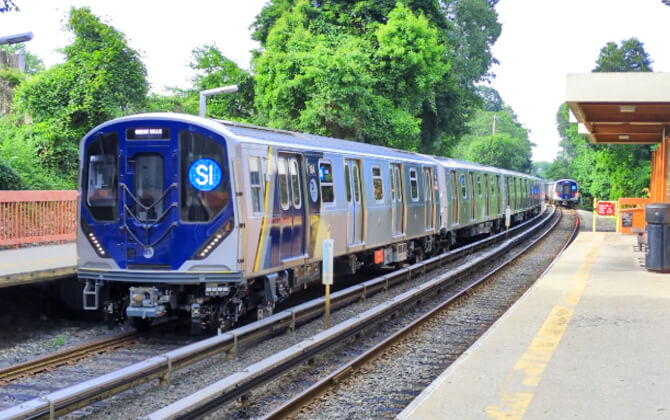
In the 2010s, the MTA planned to replace the aging R44 cars. After earlier replacement plans changed, 75 R211S cars were ordered, and the first entered service in October 2024. The R44 fleet was fully replaced by September 2025.
Future Extensions
Several expansion ideas have been discussed for the Staten Island Railway, but none has been completed. One long-running proposal is an in-fill station in Rosebank to reduce the longest gap between existing stops, between Grasmere and Clifton. Another idea is a direct connection to the New York City Subway system, including concepts such as the abandoned Staten Island Tunnel and a route across the Verrazzano–Narrows Bridge.
Restoring passenger service on the North Shore Branch has also been studied. A 2006 report described a 5.1-mile / 8.2-kilometer corridor between St. George and Arlington, with a preliminary estimate of up to 15,000 daily riders. Later analysis looked at heavy rail, light rail, and bus rapid transit, with bus rapid transit described as the preferred option because of lower cost and easier implementation.
The South Beach Branch and other inactive rights-of-way have appeared in broader planning discussions, but the available material does not identify any approved passenger extension project. For now, the railway remains focused on its single active line between St. George and Tottenville.
Nearby Attractions
Several notable places are easy to reach from the Staten Island Railway, especially near St. George and Tottenville. If you are building a simple route plan for a day out, these stops and landmarks are among the best-known options along the line.
- National Lighthouse Museum — Located a few blocks from St. George’s municipal buildings, this museum is housed in a former depot for the United States Lighthouse Service. It opened in 2015 after years of abandonment and vandalism.
- St. George Theatre — This 2,800-seat theater sits up the hill on Hyatt Street and is one of the neighborhood’s major landmarks. It has hosted performers including Chaka Khan, Lester Flatt, Chris Rock, and Jerry Seinfeld.
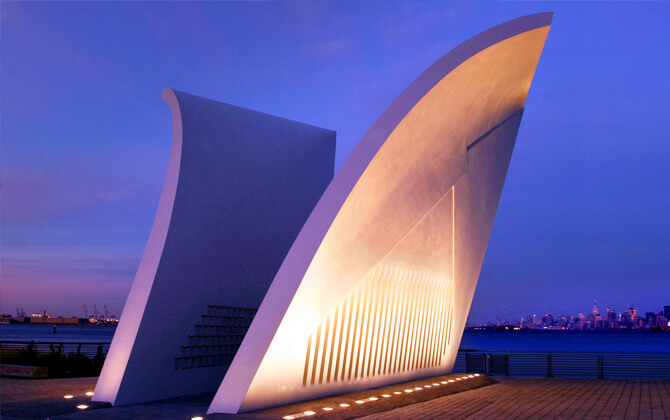
- Staten Island September 11 Memorial — Listed among nearby attractions associated with the railway, this memorial is a meaningful stop when exploring the St. George area.
- St. George Ferry Terminal — The northern terminus of the railway is also a major transit hub and a rare rail-to-boat connection in the United States. It links the SIR with the Staten Island Ferry to Manhattan.
- Conference House Park — At the southern end of the line in Tottenville, this park centers on the historic Conference House, a stone manor built in 1680 and known for peace negotiations during the war.
I found this post super helpful! The detailed map and information on the routes and hours make planning my trips so much easier. Thanks for breaking everything down!