Guangzhou Metro is the rapid transit system of Guangzhou, the capital of Guangdong, China. Operated by the state-owned Guangzhou Metro Corporation, it was the fourth metro system built in mainland China after Beijing, Tianjin, and Shanghai. As of 29 June 2025, the system has 19 lines in operation, including Line 1 to Line 14, Line 18, Line 21, Line 22, the Guangfo Line, and the Zhujiang New Town APM. It serves the urban core and outer districts, runs daily from 6:00 am to midnight, and is a major part of public transport and city transport in Guangzhou. The network also stands out for its scale, with 381 stations across 750.09 km (466.1 mi) of lines in one part of the source material, while another section lists 399 stations across 779.9 km (484.6 mi). Some routes are built for higher speeds, and Lines 18 and 22 are described as the fastest metro lines in China.
| Key | Information |
|---|---|
| System | Guangzhou Metro |
| City | Guangzhou, Guangdong, China |
| Operator | Guangzhou Metro Corporation |
| Lines in operation | 19 |
| Operating hours | Usually 6:00 am to midnight |
| Stations | 381 or 399, depending on the source section |
| Network length | 750.09 km (466.1 mi) or 779.9 km (484.6 mi), depending on the source section |
| Special link | Guangfo Line connects Guangzhou and Foshan |
| Fast lines | Lines 18 and 22 |
Guangzhou Metro Map
Map of Guangzhou Metro showing different lines. Click on the map to enlarge it or download the Guangzhou Metro map in PDF format.
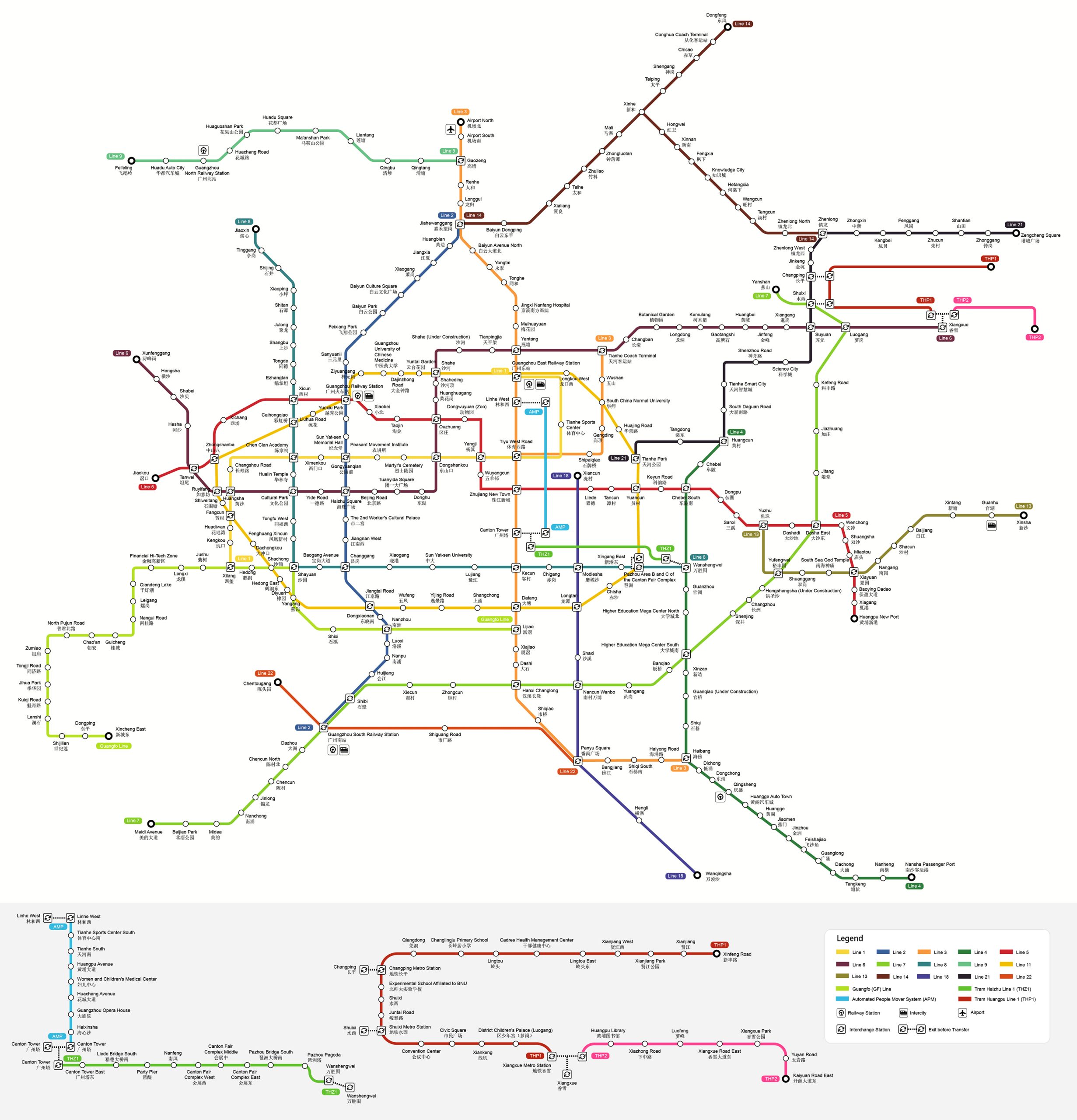
Lines and Stations
As of 29 June 2025, Guangzhou Metro has 19 lines in operation: Line 1, Line 2, Line 3, Line 4, Line 5, Line 6, Line 7, Line 8, Line 9, Line 10, Line 11, Line 12, Line 13, Line 14, Line 18, Line 21, Line 22, the Guangfo Line, and Zhujiang New Town APM. The system covers central Guangzhou and the suburbs, while the Guangfo Line extends the route into Foshan as China’s first metro line linking two cities.
The network is listed here as having 399 stations across 779.9 km (484.6 mi) of lines. Daily service usually starts at 6:00 am and ends at midnight, with average daily ridership above 7 million. If you are looking for a stations map, stations list, or route plan, the line overview below gives a practical snapshot of the system.
Selected line openings
- Line 1 opened between Xilang and Huangsha on 28 June 1997 and was later extended to Guangzhou East Railway Station on 16 February 1999.
- Line 2 first opened on 29 December 2002 and resumed as a through line on 25 September 2010 after extensions and realignments.
- Line 3 began service on 26 December 2005.
- Line 4 opened in stages from 26 December 2005.
- Line 5 opened on 28 December 2009 and was extended to Huangpu New Port on 28 December 2023.
- Line 6 opened on 28 December 2013 and was extended to Xiangxue in 2016.
- Line 7 opened in 2016 and later expanded in 2022 and 2023.
- Line 10 opened its initial section from Xilang to Yangji East on 29 June 2025.
- Line 11 opened as a full circular line on 28 December 2024.
- Line 12 opened its western and eastern sections on 29 June 2025.
- Line 13 opened in 2017, and Line 14 opened in 2018.
Stations in operation
Major transfer stations include Xilang, Guangzhou South Railway Station, Tiyu Xilu, Changgang, Guangzhou East Railway Station, and Jiahewanggang. Airport access is available through Airport South and Airport North on Line 3, and the Guangfo Line adds cross-city connectivity.
| Station | Details |
|---|---|
| Line 1 | Xilang — Guangzhou East Railway Station |
| Line 2 | Guangzhou South Railway Station — Jiahewanggang |
| Line 3 | Haibang — Tianhe Coach Terminal / Airport North |
| Line 4 | Nansha Passenger Port — Huangcun |
| Line 5 | Jiaokou — Huangpu New Port |
| Line 6 | Xunfenggang — Xiangxue |
| Line 7 | Guangzhou South Railway Station — Yanshan |
| Line 8 | Jiaoxin — Wanshengwei |
| Line 9 | Fei’eling — Gaozeng |
| Line 10 | Xilang — Yangji East |
| Line 11 | Chisha — Longtan |
| Line 12 | Xunfenggang / Ersha Island — Higher Education Mega Center South |
| Line 13 | Tianhe Park — Xinsha |
| Line 14 | Lejia Road — Dongfeng / Xinhe — Zhenlong |
| Line 18 | Xiancun — Wanqingsha |
| Line 21 | Tianhe Park — Zengcheng Square |
| Line 22 | Fangcun — Panyu Square |
| Guangfo Line | Xincheng Dong — Lijiao |
| APM | Linhexi — Canton Tower |
Several extensions are planned or under construction, including Line 24, pre-construction work for Line 28, and extensions of Lines 8, 10, 12, 13, 14, 18, and Line 22 toward Baiyun Airport.
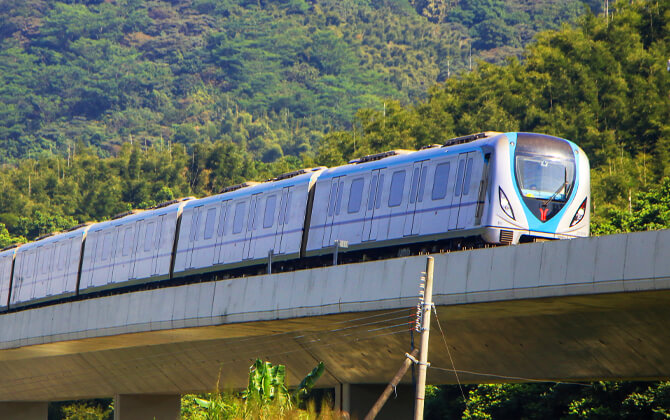
Schedule
Guangzhou Metro operating hours usually begin around 6:00 am. Opening times, working hours, and last train timings vary by line and direction, and service can change on holidays or during major events. For timings today or the latest schedule today, station signage and the official app are the best sources.
The timetable below shows sample train schedule details from the current service information. It is useful if you need the starting time, closing time, or route timetable for popular lines.
| Service detail | Timings |
|---|---|
| Line 1, Xilang to Guangzhou East Railway Station | First train 06:00, last train 22:55 |
| Line 1, Guangzhou East Railway Station to Xilang | First train 06:10, last train 23:30 |
| Line 3, Panyu Square to Tianhe Coach Terminal | First train 06:00, last train 22:55 |
| Line 3, Tianhe Coach Terminal to Panyu Square | First train 06:10, last train 23:30 |
| Line 3 North Extension, Tiyu Xilu to Airport North | First train 06:00, last train 23:30 |
| Line 6, Xunfenggang to Xiangxue | First train 06:00, last train 22:50 |
| Line 7, Guangzhou South Railway Station to Higher Education Mega Center South | First train 06:00, last train 23:30 |
| APM Line, Canton Tower to Linhexi | First train 07:00, last train 23:30 |
During rush hours, frequency on busy routes can be every few minutes. Off-peak running time between trains may be longer. For airport trips, Line 3 North Extension is the key path train route, while travel toward Foshan on the Guangfo Line follows its own timetable and schedule.
Fares
Guangzhou Metro uses a distance-based fare system. The starting ticket price is ¥2 (about $0.28), and the cost rises with distance, so longer trips cost more. If you want a simple fare calculator reference, the table below shows the basic price structure from the source material.
| Key | Information |
|---|---|
| 0–4 km (0–2.5 mi) | ¥2 (about $0.28) |
| 4–12 km (2.5–7.5 mi) | ¥3–4 (about $0.42–$0.56) |
| 12–24 km (7.5–14.9 mi) | ¥5–7 (about $0.69–$0.97) |
| Over 24 km (14.9 mi) | ¥8+ (about $1.11+) |
| APM Line | ¥2 flat fare (about $0.28) |
The Yang Cheng Tong transportation card gives a 5% discount on fares. The system accepts cash, the Guangzhou Transportation Smart Card, UnionPay QuickPass, and mobile payments through WeChat Pay and Alipay. Tickets can be purchased at metro stations using cash or credit cards.
Most lines run daily from 6:00 am to 11:30 pm, although opening hours may differ slightly by line and station.
Connectivity
Guangzhou Metro is the backbone of transportation in Guangzhou and a central part of the city’s public transport system. As of 29 June 2025, it has 19 lines in operation, including the Guangfo Line and Zhujiang New Town APM, with 399 stations and 779.9 km (484.6 mi) of lines.
One of the network’s most important links is the Guangfo Line, which connects Guangzhou and Foshan. The metro also ties directly into major rail hubs such as Guangzhou South Railway Station, Guangzhou East Railway Station, Guangzhou Railway Station, and Baiyun International Airport. For local transport and regional transport alike, that makes it especially practical.
Key transfer links
- Guangzhou South Railway Station is served by Lines 2, 7, and 22.
- Guangzhou Railway Station is served by Lines 1 and 5.
- Guangzhou East Railway Station is served by Lines 1 and 3.
- Baiyun International Airport is connected by Line 3 North Extension and Line 22.
- Guangfo Line provides direct connectivity with Foshan.
The network also links with intercity rail services, helping connect Guangzhou with nearby cities including Foshan, Dongguan, Huizhou, Zhaoqing, and Qingyuan. So this is not just a city transport system. It is also part of wider regional mobility across the Pearl River Delta.
Daily service generally runs from 6:00 am to midnight, which works well for commuting, airport transfers, and longer cross-city trips.
Airport Connection
Guangzhou Baiyun International Airport has two terminals, Terminal 1 and Terminal 2. Both are connected to the city by Metro Line 3 North Extension, an easy and budget-friendly airport route into central Guangzhou.
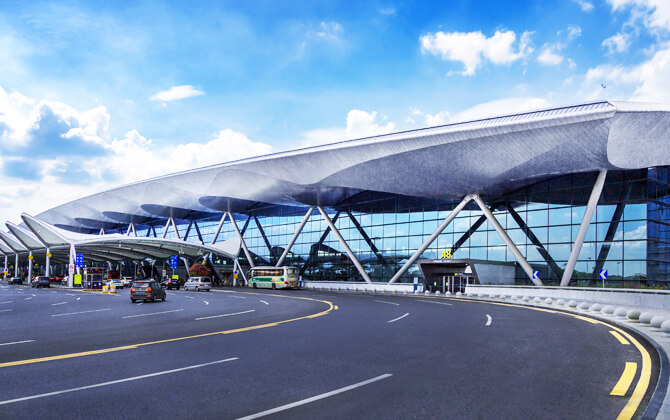
Metro from the Airport
Metro stations are located in the basement of both terminals: Airport South Station for Terminal 1 and Airport North Station for Terminal 2. The line runs daily from around 06:10 to 23:00.
- For the new downtown area, get off at Tiyu Xilu.
- For the old downtown area, transfer at Jiahewanggang to Line 2 and continue to stations such as Sun Yat-sen Memorial Hall, Yuexiu Park, or Gongyuanqian.
- Line 3 also connects with major stations including Guangzhou East Railway Station and Guangzhou North Railway Station.
Useful Metro Transfers
| Key | Information |
|---|---|
| Tiyu Xilu | Line 3 North Extension, about 45 minutes |
| Sun Yat-sen Memorial Hall | Line 3 → Jiahewanggang → Line 2, about 49 minutes |
| Yuexiu Park | Line 3 → Jiahewanggang → Line 2, about 48 minutes |
| Guangzhou East Railway Station | Line 3 North Extension, about 42 minutes |
Other Ways to Reach Downtown
A taxi is the most direct option, especially with heavy luggage or if you are going to a specific address. The airport is about 31–36 km (19.3–22.4 mi) from downtown Guangzhou, and the price depends on the destination.
Shuttle buses also run from both terminals, serving major hotels, railway stations, and business districts in Guangzhou.
Ticketing and Fares
Metro fare from the airport is distance-based and generally falls between RMB 2 and 7, or about $0.28 to $0.97. Tickets are available at booths in Airport South Station and Airport North Station. Ticket machines may not accept large bills or provide change, so it helps to be prepared.
For many travelers, the metro is the best balance of speed, price, and easy connections across the city.
Rules and Regulations
Passengers are expected to follow Guangzhou Metro rules on conduct, ticket use, and security checks. These regulations are meant to keep the system safe, orderly, and convenient for everyone.
Passenger conduct
In stations, passageways, halls, platforms, train cars, and other metro facilities, passengers must not disturb public order or affect normal operations. Prohibited behavior includes playing electronic devices out loud, lying across seats, taking multiple seats, begging or performing for commercial purposes, and bringing bicycles on board except folding bicycles in full packaging that meet luggage rules.
Passengers must also avoid fighting, drunken disorderly conduct, harassment, secretly filming others, using open flames, crossing safety lines, forcing doors open, entering restricted areas, damaging facilities, or ignoring staff instructions. Actions that cause crowding, block evacuation routes, or affect cleanliness and order are prohibited as well.
Items not allowed
Guangzhou Metro does not allow firearms, ammunition, controlled knives and tools, explosives, hazardous substances, strongly odorous or irritating items, and other goods restricted by law. Anything that may cause panic, put passengers or property at risk, or affect rail safety is also banned.
Other prohibited items include bicycles, electric bicycles, electric skateboards, live poultry, and pets such as cats, dogs, and snakes. Service animals on duty, including guide dogs and assistance dogs with valid identification and certificates, are exempt if protective measures are in place.
Each passenger may carry luggage up to 30 kilograms in total, with total external dimensions no larger than 1.8 meters. No extra fare is charged within that limit. Items that exceed it, obstruct movement, or affect operational safety are not permitted.
Tickets and travel documents
Passengers must travel with a valid ticket under the one person, one ticket rule. The same ticket should be used for entry and exit so the travel record stays complete. Passengers using QR code ticketing must follow the relevant platform rules and may not mix QR codes from different e-platforms for one journey.
The metro also requires compliance with the rules for single-journey tickets, day pass products, UnionPay credit card payment, and other valid travel vouchers. Tickets must not be altered, forged, or misused. If a passenger travels without a valid ticket, uses an invalid one, or exceeds the permitted travel time or distance, additional fare may be charged.
Security inspection
All passengers and belongings are subject to security screening at station entry. Inspection may include walk-through metal detectors, conveyor scanners, handheld detectors, liquid scanners, and explosive detectors. If a suspicious or prohibited item is found, or an item cannot be clearly identified, passengers must cooperate with further checks.
During peak periods, severe weather, equipment failure, or other disruptions, operators may strengthen crowd control and apply temporary measures such as station closures or passenger flow restrictions.
Violations and penalties
Violations are handled under the Guangzhou Urban Rail Transit Management Regulations and other relevant provisions. Suspected criminal cases may be transferred to judicial authorities. Related violations may also be recorded in the public credit information management system under applicable regulations.
The current rules took effect upon issuance and remain valid for five years. The earlier 2019 passenger code notice was repealed at the same time.
History
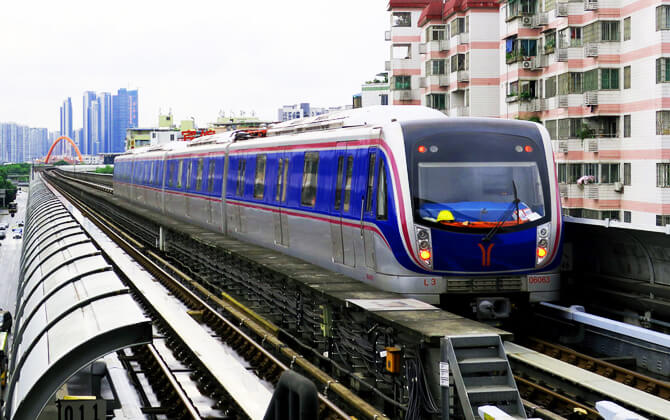
The history of Guangzhou Metro goes back to 1960, when Chen Yu, then Governor of Guangdong, first proposed an underground rapid transit system for the city. That summer, he ordered a secret geological survey of groundwater conditions. The findings led to a confidential report in July 1961, and later, in 1965, Chen Yu and Tao Zhu proposed building a tunnel in Guangzhou for wartime evacuation and future metro development.
After central government approval, the project began in spring 1965 under the name Project Nine. The original plan included two lines, roughly similar to today’s Line 2 and Line 1. The east-west route was never built, while the north-south route moved forward in a scaled-down form. Because of major limits in time, money, and materials, the tunnel finished in 1966 was not suitable for public transport use.
Modern planning resumed in 1984 through the Preparation Office of Guangzhou Metro. At that point, the focus shifted from wartime needs to everyday urban transport. China and France jointly developed the initial network design, and four tentative schemes were published in Guangzhou Daily on 14 March 1988. After expert review and public feedback, one scheme was selected as the basis for Line 1 and Line 2.
Construction of Line 1 officially started on 28 December 1993, though a trial section at Huangsha had already begun in October 1992. The project introduced technology that was new in China at the time, including immersed tubes for the Pearl River Tunnel and tunnel boring machines in the Huangsha–Martyrs’ Park section. Line 1 was funded entirely by the local government and required large-scale relocation and demolition.
The first section of Line 1, from Xilang to Huangsha, opened for trial operation on 28 June 1997. The remaining section to Guangzhou East Railway Station was completed on 28 December 1998. Sightseeing tours ran from 16 February to 2 March 1999, and full passenger service began on 28 June 1999.
Expansion picked up in the 2000s. Line 2 was approved in June 1998 on the condition that most electromechanical equipment be sourced domestically. Construction began in July 1998, and the line opened in stages, with the first section entering service on 29 December 2002 and the remaining section on 28 June 2003. By then, construction of Line 3, Line 4, and Guangfo Line was already under way.
From there, the system grew quickly. Guangfo Line became the first metro line connecting two cities in China, linking Guangzhou and Foshan, and Guangzhou Metro developed into one of the world’s busiest and largest urban rail systems.
Future Extensions
Guangzhou Metro has a substantial expansion pipeline. Some projects are under construction, while others are still in preparation. The next stage of growth combines new lines, unfinished sections, and targeted extensions to improve access to key districts and transfer hubs.
Projects under construction
Current works include Line 24, listed in north and south sections, and Line 28, which is in pre-construction preparation. Other active projects include unfinished sections on Lines 4, 7, 8, 10, 11, 12, 13, 14, 18, and 22. Notable items include the middle section of Line 12, the remaining section of Line 13 Phase 2, and planned extensions for Lines 18 and 22.
- Line 12 middle section between Guangzhou Gymnasium and Ersha Island
- Line 13 Phase 2 remaining section between Tianhe Park and Chaoyang
- Line 14 Phase 2 remaining section between Guangzhou Railway Station and Lejia Road
- Line 18 northern and southern extension projects
- Line 22 northern extension toward Airport North
- Line 24 connections linked to the Line 8 far northern extension
- Line 28 intercity project in pre-construction preparation
Long-term network planning
The Guangzhou Urban Rail Transit Network Planning Scheme (2018–2035), approved by the Guangzhou Municipal Government in November 2020, outlines a very large long-term expansion. The plan includes 53 metro lines and 2,029 km (1,260.8 mi) of total planned rail, divided into high-speed metro, rapid metro, and regular-speed metro layers.
| Key | Information |
|---|---|
| High-speed metro | 5 lines, 452 km (280.9 mi) |
| Rapid metro | 11 lines, 607 km (377.2 mi) |
| Regular-speed metro | 37 lines, 970 km (602.7 mi) |
The long-term route plan also identifies corridors and branches including Line 3 to Airport North and Haiou Island, a parallel express service on Line 4, Line 13 toward Xinsha, Line 14 toward Dongfeng, Line 16 toward Lichengbei, Line 24 toward Lijiao, Line 25 toward Huangpu New Port, Line 26 toward Foshan, and Line 27 toward Dongguan.
Connections to neighboring cities
Guangzhou Metro is being developed as part of a wider regional transport system. The Guangfo Metro already links Guangzhou and Foshan, and other proposed links would connect Guangzhou with Foshan, Dongguan, Huizhou, Zhongshan, and Qingyuan.
The source material also mentions studies for extending Lines 16 and 21 toward Huizhou, as well as feasibility work for extending Line 18 south toward Zhongshan and north toward Qingyuan. In other words, the expansion is not only about the city itself. It is also about stronger cross-city integration.
Tourist Attractions
Guangzhou Metro makes it easy to reach many of the city’s best-known attractions. If you want to combine sightseeing with efficient public transport, these stops are among the most useful to include in your route.
- Beijing Road Pedestrian Street — a 440-meter (0.44 km / 0.27 mi) shopping street with around 100 shops, restaurants, and grocery stores. Its glass-paved surface reveals ancient road remains below.
- Canton Tower — one of Guangzhou’s landmarks, 600 meters high (0.6 km / 0.37 mi), with 46 rings of LED lights and the Revolving Restaurant on the 106th floor.
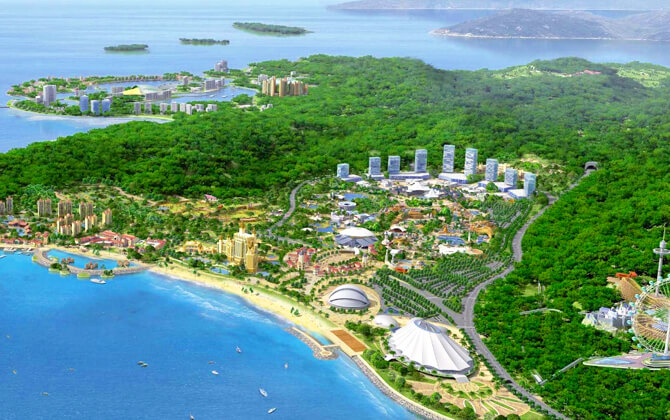
- Guangzhou Chimelong Tourist Resort — a large resort area with Chimelong Paradise, Chimelong International Circus, Chimelong Safari Park, Chimelong Bird Park, and Chimelong Hotel.
- Shamian Island — known for more than 150 European-style buildings, including New Baroque, Gothic, and Colonial architecture, plus scenic streets with cafes and bars.
- Shangxiajiu Pedestrian Street — a 1,237-meter pedestrian street (1.24 km / 0.77 mi) with more than 300 shops and restaurants, popular for local food.
- Sun Yat-sen Memorial Hall — an octagonal palace-style building combining Chinese and Western design elements.
- Guangzhou Metro Museum — the first metro-themed museum in China, with interactive displays, 3D projection, train models, and a driving simulation experience.
- Guangzhou South Railway Station — a major high-speed rail hub and a useful base for reaching other attractions by metro.
- Guangzhou North Railway Station — another important transport hub for long-distance travelers.
- Flower World — a botanical attraction on Foshan Metro Line 2, described in the source as a botanical paradise.
Other notable places along the network include Guangzhou Cultural Park, South China Botanical Garden, Nanhai God Temple, Conghua Hot Spring Resort, Zhuliao Ancient Village, Wanqingsha Wetland Park, Tianhe Smart City, and Science City.
For first-time visitors, metro-friendly highlights such as Canton Tower, Beijing Road Pedestrian Street, Shamian Island, and Sun Yat-sen Memorial Hall offer a practical mix of history, local culture, and modern Guangzhou.