The Roosevelt Island Tramway is an aerial tramway in New York City that crosses the East River between Roosevelt Island and the Upper East Side of Manhattan. Opened on May 17, 1976, it was the first commuter aerial tramway in the United States and remains a useful public transport link as well as one of the city’s most scenic rides. The cabins travel 3,140 feet (about 0.96 km / 0.60 mi) between the two terminals, with frequent service through the day and evening.
| Key | Information |
|---|---|
| Opened | May 17, 1976 |
| System type | Aerial tramway and city transport link |
| Route | Roosevelt Island to Manhattan |
| Distance | 3,140 feet (about 0.96 km / 0.60 mi) |
| Operator | Leitner-Poma for the Roosevelt Island Operating Corporation |
| Fare payment | MetroCard and OMNY |
Roosevelt Island Tramway Map
Roosevelt Island Tramway map shows all available stops. Click on the map to enlarge it or download the Roosevelt Island Tramway map in PDF format.
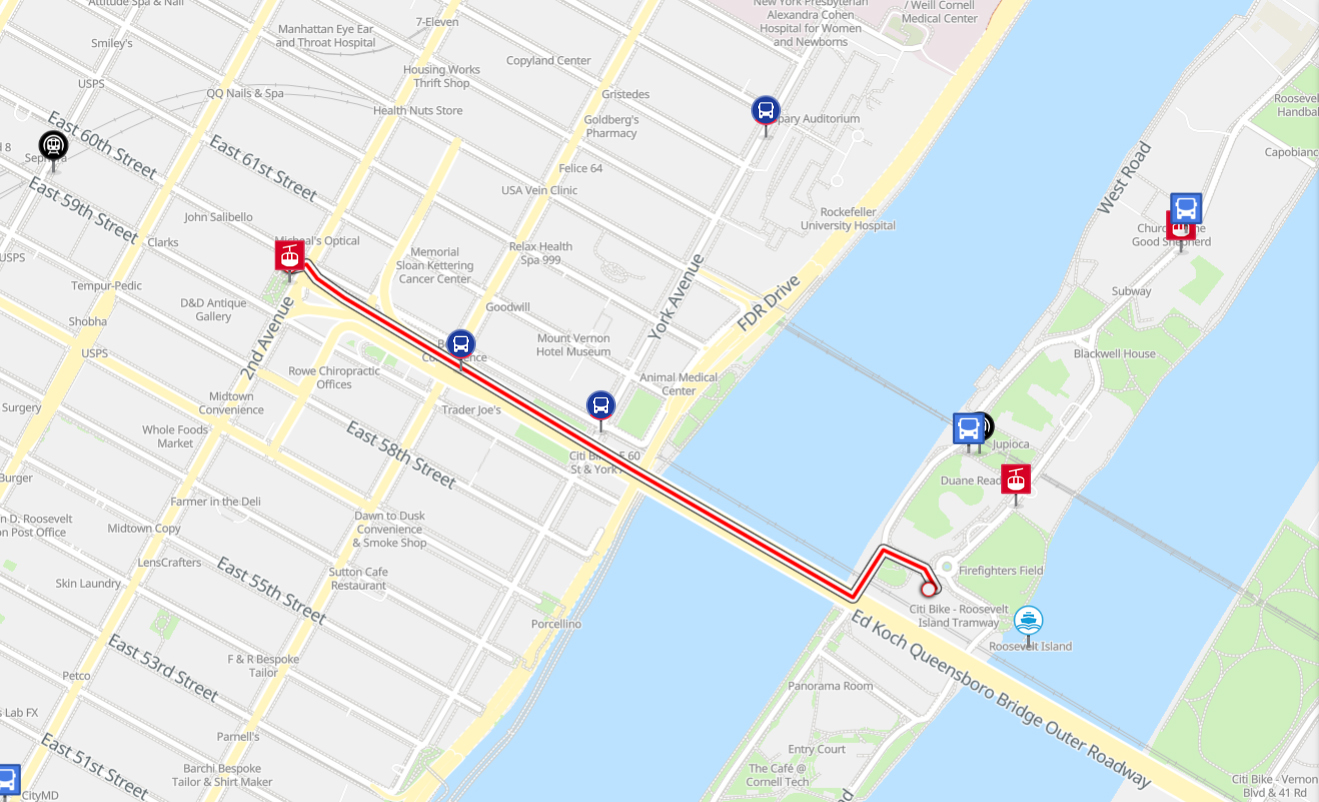
Roosevelt Island Tramway Route and stations
The Roosevelt Island Tramway route crosses the East River just north of the Queensboro Bridge, running between Roosevelt Island and Manhattan. It is a simple two-station route plan, so the stations map is easy to understand: one terminal on Roosevelt Island and one terminal on the Upper East Side.
The Roosevelt Island terminal is at 300 Main Street, near the Southtown area. In Manhattan, riders board at Tramway Plaza on the west side of Second Avenue between 59th and 60th Streets.
The full route is 3,140 feet (about 0.96 km / 0.60 mi). The tram crosses 1,184 feet (361 m / 0.22 mi) over the East River’s western channel. The section over Roosevelt Island is nearly 300 feet (91 m / 0.06 mi), while the Manhattan side extends for more than 1,600 feet (490 m / 0.30 mi).
The ride is short and direct, with a running time of about 3 to 10 minutes depending on how the trip is described. Service generally starts at 6:00 a.m. Eastern Time and runs daily except late nights.
| Station | Details |
|---|---|
| Roosevelt Island Tram Station | 300 Main Street, Roosevelt Island |
| Manhattan Tram Station | Tramway Plaza, Second Avenue between 59th and 60th Streets |
Nearby local transport at the Manhattan terminal includes MTA buses M15, M15 SBS, M31, M57, Q32, and Q60. The Lexington Avenue/59th Street subway station is one block west and is served by the 4, 5, 6, <6>, N, R, and W trains.
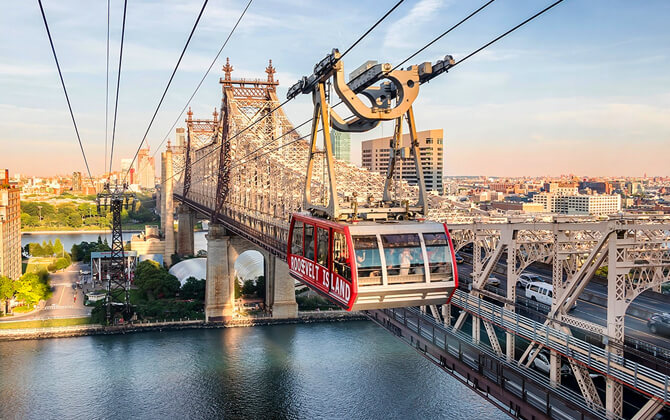
Fares, Tickets, and Payment Options
The Roosevelt Island Tramway uses the same fare structure as the New York City subway and bus system. There is no separate tram ticket: riders pay with MetroCard or OMNY, and unlimited MetroCards can be used for the tram as part of regular transit travel.
The adult one-way fare is listed as $2.90 USD, with a reduced fare of $1.45 USD for eligible riders. Children under 44 inches tall can ride free when accompanied by a fare-paying adult, with up to three children allowed per paying adult.
OMNY tap-to-pay is accepted at the turnstiles and counts toward the weekly fare cap. MetroCard vending machines are available at tram terminals, and single-ride tickets are also available from machines at the stations.
Getting a MetroCard
To get a MetroCard, use a ticket vending machine at any subway station. If it is your first card, choose Get a new card; the card fee is $1 USD. If you already have one, choose Recharge your card and add value or time.
You can choose a regular Pay-Per-Ride MetroCard or an Unlimited Ride MetroCard, including 7-Day Unlimited and 1-Month Unlimited options. Payment can be made with cash, debit card, or credit card.
Other payment details
MetroCard and OMNY are the main payment options for the Roosevelt Island Tramway. Riders must exit at each terminal and pay again to travel back the other way, so plan the cost accordingly if you are making a round trip.
- Adult one-way ticket price: $2.90 USD
- Reduced fare: $1.45 USD
- Accepted payment: MetroCard and OMNY
- MetroCard types: Pay-Per-Ride, 7-Day Unlimited, and 1-Month Unlimited
- First MetroCard fee: $1 USD
- Children under 44 inches: free with a fare-paying adult
Operating hours & Schedule
The Roosevelt Island Tramway operating hours cover most of the day and evening, making it useful for commuters, visitors, and anyone planning transportation in New York City. If you are checking the schedule today, use the day-of-week timings below and allow extra time during busy commuter periods.
| Service detail | Timings |
|---|---|
| Sunday through Thursday opening hours | 6:00 a.m. to 2:00 a.m. |
| Friday and Saturday opening times | 6:00 a.m. to 3:30 a.m. |
| Weekday morning rush hour | 7:00 a.m. to 10:00 a.m. |
| Weekday evening rush hour | 2:30 p.m. to 7:00 p.m. |
| Rush-hour frequency | Every 7.5 minutes |
| Regular frequency | Every 15 minutes |
The starting time is 6:00 a.m. on all listed days. The closing time is later on Friday and Saturday, when the tram stays open until 3:30 a.m. Outside rush hours, the working hours follow the same daily timetable but with longer headways between trams.
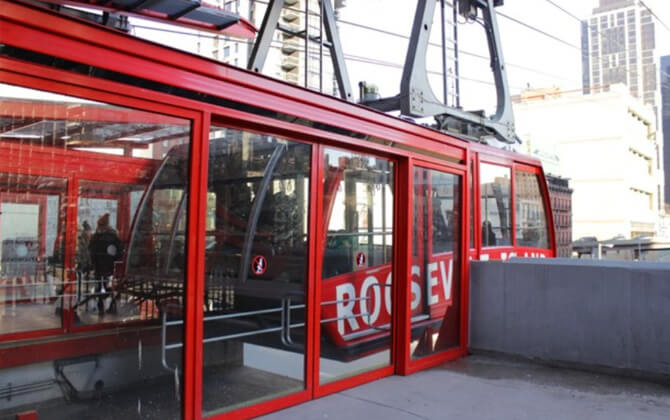
How to Get to the Roosevelt Island Tramway
The Manhattan entrance to the Roosevelt Island Tramway is on Second Avenue between 59th and 60th Streets, also commonly described as 60th Street and Second Avenue. The tram crosses the East River to Roosevelt Island in only a few minutes.
You can reach the Manhattan terminal by subway, bus, or on foot from nearby Upper East Side streets. The closest subway stations include Lexington Av/59 St and Lexington Av/63 St. M15 buses also stop near the terminal, making the tram easy to combine with bus, subway, and other public transportation.
For the return trip, you can ride the tram back to Manhattan, use the subway station on Roosevelt Island, or take the NYC Ferry from the east side of the island. The tram is wheelchair accessible, and bicycles are permitted in the cabins.
- Manhattan terminal: Second Avenue between 59th and 60th Streets
- Closest subway stations: Lexington Av/59 St and Lexington Av/63 St
- Other transport options: M15 bus, NYC Ferry, and the Roosevelt Island subway station
- Typical ride time: about 3 to 5 minutes across the river
- Fare: same fare system as the subway and bus
If you want to avoid queues, one practical approach is to take the subway to Roosevelt Island first and save the tram ride for the return to Manhattan.
Passenger Safety and Rules
The Roosevelt Island Tramway is widely regarded as one of New York City’s safest modes of transport. For a smooth trip, follow posted rules and staff instructions at both terminals.
The modern system uses independent vehicles, so if one cabin is offline for maintenance, the other can continue operating. Each vehicle also has independent retrieval systems designed to help passengers reach a terminal safely if service is interrupted.
During the ride, stay inside the cabin, keep hands and arms clear of the doors, and avoid leaning on them. Secure loose items, and either remain seated or hold the rails while the tram is moving. A slight sway during the crossing is normal.
The tram is wheelchair accessible, and bicycles are allowed in the cabins. Service animals are permitted, as are animals being trained as service animals when accompanied by the proper handler.
Weather can affect service. The modern tramway shuts down if crosswinds exceed 50 miles per hour (80 km/h) or if there is lightning.
- Follow all posted safety instructions.
- Stay clear of the doors while the tram is moving.
- Keep loose belongings secure.
- Respect wheelchair and bicycle boarding rules.
- Expect possible service pauses during strong wind or lightning.
Passengers with questions about group travel or special arrangements should contact the tramway office in advance.
Brief History
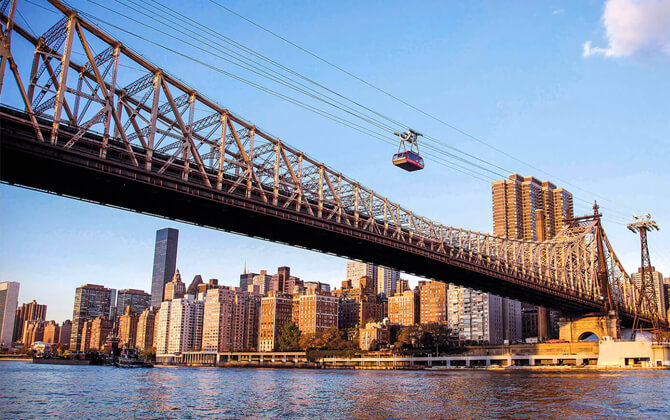
Before the tramway opened, Roosevelt Island was reached from Queens by the Roosevelt Island Bridge, which opened in 1955, and by a trolley line that crossed the Queensboro Bridge. That trolley stopped at an elevator in the middle of the bridge and remained in service until April 7, 1957.
In the late 1960s, Roosevelt Island began a major redevelopment, and a direct public transit link to Manhattan became necessary. Plans for the 63rd Street subway line were already in progress, but delays left the island without the connection it needed.
An aerial tramway was proposed in 1971 and approved in 1973 as a temporary transit solution. Construction began in October 1974, and the Roosevelt Island Tramway opened on May 17, 1976, becoming the first commuter aerial tramway in the United States.
The tramway quickly became popular, carrying 1.25 million riders in its first year. It was meant to be temporary, but it stayed in service after the subway line opened in 1989. Ridership declined after that, yet the tram remained an important link between Roosevelt Island and Manhattan.
In the mid-2000s, two major breakdowns led to a full rebuild of the system. The tramway was renovated from March to November 2010, and the stations were updated in the late 2010s. The original setup used two 125-person cabins hauled by the same cable; after the 2010 renovation, the cabins were replaced with 110-person vehicles that can operate independently.
Travel Guide
The Roosevelt Island Tramway is short, scenic, and easy to fit into a New York itinerary. From the aerial cable car, you get wide views of the East River, Midtown Manhattan, and the Queensboro Bridge, while Roosevelt Island offers waterfront paths, open spaces, and skyline views after you arrive.
Where to Board
The Manhattan terminal is on 2nd Avenue between 59th and 60th Streets on the Upper East Side. Nearby subway stations include 59th Street with the 4, 5, and 6 trains, Lexington Ave/59th Street with the N, Q, and R trains, and Lexington Ave/53rd Street with the E and M trains. The M15 bus also runs along 2nd Avenue and 1st Avenue.
Best Time to Ride
This is a commuter tramway, so timing matters. On weekdays, avoid the morning rush from Roosevelt Island to Manhattan and the evening rush from Manhattan to Roosevelt Island if you want a quieter ride.
For a relaxed daytime trip, 10:00 a.m. to 3:00 p.m. is a good window. For night views, 7:00 p.m. to 2:00 a.m. offers bright city lights. Weekends are often easier if your goal is to skip the busiest commuter periods.
If you want a window spot, board as soon as the doors open. Riding to Roosevelt Island first and returning later can also work well, since the view on the way back toward Manhattan is especially strong.
What to Expect on the Ride
The ride usually takes about 3 to 5 minutes across the river. The modern cabins can carry up to 110 passengers, so they may feel crowded during peak times.
From the tram, you can see the East River, the 59th Street Bridge, Midtown Manhattan, and landmarks such as the Chrysler Building and the Empire State Building.
After You Arrive on Roosevelt Island
Once you reach Roosevelt Island, it is worth staying a little while. You can explore on foot, use the Red Bus, or connect to the East River Ferry.
The island has walking paths, park spaces, benches, and strong views of Manhattan. If you have time, continue south to Four Freedoms Park or head north for more of the island’s sights. A simple route plan is to allow about 3 hours if you want to ride the tram and explore before returning to Manhattan.
Attractions Near Roosevelt Island Tramway
The Roosevelt Island Tramway places you close to notable sights on Roosevelt Island and the Upper East Side. If your schedule allows, add a short walk before or after the ride rather than heading straight back.
Top nearby attractions
- Roosevelt Island — Explore the island beyond the tram station, including waterfront views and open spaces.
- Four Freedoms Park — A major reason to visit the island, located at its southern end.
- Blackwell Island Lighthouse — A notable sight in Lighthouse Park.
- Chapel of the Good Shepherd — Now used as a community center.
- The Octagon — The former asylum entrance, now part of an apartment complex.
- Strecker Memorial Laboratory — One of the island’s historic points of interest.
- Smallpox Hospital — Ruins that remain one of Roosevelt Island’s most striking historic sites.
- Cornell Tech Roosevelt Island Campus — A 12-acre campus that has changed the look and feel of the island.
Notable attractions in the wider area
- Park Avenue Armory
- Temple Emanu-El
- Paley Park
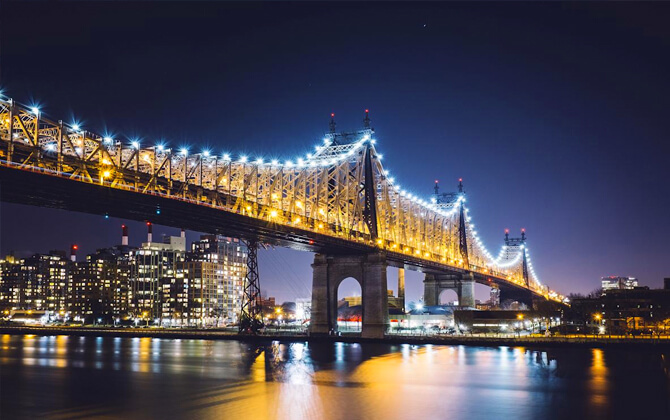
- Queensboro Bridge
- Central Park Zoo
- St. Thomas Church
- Gapstow Bridge
- Eileen Lane Antiques
- Hixenbaugh Ancient Art
- AIRE Ancient Baths New York · Upper East Side