The Shenzhen Metro is the rapid transit system serving Shenzhen in Guangdong Province, China. It opened on December 28, 2004, and has grown into one of the world’s largest metro networks, with 17 lines, 421 stations, and 609.5 kilometers (378.7 miles) of trackage after the latest lines and extensions opened on December 27, 2024. The system is a core part of public transport and city transport in Shenzhen, with cross-border connections to Hong Kong at Luohu/Lo Wu and Futian Checkpoint/Lok Ma Chau.
| Key | Information |
|---|---|
| System | Shenzhen Metro, also known as 深圳地铁 |
| Opened | December 28, 2004 |
| Network size | 609.5 kilometers (378.7 miles) of trackage |
| Lines and stations | 17 lines and 421 stations |
| Cross-border links | Connections to Hong Kong MTR East Rail via Luohu/Lo Wu and Futian Checkpoint/Lok Ma Chau |
| Long-term expansion plan | 8 express and 24 non-express lines totaling 1,142 kilometers (709.6 miles) by 2035 |
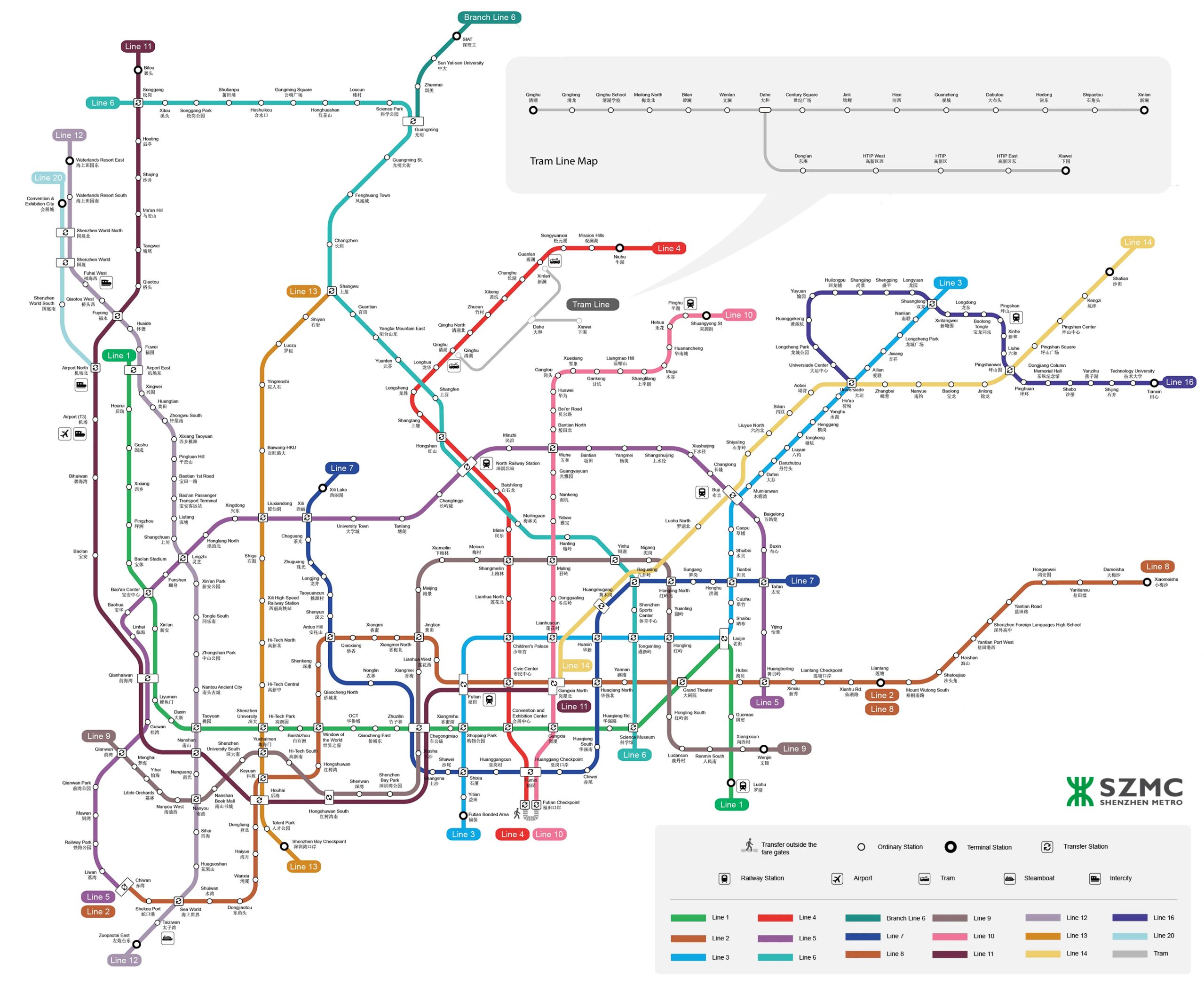
Shenzhen Metro Map
Map of Shenzhen Metro showing different lines. Click on the map to enlarge it or download the Shenzhen Metro map in PDF format.
Shenzhen Metro Lines and Stations
Shenzhen Metro runs across a large and still-growing route network. The system includes regular lines and a branch line, and its stations map is especially useful because many trips require transfers between numbered, color-coded routes.
Several lines are important for cross-border travel. Line 1 serves Luohu/Lo Wu, while Lines 4 and 10 serve Futian Checkpoint/Lok Ma Chau, where passengers can transfer to Hong Kong’s MTR East Rail line.
The stations list below shows the main route plan for each line, including termini, station count, and operator.
| Station | Details |
|---|---|
| Line 1 | Luohu – Airport East; 30 stations; operated by Shenzhen Metro Group |
| Line 2 | Chiwan – Liantang; 32 stations; operated by Shenzhen Metro Group |
| Line 3 | Futian Bonded Area – Pingdi Liulian; 38 stations; operated by Shenzhen Metro Group |
| Line 4 | Futian Checkpoint – Niuhu; 23 stations; operated by MTR Corporation (Shenzhen) |
| Line 5 | Chiwan – Grand Theater; 37 stations; operated by Shenzhen Metro Group |
| Line 6 | Science Museum – Songgang; 27 stations; operated by Shenzhen Metro Group |
| Line 6B | Guangmingcheng – SIAT; 7 stations; operated by Shenzhen Metro Group |
| Line 7 | SZU Lihu Campus – Tai’an; 29 stations; operated by Shenzhen Metro Group |
| Line 8 | Liantang – Xichong; 11 stations; operated by Shenzhen Metro Group |
| Line 9 | Qianwan – Wenjin; 32 stations; operated by Shenzhen Metro Group |
| Line 10 | Futian Checkpoint – Shuangyong Street; 24 stations; operated by Shenzhen Metro Group |
| Line 11 | Hongling South – Bitou; 22 stations; operated by Shenzhen Metro Group |
| Line 12 | Zuopaotai East – Songgang; 39 stations; operated by Shenzhen Metro Group |
| Line 13 | Shenzhen Bay Checkpoint – Shangwu; 15 stations; operated by MTR Corporation (Shenzhen) |
| Line 14 | Gangxia North – Shatian; 18 stations; operated by Shenzhen Metro Group |
| Line 16 | Yuanshan Xikeng – Tianxin; 32 stations; operated by Shenzhen Metro Group |
| Line 20 | Airport North – Convention & Exhibition City; 5 stations; operated by Shenzhen Metro Group |
Line 13 opened in 2024 and is operated by MTR Corporation (Shenzhen), like Line 4. Newer lines such as Line 14, Line 16, and Line 20 extend coverage to fast-growing districts across the city. Some services also use partial operating patterns, including selected sections on Line 1, rush-hour patterns on Lines 2 and 3, and a partial Line 10 service between Futian Checkpoint and Gankeng.
Operating Hours
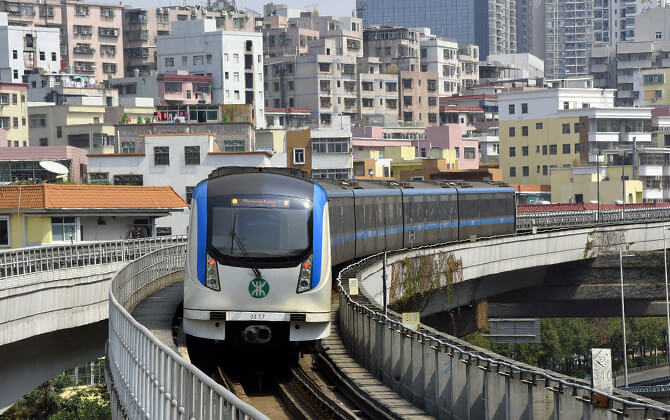
Shenzhen Metro does not operate 24 hours a day. Opening hours are generally from around 6:30 AM to 11:00 PM, although the exact starting time, closing time, and last train vary by line and station.
For timings today or schedule today, check platform screens and station announcements before boarding, especially late in the evening. Holiday service can also affect the route timetable.
| Service detail | Timings |
|---|---|
| General operating hours | Around 6:30 AM to 11:00 PM |
| First train range | Most first trains begin around 6:15 AM to 6:36 AM on weekdays |
| Last train range | Usually around 11:00 PM to 12:00 AM, depending on line and station |
| Holiday and event service | Some last trains may be extended by 1 to 2.5 hours during legal holidays and major events |
| Frequency | Average waiting time is roughly 2 to 10 minutes, with higher frequency on some lines during rush hours |
Because opening times and working hours are not identical across the network, do not assume every route will close at the same time. If you are catching the last train, arrive early and confirm the train schedule at the station.
Fares and Tickets
Shenzhen Metro uses a one-person-one-ticket policy. Standard Class fare is calculated by distance, while Business Class on Line 11 has a higher ticket price. The station machines and digital ticket tools can work like a fare calculator: select the destination, then the system shows the price before payment.
| Distance | Standard Class fare | Business Class on Line 11 |
|---|---|---|
| 0–4 kilometers (0–2.5 miles) | ¥2, about US$0.28 | Up to 3 times the regular fare |
| 4–8 kilometers (2.5–5 miles) | ¥3, about US$0.42 | Higher than the regular fare |
| 8–12 kilometers (5–7.5 miles) | ¥4, about US$0.56 | About 2 times the regular fare in the listed structure |
| 12–18 kilometers (7.5–11.2 miles) | ¥5, about US$0.70 | Higher than the regular fare |
| 18–24 kilometers (11.2–14.9 miles) | ¥6, about US$0.84 | Higher than the regular fare |
| 24+ kilometers (14.9+ miles) | +¥1, about US$0.14, per 8 kilometers (5 miles) | Higher than the regular fare |
Accepted ticket and payment options include Single Journey Tickets, Multi-ride Tickets, One-Day Tickets, Three-Day Tickets, Children’s Tickets, Luggage Tickets, Shenzhen Tong Cards, Shenzhen Tong Preferential Cards, China T-union Cards, Shenzhen Metro Ticket QR Codes, Shenzhen Tong QR Codes, and Financial IC Cards.
- Single Journey Ticket: sold for one ride and collected when you exit the gate.
- Multi-ride Ticket: valid for limited use by one person within the valid period and specified section.
- One-Day Ticket: a day pass valid for one person within 24 hours from first entry, regardless of ride count or mileage.
- Three-Day Ticket: valid for one person within 72 hours from first entry, regardless of ride count or mileage.
- Children’s Ticket: required for children who are 1.2–1.5 meters tall or 6–14 years old.
- Shenzhen Tong Card: a stored-value public transport card issued by Shenzhen Tong Company.
- Shenzhen Tong Preferential Card: a concession card issued according to municipal government regulations.
- China T-union Card: accepted in multiple cities and issued either in Shenzhen or by other cities.
- Shenzhen Metro Ticket QR Code: a scan-to-ride product used on all Shenzhen rail transit lines.
- Financial IC Card: accepted when the small-amount password-free function is enabled and the balance is sufficient.
Single Journey Tickets are issued through ticket vending machines and customer service centers. Multi-ride Tickets are sold in limited quantity through the Shenzhen Metro WeChat Official Account. One-Day Tickets are available at customer service centers in selected stations, including Qianhaiwan and Luohu on Line 1, Futian and Buji on Line 3, Shenzhenbei on Line 5, Fumin on Line 7, Yinhu on Line 9, and Airport on Line 11.
Shenzhen Metro Ticket QR Codes can be activated through the WeChat Transit QR Code Mini Program, the official Shenzhen Metro app, the MTR (SZ) live+ Mini Program, or the Shenzhen Metro E-Travel Mini Program. After activation, passengers scan the generated code at the gate.
Children under 1.2 meters ride free, and half-price fares apply to children 1.2–1.5 meters tall. Shenzhen Tong Card users receive a 5% discount, except for student tickets, and an additional bus-transfer discount applies when eligible. Business Class fares on Line 11 are not covered by standard card discounts.
One-Day Tickets cost ¥25, about US$3.50. Three-Day Tickets cost ¥75, about US$10.50.
Tokens
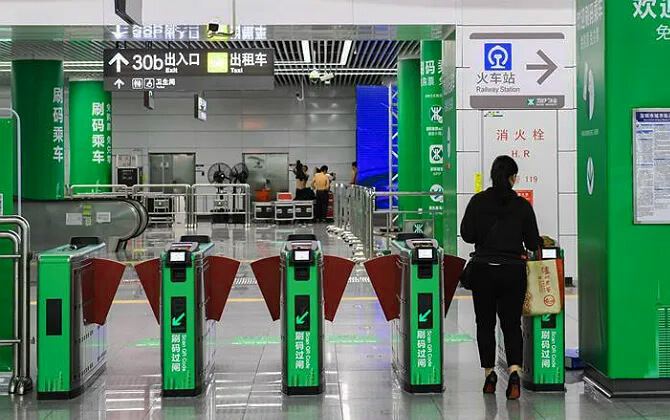
When paying in cash, passengers buy an RFID token for a single, non-returnable journey. Green tokens are used for Standard Class, while yellow tokens are used for Business Class on Line 11.
Ticket vending machines offer English and Chinese interfaces. Select the destination station to calculate the fare, pay, then take the green token. Scan it at the entrance gate and deposit it at the exit gate. If a token is lost, a penalty applies.
Passengers with green tokens cannot ride Business Class on Line 11 directly. They must exit at a transfer station served by Line 11 and buy a separate yellow token. As of 2015, many machines accept only 5 or 10 RMB notes.
Tokens are valid only at the station where they are issued, so passengers cannot buy an extra return token before departure. Baggage X-ray machines are located at each station and may be staffed during peak hours.
Connections to Other Systems
Shenzhen Metro is closely linked with other rail and transport systems in the region. Inside the city, major interchange stations help passengers move across the network without depending on one corridor. Beyond Shenzhen, the metro is part of wider transportation in the Pearl River Delta.
Line 1 connects to Luohu/Lo Wu, and Lines 4 and 10 connect to Futian Checkpoint/Lok Ma Chau. From these border crossings, passengers can transfer to Hong Kong’s MTR East Rail line.
Cross-border fare media also supports regional travel. Since June 30, 2011, cards containing both a Shenzhen Tong chip and a Hong Kong Octopus chip have been available in both cities.
Dongguan connections are also part of the system’s regional role. The Line 6 branch is connected with the neighboring Dongguan Rail Transit system, and a shuttle bus has linked the terminus of the Shenzhen Metro Line 6 spur with the terminus of Dongguan Metro Line 1. Future plans have also included links involving Lines 10 and 11.
- Hong Kong MTR East Rail line via Luohu/Lo Wu
- Hong Kong MTR East Rail line via Futian Checkpoint/Lok Ma Chau
- Dongguan Metro links through the Line 6 spur and related future plans
- Planned links with Huizhou and other Pearl River Delta rail systems
Key internal transfer stations such as Gangxia North, Qianhaiwan, and Liantang help distribute passenger flow between ordinary and express services.
Airport Connections
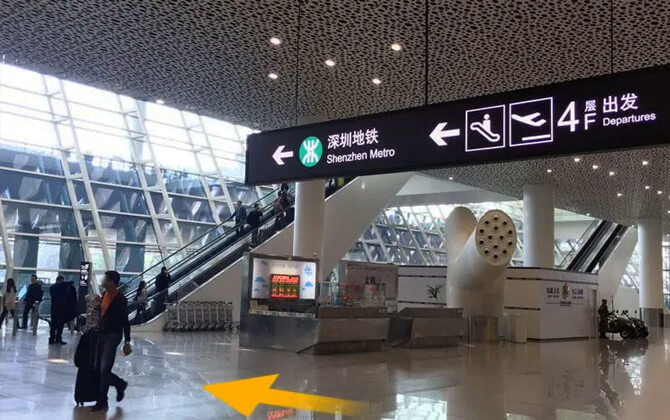
Shenzhen Bao’an International Airport is connected to the metro through Airport North station, served by Line 11 and Line 20. For many airport passengers, Line 11 is the main path train option for reaching central districts while avoiding road traffic.
Line 11 opened on June 28, 2016, and provides a direct airport rail link toward major business districts such as Futian, Nanshan, and Qianhai. It is designed as a faster express route with wider spacing between stops and continues toward suburban areas including Fuyong, Shajing, and Songgang.
Airport North station will also serve the future Terminal T4 of Shenzhen Bao’an International Airport. The station opened for Line 11 in 2016 and received Line 20 service on December 28, 2021.
| Key | Information |
|---|---|
| Airport station | Airport North |
| Metro lines | Line 11 and Line 20 |
| Platforms | 4 platforms arranged as 2 island platforms |
| Tracks | 4 tracks |
| Accessibility | Accessible station |
| Line 11 role | Airport link toward Futian and other central districts |
| Line 20 role | Connects Airport North with Convention & Exhibition City and Huaqiang South (Airport) |
Regulations
Passengers must use the correct ticket, card, or QR code for their journey and class of carriage. They must also leave the gates within the required time limit unless they are entitled to ride free under the rules.
A Single Journey Ticket is valid only for entry at the station of issue and on the day of issue. An expired ticket is invalid and will be taken back by the station. If a passenger does not return the Single Journey Ticket when exiting, it is also treated as invalid.
Passengers carrying items weighing more than 20 kilograms and less than 30 kilograms, or items with external dimensions greater than 1.4 meters and less than 1.6 meters, must buy a luggage ticket at the Customer Service Center. The luggage ticket costs the same as an ordinary carriage fare. Items weighing more than 30 kilograms, or with external dimensions over 1.6 meters, are not allowed on the metro.
Card and QR code users must follow the one-person-one-card or one-person-one-QR-code rule, as well as the one-in-one-out rule. The same card or QR code must be used to enter and exit, and it cannot be shared by multiple passengers.
Refunds and replacements for Shenzhen Tong Card and China T-union Card are not available at station Customer Service Centers. Shenzhen-issued cards can only be handled at locations designated by Shenzhen Tong Company.
Passengers using a Shenzhen Metro code or Shenzhen Tong code can obtain an electronic invoice after binding their account in the Electronic Invoice function of the Shenzhen Metro Mini Program. Passengers using a Single Journey Ticket, a China T-union Card issued by non-local banks, or a financial IC card may request an invoice at the Customer Service Center before leaving the ticket gate with the ticket or ride record. Paper invoices are not available for metro rides.
If a China T-union Card transaction is incomplete, it must be processed where the incomplete transaction occurred before the card is used again. Shenzhen does not provide this service for incomplete transactions that occurred in other cities.
Passengers using a financial IC card in a pre-authorized transaction must ensure the available balance is at least equal to the maximum one-way fare for an ordinary class carriage. If deduction fails because of insufficient balance or available amount, the system will restrict further rides.
If a passenger enters and exits with a Shenzhen Metro Ticket QR Code or Shenzhen Tong QR Code without following the one-in-one-out rule, the system will ask the passenger to complete the ride information. If this is not completed in time, the fare will be deducted according to ticket rules. Malicious incomplete ride records may affect future travel and personal credit.
Tips
For a smoother ride, avoid weekday peak hours if you can, especially 7:00–9:00 AM and 5:30–7:00 PM. Trains, gates, and ticket areas can get crowded, and large luggage makes the trip less comfortable.
Check the metro map before you travel. Shenzhen Metro lines are identified by numbers, names, and colors, so reviewing your route, transfer station, and exit in advance can save time.
If you plan to make several trips, a Shenzhen Tong Card or One-Day Ticket may be easier than buying a single ticket each time. Single Journey Tickets still work well for one-time rides.
At your destination, check the station exits before leaving the platform. Many attractions and commercial areas are easier to reach from specific exits.
For trips to Hong Kong, use stations connected to border crossings such as Luohu, Futian Checkpoint, or Huanggang Checkpoint. You still need to complete immigration procedures before continuing your journey.
If you are traveling late, check the operating times carefully. First trains usually start around 6:15 AM to 6:36 AM, while last train times vary by line and day type.
Amenities and Services
Shenzhen Metro offers practical services for daily travel. Some stations have free toilets and public telephones, and SZMC operates luggage storage facilities in the concourse above Luohu Station. Mobile phone service is available throughout the system through China Mobile, China Telecom, and China Unicom.
Station announcements are multilingual. Like the Hong Kong MTR, Guangzhou Metro, and Foshan Metro, announcements are made in Mandarin, Cantonese, and English. Some messages, such as train arrival notices, are announced in Mandarin and English only.
Selected stations include extra amenities. Huangmugang Station has sports facilities, including a gym with badminton courts, snooker tables, and a pickleball court. Across the network, Shenzhen Metro has added luggage lockers, snack outlets, and free umbrella services at multiple stations.
There are 38 luggage deposit points at 34 major hubs or stations near tourist areas, offering 750 lockers in different sizes. Food options are also available at some stations: Futian Station has a metro-operated dim sum stall, while Shenzhen North, Gangxia North, and Huangmugang host food carts with breakfast items.
Since 2023, cooling spaces have been introduced at 17 stations, giving passengers places to rest and read during the summer heat. Free red umbrellas can be borrowed at a limited number of stations. On Lines 4 and 13, passengers can reserve one through the 港铁深圳live+ WeChat Mini Program before collecting it on-site.
Future Expansion
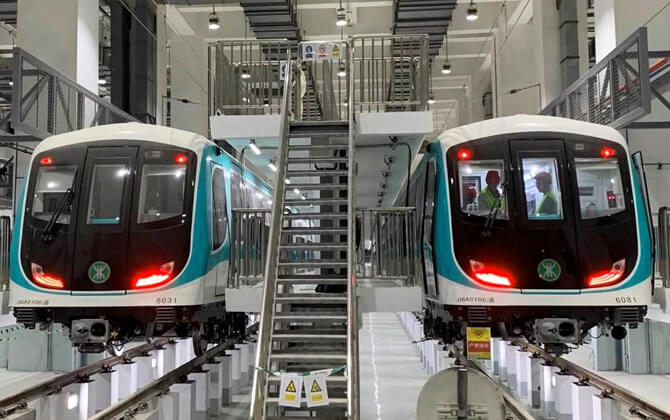
Shenzhen Metro’s expansion continues through approved and planned projects. The Phase IV revised plan, approved by the NDRC on March 26, 2020, added extension schemes including Line 13 Phase 2 North from Shangwu to Lisonglang and Line 13 Phase 2 South from Shenzhen Bay Checkpoint to Dongjiaotou, both scheduled for 2026.
Phase V covers a larger construction package. In June 2023, Shenzhen approved 11 projects for the 2023–2028 period, including Line 15, Line 17 Phase 1, Line 19 Phase 1, Line 20 Phase 2, Line 22 Phase 1, Line 25 Phase 1, Line 27 Phase 1, Line 29 Phase 1, Line 32 Phase 1, plus the Line 10 East Extension and Line 11 North Extension. Together, these projects total 196.3 kilometers (122.0 miles).
| Line | Section | Termini | Length | Stations | Status |
|---|---|---|---|---|---|
| 10 | East extension | Shuangyong Street – Huanggekeng | 9.8 kilometers (6.1 miles), including 2.9 kilometers (1.8 miles) in Shenzhen | 5 | Approved |
| 11 | North extension | Bitou – Chang’an | 3.7 kilometers (2.3 miles), including 0.8 kilometers (0.5 miles) in Shenzhen | 1 | Approved |
| 14 | West extension | Gangxia North – Xiangmihu West | Not listed | 1 | Approved |
| 15 | Loop Line | Loop Line | 32.2 kilometers (20.0 miles) | 24 | Under Construction |
| 17 | Phase 1 | Luohu West – Shanglilang | 18.8 kilometers (11.7 miles) | 18 | Under Construction |
| 19 | Phase 1 | Nantangwei – Julong | 12.5 kilometers (7.8 miles) | 12 | Under Construction |
| 20 | Phase 2 | Airport North – Baishizhou | 24.9 kilometers (15.5 miles) | 11 | Under Construction |
| 22 | Phase 1 | Shangsha – Liguang | 34.2 kilometers (21.3 miles) | 21 | Under Construction |
| 25 | Phase 1 | Shilong – Jihua Hospital | 16.2 kilometers (10.1 miles) | 14 | Under Construction |
| 27 | Phase 1 | Songpingcun and Jihua Hospital – Gangtou West and Lizhi Orchard | 25.6 kilometers (15.9 miles) | 21 | Under Construction |
| 29 | Phase 1 | Hongshuwan South – Xingdong | 11.3 kilometers (7.0 miles) | 10 | Under Construction |
| 32 | Phase 1 | Xichong – Kuichong East | 9.5 kilometers (5.9 miles) | 4 | Under Construction |
| Total | Total | Total | 196.3 kilometers (122.0 miles) | 140 | Listed in Phase V package |
The long-term master plan envisions 32 lines totaling 1,142 kilometers (709.6 miles) by 2035. Earlier planning documents also described connections beyond Shenzhen, including rapid transit links to neighboring urban centers in the Pearl River Delta. The wider buildout is intended to shorten travel between central and suburban districts and strengthen regional mobility across the Greater Bay Area.
Recent reports also indicate that Shenzhen expects its metro mileage to pass 800 kilometers (497.1 miles) by around 2030.
History
Planning for Shenzhen’s rail transit system began in the early 1980s. In late 1983, Shenzhen officials studied Singapore’s mass transit system, and the city later decided to protect land along Shennan Avenue for future transit use, including a reserved median for a light rail or light metro line.
In 1984, the Shenzhen Special Economic Zone Master Plan concluded that a light metro would not provide enough capacity for the city’s growing population and traffic. It proposed a heavy rail subway line along Shennan Avenue, and the project was approved by the Central Planning Department in 1992.
In 1994, the city prepared an urban rail network master plan for inclusion in the Shenzhen City Master Plan. It outlined nine lines, including three commuter rail lines upgraded from existing national railway corridors, with a total network length of about 270 kilometers (167.8 miles).
A national moratorium on urban rapid transit approvals in 1995 delayed the project, but Shenzhen reapplied and received approval in May 1998. Shenzhen Metro Group was formally established in July 1998, and the feasibility study for the subway project was approved by April 1999.
Construction of the first sections of Line 1 and Line 4 began in 1999. Shenzhen Metro opened to the public at 5:00 PM on December 28, 2004, making Shenzhen the seventh city in mainland China with a subway system. Initial service included Line 1 between Luohu and Shijie Zhi Chuang, now Window of the World, and Line 4 between Fumin and Shaonian Gong, now Children’s Palace.
After Shenzhen won the right to host the 2011 Universiade, the city committed to completing 155 kilometers (96.3 miles) of subway lines before the games. By June 2011, the network had passed 100 operating stations and expanded from 64 kilometers (39.8 miles) to 177 kilometers (110.0 miles) in just two weeks.
Line 11 opened on June 28, 2016, becoming Shenzhen’s first line with 8-car trains, a 120 km/h maximum service speed, and First Class service. Lines 7 and 9 followed on October 28, 2016. Lines 6 and 10 opened on August 18, 2020, bringing the network to 382.1 kilometers (237.4 miles), and additional openings on October 28, 2020 pushed it to 411 kilometers (255.4 miles).
Line 20 opened on December 28, 2021 as the world’s first fully automatic subway. It connects Shenzhen airport with the Shenzhen World Exhibition and Convention Center in Bao’an District and uses autonomous driving, obstacle detection, train-collision avoidance, and derailment detection.
On December 28, 2024, new lines and extensions increased the network to 609.5 kilometers (378.7 miles) of trackage. The system now operates 17 lines with 421 stations, and planning continues for further expansion.
Nearby Attractions
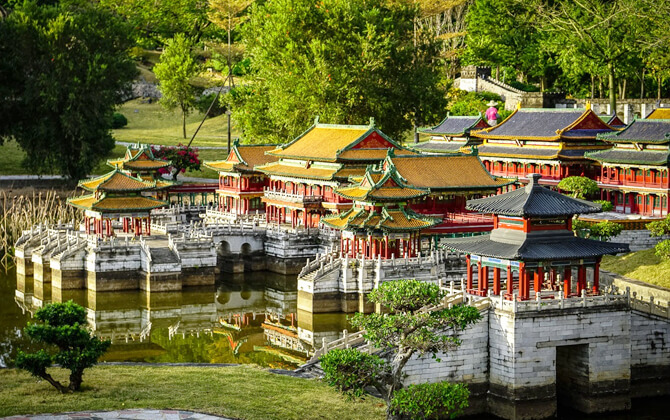
Shenzhen Metro connects many of the city’s best-known attractions, from landmark towers and museums to theme parks, shopping streets, and coastal parks. It is often the easiest local transport option for visitors planning a full day of sightseeing.
- Window of the World and Splendid China Folk Culture Village are among Shenzhen’s most famous attractions and are easily reached by Metro Line 1 or Line 2.
- Shenzhen Safari Park is directly served by Metro Line 7, making it convenient for families and animal lovers.
- Shenzhen Bay Park is a popular place for cycling and coastal walks, and it can be reached by Metro Line 9.
- Shenzhen Museum offers a look at the city’s history and is accessible from stations on Metro Line 4 and Line 5 connections mentioned in the guide.
- Dafen Oil Painting Village can be visited via Metro Line 3 and is known for its oil paintings and creative atmosphere.
- Ping An Finance Center, one of Shenzhen’s most prominent skyscrapers, is near Metro Line 7 stations.
- Luohu Port, Futian Checkpoint, and Huanggang Checkpoint are important border crossing points for travel between Shenzhen and Hong Kong.
If you want to combine sightseeing with shopping, stations such as Shopping Park, Convention & Exhibition Center, and Coco Park place you close to major commercial areas and dining options.
Travelers with more time can also use the metro to reach western Shenzhen destinations such as Nantou Ancient Town, Nanshan Museum, Sea World, and Shekou Cruise Homeport via newer lines and transfer stations.