The Dalian Metro is a rapid transit system in Dalian, Liaoning, China. It opened on May 1, 2003, and now operates six lines: Line 1, Line 2, Line 3, Line 5, Line 12, and Line 13. The network combines urban metro service with longer regional-style routes, covers 237.74 km (147.73 miles), and includes 107 stations, with key interchanges at Xi’an Road, Hekou, Dalian North Railway Station, and Dalian Railway Station.
| Key | Information |
|---|---|
| System | Dalian Metro |
| City | Dalian, Liaoning, China |
| Opening date | May 1, 2003 |
| Lines in operation | 6 |
| Lines | Line 1, Line 2, Line 3, Line 5, Line 12, Line 13 |
| Network length | 237.74 km (147.73 miles) |
| Stations | 107 |
| Main interchange stations | Xi’an Road, Hekou, Dalian North Railway Station, Dalian Railway Station |
Dalian Metro Map
Map of Dalian Metro showing different lines. Click on the map to enlarge it or download the Dalian Metro map in PDF format.
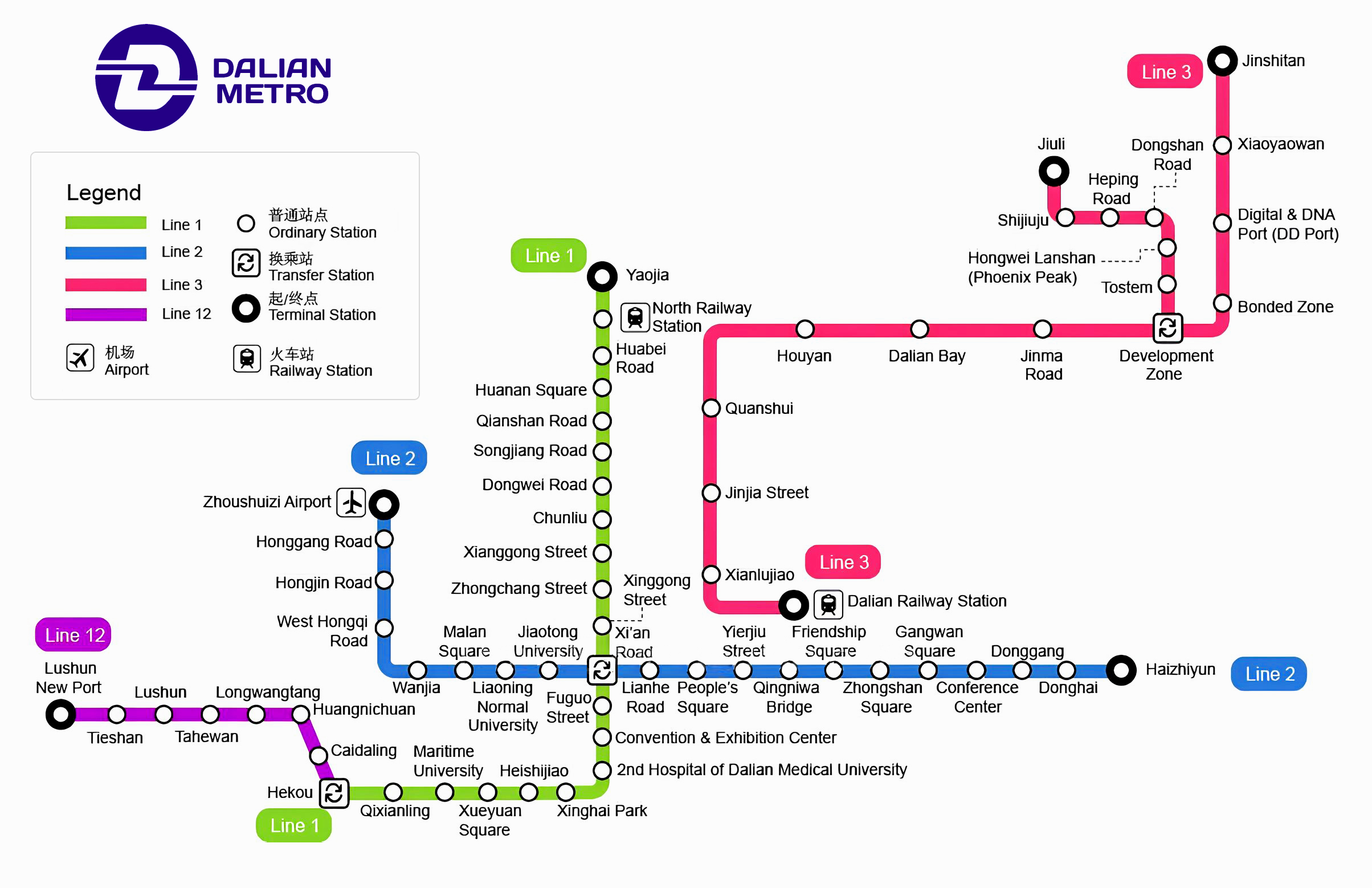
Overview of Lines and Stations
The Dalian Metro system serves different parts of the city through a mix of central urban lines and longer suburban corridors. If you are looking for a quick route plan, the network currently has 107 stations across 237.74 km (147.73 miles), with major transfer points in central Dalian.
| Station | Details |
|---|---|
| Line 1 | Yaojia – Hekou; 28.34 km (17.61 miles); 22 stations |
| Line 2 | Dalian North Railway Station – Haizhiyun; 37.97 km (23.59 miles); 29 stations |
| Line 3 | Dalian Railway Station – Golden Pebble Beach; 63.45 km (39.43 miles); 18 stations |
| Line 3 branch | Dalian Development Area – Jiuli; 63.45 km (39.43 miles); 18 stations |
| Line 5 | Hutan Xinqu – Houguan; 24.48 km (15.21 miles); 18 stations |
| Line 12 | Hekou – Lüshun New Port; 40.35 km (25.07 miles); 8 stations |
| Line 13 | Jiuli – Pulandian Zhenxing Street; 43.15 km (26.81 miles); 12 stations |
| Active system total | 237.74 km (147.73 miles); 107 stations |
Line 1
Line 1 opened in 2015. It links west and central Dalian with the northern part of the city, runs 28.34 km (17.61 miles), has 22 stations, and is shown in green.
| Station | Details |
|---|---|
| Yaojia | Western terminal |
| Dalian North Railway Station | Interchange station |
| Huabei Road | Line 1 station |
| Huananbei | Line 1 station |
| Huanan Square | Line 1 station |
| Qianshan Road | Line 1 station |
| Songjiang Road | Line 1 station |
| Dongwei Road | Line 1 station |
| Chunliu | Line 1 station |
| Xianggong Street | Line 1 station |
| Zhongchang Street | Line 1 station |
| Xinggong Street | Line 1 station |
| Xi’an Road | Interchange with Line 2 |
| Fuguo Street | Line 1 station |
| Convention and Exhibition Center | Line 1 station |
| Xinghai Square | Useful for sightseeing |
| 2nd Affiliated Hospital of Dalian | Line 1 station |
| Heishijiao | Line 1 station |
| Xueyuan Square | Line 1 station |
| Maritime University | Line 1 station |
| Qixianling | Line 1 station |
| Hekou | Terminal and interchange with Line 12 |
Line 2
Line 2 also opened in 2015. This blue line forms a C-shaped route across east-central and west-central Dalian. It is 37.97 km (23.59 miles) long and has 29 stations.
| Station | Details |
|---|---|
| Dalian North Railway Station | Terminal and interchange with Line 1 |
| Nanguanling | Line 2 station |
| Sports Center | Line 2 station |
| Health Center | Line 2 station |
| Houge | Line 2 station |
| Gezhenpu Zhongge | Line 2 station |
| Qiange | Line 2 station |
| Xinzhaizi | Line 2 station |
| Airport | Direct airport access |
| Honggang Road | Line 2 station |
| Hongjin Road | Line 2 station |
| Hongqi West Road | Line 2 station |
| Wanjia | Line 2 station |
| Malan Square | Line 2 station |
| Liaoning Normal University | Line 2 station |
| Dalian Jiaotong University | Line 2 station |
| Xi’an Road | Interchange with Line 1 |
| Lianhe Road | Line 2 station |
| Renmin Square | Line 2 station |
| Yi’erjiu Street | Line 2 station |
| Qingniwaqiao | Interchange with Line 5 |
| Youhao Square | Line 2 station |
| Zhongshan Square | Useful for city center access |
| Gangwan Square | Line 2 station |
| Conference Center | Line 2 station |
| Donggang | Line 2 station |
| Donghai | Line 2 station |
| Haizhiyun | Eastern terminal |
Line 3
Line 3 was Dalian’s first metro route, opening in 2003. Also known as the Jinzhou Eastern Line, it connects the city center with the Dalian Development Zone and Golden Pebble Beach. The line is mostly elevated or at grade and is identified by magenta.
| Station | Details |
|---|---|
| Dalian Railway Station | Main route terminal; interchange with Line 5 |
| Xianglujiao | Line 3 station |
| Jinjia Street | Line 3 station |
| Quanshui | Line 3 station |
| Houyan | Interchange with Line 5 |
| Dalianwan | Line 3 station |
| Jinma Road | Line 3 station |
| Development Zone | Line 3 station |
| Free Trade Zone | Line 3 station |
| DD Port | Line 3 station |
| Xiaoyaowan | Line 3 station |
| Golden Pebble Beach | Main route terminal |
| Dalian Development Area | Branch line start |
| Jiuli | Branch line connection with Line 13 |
Line 5
Line 5 opened on March 17, 2023, making it the newest line currently in service. It runs between Hutan Xinqu and Houguan and is shown in red. Key interchanges include Qingniwaqiao for Line 2, plus Dalian Railway Station and Houyan for Line 3.
Line 12
Line 12 opened in 2013 and was previously known as the Tram Route 202 Extension Line. It connects central Dalian with Lüshunkou District, runs 40.35 km (25.07 miles), has 8 stations, and is marked in purple.
| Station | Details |
|---|---|
| Hekou | Terminal and interchange with Line 1 |
| Caidaling | Line 12 station |
| Huangnichuan | Line 12 station |
| Longwangtang | Line 12 station |
| Tahewan | Line 12 station |
| Lushun | Line 12 station |
| Tieshan | Line 12 station |
| Lushun New Port | Terminal |
Line 13
Line 13 Phase I runs from Jiuli to Pulandian Zhenxing Street. It opened on December 28, 2021, and is shown in yellow. It also strengthens connections on the outer part of the network through Jiuli.
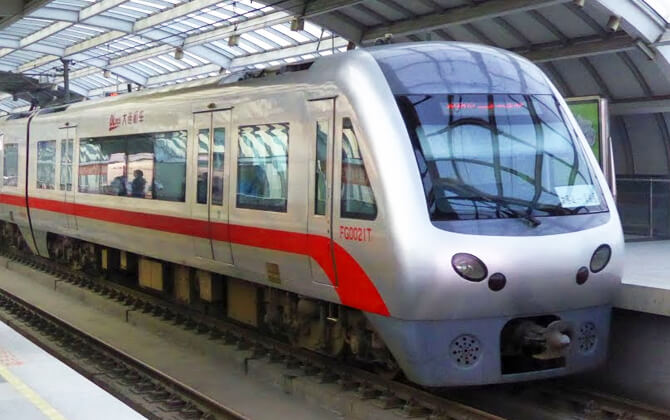
Operating Hours
Dalian Metro does not operate around the clock. The general operating hours in the source material are 5:30 a.m. to 10:30 p.m., though actual opening hours, opening times, and closing time can vary by line.
If you need timings today or want the last train for a specific route, it is best to check the line-specific timetable and train schedule before you travel.
| Service detail | Timings |
|---|---|
| General system operating hours | 05:30-22:30 |
| Line 1 working hours | 05:30-22:30 |
| Line 2 working hours | 05:30-22:30 |
| Other lines | Opening times and closing time vary by route |
| Weekday frequency, off-peak | Every 4 minutes |
| Weekday frequency, peak | Every 2 minutes |
| Weekend frequency | Every 4 minutes |
The system runs every day, although service interruptions may happen because of maintenance or breakdowns. Once the metro closes, passengers need to switch to other public transport such as bus services or taxis.
Cost and Fare Structure
Dalian Metro uses a distance-based fare system, so the ticket price depends on your running time and route length. On Lines 1, 2, and 12, the starting fare is CNY 2 (about USD 0.28), and the maximum fare is CNY 6 (about USD 0.83).
- CNY 2 (about USD 0.28) within 6 km (3.73 miles)
- CNY 3 (about USD 0.41) for 6 to 12 km (3.73 to 7.46 miles)
- CNY 4 (about USD 0.55) for 12 to 18 km (7.46 to 11.18 miles)
- CNY 5 (about USD 0.69) for 18 to 26 km (11.18 to 16.16 miles)
- CNY 6 (about USD 0.83) for 26 to 34 km (16.16 to 21.13 miles)
Line 3 uses a different fare structure. Its price also varies by distance, starting at CNY 1 (about USD 0.14) and going up to CNY 8 (about USD 1.10).
For everyday transportation in Dalian, the metro is generally a low-cost option. The Pearl Card can reduce travel cost on selected services, which makes it useful for regular riders.
Ticketing
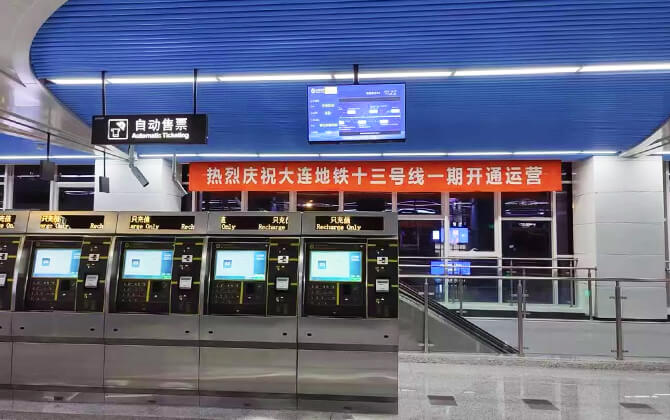
Single tickets use a magnetic stripe and must be swiped at the gates when entering and leaving stations. You can buy a ticket from vending machines in station ticket areas or at ticket offices. The machines support several languages, including English, Japanese, Korean, and Russian.
On Lines 1 and 2, the fare is distance-based from CNY 2 (about USD 0.28) to CNY 6 (about USD 0.83). On Line 3, the fare calculator effectively follows distance too, with prices from CNY 1 (about USD 0.14) to CNY 8 (about USD 1.10). Line 12 is described in the source materials as using the same fare system as Line 3.
The metro also issues commemorative tickets from time to time. For regular travel, the Pearl Card is a convenient pass option and can also be used on city bus services.
Card
The Pearl Card is a discounted monthly smart card. Source materials also mention specific fare examples within the wider fare system.
| Station | Details |
|---|---|
| Between two stations | CNY 1 (about USD 0.14) |
| More than two stations | CNY 2 (about USD 0.28) |
| Dalian Station to Golden Pebble Beach | CNY 8 (about USD 1.10) |
| Dalian Station to Jiuli | CNY 7 (about USD 0.97) |
Interconnections with Other Systems
Dalian Metro is part of the wider Dalian Rail Transit system, which brings together metro, light rail, and tramway services. In day-to-day city transport, that means the metro works alongside trams and other local transport options rather than standing alone.
Transfers between lines are a major part of the route network. Line 1 connects with Line 2 at Dalian North Railway Station and Xi’an Road, and with Line 12 at Hekou. Line 2 connects with Line 5 at Qingniwaqiao. Line 3 connects with Line 5 at Dalian Railway Station and Houyan. Future Line 4 is planned to connect with Lines 1, 2, 3, 5, and 12.
The metro also ties into Dalian’s tram system. Line 12 was originally known as Tram Route 202 Extension Line, and the source material also notes a transfer between metro and trams at Hekou. Add in the main railway stations, and the metro becomes a key link across Dalian public transport.
Airport Connection
Dalian Metro has a direct airport connection through Airport Station on Line 2, serving Dalian Zhoushuizi International Airport. For many travelers, this is the simplest public transport option to and from the terminal.
The station has three exits leading to the terminal area. Exit A reaches a recently opened facility and Terminal D, while Exit B leads to Terminal C, which is under construction.
The fare depends on your starting point and can range from CNY 2 to CNY 5, or about USD 0.28 to USD 0.69. For passengers with heavy luggage, bus services, taxis, and vehicle rental may be more convenient.
A northern extension of Line 1 is also planned to connect Yaojia with the new airport under construction in northern Dalian. The project is expected to be 13.2 km (8.20 miles) long.
Rules and Regulations
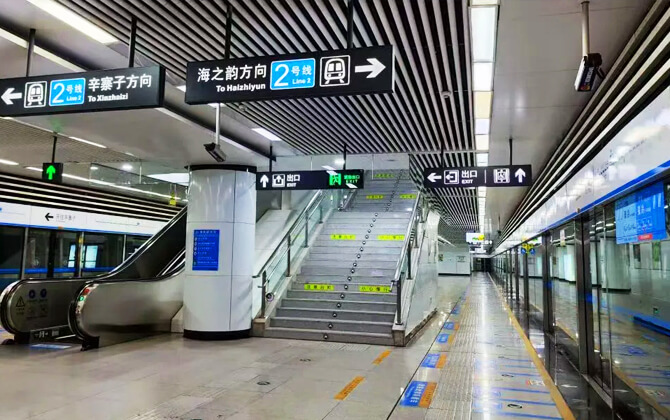
Dalian Metro passenger rules are designed to keep travel safe and orderly. Station staff instructions should be followed at all times.
- Passengers must have a valid ticket. The system follows a one-person, one-ticket rule, and tickets are not refundable after passing through the gate.
- Each ticket allows one child under 1.3 meters to travel free. Group travel with children must be reported to the station in advance.
- Passengers who are improperly dressed, intoxicated, or behaving in an uncivil manner may not enter or ride.
- Passengers with mental illness, intellectual disabilities, vision impairments, or mobility limitations must be accompanied by a healthy adult with guardian capacity. Intoxicated passengers must also be accompanied.
- Tickets and Pearl Card top-ups can be purchased at ticket machines, ticket offices, or through the Dalian Metro e-Travel app.
- Single-journey tickets are valid for one person, for same-day entry at the station where they were sold, and are collected on exit.
- Free travel is available for eligible groups on presentation of valid documents, and reduced fares are available for seniors aged 60 to 69 and for students.
- Passengers must keep tickets safe. If a ticket is lost, damaged, or contaminated in the fare-paid area, a card production fee and any fare adjustment may apply.
- Passengers must cooperate with security checks. Refusing inspection or disrupting the process is prohibited.
- Items may be carried free only within the permitted size and weight limits. Larger items require a ticket of corresponding value.
- Dangerous goods, firearms, explosives, controlled knives, flammable or toxic substances, live animals other than certified guide dogs and police dogs, and strong-smelling items are prohibited.
- Smoking, open flames, spitting, littering, blocking circulation areas, entering restricted zones, leaning on doors, forcing doors open, damaging equipment, and misusing emergency devices are prohibited.
- Passengers should follow escalator and elevator safety rules, wait behind the yellow line, let others get off first, and board in an orderly way.
- In an emergency, remain calm, follow staff instructions, and move quickly to a safe area.
These regulations have been in effect since May 2015 and are interpreted by Dalian Metro Operating Co., Ltd.
Fascinating Facts
- The Dalian Metro opened on May 1, 2003 and now operates 6 lines.
- The network totals 237.74 km (147.73 miles) and 107 stations.
- The system serves more than 430,000 passengers daily, with annual ridership above 157.2 million.
- In 2017, it became the first metro system in China to provide ticket machine information in languages other than English and Mandarin, adding Japanese, Korean, and Russian.
- Operations are split between two companies: Dalian Metro Co. runs Lines 1 and 2, while Dalian Public Transportation Group Co. runs Lines 3 and 12.
- Xi’an Road station on Lines 1 and 2 has a maternity room.
- Public toilets are available at all stations.
- Line 3 was the first line, and Line 5 is the newest one in service, opening on March 17, 2023.
History
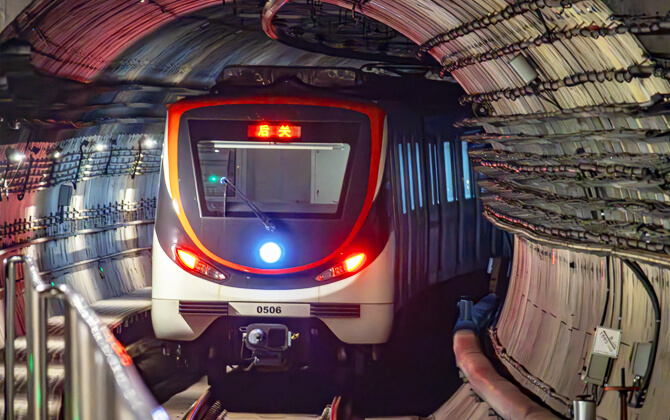
Dalian’s rail transport story started long before the metro. The city had an extensive tramway network in the first half of the 20th century. The first tram line opened on September 25, 1908, and by 1950 the system had grown to 11 lines and 65.9 km (40.95 miles).
After 1950, rising population and heavier road traffic began to interfere with tram operations. The city gradually reduced the tram network, closing eight lines by 1980. During the same period, an early metro plan appeared, but congestion and air pollution kept worsening.
Trolleybuses were introduced as a cleaner option, with the first line opening in 1960 and a second in 1977. Even so, they were still affected by street congestion. Instead of expanding trolleybuses further, planners proposed a grade-separated rail system of 82.4 km (51.20 miles) in the 1987 master plan for 1990-2010.
The first project to move ahead was Tram Route 202, rebuilt on the model of the Milchbuck-Schwamendingen tunnel section in Zurich and opened in 1999. In 2000, a broader 2000-2020 master plan included tram, metro, rapid transit, and regional rail.
Construction on the nearly 50 km (31.07 miles) Line 3 began in September 2000. Trial runs started in October 2002, and regular service began on May 1, 2003. The line was extended to Dalian Railway Station in 2004, and a branch to Jinzhou later opened on December 28, 2008.
Construction of Lines 1 and 2 started in June 2009. Tunnel collapses in March 2010 caused a temporary suspension, so both lines opened later than first planned, eventually entering service in 2015. Together with Line 3, the Jiuli branch, and Tram Route 202, the network then reached 141 km (87.61 miles).
Line 12 opened in 2013, and Line 13 followed on December 28, 2021 with 12 stations and automated train operation. In 2017, the system changed its line numbering scheme, including the current arrangements for Lines 1 and 2 through Xi’an Road.
Planned Expansions
Dalian Metro expansion plans include several future projects intended to improve coverage and interchange options. The clearest near-term project is Line 4 Phase 1, planned from Yingchengzi to Suoyuwan.
This section is expected to be 23.01 km (14.30 miles) long with 17 stations and is scheduled to open in 2027.
| Station | Details |
|---|---|
| Suoyuwan | Planned interchange with Line 5 |
| Dongfang Road | Planned Line 4 Phase 1 station |
| Jinjia Street | Planned interchange with Line 3 |
| Jinsanjiao | Planned Line 4 Phase 1 station |
| Songjiang Road | Planned interchange with Line 1 |
| Xibei Road | Planned Line 4 Phase 1 station |
| Xinda Street | Planned Line 4 Phase 1 station |
| Zelong Lake | Planned Line 4 Phase 1 station |
| Polytechnic University | Planned Line 4 Phase 1 station |
| Xinzhaizi | Planned interchange with Line 2 |
| Xinping Street | Planned Line 4 Phase 1 station |
| Yinxing Avenue | Planned Line 4 Phase 1 station |
| Zhoujiagou | Planned Line 4 Phase 1 station |
| Dongnanshan | Planned Line 4 Phase 1 station |
| Qianmu | Planned Line 4 Phase 1 station |
| Xingfucun | Planned Line 4 Phase 1 station |
| Yingchengzi | Planned terminal |
Other projects listed in the source materials include Line 1 Phase III from Yaojia to Dalian New Airport, also called Dalian Jinzhouwan Airport, at 14.1 km (8.76 miles), and Line 13 Phase II from Dalian North Railway Station to Jiuli at 22.92 km (14.24 miles).
Line 7 is listed as a planned route between Baiheshanzhuang and Gangwan Square at 16.5 km (10.25 miles), while Line 11 would run between Yingchengzi and Shimao at 14.0 km (8.70 miles).
Earlier planning documents described a broader expansion program of nine metro lines totaling 262.9 km (163.36 miles). A 2009 government plan approved investment of CNY 22 billion (about USD 3.03 billion) for Lines 1-5 as part of the 2009-2016 urban rail construction program.
Tourist Attractions
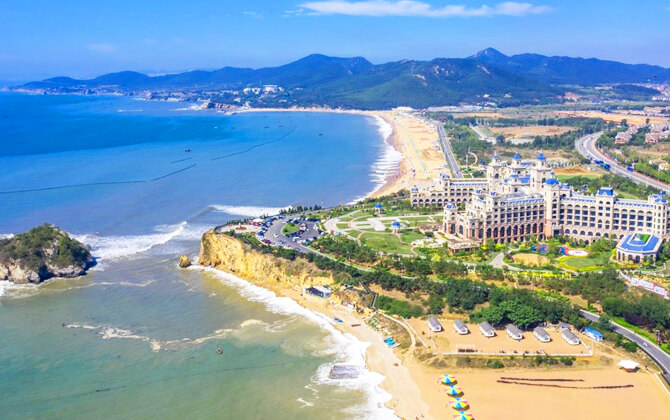
Dalian is easy to explore by metro, bus, trams, and tourist bus services. For visitors using city transport, the metro gives convenient access to several major areas, while trams add a more old-school feel to the trip.
Xinghai Square is one of the city’s best-known landmarks and a practical stop for sightseeing. It also connects well with nearby attractions such as Xinghai Park and the Shell Museum.
Golden Pebble Beach, or Jinshitan, is a major resort area outside the center. It is known for beaches, coastline views, geological scenery, and family-friendly attractions, and it can be reached by metro and other transport options.
Laohutan Ocean Park and Sunasia Ocean Park are popular with families and marine-life fans. Binhai Road is another favorite, especially for coastal views, walks, and photo stops.
Donggang Venice Water City stands out in the evening thanks to its canals, gondola rides, and illuminated scenery. Russian Street and Zhongshan Square show a more historic side of Dalian, with European-style architecture and central urban character.
For a different kind of ride, the historic tram routes 201, 202, and 203 are still worth using. They remain part of local transport and offer a relaxed way to see central districts.
- Use Line 2 for important city-center and coastal connections.
- Take Tourist Bus 901 to cover several major attractions on one route.
- Choose historic tram routes for a slower trip through downtown Dalian.