Mashhad Urban Railway is a rapid transit system in Mashhad, Iran. It is the country’s second-oldest rapid transit network and is variously described as light rail, light metro, urban rail, or metro. In practice, it works like a full rapid transit system, with grade-separated tracks and frequent service. As of 2025, three lines are operating: Line 1 opened in 2011, Line 2 in 2017, and Line 3 entered partial operation in 2025. The wider system includes four inner-city lines in planning and development, with 83 stations across 90.5 km (56.2 miles) of track.
| Key | Information |
|---|---|
| System | Mashhad Urban Railway |
| City | Mashhad, Iran |
| Type | Rapid transit / urban rail system |
| Operating lines | 3 lines as of 2025 |
| Inner-city network | 4 lines planned in total |
| Stations | 83 |
| Network length | 90.5 km (56.2 miles) |
| Line 1 opening | 2011 |
| Line 2 opening | 2017 |
| Line 3 status | Partial operation since 2025 |
| Line 1 operating hours | Daily from 06:00 to 22:00 |
Mashhad Urban Railway Map
Map of Mashhad Urban Railway showing different lines. Click on the map to enlarge it or download the Mashhad Railway map in PDF format.
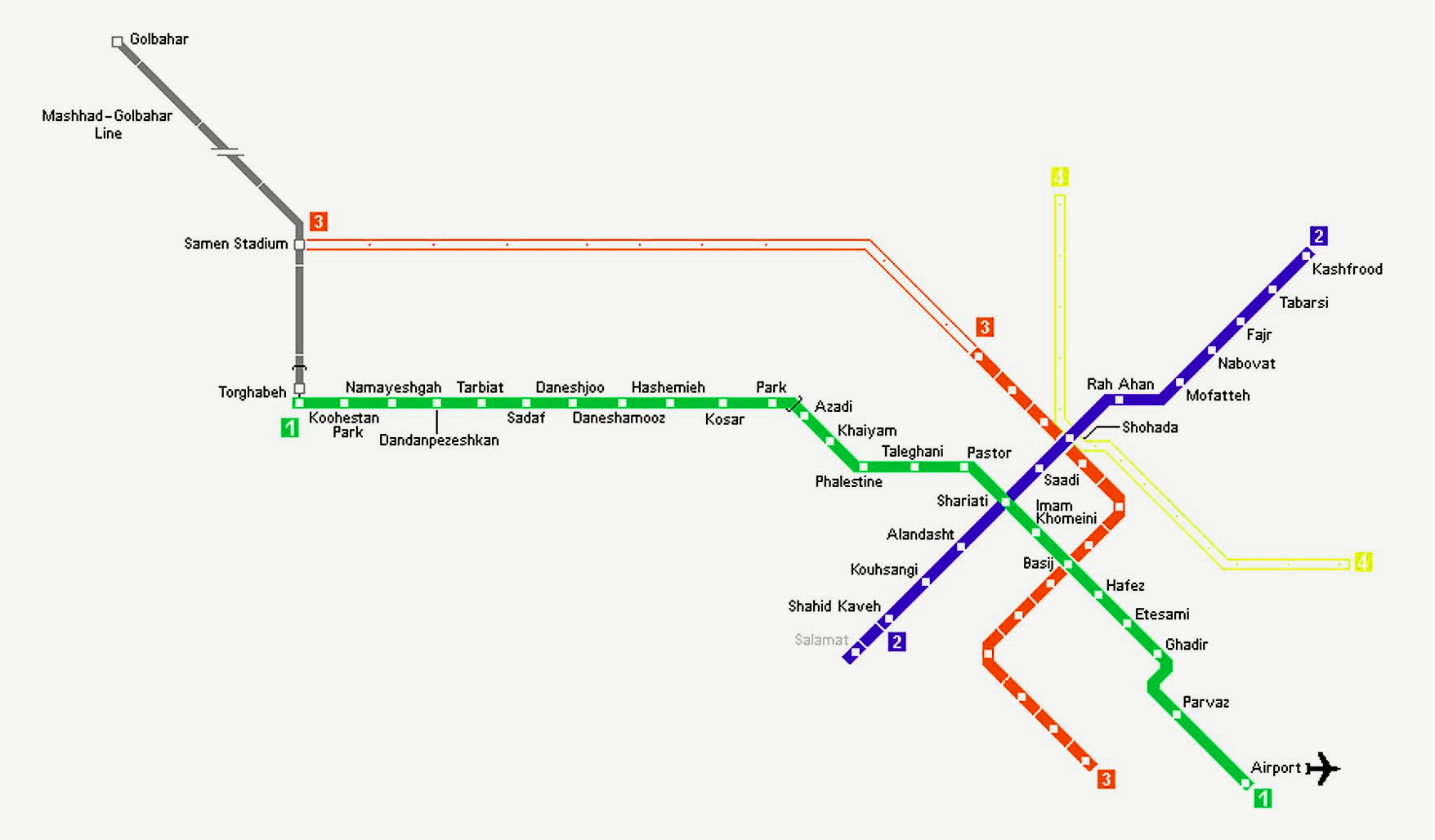
Mashhad Urban Railway Lines and Stations
Mashhad Urban Railway currently operates three lines, while a fourth line is planned. Across the inner-city system, the network has 83 stations and a total length of 90.5 km (56.2 miles). Standards differ by line, but the system functions as a grade-separated urban rail network with frequent train service.
For travelers checking the stations map or building a route plan, these are the main line details available.
Line 1
Line 1 was the first line to open. Construction began in 1999, and the line entered service on 24 April 2011. It is an east-west route that originally ran from Vakil Abad to Ghadir. Today, it connects Hasheminejad Airport in the east with Vakil Abad in the southwest, with a running time of about 41 minutes.
Line 1 is 24 km (14.9 miles) long and has 24 stations. Roughly half the route is underground, and the rest runs at ground level. The airport extension added 4.5 km (2.8 miles) of tunnel and two stations: Bustan-e Reyhaneh and Hasheminejad Airport.
| Station | Details |
|---|---|
| Vakil Abad | Southwestern end of Line 1 |
| Ghadir | Original eastern end of Line 1 |
| Bustan-e Reyhaneh | Added as part of the airport extension |
| Hasheminejad Airport | Airport station on Line 1 |
Line 2
Line 2 is a heavy metro line running north-south for 14.5 km (9.0 miles) between Shahid Fakouri and Tabarsi. It has 13 stations. Excavation was completed with two tunnel boring machines, and limited operation of the first phase began in February 2017.
This route connects with the inter-urban railway at Raah Ahan. Shariati, the first interchange station in the system, began pilot operation on 20 March 2018 and was officially inaugurated on 7 May 2018. Shahid Kaveh opened on 27 July 2019, and the line was extended to Shahid Fakouri on 3 May 2025.
| Station | Details |
|---|---|
| Shahid Fakouri | Current end of Line 2 after the 2025 extension |
| Tabarsi | Opposite end of Line 2 |
| Raah Ahan | Connection to the inter-urban railway system |
| Shariati | Interchange between Line 1 and Line 2 |
| Shahid Kaveh | Opened on 27 July 2019 |
Line 3
Line 3 is also built to heavy rail standards and serves the central area around the Imam Reza shrine. Construction started in 2015 using tunnel boring machines. By 2020, 8.5 km (5.3 miles) of tunnels had been excavated. The full planned route is 28.5 km (17.7 miles) long with 24 stations.
The first phase entered partial operation on 8 May 2025, with a three-station section between Shohada and Imam Reza Terminal.
| Station | Details |
|---|---|
| Shohada | Part of the first operating section of Line 3 |
| Imam Reza Terminal | Part of the first operating section of Line 3 |
Line 4
Line 4 is planned and approved as a 17.5 km (10.9 miles) line with 15 stations. Tunnel excavation began in summer 2021.
| Station | Details |
|---|---|
| Planned line | 17.5 km (10.9 miles) long with 15 stations; excavation started in summer 2021 |
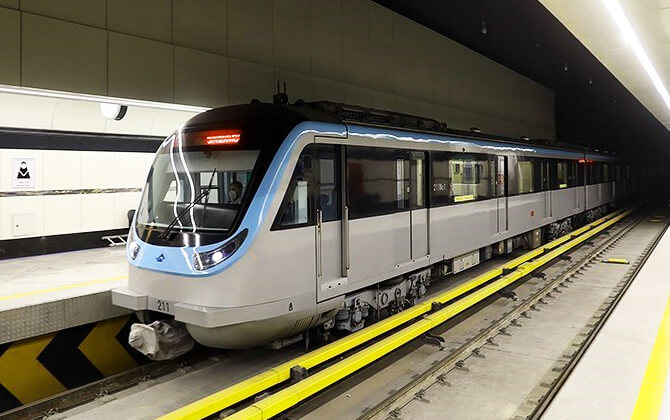
Timings, Frequency and Schedule
If you are checking operating hours, opening hours, or timings today, the clearest confirmed information is for Line 1: it runs daily from 06:00 to 22:00. Across the system, service starts early and closes in the late evening.
Available timetable and schedule details show frequent trains during much of the day. General frequency is about 5 minutes in peak periods, around 7 minutes off-peak, and about 12 minutes on holidays for Line 1. Line 2 is listed with a 10-minute frequency.
Some route timetable details vary slightly by source. On Saturday to Thursday, the starting time is 06:00, and the last train is between 22:00 and 22:30. On Sundays and other public holidays, opening times are later, around 07:00, with closing time around 22:30.
| Service detail | Timings |
|---|---|
| Line 1 working hours | 06:00 to 22:00 daily |
| General peak frequency | About 5 minutes |
| Line 1 off-peak frequency | About 7 minutes |
| Line 1 holiday frequency | About 12 minutes |
| Line 2 frequency | 10 minutes |
| Saturday to Thursday first train | 06:00 |
| Saturday to Thursday last train | Between 22:00 and 22:30 |
| Sundays and public holidays starting time | Around 07:00 |
| Sundays and public holidays closing time | Around 22:30 |
So, for practical trip planning, expect early opening, regular train schedule service through the day, and a late-evening close rather than overnight operation.
Mashhad Urban Railway Fares, Tickets and Cards
Mashhad Urban Railway uses a card-based fare system with two main options: a prepaid card and a magnetic ticket. If you travel often, the prepaid card is the more practical choice. For occasional trips, the magnetic ticket is aimed at infrequent users.
The prepaid card costs 5,000 RI, which is approximately $0.01 USD. According to the available information, it offers a 60% advantage over magnetic tickets.
Tickets and cards can be bought or recharged at metro counters. One-way tickets and ticket cards are also available. Ticket cards include Zaer Card and Mancard. The Zaer Card can also be used for bus rides and parking, while charging is possible through TVM devices and through the phone application for Mancard or Mashhad Card.
No fare calculator or day pass details are provided in the available materials, and no station parking charges or parking charges per day are listed.
Connections to Other Systems
Mashhad Urban Railway connects with other parts of public transport in a few key ways. The best-known link is on Line 1, which reaches Hasheminejad Airport and gives the city a direct rail connection to the airport.
Line 2 connects with the inter-urban railway system at Raah Ahan, which is useful for passengers transferring to longer-distance rail services. Within the metro system itself, Shariati is the main interchange between Line 1 and Line 2.
Available information also says that Line 2 is planned to connect with future Lines 3 and 4, which would expand transfer options across the city transport network.
- Airport access: Line 1 serves Hasheminejad Airport.
- Rail interchange: Line 2 connects with the inter-urban railway at Raah Ahan.
- Metro transfer: Shariati links Line 1 and Line 2.
- Future integration: Line 2 is expected to connect with Lines 3 and 4.
Airport Connections
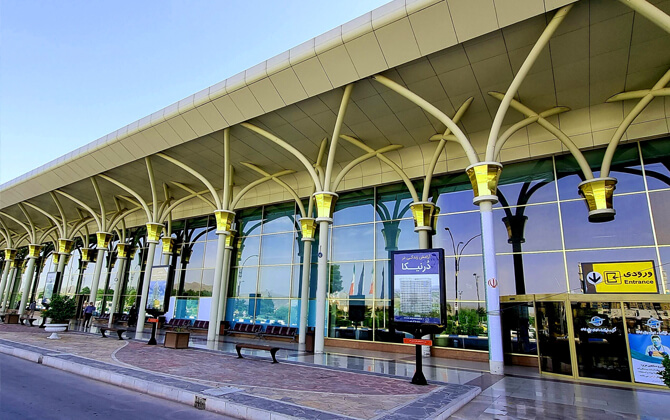
Line 1 is the Mashhad Urban Railway route for airport access. It links Hasheminejad Airport with the rest of the city and made Mashhad the first city in Iran to have a mass transit airport connection.
The line runs between Hasheminejad Airport and Vakil Abad, with a running time of about 41 minutes. Line 1 operating hours are 06:00 to 22:00 daily, so if you are checking the timetable or schedule today for an airport trip, that is the main service window confirmed in the available information.
The airport extension added 4.5 km (2.8 miles) of underground track and two stations: Bustan-e Reyhaneh and Hasheminejad Airport. Line 1 now totals about 24 km (14.9 miles).
For many travelers, this is the most straightforward public transport connection between the airport and the city.
Tips and Rules
Buy a reloadable card or a single ticket before boarding. The reloadable card is especially handy because it can also be used on bus services, including BRT.
Check your route, stations list, and transfer point before you travel. If you need to switch between Line 1 and Line 2, use Shariati interchange station. A stations map can help, especially if you are unfamiliar with the system.
Watch the train direction carefully. On Line 1, some services go to the airport while others end at Ghadir, so confirm the destination before you board. On Line 2, choose the correct direction toward Tabarsi or Shahid Kaveh.
Regular opening hours are usually 06:00 to 22:00, while on Fridays and official holidays the starting time is 07:00. Trains can get crowded during peak periods, around midday, and during pilgrimage seasons.
Women-only cars are available on some trains and are usually marked. Let passengers get off first, then board. If you miss your stop or take the wrong train, simply leave at the next station and return in the opposite direction.
When your stop is close, move toward the doors early, especially on busy trains. Station names are shown on screens and announced by voice, which makes the system fairly easy to follow. For many central trips, the metro is a safe and practical way to avoid road traffic.
History
Mashhad Urban Railway is the second-oldest rapid transit system in Iran. Although it has been described in different ways, including light rail and light metro, its fully separated alignment and frequent service place it firmly in the rapid transit category.
Construction of Line 1 began in 1999, and the line opened on 24 April 2011. It later reached Mashhad International Airport, giving the city the first mass transit airport link in Iran.
Line 2 followed as a north-south heavy metro route. Limited operation began in February 2017. Shariati, the first interchange station, started pilot operation on 20 March 2018 and was officially inaugurated on 7 May 2018. Shahid Kaveh opened on 27 July 2019, and the line was extended to Shahid Fakouri on 3 May 2025.
Construction of Line 3 started in 2015 using tunnel boring machines. By 2020, 8.5 km (5.3 miles) of tunnels had been excavated, and the first phase entered partial operation on 8 May 2025 between Shohada and Imam Reza Terminal.
Line 4 was later approved as part of the system’s expansion, with tunnel excavation beginning in summer 2021.
Future Extensions
Expansion remains a major part of the Mashhad Urban Railway route plan. Line 4 has already been approved as a 17.5 km (10.9 miles) line with 15 stations, and excavation is underway.
Planning materials also point to growth beyond the lines now in service. Earlier studies identified the need for four urban rail lines in Mashhad, and a fifth monorail line is also mentioned in long-term planning.
Recent milestones show that the network is being built in stages. Line 3 entered partial operation in 2025, and Line 2 was extended to Shahid Fakouri in May 2025. That gives a clear picture of the system’s ongoing expansion.
- Line 4: approved, 17.5 km (10.9 miles), 15 stations, excavation underway.
- Line 3: partially open since 2025, with a full planned length of 28.5 km (17.7 miles) and 24 stations.
- Additional planning: a fifth monorail line is mentioned in the long-term vision.
Nearby Attractions
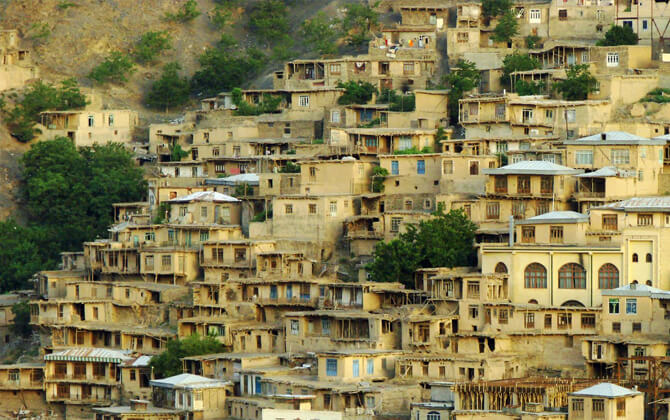
The metro is useful for reaching several of Mashhad’s best-known attractions and busy urban areas. One of the most important destinations is Imam Reza’s shrine, served by the central area covered by Line 3.
Other places mentioned in the available materials include Koohsangi Park, Mellat Park, Vakilabad, the Exhibition area, Palestine Square, Azadi Square, the Airport area, and Ferdowsi University of Mashhad. The network also helps travelers heading toward Torghabeh and Shandiz.
For quick trip planning, these stations are especially useful:
| Station | Details |
|---|---|
| Vakilabad | Useful for the park area, zoo, Torghabeh, and Shandiz |
| Koohsangi | For Koohsangi Park |
| Exhibition | For the exhibition center |
| Mellat Park | For Mellat Park |
| Palestine | For central city access |
| Shariati | Important interchange station |
| Hasheminejad Airport | For air travelers |
For visitors using local transport and city transport to get around Mashhad, the metro is often one of the easiest ways to move between key sights and everyday destinations.