The City Loop, originally called the Melbourne Underground Rail Loop, is an underground metropolitan rail system in central Melbourne, Victoria. It has four single-track rail tunnels and three underground stations: Flagstaff, Melbourne Central, and Parliament. Together with Flinders Street, Southern Cross, and the Flinders Street Viaduct, it creates a four-track ring around the CBD. Eleven metropolitan rail lines use the system in four groups: Burnley, Caulfield, Clifton Hill/City Circle, and Northern. Planning dates back to the 1920s, tunnelling began in 1972, and the loop opened in stages from 1981 to 1985. After the Metro Tunnel soft-opened on 30 November 2025, the Pakenham, Cranbourne, and Sunbury lines were removed from the Loop from 1 February 2026, while the Frankston line returned to the Caulfield tunnel.
| Key | Information |
|---|---|
| System | Underground metropolitan rail system in Melbourne CBD |
| Stations | Flagstaff, Melbourne Central, Parliament |
| Track layout | Four single-track tunnels forming a CBD rail ring with surface connections |
| Line groups | Burnley, Caulfield, Clifton Hill/City Circle, Northern |
| Opening period | Opened in stages from 1981 to 1985 |
| Major change | From 1 February 2026, Pakenham, Cranbourne, and Sunbury moved to the Metro Tunnel; Frankston returned to the Caulfield tunnel |
City Loop (Melbourne) Map
Map of Melbourne City Loop showing next stations. Click on the map to enlarge it or download the Melbourne City Loop map in PDF format.

Lines and Stations
The City Loop is part of Melbourne public transport and links the CBD with the wider suburban rail system. Eleven metropolitan lines use the Loop, grouped into Burnley, Caulfield, Clifton Hill, and Northern tunnels. Each group has its own route through the system, and the loop connects directly with Flinders Street and Southern Cross to form a continuous rail ring around central Melbourne.
The underground stations are Flagstaff, Melbourne Central, and Parliament. Along with the surface stations at Flinders Street and Southern Cross, they give passengers easy access to key parts of the city centre and make the stations map especially useful for planning transfers.
Line groups
- Burnley Group: Lilydale, Belgrave, Alamein, and Glen Waverley lines.
- Caulfield Group: Frankston line.
- Clifton Hill Group: Mernda and Hurstbridge lines.
- Northern Group: Craigieburn and Upfield lines.
Operating patterns vary by line group and time of day. Burnley and Northern services change direction on weekdays, while Clifton Hill and Caulfield keep the same direction throughout the day. On weekends, Burnley and Northern trains follow different patterns again, so checking the route plan and train schedule before you travel is a smart move.
Stations
| Station | Details |
|---|---|
| Parliament | Serves the eastern end of the CBD and has entrances on Lonsdale Street and Macarthur Street. |
| Melbourne Central | Opened as Museum station in 1981 and was renamed in 1997. |
| Flagstaff | Serves the western end of the CBD and is near Flagstaff Gardens. |
Each City Loop station has four tracks and two stacked island platforms. That design supports the independent tunnel arrangement used across the system.
Summary
| Platform number | Group | Lines |
|---|---|---|
| 1 | Clifton Hill Group | Mernda & Hurstbridge |
| 2 | Caulfield Group | Frankston |
| 3 | Northern Group | Craigieburn & Upfield |
| 4 | Burnley Group | Lilydale, Belgrave, Alamein & Glen Waverley |
From 1 February 2026, the Pakenham, Cranbourne, and Sunbury lines no longer use the City Loop and run through the Metro Tunnel full-time. The Frankston line returned to the Caulfield loop tunnel.
Timetable & Operating Hours
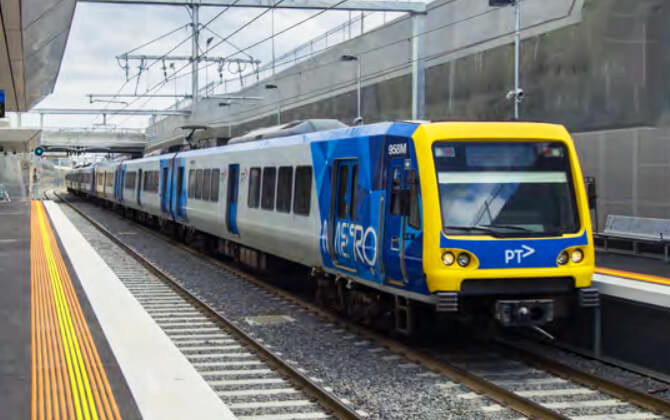
The City Loop timetable depends on which line group is using each tunnel. Services are split into Burnley, Caulfield, Clifton Hill, and Northern groups, and their route timetable changes by day and time. That means opening hours, working hours, and running time through the Loop are not the same for every train. Some groups reverse direction between weekday mornings and afternoons, so if you are checking timings today or looking for the last train, always confirm the current schedule.
Network changes tied to the Metro Tunnel also affect service patterns. From 1 February 2026, the Pakenham, Cranbourne, and Sunbury lines were removed from the City Loop. From the same date, Frankston trains returned to the Caulfield tunnel, while Sandringham services through-run with Werribee and Williamstown lines.
Typical City Loop operating patterns
| Service detail | Timings |
|---|---|
| Clifton Hill Group: Mernda & Hurstbridge – weekday mornings / weekday afternoons / weekends | Clockwise / Clockwise / Clockwise |
| Caulfield Group: Frankston – weekday mornings / weekday afternoons / weekends | Anti-clockwise / Anti-clockwise / Anti-clockwise |
| Northern Group: Craigieburn & Upfield – weekday mornings / weekday afternoons / weekends | Clockwise / Anti-clockwise / Clockwise |
| Burnley Group: Lilydale, Belgrave, Alamein & Glen Waverley – weekday mornings / weekday afternoons / weekends | Anti-clockwise / Clockwise / Clockwise |
The Burnley and Northern groups are the ones that reverse direction on weekdays. On weekends and public holidays, Burnley services generally follow the weekday afternoon pattern, while Northern services usually follow the weekday morning pattern.
Night Network
Metro Trains runs all-night services on most lines on weekends. Night Network trains operate from 12:30 am to 5:00 am on Saturday mornings and from 12:30 am to 7:30 am on Sunday mornings. During those hours, trains run direct between North Melbourne, Jolimont, or Richmond and Flinders Street. Services from North Melbourne do not stop at Southern Cross station.
CITY CIRCLE service example
The CITY CIRCLE service runs every day. Published timetable information shows these operating hours, opening times, and frequency levels.
| Service detail | Timings |
|---|---|
| Mon | 20:15-00:36, frequency 14-16 min |
| Tue | 21:51-00:21, frequency 15 min |
| Wed | 20:15-00:36, frequency 14-16 min |
| Thu | 21:09-00:52, frequency 14-16 min |
| Fri | 21:09-00:07, frequency 14-16 min |
| Sat | 05:30-00:20, frequency 18-22 min |
| Sun | 20:20-00:33, frequency 14-15 min |
The CITY LOOP clockwise service is listed for Monday through Thursday, usually in the late evening and after midnight. Published train schedule data also shows a regular operating range of 20:39-00:31 for this service.
For live departures, service updates, schedule today details, and any change to starting time or closing time, check real-time timetable information before you travel.
Prices, tickets and discounts
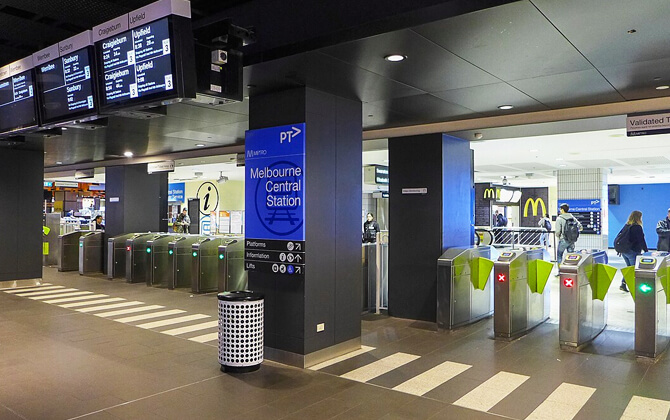
Travel on the City Loop uses Melbourne’s standard public transport ticket system, myki. The fare, ticket price, and total cost can vary, so it is best to check the official PTV website or a fare calculator before you travel.
Outside Melbourne’s Free Tram Zone, you need a myki card. You can buy one at staffed Metro stations such as Flinders Street and Southern Cross, at some V/Line stations, from retail outlets showing the myki sign, at visitor centres, or online and by phone. Cards can also be topped up online, at station machines, and at many train stations and tram stops.
The myki system covers trains, trams, and bus services across Melbourne transport. For train travel, touch on before boarding and touch off when you leave at your destination. At Flinders Street, Southern Cross, and some City Loop services, barriers are available for touching on and off.
Concession discounts are available for eligible travellers with valid concession cards, including Pension Card holders, students, and seniors. A myki Explorer kit is also available. It includes a card with a full day pass for unlimited travel on metropolitan trains, trams, and buses, plus maps and attraction discounts.
If you stay entirely within the Free Tram Zone in the CBD, you do not need to touch on or off with your myki card. There is also a free City Circle Tram service, which is handy for short trips around central Melbourne.
Make sure your myki has enough credit before you travel, as ticket inspectors regularly check passengers across the public transport system.
Tips and Rules
The main rule is simple: always check which line group and direction your train is using before you board. City Loop services may run clockwise or anti-clockwise, and the route can change with the time of day or day of week.
Not every line uses the Loop all the time. Some trains run direct to Flinders Street, while others use the Metro Tunnel from 1 February 2026. If you are travelling on the Frankston line, remember that it returned to the Caulfield tunnel from that date.
Allow extra time if you need to change trains. The underground stations have four platforms on two levels, so transfers can involve moving between concourses and platforms. If you are walking between nearby CBD stations, follow the signed routes carefully.
For a smoother trip, watch the platform displays and destination signs. The same stations can appear in different service patterns during the day, and a direct train may be followed by a Loop service after Flinders Street.
Night services follow a simpler pattern. On weekend nights, trains run direct between North Melbourne, Jolimont, or Richmond and Flinders Street, and services from North Melbourne do not stop at Southern Cross.
- Check the line group before boarding.
- Confirm whether your service runs via the City Loop or direct to Flinders Street.
- Allow extra time for underground transfers.
- Use platform displays and the timetable for the latest service pattern.
- Remember that night trains can operate differently from daytime services.
- For safe travel, double-check the station, direction, and train schedule before boarding.
History
Before the City Loop opened, Flinders Street and Spencer Street station were connected only by the four-track Flinders Street Viaduct beside the Yarra River. By the 1970s, Flinders Street was heavily congested, many trains still had to reverse direction, and the Epping and Hurstbridge lines were separated from the rest of the network by Princes Bridge station.
The idea of an underground railway in Melbourne had been around since the 1920s, but serious planning started in the 1960s. Early proposals suggested different routes and station layouts. The plan that was eventually chosen was a circular railway that would let trains pass Flinders Street, loop through the CBD, and return to the suburbs. The aim was to increase platform capacity and bring passengers closer to the northern and eastern city centre.
The Melbourne Underground Rail Loop Act 1970 finalized the design and created the authority responsible for construction. The Melbourne Underground Rail Loop Authority began operating on 1 January 1971, and tunnelling started in June 1972. Work used both a tunnel boring machine and conventional construction methods, while cut-and-cover was used for access ramps and for Melbourne Central station, then called Museum.
The system opened in stages between 1981 and 1985. Museum station and the Burnley and Caulfield tunnels opened first on 24 January 1981. The City Circle tunnel began operating with special services on 6 December 1981, followed by Clifton Hill services on 31 October 1982. Parliament station opened on 22 January 1983, the Northern tunnel opened in January 1985, and Flagstaff station completed the project in May 1985.
In January 2023, the City Loop and its three stations closed for two weeks for major safety upgrades. The works were designed to improve smoke detection, extraction, fire detection, hydrants, CCTV, and intruder-detection systems. Construction of the Metro Tunnel, built to reduce pressure on the City Loop, began in 2017 and soft-opened on 30 November 2025. From 1 February 2026, the Pakenham, Cranbourne, and Sunbury lines were removed from the Loop, while the Frankston line returned to the Caulfield tunnel and Sandringham trains began through-running with Werribee and Williamstown services.
Nearby Attractions
The City Loop is a practical base for exploring central Melbourne. Because it connects Melbourne Central, Parliament, Flinders Street, and Southern Cross, it is easy to step off the train and continue on foot or by tram. That makes it a useful hub for city transport and local transport around the CBD.
One of the closest attractions is the State Library, a historic building with a Children’s Quarter offering free activities, storytime, and quiet spaces. Nearby, Melbourne Central combines a major shopping precinct with the well-known clock show, and the surrounding streets lead into the city’s laneways and arcades.
At Fed Square, you can visit ACMI, the Koorie Heritage Trust, and other cultural venues within a short walk of Melbourne Central and Flinders Street. This area also connects easily to the Immigration Museum and the Yarra River promenades.
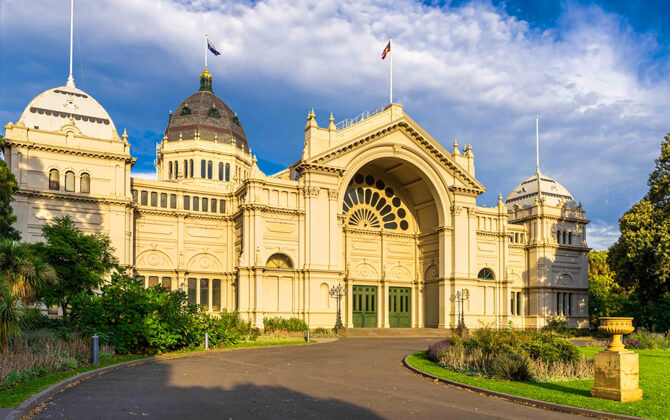
Heading east, the Loop gives quick access to Melbourne Museum, the Royal Exhibition Building, Fitzroy Gardens, and the Old Melbourne Gaol. These sights are close enough to combine into a full day around Carlton and the eastern CBD.
For green space, the City Loop also makes it easy to reach the Royal Botanic Gardens, Birrarung Marr, Flagstaff Gardens, and the Southbank riverfront. From there, you can continue to attractions such as SEA LIFE Melbourne Aquarium, the Arts Centre, and the Melbourne Skydeck.
Beyond the CBD, a short tram ride can take you to St Kilda Pier, Luna Park, Albert Park, and Melbourne Zoo. With so many places close to the free tram zone and the Loop, it is easy to combine several stops in one day.