The Xi’an Metro, also called Xi’an Rail Transit, is the rapid transit system serving Xi’an and nearby Xianyang in Shaanxi province, China. It is a core part of public transport and city transport in the region, with 11 metro lines and one commuter railway listed as of January 2025. The network covers 427.9 km (265.9 mi) and serves 270 stations, connecting urban districts, suburban areas, major rail hubs, and Xi’an Xianyang International Airport.
| Key | Information |
|---|---|
| System name | Xi’an Metro, also known as Xi’an Rail Transit |
| Area served | Xi’an and neighboring Xianyang, Shaanxi province, China |
| System type | Rapid transit and commuter railway |
| Network size | 427.9 km (265.9 mi) |
| Stations | 270 stations |
| First opening | 2011, with Line 2 |
| Operational lines listed | Line 1, Line 2, Line 3, Line 4, Line 5, Line 6, Line 8, Line 9, Line 10, Line 14, Line 15, Line 16, and Xihu Line |
| Airport route | Line 14 serves Airport West (T1, T2, T3) and Airport (T5) |
| Starting fare | RMB 2, about $0.28, for trips up to 6 km (3.7 mi) |
| Typical opening hours | First trains generally start around 6:00 AM, with the last train depending on the line |
Xi’an Metro Map
Map of Xi’an Metro showing different lines. Click on the map to enlarge it or download the Xi’an Metro map in PDF format.
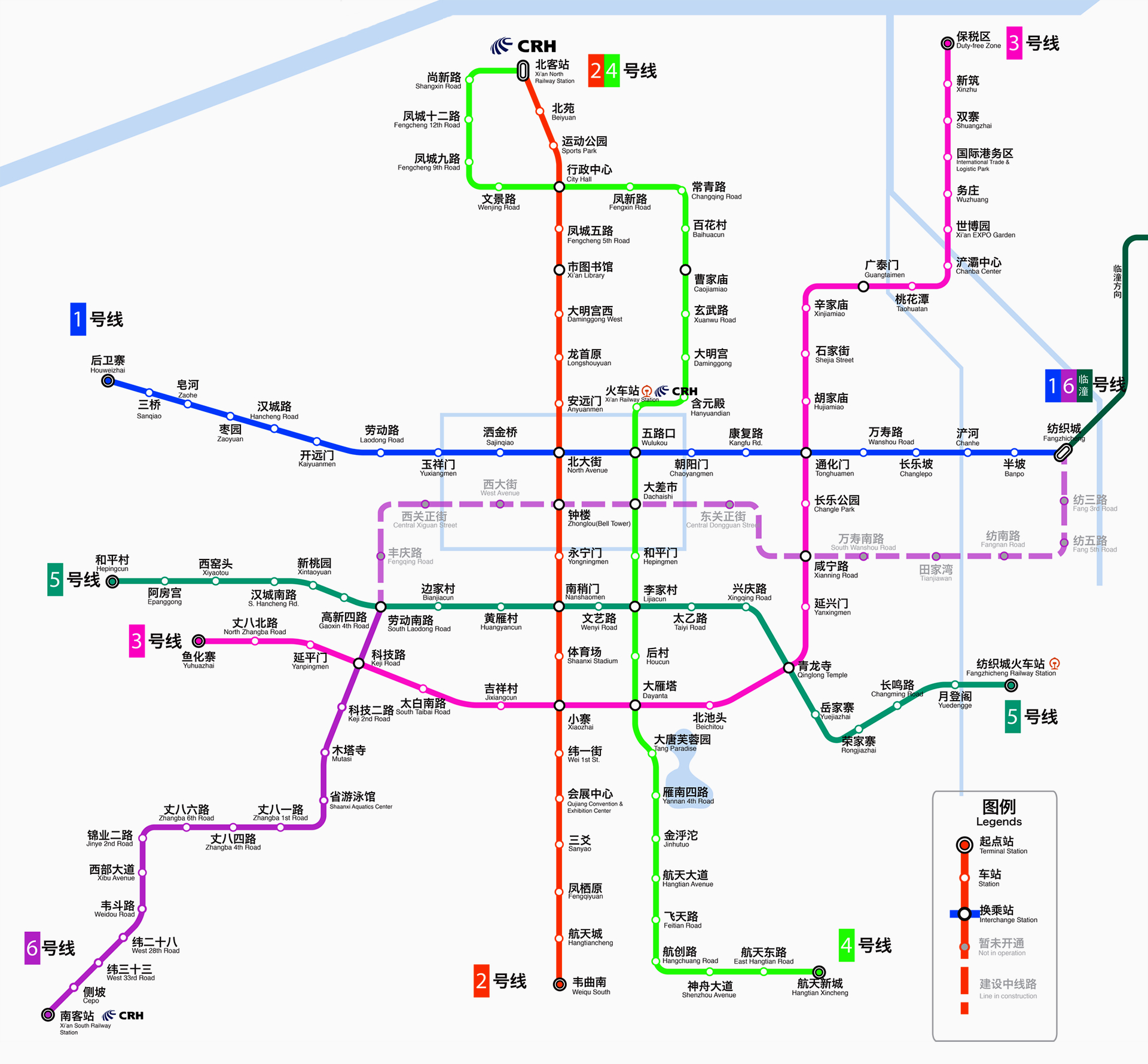
Xi’an Metro Lines
The Xi’an Metro route plan has grown from a single north-south line into a broad local transport network crossing Xi’an and parts of Xianyang. Line 2 opened first in 2011, followed by Line 1 in 2013, Line 3 in 2016, and Line 4 in 2018. Later expansion added Lines 14, 5, 6, 9, 16, 10, 8, 15, and the Xihu Line.
For route timetable planning, the main thing to check is the line, terminal station, and interchange point. The stations map and stations list are especially useful at larger hubs such as Xi’an Beizhan, Bell Tower, Beidajie, and Xiaozhai.
| Line | Terminals | Opened | Newest extension | Length | Stations |
|---|---|---|---|---|---|
| Line 1 | Xianyangxizhan to Fangzhicheng | 2013 | 2023 | 42.1 km (26.2 mi) | 30 |
| Line 2 | Caotan to Changninggong | 2011 | 2023 | 33.637 km (20.9 mi) | 25 |
| Line 3 | Yuhuazhai to Baoshuiqu | 2016 | — | 39.15 km (24.3 mi) | 26 |
| Line 4 | Xi’an Beizhan to Hangtian Xincheng | 2018 | — | 35.2 km (21.9 mi) | 29 |
| Line 5 | Yanminghu to Chuangxingang | 2020 | 2024 | 45.0 km (28.0 mi) | 33 |
| Line 6 | Xi’annanzhan to Fangzhicheng | 2020 | 2024 | 39.6 km (24.6 mi) | 32 |
| Line 8 | Loop Line | 2024 | — | 49.9 km (31.0 mi) | 37 |
| Line 9 | Fangzhicheng to Qinlingxi | 2020 | — | 25.3 km (15.7 mi) | 15 |
| Line 10 | Jingshangcun to Zhaohuiguangchang | 2024 | — | 34.4 km (21.4 mi) | 17 |
| Line 14 | Airport West (T1, T2, T3) to Heshao | 2019 | 2021 | 42.96 km (26.7 mi) | 18 |
| Line 15 | Xiliu to Dongzhaoyu | 2025 | — | 19.46 km (12.1 mi) | 13 |
| Line 16 | Qinchuangyuanzhongxin to Shijingli | 2023 | — | 15.03 km (9.3 mi) | 9 |
| Xihu Line | Epanggongnan to Huxian | 2022 | — | 26.3 km (16.3 mi) | 2 |
Line 2 runs north to south and passes under key historic areas, including the Bell Tower and the Xi’an City Wall. Line 1 runs east to west and supports travel between Xi’an and Xianyang. Line 3 connects Yuhuazhai with Baoshuiqu, while Line 4 links Xi’an Beizhan with Hangtian Xincheng and includes Xi’an Railway Station.
Line 8 is a fully underground circular route. Line 14, formerly the Airport Intercity Railway, is the main airport line. Xihu Line runs from Epanggongnan to Huxian with no intermediate stations, which makes it different from the regular metro lines.
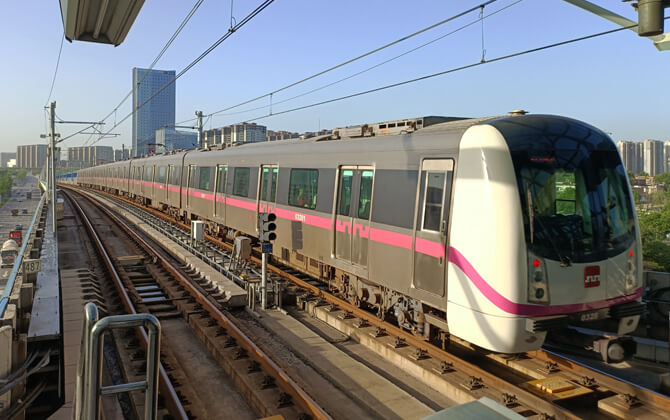
Opening hours
Xi’an Metro operates daily. The usual starting time is around 6:00 AM, while the closing time depends on the line and terminal station. In most cases, the last train leaves between about 10:00 PM and midnight. Public holidays may bring extended operating hours, so checking the schedule today before a late trip is a good idea.
| Service detail | Timings |
|---|---|
| Line 1 operating hours | About 6:00 AM to 11:30 PM |
| Line 2 opening times | About 6:00 AM to 11:45 PM at both terminals; latest service ends around 11:50 PM |
| Line 3 working hours | About 6:00 AM to 11:00 PM |
| Line 4 timings | About 6:00 AM to 11:00 PM |
| Line 5 train schedule | About 6:00 AM to 11:13 PM |
| Line 6 schedule | About 6:00 AM to 11:15 PM |
| Line 8 Inner Ring running time | About 6:10 AM to 12:12 AM |
| Line 8 Outer Ring timings today | About 6:20 AM to 11:00 PM |
| Line 9 opening hours | About 6:00 AM to 10:30 PM |
| Line 14 last train range | About 6:00 AM to 10:20 PM or 10:30 PM, depending on terminal |
| Line 16 service hours | About 6:00 AM to 10:15 PM |
Frequency varies by route. Busy lines usually run more often during the morning and evening rush, while quieter periods can have longer intervals between trains.
Cost of travel, Tickets and Cards
Xi’an Metro uses a distance-based fare system, so the ticket price depends on your route. The starting fare is RMB 2, about $0.28, for trips up to 6 km (3.7 mi). The fare then rises in steps: RMB 3, about $0.42, for 6–10 km (3.7–6.2 mi); RMB 4, about $0.55, for 10–14 km (6.2–8.7 mi); RMB 5, about $0.69, for 14–20 km (8.7–12.4 mi); and RMB 6, about $0.83, for 20–26 km (12.4–16.2 mi). Beyond 26 km (16.2 mi), the cost increases by RMB 1, about $0.14, for every additional 8 km (5.0 mi).
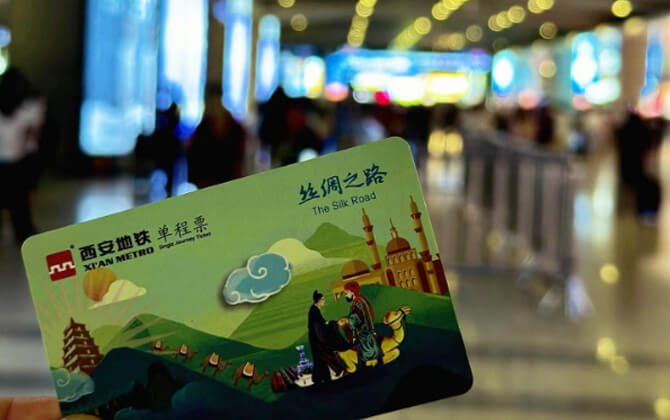
The highest single fare mentioned in the source material is RMB 13, about $1.80, on the longest cross-city airport trip. Ticket vending machines can help as a simple fare calculator: choose your destination, check the price, and buy the ticket.
- Chang’an Tong IC Card: 10% off single fares and usable on both metro and bus.
- Students: 50% off.
- Seniors aged 60 and above: free during off-peak hours.
- Children under 1.2 m (3.9 ft): free.
Pass options are available for visitors and frequent riders. A 1-Day Pass costs RMB 18, about $2.50, and gives unlimited rides for 24 hours from first use. A 3-Day Pass costs RMB 45, about $6.25, and is valid for 72 hours from first use. Some materials also list a One-Day Pass at RMB 15, about $2.10, and a Three-Day Pass at RMB 40, about $5.55.
Other value-card options mentioned include RMB 38, about $5.30, for a RMB 50 value card, about $6.95, and RMB 68, about $9.45, for a RMB 100 value card, about $13.90. A Chang’an Tong Card can be bought at station service counters with a RMB 20 deposit, about $2.80, then topped up as needed.
- Single Journey Token: buy it from a ticket vending machine, choose English, select your destination, pay by cash or mobile payment, and collect the token.
- Mobile QR code: use Alipay Global, WeChat International, or the Xi’an Metro app to scan in and out.
- Chang’an Tong Card: useful for repeated metro and bus trips.
- Tourist day pass: available at station service desks.
Single journey tokens are collected when you exit. Day passes can usually be kept, which is a small bonus if you like transport souvenirs.
Connections to Other Systems
Xi’an Metro is closely linked with the wider transportation in Xi’an, including railway stations, airport services, suburban rail, and other urban transport systems. These interchanges make it easier to move between metro routes, mainline rail, and longer-distance trips.
| Station | Details |
|---|---|
| Xi’an North Railway Station | Connected to Lines 2, 4, and 14; a major rail and metro interchange. |
| Xi’an Railway Station | Connected to Line 4. |
| Xi’an East Railway Station | Planned to connect with Line 5; the station is still under construction. |
| Xi’an Xianyang International Airport | Served by Line 14 through Airport West (T1, T2, T3) and Airport (T5). |
The network also connects with other rail-based local transport systems in the region. Xihu Line functions as a suburban railway, while Xixian ART Line 1, the Qujiang Sightseeing Monorail, and Gaoxin SkyShuttle are listed among related systems in Xi’an’s transport network.
Airport Connections
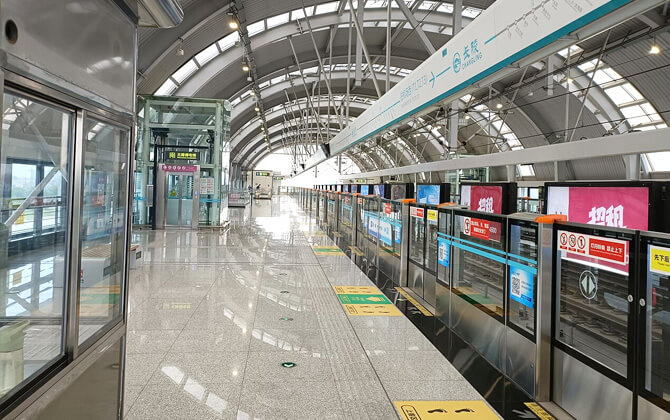
Xi’an Metro Line 14 is the main airport route and provides direct rail service to Xi’an Xianyang International Airport. It links the airport with Xi’an North Railway Station, helping passengers avoid road traffic when traveling between the airport and a major rail hub.
The airport connection opened in stages. The west section from Airport West (T1, T2, T3) to Xi’an Beizhan opened on September 29, 2019. The east section from Xi’an Beizhan to Heshao opened on June 29, 2021. Airport (T5) is listed as an infill station for February 18, 2025.
| Station | Details |
|---|---|
| Airport West (T1, T2, T3) | Airport station on Line 14 serving terminals T1, T2, and T3 in Xianyang. |
| Airport (T5) | Listed as an airport station on Line 14 for Terminal 5. |
| Xi’an Beizhan | Key transfer point for Lines 2, 4, and 14, with connections to rail services. |
For most airport trips by metro, Line 14 is the path train travelers need to follow. It runs through Xi’an Xianyang New Area and Xi’an North Railway Station, giving a practical connection between the airport and the city network.
Tips and Rules
Using the Xi’an Metro is straightforward. Stations have Chinese and English signs, and train maps help you follow the route while onboard. The system is generally easy to use, safe, and well suited to visitors who want reliable public transport without dealing with traffic.
- Choose your payment method before entering the station: a single-journey ticket, Chang’an Tong Card, mobile QR code, or day pass.
- Keep a route plan ready, especially at busy interchanges or when you need a specific exit.
- Stand behind the yellow safety line and let passengers exit before boarding.
- Use priority seats only when needed, and offer them to elderly passengers, pregnant women, or passengers with disabilities.
- Keep phones quiet and use earphones for music or videos.
- Do not eat or drink on the metro.
- Keep bags and luggage close so you do not block aisles or doors.
- Avoid standing in the doorway, particularly during rush hour.
Late morning and early afternoon are usually the most comfortable times to ride. Peak hours are typically around 7:30 AM to 9:00 AM and 5:30 PM to 7:00 PM. If your route includes Bell Tower, Beidajie, Xi’an North Railway Station, Xiaozhai, or Dayanta, allow extra time.
- Check the station exit map before leaving, especially at Dayanta, where nearby attractions can make exits confusing.
- Some ticket machines may not accept foreign bank cards, so carrying cash for top-ups can help.
- Remember to tap out with your metro card at the end of the trip.
- Children under 4 ft (1.3 m) can travel free on all Xi’an subway lines.
- Folding bicycles and guide dogs are allowed on the metro.
History
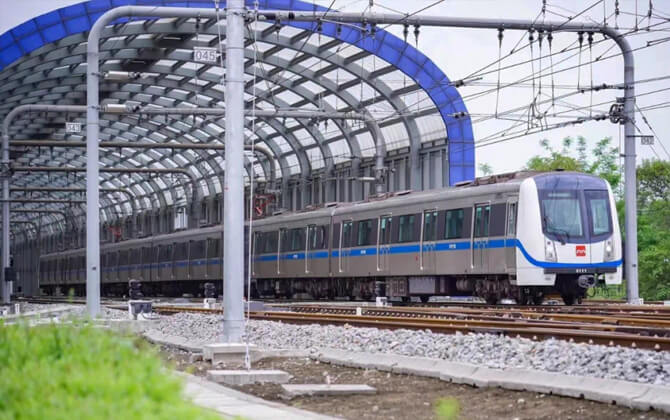
The history of the Xi’an Metro goes back to early subway proposals in the 1970s. One idea would have demolished the Xi’an City Wall to create a ring subway line, similar to Beijing Subway Line 2. That plan was dropped after opposition from preservationists and because of funding limits.
Planning for a multi-line metro system began in the mid-1980s. A proposal submitted to the State Council in 1994 covered four planned lines totaling 73.2 km (45.5 mi). A revised plan was submitted in February 2004 and received final approval on September 13, 2006.
Construction of Line 2 began on September 29, 2006, along Chang’an Street. The line opened on September 28, 2011, running north to south under historic areas such as the Bell Tower and the Xi’an City Wall. Line 1 followed on September 15, 2013, then Line 3 on November 8, 2016, and Line 4 on December 26, 2018.
Line 14 opened in September 2019 and was extended in June 2021. Major expansion continued in the 2020s, with Lines 5, 6, and 9 opening in December 2020, Xihu Line in November 2022, Line 16 in June 2023, Line 10 in September 2024, Line 8 in December 2024, and Line 15 in 2025.
On June 12, 2019, the NDRC approved the Phase III Construction Plan for Xi’an Metro. The plan included Line 1 Phase 3, Line 2 Phase 2, Line 8, Line 10 Phase 1, Line 14, Line 15 Phase 1, and Line 16 Phase 1. By January 2025, the network was listed with 11 metro lines, one commuter railway, 427.9 km (265.9 mi) of route length, and 270 stations.
Future Extensions
Xi’an Metro expansion is continuing through new sections and planned routes. The clearest future projects in the available material are the remaining section of Line 5, a southern extension of Line 10, and the first phase of Line 17.
The remaining Line 5 section is planned to connect Yanminghu with Xi’an East Railway Station. Line 10 is under planning for a southern extension from Jingshangcun to Yanxianglubeikou, with interchange stations planned at Kangfulu, Jiaotongdaxue · Xingqinggong, and Yanxianglubeikou. Line 17 is expected no earlier than late 2027 and is planned from Airport (T5) to Fupingxingzhengzhongxin.
| Planned operation time | Line | Phase or section | Terminals | Length | Stations |
|---|---|---|---|---|---|
| 2026 | Line 5 | Phase I remaining section | Yanminghu to Xi’an East Railway Station | 3.66 km (2.3 mi) | 1 |
| 2027 or later | Line 17 | Phase I | Airport (T5) to Fupingxingzhengzhongxin | 69.3 km (43.1 mi) | 8 |
These projects show the system’s continuing build-out, with future work focused on longer corridors, airport access, and stronger interchange links at major transport nodes.
Nearby Attractions

Xi’an Metro is useful for reaching many of the city’s main sights, from old-city landmarks to shopping districts and cultural parks. It is especially handy when you want to combine central sightseeing with longer trips to rail hubs or the airport.
- Bell Tower: a major city-center landmark and one of Xi’an’s best-known sights.
- Drum Tower: close to the Bell Tower, with traditional architecture and city views.
- Xi’an City Wall: accessible from key stations such as Yongningmen and Anyuanmen, with scenic views and cycling opportunities.
- Muslim Quarter: a popular food street near the Bell Tower area, known for local snacks and a lively atmosphere.
- Big Wild Goose Pagoda: one of Xi’an’s iconic landmarks, with a popular evening music fountain show nearby.
- Shaanxi History Museum: a major stop for ancient artifacts and Tang Dynasty treasures.
- Daming Palace National Heritage Park: a historic site focused on the remains of the Tang Dynasty imperial palace.
- Tang Paradise: a cultural park with Tang-style architecture, water features, and night performances.
- Huaqing Pool: a famous hot spring and historical site linked with Emperor Xuanzong and Yang Guifei.
- Terracotta Army: one of Xi’an’s most famous day-trip destinations.
- Xi’an Xianyang International Airport: directly connected by Line 14.
- Xiaozhai: a busy shopping and entertainment area with malls, cinemas, and food options.
- Changle Park: a quiet green space for a walk.
- Weiyang Lake: a scenic area suited to relaxed strolls and family outings.
- Wenjing Mountain Park: a calm place for walking and time outdoors.
For visitors, the biggest advantage is simple: the metro connects major attractions without the delays that often come with road traffic.