Wuhan Metro is the rapid transit system serving Wuhan, Hubei, China. Owned and operated by Wuhan Metro Group Co., Ltd., it has grown into a major part of public transport and city transport in Wuhan, with 13 lines, 335 stations, and 553 kilometers (343.6 miles) of track as of May 1, 2026. In 2023, the system carried 1.35 billion passengers, making it the sixth-busiest rapid transit network in mainland China.
| Key | Information |
|---|---|
| System | Rapid transit system for Wuhan, Hubei, China |
| Operator | Wuhan Metro Group Co., Ltd. |
| Network size | 13 lines, 335 stations, 553 kilometers (343.6 miles) of track |
| First line | Line 1 opened on July 28, 2004 |
| Notable milestone | Line 2 was the first underground rail line crossing the Yangtze River |
| Annual ridership | 1.35 billion passengers in 2023 |
| Main travel role | Connects central districts, railway stations, airport access, trams, buses, and other local transport |
Wuhan Metro Map
Map of Wuhan Metro showing different lines. Click on the map to enlarge it or download the Wuhan Metro map in PDF format.
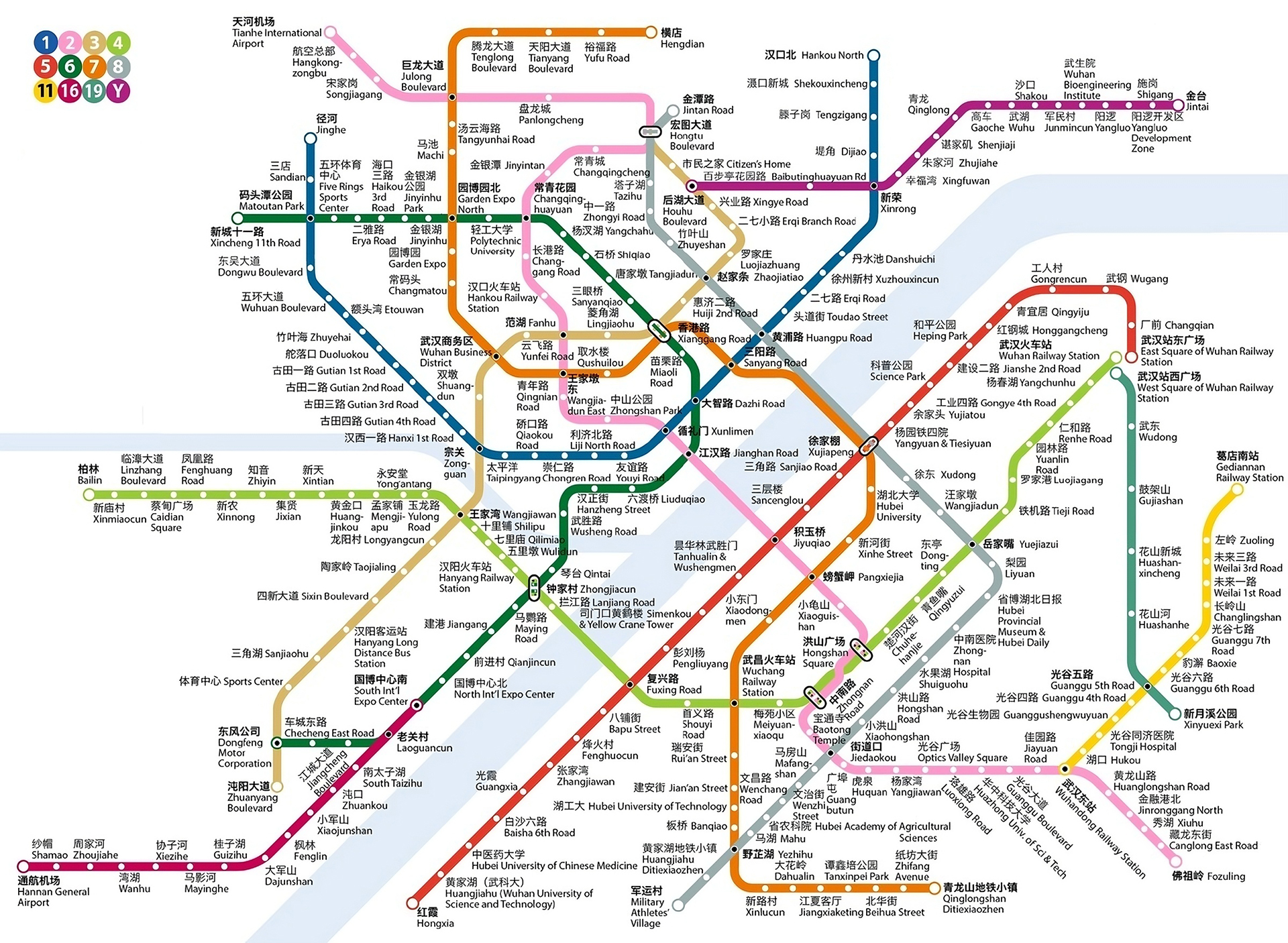
Wuhan Metro Lines and Stations
Wuhan Metro has a wide route network across the city, with several lines still under construction. The stations map and stations list are useful when planning transfers, airport trips, or cross-river journeys.
The operating network includes the following routes:
| Station | Details |
|---|---|
| Line 1 | Jinghe to Hankou North |
| Line 2 | Tianhe International Airport to Fozuling |
| Line 3 | Hongtu Boulevard to Zhuanyang Boulevard |
| Line 4 | Bailin to Wuhan Railway Station |
| Line 5 | Hongxia to Wuhan Railway Station |
| Line 6 | Xincheng 11th Road to Dongfeng Motor Company |
| Line 7 | Huangpi Square to Qinglongshan Ditiexiaozhen |
| Line 8 | Junyuncun to Jintan Road |
| Line 11 | Jiang’an Road to Gedian South Railway Station |
| Line 16 | South International Expo Center to Hannan General Airport |
| Line 19 | West Square of Wuhan Railway Station to Xinyuexi Park |
| Yangluo Line, Line 21 | Houhu Avenue to Jintai |
Lines under construction include Line 12, from Baisha West Road to Gangdu, and Line 27, from T5 of Wuhan Airport to Jinpingcun.
Most stations are designed for accessible travel, with automatic fare collection, announcements, electronic displays, escalators, lifts, non-slip flooring, grip rails, audio announcements, and Braille. Platform screen doors are installed at most stations, with Line 1 being the main exception for now.
Some routes use short-turn services to improve service on busy sections. These services run on Line 2, Line 4, and Line 7:
| Station | Details |
|---|---|
| Line 2 | Jinyintan to Wuhandong Railway Station; Tianhe International Airport to Fozuling |
| Line 4 | Yulong Road to Wuhan Railway Station; Bailin to Wuhan Railway Station |
| Line 7 | Julong Blvd to Banqiao; Hengdian to Qinglongshan Ditiexiaozhen |
For a smooth route plan, check the direction shown on station screens before boarding. The train path, transfer station, and final destination matter, especially on lines with short-turn service.
Hours of Operation
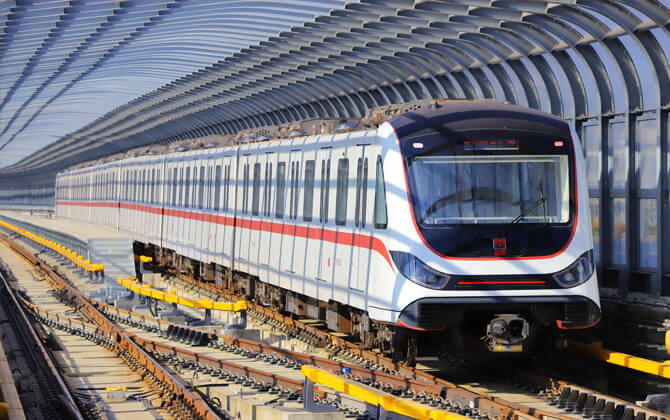
Wuhan Metro opening hours generally start at 6:00 on weekdays and 6:30 on weekends and holidays. Most lines close at 23:00, but Line 16, Line 19, and the Yangluo Line have earlier last train departures in some directions.
Operating hours, opening times, and timings today can vary slightly by line and direction, so check the route timetable or train schedule for your exact journey.
| Service detail | Timings |
|---|---|
| Line 1, 2, 3, 4, 5, 6, 7, 8, and 11 on weekdays | 6:00 to 23:00 |
| Line 1, 2, 3, 4, 5, 6, 7, 8, and 11 on weekends or holidays | 6:30 to 23:00 |
| Line 16 to Hannan General Airport on weekdays | 6:00 to 22:30 |
| Line 16 to Hannan General Airport on weekends or holidays | 6:30 to 22:30 |
| Line 16 to South International Expo Center on weekdays | 6:00 to 22:00 |
| Line 16 to South International Expo Center on weekends or holidays | 6:30 to 22:00 |
| Line 19 to Xinyuexi Park on weekdays | 6:00 to 22:30 |
| Line 19 to Xinyuexi Park on weekends or holidays | 6:30 to 22:30 |
| Line 19 to West Square of Wuhan Railway Station on weekdays | 6:00 to 22:00 |
| Line 19 to West Square of Wuhan Railway Station on weekends or holidays | 6:30 to 22:00 |
| Yangluo Line to Jintai on weekdays | 6:00 to 22:30 |
| Yangluo Line to Jintai on weekends or holidays | 6:30 to 22:30 |
| Yangluo Line to Houhu Boulevard on weekdays | 6:00 to 22:00 |
| Yangluo Line to Houhu Boulevard on weekends or holidays | 6:30 to 22:00 |
| Minimum train frequency | 1.5 minutes |
If you are traveling late, check the closing time for your direction before entering the station. The last train may leave earlier than the general working hours shown for the line.
Fares and Tickets
Wuhan Metro fare rules are distance-based. The ticket price is CNY 2, about US$0.28, for the first 9 kilometers (5.6 miles), and CNY 3, about US$0.42, for trips from 9 to 14 kilometers (5.6 to 8.7 miles). After that, the cost rises by CNY 1, about US$0.14, for every additional 1.2 kilometers (0.75 miles), up to a maximum fare of CNY 6, about US$0.83.
Passengers can use a single ticket or a transport card. Wuhan Tong card users receive a 10% discount. Primary school children get a 30% discount on adult fares, while passengers aged 65 and above and disabled passengers can ride free of charge.
Single-journey tokens are sold at ticket machines, and transport cards are available at customer information centers. Scan the ticket, pass, or card at the entry gate; single-journey tokens must be returned at the exit gate. Mobile ticket payment is also available through Alipay and WeChat QR code ticketing.
For frequent travel, Wuhan Metro offers multi-day passes:
- One-day pass: CNY 18, about US$2.50
- Three-day pass: CNY 45, about US$6.25
- Seven-day pass: CNY 90, about US$12.50
Each multi-day pass card requires a CNY 20 deposit, about US$2.80. These passes are sold at Customer Service Centers in metro stations and allow unlimited rides during the valid period.
The fare structure works like a simple fare calculator: longer trips cost more, up to the set maximum. For airport travel, vending machines and mobile payment screens show the current price before purchase.
Connections to Other Systems
Wuhan Metro connects with the wider transport network through rail, tram, bus, ferry, and other local transport options. For transportation in Wuhan, the system is especially useful because it links major districts, railway hubs, and cross-river corridors.
Rail connections are central to the network. Line 2 links Hankou and Wuchang and was the first subway line in China to cross the Yangtze River. Line 4 connects Wuhan Railway Station and Wuchang Railway Station, making all three main railway stations in Wuhan accessible by metro. Line 11 serves Wuhan Railway Station and extends toward Gediannan Railway Station, while Line 19 provides a tangential route between West Square of Wuhan Railway Station and Xinyuexi Park.
The metro also connects with tram services. The T1 tram line links with the Zhuanyang Boulevard terminus of Line 3 and continues southwest. Wuhan also has the Guanggu Tram in the southeast, with transfer opportunities to the metro at several stations. Together, the metro and tramway network widen the reach of public transport beyond the core lines.
The Wuhan Optics Valley Sky Rail is another regional connection. This suspended monorail serves the Optics Valley area, linking Line 11 with Tram Line T2 and improving interchange options in the eastern part of the city.
Inside the metro, transfers are a key part of the route plan. Some stations allow cross-platform transfers, and Line 2 and Line 4 include continuous cross-platform interchange in certain locations. Short-turn services on Lines 2, 4, and 7 also help manage busy sections.
Wuhan Tong cards can be used not only on the metro, but also for tram, bus, and ferry travel within Wuhan. QR code payment is available across the network, which makes switching between city transport modes more convenient.
Airport Connections

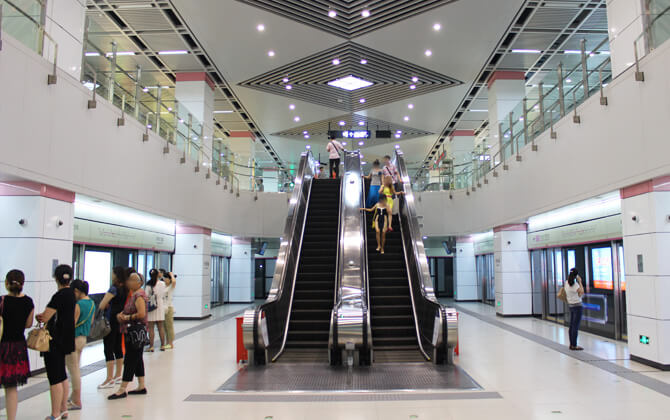
Wuhan Tianhe International Airport is connected to the city by metro, airport buses, intercity rail, taxis, and ride-hailing. For many travelers, Line 2 is the most direct public transport route because it links Tianhe Airport Station with central Wuhan and major railway stations.
Metro
Metro Line 2 runs directly to Tianhe Airport Station and continues toward Fozuling. On weekdays, service runs from 6:00 to 23:00; on weekends and holidays, it runs from 6:30 to 23:00. Trains arrive every 5 to 8 minutes, and the line connects the airport with important stops such as Hankou Railway Station.
For T3 Terminal, use Metro B Exit, take the elevators to the second floor of the Transportation Center, and follow the sky corridor to the T3 departure hall. For T2 Terminal, use Metro A Exit and transfer to Konggang Bus Line 3 for T2 Gate 8.
Arriving passengers should follow airport signs to Tianhe Airport Metro Station. From T3, go from the second-floor arrival hall to Subway Exit B and then to Line 2. From T2, follow signs to Exit 10, take the free Konggang No. 3 shuttle bus to Subway Exit A, and continue to Line 2.
Tickets can be bought from vending machines or paid for with WeChat and Alipay. Airport metro fares vary by distance, from CNY 2 to CNY 10, about US$0.28 to US$1.39. Before boarding, check that the train is heading toward Fozuling.
Airport Buses
Airport shuttle buses serve downtown Wuhan and major transport hubs, including Wuhan Railway Station and other important stops depending on the route. Buses generally depart every 30 to 60 minutes from 6:00 to 20:00, with late-night buses running until the last flight.
Airport bus stops and ticket counters are outside Terminal 3 at Gate 12 on the first floor. Terminal 2 buses stop near Gate 8. Shuttle routes can connect the airport with Wuhan Railway Station, Hankou Railway Station, and Wuchang Railway Station.
High-Speed Rail
Tianhe Airport High-Speed Rail Station is located beneath T3 Terminal. It provides rail connections to Wuhan Hankou Station, Wuchang Station, and cities in Hubei Province including Xianning, Xiaogan, Jingzhou, Yichang, and Shiyan. Extra trains may run during peak travel seasons.
Taxi and Ride-Hailing
For a direct door-to-door trip, taxis are available from the official taxi zone outside T3 Gate 12. Ride-hailing apps such as Didi Chuxing are also available, with pickup at Gate 12, T3. This option is often easier if you have heavy luggage or want a simple transfer to your hotel.
Wuhan Tianhe International Airport is set up as an integrated transport hub, so moving between terminals, the metro, rail services, buses, and ground transport is straightforward once you follow the signs.
Parking near the Metro
Parking can matter if you are combining a car trip with Wuhan Metro. Some areas near metro access points have nearby parking lots, including Wuhan High-Speed Rail Comprehensive Building Parking Lot – Entrance / Exit in Hongshan District and Wuhan Light Industry University – Parking Lot in Dongxihu District.
Near Wuhan High-Speed Rail Comprehensive Building Parking Lot – Entrance / Exit, the closest listed stop is Wuhan Railway Station, about a 1-minute walk away. The nearest listed metro station is Yangchun Lake, about a 40-minute walk away, while Line 4 serves the area. Nearby bus routes include 513, Route 540, Route 551, 610, 634, and Route 643.
For Wuhan Light Industry University – Parking Lot, the closest listed metro stations are Light Industry University and Jinyintan. Nearby bus options include Route 339, Route 602, Route 730, Route H93, Route 356, Route 217, and Route 318.
Station parking availability can change by time and location, and surrounding streets may be busy. If you plan to park and ride, check the station parking entrance, the nearest bus stop, and posted parking charges before you go. Parking charges per day are usually easiest to confirm at the lot itself.
Facilities and Services
Wuhan Metro provides passenger facilities that make daily travel easier. Announcements are made in Chinese and English, and stations are generally located near bus routes, helping passengers transfer between transport modes with less hassle.
Some stations include waiting rooms for women and mothers with children. Libraries are also available in stations to encourage reading while passengers wait. Most stations on lines other than Line 1 have restrooms and lifts.
Accessibility is built into much of the system. Stations are designed to support disabled and elderly passengers with automatic fare collection, announcement systems, electronic display boards, escalators, lifts, non-slip flooring, grip rails, audio announcements, and Braille.
Platform screen doors are installed at almost all stations except those on Line 1. There are plans to add platform screen doors to Line 1 stations in the future. Because Line 1 opened earlier, some of its stations have fewer facilities than newer parts of the network.
Passengers can use 4G LTE services in all stations and trains. The system supports fare gates, single-journey tokens, ticket vending machines, customer service centers, QR code payment, Wuhan Tong cards, China T-union cards, and UnionPay cards.
Wuhan Tong cardholders receive a discount on metro travel, and the card can also be used for tram, bus, and ferry payments within Wuhan.
Rules
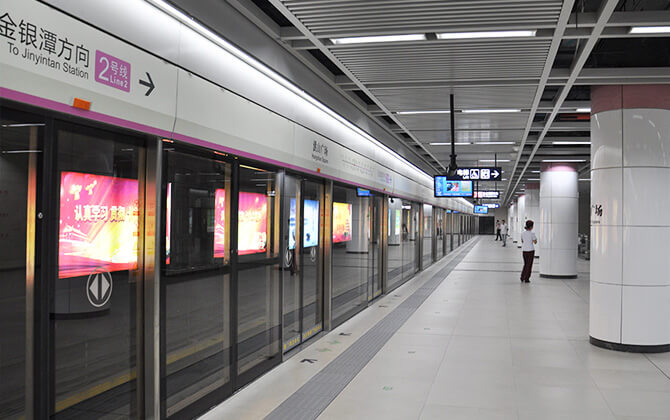
Wuhan Metro safety rules are based on the Measures of Wuhan Municipality for the Administration of Rail Transit Safety. The rules focus on prevention, clear responsibilities, safe passenger movement, and the protection of rail transit operations.
Passengers must accept security checks at station entrances. If someone refuses a security check, entry may be denied. Forcible entry, boarding, or disruption of security checks may lead to punishment according to law.
Hazardous articles are not allowed in rail transit operation areas. The operating unit publishes the catalogue and descriptions of prohibited items in metro stations by posting, display, or other methods.
- Begging, street performances, collecting scraps, soliciting donations, missionary activity, and distributing promotional materials are prohibited in stations, trains, exits, and passageways.
- Hydrogen balloons, hacksaws, iron rods, bicycles, motorized bicycles, carts, and similar items are prohibited, except folding bicycles that meet the required dimensions.
- Passengers must not push, pull, play roughly, move in reverse on escalators, lean on or out of escalator rails, or block staircases and ticket gates.
- Damaging rail transit facilities and equipment is prohibited, including escalators, automatic ticket machines, public transport card charging and checking machines, and video surveillance cameras.
Fare and access rules require passengers to use valid tickets or cards at the gates. Security checkers must wear security check badges, and passengers may refuse a check by a checker without a badge.
Operational rules require the operator to maintain safety facilities and fire equipment, keep evacuation routes and emergency exits clear, and give advance notice when service is suspended or operating hours are adjusted. If an emergency affects service, the operator must activate its emergency plan, report to the relevant authorities, and evacuate passengers in an orderly way.
Construction and safety protection rules apply in rail transit safety protection zones. Before work begins in these zones, a safety agreement must be signed with the operating unit. If safety risks appear, the operating unit may require work to stop.
Staff duties include keeping station order, guiding boarding and alighting, preventing dangerous acts, reporting potential accidents, and helping with evacuation when needed.
Tips
Plan your first move with the Wuhan Metro route map. It is often one of the fastest ways to cross central districts, and it can be quicker than buses for many trips. Use the official app to check departures, transfer times, live updates, schedule today, and available discounts on passes.
If you are traveling with a baby or stroller, choose stations with elevators and wide corridors where possible. That can reduce stairs, cut waiting time, and make transfers easier.
For smoother local transport, combine the metro with buses or bike-sharing for the last mile. Buses can cover neighborhoods beyond the rapid transit lines, and some routes use dedicated lanes. It is also worth checking whether a weekly or monthly card works across the metro, buses, and bike kiosks.
Keep a backup plan. Offline maps and downloaded timetables can help if the signal is weak or if service changes appear. Before leaving, check the app for route adjustments, temporary closures, or new discounts.
During transfers, watch the station map, line colors, arrows, and direction signs. If you need to change lines, note the main interchange station in advance so you can avoid extra walking and long waits. A phone charger is useful for a long day of travel.
For airport trips and longer journeys, compare the metro, taxi, and ride-hailing before you leave. The best option depends on your timetable, luggage, and how direct you need the trip to be.
History
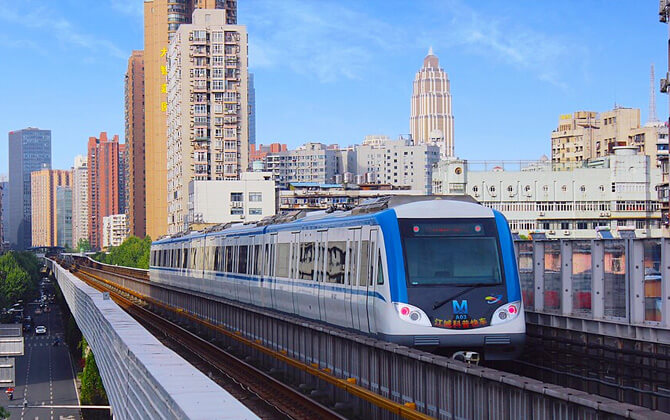
Preliminary studies for urban rail transit in Wuhan began shortly after a Belgian Railways delegation visited the city in 1984. After the old Beijing-Hankou Railway was demolished, Wuhan planned to use that corridor for its first rapid transit line.
In September 1992, Wuhan Metro Construction Group was established. In 1993, a supervision group led by Mayor Qian Yunlu was formed to coordinate funding, planning, logistics, and organization.
Serious project work began in 1999, when the National Planning Commission approved the Wuhan Light Rail project for Line 1, Phase 1. The Wuhan Municipal Government approved the establishment of Wuhan Rail Transit Co., Ltd. in October 2000, and construction formally started on December 23, 2000.
Line 1 opened on July 28, 2004 as the system’s first line, making Wuhan the seventh city in mainland China with a rapid transit system. Although ridership was initially low, the network continued to grow. A long-term rail transit master plan was approved in 2002, and Line 1 later received extensions in 2010, 2014, and 2017.
In the mid-2000s, work began on major new lines and the broader rail hub around Wuhan’s main railway stations. Construction of Line 2 started in 2006, and drilling of the Yangtze River tunnel began in 2009. Line 1 Phase 2 opened on July 29, 2010. Wuhan Metro Group Co., Ltd. was established in May 2007 to replace Wuhan Rail Transit Co., Ltd. and take over its responsibilities.
A revised construction plan approved in 2011 set the next major expansion goals. Line 3 and Line 6 were approved in 2012, and Line 2 opened on December 28, 2012. Line 2 became the first underground rail line to cross the Yangtze River and connected major areas of Hankou, Wuchang, and Optics Valley.
Expansion accelerated in the following years. Line 4 opened in 2013, followed by extensions and new sections on Line 1, Line 4, Line 8, Line 7, Line 11, Line 5, Line 16, and Line 19. By 2026, the network had reached 13 lines, 335 stations, and 553 kilometers (343.6 miles) of track.
On January 23, 2020, the entire metro network shut down along with other public transport in Wuhan in response to the COVID-19 pandemic in Hubei. Service resumed in stages from March 28, 2020, with additional lines reopening in April 2020 as the lockdown eased.
Wuhan Metro has continued to expand quickly, with several lines and sections still under construction.
Future Expansion
Wuhan Metro expansion continues with several lines and extensions under construction. Current projects include the Yangluo Line west extension, Line 12 Phase 2 to complete the loop line, the Xingang west extension and Phase 1, Line 11 Phase 4, Line 3 Phase 2, Line 6 Phase 3, and the remaining section of Line 11.
| Planned opening | Line | Section | Termini | Length | Stations | Status |
|---|---|---|---|---|---|---|
| 2026-2027 | Yangluo | West extension | Zhongyi Road to Houhu Boulevard | 3.2 kilometers (2.0 miles) | 2 | Under construction |
| 2026-2027 | 12 | Phase 2 | Completes loop line | 24.58 kilometers (15.27 miles) | Under construction | |
| 2028 | Xingang | West extension | Huaihai Road to Beiyangqiao | 20.3 kilometers (12.6 miles) | 9 | Under construction |
| 2028 | 11 | Phase 4 | Wuhan West Railway Station to Jiang’an Road | 16.6 kilometers (10.3 miles) | 6 | Under construction |
| TBA | Xingang | Phase 1 | Beiyangqiao to Baiyushan | 10.9 kilometers (6.8 miles) | 5 | Under construction |
| TBA | 3 | Phase 2 | Zhuanyang Boulevard to Wenling | 11.8 kilometers (7.3 miles) | 5 | Under construction |
| TBA | 6 | Phase 3 | Boyi Road to Dongfeng Motor Corporation | 2.2 kilometers (1.4 miles) | 2 | Under construction |
| TBA | 11 | Phase 3 remaining section | Huangjinkou to Wuhan West Railway Station | 2.2 kilometers (1.4 miles) | 2 | Under construction |
| TBD, under planning | 20 | Tianhe International Airport to Wuhan Railway Station | 30.0 kilometers (18.6 miles) | 6 | Proposed | |
| TBD, under planning | 9 | China University of Geosciences to Wulijie | 13 | Proposed | ||
| TBD, under planning | 11 | Sino-French Ecological City to Huangjinkou | 1 | Proposed | ||
| TBD, under planning | 15 | Qingling North to Jinkou | Proposed | |||
| TBD, under planning | 17 | Jinghe to Baoxie | Proposed |
Line 12 is a major milestone for the system. Its first phase opened on May 1, 2026, and the full line is planned to become a 59.9-kilometer (37.2-mile) loop in late 2026. Once completed, it will connect central areas more directly and expand transfer options across the network.
Several future lines are listed as planned or proposed. These include Line 20 between Tianhe International Airport and Wuhan Railway Station, Line 9 between China University of Geosciences and Wulijie, Line 11 between Sino-French Ecological City and Huangjinkou, Line 15 between Qingling North and Jinkou, and Line 17 between Jinghe and Baoxie.
Beyond the current construction program, Wuhan Metro has also identified additional lines for future planning, including Lines 9, 10, and 13. The expansion strategy focuses on better cross-city connectivity and stronger links between major districts, railway hubs, and airport access points.
Nearby Attractions
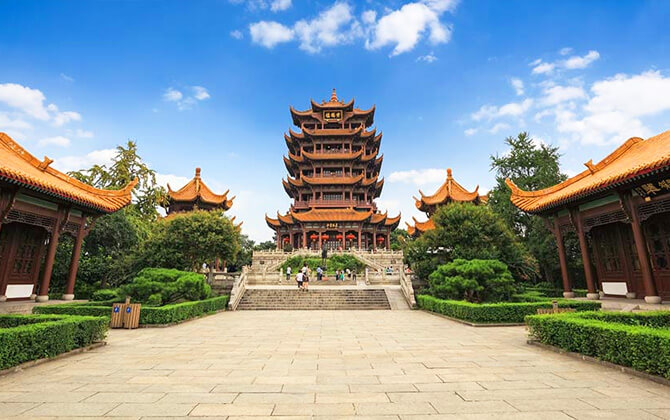
Wuhan Metro makes it easy to reach well-known sights, shopping streets, temples, parks, and riverfront areas. For visitors, Line 2 is especially convenient because it connects many central and visitor-friendly stops.
Popular stops along the metro
| Station | Details |
|---|---|
| Hankou Railway Station | Good for Wuhan Museum and nearby Houxianghe Park |
| Zhongshan Park Station | Close to Zhongshan Park, one of Wuhan’s best-known urban parks |
| Jianghan Road Station | Useful for Jianghan Road Pedestrian Street, a famous shopping street with a busy night market |
| Jiyuqiao Station | Convenient for Wuchang River Beach |
| Pangxiejia Station | Practical for Tanhua Lin, known for old buildings and a relaxed atmosphere |
| Baotong Temple Station | Useful for Baotong Temple, one of Wuhan’s best-known Buddhist temples |
| Optics Valley Square Station | Close to Optics Valley Pedestrian Street, with shops, restaurants, and international-style streets |
| Liyuan Station | A gateway to the East Lake Scenic Area, one of Wuhan’s top natural attractions |
These stations work well for a simple metro-based sightseeing route. You can combine museums, temples, shopping, local dining, city walks, and lake views without relying only on taxis or buses.