The Hangzhou Metro is the rapid transit system serving Hangzhou, the capital of Zhejiang province, China. It opened on November 24, 2012, becoming the 17th city in China with a metro system. Today, it has 12 operating lines and links major railway stations, Xiaoshan International Airport, West Lake, Qianjiang New City, and Liangzhu. The network also connects with Shaoxing Metro at Guniangqiao on Line 5 and with the Hangzhou-Haining Intercity Rail at Linpingnan Railway Station on Line 9. Known for its distinctive route layout and colorful stations map, the system continues to expand across the city.
| Key | Information |
|---|---|
| System | Hangzhou Metro |
| City | Hangzhou, Zhejiang, China |
| Opened | November 24, 2012 |
| Lines in operation | 12 |
| Total network length | 516 km / 320.6 miles |
| Total stations | 300 |
| Airport connection | Lines 1, 7, and 19 serve Xiaoshan International Airport |
| Other rail connections | Shaoxing Metro at Guniangqiao; Hangzhou-Haining Intercity Rail at Linpingnan Railway Station |
Hangzhou Metro Map
Map of Hangzhou Metro showing different lines and stations. Click on the map to enlarge it or download the Hangzhou Metro map in PDF format.
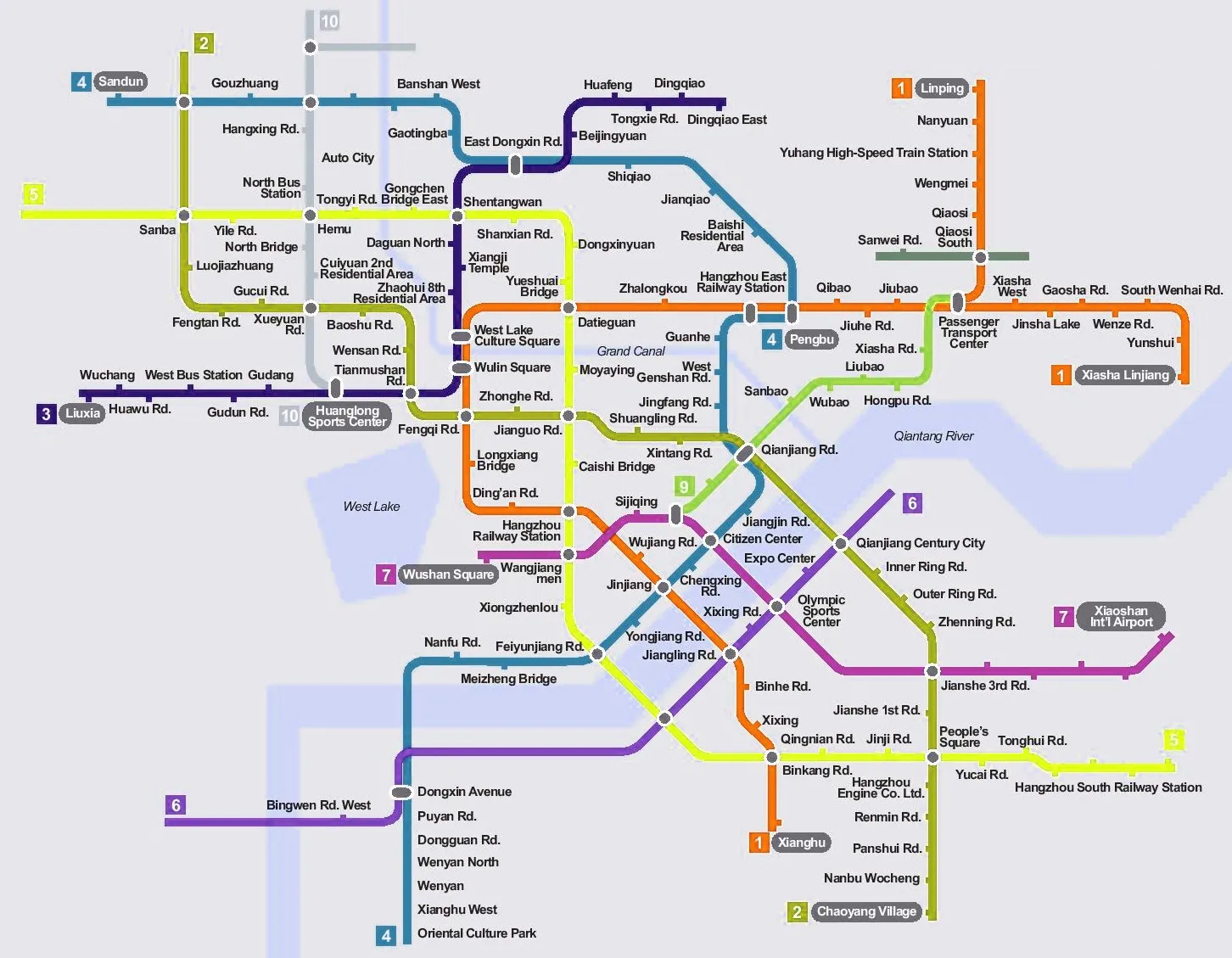
Hangzhou Metro Lines
Hangzhou Metro is a large urban transport network with 12 lines in service. It connects central districts, outer areas, major rail hubs, and the airport, while also linking with nearby rail systems. For trip planning, the line structure is fairly easy to follow, and the stations map is especially recognizable because the first seven lines follow the hue order of the rainbow colors.
| Station | Details |
|---|---|
| Line 1 | Xianghu – Xiaoshan International Airport; opened 2012; latest extension 2020; 53.1 km / 33.0 miles; 33 stations |
| Line 2 | Chaoyang – Liangzhu; opened 2014; latest extension 2017; 43.3 km / 26.9 miles; 33 stations |
| Line 3 | Xingqiao – Wushanqiancun / Shima; opened 2022; latest extension 2022; 57.5 km / 35.7 miles; 37 stations |
| Line 4 | Chihua Street – Puyan; opened 2015; latest extension 2022; 46.8 km / 29.1 miles; 32 stations |
| Line 5 | East Nanhu – Guniangqiao; opened 2019; latest extension 2025; 56.0 km / 34.8 miles; 40 stations |
| Line 6 | Goujulong – West Guihua Road / Shuangpu; opened 2020; latest extension 2021; 58.5 km / 36.4 miles; 34 stations |
| Line 7 | Jiangdong’er Road – Wushan Square; opened 2020; latest extension 2022; 47.5 km / 29.5 miles; 24 stations |
| Line 8 | South Wenhai Road – Xinwan Road; opened 2021; 17.2 km / 10.7 miles; 9 stations |
| Line 9 | Guanyintang – Long’an; opened 2021; latest extension 2022; 29.5 km / 18.3 miles; 19 stations |
| Line 10 | Yisheng Road – Huanglong Sports Center; opened 2022; latest extension 2023; 14.7 km / 9.1 miles; 12 stations |
| Line 16 | Lvting Road – Jiuzhou Street; opened 2020; 35.1 km / 21.8 miles; 12 stations |
| Line 19 | West Railway Station – Yongsheng Road; opened 2022; 59.14 km / 36.7 miles; 17 stations |
| Total | 12 lines; 516 km / 320.6 miles; 300 stations |
Line 1 is the main arc-shaped route and links Xianghu, West Lake, Hangzhou Railway Station, Hangzhou East Railway Station, Xiasha Higher Education Park, and the airport. Line 2 runs northwest to southeast and connects Xiaoshan Industrial Park, Qianjiang Century City, downtown Hangzhou, and Liangzhu. Line 3 runs northeast to southwest and includes a branch to Xiaoheshan Higher Education Park.
Line 4 is a hook-shaped route connecting Puyan, the southern side of the West Lake scenic area, Qianjiang New City, Hangzhou East Railway Station, and northern residential districts. Line 5 is a Z-shaped route with several transfer points and is one of the busiest in the system, carrying more than 500,000 passengers per day. Line 6 links Fuyang District with Olympic Sports Park, Qianjiang Century City, Asian Games Village, and Hangzhou East Railway Station.
Line 7 connects West Lake, Qianjiang New City, Olympic Sports Park, Xiaoshan International Airport, and Dajiangdong Industrial Park. Line 8 links Xiasha Higher Education Park with Dajiangdong Industrial Park. Line 9 connects Qianjiang New City and Linping District and gives access to the Hangzhou-Haining Intercity Rail.
Line 10 provides a north-south route between Huanglong Sports Center and Renhe in Yuhang. Line 16 is an express path train service between Lin’an District and Yuhang District. Line 19 is another express route, linking Hangzhou West Railway Station, Hangzhou East Railway Station, and Xiaoshan International Airport.
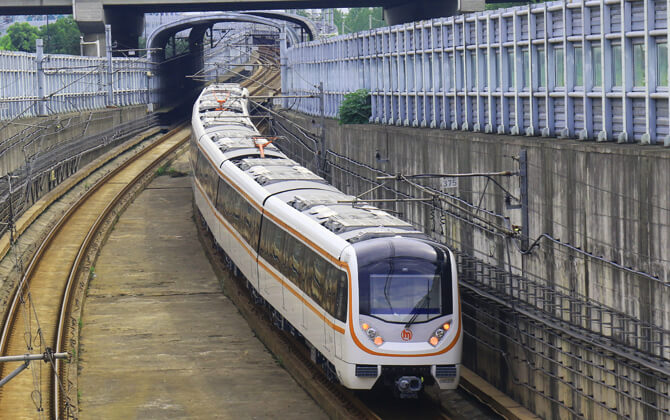
Hangzhou Metro Fare, Ticket and Card
Hangzhou Metro uses a distance-based fare system. The ticket price starts at CNY2 (about USD0.28) for the first 4 kilometers / 2.5 miles. After that, the fare increases by CNY1 (about USD0.14) for every additional 4 kilometers / 2.5 miles between 4 and 12 kilometers / 7.5 miles, by CNY1 for every additional 6 kilometers / 3.7 miles between 12 and 24 kilometers / 14.9 miles, and by CNY1 for every additional 8 kilometers / 5.0 miles beyond 24 kilometers.
A typical trip from Xiaoshan International Airport to West Lake usually costs about CNY8 (about USD1.11) per person. Each ticket is valid for up to 240 minutes.
Children under 1.3 meters / 4.3 feet can ride free on all lines when accompanied by an adult.
Ticket Types
- Single Journey Ticket: valid on the day of issue, for one person, and recyclable.
- Tourist Metro Pass: available at Customer Service Centers in metro stations and valid within 6 months from the day of issue.
- One Day Pass: CNY15 (about USD2.08), unlimited rides for 24 hours from first use.
- Three Day Pass: CNY40 (about USD5.55), unlimited rides for 72 hours from first use.
- Regular IC Card: accepted for metro travel.
- Hangzhou Multifunction Card (Hang Zhou Tong): also accepted for metro travel.
Passengers can use mobile payment with QR code entry through the Hangzhou Metro app. If you prefer a physical ticket, self-service machines are available at stations. There is no fare calculator in the source material, but the distance-based price system is clearly defined.
Useful Notes
- Single journey tickets are valid only on the day of purchase.
- Tourist passes may be issued in paper or electronic form.
- A day pass or multi-day pass allows unlimited rides within its valid period after activation.
- Children under 1.3 meters / 4.3 feet must travel with an adult.
Hours, Timetable and Schedule
Hangzhou Metro operating hours are generally about 6:00 AM to 11:00 PM on most lines. Opening hours and closing time can vary by line, direction, station, holiday period, or special event, so checking the timetable before travel is a smart move. If you need timings today or a schedule today for a specific stop, station QR codes and the Hangzhou Metro app are the most reliable tools.
The first train starting time and last train times depend on the route. Frequency is usually every 2 to 6 minutes in peak periods and every 5 to 10 minutes off-peak. Entry gates may close less than 5 minutes before the last train departure, so do not leave it too late.
Regular Operating Hours
| Service detail | Timings |
|---|---|
| Most lines | Around 6:00 AM to 11:00 PM |
| Holiday service | Some lines may run 30 to 60 minutes later |
| Peak travel periods | Major hubs may offer extended late-night service |
| Airport services | Lines 1 and 19 provide direct airport access |
Late trains can be especially useful for airport and rail transfers. Line 19, in particular, often has longer running time coverage than many other lines, and busy hubs such as Hangzhou East Railway Station and Hangzhou West Railway Station may have extended working hours during heavy travel periods.
Useful Timetable Notes
Line 19 is a practical option for airport and intercity transfers. It connects Hangzhou West Railway Station, Hangzhou East Railway Station, Xiaoshan International Airport, and West Lake Cultural Square, with a running time of about 60 minutes between the end points.
| Service detail | Timings |
|---|---|
| Line 1 train schedule | First train about 6:00 AM; last train about 10:30 PM to 10:50 PM, depending on direction |
| Line 2 train schedule | First train about 6:00 AM; last train about 11:02 PM to 11:04 PM |
| Line 3 train schedule | First train about 6:00 AM; last train about 10:30 PM to 11:00 PM |
| Line 4 train schedule | First train about 6:00 AM; last train about 10:30 PM to 10:40 PM |
| Line 5 train schedule | First train about 6:00 AM; last train about 10:30 PM to 10:34 PM |
| Line 6 train schedule | First train about 6:02 AM; last train about 10:30 PM to 10:50 PM |
| Line 7 train schedule | First train about 6:00 AM; last train about 10:30 PM |
| Line 8 train schedule | First train about 6:05 AM; last train about 10:30 PM to 11:02 PM |
| Line 9 train schedule | First train about 6:02 AM; last train about 11:04 PM to 11:16 PM |
| Line 10 train schedule | First train about 6:01 AM to 6:04 AM; last train about 10:54 PM to 11:15 PM |
| Line 16 train schedule | First train about 6:10 AM to 6:20 AM; last train about 10:33 PM to 11:00 PM |
| Line 19 train schedule | First train about 6:00 AM to 6:04 AM; last train about 11:11 PM to 11:15 PM |
| Xiaoshan International Airport station | Service listed as 5:50 AM to 12:27 AM for Lines 1, 7, and 19 in the source materials |
For exact opening times, route timetable details, and the last train from your station, check live updates before you travel.
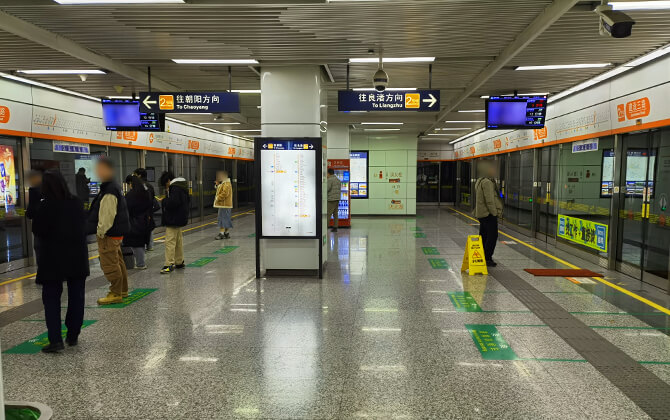
Connections to Other Systems
Hangzhou Metro connects with other rail systems in and around the city, which makes it an important part of local transport and wider transportation in the region. Shaoxing Metro links with Hangzhou Metro at Guniangqiao station on Line 5, and the Hangzhou-Haining Intercity Rail connects at Linpingnan Railway Station on Line 9.
The metro also provides convenient transfers to major transport hubs. Line 1 reaches Xiaoshan International Airport, while Line 19 links Hangzhou West Railway Station, Hangzhou East Railway Station, and the airport. This makes moving between metro, air travel, and high-speed rail much easier.
Further integration is planned as well. Line 10 is intended to connect with the Hangzhou-Deqing Intercity Rail in the future.
Airport Connections
Hangzhou Xiaoshan International Airport is served by Metro Lines 1, 7, and 19. For many travelers, this is one of the fastest and cheapest public transport options to reach downtown Hangzhou, West Lake, and the city’s main railway stations.
From central Hangzhou, the metro trip to the airport takes about 30 to 35 minutes. Hangzhou Xiaoshan International Airport Station is located on the B1 level of the airport transportation center. From the metro exit, it takes around 5 to 8 minutes on foot to reach Terminals T4, T3, T2, or T1.
Metro Lines Serving the Airport
| Service detail | Timings |
|---|---|
| Line 1 | First train 6:00 AM; last train 10:30 PM; frequency 8 minutes; fare CNY2 to CNY8 (about USD0.28 to USD1.11) one way |
| Line 7 to Olympic Sports Center | First train 6:16 AM; last train 10:48 PM; frequency 9 minutes; fare CNY2 to CNY8 (about USD0.28 to USD1.11) one way |
| Line 7 to Jiangdong’er Road | First train 6:08 AM; last train 11:02 PM; frequency 9 minutes; fare CNY2 to CNY8 (about USD0.28 to USD1.11) one way |
| Line 19 to Hangzhou West Railway Station | First train 6:03 AM; last train 11:14 PM; frequency 8 to 10 minutes; fare CNY2 to CNY10 (about USD0.28 to USD1.39) one way |
| Line 19 to Yongsheng Road | First train 6:20 AM; last train 12:09 AM; frequency 8 to 10 minutes; fare CNY2 to CNY10 (about USD0.28 to USD1.39) one way |
If you are heading to a rail hub or planning a straightforward airport route, Line 19 is especially handy. It gives direct access to the airport, Hangzhou East Railway Station, and Hangzhou West Railway Station.
Parking near the Metro
The source material mentions a place listed as Parking Lot in Hangzhou, with several nearby bus stops and one metro station. If you are comparing station parking or parking charges per day, that information is not provided here. What is available is the nearby public transport access.
The closest bus stop is Wushan Square, about a 2-minute walk away. Other nearby bus stops include Wushan Square Huaguang Lane, Yan’an Road Yinmajing Lane, Yongjinmen East, and Huansha Road South. The nearest metro station listed is Fengqi Road, around a 37-minute walk away, with Lines 1 and 2 mentioned in the area.
| Station | Details |
|---|---|
| Wushan Square | Bus stop, about 2 minutes on foot |
| Wushan Square Huaguang Lane | Bus stop, about 4 minutes on foot |
| Yan’an Road Yinmajing Lane | Bus stop, about 5 minutes on foot |
| Yongjinmen East | Bus stop, about 5 minutes on foot |
| Huansha Road South | Bus stop, about 8 minutes on foot |
| Fengqi Road | Metro station, about 37 minutes on foot |
Nearby bus routes include 124, 127, 40, 514 Branch, and Y8. So, for this location, the bus is the more convenient local transport option.
Hangzhou Metro Rules and Tips
Hangzhou Metro is a safe, efficient, and low-cost way to get around the city. A little planning helps, especially if you are traveling during busy opening hours or trying to catch the last train.
Before you ride, check your route plan in a map app such as Amap or Apple Maps and confirm the direction before entering the platform. If you use Alipay, search for Hangzhou Metro and open the transport QR code for gate access. If not, buy a single-journey ticket at a station machine.
At the station, expect security screening. Bags are scanned, and prohibited items include lighters, knives, and alcohol over 50%. Pets are not allowed unless they are in carriers. Large luggage is permitted, though it is better to avoid peak hours when trains and stations are busiest.
On the platform, stand behind the yellow line and let passengers get off first. On the train, stops are announced in Chinese and English, and transfer stations are clearly marked with bilingual signs. Elevators are available at some stations, and priority seats should be given to elderly or pregnant passengers.
Fare and ticket tips are straightforward: fares start at CNY2 (about USD0.28) and rise with distance. The source material here lists one-day and three-day passes, while this draft also mentions tourist passes and public transport cards accepted across parts of the city transport system. Children under 1.3 meters / 4.3 feet ride free with an adult.
If possible, avoid peak periods around 7:30 to 9:00 AM and 5:30 to 7:00 PM. When exiting, scan your QR code or insert your token at the gate, then use your stations map or app to pick the best exit.
For live schedule updates, route timetable changes, or timings today, use the Hangzhou Metro app or station QR codes.
History
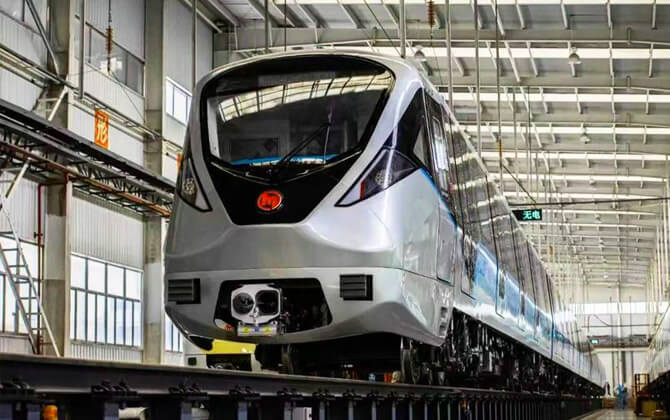
The history of Hangzhou Metro began in the 1990s, when planning for a rapid transit system first started. Construction had been expected to begin in September 2003, but the State Council suspended the works because of rising costs. Approval for construction and operation was later granted on June 5, 2005.
The preliminary design for Line 1 was approved on January 11, 2007, after four days of study. The line was planned at 47.97 km / 29.8 miles long, including 41.36 km / 25.7 miles underground, 6.14 km / 3.8 miles elevated, and 0.47 km / 0.3 miles at grade. Construction of the first phase began on March 28, 2007.
Funding for Line 1 came from the city government and banks. In January 2009, MTR Corporation announced a 22 billion yuan joint venture with the Hangzhou government for a 25-year operating agreement, with MTR holding a 49% stake. In October 2009, CSR Nanjing Puzhen received a contract to supply 48 six-car trains.
The first section of Line 1 opened on November 24, 2012, making Hangzhou the 17th city in China with a metro system. The first section of Line 4 began trial operation on February 2, 2015. By December 2016, plans for 10 lines had been approved, including extensions to three existing lines, with completion targeted for the 2022 Asian Games.
The network then expanded quickly. Line 1 was extended in stages, and the Xiasha Jiangbin to Xiaoshan International Airport section opened on December 30, 2020. By mid-2021, the network had reached 323 km / 200.7 miles, excluding the Hangzhou-Haining Intercity Railway. In 2018, the State Council approved planning for 15 metro lines, with the network projected to reach 617 km / 383.4 miles by the time of the 2022 Asian Games. On November 14, 2022, the NDRC approved the fourth phase expansion plan, covering 152.9 km / 95.0 miles of new lines.
An accident occurred during construction on November 15, 2008, when a 75-meter / 0.075-kilometer section of tunnel near Fengqing Avenue in Xiaoshan District collapsed. The collapse killed 17 people.
Future Extensions
Hangzhou Metro expansion continues through projects already under construction and the approved Phase IV program. The future route plan is designed to strengthen connections between the city center, outer districts, transport hubs, and development areas.
Lines already in progress
Several extensions are moving ahead. Line 10 is planned to continue northward and eventually connect with the Hangzhou-Deqing Intercity Rail. Line 19 is designed as an express route between Hangzhou West Railway Station, Hangzhou East Railway Station, and Xiaoshan International Airport. Line 16 will continue serving the corridor between Lin’an District and Yuhang District.
Line 6 links Fuyang District with Olympic Sports Park, Qianjiang Century City, Asian Games Village, and Hangzhou East Railway Station. Line 7 connects West Lake, Qianjiang New City, Olympic Sports Park, Xiaoshan International Airport, and Dajiangdong Industrial Park. Line 9 links Qianjiang New City and Linping District, with a connection to the Hangzhou-Haining Intercity Rail.
Phase IV expansion
The fourth phase of the system was approved on November 14, 2022. It covers 152.9 km / 95.0 miles of new lines and includes extensions for Lines 3, 4, 9, and 10, plus new work on Lines 12, 15, and 18. In total, this phase will add 90 stations.
| Station | Details |
|---|---|
| Line 3 Phase II | 7.5 km / 4.7 miles, 5 stations, under construction |
| Line 4 Phase III West | 5 km / 3.1 miles, 4 stations, under construction |
| Line 4 Phase III South | 5 km / 3.1 miles, 5 stations, under construction |
| Line 9 Phase II | 10.1 km / 6.3 miles, 7 stations, under construction |
| Line 10 Phase II | 5.8 km / 3.6 miles, 3 stations, under construction |
| Line 10 Phase III | 5 km / 3.1 miles, 2 stations |
| Line 12 Phase I North | 24.3 km / 15.1 miles, 14 stations, under construction |
| Line 12 Phase I South | 1.7 km / 1.1 miles, 1 station, under construction |
| Line 15 Phase I | 40.5 km / 25.2 miles, 30 stations, under construction |
| Line 18 Phase I | 48 km / 29.8 miles, 19 stations, under construction |
| Total | 152.9 km / 95.0 miles, 90 stations |
Among the key planned projects, Line 12 is intended to create a north-south corridor linking Hangzhou West Railway Station, Future Science and Technology City, Xiaoheshan Higher Education Park, Zhijiang New City, and Shuangpu New District. Line 15 will connect Xiaoshan Yatai Road with Linping Chongxian and improve north-south travel through central Hangzhou. Line 18 is planned as a north-south express line and will help shape the city’s fast-transit backbone together with Line 19.
Other projects include the second phase of Line 3 in the Linping area, the third phase of Line 4 in the west and south, and the second phase of Line 9 to improve faster connections between Tangqi, Linping, and the main city.
Nearby Attractions
Hangzhou Metro makes it easy to reach many of the city’s best-known attractions. For visitors using public transport, the system is especially useful for West Lake, cultural districts, major railway stations, and the airport.
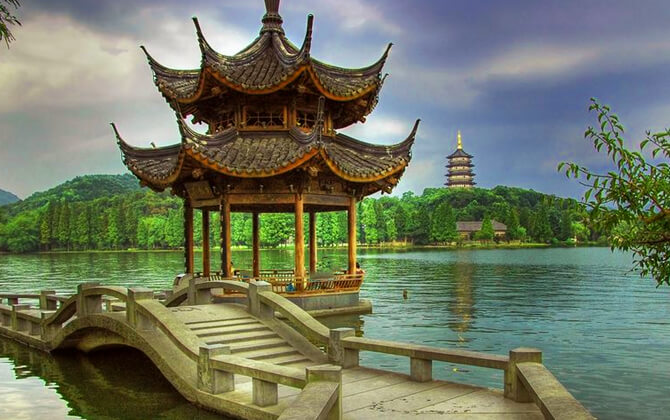
Popular Attractions by Metro Line
| Station | Details |
|---|---|
| Longxiang Bridge, Wushan Square, Fengqi Road, Huanglong Sports Center | Useful stations for West Lake, depending on the line you use |
| Ding’an Road or Chengzhan | For Hefang Street, then continue on foot |
| Wulin Square and The Grand Canal | For the Beijing-Hangzhou Grand Canal area |
| South Xixi Wetland, North Xixi Wetland, nearby Line 19 stations | For Xixi National Wetland Park |
| Hangzhou East Railway Station | Served by Lines 1, 4, and 19 |
| Hangzhou Xiaoshan International Airport | Served by Lines 1, 7, and 19 |
| Hangzhou West Railway Station | Served by Line 19 |
| Fuxing Road | For China National Silk Museum via Line 4 |
| Chengxing Road | For Qianjiang New City via Line 4 |
Useful Stops for Sightseeing
Longxiang Bridge is a convenient stop for the West Lake Music Fountain. Wulin Square is useful for Hangzhou Exhibition Hall and the Grand Canal area. Ding’an Road works well for Hefang Street and Fenghuang Temple. Fengqi Road also gives access to West Lake and the central district.
If you are arriving by train or plane, the metro helps keep the trip simple. Hangzhou East Railway Station, Hangzhou Railway Station, Hangzhou South Railway Station, Hangzhou West Railway Station, and Xiaoshan International Airport are all connected or referenced within the network.
A classic metro-based city route often combines West Lake, Hefang Street, Xixi National Wetland Park, and the Grand Canal.