SEPTA Regional Rail is the commuter rail system owned and operated by SEPTA for Philadelphia, the surrounding suburbs, and nearby towns in Pennsylvania, New Jersey, and Delaware. The network has 13 branches, more than 150 active stations, and a 280-mile (451-kilometer) route network, making it a major part of public transportation in Greater Philadelphia.
| Key | Information |
|---|---|
| System type | Commuter rail and regional public transport network |
| Operator | SEPTA Railroad Division |
| Service area | Philadelphia, nearby Pennsylvania counties, Mercer County in New Jersey, and New Castle County in Delaware |
| Lines | 13 Regional Rail branches |
| Stations | More than 150 active stations |
| Route length | About 280 miles (451 kilometers) |
| Core tunnel | Center City Commuter Connection linking 30th Street Station, Suburban Station, and Jefferson Station |
| Main fare method | Zone-based fare using SEPTA Key, contactless payment, Quick Trip, or cash where accepted |
| Typical operating hours | Most lines run from about 5:30 AM to midnight, with exact timings varying by line and day |
SEPTA Regional Rail Map
SEPTA Regional Rail map shows all available lines and stops. Click on the map to enlarge it or download SEPTA Regional Rail map in PDF format.
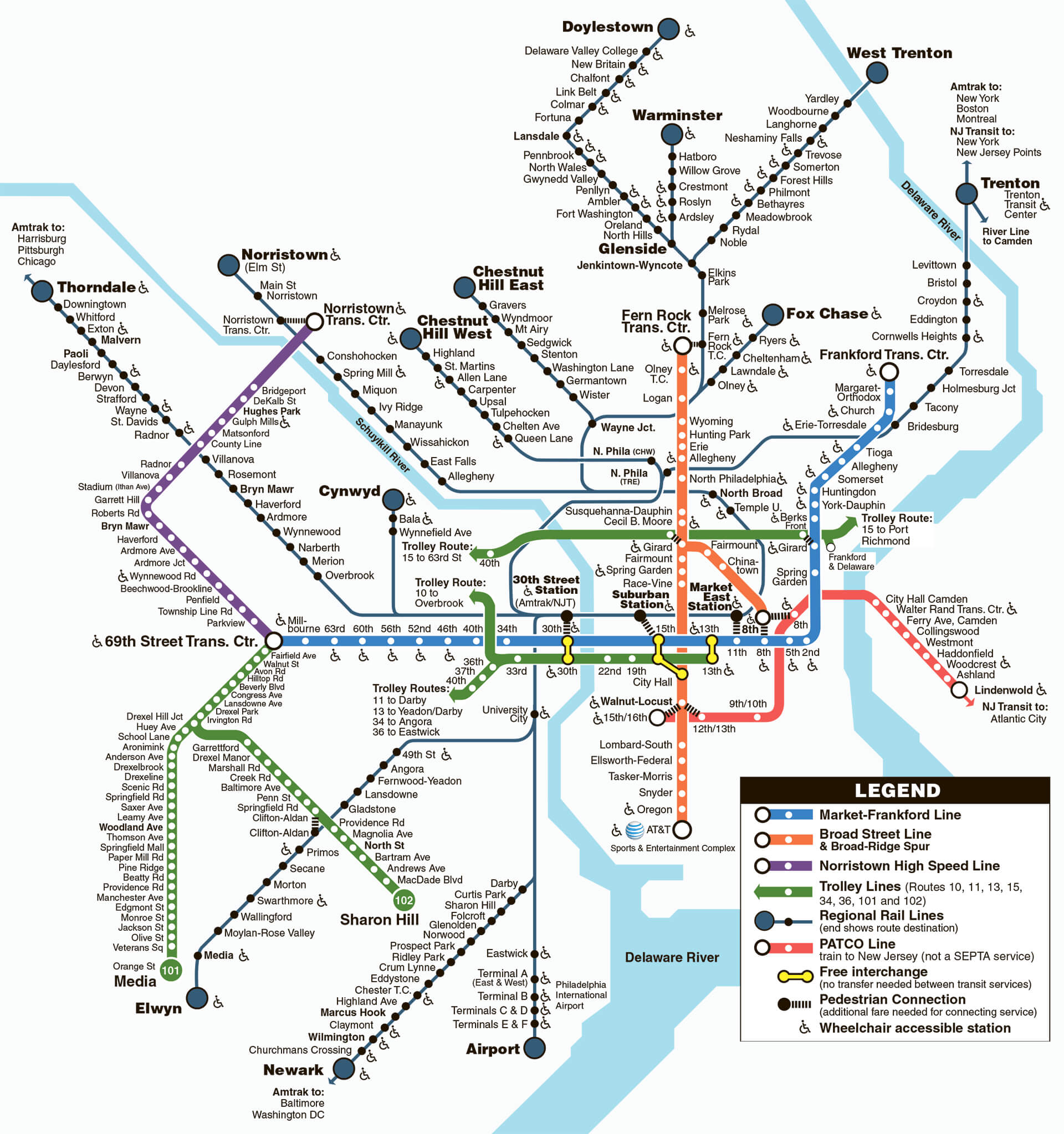
SEPTA Regional Rail Lines and Stations
SEPTA Regional Rail is built around Center City Philadelphia. Most trains pass through the Center City Commuter Connection, which ties the suburban route network together and makes cross-city trips possible without ending at a downtown terminal.
Fare zones also follow this pattern. Center City stations are in the CC zone, outlying stations are in zones 1 through 4, and New Jersey stations use the NJ zone. The stations map is useful for checking a station zone before you ride.
Regional Rail Lines
The SEPTA Regional Rail lines cover former Pennsylvania Railroad routes, former Reading Company routes, and the Airport Line, which opened under SEPTA in 1985. The former R1 through R8 route numbering system was discontinued on July 25, 2010.
| Station | Details |
|---|---|
| Airport Line | Runs between Temple University and Airport Terminals E & F. Route length: 12.10 miles (19.47 kilometers). Weekday ridership in FY 2023: 5,268. |
| Chestnut Hill East Line | Runs between 30th Street Station and Chestnut Hill East. Route length: 12.20 miles (19.63 kilometers). Weekday ridership in FY 2023: 2,318. |
| Chestnut Hill West Line | Runs between Temple University and Chestnut Hill West. Route length: 14.59 miles (23.48 kilometers). Weekday ridership in FY 2023: 2,768. |
| Cynwyd Line | Runs between Suburban Station and Cynwyd. Route length: 6.93 miles (11.15 kilometers). Weekday ridership in FY 2023: 112. |
| Fox Chase Line | Runs between 30th Street Station and Fox Chase. Route length: 12.69 miles (20.42 kilometers). Weekday ridership in FY 2023: 2,425. |
| Lansdale/Doylestown Line | Runs between 30th Street Station and Doylestown. Route length: 35.81 miles (57.63 kilometers). Weekday ridership in FY 2023: 7,674. |
| Manayunk/Norristown Line | Runs between Penn Medicine Station and Elm Street. Route length: 20.48 miles (32.96 kilometers). Weekday ridership in FY 2023: 4,724. |
| Media/Wawa Line | Runs between Temple University and Wawa Station. Route length: 20.77 miles (33.43 kilometers). Weekday ridership in FY 2023: 3,548. |
| Paoli/Thorndale Line | Runs between Temple University and Thorndale. Route length: 37.92 miles (61.03 kilometers). Weekday ridership in FY 2023: 7,425. |
| Trenton Line | Runs between Temple University and Trenton Transit Center. Route length: 35.95 miles (57.86 kilometers). Weekday ridership in FY 2023: 7,316. |
| Warminster Line | Runs between Penn Medicine Station and Warminster. Route length: 22.37 miles (36.00 kilometers). Weekday ridership in FY 2023: 5,227. |
| West Trenton Line | Runs between Penn Medicine Station and West Trenton. Route length: 34.79 miles (55.99 kilometers). Weekday ridership in FY 2023: 5,736. |
| Wilmington/Newark Line | Runs between Temple University and Newark. Route length: 41.37 miles (66.58 kilometers). Weekday ridership in FY 2023: 4,172. |
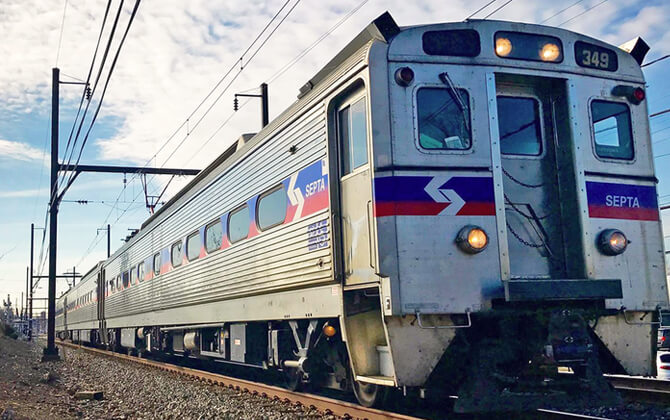
SEPTA uses electric multiple-unit Silverliner cars on all Regional Rail lines. Most service runs through Center City, though the exact route plan, route timetable, and stopping pattern vary by line.
Major Center City Stations
The busiest part of the system is the Center City Commuter Connection. All trains stop at the three main Center City stations except the Cynwyd Line, and most also stop at Temple University Station in North Philadelphia.
| Station | Details |
|---|---|
| William H. Gray III 30th Street Station | CC-zone station in University City with Amtrak, NJ Transit, and SEPTA Metro connections. The upper level is part of the Regional Rail core. |
| Suburban Station | CC-zone underground station near City Hall and one of the main downtown transfer points. |
| Jefferson Station | CC-zone downtown station near Reading Terminal Market and Old City access. |
| Penn Medicine Station | CC-zone station serving University City and Penn Medicine. |
| Temple University Station | CC-zone station in North Philadelphia served by most Regional Rail lines. |
These stations form the backbone of the stations list for downtown travel. If you are checking a stations map, they are the best reference points for transfers, fare zones, and the Center City path of your train.
Schedule and Frequency
SEPTA updates Regional Rail schedules four times per year to improve reliability and adjust for capital projects, infrastructure work, staffing, and train operations. New Regional Rail schedules go into effect on Sunday, July 5, 2026.
For riders checking operating hours, opening hours, opening times, working hours, or timings today, the most important source is the individual line timetable. Most lines operate from about 5:30 AM to midnight, but the starting time, closing time, last train, and running time depend on the line, direction, and day of travel.
| Service detail | Timings |
|---|---|
| Typical daily service span | Most lines run from about 5:30 AM to midnight, with exact train schedule details varying by route. |
| Airport Line | Generally runs every 30 minutes from about 5:00 AM to midnight. |
| July 5, 2026 schedule update | Some trips shift by about 5 minutes earlier or later; some trains receive new numbers, revised departure times, or changed endpoints. |
| Weekend service | No adjustments are listed in the provided materials for the referenced schedule update. |
| Holiday service | Weekend service rules apply all day on Saturdays, Sundays, and major SEPTA holidays. |
| Travel time reference | Times are measured by arrivals at or departures from William H. Gray III 30th Street, Suburban, and Jefferson stations. |
Schedule today and route timetable details can change by branch, so check your exact train before you leave. Frequency is also line-specific: the Airport Line is the clearest example in the provided material, with trains every 30 minutes on weekdays and weekends.
Weekday, Weekend, and Holiday Service
Weekday changes in the July 5, 2026 update include train number changes, departure time adjustments, revised connections, added trips on some lines, and changed terminal points. Some updates also add capacity to Penn Medicine Station, increase direct service from Doylestown, and revise stopping patterns on selected Lansdale trains.
Weekend service has no listed adjustments in the provided materials for this update. Holidays follow the weekend definition for Regional Rail fare and schedule purposes: New Year’s Day, Martin Luther King Jr. Day for Regional Rail only, Memorial Day, Independence Day, Labor Day, Thanksgiving, and Christmas.
If your trip is time-sensitive, check the latest timetable close to departure. Even when a line has a new schedule, not every station time changes.
Fares, Tickets, and Payment Options
SEPTA Regional Rail fare depends on your starting station, destination, fare zone, day of travel, and payment method. The standard Regional Rail price range in the provided material is $5.00 to $13.00 USD, with lower fares generally available when you tap before boarding.
SEPTA accepts SEPTA Key cards, contactless credit or debit cards, mobile wallets, Quick Trips, and cash in certain onboard or station situations. If you use a SEPTA Key card or contactless payment, tap on at your starting station and tap off at your destination. If you do not tap off, the maximum fare may be charged.
Fare Zones and Travel Times
Regional Rail uses fare zones to calculate ticket price and travel cost. The more zones your trip crosses, the higher the fare usually is. A fare calculator or zone check is especially useful when your route passes through Center City and continues to another suburban line.
- CC: Penn Medicine Station, William H. Gray III 30th Street Station, Suburban Station, Jefferson Station, and Temple University Station.
- Zone 1: stations near Center City.
- Zone 2: Philadelphia and the nearest suburbs.
- Zone 3: outlying Philadelphia areas and suburbs.
- Zone 4: distant suburbs, Philadelphia Airport, and Delaware.
- NJ: New Jersey stations.
For example, Malvern Station to Villanova Station is a shorter zone-based trip than Malvern Station to Suburban Station. Malvern Station to Wilmington Station costs more in the examples provided because the trip goes through Center City and back out again.
| Station | Details |
|---|---|
| Zone 1 | Weekday fare: $5.00 USD. Weekend fare: $5.00 USD. |
| Zone 2 | Weekday fare: $6.50 USD. Weekend fare: $6.00 USD. |
| Zone 3 | Weekday fare: $7.75 USD. Weekend fare: $7.00 USD. |
| Zone 4 | Weekday fare: $8.75 USD. Weekend fare: $8.00 USD. |
| NJ | Weekday fare: $11.00 USD. Weekend fare: $11.00 USD. |
Free transfers are available only between SEPTA Bus and Metro services. Trips involving Regional Rail require an additional fare.
SEPTA Key, Contactless Payment, and Quick Trips
SEPTA Key is a reloadable contactless card that can hold Travel Wallet funds and passes. A SEPTA Key card costs $4.95 USD, and the cost is refunded to the Travel Wallet if the card is registered within 30 days.
As of April 2025, SEPTA accepts contactless payment on Regional Rail. You can tap on and tap off with a credit card, debit card, or mobile wallet such as Apple Pay, Google Pay, or Samsung Pay at faregates and platform validators. To avoid card clash, tap with only the card or device you want to use.
Quick Trips are single-rider tickets with no transfers. For inbound trips toward Center City, a conductor can issue a Quick Trip valid for 2 hours from purchase. For outbound trips from Center City, riders without a fare must buy a Quick Trip from a Fare Kiosk or Sales Office before boarding.
Contactless tap-to-ride is not available at Trenton and West Trenton stations in the provided material, though SEPTA is working on validators there. SEPTA Key Tix is separate and is not available on Regional Rail.
Passes and Visitor-Friendly Options
SEPTA offers several pass products for frequent riders and visitors. Options mentioned in the provided material include Daily, Weekly, and Monthly passes, plus day pass products and Regional Rail passes for regular travel.
- One Day Convenience Pass: $7.50 USD.
- Three Day Convenience Pass: $19.00 USD.
- Weekly TransPass+: $31.00 USD.
- One Day Neighborhood FleX Pass: $10.00 USD, valid for up to 10 rides on buses, subways, trolleys, and up to any Zone 2 Regional Rail station in one day.
- One Day Anywhere FleX Pass: $13.00 USD, valid for up to 10 rides on buses, subways, trolleys, and any Regional Rail station in one day.
- New Jersey surcharge for FleX Pass travel: $3.75 USD.
TransPass+ is valid on Regional Rail for travel to and from Center City Philadelphia and Zone 1/Airport, and it is valid anywhere on weekends and major holidays. Children under 12 ride free with a fare-paying adult. Seniors age 65 and older ride free on Regional Rail within Pennsylvania with a valid Senior Fare Card; for New Jersey or Delaware trips, seniors pay 50% of the weekday fare.
Connections with Other Transit Systems
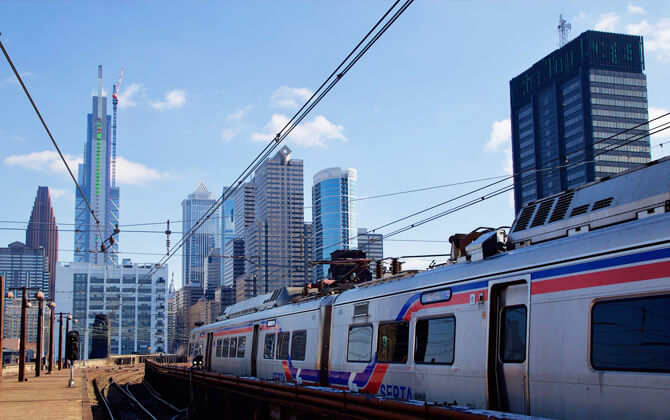
SEPTA Regional Rail connects with local transport, city transport, intercity rail, bus service, trolleys, and other regional networks. The biggest transfer points are in Center City, especially 30th Street Station, Suburban Station, and Jefferson Station.
Regional Rail also reaches out-of-state terminals in New Jersey and Delaware, which makes it useful for longer transportation in the Philadelphia region. Some transfers require a separate fare or ticket, so check payment rules before switching systems.
SEPTA Metro, Trolley, and Bus Connections
SEPTA’s public transport network includes Regional Rail, SEPTA Metro, and bus operations. SEPTA Metro covers subway, elevated, and trolley services; some riders may also search these street-running lines as trams or tramway service.
Center City is the main transfer hub. Regional Rail connects with SEPTA Metro at key downtown stations, while trolleys and more than 100 bus routes feed into stations throughout the network. Pay-per-ride fares listed in the provided material are $2.90 USD for Bus and Metro and $5.00 to $13.00 USD for Regional Rail.
Amtrak and NJ Transit Connections
Amtrak connects with SEPTA Regional Rail at William H. Gray III 30th Street Station, North Philadelphia Station, Ardmore Station, Paoli Station, Trenton Transit Center, Wilmington Station, Downingtown, Exton, and Cornwells Heights.
NJ Transit and SEPTA connect at Trenton Transit Center, where travelers can use joint NJ Transit/SEPTA rail tickets. The joint ticket is issued in two parts: one for NJ Transit and one for SEPTA. Prices vary by origin and destination.
- Philadelphia 30th Street: covers Philadelphia 30th Street, Suburban Station, Jefferson Station, Temple University, and University City.
- SEPTA Intermediate: covers Trenton Line Regional Rail stations from North Philadelphia through Levittown Station.
- SEPTA Tunnel: covers travel to or from other SEPTA Regional Rail stations not on the Trenton Line.
Popular Amtrak destinations named in the provided material include Harrisburg, Lancaster, Wilmington, Trenton, Newark, New York City, and Washington, DC. NJ Transit destinations include Cherry Hill, Atlantic City, Princeton, New Brunswick, and Newark.
PATCO and Other Regional Links
PATCO is a separate rapid transit system for travel between Philadelphia and Camden County, with major Center City access at 8th & Market and 16th & Locust. Regional Rail riders can reach PATCO from Center City stations, including Jefferson Station near the 8th & Market area.
Other regional links include DART First State bus service in Delaware, NJ Transit services in New Jersey, Greyhound bus routes in Philadelphia, PART service from Pottstown, and RushBus connections from Bristol Station and Warminster Station. SEPTA Key is not accepted on PATCO or NJ Transit.
Airport Line and Philadelphia International Airport Connections
The Airport Line is SEPTA Regional Rail’s direct rail route between Center City Philadelphia and Philadelphia International Airport. It serves the airport terminal complex and continues through Center City toward Temple University, with many trains through-routed to other lines.
The line operates seven days a week, generally every 30 minutes from about 5:00 AM to midnight. The trip from Suburban Station to the airport takes about 19 to 24 minutes, while airport-to-Center City trips are commonly described as about 25 to 30 minutes depending on station and schedule.
| Station | Details |
|---|---|
| Penn Medicine Station | University City stop after the Center City Commuter Connection. |
| Eastwick | Serves the western approach to the airport area. |
| Airport Terminal A | Direct terminal connection with high-level platforms. |
| Airport Terminal B | Direct terminal connection with high-level platforms. |
| Airport Terminals C & D | Direct terminal connection with high-level platforms. |
| Airport Terminals E & F | Combined terminal station and line terminus. |
The Airport Line opened on April 28, 1985 as the R1 Airport Line. SEPTA bus routes 37, 108, and 115 also serve Philadelphia International Airport.
Getting Between PHL Airport and Center City
For most travelers, the Airport Line is the simplest way to get between PHL and Center City. It stops at the major airport terminals and connects directly to 30th Street Station, Suburban Station, and Jefferson Station.
Airport stations have high-level platforms, and terminal access is via walkways, escalators, and elevators. If you arrive at the wrong terminal, walking between terminals is possible.
One-way airport fares in the provided material include $6.75 USD per person, with a $0.25 USD savings when using a SEPTA Key card. Paying on the train by credit card is listed at $8.00 USD. As with any fare, check current ticket price before you travel.
How to Ride SEPTA Regional Rail
Riding SEPTA Regional Rail is straightforward: plan your route, check the timetable, tap on before boarding when possible, ride to your stop, and tap off at the end. Keeping your ticket, card, or contactless payment ready makes the trip smoother.
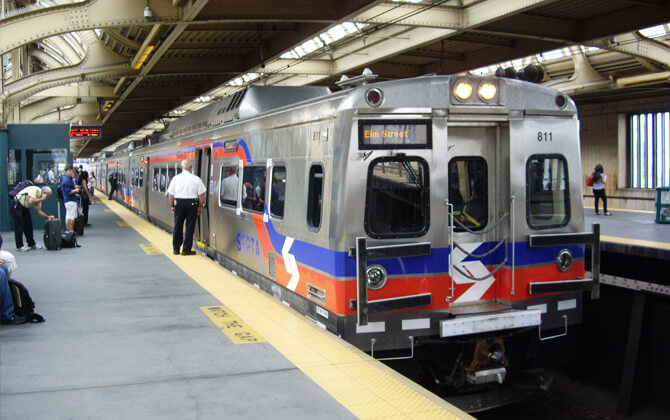
- Check the schedule, train schedule today, and route plan for your line before leaving.
- At the station, tap your SEPTA Key card or contactless payment at the platform validator or turnstile.
- Stand behind the yellow line and wait for the train to stop fully.
- Let passengers exit before boarding.
- Take a seat, listen for announcements, and watch for your station.
- At your destination, exit after the conductor opens the door.
- Tap off at the platform validator or turnstile to close your trip.
Conductors check Quick Trips, SEPTA Key cards, and contactless payments onboard. If you pay cash on board, the fare can be higher than tapping before boarding.
The first car of all weekday peak-hour trains with three or more cars is the QuietRide Car. Keep calls short, use headphones, and let other riders travel in peace.
Traveling Between Suburban Lines
Many suburban-to-suburban trips require changing trains at a CC-zone station. Because the fare is based on the starting and ending stations, a trip that passes through Center City can cost more than a shorter trip on one line.
The Malvern examples show how this works: Malvern to Villanova is a smaller fare, Malvern to Suburban Station crosses more zones, and Malvern to Wilmington costs the most among those examples because the route goes through Center City and back out again.
Tap on at the beginning and tap off at the end of the Regional Rail ride so the system records your trip correctly.
Parking and Park-and-Ride
Station parking is available at many Regional Rail stations, mostly in SEPTA-owned surface lots and garages. Some stations also have municipal, street, or privately owned parking nearby, with different rules and prices.
| Station | Details |
|---|---|
| SEPTA surface lots | Parking charges per day are $2.00 USD. |
| SEPTA garages | Parking charges per day are $4.00 USD. |
| Weekends and holidays | Daily-use parking charges apply at the same rates. |
| Monthly permits | Monthly permit parking fees at SEPTA-operated lots and garages are suspended until further notice. |
Riders can pay with the SEPTA Park app, text-to-pay, or station kiosks that accept credit cards, debit cards, and coins. Free parking is extremely limited, and lots can fill early on weekday mornings.
Finding Station Parking
Use station information and posted signs to confirm parking availability, accessibility, number of spaces, overnight rules, and station-specific parking charges. Most SEPTA daily-use spaces are striped and numbered. Pull into a marked space and do not back in.
If a lot is full, nearby stations may have more space. Local stations can sometimes be easier than the busiest park-and-ride locations.
Daily and Overnight Parking
Overnight parking is permitted at most Regional Rail stations, most Norristown High Speed Line stations, and the Fern Rock Transit Center and 69th Street Transit Center parking lots. It is not allowed at some stations, so check signs before leaving your car.
Overnight parking is permitted for up to 14 days and is charged at the daily-use rate. If you pay in advance and leave the lot, your space is not guaranteed when you return.
- Norristown Transit Center Parking Garage has listed operating hours that vary by day.
- Lansdale Station Garage is open 24 hours a day, 365 days a year, with surface lot parking also available.
- Frankford Transit Center Parking Garage is open 24 hours a day, 365 days a year, and is garage-only for customers.
Rules, Safety, and Travel Etiquette
SEPTA’s rider rules are meant to keep the system safe, clean, and comfortable. Follow posted instructions, cooperate with employees, and be considerate of other riders.
- Smoking and vaping are not allowed in stations, on platforms, in shelters, or on transit vehicles.
- Alcohol consumption is forbidden at all times.
- Correct fare is required for travel.
- Yield designated seats to seniors and riders with disabilities.
- Do not place feet or belongings on seats.
- Use earbuds or headphones, and avoid speakerphone calls.
- Drinks with secure lids and light snacks are allowed, but hot or processed foods are not to be consumed onboard.
- Stand behind the yellow line and let riders exit before boarding.
- Do not block aisles, doors, stairwells, hallways, or operator cab doors.
- Do not move between cars on trains and trolleys.
- Respect the QuietRide Car when it applies.
Harassment is prohibited. If you witness harassing or violent behavior, contact SEPTA Transit Police at 215-580-8111 or text 215-235-1911.
Brief History
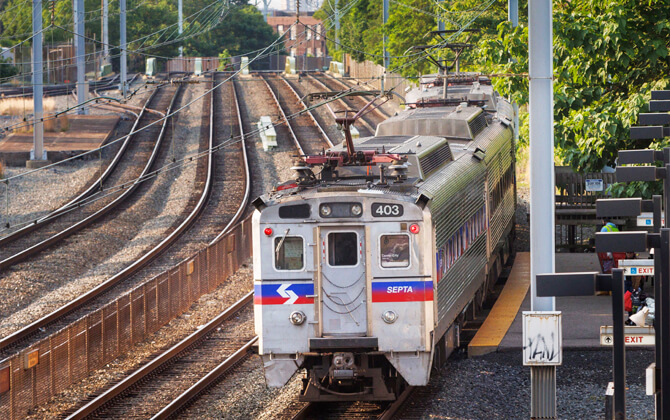
SEPTA Regional Rail grew from two older commuter rail networks: one operated by the Pennsylvania Railroad and the other by the Reading Company. The Pennsylvania Railroad served downtown through Broad Street Station and later Suburban Station, while Reading trains ended at Reading Terminal.
Both railroads electrified major commuter routes beginning in 1915, using overhead catenary powered at 11,000 volts, 25 Hz. By the 1950s and 1960s, car ownership and declining rail profits put commuter service under pressure.
SEPTA was created in 1963 to coordinate public funding for transit and railroads in southeastern Pennsylvania. It began subsidizing commuter rail in 1966, then took over direct operation on January 1, 1983.
The Center City Commuter Connection opened in November 1984, turning the former terminal-based networks into a through-running system. The Airport Line opened in 1985, adding a direct airport rail connection. Today, six lines trace back to the Pennsylvania Railroad, six to the Reading Company, and one was built under SEPTA.
Future Service Changes and Improvements
SEPTA is working on short-term reliability improvements and longer-term Regional Rail expansion of service quality, frequency, and integration. Recent efforts focused on on-time performance, schedule adjustments, staffing, infrastructure, and vehicles.
After targeted changes to about 180 of the lowest-performing trains, on-time performance on those trains improved from 79% to 89%. Across all Regional Rail lines, on-time performance reached 87% for the period described, while SEPTA reported 300 additional trains per week and ridership 7% higher than in spring 2024.
- Add 31 Assistant Conductors to peak trains.
- Adjust schedules on about 20% of service to reduce cascading delays.
- Increase time between SEPTA and Amtrak trains, especially on the Paoli/Thorndale Line.
- Use newer vehicles for peak service when possible.
- Place maintenance crews strategically to restore service faster after disruptions.
- Review the lowest-performing trains before each schedule change.
- Improve communication about delays and disruptions.
Infrastructure work includes priority improvements at key interlockings, catenary replacement on the Fox Chase Line, continuous welded rail planned for late fall 2025, and new striping and delineators at 20 grade crossings in spring and summer 2025.
Longer term, Reimagining Regional Rail describes a vision for frequent, all-day, all-week service that works more smoothly with SEPTA Metro and bus service. Station projects at Ambler, Ardmore, Bristol, Chestnut Hill East, Conshohocken, Jenkintown-Wyncote, Malvern, Marcus Hook, Villanova, and Willow Grove are in planning, design, or solicitation stages.
The next Regional Rail schedule change takes effect Sunday, July 5, 2026, with more consistent line pairings, simplified express patterns on some lines, more capacity to Penn Medicine Station, and longer trains with more room for riders.
Nearby Attractions by Regional Rail
Regional Rail is useful for reaching Philadelphia attractions, suburban towns, parks, and day trips without driving. Some destinations are walkable from stations, while others work better with a short walk, bike ride, bus, trolley, or other transit transfer.
Town centers and historic districts mentioned in the provided material include Ambler, Narberth, Media, Doylestown, Ardmore, Haddonfield, and Collingswood. Parks and outdoor options include Wissahickon Valley, Pennypack Preserve, and the Delaware Canal Towpath when paired with the right route.
Attractions Near Center City Stations
William H. Gray III 30th Street Station is close to Drexel University, the University of Pennsylvania, and the Art Museum District, including the Philadelphia Museum of Art, the Rodin Museum, the Barnes Foundation, the Franklin Institute, and the Mutter Museum.
Suburban Station is near LOVE Park, City Hall, Dilworth Park, and Rittenhouse Square. Jefferson Station is close to Reading Terminal Market, Old City, the Liberty Bell, Independence Hall, the National Constitution Center, Wonderspaces, Spruce Street Harbor, and Penn’s Landing.
Other nearby station-based stops include Wynnewood for shopping, Narberth for Reel Cinemas and Character Development, Merion for Merion Botanical Park, and Overbrook for Saint Joseph’s University.
Suburban Destinations and Day Trips
Popular Regional Rail day trips include Media, Ardmore, Doylestown, Ambler, Conshohocken, Chestnut Hill, Haddonfield, Wayne, Narberth, and Bristol. Media is known for a walkable downtown, Ardmore has shopping and food, and Doylestown offers the Mercer Museum, Fonthill Castle, and ice cream shops.
Chestnut Hill is good for shops, food, and an easy walk along the avenue. Narberth offers a quieter small-town visit with a main street, movie theater, and restaurants. Bristol is useful for the Bristol Riverside Theatre and a town walk.
Longer trips mentioned include Wilmington for a Blue Rocks game, dinner, and the waterfront. Atlantic City is reached by NJ Transit rather than SEPTA, with access to the boardwalk, restaurants, casinos, and beach. For an outdoorsy trip, one option is to take the train to Yardley and bike to New Hope along the marked bike path.
Before planning a weekend outing, check the schedule carefully. Service can be limited on some lines and at some times.