The Port Jervis Line is a commuter rail route in the Metro-North Railroad West of Hudson system, running between Hoboken Terminal in New Jersey and Port Jervis, New York. NJ Transit Rail Operations operates the service under contract to Metro-North Railroad. The line covers about 95.0 miles (152.9 km), serving northern New Jersey and the Hudson Valley, with diesel push-pull trains, rural stretches north of Suffern, and major landmarks such as the Moodna Viaduct and the Otisville Tunnel.
| Key | Information |
|---|---|
| Type | Commuter rail and public transport service |
| System | NJ Transit Rail Operations and Metro-North Railroad |
| Operator | NJ Transit Rail Operations under contract to Metro-North Railroad |
| Route | Hoboken Terminal to Port Jervis |
| Line length | 95.0 miles (152.9 km) |
| Stations | 12 in express service, 24 local via the Bergen County Line, 26 local via the Main Line |
| Daily ridership | 2,613 riders in 2018 |
| Annual ridership | 581,453 riders in 2024 |
| Service character | Mostly commuter-focused, with express, local, weekday, weekend, and holiday patterns |
North of Suffern, the route becomes largely single-track with passing sidings, which affects running time, frequency, and service flexibility. At Hoboken and Secaucus Junction, riders can connect to broader city transport, local transport, PATH train service, buses, ferries, and other rail lines.
Port Jervis Line Map
The Port Jervis Line map shows all available stops. Click on the map to enlarge it or download the Port Jervis Line map in PDF format.
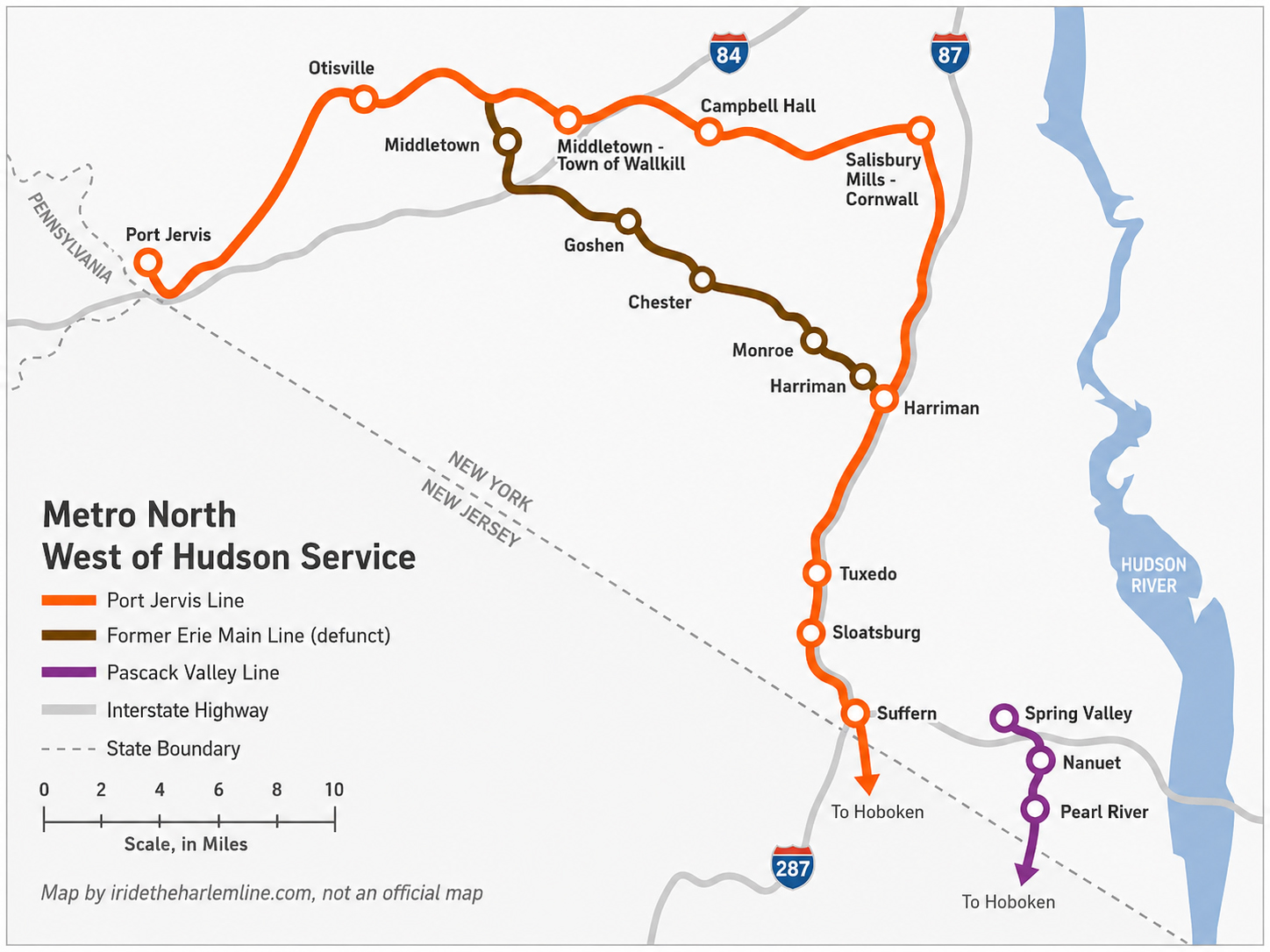
Stations and Route
The Port Jervis Line route runs from Hoboken Terminal to Port Jervis, crossing northern New Jersey before heading into New York State through Suffern and Orange County. Most trains stop at Secaucus Junction, the main transfer point for riders coming from or going to New York Penn Station.
Between Secaucus and Ridgewood, trains may use either the Main Line or the Bergen County Line. Weekday peak trains often run express, while weekend service is more likely to run local. For trip planning, check the route timetable and stations map before traveling.
| Station | Details |
|---|---|
| Hoboken Terminal | Eastern terminal with PATH, ferry, bus, light rail, and NJ Transit rail connections |
| Secaucus Junction | Main transfer point for New York Penn Station service |
| Ramsey Route 17 | Major New Jersey stop on some service patterns |
| Mahwah | New Jersey station used by some routing patterns |
| Suffern | Key point where the line continues south into New Jersey on NJ Transit’s Main Line |
| Sloatsburg | New York station north of Suffern |
| Tuxedo | Orange County station near scenic and outdoor areas |
| Harriman | Busiest station on the line |
| Salisbury Mills-Cornwall | Station near the Moodna Viaduct and Storm King Art Center access |
| Campbell Hall | Orange County station and proposed midpoint yard area in future plans |
| Middletown/Town of Wallkill | Major intermediate station in Orange County |
| Otisville | Station near the Otisville Tunnel |
| Port Jervis | Western terminus, two blocks from the Delaware River near Pennsylvania |
New York Stations
In New York, the Port Jervis Line runs from Suffern through Orange County to Port Jervis. These stations form the core stations list for riders traveling west of the New Jersey border.
| Station | Details |
|---|---|
| Suffern | Connection point with NJ Transit’s Main Line |
| Hillburn | Listed New York stop on the line |
| Sloatsburg | New York station north of Suffern |
| Tuxedo | Orange County stop with scenic nearby areas |
| Salisbury Mills-Cornwall | Listed as Cornwall in some station references |
| Campbell Hall | Orange County stop west of Salisbury Mills-Cornwall |
| Middletown/Town of Wallkill | Major intermediate station |
| Otisville | Station near the line’s longest tunnel |
| Port Jervis | Western terminal near the Delaware River |
For exact train schedule today details, riders can use NJ Transit trip-planning tools or call NJ Transit at 973-275-5555.
New Jersey and Transfer Stations
Several New Jersey stations matter most because they shape transfers, fare rules, and the route plan into New York City. Secaucus Junction is the recommended transfer for Penn Station-NY. Grove Street and Journal Square are useful for PATH train connections toward Hoboken or World Trade Center.
| Station | Details |
|---|---|
| Secaucus Junction | Recommended transfer for Penn Station-NY service |
| Grove Street | PATH transfer for Hoboken or World Trade Center service |
| Journal Square | PATH transfer for Hoboken or World Trade Center service |
| Hoboken Terminal | Major terminal for PATH, buses, ferries, light rail, and NJ Transit trains |
| Ramsey Route 17 | Important stop on some express and connection patterns |
| Mahwah | New Jersey stop used by some Port Jervis Line service patterns |
Peak tickets are required on weekday trains that arrive at Hoboken or Penn Station-NY between 7:00 AM and 9:30 AM, or depart for Port Jervis from Hoboken or Penn Station-NY between 4:00 PM and 7:00 PM. Peak fares apply only for travel to or from Hoboken, Secaucus, Newark, and Penn Station-NY.
Major Stations for Commuters and Visitors
For daily commuters, the most useful stations are Hoboken, Secaucus Junction, Harriman, Middletown/Town of Wallkill, and Port Jervis. For visitors, Salisbury Mills-Cornwall, Tuxedo, and Port Jervis are especially useful because they place riders near scenic areas, trails, and small-town destinations.
| Station | Details |
|---|---|
| Hoboken Terminal | Major transfer hub for rail, PATH, ferry, light rail, and bus service |
| Secaucus Junction | Best transfer for Midtown Manhattan via Penn Station-NY |
| Harriman | Busiest station on the line and useful for Woodbury Commons access |
| Middletown/Town of Wallkill | Key intermediate station in Orange County |
| Port Jervis | Western end of the line near the Delaware River and Pennsylvania border |
Local, Express, Main Line, and Bergen County Line Routing
The Port Jervis Line uses different routing depending on the timetable. During weekday rush hours, trains often operate as express service, stopping mainly at New York State stations and major New Jersey stations with connections into New York City.
Most trains start at Hoboken, stop at Secaucus Junction, and continue toward Suffern before entering New York State. Between Secaucus and Ridgewood, the path train routing may use either the Main Line or the Bergen County Line. On weekends, most trains run local and make all stops on one of those two lines.
Fares, Tickets, and Apps
Port Jervis Line fare and ticket price depend on distance, ticket type, and time of day. Peak and off-peak rules matter, so check the price for your route before boarding. If available in your trip-planning tool, use the fare calculator or fare table to confirm the exact cost.
Ticket options include one-way tickets, ten-trip tickets, weekly passes, monthly passes, and reduced-fare tickets. You can buy a ticket through the NJ Transit app, MyTix, ticket vending machines, or ticket offices where available. If no machine or ticket agent is available, onboard purchase is allowed without penalty.
Ticket Types
NJ Transit ticket types for the Port Jervis Line include one-way tickets, ten-trip tickets, weekly passes, monthly passes, student monthly passes, reduced-fare tickets, and bulk-sale tickets. One-way tickets are valid for one continuous trip between the stations shown on the ticket and expire 30 days after purchase.
- Monthly pass: unlimited trips between two rail stations during a calendar month.
- Weekly pass: unlimited trips between two rail stations for the valid week.
- Ten-trip ticket: ten one-way trips, valid for 30 days.
- Student monthly pass: available to eligible post-secondary students in the University Partnership Program, with a 25 percent savings.
- Military reduced ticket: available to eligible military personnel and dependents with valid ID.
Peak and Off-Peak Fares
Peak tickets are required on weekday trains arriving at Hoboken or Penn Station-NY between 7:00 AM and 9:30 AM, and on weekday trains departing for Port Jervis from Hoboken or Penn Station-NY between 4:00 PM and 7:00 PM. Peak fares apply only for travel to or from Hoboken, Secaucus, Newark, and Penn Station-NY.
Off-peak round-trip tickets are valid on PM peak trains to stations west of Suffern. Reduced fares are available for seniors, customers with disabilities, and Medicare customers. These riders are not charged the onboard surcharge when buying a ticket on the train.
Where to Buy Tickets
Tickets can be bought through the NJ Transit app, MyTix, ticket vending machines, ticket offices where available, and web ticketing for train travel. Some stations have no ticket office; Port Jervis station has a ticket vending machine on the platform.
If a station has no ticket agent or vending machine, onboard purchase is allowed without penalty. Credit cards, debit cards, and cash are accepted at ticket offices and vending machines where available.
Reduced Fares, Children, and Family Options
Senior citizens and customers with disabilities can travel at a reduced fare of half the regular one-way fare or less. Senior riders age 65 and over, people with disabilities, and Medicare customers also do not pay the onboard surcharge when buying a ticket on the train.
Children ages 5 to 11 save 50 percent. Up to three children ages 4 and under ride free with a passenger paying a valid fare. On weekends and holidays, Family SuperSaver rules allow up to two children ages 5 to 11 to ride free with a paying passenger.
Schedule and Service Patterns
The Port Jervis Line schedule changes by weekday, weekend, and holiday. Operating hours run from early morning into late evening, but exact opening hours, opening times, closing time, and last train details depend on the day and direction of travel. Always check the current timetable before leaving, especially if you need timings today.
| Service detail | Timings |
|---|---|
| Weekday peak fare period toward Hoboken or Penn Station-NY | Arrivals between 7:00 AM and 9:30 AM |
| Weekday peak fare period toward Port Jervis | Departures from Hoboken or Penn Station-NY between 4:00 PM and 7:00 PM |
| Typical weekday service level | About 12 to 14 trains, with many peak-direction trips |
| First Port Jervis-bound arrival noted in the draft schedule | 10:51 AM |
| Hoboken-bound gap from Port Jervis noted in the draft schedule | 1:35 PM to 9:22 PM, with an additional 3:19 PM train starting at Middletown |
| Weekend service level | 7 round trips per day, generally local service |
Because the route is mostly single-track north of Suffern, frequency can be limited. Some trains may also depart earlier than listed, so checking the train schedule close to departure is a smart move.
Weekday Peak and Off-Peak Service
Weekday peak service is built around commuter demand. Trains arriving at Hoboken or Penn Station-NY from 7:00 AM to 9:30 AM, and trains leaving Hoboken or Penn Station-NY for Port Jervis from 4:00 PM to 7:00 PM, require peak tickets for eligible travel zones.
Off-peak round-trip tickets are valid on PM peak trains to stations west of Suffern. During weekday rush hours, some trains run express and may skip many New Jersey stations. One peak-hour train in each direction runs nonstop between Secaucus and Harriman.
Some weekday off-peak service may be replaced by substitute buses during service changes. Those buses follow train schedules and connect with trains at designated stations.
Weekend and Holiday Service
Weekend and holiday service follows a different schedule. Most Port Jervis Line trains run local, making all stops on either the Main Line or the Bergen County Line between Secaucus Junction and Ridgewood.
For New York City trips, use Secaucus Junction for Penn Station-NY. For PATH service to Hoboken or World Trade Center, Grove Street and Journal Square may be used depending on the trip. Holiday timetables can be modified, and extra or special service may operate during major travel periods.
How Often Trains Run
Frequency is strongest during weekday rush hours and lighter during midday, evening, weekend, and holiday periods. A typical weekday has about 12 to 14 trains, while weekend service is listed as 7 round trips per day.
Running time varies widely. Express trains are faster, while local trains take longer because they make more stops. The mostly single-track layout north of Suffern also limits how often trains can run.
Popular Trips and Travel Times
Popular trips on the Port Jervis Line usually involve travel between Orange County, Secaucus Junction, Hoboken, and New York City connections. Travel times vary by express or local service, transfer wait, and schedule today conditions.
For many riders, Hoboken to Port Jervis takes roughly 2 to 2.5 hours. One listed Middletown-to-Hoboken trip departs at 3:20 PM, arrives at 5:13 PM, and takes 113 minutes.
- Weekday example: 8:25 AM to 10:51 AM, then return 11:35 AM to 2:12 PM.
- Weekday example: 8:25 AM to 10:51 AM, then return 1:35 PM to 3:54 PM.
- Weekend example: 11:20 AM to 1:49 PM, then return 3:04 PM to 5:26 PM.
- Weekend example: 1:21 PM to 3:48 PM, then return 5:28 PM to 7:39 PM.
Port Jervis to New York City
There is no direct train from Port Jervis to Penn Station-NY. The usual route plan is to ride the Port Jervis Line to Secaucus Junction, then transfer to a train for Penn Station-NY. Some trips may also use Hoboken and PATH, depending on destination and timing.
Weekday peak fare rules apply for trains arriving at Hoboken or Penn Station-NY between 7:00 AM and 9:30 AM, and for trains departing toward Port Jervis between 4:00 PM and 7:00 PM.
Orange County Stations to Hoboken and Secaucus
Orange County riders use the Port Jervis Line for trips to Hoboken Terminal and Secaucus Junction, with onward connections toward New York Penn Station. Service may be express on weekdays and local on weekends.
| Station | Details |
|---|---|
| Salisbury Mills-Cornwall | Orange County stop near Moodna Viaduct access |
| Campbell Hall | Intermediate Orange County station |
| Middletown/Town of Wallkill | Major station for Orange County commuters |
| Otisville | Station near the Otisville Tunnel |
| Port Jervis | Western terminus near the Delaware River |
Trips to Midtown Manhattan via Secaucus
For Midtown Manhattan, Secaucus Junction is the key transfer. Port Jervis Line trains stop there so riders can connect to Penn Station-NY service.
Peak tickets are required during the weekday peak fare windows. Off-peak round-trip tickets remain valid on PM peak trains to stations west of Suffern, which is useful for riders returning to Orange County.
Trips to Lower Manhattan via Hoboken
For Lower Manhattan, many riders use Hoboken and PATH connections. Depending on the trip, Grove Street or Journal Square can connect you toward Hoboken or World Trade Center.
| Station | Details |
|---|---|
| Grove Street | Transfer for Hoboken or World Trade Center PATH service |
| Journal Square | Transfer for Hoboken or World Trade Center PATH service |
| Secaucus Junction | Transfer for Penn Station-NY service |
Transfers and Connections
The Port Jervis Line connects with regional transportation in New Jersey and New York. Secaucus Junction is the main transfer for Penn Station-NY, while Hoboken Terminal offers PATH, ferries, buses, light rail, and other NJ Transit rail services.
Additional service is available between Suffern and Hoboken via the NJ Transit Main Line and Bergen County Line. PATH weekend schedules vary, so confirm timings before traveling.
Secaucus Junction for New York Penn Station
Transfer at Secaucus Junction for New York Penn Station. This is the recommended connection for riders continuing from the Port Jervis Line to Midtown Manhattan or other NJ Transit lines that serve New York.
Peak ticket rules apply during weekday peak windows. Off-peak round-trip tickets are valid on PM peak trains to stations west of Suffern.
Hoboken Terminal for PATH, Ferries, Buses, and Light Rail
Hoboken Terminal is the eastern endpoint of the Port Jervis Line and a major transport hub. It connects with PATH, NY Waterway ferries, NJ Transit buses, Hudson-Bergen Light Rail, and NJ Transit commuter rail.
PATH operates from an underground terminal with 24-hour service. The Hudson-Bergen Light Rail functions like tramway-style city transport for local trips, and many riders searching for trams near Hoboken will use this service instead.
Connections to NJ Transit Main Line and Bergen County Line
At Suffern, the Port Jervis Line connects with NJ Transit’s Main Line. Between Secaucus and Ridgewood, trains may operate via either the Main Line or the Bergen County Line.
Weekday rush-hour trains are often express, while weekend trains usually run local and make all stops on the assigned line. Some service changes may use rail shuttle buses between stations.
Local Bus and Park-and-Ride Connections
Several stations connect with local bus routes, park-and-ride lots, and regional bus services. These connections are most useful at Hoboken, Secaucus Junction, Harriman, Middletown, and Port Jervis.
| Station | Details |
|---|---|
| Campbell Hall | NJ Transit bus connections at Warwick/Monroe and Coach USA Short Line park-and-ride options |
| Harriman | NJ Transit bus connections and Coach USA Short Line service; useful for Woodbury Commons |
| Hoboken | NJ Transit buses, Hudson-Bergen Light Rail, PATH, and NY Waterway ferry |
| Middletown, NY | NJ Transit bus connections and Coach USA Short Line park-and-ride options |
| Otisville | NJ Transit bus connections at Warwick/Monroe |
| Port Jervis | NJ Transit bus and Coach USA Short Line connections |
| Salisbury Mills | NJ Transit bus and Coach USA Short Line connections |
| Secaucus Junction | NJ Transit bus and rail connections |
| Sloatsburg | NJ Transit bus and Coach USA Short Line connections |
| Tuxedo | NJ Transit bus and Coach USA Short Line connections |
During planned bus substitutions, buses may operate between Port Jervis and Ramsey Route 17 with intermediate stops. Those trips are mainly for travel along the line and may not connect with every NJ Transit train.
Airport Access
The Port Jervis Line does not have a direct airport station. Stewart International Airport was studied in 2008 for a possible rail branch, but the Port Authority later concluded that express bus service could meet the same travel needs at lower cost.
Stewart International Airport can be reached by road from Port Jervis via Route 84, with a listed drive of about 45 minutes.
Getting to Newark Liberty International Airport
From Port Jervis to Newark Liberty International Airport, travelers can use train, bus, car, or town car options. The best choice depends on price, travel time, and how many transfers you are comfortable making.
- Train: Port Jervis to Secaucus Lower Level takes about 2 hours 33 minutes, with a cost around US$30–$50. Transfers are required, and riders continue to AirTrain Newark for terminals A, B, and C.
- Bus: about 3 hours 40 minutes, with a cost around US$55–$70, typically via Port Authority Bus Terminal and Newark Airport Express.
- Car: about 70 miles (112.7 km), usually around 1 hour 30 minutes, with an estimated cost of US$12–$19.
- Town car: about 1 hour 29 minutes, with a cost around US$250–$350.
Without a car, the train is usually the best balance of fare, time, and reliability.
Getting to Stewart, JFK, and LaGuardia Airports
Stewart, JFK, LaGuardia, and Newark airports can be reached through connecting rail, road, and bus services. There is no one-seat Port Jervis Line airport ride, so transfers and running time vary by route and schedule.
For Stewart, the draft material notes road access from Port Jervis via Route 84 and the earlier feasibility study for a possible airport branch.
How to Ride the Port Jervis Line
To ride the Port Jervis Line, choose your origin and destination, check the current timetable, buy a ticket before boarding when possible, and confirm whether your trip falls under peak fare rules. Most riders use the NJ Transit app for tickets, train status, and schedule today checks.
Use Secaucus Junction for Penn Station-NY, Hoboken for PATH, ferry, bus, and light rail connections, and the Main Line or Bergen County Line schedules for additional service between Suffern and Hoboken. If you are new to the route, give yourself extra transfer time.
Tips for Riders
- Check the train schedule shortly before you travel; some trains may leave earlier than expected.
- Use Secaucus Junction for the simplest Midtown Manhattan connection.
- Use Hoboken for PATH, ferry, bus, and light rail connections.
- During weekday rush hours, confirm whether your train is express or local.
- For scenery toward Port Jervis, the right side of the train is often better; toward Hoboken, try the left side.
- Pack snacks and water for longer rides, especially if you are making a day trip.
- Call NJ Transit at 973-275-5555 for specific train times if needed.
Accessibility, Bikes, Parking, and Station Amenities
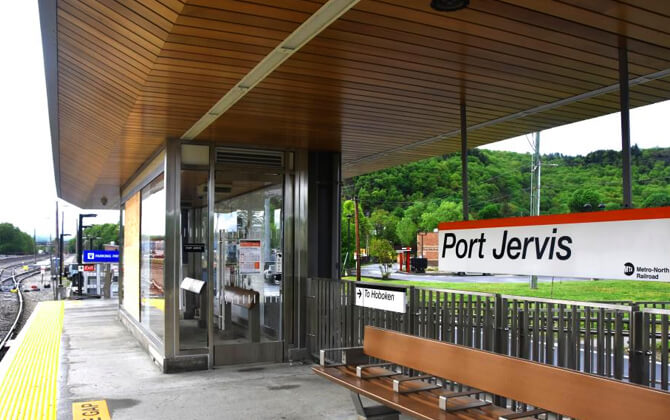
Port Jervis station is accessible, with a ramp, tactile warning strips, audiovisual passenger information systems, and a high-level side platform. The station has a ticket machine on the platform, but no ticket office or ticket agents.
Bike racks or lockers are available at the station. Parking is available, with the draft material listing both 92 spaces and another station reference listing 110 total spaces. Parking details vary by station, so check current station parking rules, permit requirements, parking charges, and parking charges per day before you drive.
Basic station amenities include a shelter, posted schedule information, and ticket vending access.
Rules and Passenger Etiquette
Passengers should follow ticket, transfer, bike, smoking, and onboard conduct rules. Peak tickets are required during the weekday peak windows for eligible travel to or from Hoboken, Secaucus, Newark, and Penn Station-NY. Off-peak round-trip tickets are valid on PM peak trains to stations west of Suffern.
Quiet Commute riders are asked to silence audio devices, avoid phone calls, speak softly, and keep headphone volume low. Quiet cars are available on specified cars of trains to and from New York and Hoboken, on a first-come, first-served basis.
Bicycles are allowed under NJ Transit policy but are restricted on certain peak trains, trains marked with the NO BIKE symbol, some holidays, and the connecting train between Penn Station-NY and Secaucus. Collapsible bikes are allowed on all trains. Standard bikes must stay clear of aisles and doors.
Smoking and vaping are prohibited on trains, stations, terminals, platforms, ticketing areas, waiting areas, boarding areas, elevators, and staircases. Keeping the train clean, calm, and safe makes the ride better for everyone.
Brief History
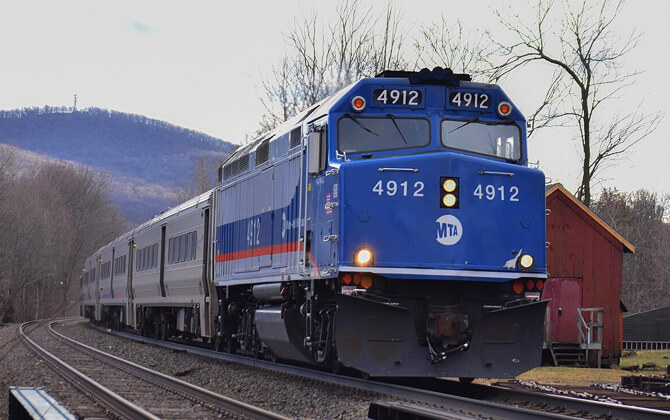
The Port Jervis Line traces its history to the New York and Erie Rail Road. Sections from Suffern to Harriman and from Otisville to Port Jervis opened as part of the Erie main line in 1848. Through service south of Suffern followed in 1853.
Between 1906 and 1909, the Harriman-to-Otisville segment was built as the Graham Line, a freight bypass that avoided the older Erie route through Monroe, Chester, Goshen, and Middletown. For many years, the line carried Erie Railroad long-distance trains west toward Binghamton, Buffalo, and Chicago. The last train west of Port Jervis ran on November 27, 1966.
Public subsidies later supported passenger service. The Metropolitan Transportation Authority agreed to subsidize Erie Lackawanna service in 1973, with the subsidy beginning in 1974. On January 1, 1983, Metro-North took over commuter operations in New York, while New Jersey Transit Rail Operations assumed service in New Jersey.
After the Conrail split in 1999, the line came under Norfolk Southern control. Metro-North leased the entire line from Norfolk Southern in 2003. In August 2011, service north of Suffern was suspended after Hurricane Irene caused severe damage.
Future Improvements
Future improvements on the Port Jervis Line focus on reliability, safety, capacity, and customer experience. Past and ongoing work has included track upgrades, signal projects, station improvements, and structure repairs.
Cab signaling across the entire line was completed in April 2020, supporting Positive Train Control and safer operations. Capacity plans have included passing sidings, a midpoint yard, and additional track work to help trains meet and pass on the mostly single-track route.
Metro-North has identified a possible midpoint yard site at Campbell Hall, along with proposed passing sidings near Tuxedo, Salisbury Mills, and Middletown. These projects could support better frequency, stronger peak service, improved off-peak options, and more reverse-peak flexibility.
Other priorities include repairs to the Moodna and Woodbury Viaducts, rehabilitation of bridges and culverts, station enhancements, diesel fleet work, and continued modernization. Port Jervis station upgrades added accessible features, a high-level platform, a ramp, a redesigned canopy, new passenger amenities, and artwork inspired by local history.
Nearby Attractions and Destinations
The Port Jervis Line is useful for commuters, but it also works well for day trips. The ride includes Hackensack River views after Secaucus, wooded scenery around Tuxedo and Harriman, the Moodna Viaduct near Salisbury Mills, the Otisville Tunnel, and the Delaware River near Port Jervis.
| Station | Details |
|---|---|
| Salisbury Mills-Cornwall | Best for Storm King Art Center access and views near the Moodna Viaduct |
| Port Jervis | Downtown shops, dining, rail history, river views, and the Tri-States Monument area |
| Harriman | Access to Woodbury Commons and nearby hiking options |
| Tuxedo | Good starting point for trails and scenic terrain |
Some riders also use the line for access to the Delaware Water Gap National Recreation Area and the Upper Delaware Scenic and Recreational River region.
Port Jervis and the Delaware River Area
Port Jervis is the western terminus of the line, located in Orange County near the Delaware River. The station is a short walk from the river, and the city sits near the meeting of the Delaware and Neversink rivers.
The area offers access to river scenery, outdoor recreation, and nearby border-town destinations. Matamoras, Pennsylvania is across the river via the Mid-Delaware Bridge, and the Tri-States Monument marks the meeting point of New York, New Jersey, and Pennsylvania.
Harriman, Tuxedo, and Orange County Destinations
Harriman is the busiest station on the line and is useful for Woodbury Commons and nearby outdoor areas. Tuxedo is notable for its original 1883 passenger station building and is a good access point for nearby trails.
Other Orange County stops include Salisbury Mills-Cornwall, Campbell Hall, Middletown/Town of Wallkill, and Otisville. The former line from Harriman to Middletown is now the Orange County Heritage Trail, adding another option for riders interested in local history and outdoor travel.
Scenic Highlights Along the Route
The Port Jervis Line is one of the more scenic commuter rail rides in the New York metropolitan area. Heading toward Port Jervis, the right side of the train usually has the better views; returning to Hoboken, the left side is often best.
- Hackensack River views after Secaucus
- Glimpses of the Manhattan skyline
- Harriman State Park and wooded hills
- Small waterfalls and rapids near Tuxedo
- Moodna Viaduct above the valley
- Otisville Tunnel
- Delaware River and Pennsylvania views near Port Jervis

FAQ
These quick answers cover the most common Port Jervis Line questions about the system, route, fare rules, stations, schedule, and whether the line is practical for visitors.
Is the Port Jervis Line Metro-North or NJ Transit?
It is both in practice. The Port Jervis Line is part of Metro-North Railroad’s West of Hudson service, but NJ Transit Rail Operations runs the trains under contract to Metro-North Railroad.
Does the Port Jervis Line go directly to Penn Station?
No. Port Jervis Line trains do not go directly to Penn Station-NY. Transfer at Secaucus Junction for the easiest connection to Penn Station-NY.
Do all trains stop at every station?
No. Weekday rush-hour trains may run express and skip many stops. Weekend trains usually run local and make all stops on the assigned Main Line or Bergen County Line routing.
Which app should I use for tickets and schedules?
Use the NJ Transit app or MyTix for tickets, prices, and train schedule information. For Metro-North connection updates, Metro-North and MTA travel tools can also be useful. For PATH weekend timings, check current PATH information before traveling.
Are bicycles allowed on the Port Jervis Line?
Yes, bicycles are allowed under NJ Transit bike rules. Collapsible bikes are permitted on all trains. Standard bikes are restricted on certain peak trains, some holidays, and trains marked with the NO BIKE symbol.
Is there parking at Port Jervis Line stations?
Yes. Parking is available at several stations, including Port Jervis, though space counts, permits, overnight rules, and parking charges vary by station. Check the station parking details before you travel.
Is the Port Jervis Line good for tourists?
Yes, especially for scenic rail travel, small-town visits, and outdoor trips. The line offers views of Harriman State Park, the Moodna Viaduct, the Otisville Tunnel, and the Delaware River, but frequency is limited, so plan around the timetable carefully.