The Paoli/Thorndale Line, often called the Main Line, is a SEPTA Regional Rail commuter route connecting Center City Philadelphia with Montgomery County, Delaware County, and Thorndale in Chester County. It runs on the eastern leg of Amtrak’s Philadelphia–Harrisburg Main Line, part of the Keystone Corridor, and is one of the busiest routes in the SEPTA system. The line serves local transport needs for daily commuters, students, airport-bound travelers making a transfer, and visitors exploring the western suburbs.
| Key | Information |
|---|---|
| Service type | Commuter rail |
| System | SEPTA Regional Rail |
| Route termini | Temple University and Thorndale |
| Stops | 26 |
| Line used | Philadelphia–Harrisburg Main Line |
| Main corridor | Keystone Corridor, shared with Amtrak services |
| Service style | Local trains, selected express patterns, and through-running to other SEPTA lines depending on the day |
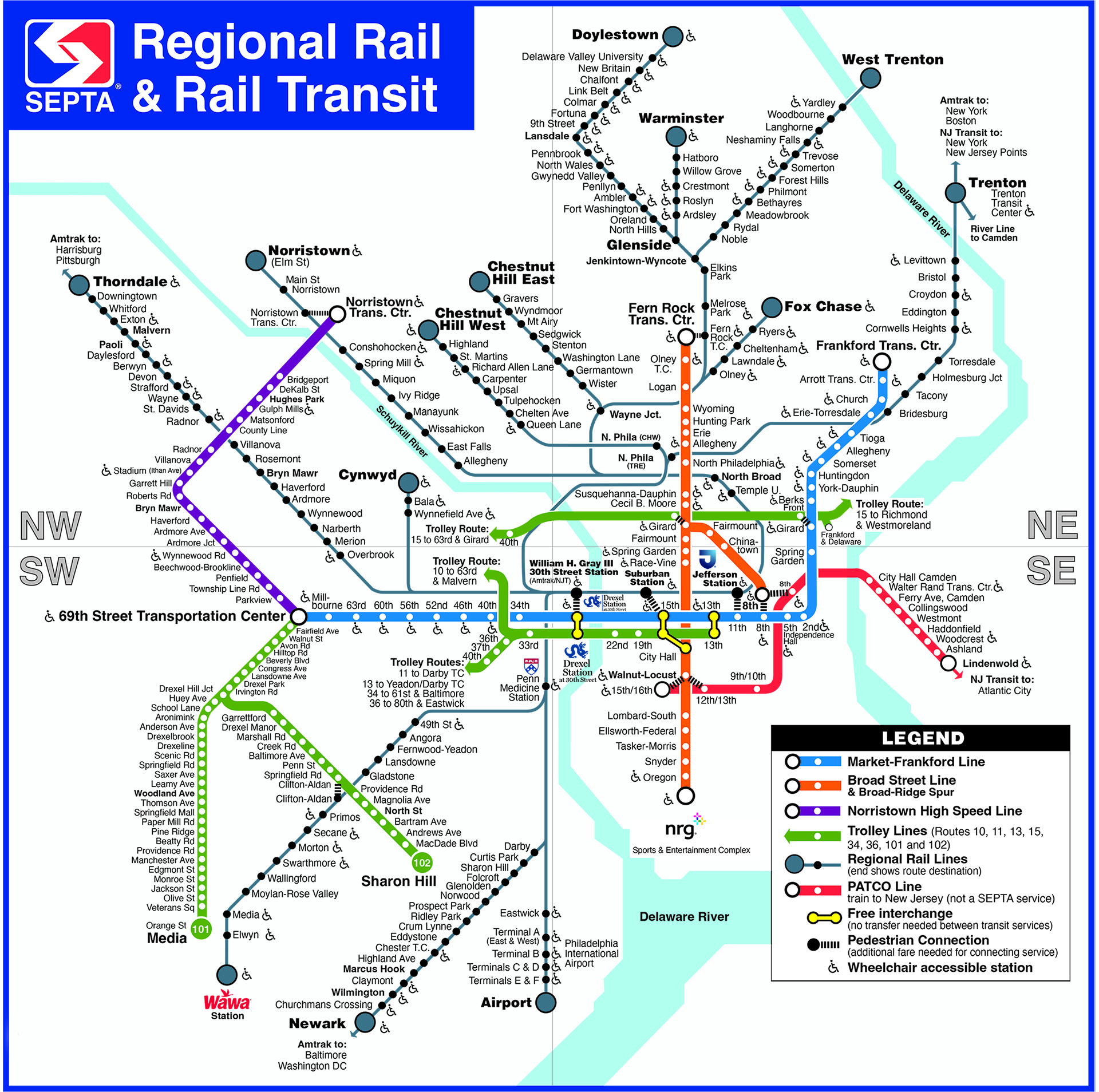
Paoli Thorndale Line Map
The Paoli Thorndale Line map shows all available stops. Click on the map to enlarge it or download the Paoli Thorndale Line map in PDF format.
Stations and Fare Zones
The Paoli/Thorndale Line stations list runs from Center City Philadelphia west through the Main Line suburbs to Thorndale. West of the Center City Commuter Connection, stations are shown in fare zones 2, 3, and 4, with Zone C listed for the former 52nd Street station. Use the stations map and current timetable when planning a trip, because some historical stops no longer have SEPTA service.
Several stations connect with SEPTA bus routes, while Ardmore, Paoli, Exton, Downingtown, and Coatesville are also listed with Amtrak service. A separate Amtrak ticket is required for Amtrak trains.
| Station | Details |
|---|---|
| 52nd Street | Zone C; closed August 23, 1980 |
| Overbrook | Zone 2; SEPTA City Bus routes 63 and 65 |
| Merion | Zone 2 |
| Narberth | Zone 2; SEPTA City Bus route 44 |
| Wynnewood | Zone 2; SEPTA Suburban Bus route 105 |
| Ardmore | Zone 2; Amtrak Keystone Service; SEPTA City Bus route 44; SEPTA Suburban Bus routes 103, 105, and 106 |
| Haverford | Zone 2; SEPTA Suburban Bus routes 105 and 106 |
| Bryn Mawr | Zone 3; SEPTA Suburban Bus routes 105 and 106 |
| Rosemont | Zone 3; SEPTA Suburban Bus routes 105 and 106 |
| Villanova | Zone 3; SEPTA Suburban Bus route 106 |
| Radnor | Zone 3; SEPTA Suburban Bus route 106 |
| St. Davids | Zone 3 |
| Wayne | Zone 3; SEPTA Suburban Bus route 106 |
| Strafford | Zone 3 |
| Devon | Zone 3; SEPTA Suburban Bus route 106 |
| Berwyn | Zone 3; SEPTA Suburban Bus route 106 |
| Daylesford | Zone 3; SEPTA Suburban Bus route 106 |
| Paoli | Zone 4; Amtrak Keystone Service and Pennsylvanian; SEPTA Suburban Bus routes 92, 106, 204, and 206 |
| Malvern | Zone 4; SEPTA Suburban Bus route 92 |
| Exton | Zone 4; Amtrak Keystone Service and Pennsylvanian; SEPTA Suburban Bus route 135 |
| Whitford | Zone 4 |
| Downingtown | Zone 4; Amtrak Keystone Service; SEPTA Suburban Bus route 135 |
| Thorndale | Zone 4; SEPTA Suburban Bus route 135 |
| Coatesville | Zone 4; Amtrak Keystone Service; SEPTA service ended November 10, 1996 |
| Parkesburg | Zone 4; Amtrak Keystone Service; SEPTA service ended November 10, 1996 |
Fare treatment depends on the zone traveled. Evening and weekend fares apply on weekdays after 7:00 PM and all day on Saturdays and Sundays for trips to, from, or via Gray 30th Street, Suburban, and Jefferson Stations.
Center City Stations
The Paoli/Thorndale Line enters Philadelphia through the Center City Commuter Connection. These stops are the main Center City access points for city transport, SEPTA Metro, bus routes, other Regional Rail lines, and Amtrak at 30th Street.
| Station | Details |
|---|---|
| Gray 30th Street Station | Major rail hub with Amtrak, NJ Transit Atlantic City Rail Line, SEPTA Regional Rail, Metro, and bus connections |
| Suburban Station | Central Philadelphia station with connections to SEPTA Metro, bus routes, and other Regional Rail lines |
| Jefferson Station | Center City station with SEPTA Metro, bus, and Regional Rail connections |
| Temple University | Common eastern terminus or through-running point for many Paoli/Thorndale Line trains |
Most trains either end at Temple University or continue through Center City to other SEPTA lines, depending on the day and schedule. If Paoli/Thorndale Line service is unavailable, SEPTA recommends using Metro and bus connections where possible.
Main Line and Western Suburban Stations
West of Center City, the route follows the historic Main Line through suburban towns and college-oriented stops. Important western stations include Paoli, Malvern, Exton, Downingtown, and Thorndale. Paoli is a major transfer point with Amtrak Keystone Service and Pennsylvanian service, while Thorndale is the western SEPTA terminus.
The former Paoli turn-around arrangement now uses Malvern as the last stop on some trains, with Frazer serving as the turn-around location. The broader electrified corridor between Harrisburg Transportation Center and 30th Street Station is about 167 kilometers (104 miles) long.
| Station | Details |
|---|---|
| Paoli | Major Zone 4 stop with Amtrak and SEPTA bus connections |
| Malvern | Zone 4 stop and last stop for some Paoli turn-around trains |
| Exton | Zone 4 stop with Amtrak and SEPTA Bus route 135 |
| Downingtown | Zone 4 stop with Amtrak Keystone Service and SEPTA Bus route 135 |
| Thorndale | Western terminus of SEPTA Paoli/Thorndale Line service |
Fares, Tickets, and SEPTA Key
The fare on the Paoli/Thorndale Line depends on your station pair, travel zone, and payment method. SEPTA payment options include cash, SEPTA Key Card, Travel Wallet, contactless payment, Weekly or Monthly passes, and Trial Pass products. For the current price, ticket price, pass options, and any fare calculator information, check SEPTA’s current fare tools before you travel.
Riders using a SEPTA Key card or contactless credit or debit card can receive up to two free transfers when eligible. KeyTix users can receive one free transfer. Transfers must be made within 2 hours of the first tap, and the same card or device must be used throughout the trip.
Children under age 12 ride free with a fare-paying adult. Seniors age 65 and older ride free with a valid SEPTA Senior Fare Card on Regional Rail when both stations are in Pennsylvania; travel to or from New Jersey or Delaware is charged at 50% of the weekday fare for seniors with a valid Senior Fare Card.
SEPTA Key, Contactless Payment, Quick Trips, and Passes
The SEPTA Key card is a reloadable contactless card that can hold Travel Wallet funds and passes. It can be purchased at fare kiosks, select retail locations, and online. The card costs $4.95 (US$4.95), and SEPTA refunds that cost to your Travel Wallet if you register the card within 30 days of purchase. The refund is limited to 2 cards per account.
Contactless payment is accepted with a credit or debit card, Apple Pay, Google Pay, or Samsung Pay on Bus, Metro, and Regional Rail. It is not available for travel to or from New Jersey. Use the same card or device for the whole trip, and keep cards separate to avoid card clash.
SEPTA Key cards can be loaded with Daily, Weekly, or Monthly Passes, along with Travel Wallet funds. Weekly Passes include up to 56 trips, while Monthly Passes include up to 240 trips. Quick Trips are available for a single one-way ride on select services, but free transfers are not available with Quick Trips.
Tap On and Tap Off Rules
On SEPTA Regional Rail, tap on before boarding and tap off after exiting so the system can calculate the correct fare. If you do not tap out, you may be charged the maximum fare from your departure station or billed as if you traveled to the final stop.
| Station | Details |
|---|---|
| Center City stations | Tap in and out at turnstiles at Temple University, Jefferson, Suburban, 30th Street, and Penn Medicine |
| Stations outside Center City | Tap at platform validator towers before boarding and after exiting |
| On-board conductor check | A handheld conductor check does not replace platform tapping or Center City turnstile use |
Schedule, Frequency, and Travel Times
The Paoli/Thorndale Line schedule changes by day, direction, and train pattern. Some trains make every local stop, while others run express over part of the route before continuing locally. For schedule today, timings today, opening times, closing time, last train, and real-time departures, check the current SEPTA timetable or Transit app before riding.
| Service detail | Timings |
|---|---|
| Example trip shown in source materials | Suburban Station 6:31 AM to Malvern 7:28 AM |
| Example running time | 57 minutes |
| Weekday operating hours | Regular weekday service shown from 4:37 AM to 8:07 PM |
| Weekday frequency | 12 to 81 minutes, depending on the period |
| Saturday and Sunday working hours | Service shown from 5:38 AM to 9:38 PM |
| Weekend frequency | About 120 minutes in the listed materials |
| Sunday western service | Service reaches Malvern only, not Exton, Whitford, Downingtown, or Thorndale |
| Holiday service | Listed separately in the timetable for major holidays |
Because this is a long Regional Rail route, the practical train schedule can feel very different depending on where you board. A short Center City trip may have more options, while riders traveling west of Malvern should pay closer attention to the route timetable and last train.
Inbound and Outbound Trains
Inbound trains travel toward Center City Philadelphia, while outbound trains head west toward Main Line and Chester County stations. The route serves Thorndale, Downingtown, Whitford, Exton, Malvern, Paoli, Daylesford, Berwyn, Devon, Strafford, Wayne, St. Davids, Radnor, Villanova, Rosemont, Bryn Mawr, Haverford, Ardmore, Wynnewood, Narberth, Merion, Overbrook, Gray 30th Street, Suburban Station, Jefferson Station, and Temple University.
Suburban Station is a key Center City departure point, but riders should always check the current train schedule. Some trips operate as locals; others use express patterns that skip selected stations before continuing to the outer suburbs.
Weekday, Saturday, Sunday, and Holiday Service
The timetable separates weekday, Saturday, Sunday, and major holiday service. Weekday trains generally provide the most useful frequency for riders heading to farther-west stations, while weekend service is more limited.
On Sundays, service continues only to Malvern and does not reach Exton, Whitford, Downingtown, or Thorndale. Paoli turn-around trains operate alternately on Saturdays and exclusively on Sundays, using Malvern as the last stop and Frazer as the turn-around location.
Local and Express Service
Local trains make the regular station stops between Center City and the western suburbs. Express trains may use several service patterns, so the route plan matters: do not assume every train stops at every station.
- Local from 30th Street only to Bryn Mawr, then returning to 30th Street.
- Express from 30th Street to Bryn Mawr, then local to Malvern.
- Express from 30th Street to Bryn Mawr, then local to Thorndale.
- Express from 30th Street to Wayne, then local to Thorndale.
The Great Valley Flyer also operated as an express between 30th Street and Paoli before continuing to Thorndale. During the COVID-19 service period, trains were curtailed and all trains ran local. Express service from 30th Street to Bryn Mawr and Wayne later resumed, while express service between 30th Street and Paoli was not restored in the referenced schedule.
Connections and Transfers
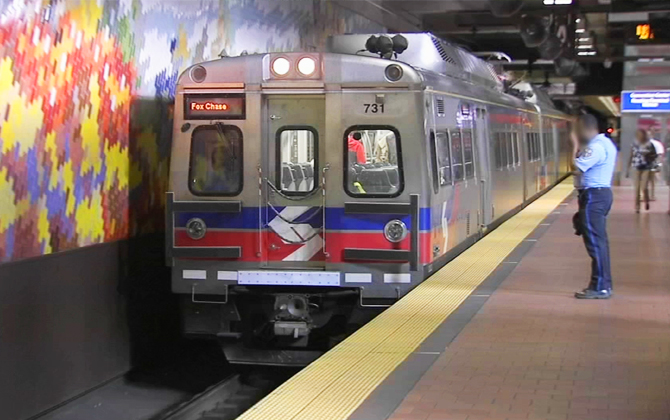
The Paoli/Thorndale Line connects with SEPTA’s core public transport network at 30th Street Station, Suburban Station, Jefferson Station, and Temple University. At 30th Street Station, riders can transfer to Amtrak and the NJ Transit Atlantic City Rail Line. Suburban and Jefferson also offer useful SEPTA Metro and bus connections.
Several suburban stations connect with local transport by bus, including Overbrook, Ardmore, Wayne, Paoli, Exton, Downingtown, and Thorndale. If train service is unavailable, SEPTA recommends using Metro and bus connections where they exist.
SEPTA Metro, Bus, and Regional Rail Connections
Alternative transport options vary by station. Some routes can help during disruptions, but not every station has a direct substitute in both directions.
- Downingtown Station: Bus Route 135 eastbound at Lincoln Hwy & Bailey Rd to Downingtown Station, or Amtrak Keystone Service to Gray 30th Street Station.
- Thorndale Station: Bus Route 135 westbound at Lincoln Hwy & Stuart Ave to Thorndale Station, or Amtrak Keystone Service to Downingtown Station.
- Exton Station: Amtrak Keystone Service to Gray 30th Street Station, or westbound travel to Drexel Station at 30th Street with a connection to Exton Station.
- Malvern Station: Bus Route 92 eastbound at King St & Warren Ave to Norristown Transit Center, or westbound to Malvern Station.
- Paoli Station: Bus Route 106 eastbound at Lancaster Ave & Darby Rd to 69th Street Transit Center, or westbound to Paoli Station.
- Wynnewood Station: Bus Route 92 eastbound at King St & Warren Ave to Norristown Transit Center.
- Ardmore Station: Bus Route 106 eastbound at Lancaster Ave & Darby Rd to 69th Street Transit Center, or Amtrak Keystone Service to Gray 30th Street Station.
For live arrivals, service alerts, and route details, use SEPTA’s Trip Planner or app. Customer Service is available by live chat or by phone at 215-580-7800.
Amtrak Connections
The Paoli/Thorndale Line shares the Philadelphia–Harrisburg Main Line with Amtrak services, including Keystone Service and the Pennsylvanian. Amtrak can be useful for some trips along the corridor, but it requires a separate ticket from SEPTA.
| Station | Details |
|---|---|
| Ardmore | Amtrak Keystone Service |
| Paoli | Amtrak Keystone Service and Pennsylvanian |
| Exton | Amtrak Keystone Service and Pennsylvanian |
| Downingtown | Amtrak Keystone Service |
| Coatesville | Amtrak Keystone Service; SEPTA service no longer operates there |
Connections to Philadelphia International Airport
The Paoli/Thorndale Line does not go directly to Philadelphia International Airport. For airport travel, connect in Center City to SEPTA’s Airport Line, which serves the airport from stations such as 30th Street and Suburban.
Passengers can transfer at Gray 30th Street Station, Suburban Station, or Jefferson Station. These stations also connect with the Market-Frankford Line, Broad Street Line, bus routes, and other Regional Rail services, making them the practical transfer points for airport transportation in Philadelphia.
Parking, Bike Access, and Station Facilities
Paoli station is ADA accessible, though elevator outages may temporarily limit access to the outbound platform or center platform. Check active station notices before traveling if step-free access is essential.
Station parking at Paoli includes 486 SEPTA spaces and no non-SEPTA spaces. Overnight parking is available. Surface lot parking costs $2.00 (US$2.00) every day from 5:00 AM to 2:00 AM, so the parking charges per day are straightforward for most riders. Bike parking is also available.
The Paoli sales office is open Monday through Friday from 5:00 AM to 6:45 PM and closed on weekends. The station is in Regional Rail Fare Zone 4 and connects with Bus 204, Bus 206, and PAO service.
How to Ride the Paoli/Thorndale Line
Start by checking the route timetable for your day of travel. Confirm the station, direction, departure time, whether the train is local or express, and the closing time or last train if you are returning late. The line is long, and westbound service beyond Malvern can be limited on certain days.
- Choose your station and destination using the stations list, schedule, or live app information.
- Check whether your train makes your stop, especially if it is an express trip.
- Pay with a SEPTA Key card, pass, contactless payment, cash, or another valid ticket option.
- Tap on before boarding and tap off after exiting when using SEPTA Key or contactless payment.
- Listen for announcements and watch station signs, especially in Center City.
Evening and weekend fares apply to trips to, from, or via Gray 30th Street, Suburban, and Jefferson Stations on weekdays after 7:00 PM and all day on Saturdays and Sundays. If you are building a route plan with multiple stops, leave extra time for lower frequency outside peak periods.
Tips for Tourists and Local Riders
Tourists often use this line for Center City, Main Line towns, college stops, breweries, gardens, and historic sites. Local riders use it heavily for predictable peak-hour travel into Center City. Either way, plan around the actual train schedule rather than assuming a subway-style frequency.
- For a day pass or multi-stop trip, compare SEPTA pass options before buying individual tickets.
- For westbound weekend trips, check whether your destination is served that day; Sunday service ends at Malvern.
- If you rely on station parking, check lot availability, station parking rules, and parking charges before making it part of your routine.
- Bring a phone charger or battery if you plan to check live updates throughout the day.
- For suburb-to-suburb trips, compare rail with bus or car access, since train timings may not always line up.
Service Alerts, Delays, and Alternative Routes
If Paoli/Thorndale Line service is delayed, suspended, or unavailable, use SEPTA’s app or Trip Planner for service alerts, schedule today, and alternative route details. SEPTA also recommends Metro and bus connections where available.
Amtrak Keystone Service stops at Ardmore, Paoli, Exton, and Downingtown, but it requires a separate ticket and fare. Bus Route 135 may help for Downingtown and Thorndale, while routes 92 and 106 are useful at selected Main Line stations. Some disruptions may have no direct substitute in one or both directions, so check before you leave.
Customer Service is available by live chat or by phone at 215-580-7800.
Rules, Safety, and Passenger Etiquette
The Paoli/Thorndale Line follows SEPTA’s standard rail rules. A few simple habits keep the trip safe, orderly, and more comfortable for everyone.
- Stay behind the yellow line while waiting on the platform.
- Mind the gap when boarding or leaving the train.
- Use designated crossings only, and never cross the tracks elsewhere.
- Pay attention to train announcements from operators and station personnel.
- Keep personal belongings with you at all times.
- Have a valid ticket, pass, card, or contactless payment method ready before boarding.
- Expect crowding during weekday morning and evening rush hours.
If an emergency occurs, remain calm and follow SEPTA staff instructions. Report suspicious activity or unsafe conditions to a SEPTA employee or the authorities. SEPTA Transit Police patrol stations and trains and can assist with security-related incidents.
Bikes are allowed on the Paoli/Thorndale Line except during weekday peak hours from 6:00 AM to 9:00 AM and from 4:00 PM to 7:00 PM.
Brief History
The Paoli/Thorndale Line has deep rail history. Its corridor began as part of Pennsylvania’s Main Line of Public Works, built between 1826 and 1834 to connect Philadelphia with Harrisburg, Pittsburgh, and points west. It later became part of the Pennsylvania Railroad main line and is now the eastern leg of Amtrak’s Keystone Corridor.
Electrified commuter service between Philadelphia and Paoli began on September 11, 1915. It was the Pennsylvania Railroad’s first electrified local commuter line and an early use of AC overhead catenary power. PRR position light signals were installed between Overbrook and Bryn Mawr, and original catenary poles remain in service in Lower Merion.
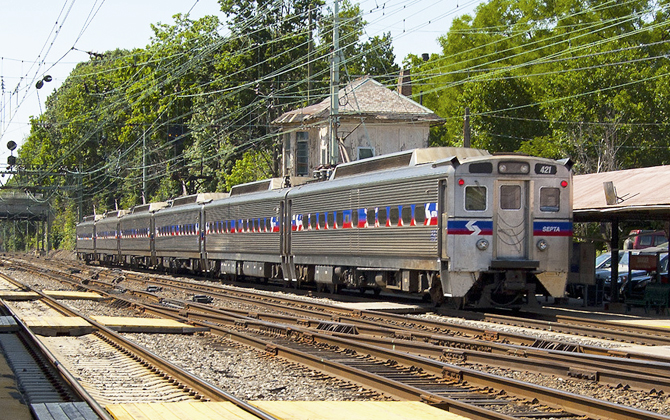
From 1915 through the 1960s, the line used MP-54 electric multiple-unit cars, later replaced by Silverliner equipment. SEPTA also used push-pull coaches hauled by AEM-7 electric locomotives, replaced by ACS-64 locomotives in 2018. Corridor upgrades in 2007 added concrete ties, continuous welded rail, overhead lines, and substations. Positive train control was activated on May 1, 2017.
Between 1984 and 2010, the route was designated R5 Paoli and R5 Thorndale. Before the late 1980s, commuter trains ran from Suburban Station only as far west as Paoli, which is why many riders called it the Paoli Local. Service later extended to Parkesburg, was cut back to Downingtown in 1996, and then extended to the new Thorndale station on November 22, 1999.
Popular Destinations Along the Line
The Paoli/Thorndale Line links Center City Philadelphia with Main Line towns, college-area stations, neighborhood business districts, breweries, gardens, and historic sites. It is Regional Rail, not a tramway or trams route, so check train timings before planning several stops in one day.
Center City Philadelphia
In Center City, the line serves Gray 30th Street Station, Suburban Station, Jefferson Station, and Temple University. These stops connect riders to downtown Philadelphia, other Regional Rail lines, SEPTA Metro, buses, Amtrak, and the wider city transport network.
| Station | Details |
|---|---|
| Gray 30th Street Station | Major rail hub with Amtrak and regional connections |
| Suburban Station | Central business district access and SEPTA connections |
| Jefferson Station | Center City access with Metro, bus, and Regional Rail connections |
| Temple University | University-area station and common through-running point |
Main Line Towns and College Stops
The route is widely known as the Main Line because it serves many communities along the Philadelphia–Harrisburg corridor. Well-known stops include Ardmore, Bryn Mawr, Haverford, Villanova, Radnor, Wayne, Paoli, Malvern, Downingtown, and Thorndale.
Temple University is directly on the line, while Bryn Mawr, Villanova, Ardmore, Haverford, and Radnor are useful for college-area travel and nearby neighborhoods. Ardmore, Wayne, Berwyn, Paoli, and Downingtown also give riders access to walkable local dining and shopping areas.
Attractions Near Selected Stations
Several attractions and food-and-drink stops are within reach of the Paoli/Thorndale Line. Bridgewater’s Pub is inside 30th Street Station. Ardmore is close to Tired Hands Fermentaria, Bryn Mawr gives access to Tin Lizard Brewing Co., Wayne is near Teresa’s Next Door, and Berwyn is close to La Cabra Brewing. Farther west, Exton has World of Beer and Stolen Sun Craft Brewing & Roasting, while Downingtown is served by Victory Brewpub and Station Taproom.
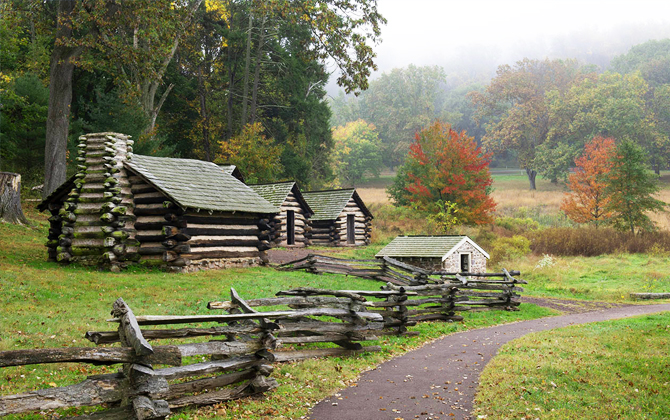
For gardens and outdoor stops, riders can reach Chanticleer Garden in Wayne, Jenkins Arboretum in Devon, the Barnes Foundation Arboretum in Merion, and Stoneleigh: A Natural Garden in Villanova. Other regional destinations listed near the line include Paoli Battlefield Park in Malvern, the John James Audubon Center Museum in Montgomery County, and Valley Forge National Historical Park.