The Norristown High Speed Line is a SEPTA public transport route between 69th Street Transit Center in Upper Darby and Norristown Transit Center in Norristown, Pennsylvania. Also known over time as the P&W, Route 100, R100, NHSL, and Norristown Trolley, it is now being rebranded as the M within the SEPTA Metro system. The line opened in 1907, runs entirely on its own right-of-way, covers 13.4 miles (21.6 km), serves 22 stations, and takes about 30 minutes end to end on local service.
| Key | Information |
|---|---|
| Route | 69th Street Transit Center to Norristown Transit Center |
| System | SEPTA Metro, operated by SEPTA’s Suburban Transit Division |
| Length | 13.4 miles (21.6 km) |
| Stations | 22 stations on the full local route |
| Running time | About 30 minutes on local trains between the terminals |
| Operating hours | Service is described as running daily from about 5:00 am to 2:00 am, with published timings varying by day and trip |
| Frequency | Every 30 minutes or less on weekdays between 6:00 am and 9:00 pm; less frequent at other times |
| Fare | Draft fare materials list a single ride at $2.90 (US$2.90) as of September 2025, with older references showing $2.50 (US$2.50) |
| Route identity | Formerly Route 100 and NHSL; now transitioning to the SEPTA Metro M name |
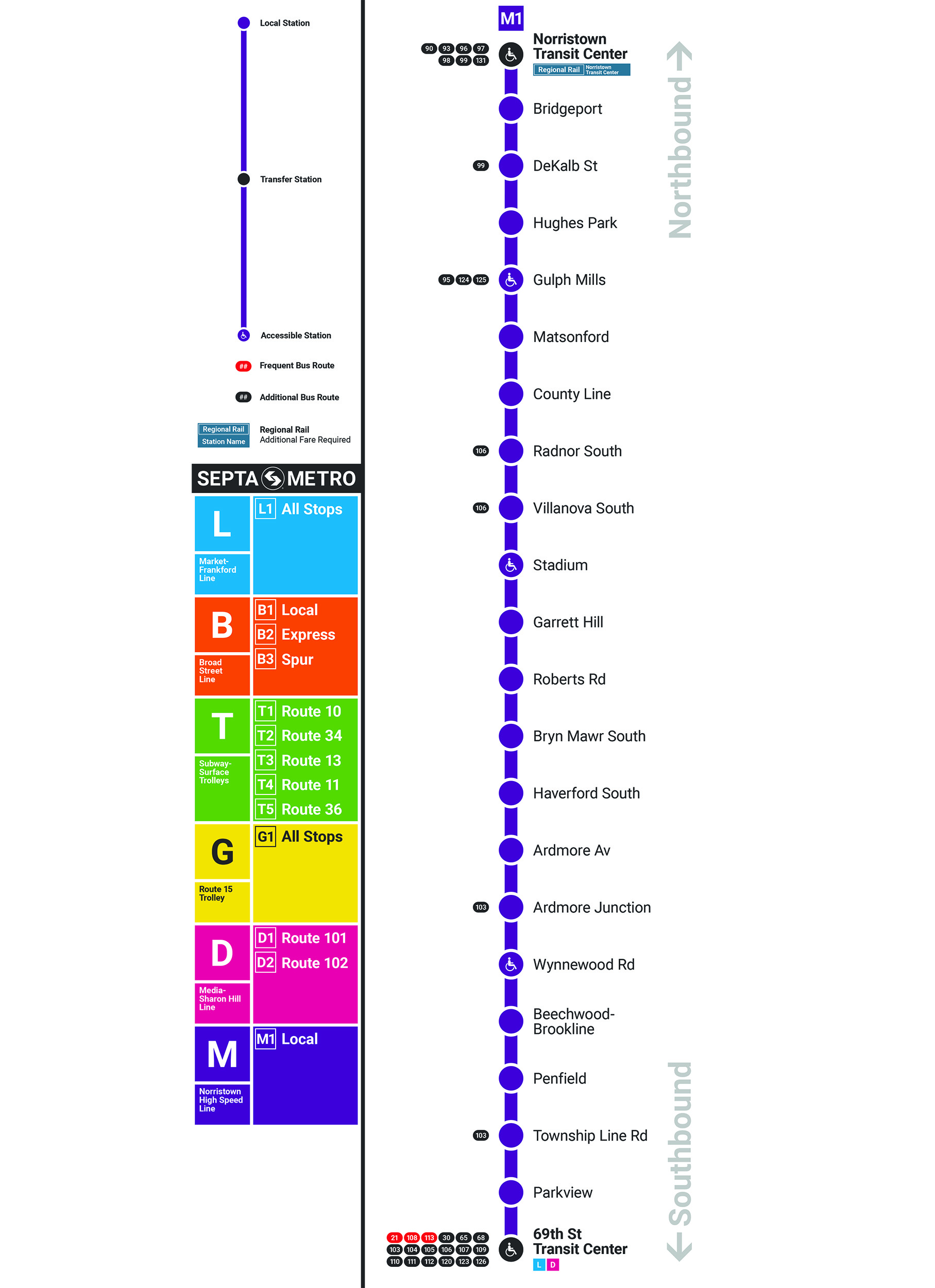
Norristown High Speed Line Map
The Norristown High Speed Line map of Tokyo Metro showing different stops. Click on the map to enlarge it or download the Norristown High Speed Line map in PDF format.
Stations and Stops
The Norristown High Speed Line route runs northwest from 69th Street Transit Center through suburban Delaware and Montgomery County communities to Norristown Transit Center. Local trains stop at all 22 stations, while peak-period express and limited patterns have used fewer stops.
For trip planning, use the stations list together with a stations map so you can see where the line meets bus routes, Regional Rail, and other SEPTA Metro services.
Full Station List
The full stations list covers Upper Darby, Haverford, Radnor, Lower Merion, Upper Merion, Bridgeport, and Norristown. Distances are shown from 69th Street Transit Center in miles and kilometers.
| Station | Details |
|---|---|
| 69th Street Transit Center | Upper Darby; 0.0 miles (0.0 km). Connections include SEPTA Metro, SEPTA City Bus routes 21, 30, 65, 68, and SEPTA Suburban Bus routes 103, 104, 105, 106, 107, 108, 109, 110, 111, 112, 113, 120, 123, and 126. |
| Parkview | Upper Darby; 0.7 miles (1.1 km). |
| Township Line Road | Haverford; 1.4 miles (2.3 km). Connection to SEPTA Suburban Bus 103. |
| Penfield | Haverford; 1.9 miles (3.1 km). |
| Beechwood-Brookline | Haverford; 2.5 miles (4.0 km). |
| Wynnewood Road | Haverford; 3.1 miles (5.0 km). |
| Ardmore Junction | Haverford; 3.4 miles (5.5 km). Connection to SEPTA Suburban Bus 103. |
| Ardmore Avenue | Haverford; 3.9 miles (6.3 km). |
| Haverford South | Haverford; 4.5 miles (7.2 km). |
| Bryn Mawr South | Radnor; 5.4 miles (8.7 km). |
| Roberts Road | Radnor; 5.9 miles (9.5 km). |
| Garrett Hill | Radnor; 6.4 miles (10.3 km). |
| Stadium | Radnor; 6.8 miles (10.9 km). Useful for Villanova-area trips. |
| Villanova South | Radnor; 7.0 miles (11.3 km). Connection to SEPTA Suburban Bus 106. |
| Radnor South | Radnor; 7.9 miles (12.7 km). Connection to SEPTA Suburban Bus 106. |
| County Line | Lower Merion; 8.6 miles (13.8 km). |
| Matsonford | Lower Merion; 9.4 miles (15.1 km). |
| Gulph Mills | Upper Merion; 10.3 miles (16.6 km). Connections to SEPTA Suburban Bus routes 95, 124, and 125. |
| Hughes Park | Upper Merion; 11.0 miles (17.7 km). Some short-turn trips may end here. |
| DeKalb Street | Bridgeport; 12.3 miles (19.8 km). Connection to SEPTA Suburban Bus 99. |
| Bridgeport | Bridgeport; 12.8 miles (20.6 km). |
| Norristown Transit Center | Norristown; 13.4 miles (21.6 km). Connections include the Manayunk/Norristown Regional Rail Line and SEPTA Suburban Bus routes 90, 91, 93, 96, 97, 98, 99, and 131. |
Local trains stop at all 22 stations. Limited or express service, when used, follows a different stopping pattern.
Schedule, Frequency, and Travel Time
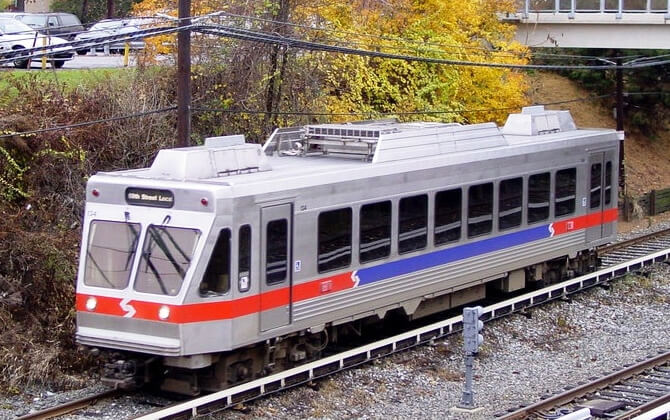
The M, formerly the Norristown High Speed Line, operates seven days a week. Its opening hours and closing time are usually described as about 5:00 am to 2:00 am, though the exact train schedule and route timetable depend on the day, direction, and service pattern.
| Service detail | Timings |
|---|---|
| General operating hours | Daily service is described as running from about 5:00 am to 2:00 am. |
| Weekday frequent-service period | Every 30 minutes or less between 6:00 am and 9:00 pm. |
| Weekday frequency | About 16 to 36 minutes, depending on time of day. |
| Weekend frequency | About 20 to 30 minutes, depending on time of day. |
| Local running time | About 30 minutes between 69th Street Transit Center and Norristown Transit Center. |
| Historic Norristown Express running time | About 22 minutes. |
| Historic Norristown Limited running time | About 26 minutes. |
Some trips do not run the full route. Local trains may operate only between 69th Street and Bryn Mawr, or between 69th Street and Hughes Park. If you are checking timings today, look at the current schedule today for your direction before heading to the station.
Weekday, Weekend, and Holiday Service
Draft schedule information lists regular opening times as 5:43 am to 11:08 pm on weekdays and 5:33 am to 10:33 pm on weekends, while broader service information describes the line as running from 5:00 am to 2:00 am. That is why checking the timetable for the exact trip matters, especially late at night when the last train may vary by direction.
| Service detail | Timings |
|---|---|
| Weekday service window in draft materials | 5:43 am to 11:08 pm |
| Weekend service window in draft materials | 5:33 am to 10:33 pm |
| General daily service span | About 5:00 am to 2:00 am |
| Weekday daytime frequency | Every 30 minutes or less between 6:00 am and 9:00 pm |
| Holiday service | May change, including on Labor Day |
At 69th Street Transit Center and Norristown Transit Center, fare collection may use turnstiles during daytime weekday hours. During late-night, early-morning, and weekend periods, riders may pay onboard. Intermediate stations use onboard payment at all times.
Fares, Tickets, and Payment Methods
Fare information in the draft materials varies by date. The most recent fare line lists a single ride at $2.90 (US$2.90) as of September 2025. Older references list $2.50 (US$2.50). For the actual ticket price before you ride, check the current fare information for your trip.
At 69th Street Transit Center and Norristown Transit Center, fares are collected at station turnstiles. At intermediate stations, riders pay onboard when entering the train. Earlier pay-as-you-exit rules toward 69th Street no longer apply.
Accepted payment methods have changed over time as SEPTA updated its fare system. Draft materials mention cash, contactless payment, and Travel Wallet funds on a SEPTA Key card, along with SEPTA passes and Quick Trip tickets in certain cases. If you are comparing the cost of a single ticket, a pass, or a day pass, use the current SEPTA fare tools or fare calculator before you travel.
SEPTA Key, Contactless Payment, and Quick Trip
SEPTA Key is a reloadable contactless chip card that can hold passes and Travel Wallet funds. A SEPTA Key card costs $4.95 (US$4.95), and draft materials state that the cost is refunded to Travel Wallet if the card is registered within 30 days of purchase.
Contactless payment is accepted across SEPTA buses, Metro, and Regional Rail. Riders can tap a credit or debit card, or use Apple Pay, Google Pay, or Samsung Pay. Contactless payment is not available for travel to or from New Jersey.
SEPTA Key cards can be loaded with Daily, Weekly, or Monthly passes, as well as Travel Wallet value. Riders can load or reload fare products at fare kiosks, through SEPTA Key account tools, or through the SEPTA app, and can check balances at fare kiosks.
A Quick Trip Ticket for Transit and Metro is available from fare kiosks for a single one-way ride on the Market-Frankford Line, Broad Street Line, trolleys, and the Norristown High Speed Line. Quick Trips are valid on the day of purchase until 2:00 am the following day, but free transfers are not available with Quick Trip.
At 69th Street and Norristown Transportation Centers, riders may enter with a SEPTA Key card loaded with a pass or Travel Wallet funds, a SEPTA Key Senior ID, a SEPTA Key Reduced Fare ID, a Quick Trip ticket, a legacy SEPTA pass with magnetic stripe, or a SEPTA Key Partner Pass. Riders paying with cash, tokens, or credit and debit cards may need to purchase a Quick Trip at a kiosk to pass through the turnstiles.
Connections with Other SEPTA Services
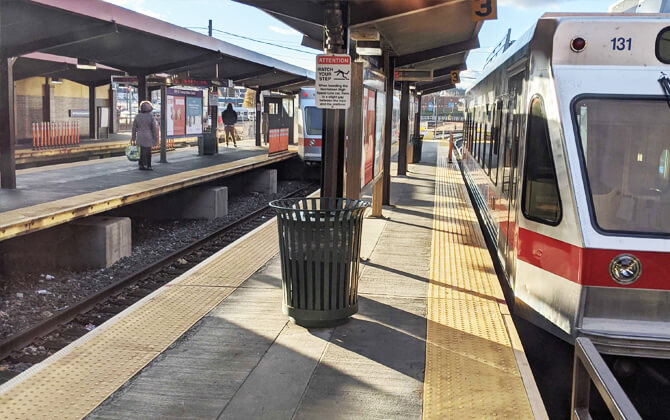
The Norristown High Speed Line is a useful link in regional transportation in Delaware and Montgomery counties. It connects SEPTA Metro, bus routes, Regional Rail, and local transport at key hubs, making it a practical city transport option for suburban trips.
At 69th Street Transit Center, riders can connect to the Market-Frankford Line, Media-Sharon Hill service, Route 101 and 102 trolleys, and many bus routes. At Norristown Transit Center, the line connects with Regional Rail and several suburban bus routes.
69th Street Transit Center Connections
69th Street Transit Center in Upper Darby is one of the biggest transfer points on the route. It connects the Norristown High Speed Line with the Market-Frankford Line, Route 101, Route 102, and multiple bus routes.
Nearby bus service includes Bus 103, 104, 105, 106, 107, Frequent Bus 108, Bus 109, 110, 111, 112, Frequent Bus 113, Bus 120, 123, 126, Frequent Bus 21, Bus 30, Bus 65, and Bus 68.
For riders moving between suburban bus service and SEPTA Metro, 69th Street is the main transfer point on the southern end of the line.
Norristown Transit Center Connections
Norristown Transit Center connects the high speed line with the Manayunk/Norristown Regional Rail Line and SEPTA Suburban Bus routes 90, 91, 93, 96, 97, 98, 99, and 131.
The Regional Rail connection provides service toward Center City Philadelphia via Conshohocken and Manayunk. It is also useful for riders continuing beyond the M route into other parts of Montgomery County.
Main Line and Gulph Mills Connections
The line runs near SEPTA’s Main Line corridor and crosses under it before continuing toward Montgomery Avenue. In the Main Line area, the two rail corridors are about 0.5 miles (0.8 km) apart.
Gulph Mills is an important bus connection point. The station connects with SEPTA Suburban Bus routes 124 and 125, which operate express service to Center City. Farther north, the route continues through Bridgeport and ends at Norristown Transit Center, where additional bus transfers are available.
Norristown High Speed Line vs. Norristown Regional Rail Line
The Norristown High Speed Line and the Norristown Regional Rail Line serve different travel needs. The NHSL is a transit route with frequent service and a lower fare in the draft materials, while Regional Rail offers a direct one-seat ride into Center City Philadelphia.
For many commuters, the tradeoff is simple. Regional Rail can be easier if you want to stay on one train into Center City. The NHSL usually requires a transfer at 69th Street to the Market-Frankford Line for Center City trips.
On the other hand, riders often value the NHSL for its frequency, reliability, and shorter waits. Because it runs on its own track and has frequent service during much of the day, missing one train may mean a shorter delay than missing a Regional Rail departure.
Parking can also affect the decision. Draft materials mention discounted parking at Norristown Transportation Center through a parking card available from the garage office.
Connections to Philadelphia International Airport
The Norristown High Speed Line does not go directly to Philadelphia International Airport. Riders can still reach the airport through SEPTA connections by bus, Metro, or Regional Rail.
One rail option is to travel between Airport Terminal C & D and Norristown – Elm Street via Suburban Station. Draft materials list this trip at about 1 hour 53 minutes.
A bus and subway option uses Bus 108 from Philadelphia Airport Terminals E & F to 69th Street Transit Center South Terminal, followed by service from 69th Street Transit Center to Norristown Transit Center. Draft materials list this trip at about 1 hour 30 minutes.
A bus-only trip is also described from Philadelphia Airport Terminals E & F to Norristown Transit Center via 69th Street Transit Center and Plaza at King of Prussia. That option is listed at about 2 hours 39 minutes.
The distance between Philadelphia International Airport Stations and Norristown is 40 km (24.9 miles). The road distance is 33.3 km (20.7 miles).
Via 69th Street Transit Center
For airport trips that use the NHSL, 69th Street Transit Center is the key transfer point. The terminal is in Upper Darby Township, just outside Philadelphia in Delaware County, and also serves the Market-Frankford Line, Media-Sharon Hill service, and many bus routes.
The NHSL boarding area uses station fare collection at the terminal, unlike intermediate stops where riders pay onboard. If your route plan includes Bus 108 from the airport, this is where you transfer to continue toward Norristown.
Via Regional Rail
The Norristown High Speed Line connects with Regional Rail at Norristown Transit Center. From there, riders can use the Manayunk/Norristown Line for trips through SEPTA’s rail network.
- Transfer point: Norristown Transit Center
- Regional Rail connection: Manayunk/Norristown Line
- Additional connections: SEPTA Suburban Bus routes at the same terminal
Parking and Station Access
Some Norristown High Speed Line stations offer commuter parking. At SEPTA parking facilities, draft materials list parking charges per day as $2 (US$2) for surface lots and $4 (US$4) for garages. Monthly permit parking is suspended until further notice.
Norristown Transit Center has 694 SEPTA parking spaces and 0 non-SEPTA spaces. Overnight parking is available, the station is ADA accessible, and bike parking is also offered.
Station parking payments can be made at kiosks, by credit or debit card, with coins, or through SEPTA Park and text-to-pay. To pay by text, send the Station ID to 727563. Riders should pull into a space rather than back in, then follow the posted instructions.
Parking availability varies by station and time of day. Lots may fill early on weekday mornings, and municipal or private parking near some stations may have different rules and rates.
Accessibility, Safety, and Passenger Rules
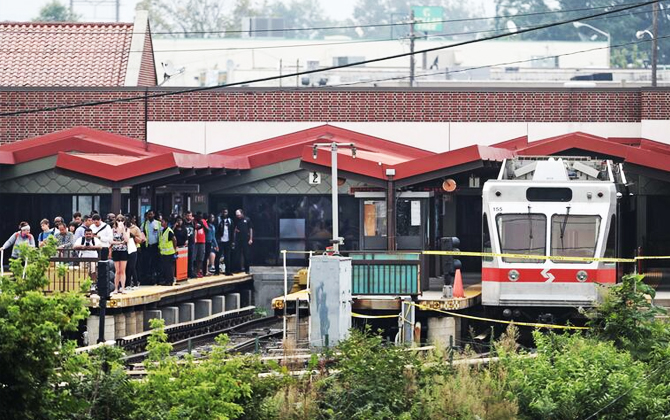
The Norristown High Speed Line serves 22 stations and operates from early morning until late night. Accessibility is available at key stations named in the draft materials, including 69th Street Terminal, Norristown Transportation Center, and Gulph Mills.
Norristown Transportation Center includes direct access to the NHSL, escalator and elevator access, and a fully enclosed waiting area. Gulph Mills is also noted as wheelchair accessible.
For a safe ride, use designated boarding areas, keep aisles and doors clear, and follow crew instructions. Draft materials note that the line’s maximum operating speed was reduced from 70 mph (113 km/h) to 55 mph (89 km/h) after a 2017 crash.
- Fares are pay-as-you-enter under current boarding rules described in the draft materials.
- At 69th Street Transit Center and Norristown Transit Center, fares are collected through turnstiles.
- At intermediate stations, riders pay onboard when entering the train.
- Folding personal vehicles are allowed when fully collapsed.
- Bicycles, scooters, and electric personal vehicles are allowed with restrictions.
- Gasoline-powered vehicles, mopeds, and motorcycles are not allowed.
- Up to two non-folding personal vehicles per car are allowed on the Norristown High Speed Line, in the rear vestibule, at all times.
How to Ride the Norristown High Speed Line
Start by checking the route, direction, and train schedule for your trip. Local service between 69th Street Transit Center and Norristown Transit Center usually takes about 30 minutes, but some trains short-turn at Bryn Mawr or Hughes Park.
At 69th Street and Norristown, use the turnstiles when station fare collection is operating. At intermediate stations, board the train and pay onboard. If your app asks for a path, choose the M or Norristown High Speed Line route and confirm the destination before boarding.
Because not every train necessarily follows the same stopping pattern, check whether your trip is local, limited, express, or a short-turn. A simple route plan saves confusion, especially if you are connecting to a bus or Regional Rail.
Tips for Riders
Know your boarding station before you arrive. Terminal stations use turnstiles, while intermediate stops use onboard payment.
Many stops use a stop-request system, so be ready to signal when you need the train to stop. Not every service pattern serves every station.
For travel time, plan on about 25 to 30 minutes for a full ride, depending on the service pattern. Weekday trains are generally more frequent than weekend trains.
If bringing a bike, let the operator know when boarding or leaving. Folding bikes are allowed when fully folded, and other bikes are subject to SEPTA’s current rules.
Brief History
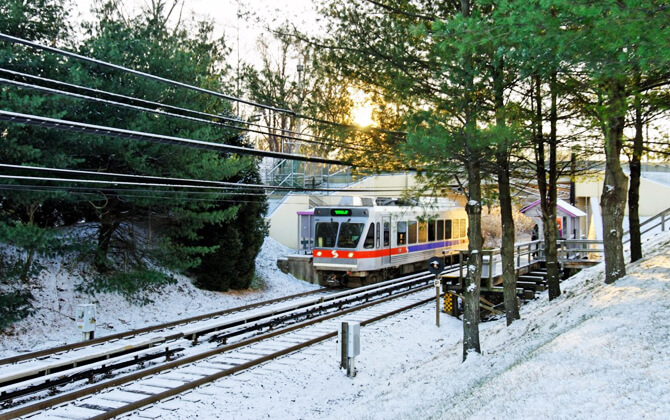
The line opened in 1907 as the Philadelphia and Western Railroad, commonly called the P&W. It was originally built as a steam railroad but operated as an interurban electric railway between the present 69th Street Transportation Center and Strafford.
A Norristown branch opened in 1912 and soon became the more important route. By the mid-1930s, the Norristown line had a new art deco terminal at Main and Swede Streets, while the remaining Strafford spur had been reduced on its final stretch.
The Philadelphia Suburban Transportation Company, also known as Red Arrow Lines, took over the P&W in 1955. The original Villanova-to-Strafford branch was abandoned in 1956, leaving electric MU service between 69th Street and Norristown.
SEPTA absorbed Red Arrow operations in 1970, and the line became Route 100. After major decline by the mid-1980s, SEPTA carried out modernization work that included track rebuilding, upgraded substations and signals, bridge work, terminal reconstruction, a maintenance facility, and station improvements.
The line was renamed the Norristown High Speed Line in September 2009. In 2024, it began moving into the SEPTA Metro M branding. Older names such as P&W, Route 100, R100, NHSL, and Norristown Trolley may still appear during the transition.
From the Philadelphia & Western Railroad to Route 100
The P&W began in 1907 from what is now 69th Street Transit Center to a converted farmhouse station in Strafford. In 1911, the line was extended west to a new Strafford P&W station near the Pennsylvania Railroad’s Strafford station.
In 1912, a 6.2-mile (10.0 km) branch was built from Villanova Junction to Norristown. For many years, the P&W also connected at Norristown with the Lehigh Valley Transit Liberty Bell Route, allowing direct electric train service between Upper Darby and Allentown.
After SEPTA took over Red Arrow operations, the line became Route 100. Despite nicknames tied to trolleys, trams, and tramway-style service, the line kept its distinctive character: fully grade separated, third-rail powered, and mostly operated with single-car trains and frequent stops.
From the Norristown High Speed Line to SEPTA Metro M
The Route 100 name gave way to Norristown High Speed Line branding in September 2009. From 2024, the line is being presented as the M as part of SEPTA’s system-wide wayfinding improvements.
The service itself remains the same route between 69th Street Transit Center and Norristown Transit Center. During the transition, riders may still see old and new names on signs, schedules, and maps.
- Termini: 69th Street Transit Center and Norristown Transit Center
- Length: 13.4 miles (21.6 km)
- Stations: 22
- Frequency: every 30 minutes or less on weekdays between 6:00 am and 9:00 pm
Current Projects and Future Expansion Status
SEPTA project materials describe a major rehabilitation of the Bridgeport Viaduct, the bridge that carries the line over the Schuylkill River. The structure is 3,525 feet long, about 0.67 miles (1.07 km), and opened in 1911.
The work includes shuttle bus replacement between Bridgeport Station and Norristown Transit Center during specified outage periods, while trains continue between Bridgeport Station and 69th Street Transit Center. Riders are advised to allow extra travel time and check the updated M schedule when the outage is in effect.
The project is estimated at $55 million (US$55 million), including design, support, and construction. Work listed in the draft includes structural steel repairs, concrete repairs to abutments and piers, bearing replacement, concrete deck replacement, maintenance catwalk replacement, repainting, and replacement of the Norristown Transit Center stairway.
SEPTA has also discussed a King of Prussia Rail extension from the existing line toward King of Prussia. Draft materials describe it as a 4-mile (6.4 km) project with three proposed stops in Upper Merion Township, but later materials say the project was paused after federal funding was denied.
Maintenance and Rehabilitation Projects
Modernization and rehabilitation work on the Norristown High Speed Line has included new multiple-unit interurban passenger cars, cab signals, overspeed protection, spare parts, signal system upgrades, track reconstruction, substation replacement, bridge rehabilitation, and a new vehicle maintenance and repair facility.
Earlier plans also included rebuilding major terminals, improving intermediate stations, replacing pedestrian bridges, and expanding parking at stations. Work on the original 1908 P&W car shop near 69th Street Terminal included roof and floor renewal needs.
The more recent Bridgeport Viaduct project is one of the largest maintenance efforts described in the draft. SEPTA says the repairs are intended to extend the bridge’s life for decades and keep M service operating between Bridgeport and Norristown.
King of Prussia Rail Extension Status
The proposed King of Prussia Rail extension has changed status over time. Earlier planning described a $390 million (US$390 million), 4-mile (6.4 km) extension from the Norristown High Speed Line into King of Prussia, with three proposed stops in Upper Merion Township: First and Moore streets, First Street and American Avenue, and Henderson Road.
Later reporting in the draft materials says the project was paused after SEPTA was denied funding from the Federal Transit Administration’s New Starts program. SEPTA stopped KOP Rail activity after federal officials raised concerns about the agency’s ability to fund its share and cover possible cost overruns.
The estimated price had risen to more than $3 billion (US$3 billion). Based on the available draft materials, the extension is paused, with no active construction underway.
Popular Places Along the Line
The Norristown High Speed Line passes campuses, parks, town centers, office areas, and suburban connection points. It is useful not only for commuting but also for reaching local destinations without driving.
- Norristown Farm Park offers trails in a natural setting.
- Elmwood Park combines paved paths with green space.
- Sandy Hill Park is a quiet spot for running.
- The Schuylkill River Trail is nearby and offers river views.
- Pennsy Trail is relatively close to Ardmore Junction and can be reached by a SEPTA access road near the YMCA.
- Haverford College has a nature trail suited to walking or jogging.
- The Ardmore busway provides access to local destinations.
Farther west, the line also serves areas near golf courses, office parks, and suburban business districts around Gulph Mills, Hughes Park, and Norristown Transit Center.
Villanova University and Stadium
Villanova University is served by two Norristown High Speed Line stops: Villanova South and Stadium. These stations make the campus reachable from either direction on the line between Norristown and 69th Street.
Villanova South, formerly known as Villanova Station, is near campus in Radnor Township. All trains stop there, and off-street parking is available. Stadium Station is also close to campus and works as another convenient boarding point.
The Paoli/Thorndale Regional Rail Line also serves Villanova Station directly on campus, giving students, visitors, and commuters another rail option.
- Villanova South: NHSL stop near campus
- Stadium: NHSL stop near campus
- Villanova Station: Regional Rail access directly on campus
Ardmore, Bryn Mawr, and the Main Line
The line runs through several Main Line communities, including Ardmore, Haverford, Bryn Mawr, Villanova, and Radnor. Stations along this section include Ardmore Junction, Ardmore Avenue, Haverford South, Bryn Mawr South, Roberts Road, Stadium, and Villanova South.
Bryn Mawr is also a common short-turn point. Some local trains operate only between 69th Street and Bryn Mawr, serving ten stations on that shorter pattern.
- Ardmore: a well-known Main Line community with NHSL access.
- Bryn Mawr: a major stop and short-turn endpoint for some local trips.
- Villanova: served farther northeast before the line turns toward Norristown.
Full local service on the corridor stops at all 22 stations and takes about 30 minutes between 69th Street and Norristown.
Norristown and Montgomery County Connections
In Montgomery County, the M links Norristown with the broader SEPTA network. Norristown Transit Center connects the line with Regional Rail and multiple suburban bus routes.
Historically, the line also connected at Norristown with the Lehigh Valley Transit Liberty Bell Route, which provided direct electric train service from 69th Street Terminal to Allentown.
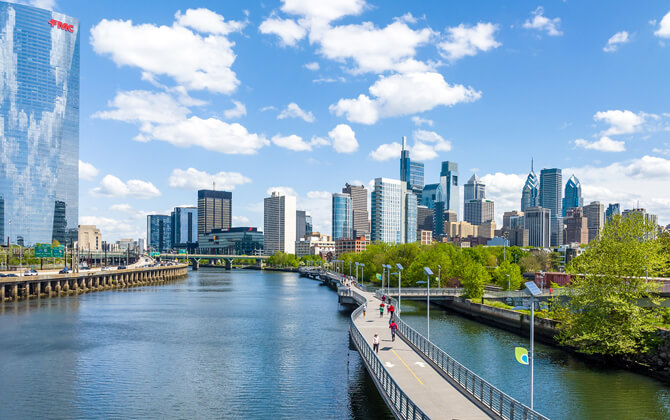
For everyday travel, the line remains a practical link through the western suburbs, with weekday service every 30 minutes or less between 6:00 am and 9:00 pm.
FAQ
These quick answers cover the most common questions about the Norristown High Speed Line, including the M rebrand, schedule basics, airport access, and bike rules.
Is the Norristown High Speed Line the same as the M Line?
Yes. The Norristown High Speed Line is being rebranded as the M as part of SEPTA’s system-wide wayfinding improvements. The route remains the same line between 69th Street and Norristown.
During the transition, you may still see older names such as P&W, Route 100, R100, NHSL, and Norristown Trolley.
Is it a subway, light rail, or commuter rail?
The line is a hybrid. It has rapid-transit features such as full grade separation, third-rail electrification, and high-level platforms, while also using onboard fare collection, mostly single-car operation, and frequent stops.
SEPTA materials have described it in different ways over time, including light rail and heavy rail. It is not a subway in the usual sense and is not typical commuter rail, but it operates like a metro-style interurban line in several ways.
Does it go to Center City Philadelphia?
No. The Norristown High Speed Line runs between 69th Street Transit Center in Upper Darby and Norristown Transit Center. It does not go directly into Center City Philadelphia.
For Center City, riders can transfer at 69th Street to the Market-Frankford Line or use the Manayunk/Norristown Regional Rail Line from Norristown.
Does it go to Philadelphia International Airport?
No. The line does not serve Philadelphia International Airport directly.
Airport trips require a transfer through SEPTA services, such as Bus 108 to 69th Street, Regional Rail connections, or SEPTA’s Airport Line depending on your route.
How can I check current service alerts?
Check current service alerts before traveling, especially during construction or shuttle bus periods. Alerts may include single-track changes, shuttle bus replacement between Bridgeport and Norristown, delays, closed stations, skipped stops, or trip cancellations.
Real-time tools and the SEPTA app can help confirm route status, platform changes, and upcoming departures.
Can I bring a bike on board?
Yes. Draft materials state that bikes are allowed on NHSL trains at all times, though riders should still communicate with the operator when boarding or leaving the train.
Folding bicycles are allowed when fully folded. SEPTA bike policies can vary by line, so check the current rules before you travel.