NJ Transit, officially the New Jersey Transit Corporation, is New Jersey’s statewide public transportation system. It operates commuter rail, bus, and light rail service across New Jersey, with connections into parts of New York and Pennsylvania, including major travel markets such as New York City and Philadelphia. The agency was founded on July 17, 1979, and today it is one of the largest public transport providers in the United States by service area and ridership.
| Key | Information |
|---|---|
| Official name | New Jersey Transit Corporation |
| System type | State-owned public transportation system |
| Founded | July 17, 1979 |
| Headquarters | 2 Gateway Center, Newark, New Jersey |
| Service area | 5,325 square miles |
| Annual ridership | 221,114,200 in 2025 |
| Network | 253 bus routes, 12 rail lines, and 3 light rail lines |
| Main role | Local transport and regional transportation in New Jersey, with links to New York City and Philadelphia |
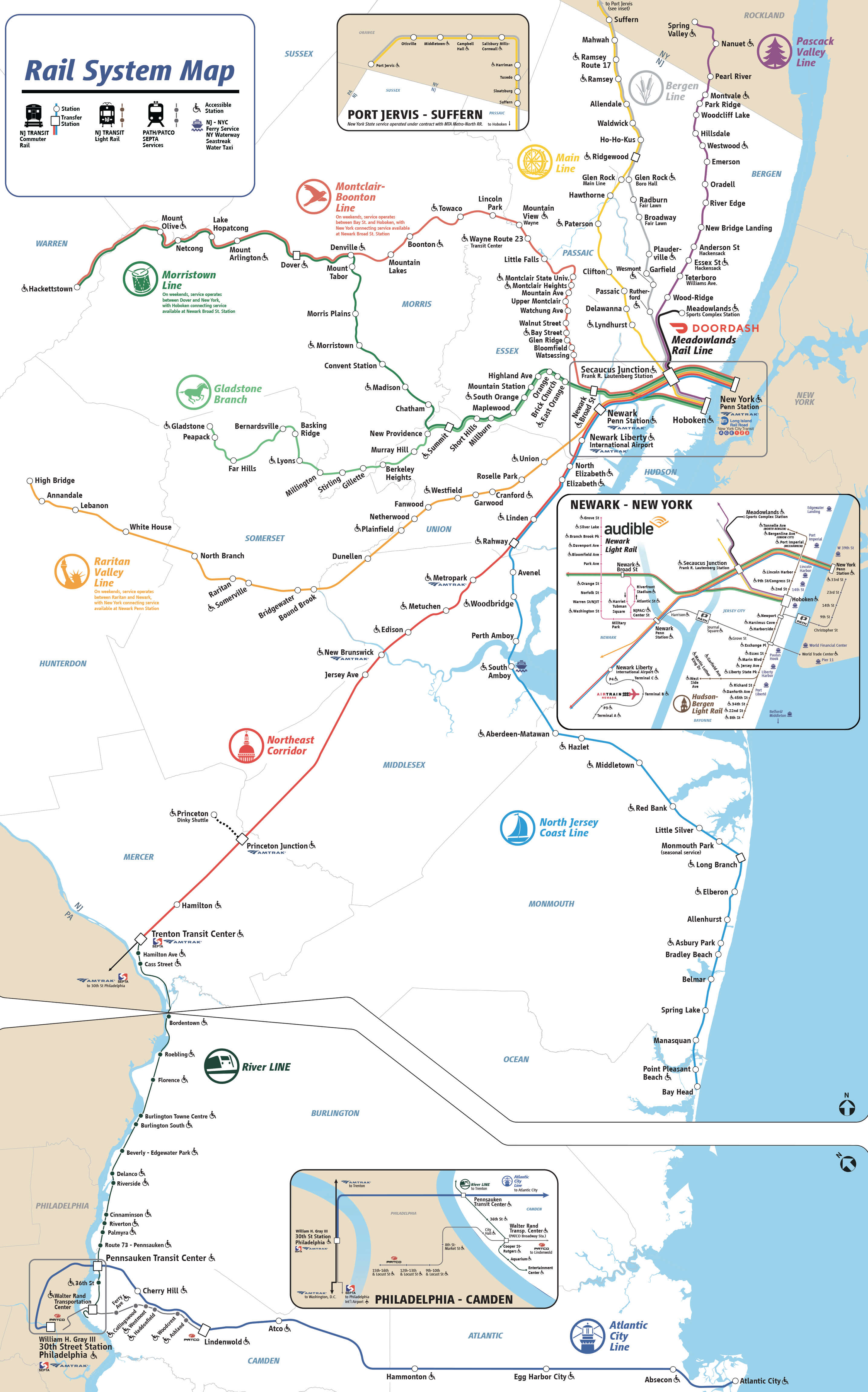
NJ Transit Map
NJ Transit map showing different lines and stations. Click on the map to enlarge it or download NJ Transit map in PDF format.
Lines and Stations
NJ Transit runs commuter rail, bus, and light rail service across New Jersey, with route connections into New York and Pennsylvania. Its rail network focuses on North and Central Jersey, while the Atlantic City Line serves South Jersey between Philadelphia and Atlantic City.
The system includes 12 commuter rail lines with 165 rail stations, 3 light rail lines with 86 light rail stations, and 253 bus routes with 26 bus terminals and 15,991 bus stops. For trip planning, riders often use a stations map, a stations list, the route timetable, or the NJ Transit app.
| Station | Details |
|---|---|
| Newark Penn Station | Major rail, bus, light rail, PATH, and Amtrak hub |
| New York Penn Station | Main Manhattan rail terminal for NJ Transit service to New York City |
| Hoboken Terminal | Major rail, bus, light rail, PATH, and ferry connection point |
| Secaucus Junction | Key transfer station connecting northern commuter rail routes |
| Trenton Transit Center | Rail hub with NJ Transit, Amtrak, SEPTA, and River Line connections |
| Princeton Junction | Northeast Corridor station with Princeton Branch service |
| Atlantic City | Terminal for the Atlantic City Rail Line |
Commuter Rail Lines
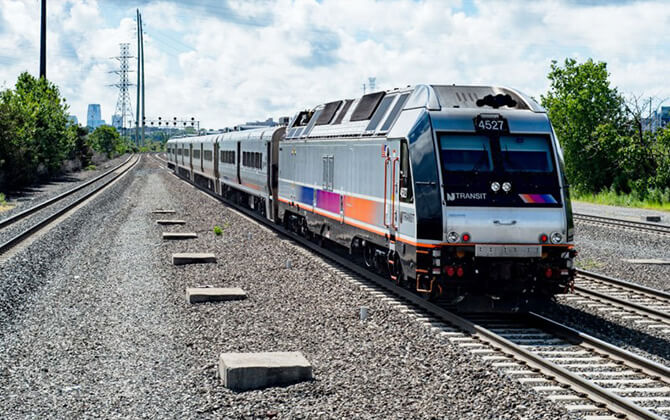
NJ Transit Rail Operations runs commuter rail service across New Jersey, with most trains focused on travel to and from New York City, Hoboken, and Newark. The network also includes service in Orange and Rockland counties in New York under contract with Metro-North Railroad.
The commuter rail system took its current shape in 1983, when NJ Transit assumed commuter rail service in New Jersey. Secaucus Junction later connected the Hoboken and Newark divisions in 2003, making many transfers much easier.
| Station | Details |
|---|---|
| Atlantic City Line | South Jersey rail route between Philadelphia and Atlantic City |
| Bergen County Line | North Jersey commuter rail service |
| Main Line | North Jersey commuter rail service |
| Meadowlands Rail Line | Special-event service to the Meadowlands Sports Complex |
| Montclair-Boonton Line | Commuter rail line with Midtown Direct service |
| Morris & Essex Lines | Includes the Morristown Line and Gladstone Branch |
| North Jersey Coast Line | Rail service linking New York, Newark, and Shore destinations |
| Northeast Corridor Line | Major rail route that includes the Princeton Branch connection |
| Pascack Valley Line | North Jersey commuter rail line |
| Port Jervis Line | Service operated under contract with Metro-North Railroad |
| Raritan Valley Line | Central and North Jersey commuter rail service |
Midtown Direct trains operate on the Morris & Essex and Montclair-Boonton lines via the Kearny Connection. In 2025, NJ Transit commuter rail carried 62,029,400 riders, making it one of North America’s busiest commuter rail systems.
Bus Routes and Major Terminals
NJ Transit operates many bus routes between New Jersey and New York City. Most New York-bound routes serve the Port Authority Bus Terminal in Midtown Manhattan, while others use the George Washington Bridge Bus Terminal or travel into Lower Manhattan.
Major New York bus routes include these frequently used services:
| Station | Details |
|---|---|
| Port Authority Bus Terminal | Main Midtown Manhattan terminal for many NJ Transit bus routes |
| George Washington Bridge Bus Terminal | Washington Heights terminal for selected New Jersey bus routes |
| 107 | Irvington – New York |
| 108 | Newark – New York |
| 111 | New York – IKEA – Jersey Gardens |
| 119 | Bayonne – Jersey City – New York, weekdays and Saturdays only |
| 126 | Hoboken – New York |
| 137 | Toms River – New York |
| 139 | Lakewood – Old Bridge – New York via Route 9 |
| 158 | Fort Lee – Edgewater – New York |
| 159 | Fort Lee – New York |
| 163 | Ridgewood – New York |
| 165 | Westwood – New York |
| 166 | Cresskill – Bergenfield – New York |
| 167 | Harrington Park – Teaneck – New York |
| 190 | Paterson – Secaucus – New York |
| 319 | New York – Atlantic City – Cape May |
| 320 | Mill Creek – North Bergen Park/Ride – New York |
The Transit Information Center provides automated service 24/7, with live operators daily from 8:30 a.m. to 5 p.m.
Light Rail Systems
NJ Transit operates three light rail systems: Hudson-Bergen Light Rail, Newark Light Rail, and the River Line. Together, they connect waterfront communities, Newark neighborhoods, Trenton, Camden, and major transfer points across the local transport network.
| Station | Details |
|---|---|
| Hudson-Bergen Light Rail | 24 stations; 20.6 miles (33.2 km); runs from Bayonne to North Bergen along the Hudson Waterfront |
| Newark Light Rail | 17 stations; 5.3 miles (8.5 km); serves Newark and nearby transportation hubs |
| River Line | 21 stations; 34 miles (55 km); runs from Trenton to Camden along the Delaware River |
The light rail system carried 22,215,800 riders in 2024. Tickets can be bought before boarding, and Tap & Ride is available at light rail stations for a validated one-way adult ticket.
Schedule, Frequency, and Service Patterns
NJ Transit schedules vary by route, mode, day type, and special operating conditions. Riders should check the timetable, route plan, train schedule, or bus schedule today before traveling, especially on holidays, severe weather days, and event days.
| Service detail | Timings |
|---|---|
| Automated Transit Information Center | Available 24/7 |
| Live Transit Information Center operators | Daily, 8:30 a.m. to 5 p.m. |
| Weekday, weekend, and holiday schedules | Timings depend on route, mode, and date of travel |
| Severe Weather Schedule | May operate as Level 1 or Level 2 when announced |
| Meadowlands Rail Line | Operates for major events, not as daily service |
NJ Transit regularly adjusts service to match demand. One update added 22 weekday trains across the system and 14 new weekend trains on the Main/Bergen County Line, improving frequency, seating capacity, express options, and running time on key routes.
For timings today, check the latest schedule before you leave. Departure times, station stops, starting time, closing time, and last train details can change by line.
Weekday, Weekend, and Holiday Service
Weekday, weekend, and holiday service follow different patterns. On major holidays, NJ Transit may run modified rail, bus, and light rail schedules, and some days include extra service for high-demand travel.
Holiday schedules may apply on New Year’s Day, Martin Luther King, Jr. Day, Presidents’ Day, Good Friday, Memorial Day, Independence Day, Labor Day, Columbus Day, Veterans’ Day, Thanksgiving Day, the Friday after Thanksgiving Day, and Christmas Day.
Rail may run on a regular weekend or major holiday pattern, while buses and light rail can use modified schedules. Severe weather may also trigger a limited weekday rail schedule.
Peak and Off-Peak Travel
NJ Transit does not use a separate peak and off-peak fare system for regular travel, so the ticket price is generally the same whenever you ride. A standard one-way ticket can be used in either direction and at any time within its validity rules.
Round-trip tickets are valid between the two stations shown on the ticket and do not expire. Quiet Commute service is a separate onboard amenity, not a fare rule, and it applies on selected peak and off-peak trains.
Fares, Tickets, Passes, and Cards
NJ Transit fare options include one-way tickets, ten-trip tickets, round-trip tickets, weekly passes, monthly passes, and discounted fare programs. The cost depends on distance, mode, route, and ticket type, so use the schedule, fare calculator, or route information for exact trip pricing.
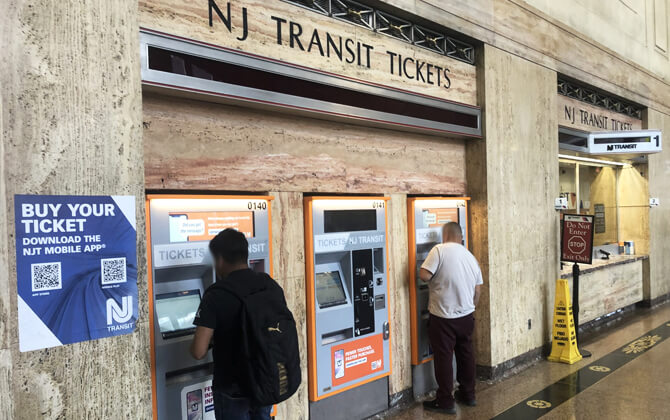
Tickets and passes are available in the NJ Transit Mobile App through MyTix, at ticket vending machines, at selected ticket offices, and through some commissioned ticket agents. Credit cards, debit cards, cash, commuter benefit cards, and transit benefits checks may be accepted depending on the sales channel.
Rail tickets should be purchased before boarding. If ticket vending machines or ticket agents are available, buying on board can trigger a surcharge.
One-Way Tickets, Passes, and Discounts
One-way tickets cover one continuous trip between the stations shown on the ticket. Starting July 1, 2024, one-way tickets expire after 30 days and are non-refundable.
Monthly passes allow unlimited trips between two rail stations during a calendar month and remain valid until noon on the first business day of the next month. Weekly passes allow unlimited trips between two rail stations from 12:01 a.m. Saturday through 6:00 a.m. the following Saturday. Ten-trip tickets include ten one-way trips and are valid for 30 days.
Children ages 5 to 11 save 50 percent, and up to three children age 4 and under ride free with a passenger paying any valid fare. On weekends and holidays, Family SuperSaver lets up to two children ages 5 to 11 ride free with a fare-paying passenger from 7 p.m. Friday, or the day before a holiday, until 6 a.m. Monday, or the day after a holiday.
Senior citizens and customers with disabilities can travel at a reduced fare of half the regular one-way fare or less at all times. Military personnel, eligible dependents, and veterans with service-connected disabilities may also qualify for reduced ticket options.
Monthly rail passes valued at $67 USD (US$67) or more can be used on NJ Transit light rail lines or buses up to the number of zones printed on the pass. Students at participating post-secondary schools may buy monthly student passes online and save 25 percent off regular monthly pass fares.
Transfers and Separate Fares
Some trips require a transfer between two NJ Transit bus routes. For travel within New Jersey, riders can either buy separate tickets for each leg or ask the driver for a transfer ticket when boarding the first bus.
Transfer tickets are valid for bus or light rail travel for two hours after purchase and cover one zone on the second leg. If your second bus trip continues beyond one zone, you pay an override fee in cash. Drivers do not make change on exact-fare routes.
Transfers are not issued or accepted for interstate trips. Rail tickets must be used separately from NJ Transit bus or light rail tickets, unless a pass rule specifically allows connecting bus or light rail travel.
Connections with Other Transit Systems
NJ Transit connects with other transportation providers across New Jersey, New York City, and Philadelphia. These links make it practical to continue by subway, PATH train, Amtrak, SEPTA, Metro-North, bus, tramway-style light rail, or ferry without driving.
Connections are available with Amtrak at Newark, Trenton, Metropark, New York, and Philadelphia 30th Street stations. PATH connects at Newark Penn Station and Hoboken Terminal. SEPTA connects at Trenton Transit Center and Philadelphia 30th Street Station, and PATCO connects at Walter Rand Transportation Center in Camden and Lindenwold.
NY Waterway ferry service is available near Hudson-Bergen Light Rail stations at Hoboken Terminal, Port Imperial, Exchange Place, Newport, and other Hudson waterfront points. Seastreak ferry service connects Monmouth County’s Sandy Hook Bay communities with Downtown and Midtown Manhattan, with NJ Transit bus route 834 serving nearby stops.
Connections to New York City Transit
NJ Transit is one of the main ways to reach New York City from New Jersey. Rail service reaches Penn Station New York on multiple lines, with easy transfers at Newark Penn Station and Secaucus Junction.
Bus service to Port Authority Bus Terminal and George Washington Bridge Bus Terminal operates on more than five dozen routes across New Jersey. Light rail connections in Hoboken, Newark, and Trenton also widen the number of places where a New York City trip can begin.
PATH, Amtrak, SEPTA, Metro-North, and Ferries
PATH trains run 24 hours a day between Newark, Harrison, Jersey City, Hoboken, and New York. NJ Transit rail customers can connect to PATH at Newark Penn Station or Hoboken Terminal, while bus riders can connect to PATH stations in New Jersey.
Amtrak serves the Northeast Corridor and national long-distance routes, with NJ Transit connections at Newark, Trenton, Metropark, New York, and Philadelphia 30th Street stations.
SEPTA serves Philadelphia and Southeast Pennsylvania, with NJ Transit connections at Trenton Transit Center, Philadelphia 30th Street Station, and West Trenton via the 608 bus line. Metro-North service is linked through contract operations and regional transfer points.
Ferry connections add another useful trans-Hudson option, especially from Hoboken and the Hudson Waterfront.
Airport Connections
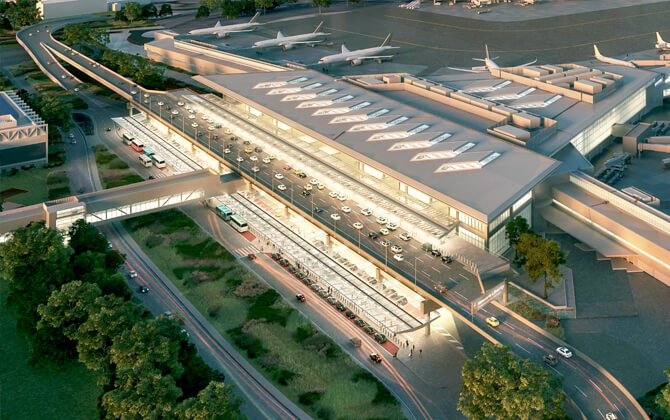
Newark Liberty International Airport is one of the easiest major airports in the region to reach by public transportation. NJ Transit rail serves Newark Liberty International Airport Rail Station, where AirTrain Newark connects to Terminals A, B, and C.
To Midtown Manhattan, the trip takes about 30 minutes to New York Penn Station, with an adult fare of $17.25 USD (US$17.25). To the Financial District, expect about 45 to 55 minutes using NJ Transit and PATH, with an adult fare of $12.30 USD (US$12.30) to Newark Penn Station plus $3.00 USD (US$3.00) for PATH.
Your NJ Transit ticket includes the AirTrain fee, so no separate AirTrain purchase is needed. Bus routes 28, 37, 62, 67, and 107 also serve the airport area, and bus 62 is useful from Newark Penn Station when rail is not the best option.
Newark Liberty International Airport (EWR)
NJ Transit rail is the fastest and most reliable listed option for EWR, with frequent daily service on the Northeast Corridor and North Jersey Coast Line. From New York Penn Station, direct service is available with no transfer needed.
- Take an NJ Transit train to Newark Liberty International Airport Rail Station.
- Transfer to AirTrain Newark.
- Ride AirTrain directly to Terminals A, B, or C.
For most Northern Jersey rail lines, transfer at Secaucus Junction. From the Raritan Valley Line, transfer at Newark Penn Station. AirTrain trains and stations are ADA-compliant, and elevators are available at Newark Liberty International Airport Rail Station.
Getting from EWR to New York City
From EWR, New York Penn Station is about 30 minutes away by NJ Transit train. The Financial District trip takes about 45 to 55 minutes with an NJ Transit and PATH connection.
| Service detail | Timings |
|---|---|
| EWR to Midtown Manhattan | About 30 minutes to New York Penn Station; fare $17.25 USD (US$17.25) |
| EWR to Financial District | About 45 to 55 minutes via NJ Transit and PATH; fare $12.30 USD (US$12.30) plus $3.00 USD (US$3.00) PATH |
For Midtown, ride NJ Transit directly to New York Penn Station. For the Financial District, transfer at Newark Penn Station and continue on PATH to World Trade Center. Keep your NJ Transit ticket with you because it includes the AirTrain fee.
How to Ride NJ Transit
Start by choosing your origin, destination, date, and travel time. Then check the route, schedule, station details, and fare before you leave. The NJ Transit App can help with planning, tickets, schedules, and service alerts.
- Use Service Near You to find nearby stations and bus stops.
- Check the timetable carefully because some trips require transfers.
- Buy rail tickets before boarding to avoid the $5.00 USD (US$5.00) onboard surcharge when machines or agents are available.
- Activate mobile tickets just before boarding.
- At bus stops, arrive a few minutes early and confirm the route number before boarding.
- At rail stations, wait behind the yellow line and let passengers exit first.
- For light rail, buy and validate your ticket before boarding unless using an accepted tap payment option.
- Keep your ticket ready for inspection throughout the trip.
For buses, some routes accept onboard payment, while others require tickets before boarding. Customers boarding at Port Authority Bus Terminal and George Washington Bridge Bus Terminal must purchase a ticket before boarding.
Tips for Tourists and First-Time Riders
For a first trip, keep it simple: check the route plan, buy the ticket early, and leave extra time for transfers. If you are traveling today, check schedule today information and alerts before heading to the station or stop.
- Use the NJ Transit App for tickets, trip planning, and real-time information.
- Read the small print on timetables, especially around holidays and special events.
- Buy a return ticket before going to New York City when possible.
- Wave down the bus if needed and confirm the destination before boarding.
- On trains, watch the gap between the platform and train when exiting.
- Parking availability varies by station, and some station parking may require a permit.
- Parking charges and parking charges per day vary by location, so check station parking rules before driving to a stop.
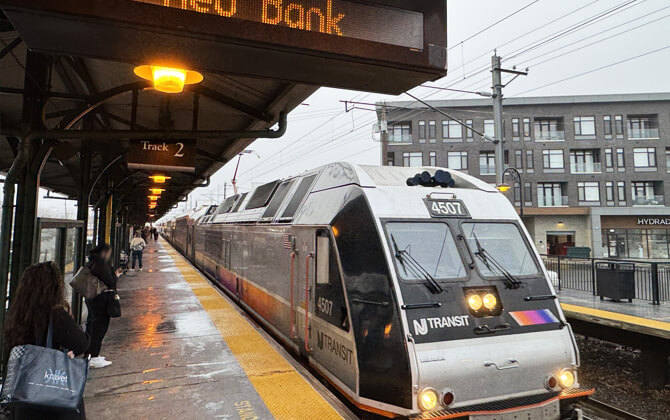
Major stations have public bathrooms, many stations have bike racks, and not every station is fully accessible. A quick check before you go can save a lot of trouble.
Accessibility and Rider Assistance
NJ Transit provides accessible service across bus, rail, light rail, and Access Link paratransit. The system includes reduced fare card programs, community transportation support, and travel training through NJTIP @ Rutgers.
Access Link is NJ Transit’s ADA paratransit service for people with disabilities who cannot use local bus or light rail service because of physical or functional limitations. It provides shared-ride, curb-to-curb transportation within its service area, and drivers assist with boarding, securing mobility devices, and exiting.
NJ Transit buses are fully accessible and include lifts or ramps, securement systems, kneeling features, public address systems, and priority seating near the front door. Many rail stations include elevators, ramps, mini high-level platforms, or portable lifts, but riders should confirm station accessibility in advance.
Reduced fares are available for eligible customers, including people with disabilities and riders age 62 and older. For help with accessible bus, rail, light rail, or Access Link service, riders can contact NJ Transit customer assistance before traveling.
Rules and Rider Etiquette
Good rider etiquette helps keep NJ Transit safe, comfortable, and on time. Arrive early, stand back from the curb or platform edge, let other riders exit first, and keep aisles and doors clear.
- No smoking or vaping on NJ Transit vehicles, stations, platforms, terminals, or bus lanes.
- No eating or drinking on NJ Transit buses.
- Use headphones for music or video.
- Speak quietly on phones.
- Do not distract the operator or crew.
- Keep bags off adjacent seats when space is limited.
- Use priority seating properly and make room for riders who need it.
- Do not run after buses or trains.
- Watch for traffic when leaving a bus stop.
- Report suspicious activity by text to 65873 or by calling NJ Transit Police at 888-847-7658.
Bicycles are allowed on buses equipped with front racks or undercarriage storage compartments on a first-come, first-served basis, with no extra charge or permit required. Hoverboards are not permitted on trains, buses, light rail, Access Link vehicles, stations, or NJ Transit property.
The Transit Information Center number is 973-275-5555. TTY for text telephone only is 800-772-2287. Automated schedule and fare information is available 24/7, and operators are available from 8:30 a.m. to 5 p.m.
Brief History
New Jersey Transit Corporation was founded on July 17, 1979, through the Public Transportation Act of 1979. It was created to acquire, operate, and contract for transportation service in the public interest and to address major transport needs across New Jersey.
In its early years, NJ Transit acquired and managed private bus services, including operations connected to Public Service Electric and Gas Company. In 1980, it purchased Transport of New Jersey and the Newark City Subway, then assumed bus service in the Trenton and Mercer County area in 1984.
Rail became a central part of the agency in 1983, when NJ Transit took over commuter rail operations from Conrail. The 1990s brought service such as Midtown Direct, while the 2000s added Newark Liberty International Airport station in 2001 and Secaucus Junction in 2003.
More recent history includes multilevel rail cars, Positive Train Control certification in 2020, and major infrastructure work such as the Portal North Bridge contract approved in 2021.
Future Projects and Service Improvements
NJ Transit is investing in expansion, fleet renewal, infrastructure, safety, and customer experience. The agency has added more than 100 trains to the schedule, improved on-time performance, reduced rail cancellations, and expanded public performance reporting.
- Contracts secured for 550 new 40-foot buses and 408 articulated buses.
- Plans to replace 1,235 older buses and modernize the bus fleet by 2031.
- More than $2 billion invested in 374 new multilevel rail cars and 37 new dual-mode locomotives.
- More than 300 new minibuses and hybrid sedans added to the Access Link fleet.
- Light Rail single-ride tickets and Cash in App added for riders.
- More than $6 billion in capital projects underway or nearing procurement since 2018.
- More than $500 million in federal funding secured over five years under the Infrastructure Investment and Jobs Act.
- Over $950 million in federal grant funding secured in 2023 for major capital projects.
Long-term planning focuses on speed, reliability, safety, reach, and better customer information. Projects under study or development include Gateway, the Hudson Tunnel Project, Portal South Bridge, the Bergen Loop, Secaucus Junction expansion, the Hunter Flyover, the Midline Loop, Newark Penn Station modernization, bus rapid transit corridors, and light rail extensions.
Rail Capacity and Infrastructure Projects
NJ Transit is working on rail capacity and reliability while continuing to operate bus, rail, and light rail service. Rail on-time performance improved from 90.0 percent in FY2019 to 92.1 percent in FY2023, and rail cancellations fell 36 percent compared with FY2019.
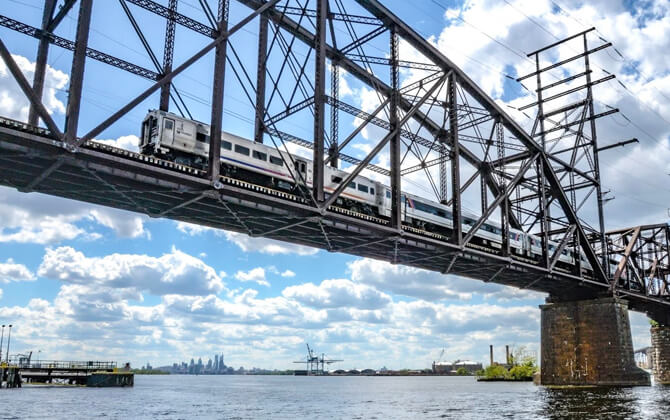
The $1.6 billion USD (US$1.6 billion) Portal North Bridge project broke ground in August 2022 and reached 70 percent completion in September 2024. It is part of the Gateway Program and will replace the existing 110-year-old swing bridge on the Northeast Corridor.
Other rail and infrastructure work includes the Hudson Tunnel Project, the Raritan River Bridge Replacement Project, the Elizabeth Station renovation, New Brunswick Train Station revitalization, Hoboken Connect, Long Slip, Sawtooth Bridge replacement, the New North Brunswick Train Station project, and the Secaucus to Meadowlands Transitway Project.
The capital program also supports stations, bridges, track, signaling, traction power, yards, tunnels, vehicles, safety, and state-of-good-repair work.
Light Rail and Station Improvement Projects
NJ Transit has increased weekday peak-period service on Newark Light Rail’s Broad Street extension so trains can run every 10 minutes. It has also approved a new operator for Hudson-Bergen Light Rail, received a $1.6 million USD (US$1.6 million) federal grant for AI-powered light rail safety systems, and added Light Rail single-ride tickets.
Station projects include Elizabeth Station, Lyndhurst Station, New Brunswick Train Station, Walter Rand Transportation Center, Newark Penn Station, Trenton Transit Center, Hoboken, Perth Amboy Station, Bloomfield Station, and platform and elevator work at New Brunswick Station.
Longer-term light rail and station-related projects include the Hudson-Bergen Light Rail Route 440 Extension, the Northern Branch, the Glassboro-Camden Light Rail line, and broader investments aimed at reliability, accessibility, and future ridership growth.
Attractions and Event Travel
NJ Transit is useful for reaching New York City, the Meadowlands, MetLife Stadium, American Dream, the Jersey Shore, Atlantic City, and local destinations. For event travel, the NJ Transit Mobile App is often the easiest place to keep tickets, schedule updates, and alerts together.
For FIFA World Cup 26 matchday travel to NYNJ Stadium, rail tickets are available only through the NJ Transit Mobile App. The matchday round-trip fare is $98 USD (US$98), and regular station ticket machines, ticket windows, and onboard sales do not sell those tickets.
Special excursions and seasonal trips may require separate event tickets. Regular NJ Transit tickets and passes are not valid for some special excursion services, so check the event rules before traveling.
New York City
NJ Transit is a convenient way to reach New York City from much of New Jersey, plus parts of Orange and Rockland counties in New York and Philadelphia. Rail service reaches Penn Station New York on five rail lines, with connections available at Newark and Secaucus Junction.
Bus service reaches Port Authority Bus Terminal and George Washington Bridge Bus Station on more than five dozen routes. Light rail connections in Hoboken, Newark, and Trenton add more starting points for trips into the city.
MTA tickets are separate from NJ Transit tickets, and rail tickets do not automatically include NJ Transit bus or light rail travel unless a pass rule applies. Buy before boarding whenever possible.
Meadowlands, MetLife Stadium, and American Dream
For major events, NJ Transit runs special train service from Secaucus Junction to Meadowlands Rail Station, which is next to MetLife Stadium. The Meadowlands Rail Line operates only in connection with major events and is not daily service.
Bus options include Coach USA service from Port Authority Bus Terminal, including the 351 Meadowlands Express. NJ Transit bus route 703 serves the Meadowlands Sports Complex, and routes 85, 703, and 772 serve American Dream.
On major event days at MetLife Stadium, route 703 does not enter the Sports Complex property beginning two hours before the event and until one hour after it ends. It operates along Paterson Plank Road and stops only upon request at designated NJ Transit bus stops.
Buy round-trip tickets before boarding when possible to avoid the additional $5.00 USD (US$5.00) charge. You must have a ticket to board the train from Meadowlands to Secaucus Junction.
Jersey Shore, Atlantic City, and Local Destinations
NJ Transit connects Atlantic City by rail and bus from New York, Philadelphia, and communities across New Jersey. Route 319 provides express bus service from Port Authority Bus Terminal, with limited stops at Newark Penn Station and Journal Square Transportation Center.
From Philadelphia and South and Central Jersey, route 551 serves Atlantic City Bus Terminal, while routes 552, 553, 554, and 559 provide additional connections from Cape May and Wildwood, Upper Deerfield, Lindenwold, and Lakewood. The Atlantic City Rail Line runs between Philadelphia 30th Street Station and Atlantic City Rail Terminal.
The North Jersey Coast Line serves Shore destinations including Aberdeen-Matawan, Hazlet, Middletown, Red Bank, Little Silver, Long Branch, and Monmouth Park. Many stations south of Long Branch require a transfer. Seasonal bus service also runs to Seaside Heights, Wildwood, and Cape May, with additional summer trips beginning Saturday, June 20, 2026.
For beach towns, casinos, and local attractions, check the latest route timetable, train schedule, and service alerts before you go.