The Morris & Essex Lines are NJ TRANSIT commuter rail services in New Jersey, built from former Delaware, Lackawanna and Western Railroad routes. The name comes from the Morris and Essex Railroad, incorporated on January 29, 1835, with the first section opening between Newark and Orange on November 19, 1836. Today the system centers on the Morristown Line and the Gladstone Branch, with trains running to Hoboken Terminal or, through the Kearny Connection, to Secaucus Junction and New York Penn Station.
| Key | Information |
|---|---|
| System | NJ TRANSIT commuter rail in New Jersey |
| Main routes | Morristown Line and Gladstone Branch |
| Major terminals | Hoboken Terminal and New York Penn Station |
| Key transfer points | Newark Broad Street, Summit, and Secaucus Junction |
| Historic origin | Morris and Essex Railroad, incorporated January 29, 1835 |
| First opened | Newark to Orange on November 19, 1836 |
| Electrification | 3000 V DC in 1930/31, converted to 25 kV 60 Hz by August 1984 |
| Former service group | The Montclair Branch was included until 2002 |
Morris & Essex Line Map
The Morris & Essex Line map shows all available stops. Click on the map to enlarge it or download the Morris & Essex Line map in PDF format.
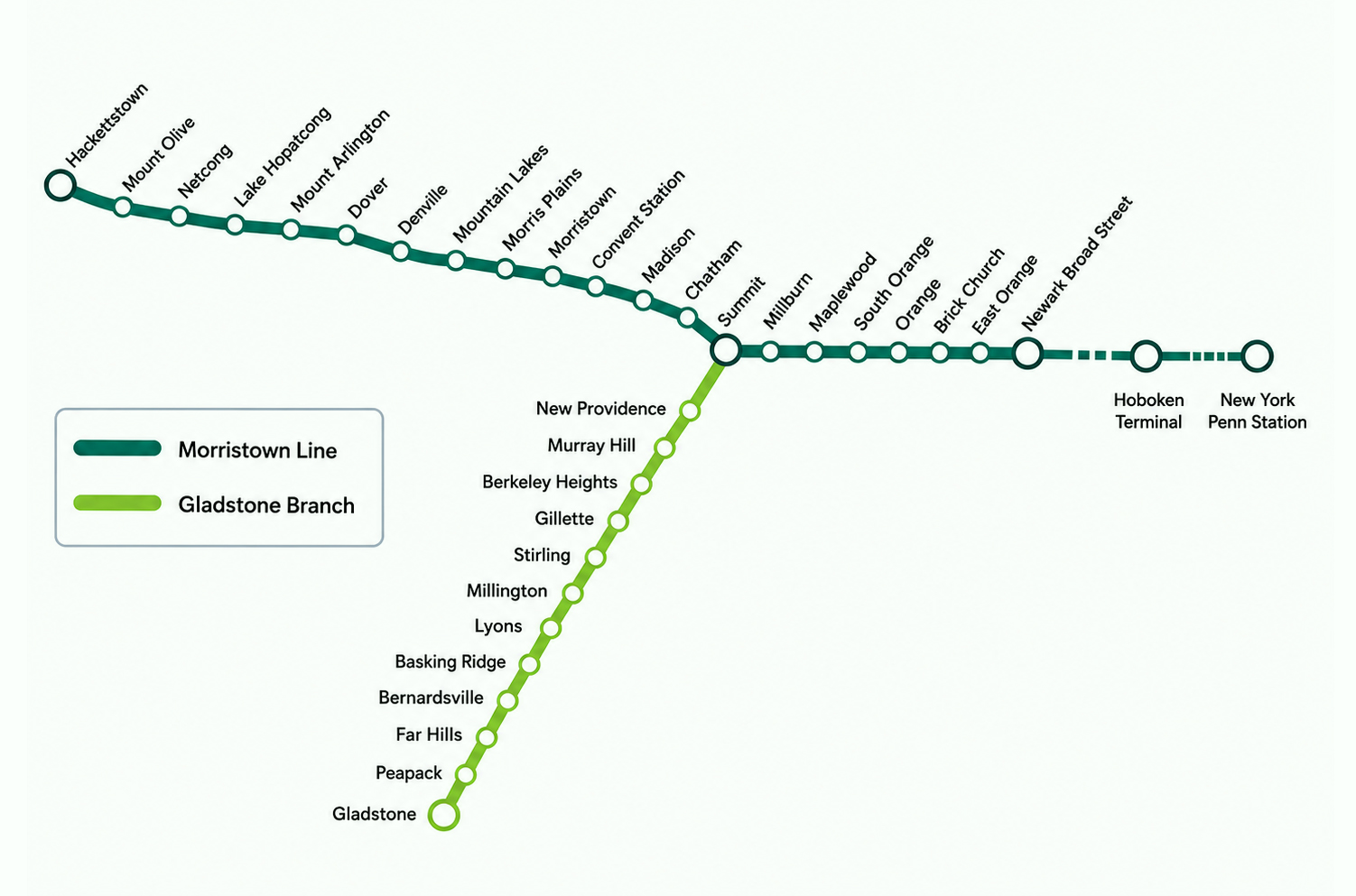
Routes, Branches, and Stations
The Morris & Essex route began as a westward railroad from Newark toward Morristown and later reached Dover, Hackettstown, Phillipsburg, and Easton. In modern NJ TRANSIT service, the name mainly refers to the Morristown Line and the Gladstone Branch. The former Montclair Branch is now part of the Montclair-Boonton Line.
For trip planning, think of the route plan in two parts: the shared eastern section toward Newark, Hoboken, Secaucus, and New York, and the western branches toward Dover or Gladstone. A stations map or stations list is useful because some trains split by destination, and transfers at Newark Broad Street or Summit may be needed.
| Station | Details |
|---|---|
| Newark Broad Street | Major eastern stop and transfer point for Morris & Essex Lines service. |
| East Orange | Viaduct station with multiple tracks and platform arrangements. |
| Brick Church | East Orange-area stop on the shared route. |
| Orange | One of the earliest communities served by the original railroad. |
| Highland Avenue | Station listed on the Morris & Essex route. |
| Mountain Station | Station listed on the Morris & Essex route. |
| South Orange | Elevated station near Seton Hall University. |
| Maplewood | Station on the shared Morris & Essex route. |
| Millburn | Station on the route west of Maplewood. |
| Short Hills | Station with limited non-resident parking options. |
| Summit | Key transfer point where the Gladstone Branch diverges; ADA-compliant. |
| Chatham | Morristown Line station west of Summit. |
| Madison | Morristown Line station west of Chatham. |
| Convent Station | Morristown Line station between Madison and Morristown. |
| Morristown | Important western stop with local attractions and a large parking facility. |
| Morris Plains | Station with day parking noted in rider information. |
| Mount Tabor | Station with shorter platform features noted in route descriptions. |
| Denville | Connection point with Boonton Line service. |
| Dover | Western end of electric service from Hoboken and New York. |
| Mount Arlington, Lake Hopatcong, Netcong/Stanhope, Hackettstown | Stations listed west of Dover in weekday service materials. |
| Phillipsburg Union Station and Easton | Historic western extension points of the old route. |
Morristown Line
The Morristown Line is the main Morris & Essex commuter rail route between Morris and Essex counties and New York City. Trains serve either New York Penn Station or Hoboken Terminal, giving riders two major terminal choices for city transport and regional connections.
On weekdays, many trains use the Kearny Connection for Midtown Direct service to New York Penn Station. Other trains run to Hoboken. On weekends, service is hourly to and from New York, with no service beyond Dover.
Core stations include Newark Broad Street, Summit, Chatham, Madison, Convent Station, Morristown, Morris Plains, Mount Tabor, Denville, and Dover. Dover is where electric trains from Hoboken and New York terminate, while diesel Boonton Line trains continue to Hackettstown.
Gladstone Branch
The Gladstone Branch, also called the Gladstone Line, leaves the shared Morris & Essex route at Summit and continues west to Gladstone. It is a single-track electrified branch with passing sidings at Murray Hill, Stirling, Bernardsville, and west of Far Hills.
Service runs between Gladstone and Hoboken Terminal, with some trains also operating to New York Penn Station. East of Newark Broad Street, trains may continue to Hoboken or use the Kearny Connection toward New York; two peak-hour trains provide direct trips to or from New York Penn Station.
During weekday rush hours, the line uses two service patterns: all stops between Hoboken and Summit, or express from Hoboken to Short Hills and then local to Gladstone. Weekend and off-peak trains are local, and weekend service runs hourly between Gladstone and Summit.
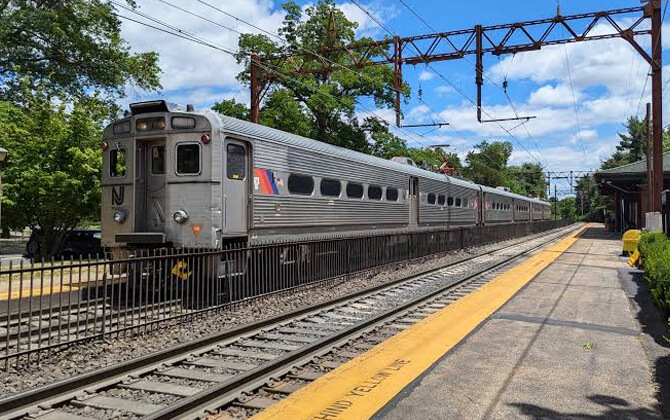
Schedule, Frequency, and Service Patterns
The Morris & Essex Line schedule includes trains to Hoboken Terminal and trains to New York Penn Station via Secaucus Junction. Opening times, operating hours, working hours, and closing time vary by direction and day, so riders should check the current train schedule or route timetable before traveling.
| Service detail | Timings |
|---|---|
| Weekday service volume | 38 train schedules per day, about 266 departures each week. |
| Dover service starting time | First train from New York Penn Station at 12:02 AM. |
| Dover service last train | Last train leaves Dover at 11:11 PM. |
| New York Penn Station service starting time | First train from Dover at 5:05 AM. |
| New York Penn Station service last train | Last train leaves New York Penn Station at 11:03 PM. |
| Listed running time note | A timetable note lists about 27 minutes for one Dover service reference. |
| Saturday service | 19 trips toward Dover and 19 trips toward New York Penn Station. |
| Gladstone Branch weekday trackwork window | 9:30 AM to 3:30 PM, with Lakeland buses replacing trains between Gladstone and Summit. |
| Weekend Gladstone Branch frequency | Hourly service between Gladstone and Summit. |
Some timetable notes matter. Q marks Quiet Car service, while L means a train may leave a station ahead of schedule. If you are checking schedule today or timings today, those markings can change how you plan your platform time.
Weekday Service
Weekday service is the busiest pattern on the Morris & Essex Line, with trains split between Hoboken Terminal and New York Penn Station. Modified schedules may apply during repairs, trackwork, or other service changes.
On the Gladstone Branch, weekday midday off-peak service may be replaced by Lakeland buses between Gladstone and Summit from 9:30 AM to 3:30 PM. Trains continue to operate from Summit to Hoboken, and passengers traveling east of Summit may need to transfer at Summit for M&E trains.
Weekend and Holiday Service
Weekend and holiday service runs on a reduced pattern compared with weekdays. The Morris & Essex Lines have hourly service to and from New York, with no trains beyond Dover on weekends.
NJ TRANSIT has also offered Holiday Express trains during special travel periods. For this line, those trains were described as cutting about 18 minutes from the usual weekend Dover-to-New York trip.
Peak, Off-Peak, and Limited-Service Segments
Peak service focuses on commuter travel, while off-peak service may include branch-specific changes. The Gladstone Branch is mainly peak-direction only west of Summit during weekday peak hours, using its single track and passing sidings.
Limited-service segments are most noticeable on weekends and during trackwork. Weekend Gladstone Branch trains run hourly between Gladstone and Summit, and some Hoboken-Summit weekend service has been reduced to once every two hours. Extra weekday trains were also added during the Pulaski Skyway rehabilitation project, including two peak-period trips and two just outside peak times.
Fares, Tickets, and Passes
Morris & Essex Line fares depend on distance, zone, and how often you travel. NJ TRANSIT offers one-way tickets, reduced one-way tickets for eligible riders, 10-trip tickets, weekly passes, and monthly passes. The ticket price can change by origin and destination, so checking the current fare before boarding is the safest move.
Tickets bought on board trains are subject to an additional US$5 charge, equal to $5, except for tickets bought by senior citizens and passengers with disabilities. Train personnel can accept cash only, and bills over US$20, equal to $20, are not accepted.
How Fares Are Calculated
The fare is calculated by matching your starting station and destination station within NJ TRANSIT fare zones. In practice, the fare table works like a fare calculator: choose your origin, choose your destination, then confirm the listed cost.
Because fare tables are subject to change without notice, do not rely on an old screenshot or saved price. For regular commuters, weekly and monthly passes may lower the cost compared with buying repeated one-way tickets.
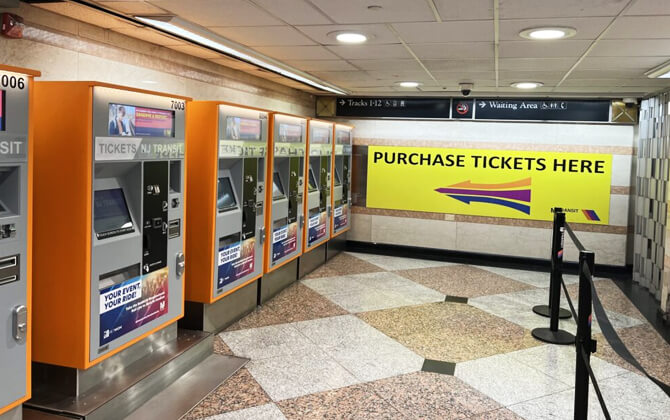
Ticket Types and Passes
- One-way ticket: valid for one continuous trip.
- Reduced one-way ticket: available for eligible riders.
- 10-trip ticket: covers ten one-way trips.
- Weekly pass: unlimited trips during the valid weekly period.
- Monthly pass: unlimited trips within a calendar month.
One-way and round-trip tickets are not refundable. Weekly and monthly passes, plus unused or partially used 10-trip tickets, must be mailed to NJ TRANSIT Rail Refund Dept., One Penn Plaza East, Newark, NJ 07105-2246. Passes mailed after they become valid have two full one-way fares deducted for each business day.
Buying and Activating Tickets
Tickets and passes can be bought at ticket offices, ticket vending machines, and through the MyTix mobile ticketing program. Ticket vending machines accept credit cards, debit cards, and cash, but not bills over US$20, equal to $20. Monthly passes are not available from TVMs.
MyTix lets riders buy and display rail one-way tickets, weekly passes, and monthly passes on a smartphone. Purchased tickets must be activated before boarding and shown to train crews when requested. One-way mobile tickets expire two hours and 45 minutes after activation.
Monthly passes self-activate on the first day of the calendar month and remain active for the full month. Weekly passes self-activate at 12:01 AM on Saturday and remain active through 6:00 AM the following Saturday. At Secaucus Junction, scan the ticket barcode at the fare gate readers.
Connections with Other Transit Systems
The Morris & Essex Lines are a major part of NJ TRANSIT public transport, linking local transport in Morris and Essex counties with New York City, Hoboken, Newark, and other regional transportation in northern New Jersey. The Kearny Connection, opened on June 10, 1996, made Midtown Direct service possible by allowing Morristown Line trains to reach Penn Station without a PATH transfer at Hoboken.
The system also connects with the Northeast Corridor near the Midtown Direct junction. Some service continues to New York Penn Station, while other trains still use Hoboken Terminal.
New York Penn Station and Secaucus Junction
Five NJ TRANSIT rail lines serve New York Penn Station. Morris & Essex riders can reach New York through direct Midtown Direct trains or by transferring at Secaucus Junction, depending on the trip.
Secaucus Junction connects 11 of NJ TRANSIT’s 12 commuter rail lines, including Morris & Essex Line Midtown Direct service on the upper level. Riders continuing to New York or to other stations on the Northeast Corridor, North Jersey Coast, or Raritan Valley Lines may need to change trains there.
Weekday service is also provided west of Dover between Lake Hopatcong, Mount Olive, and Hackettstown and Newark Broad Street or Hoboken, with customers required to transfer at Broad Street for New York service.
Hoboken Terminal, PATH, Light Rail, and Ferry
Hoboken Terminal is a major intermodal hub for Morris & Essex riders. It connects directly with PATH, Hudson-Bergen Light Rail, NJ TRANSIT bus service, and NY Waterway ferries.
PATH is available inside the terminal. From the main hall on Hudson Place, follow signs to the PATH train area at the east end of the building. Riders can use a SmartLink card or a contactless credit or debit card at the fare gates. The Hoboken-33rd Street train serves Midtown Manhattan, while the Hoboken-WTC train serves the World Trade Center and Lower Manhattan.
The Hudson-Bergen Light Rail links Hoboken Terminal with Bayonne, Jersey City, Weehawken, Union City, and North Bergen. In Hoboken, light rail stops include Hoboken Terminal, 2nd Street, and 9th Street/Congress Street. Ferry service from Hoboken operates to Brookfield Place Terminal daily, with weekday service also available to Pier 11/Wall Street and West Midtown Ferry Terminal.
Newark Broad Street and Newark Light Rail
Newark Broad Street is an important transfer point for Morris & Essex Lines riders. Newark Light Rail connects Broad Street Station with Newark Penn Station, creating a practical link between the two rail hubs and downtown Newark.
At Newark Penn Station, passengers can connect with the Northeast Corridor, North Jersey Coast Line, Raritan Valley Line, NJ TRANSIT bus service, and PATH. Newark Light Rail serves as the local tramway-style connection in this part of the city transport network.
- Newark Broad Street Station: Morris & Essex Lines and Montclair-Boonton Line rail service.
- Newark Penn Station: Amtrak, NJ TRANSIT rail, PATH, and bus connections.
- Newark Light Rail: travel between Broad Street Station and Newark Penn Station.
NJ TRANSIT Bus Connections
Bus connections are available near several Morris & Essex Line stops and at major terminals. Available stop information lists Passaic Ave at Central Ave as the nearest bus stop in one referenced area, about a 7-minute walk away.
Bus lines reported near the Morris & Essex Line include 13, 24, 29, 71, 76, GO28, 11, 27, 28, 72, 78, 378, 108, and 59. These routes connect toward Newark Penn Station, Secaucus, Bloomfield, Montclair, Jersey City, Hoboken, and nearby destinations.
During Gladstone Branch weekday trackwork, Lakeland buses replace trains between Gladstone and Summit in the midday off-peak window, while rail service continues from Summit to Hoboken.
Getting to Newark Liberty International Airport
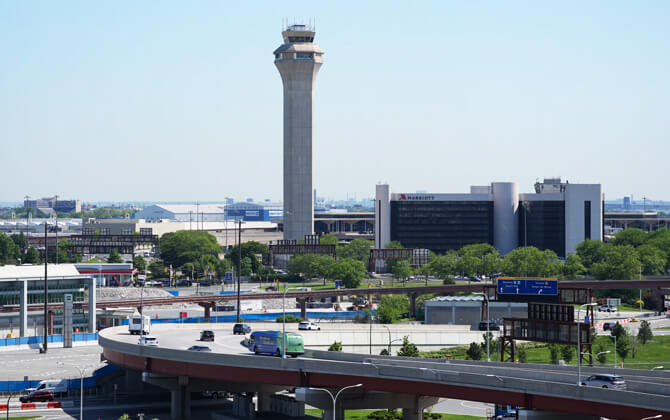
The usual airport route from the Morris & Essex Line is to ride to Secaucus Junction, transfer to a train serving Newark Liberty International Airport Rail Station, and then use AirTrain Newark to reach the terminal. If your NJ TRANSIT ticket is issued to Newark Airport Station, the AirTrain fee is included.
From Morristown, the total trip can take about 2 to 2.5 hours, depending on the schedule and transfers. One weekday option mentioned for a noon flight is Train 6624 from Morristown at 8:28 AM, transferring at Secaucus and arriving at the airport at 10:01 AM.
Another option is to travel to Newark Broad Street and connect to the GO28 bus to EWR. The estimated fare given for that route was US$8.25, equal to $8.25, for the train plus US$1.50, equal to $1.50, for the bus. A taxi or Uber from Morristown was also estimated at about US$40 to US$50, equal to $40 to $50.
Transfer via Secaucus Junction and AirTrain Newark
At Secaucus Junction, look for a southbound Northeast Corridor train serving Newark Liberty International Airport Rail Station. After arrival at the airport rail station, transfer to AirTrain Newark for Terminals A, B, and C. Terminal A is a short walk from the AirTrain stop.
Keep your ticket available, because it covers the AirTrain fee when the destination is Newark Airport Station. For flights, allow extra time: the trip usually involves two transfers and can take around 2 to 2.5 hours.
Stations, Parking, and Accessibility
Station facilities vary across the Morris & Essex Lines. Newark Broad Street has two low side platforms and a center bypass track. East Orange and Brick Church sit on a viaduct, while Summit is the first station on the line noted with high platforms and ADA compliance.
Parking also varies by station, and weekday spaces can fill early. Some towns manage their own station parking, so rules, permits, and parking charges per day may differ. If parking is tight, carpooling, drop-off, or a shuttle or loop bus can be easier.
| Station | Details |
|---|---|
| Morris Plains | Day parking is available; arriving before 7:00 AM is recommended. Reported weekday parking is about US$4 per day, equal to $4 per day. |
| Morristown | Large covered multi-story lot. Reported parking charge is about US$7 per day, equal to $7 per day. |
| Short Hills | No non-resident parking. |
| Summit | Non-resident parking garage available; ADA-compliant station. |
| Dover | Recently rebuilt with two tracks and a high center island platform. |
Station Facilities and Parking
For station parking, the most practical advice is simple: check the station or town rules before you drive. Morris Plains is often noted as a better day-parking choice, Morristown has a large covered lot, Summit has a non-resident garage, and Short Hills does not allow non-resident parking.
Availability can change by day and time. On weekdays, many lots fill early, so arriving ahead of the morning rush improves your chances. Some locations offer permit and non-permit spaces, and some communities provide shuttle or loop bus connections to the station.
How to Ride the Morris & Essex Line
Start by choosing your destination: Hoboken Terminal or New York Penn Station. If your train does not go directly where you need to be, plan a transfer at Newark Broad Street, Summit, or Secaucus Junction.
Buy your ticket before boarding when possible, especially if you want to avoid the onboard surcharge. Check the current timetable, train schedule, and platform information before leaving, because service patterns can change during trackwork or repairs.
On the route, the line passes Newark Broad Street, continues through East Orange and the Oranges, reaches Summit, and then splits between the Morristown Line toward Dover and the Gladstone Branch toward Gladstone. A local-stops ride to Dover is described as taking almost ninety minutes.
Rules and Passenger Etiquette
A safe and comfortable trip depends on basic courtesy. Let passengers exit before boarding, keep bags off seats when the train is crowded, and follow crew instructions without arguing.
Keep noise low, especially in Quiet Car areas and during early or late service. Use headphones at a reasonable volume, keep phone calls brief, and leave space for other riders to move through the aisle.
If something goes wrong, stay calm and speak with train staff. The Morris & Essex Line is shared public transport, so patience goes a long way.
Tips for Tourists and Daily Commuters
For New York, check whether your train runs directly to Penn Station or requires a transfer. For Hoboken, look for trains serving Hoboken Terminal, where PATH, ferry, light rail, and bus connections are available.
Before traveling, check current service information and alerts, especially if you are using the Gladstone Branch, traveling on a weekend, or connecting to a flight. You can call NJ TRANSIT travel information at 973 275 5555 and sign up for My Transit Alerts for delay updates by email.
If you may buy on board, carry cash in smaller bills because train personnel accept cash only and bills over US$20, equal to $20, are not accepted. Daily commuters should compare ticket cost against weekly and monthly passes.
Brief History
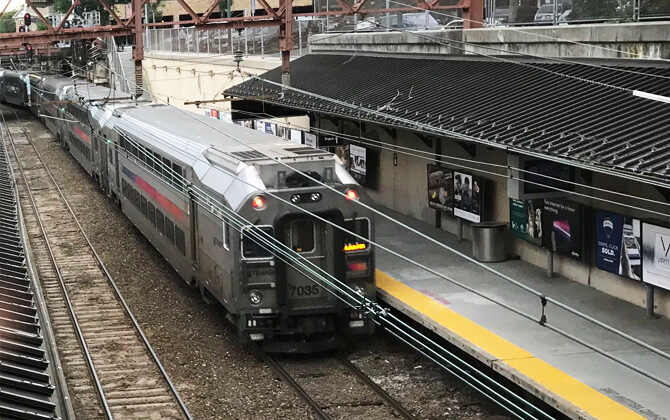
The Morris & Essex Railroad was incorporated on January 29, 1835, to build west from Newark through Morris County and beyond. The first section, Newark to Orange, opened on November 19, 1836, and the line reached Morristown in 1838.
The route expanded west to Dover in 1848, Hackettstown in 1854, and Phillipsburg in 1866. In 1868, the Delaware, Lackawanna and Western Railroad leased the line, and on July 26, 1945, the M&E was formally merged into the DL&W while still being known as the Morris and Essex Division.
The DL&W merged with the Erie Railroad in 1960 to form the Erie-Lackawanna Railroad, and the route later became part of Conrail in 1976. NJ TRANSIT still uses the Morris & Essex name for these historic rail lines. Electrification began under the DL&W at 3000 V DC in 1930/31 and was converted by NJ TRANSIT to 25 kV 60 Hz by August 1984.
Planned Improvements and Service Changes
NJ TRANSIT has announced service changes and improvement programs affecting the Morris & Essex Line and connecting service. Some are temporary, while others are part of broader systemwide expansion and reliability work.
Through Friday, July 18, Morristown Line riders may experience delays of up to 10 minutes in both directions because of track improvements between Morristown and Denville. Connecting Gladstone Branch and Montclair Line trains may also be delayed.
Earlier restoration work added trains back to modified weekday schedules on the Morris & Essex Line and restored Gladstone Branch service to Hoboken and New York on a modified schedule. NJ TRANSIT has also described a statewide Rapid Action Plan focused on digital experience, cleanliness, accessibility, public safety, real-time tracking, mobile tools, station cleaning, and elevator and escalator reliability.
To stay informed, subscribe to My Transit Alerts, use the TRANSIT Mobile App for customized push notifications, check Travel Alerts and Advisories, and follow NJ TRANSIT service updates. Customer Service is available at 973 275 5555 daily from 8:30 AM to 5:00 PM.
Nearby Destinations and Attractions
The Morris & Essex Line serves daily commuters, tourists, and local riders heading to northern New Jersey communities, Hoboken, Newark, and New York City. It also gives access to museums, historic sites, downtown station areas, and regional transfer points.
Along the route, notable station areas include Newark Broad Street, Short Hills, Summit, Morristown, South Orange, and Dover. Near Morristown, visitors can reach the Morris Museum, Morristown National Historical Park, Washington’s Headquarters Museum, the Morristown Green, Macculloch Hall Historical Museum, and Frelinghuysen Arboretum.
Other nearby points of interest mentioned for the corridor include the Whippany Railway Museum, Fosterfields Living Historical Farm, Loantaka Brook Reservation, Speedwell Lake Park, and the Museum of Early Trades & Crafts.
New York City
The Morristown Line provides NJ TRANSIT commuter rail service between Morris and Essex counties and New York City. Trains may start or end at New York Penn Station, making Midtown Manhattan one of the most important destinations on the route.
In Manhattan, 34 St-Penn Station is about a 4-minute walk from the rail stop. Nearby subway stations include 34 St-Penn Station and 28 St, while nearby bus stops include 9th Ave & W 30th St and 9 Av/W 34 St.
- Bus: 160, 34TH ST, 42ND ST, Q32.
- Train: Empire Service, Far Rockaway Branch, Port Jefferson Branch, Ronkonkoma Branch.
- Subway: 2, 3, A, E.
Newark
Newark is central to the Morris & Essex Line’s identity. The original railroad was created to run west from Newark toward Morristown, and the first opened section connected Newark and Orange.
Today, Newark Broad Street is a major Morris & Essex stop with two low side platforms, a center bypass track, large wooden station houses, street-level crossunders, and ornate wrought iron railings. It is also a useful transfer point for riders connecting through Newark.
Morristown, South Orange, Summit, and Other Station Areas
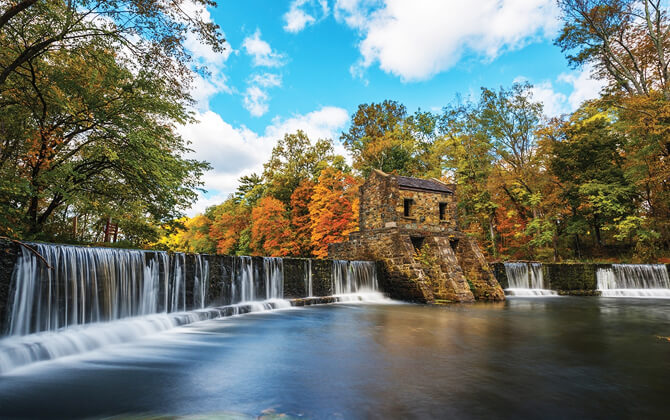
South Orange, Summit, Morristown, and Dover are among the most useful station areas for local trips and transfers. South Orange is an elevated station near Seton Hall University. Summit is a key transfer station where schedules are timed for convenient cross-platform connections to Gladstone Branch trains.
West of Summit, the line continues through Chatham, Madison, Convent Station, Morristown, Morris Plains, Mount Tabor, and Denville before reaching Dover. Station designs vary, with embankment, viaduct, grade-separated, and rebuilt platform layouts reflecting the line’s long history.
- South Orange: elevated station near Seton Hall University.
- Summit: major transfer point with timed Gladstone Branch connections.
- Morristown: key western stop with museums and historic sites nearby.
- Dover: western end of electric service from Hoboken and New York.