The Docklands Light Railway (DLR) is an automated light metro system in London serving the Docklands area and key parts of east and south-east London. Opened on 31 August 1987, it links Canary Wharf with the City of London and now reaches Stratford, Lewisham, Bank, Tower Gateway, Beckton, London City Airport and Woolwich Arsenal. The system is known for driverless operation, step-free access at every station, and a route network that covers 38 km (24 miles) across 45 stations.
| Key | Information |
|---|---|
| Opened | 31 August 1987 |
| Route length | 38 km (24 miles) |
| Stations | 45 |
| Operator | KeolisAmey Docklands for TfL |
| Accessibility | Step-free access at all stations |
| Airport link | Direct service to London City Airport |
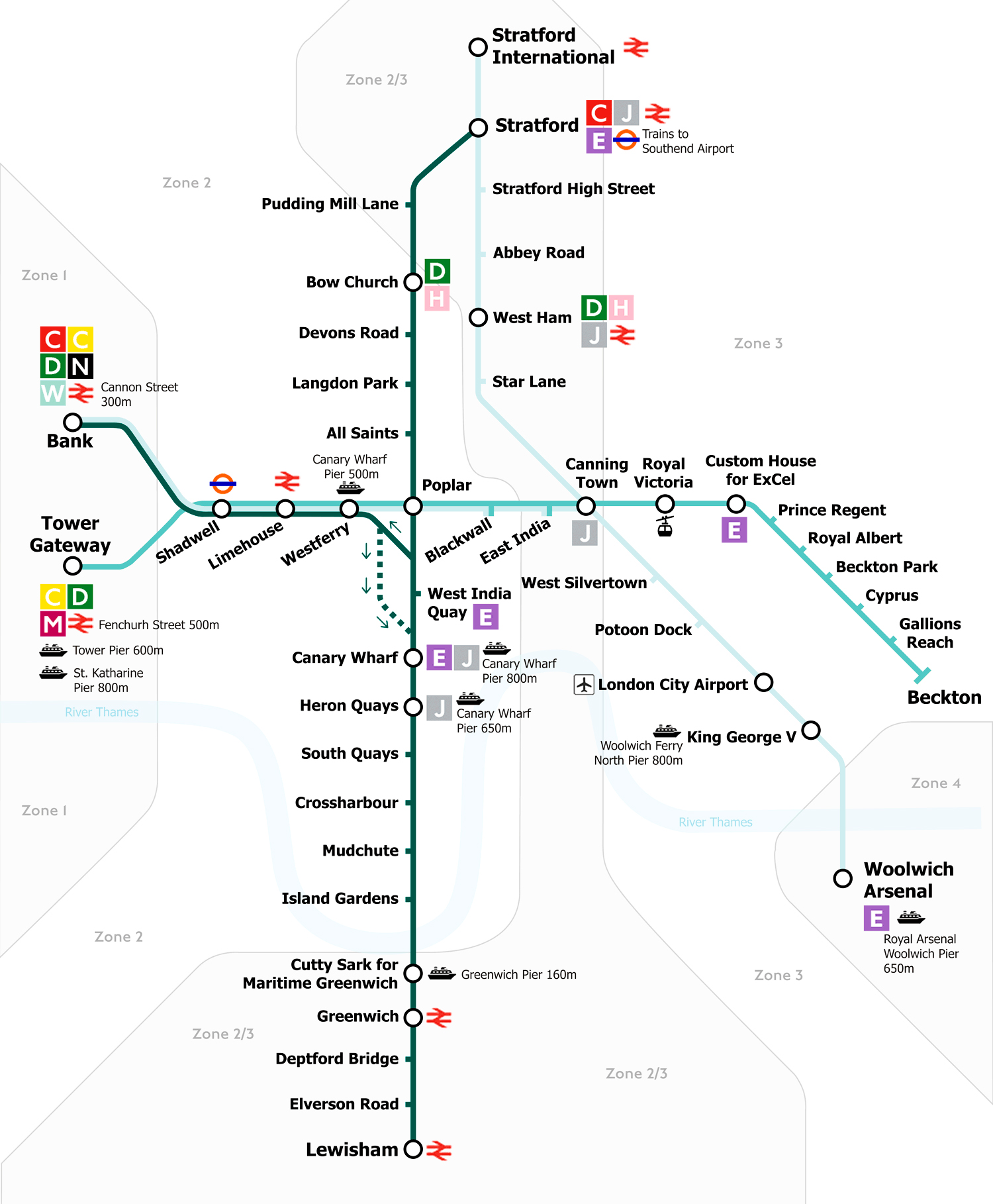
DLR Map
Map of Docklands Metro showing different lines. Click on the map to enlarge it or download the Docklands Metro map in PDF format.
Overview: DLR in London
The Docklands Light Railway is part of London public transport and an important piece of city transport in the Docklands. It provides a direct connection between Canary Wharf and the City of London while also serving Stratford, Stratford International, Beckton, Woolwich Arsenal, Lewisham, Bank and Tower Gateway.
The network opened on 31 August 1987 and has expanded several times. Today, the system extends for 38 km (24 miles) and has 45 stations. For many passengers, the DLR stations map and route plan are especially useful because the line branches in several directions across east and south-east London.
The railway is operated and maintained by KeolisAmey Docklands for Transport for London. In normal operation it runs automatically, with minimal staffing on trains and at major interchange stations. Accessibility was built into the system from the start, so all stations have step-free access from street to train.
Passenger use has grown with the network itself. Annual journeys reached 50 million by 2004, passed 100 million in 2013, and stood at 97.8 million in the 2024/25 financial year.
The DLR route has six branches, with services to Bank, Lewisham, Woolwich Arsenal, Beckton, Stratford and Stratford International. Key interchanges include Bank, Canning Town, Stratford, West Ham and Woolwich Arsenal, with additional out-of-station links at places such as Shadwell and the Tower Gateway area.
Sections and Stations
The DLR route plan has six branches: Lewisham in the south, Stratford and Stratford International in the north, Beckton and Woolwich Arsenal in the east, and central London in the west, where the route splits to Bank and Tower Gateway.
All stations are step-free from street to train, and several are major interchange points with other parts of the London transport system. If you are looking for a stations list or stations map, the most important stations are shown below.
| Station | Details |
|---|---|
| Bank | Direct London Underground interchange; western branch terminus for some services |
| Tower Gateway | Central London branch terminus with nearby connections in the Tower Hill area |
| Canning Town | Major interchange station and key connection point on the network |
| West Ham | Interchange with London Underground and National Rail services |
| Stratford | Major interchange with Underground, Overground, National Rail and other DLR services |
| Stratford International | Northern branch terminus with National Rail connections |
| Lewisham | Southern branch terminus with National Rail interchange |
| Beckton | Eastern branch terminus |
| Woolwich Arsenal | Eastern branch terminus with Southeastern interchange within the paid area |
| London City Airport | Direct airport station on the Royal Docks branch |
| Royal Victoria | Connection for the IFS Cloud Cable Car |
| Greenwich | National Rail interchange |
| Limehouse | National Rail interchange |
| Shadwell | London Overground connection via out-of-station interchange |
| Canary Wharf | Indirect Underground interchange and one of the busiest destinations on the system |
Some stations matter not just for connections but also for service patterns. Bank to Lewisham trains do not call at West India Quay because they use the diveunder track to avoid junction conflicts. Stratford, Canning Town and West Ham became especially important after later extensions.
The DLR also reaches places beyond the core rail network, including the IFS Cloud Cable Car at Royal Victoria and London City Airport. Future expansion mentioned in the source material includes the proposed Thamesmead extension, with safeguarded sites at Thames Wharf, Beckton Riverside and Thamesmead.
Interchanges
The DLR connects with London Underground, London Overground, National Rail and the IFS Cloud Cable Car. Because every station is step-free, changing between services is usually straightforward.
Direct Underground interchanges are available at Bank, Canning Town, West Ham and Stratford. Indirect links are also available at Canary Wharf, Heron Quays, Bow Church and Tower Gateway.
National Rail interchanges are available at Greenwich, Lewisham, Limehouse, Woolwich Arsenal, Stratford, West Ham and Stratford International. London Overground connections are available at Stratford and Shadwell.
The DLR also links with the IFS Cloud Cable Car at Royal Victoria. At Greenwich there is cross-platform interchange with National Rail, while at Woolwich Arsenal passengers can transfer between DLR and Southeastern platforms within the paid area.
Interchange between the Stratford International branch and the rest of the network is possible via Poplar, although the platforms are far apart and on different levels. There is no physical track connection between the two branches.
| Station | Details |
|---|---|
| Bank | Interchange with Central, Circle, District, Northern and Waterloo & City lines |
| Canning Town | Interchange with Jubilee line |
| West Ham | Interchange with Hammersmith & City, Jubilee and District lines, plus National Rail |
| Stratford | Interchange with Central and Jubilee lines, National Rail and London Overground |
| Canary Wharf | Indirect interchange with Jubilee line |
| Heron Quays | Indirect Jubilee line interchange via Canary Wharf |
| Bow Church | Indirect District and Hammersmith & City line interchange via Bow Road |
| Tower Gateway | Indirect Circle and District line interchange via Tower Hill |
| Greenwich | Cross-platform National Rail interchange |
| Woolwich Arsenal | Transfer to Southeastern within the paid area |
| Royal Victoria | Connection to the IFS Cloud Cable Car |
| Shadwell | Connection to London Overground |
Operating Hours and Frequency
DLR operating hours generally begin around 5:30am from Monday to Saturday, with services finishing around 12:30am. On Sundays, opening times are usually later, from around 7:00am, and the closing time is earlier, at about 11:30pm.
If you are checking opening hours, working hours or timings today, it is best to confirm the latest train schedule before travel. Service patterns can change because of engineering work or special events.
| Service detail | Timings |
|---|---|
| Monday to Saturday starting time | Around 5:30am |
| Monday to Saturday last train / closing time | Around 12:30am |
| Sunday starting time | Around 7:00am |
| Sunday closing time | Around 11:30pm |
| Off-peak frequency | Usually 6 to 12 trains per hour depending on route |
| Peak frequency | About 25% more frequent on the same services |
Frequency is strong across the day. Off-peak services vary by route, with some branches running 6 trains per hour and others 12. At peak times, services are about 25% more frequent, and some Stratford to Canary Wharf trains continue to Lewisham in the morning peak.
Trains normally call at every station on their route. One exception is that Bank to Lewisham services do not stop at West India Quay because they use the diveunder track. For the latest timetable, schedule today, route timetable and last train information, check TfL before you travel.
Fares for the Docklands Light Railway
DLR fare rules follow the standard London fare zone system, so prices are the same as on the Tube. Travelcards covering the relevant zones are valid, and you can also pay with Oyster, Visitor Oyster or contactless payment cards.
The source material does not provide a fixed ticket price, fare calculator result or single-journey cost, because the price depends on the zones travelled. In practice, this means the fare and ticket cost vary by journey.
Passengers using Oyster pay as you go or contactless must touch in and touch out using the card readers on gates or platforms. Tickets can be bought from ticket machines at station entrances before you access the platform.
DLR-only stations do not have ticket barriers, so fare checks are carried out by random on-train inspections. Barrier-controlled stations include Bank, Canning Town, West Ham, Stratford and Woolwich Arsenal. If you travel without a valid ticket, or fail to touch in correctly, you may be liable to a £100 penalty fare, about $126, or prosecution for fare evasion.
All stations also have step-free access from street to train.
Travel Cards and Tickets
The DLR is fully integrated into London transport, so Travelcards for the correct zones are valid on the system. Oyster cards, Visitor Oyster cards and contactless bank cards can also be used for regular travel.
If you prefer a paper ticket, you can buy one from ticket machines at platform entrances. Whatever ticket or card you use, it needs to be valid before you enter the platform area.
At DLR-only stations there are no ticket barriers. Instead, inspections are carried out on trains by Passenger Service Agents. At Bank, Canning Town, West Ham and Stratford, DLR platforms sit within a London Underground or National Rail barrier line. Woolwich Arsenal also has barriers, and passengers can move between DLR and Southeastern platforms within the paid area.
If you do not touch in properly or travel without a valid pass, card or ticket, you may face a £100 penalty fare, about $126, or prosecution.
Payment Methods
Payment methods on the DLR are the same as on the Tube because both use the TfL fare system. You can pay with an Oyster card, Visitor Oyster card, contactless payment card, or a Travelcard valid for the zones you travel through.
Tickets are also available from station ticket machines before you go to the platform. On DLR journeys, Oyster and contactless users must touch in at the start and touch out at the end using the yellow card readers.
If your contactless card was issued outside the UK, check with your bank before travel, as transaction fees or bank charges may apply. If you do not touch in correctly or travel without a valid ticket, a penalty fare may be charged.
Connections to Other Systems
The DLR is tightly connected to London’s wider public transport system. It links with London Underground, London Overground, National Rail, the IFS Cloud Cable Car and London City Airport, which makes it a practical option for transportation in London beyond the Docklands.
Important interchange stations include Bank, Canning Town, Stratford, Stratford International, West Ham, Greenwich, Lewisham, Limehouse, Woolwich Arsenal and Shadwell. At Stratford, the DLR connects with Underground, Overground, National Rail and other DLR services. At Woolwich Arsenal, passengers can change to Southeastern services within the paid area.
Oyster, Visitor Oyster and contactless payment are accepted across the system, which keeps transfers simple. Step-free access at all stations also helps passengers changing between local transport modes.
- London Underground interchanges: Bank, Canning Town, West Ham, Stratford
- London Overground interchanges: Stratford, Shadwell
- National Rail interchanges: Greenwich, Lewisham, Limehouse, Woolwich Arsenal, Stratford, West Ham, Stratford International
- Other links: IFS Cloud Cable Car at Royal Victoria, London City Airport at London City Airport station
Some journeys also rely on out-of-station interchanges, including Shadwell and the Tower Gateway area for nearby Underground and National Rail links.
Connection with the Airport
The DLR provides a direct connection to London City Airport through London City Airport station on the east side of the airport in Silvertown. For airport travel, it is one of the simplest path train options in east London.
The station is fully enclosed and has two entrances. Escalators and lifts connect the platforms to an intermediate level and a covered link to the airport concourse.
For local passengers and travellers with reduced mobility, the main access is via a lower-level subway. The station also has a staffed ticket office, which is unusual on the DLR and useful for passengers unfamiliar with the system.
Like the rest of the network, the airport station has step-free access from street to train, so the connection is fully accessible and easy to use with luggage.
History of DLR
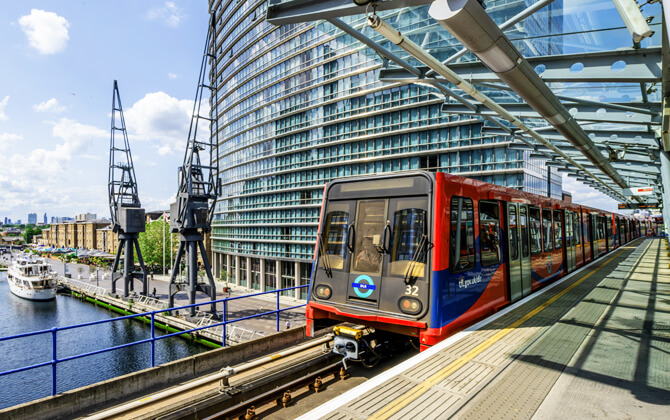
- The Docklands Light Railway was created to serve London’s redeveloped docklands with a new transport system. Two Acts passed in 1984 and 1985 authorised the project, and construction started soon after.
- The railway opened in 1987 with 11 single-car trains and 15 stations. The original route network had two lines: Tower Gateway to Island Gardens and Stratford to Island Gardens. Even before opening, planning was already under way for the Bank extension, which opened in 1991.
- As Docklands developed into a major business and residential area, the DLR expanded in stages. Extensions opened to Beckton in 1994, Lewisham in 1999, London City Airport in 2005, Woolwich Arsenal in 2009, and Stratford International in 2011. Today the system has 45 stations and 149 vehicles, with many trains running in 3-car formation.
- The DLR was originally a wholly owned subsidiary of London Regional Transport, one of TfL’s predecessors. In 1992 it transferred to the London Docklands Development Corporation, sponsored by the Department of Environment. Since 1997, the railway has been operated under franchise by the private sector, and the current franchise was awarded to KeolisAmey Docklands Ltd in 2014.
- Transport for London has been responsible for the DLR since TfL was established in 2000.
- The network also played a major role during the London 2012 Olympic and Paralympic Games. It served the Olympic Park, venues in Greenwich and the Royal Docks, and some road events in central London.
- To prepare for the Games, the DLR received major upgrades. These included the Stratford International extension, improvements for 3-car trains, a new signalling and control system, and station upgrades at key locations. During the Games, passenger numbers doubled compared with normal levels, helping the system reach 100 million journeys in 2012/13.
Future Extensions
The DLR system is still evolving, with fleet upgrades and expansion plans under consideration. Replacement of the older fleet is expected to be completed by the end of 2026, and more new trains are due to be introduced as quickly as possible to increase capacity.
The most significant proposal in the source material is an extension from Gallions Reach to Thamesmead, developed alongside plans for Beckton Riverside. TfL is working with partners on the project, which is intended to improve public transport links, support jobs, and unlock new homes in an area that is currently underserved by transport.
This proposed expansion would also support wider regeneration in east London. Consultation has already taken place, and TfL has published reports setting out options, project stages and transport benefits under review.
Another area of interest is North Quay, where TfL is working with Canary Wharf Group to support development alongside the Elizabeth line at Canary Wharf. These plans would improve access to West India Quay station and create a new connection from Poplar station into the Canary Wharf estate, strengthening links to City Airport, ExCeL and other destinations.
There have also been discussions about other possible changes, including better interchange at Tower Gateway and further extension ideas beyond the current network. Any major expansion will depend on funding, business cases and capacity across the existing railway.
Travelling via the Docklands Light Railway
The DLR is a driverless rail system connected to the wider Tube and National Rail network, making it an easy way to get around east and south-east London. It serves Docklands, Beckton, Stratford, London City Airport, Greenwich and Lewisham, with useful interchanges at major stations such as Bank and Canary Wharf.
You can use Oyster, Visitor Oyster or contactless payment for travel, and Travelcards are valid in the appropriate fare zones. That makes the DLR straightforward for both regular commuting and occasional sightseeing.
The line also connects with the IFS Cloud Cable Car at Royal Victoria, which adds another option for getting around the Royal Docks. If you are planning a route, a stations map can help, especially because the network branches in several directions.
Interesting Points to Visit via the Docklands Light Railway
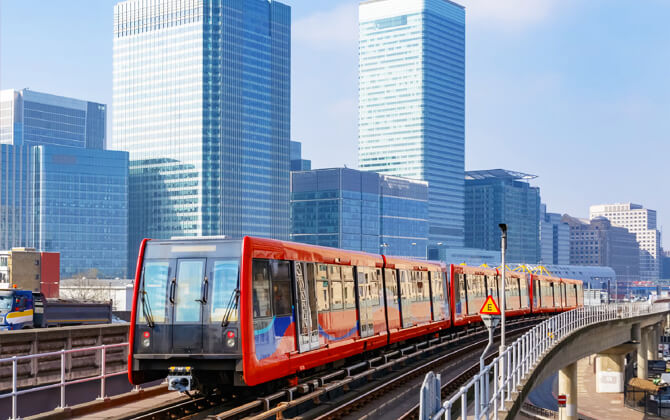
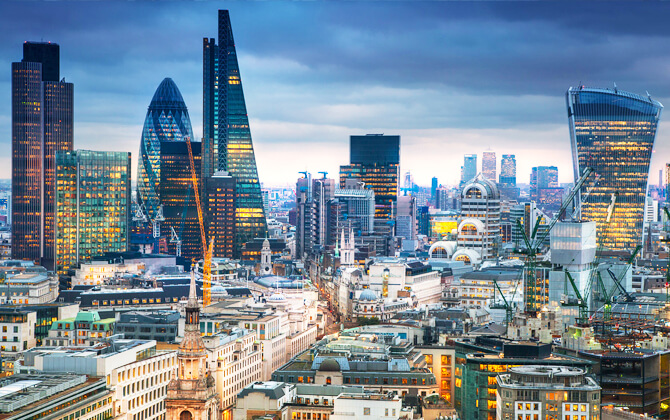
The DLR is not just a transport link. It is also a handy way to reach some of east London’s best-known destinations. Canary Wharf is the standout stop, with elevated tracks running through docks, towers and one of London’s main financial districts. Cutty Sark for Maritime Greenwich is another popular stop, giving easy access to Greenwich and the historic riverside.
For a wider day out, the DLR also reaches London City Airport, ExCeL London via Custom House for ExCeL, and the Royal Docks. Stratford and Stratford International are useful both as major stations and as gateways to wider rail connections. Woolwich Arsenal is another key destination, while the Lewisham branch provides a practical link into south London.
Part of the appeal is the journey itself. Many sections are elevated, so you get wide views of the Thames, Docklands and Canary Wharf. It is a simple, safe and efficient way to combine local transport with exploring the city.