The Saitama Rapid Railway Line (埼玉高速鉄道線) is a 14.6 km (9.1 miles) rapid transit line linking northern Tokyo with eastern Saitama Prefecture. It runs between Akabane-Iwabuchi Station in Tokyo and Urawa-Misono Station in Saitama City. The line serves a total of eight stations.
Opened in 2001, the line is mostly underground. It was built to improve commuter access between Saitama and Tokyo. It also provides direct access to Saitama Stadium 2002, one of the venues of the 2002 FIFA World Cup. Because of this role, the line is often called the “Saitama Stadium Line.”
The Saitama Rapid Railway operates as a third-sector company. It is funded by Saitama Prefecture, local municipalities, and Tokyo Metro. A key feature of the line is its through-running service into central Tokyo. Trains continue directly onto the Tokyo Metro Namboku Line without transfers. Many services also run through the Tokyu Meguro Line and the Sotetsu Shin-Yokohama Line.
This allows passengers to travel from Saitama directly into central Tokyo and even to Yokohama on a single train. Thanks to this seamless integration with the Greater Tokyo rail network, the Saitama Rapid Railway Line plays an important role as a commuter corridor.
Saitama Rapid Railway Map (2026)
The Saitama Rapid Railway Line runs north–south from the Tokyo city border into Saitama Prefecture. On railway maps, it is marked with the code “SR,” and stations are numbered accordingly. For example, Akabane-Iwabuchi is station SR19, while Urawa-Misono is SR26. The line is usually shown in green, a color close to that of the Tokyo Metro Namboku Line. This reflects their through-service compatibility.
Geographically, the line starts at Akabane-Iwabuchi Station in Kita Ward, Tokyo. It then runs underground north through Kawaguchi City in Saitama. The line emerges above ground only at its northern terminus, Urawa-Misono Station. Most stations are located beneath urban streets. Urawa-Misono is the exception, as it is elevated and adjacent to a rail yard.
Saitama Rapid Railway Line 1 lines and 8 stations. Click on the map to enlarge it or download the Saitama Rapid Railway Line map in PDF format.
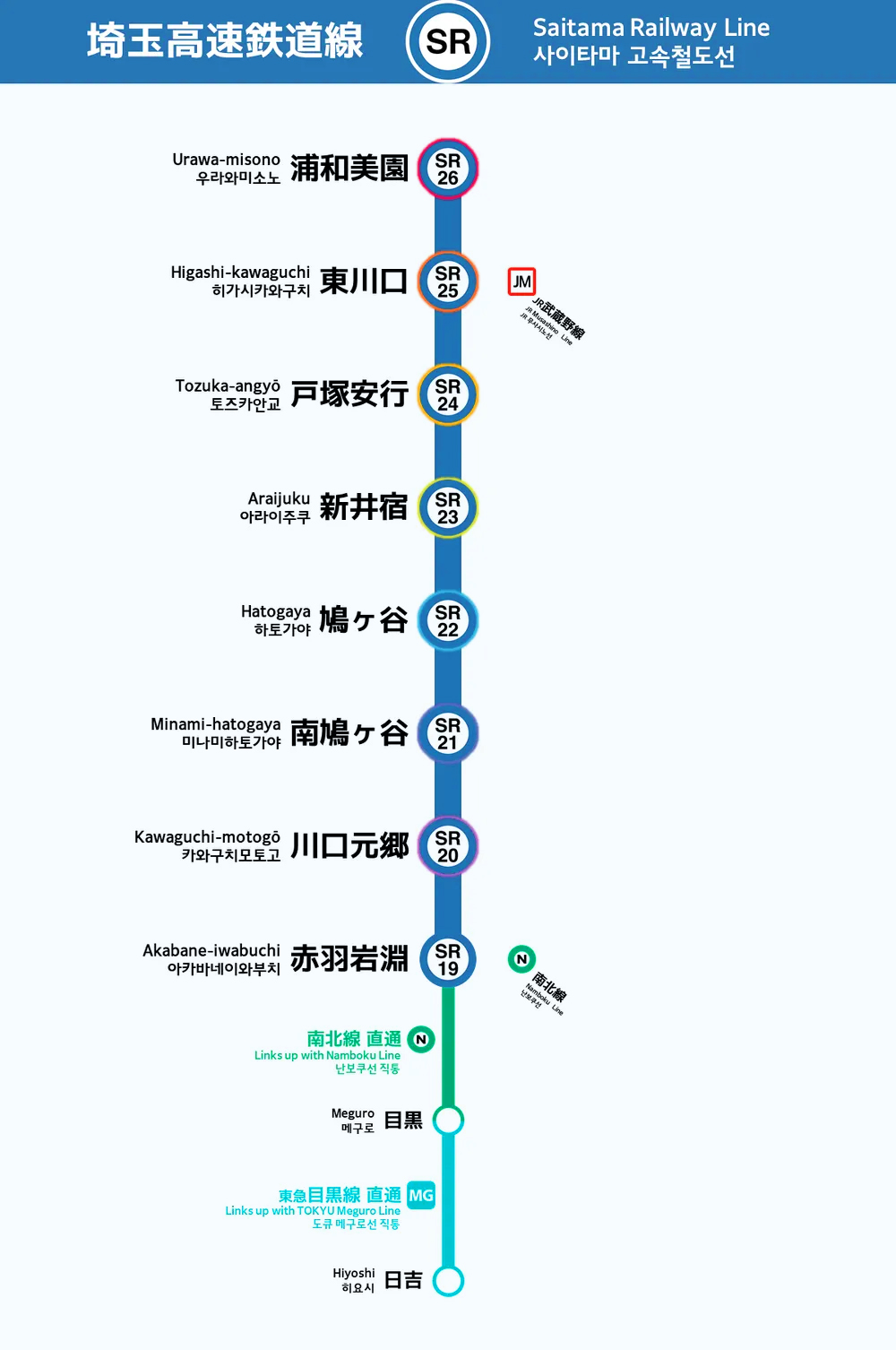
Saitama Rapid Railway Station Lines
The Saitama Rapid Railway Line includes the following stations, listed from south to north.
- Akabane-Iwabuchi (SR19) is the southern terminus. It is located in Kita Ward, Tokyo. The station is jointly operated with Tokyo Metro and connects directly to the Namboku Line (N-19). Passengers can continue into central Tokyo without changing trains. Akabane-Iwabuchi is about a 10-minute walk from JR Akabane Station, providing access to the Keihin-Tohoku, Utsunomiya (Tohoku), and Saikyo Lines.
- Kawaguchi-Motogo (SR20) is an underground station in Kawaguchi City, Saitama. It serves the Motogo area in central Kawaguchi. The station includes a municipal underground bicycle parking facility for commuters.
- Minami-Hatogaya (SR21) is located in the southern Hatogaya area, now part of Kawaguchi City. It primarily serves a residential neighborhood. The station opened together with the line in 2001.
- Hatogaya (SR22) serves the Hatogaya district of Kawaguchi. Like other stations in the city, it is equipped with elevators and escalators. The station also has an underground bicycle parking facility operated by the municipality.
- Araijuku (SR23) is an underground station in the Araijuku area of Kawaguchi City. It features escalators and elevators. A public bicycle parking area is located nearby.
- Tozuka-Angyō (SR24) is situated in the Angyō area of Kawaguchi, known for plant nurseries and the local gardening industry. The station is entirely underground. Several local bus routes depart from here, connecting surrounding neighborhoods with Kawaguchi’s city center.
- Higashi-Kawaguchi (SR25) is located on the border between Kawaguchi City and Saitama City. It is a key interchange with JR East’s Musashino Line, which runs east to west across the metropolitan area. Passengers can transfer to JR services toward Chiba, including Nishi-Funabashi and the Tokyo Disney Resort area, or toward western Tokyo. The station includes a busy bus terminal and an underground bicycle parking facility.
- Urawa-Misono (SR26) is the northern terminus in Midori Ward, Saitama City. It is the only above-ground station on the line. The station was built to serve Saitama Stadium 2002, located about 1.2 km (0.75 miles) away via a pedestrian-only route. On match days, the station is heavily used by football fans. Urawa-Misono also houses the railway’s train depot and operational headquarters beyond the platforms. Local bus services connect the station with central Saitama City and nearby suburbs.
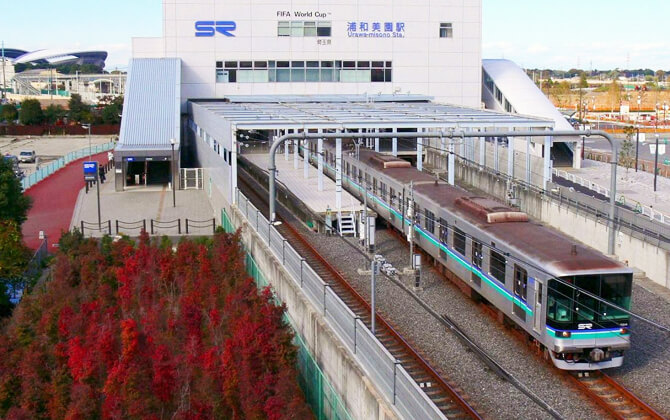
Station Facilities & Accessibility
All stations on the Saitama Rapid Railway Line are designed with accessibility and passenger comfort in mind. Every station is equipped with escalators and elevators. This allows easy movement between platforms and street level. All stations are fully wheelchair-accessible and suitable for passengers with strollers or large luggage.
Station entrances and concourses feature clear bilingual signage in Japanese and English. Train announcements are also made in both languages. This makes the system easy to use for international visitors.
For safety, platform screen doors are installed at every station. These doors open only when a train stops and align with the train doors. They reduce the risk of accidents and help control temperature in underground stations. Tactile paving is provided on platforms and inside trains for visually impaired passengers.
Each station has modern ticket vending machines with English-language guidance. Fare gates accept IC cards. Customer support is available at all times through station staff or intercom systems. Most stations also have restrooms, including accessible toilets, usually located near the ticket gates.
Four stations offer underground bicycle parking facilities: Kawaguchi-Motogo, Hatogaya, Araijuku, and Higashi-Kawaguchi. These facilities are operated by local governments and support bike-and-ride commuting. Car parking at stations is very limited. As a result, access is focused on walking, cycling, and bus connections. Overall, the stations are clean, well-lit, and easy to navigate, even for first-time users.
Saitama Rapid Railway Fares and Ticket Prices
Fares on the Saitama Rapid Railway Line are distance-based and calculated by kilometers traveled. Prices increase step by step depending on trip length. Fares apply to one-way journeys. Paper tickets are valid only on the day of purchase.
| Passenger Type | Trip Length | Price (JPY) | Price (USD) |
|---|---|---|---|
| Adult | Shortest distance | ¥210 | ≈ $1.40 |
| Adult | Full line (14.6 km / 9.1 miles) | ¥480 | ≈ $3.20 |
| Child (ages 6–11) | Shortest distance | ¥110 | ≈ $0.75 |
| Child (ages 6–11) | Full line (14.6 km / 9.1 miles) | ¥240 | ≈ $1.60 |
Children under the age of 6 usually travel free when accompanied by an adult. This follows standard practice on Japanese railways.
Tickets are available from automated vending machines at every station. All machines include an English-language menu. Passengers select a destination or fare, pay in cash, and receive a paper ticket.
Most passengers use IC cards such as PASMO or Suica. These cards are accepted on the entire line. They allow quick tap-in and tap-out travel and automatically deduct the correct fare. IC cards can also be used on most trains and buses across the Tokyo and Saitama area. There is no surcharge for using IC cards.
For frequent travel, commuter passes (teikiken) offer substantial savings. Adult and student passes are available for 1-month, 3-month, or 6-month periods. They are issued for specific origin and destination pairs.
| Pass Type | Coverage | Duration | Price (JPY) | Price (USD) |
|---|---|---|---|---|
| Adult Commuter Pass | Shortest distance | 1 month | ¥8,610 | ≈ $57 |
| Student Commuter Pass | Varies by distance | 1–6 months | Discounted | ≈ 60% off |
Commuter passes usually provide a 34–35% discount compared to buying daily tickets. Student passes offer deeper discounts and require valid proof of enrollment. Passes are sold at station ticket offices. Major stations such as Higashi-Kawaguchi operate pass counters from 07:00 to 20:00.
For occasional but repeat travel, the railway sells discounted coupon tickets. A standard coupon set includes 11 rides for the price of 10 and is valid for three months. Time-restricted options are also available.
| Coupon Type | Number of Rides | Usage Conditions |
|---|---|---|
| Standard Coupon | 11 rides | Valid for 3 months |
| Off-Peak Coupon | 12 rides | Weekdays 10:00–16:00, weekends all day |
| Weekend/Holiday Coupon | 14 rides | Valid on weekends and public holidays |
These coupon tickets are suitable for passengers who travel often but not daily. They can be purchased directly from ticket machines.
The railway also releases special promotional tickets for events or tourism. Examples include match-day tickets combining round-trip rail travel to Urawa-Misono with shuttle buses to Saitama Stadium. Current promotions are announced on the official website and station notice boards.
Ticket Types & Payment Options, Discounts
Ticket machines accept cash in Japanese yen. All gates support IC cards such as PASMO and Suica. Credit cards are not usually accepted at ticket machines. They may be used at service counters for higher-value commuter passes.
IC cards are recommended for visitors. They can be purchased or recharged at stations. A refundable ¥500 deposit (about $3.30) applies when buying a new card. IC cards can also be used for payments at station shops and vending machines.
Single-trip paper tickets must be inserted at both entry and exit gates. The ticket is collected at the destination. Tickets are valid only on the Saitama Rapid Railway Line. Travel beyond Akabane-Iwabuchi requires a through-ticket or an IC card. Stopovers are not permitted.
Children aged 6–11 receive a 50% fare discount. Up to two children under 6 may travel free with one adult. There are no standard senior discounts for single fares. Some municipalities offer separate subsidy programs.
Passengers with disability ID cards qualify for a nationwide discount, usually around 50%. This is handled at staffed gates. During service disruptions, transfer tickets may be issued for alternate routes at no extra cost.
Limited-time promotional tickets, such as one-day passes or attraction bundles, are offered occasionally. Details are published on the official website under special ticket sections.
Saitama Rapid Railway Timetable & Operating Hours
Trains on the Saitama Rapid Railway Line operate every day, from early morning until around midnight. Service usually starts around 5:00 AM in both directions. The first northbound train from Akabane-Iwabuchi departs at about 05:14 and reaches Urawa-Misono at around 05:33. The first southbound train leaves Urawa-Misono at roughly 05:10.
Late-night service continues shortly after midnight. The last train from Urawa-Misono departs at 00:06 and arrives at Akabane-Iwabuchi at about 00:25, with a travel time of around 19 minutes. In the opposite direction, the final southbound train usually leaves Akabane-Iwabuchi around 00:30. By around 1:00 AM, daily operations end and overnight maintenance begins.
Train frequency is high throughout the day. On weekday mornings between 7:00 and 9:00 AM, trains typically run every 4–6 minutes. At Urawa-Misono, there are about 10 departures during the 7:00 AM hour. During off-peak daytime hours, trains usually run every 10 minutes, with 5–6 services per hour in each direction.
Evening rush hours, roughly from 5:00 to 7:00 PM, see increased frequency again, with around 6–8 trains per hour. After 11:00 PM, service gradually reduces to about one train every 15 minutes until the last departure.
End-to-end travel time on the line is short. A full trip from Akabane-Iwabuchi to Urawa-Misono covers 14.6 km (9.1 miles) and takes about 19–20 minutes. Travel time between adjacent stations is usually just 2–3 minutes. Trains can reach speeds of up to 80 km/h (50 mph) between stations.
All trains stop at every station on the Saitama Rapid Railway Line. There are no skip-stop services on this segment. Some trains are labeled as “Express” when they continue onto the Tokyu Meguro Line. On the Saitama section, however, these trains still stop at all stations. Passengers can board any train regardless of destination.
Operating hours generally run from about 05:00 to 00:30. Weekend schedules may differ by a few minutes, but changes are minimal. There are no overnight services, even on weekends or holidays. Passengers returning late from central Tokyo should aim to board a northbound Namboku Line train by around midnight to ensure a smooth connection.
For precise departure times, it is best to check station timetables or route-planning apps. The official website provides downloadable PDF timetables for weekdays and weekends. Timetables are also displayed on station platforms. Outside late-night hours, waiting times are usually short.
Peak-hour trains can be crowded, especially around 8:00 AM. Midday services are generally less busy and often have available seating. Through-services operate in coordination with connecting lines, so destinations may vary. Passengers should check train destination displays. Overall punctuality is high, and any delays are clearly announced.
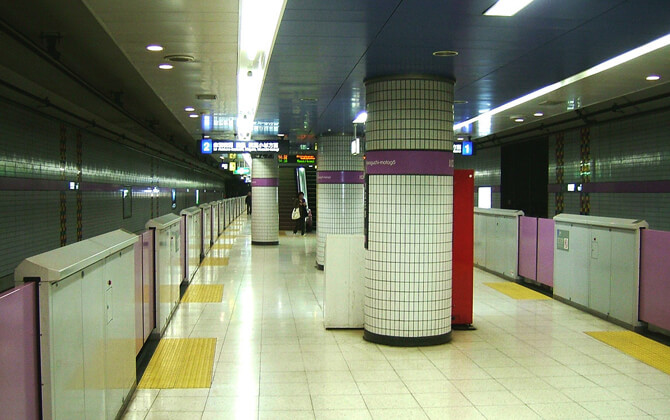
Connections & Transfers
Connections to other railway lines
One of the main strengths of the Saitama Rapid Railway Line is its integration with other rail networks. The line was designed for through-service and easy transfers.
At Akabane-Iwabuchi, the line connects directly with the Tokyo Metro Namboku Line. Many trains continue onto the Namboku Line without requiring passengers to transfer. From here, trains run toward central Tokyo and as far south as Meguro. Passengers gain direct access to areas such as Korakuen, Iidabashi, Yotsuya, and Meguro. Transfers to other Tokyo Metro and Toei lines are available along the route.
Beyond Meguro, some services continue onto the Tokyu Meguro Line. Since 2023, this line connects further via the Shin-Yokohama Line to Sotetsu lines in Kanagawa. This allows direct travel from Saitama to areas such as Musashi-Kosugi, Hiyoshi, Shin-Yokohama, and parts of Yokohama without changing trains. Not all trains run the full distance, but many do.
At Higashi-Kawaguchi Station, passengers can transfer to JR East’s Musashino Line. This orbital line runs around the outskirts of Tokyo and links Saitama with Chiba and western Tokyo. Eastbound trains connect to Nishi-Funabashi and areas near Tokyo Disney Resort. Westbound trains head toward Omiya and western suburbs. The transfer is straightforward, with adjacent platforms and clear signage.
Although not an official interchange, JR Akabane Station is about 600–700 meters (0.4 miles) from Akabane-Iwabuchi. It provides access to JR Saikyo, Keihin-Tohoku, and other lines. Some passengers use this short walk for alternative routes.
Through the Namboku Line, passengers can transfer to many Tokyo Metro and Toei lines. At Meguro, connections to the JR Yamanote Line are available. At Shin-Yokohama, some trains allow transfer to the Tokaido Shinkansen. As a result, the Saitama Rapid Railway links passengers to a wide regional rail network.
Bus connections
All stations on the Saitama Rapid Railway Line are served by local bus routes. These buses provide essential connections to nearby neighborhoods and destinations beyond walking distance.
Urawa-Misono Station functions as a major bus hub. Local buses connect the station with Urawa city center, Omiya Station, Iwatsuki Station, and surrounding districts. On event days, shuttle buses may run to Saitama Stadium 2002. Many passengers also walk the 1.2 km (0.75 miles) pedestrian route to the stadium. Long-distance highway buses, including services to Fukushima Prefecture, also stop here.
Higashi-Kawaguchi Station offers extensive bus connections from both north and south exits. Buses serve destinations such as Iwatsuki, Shin-Koshigaya, Kawaguchi Station, and nearby residential areas. Loop routes connect surrounding neighborhoods and medical facilities. This makes the station a key transfer point for travelers from areas without rail access.
Tozuka-Angyō Station has bus services to Kawaguchi Station, Nishi-Kawaguchi Station, and nearby districts. Community buses operate local loops, providing access to smaller residential areas.
Kawaguchi-Motogo, Hatogaya, Minami-Hatogaya, and Araijuku stations also have local bus stops. These routes connect residential areas, municipal offices, shopping zones, and nearby JR stations. Some destinations are reachable on foot, with central Kawaguchi about a 15-minute walk from Kawaguchi-Motogo.
Bus stops are clearly marked, and timetables are posted at each stop. During peak hours, services are frequent. Bus fares are typically flat or distance-based, usually around ¥180–¥220 (about $1.20–$1.50). Most buses accept PASMO and Suica IC cards.
There is no direct airport train on the Saitama Rapid Railway Line. Passengers typically transfer to buses or other rail lines for airport access. Common routes include buses from Urawa or Omiya to Haneda or Narita, or train transfers within Tokyo. The railway’s role is to connect passengers efficiently to the wider transport network.
Overall, the combination of rail and bus services ensures strong last-mile connectivity. Even areas without nearby stations are linked to the Saitama Rapid Railway Line. Checking bus schedules in advance can help optimize travel beyond the station area.
Connections to Airport
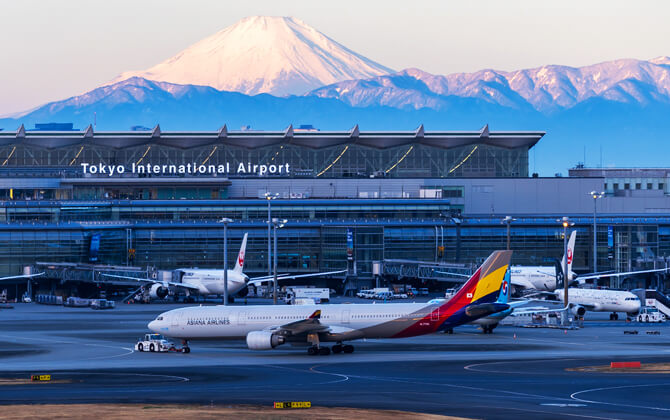
The Saitama Rapid Railway Line does not provide a direct airport train service. However, it offers convenient access to both major Tokyo airports through transfers.
For Haneda Airport, passengers can travel south via the Tokyo Metro Namboku Line to Meguro. From there, transfers are available to JR lines or the Toei/Keikyu network, which offers direct services to Haneda. Another option is to reach central Tokyo first and transfer to airport-bound lines.
For Narita Airport, a common route is to transfer at Higashi-Kawaguchi to the JR Musashino Line. From there, passengers can reach Nishi-Funabashi or other JR hubs and connect to Narita Express trains, the Keisei Skyliner, or airport buses. Some travelers also continue into Tokyo and transfer at Nippori or Tokyo Station.
Airport limousine buses are another practical option. Direct buses to Haneda and Narita operate from nearby hubs such as Urawa, Omiya, and Kawaguchi. These hubs can be reached by bus or train from Saitama Rapid Railway stations.
Overall, while transfers are required, the line provides smooth access to the wider rail and bus network, making airport travel straightforward with a bit of planning.
Parking at Stations
Parking for private cars along the Saitama Rapid Railway Line is limited. That is typical for urban rail in Japan. These stations were designed for access on foot, by bicycle, or by feeder bus, not by car.
Saitama Railway does not operate large park-and-ride lots at its stations. You generally will not see big garages attached to the entrances. Most station areas, especially in Kawaguchi, are dense and have little open space. Still, small private lots and coin-operated parking are often available nearby for a fee.
Urawa-Misono is the easiest place to find parking options. The area is newer, and there are commercial lots within about 5–10 minutes on foot. Some commuters also use shopping center parking, such as the Aeon Mall Misono area. These lots are not intended as station parking, and rules may apply. Time limits and store validation are common, so check signs before leaving your car.
Because Urawa-Misono serves Saitama Stadium 2002, the stadium also has event parking. On match or concert days, official lots may open for spectators. Capacity is around 600 spaces across multiple lots. On normal days, these lots are usually closed or not meant for commuter use.
If you want to drive to Urawa-Misono and take the train, private pay lots near the station are the safest option. Monthly spots are sometimes advertised locally. Typical prices are around ¥8,000–¥10,000 per month (about $53–$67). Hourly coin-parking is also available in some areas, depending on demand.
Bicycle parking is much better than car parking. Four stations have underground bicycle parking facilities close to the station: Kawaguchi-Motogo, Hatogaya, Araijuku, and Higashi-Kawaguchi. These facilities are usually managed by local government and offer secure parking at low cost. Even at stations without a dedicated garage, you will usually find bicycle racks or small surface lots. It is common to see many bikes parked near entrances.
For scooters and small motorcycles, some parking areas include dedicated spaces. Rules vary by location. In Japan, “駐輪場” indicates bicycle parking, and “バイク駐車場” indicates motorcycle parking. Fees and registration may be required.
Drop-off options also depend on the station. Urawa-Misono has a rotary where taxis and private cars can stop briefly. Some other stations have small roundabouts or space near the entrance. In tighter urban locations, there may be no formal drop-off zone. Use side streets where appropriate and follow local signs to avoid blocking buses or traffic.
During large stadium events, temporary parking arrangements may be used. Extra lots may open, often for a fee and sometimes with advance reservation. Traffic gets heavy, and spaces fill quickly. If you plan to park on those days, leave extra time.
If you are considering park-and-ride, expect to use private parking and pay for it. This line clearly prioritizes walking, cycling, and buses. For most riders, taking a bus to the station is simpler than driving. If you must drive, plan for extra time to find a spot, especially near midnight.
Safety and Regulations
- All stations are equipped with platform screen doors that open only after trains stop, reducing fall risks and track intrusion.
- Platforms include emergency stop buttons for immediate response to dangerous situations.
- Trains operate with one driver under an Automatic Train Operation (ATO) system, ensuring precise stops and stable speed control.
- The line uses Automatic Train Control (ATC) to maintain safe spacing between trains, with a maximum speed of 80 km/h (50 mph).
- Safety systems include onboard cameras, station monitors, and emergency intercoms in every train car.
- Stations are monitored by CCTV, supported by staff patrols, emergency call boxes, and fire detection systems.
- Underground tunnel sections include water-control systems designed for flood management and environmental safety.
- Smoking is prohibited, and quiet behavior is expected; phones should be on silent mode.
- Priority seats are reserved for elderly passengers, pregnant riders, people with disabilities, and adults with infants.
- Dangerous items are banned, large luggage must not block aisles, and bicycles must be folded or bagged.
- In emergencies, passengers should follow staff instructions and use intercoms only when necessary.
- Health measures such as improved ventilation, sanitizers, and enhanced cleaning may be applied during outbreaks.
Future Developments & Expansion
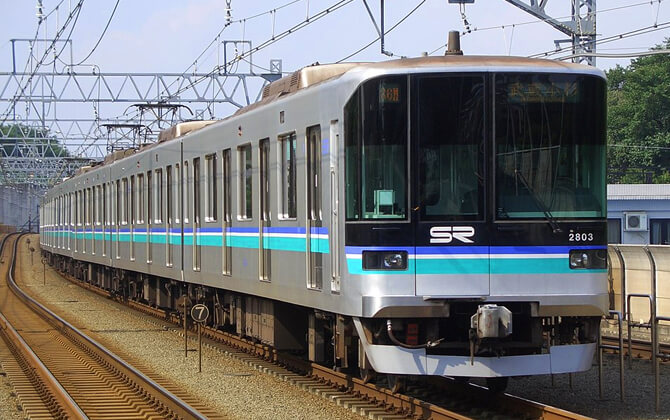
Since opening, the line has been discussed as a candidate for future extension. The main idea is to extend the route north beyond Urawa-Misono.
A long-term proposal would extend the line through Iwatsuki Ward toward Hasuda City. The goal would be to connect with JR East’s Utsunomiya Line at Hasuda Station. If built, the extension could add roughly 10–15 km (6–9 miles) of track and around 5–6 new stations. Exact station locations have been studied, but not finalized publicly.
This concept has existed for decades and was referenced in early planning as a later phase. Progress has been slow due to funding and ridership concerns. The line had high construction costs, and financial performance has been a challenge at times. Local governments have shown interest, but financing remains a key hurdle. As of 2026, construction has not started and the plan remains at the proposal stage.
If an extension happens, Urawa-Misono would shift from a terminus to a through station. The station was designed with future growth in mind. It was originally built around 6-car operations, while other stations were ready for longer trains. Any major extension could require further platform and facility adjustments.
A major change that has already happened is the move to 8-car train operations on through services. From April 2022, the Saitama Rapid Railway, Tokyo Metro Namboku Line, and Tokyu Meguro Line began operating 8-car trains. This supported capacity needs linked to the Shin-Yokohama Line network. Longer trains increase capacity by about one-third compared to 6-car sets and help reduce peak crowding.
Future “expansion” may also come through service patterns rather than new track. As the through-network settles, timetables may shift and more trains may continue beyond Meguro toward Shin-Yokohama and Sotetsu destinations. Not all services will run the full distance, but the range of one-seat trips can grow over time.
Development around station areas is also part of the long-term picture. Urawa-Misono, in particular, has seen ongoing urban growth, including housing and retail. Area development can increase ridership and strengthen the case for future extensions.
Saitama Rapid Railway Line Nearby Attractions
The Saitama Rapid Railway Line serves several areas with notable attractions, ranging from sports venues to shopping and local culture. Many sights are within walking distance or a short bus ride from stations.
- Urawa-Misono Station provides access to Saitama Stadium 2002, one of Japan’s largest football stadiums. The stadium is about 1.2 km (0.75 miles) away via a pedestrian-only route. On non-event days, the area is also popular for walking and local dining.
- Around Urawa-Misono, visitors will find large shopping complexes such as Aeon Mall Misono. The area features restaurants, cafés, and family-friendly entertainment. It reflects the district’s recent urban development.
- Higashi-Kawaguchi Station is a convenient base for exploring Kawaguchi City. Nearby parks, local shopping streets, and easy transfers to JR lines make it useful for day trips toward Omiya or Chiba.
- Stations like Tozuka-Angyō and Hatogaya are close to quieter residential districts. These areas are known for plant nurseries, small temples, and neighborhood parks. They offer a more local and relaxed atmosphere compared to central Tokyo.

History
The Saitama Rapid Railway Line has a fairly recent history. Still, it grew out of long-term transit planning for the Tokyo region.
- Concept and Planning: In the 1980s, Tokyo’s subway expansion plans included a north–south route sometimes referred to as “Line 7.” The idea was to extend rapid transit from central Tokyo into Saitama. In 1985, a transport council report to Japan’s Ministry of Transport proposed extending the future Namboku Line beyond Akabane and into Saitama. The main goals were to reduce crowding on existing commuter routes and support new residential areas. Planning also considered future demand tied to a major stadium project in Saitama.
- Company Establishment: The Saitama Railway Corporation was founded on March 25, 1992. It was created as a third-sector company, backed by public bodies such as Saitama Prefecture and local cities, along with private stakeholders including Tokyo Metro. The company received its railway business license by the end of 1992. During the 1990s, the project moved through design, land acquisition, tunneling, and construction. Total costs reached about ¥258.7 billion (about $1.7 billion).
- Opening and Early Years: Service began on March 28, 2001. The line opened with the same 8 stations and 14.6 km (9.1 miles) route it has today, from Akabane-Iwabuchi to Urawa-Misono. The timing was closely linked to the 2002 FIFA World Cup, as Saitama Stadium 2002 would host matches. Construction was pushed to ensure the line was ready in time. During the tournament, the railway moved large crowds efficiently, including for a quarter-final. A pedestrian route of about 1.2 km (0.75 miles) from the station to the stadium was built to handle heavy foot traffic safely.
- Through-Service Integration: From day one, the line was designed to work as part of a wider network. It connects directly with the Tokyo Metro Namboku Line, which opened between Meguro and Akabane-Iwabuchi in September 2000. Early through services ran between Urawa-Misono and Meguro, and some continued onto the Tokyu Meguro Line. As the Tokyu Meguro Line extended to Musashi-Kosugi (2006) and Hiyoshi (2008), one-seat travel from Saitama reached even farther. Over time, coordination between Saitama Railway, Tokyo Metro, Tokyu, and later Sotetsu expanded the practical reach of the line without adding new track in Saitama.
- Ridership and Financial Challenges: In its early years, ridership fell below forecasts. Areas near some stations, including Urawa-Misono, were still developing in 2001. The line also faced competition from nearby JR routes. With high construction costs, the operator carried heavy debt and posted losses. Fares were set relatively high to support revenue. Over time, usage increased as neighborhoods grew and more riders adopted the through-service into Tokyo. By the 2010s, daily ridership improved, though long-term debt remained an issue. Despite financial pressure, the line developed a strong reputation for reliable service.
- Milestones: The line’s short history includes several key moments. It opened in 2001 with through-service to the Namboku and Meguro lines. In 2002, it played a major role in moving World Cup crowds to Saitama Stadium. In 2006, it joined the Tokyo-area program of women-only cars during peak morning hours. On November 27, 2015, the line was formally marketed with the nickname “Saitama Stadium Line,” and station numbering using the “SR” code was promoted more actively. In April 2022, 8-car train operations began, increasing capacity. In March 2023, the Sotetsu/Tokyu Shin-Yokohama Line opened, enabling direct through-trains between Saitama and parts of Kanagawa. In March 2025, a timetable revision adjusted late-night operations to create more maintenance time.
- Historical Significance: The Saitama Rapid Railway Line is often described as the first subway line in Saitama Prefecture. Its construction reflected Saitama’s shift from a Tokyo bedroom area to a more connected urban region. The project also involved major engineering work, including tunneling and river-crossing sections. The line incorporated environmental and water-control measures in tunnel design to reduce impact on local waterways.
The story is still unfolding. While the line is young, it has become an important part of daily travel between Saitama and Tokyo. Its through-service model also set a strong example of inter-company cooperation in the Greater Tokyo rail network. If a future extension beyond Urawa-Misono is ever built, it will add a new chapter. Until then, the line continues to evolve through service upgrades, timetable changes, and the steady growth of the communities it serves.